Meta Intent: A practical decision guide for industrial lignin projects that need to translate black liquor recovery history, chemical composition, molecular architecture, and thermal behavior into defensible downstream process choices.
Introduction: A Recovered Lignin Is Not Yet an Application-Ready Lignin
Black liquor is a renewable aromatic feedstock, but recovered lignin is not a fixed commodity. Its feedstock, pulping conditions, precipitation route, washing, drying, and fractionation history alter ash, residual carbohydrate, sulfur-bearing groups, molecular-mass distribution, hydroxyl accessibility, condensation, water content, and melt behavior. Consequently, a lot that appears acceptable in one assay can fail the next process step.
The practical question is not "Is this lignin pure?" in the abstract. It is "Is this lignin fit for the route we intend to run next?" A carbon-fiber precursor, a phenolic-resin modifier, a polyurethane component, and a depolymerization feedstock do not need the same evidence package. One may be sensitive to non-melting particles and flow behavior; another may depend on accessible phenolic hydroxyl groups; another may be limited by condensed carbon-carbon linkages or catalyst-poisoning inorganics. The analytical plan should be designed around that decision before instruments are booked.
That framing turns lignin analysis for plant, soil, and biomass research from a single content measurement into the first layer of a material-release strategy. The goal is a traceable profile that separates a recoverable process deviation from a fundamental material mismatch. It also prevents a common failure mode: applying a long analytical panel after a downstream trial has already failed, then discovering that the selected tests never addressed the true route-limiting variable.
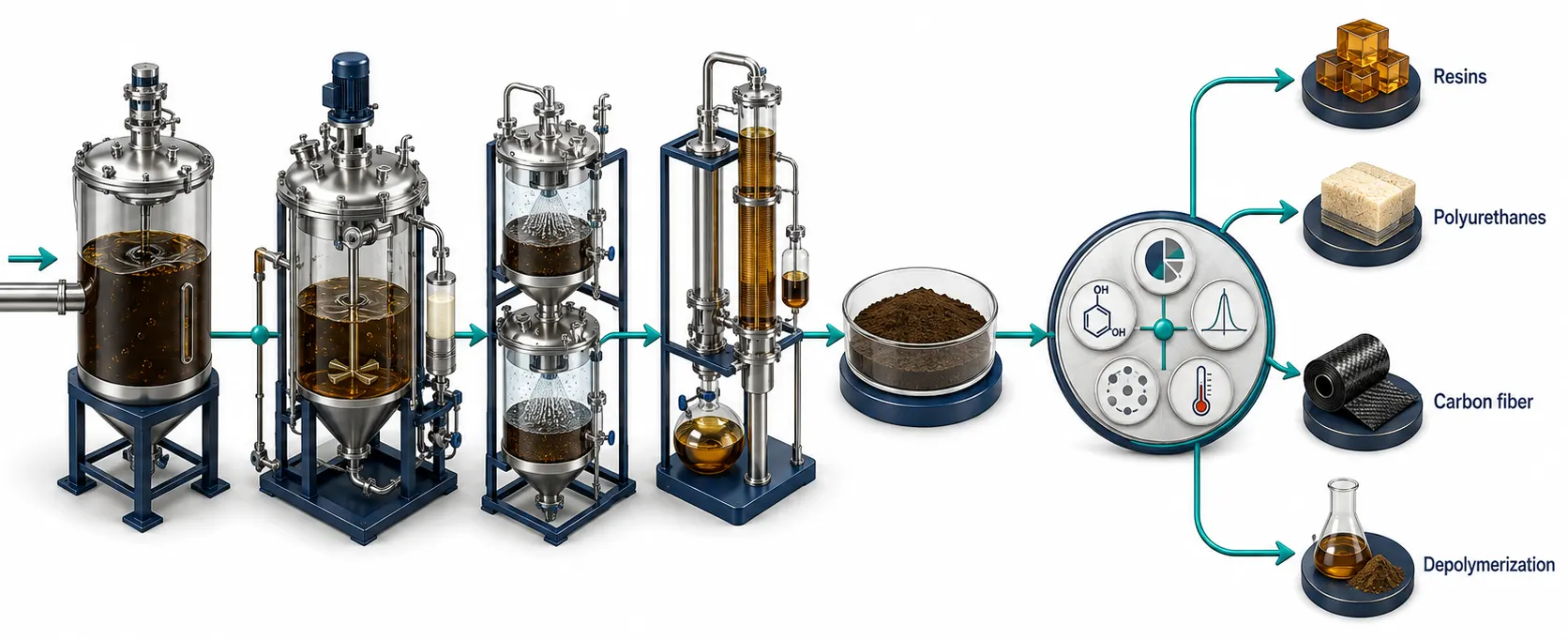 Figure 1: The Lignin Valorization Decision Chain: From Black Liquor to Application-Ready Fraction
Start with the Recovery History and a Decision Brief
Before compositional analysis, create a material passport. Record the biomass source when available, pulping or pretreatment family, black-liquor solids, precipitation acid and endpoint, temperature, residence time, separation sequence, wash solvents, drying conditions, storage history, and any fractionation performed. These are not merely manufacturing notes. They are explanatory variables for analytical results. For example, a broad distribution or poor dissolution can reflect recovery severity, aggregation induced during drying, residual inorganic salts, or a true structural difference. Without the recovery record, those possibilities are easily confused.
The decision brief should define one primary use case and one contingency route. It should state the process question, the sample form to be tested, the critical risks, the required reportable attributes, and the meaning of a hold decision. For a resin project, the key question may be whether a lot has the needed reactive functionality and impurity profile for formulation trials. For catalytic depolymerization, it may be whether the lignin retains enough cleavable ether character and has sufficiently controlled inorganic carryover for a chosen catalyst screen. A "go" result should mean that the lot has met a route-specific evidence threshold, not that it is universally superior.
Use a staged plan. First establish composition and contamination. Next confirm whether the polymeric architecture and functional groups fit the intended chemistry. Then test thermal and flow behavior only when the target process makes those properties decisive. This avoids spending time on melt rheology for a lignin intended only for solution-phase chemistry, or treating a convenient FTIR spectrum as proof of a property that requires quantitative NMR or fractionation data.
Build the Composition Layer: Lignin, Carbohydrates, Ash, and Sulfur
Separate lignin content from purity and recovery yield
Two-stage acid hydrolysis remains a useful framework for partitioning acid-insoluble residue, acid-soluble aromatic material, and hydrolysable carbohydrates. In a technical lignin project, however, the method must be qualified for the specific recovered material. Acid-insoluble material is not automatically pure lignin: ash, protein, char-like material, or other acid-resistant components can bias a gravimetric residue. Acid-soluble absorbance also depends on the chosen wavelength, extinction assumptions, dilution range, and interference control. Report the measurement basis and corrections rather than collapsing the result into a bare "lignin percentage."
Every composition table should state its reporting basis. Percentages on as-received, oven-dry, and ash-free bases answer different questions and are not interchangeable. Specify whether the sample is original black liquor, a precipitated lignin fraction, or a washed or fractionated material; record solids determination and moisture conditioning. This metadata helps later teams distinguish a true recovery change from a difference introduced by water, ash, or handling.
Residual sugars reveal a different kind of risk. Glucose, xylose, arabinose, galactose, mannose, or oligomeric carbohydrate signals may indicate lignin-carbohydrate complexes, incomplete washing, carryover from the process stream, or an intentionally retained fraction. The impact depends on the route. A small carbohydrate contribution may be tolerable in a low-severity formulation experiment yet disruptive in thermal processing or when reproducible fractionation is required. A targeted low molecular weight sugars analysis service can make this decision quantitative instead of relying on a broad, unresolved chromatographic region.
Treat inorganic content as a process variable
Ash, sodium, potassium, silica, and sulfur should be measured because they can alter solubility, thermal residue, catalyst compatibility, corrosion risk, and the reproducibility of later processing. There is no universal acceptable percentage for all lignin applications. Instead, use a route-specific limit derived from the chemistry and equipment at stake. For example, a lot moving toward high-temperature processing should be reviewed for ash and non-melting particulate risk alongside its thermal profile; a lot moving toward a catalyst screen should be evaluated for the inorganic species that matter to that catalyst system.
Elemental analysis and ash determination complement one another. Ash provides a total inorganic burden under the selected thermal program, while elemental analysis can indicate carbon, hydrogen, nitrogen, and sulfur balance. Neither result should be interpreted without sample history. A wash-intensive recovery route may lower ash but change the molecular fraction recovered; a new precipitation endpoint may change sulfur and also alter the functional-group distribution. The analytical report should therefore connect each change to the recovery step most likely to explain it.
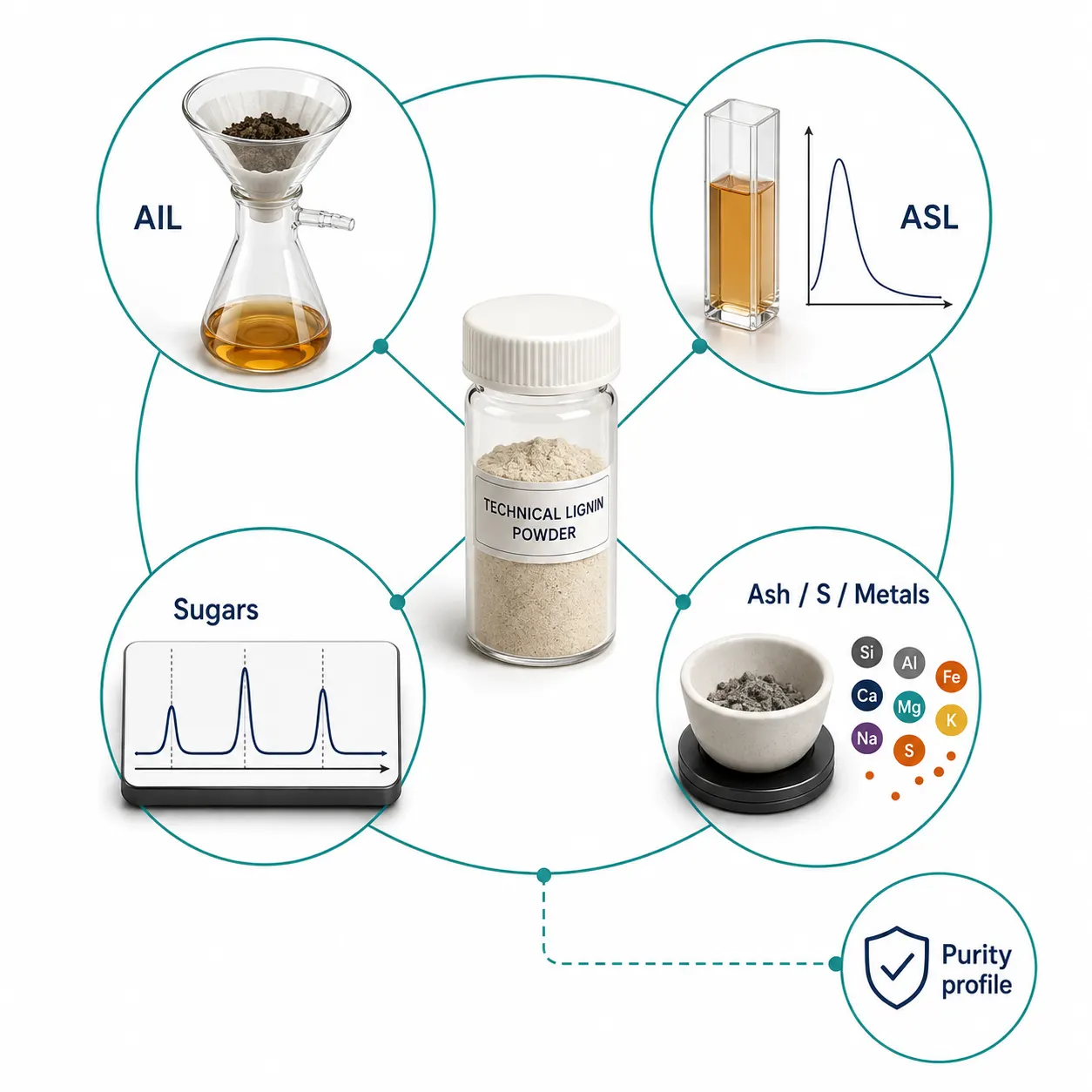 Figure 2: Lignin Composition and Contaminant Profile from a Single Technical Lignin Fraction
Measure Molecular-Mass Distribution Only After Solubility Is Under Control
SEC or GPC is indispensable for comparing molecular-mass distributions across lignin fractions, but it is also one of the easiest places to generate misleading confidence. Lignin is structurally heterogeneous, can self-associate, and may interact with the stationary phase. A broad or shifted chromatogram can reflect the material, the solvent, incomplete dissolution, filtration loss, sample concentration, derivatization, column interaction, or calibration mismatch. The report should state which of those risks were tested rather than presenting Mw, Mn, and dispersity as context-free material constants.
For organic-solvent SEC, acetylation or another suitable derivatization may improve dissolution and reduce strong hydrogen-bonding interactions, but it also changes the analyte. For alkaline aqueous methods, pH, salt composition, and sample neutralization history can change association state. The useful output is therefore a validated comparison among samples analyzed under the same conditions. A GPC and SEC based analysis service should be paired with an explicit sample-preparation record, a dissolution acceptance check, a filtration rationale, and a statement of whether the values are calibration-relative or supported by additional detectors.
SEC-MALS can reduce dependence on a polymer calibration curve, but it does not eliminate method assumptions. Light-scattering interpretation still depends on sufficient fractionation, a defensible refractive-index increment, detector alignment, concentration range, and control of aggregation. When the material is best handled in water or alkaline solution, an aqueous GPC analysis approach may be more relevant than forcing a poorly soluble fraction into an organic method. The right choice is the one that produces a stable, interpretable comparison for the material and route under study.
The decision value of the distribution is route dependent. A narrow, reproducible distribution can improve consistency for thermal or spinning investigations, but "narrower" is not automatically better. Very low-mass material can create volatility or poor mechanical integrity; very high-mass or highly associated material can compromise flow or solubility. Treat SEC data as a way to identify the fraction that fits a chosen operating window, not as a single ranking score.
For route selection, the most defensible practice is to read the distribution alongside at least one orthogonal measure of composition or functionality. Published kraft-lignin characterization combines SEC, elemental analysis, DSC, IR, and 31P NMR rather than treating one result as a complete material identity. The same logic applies here: interpret the trace with preparation and process context.
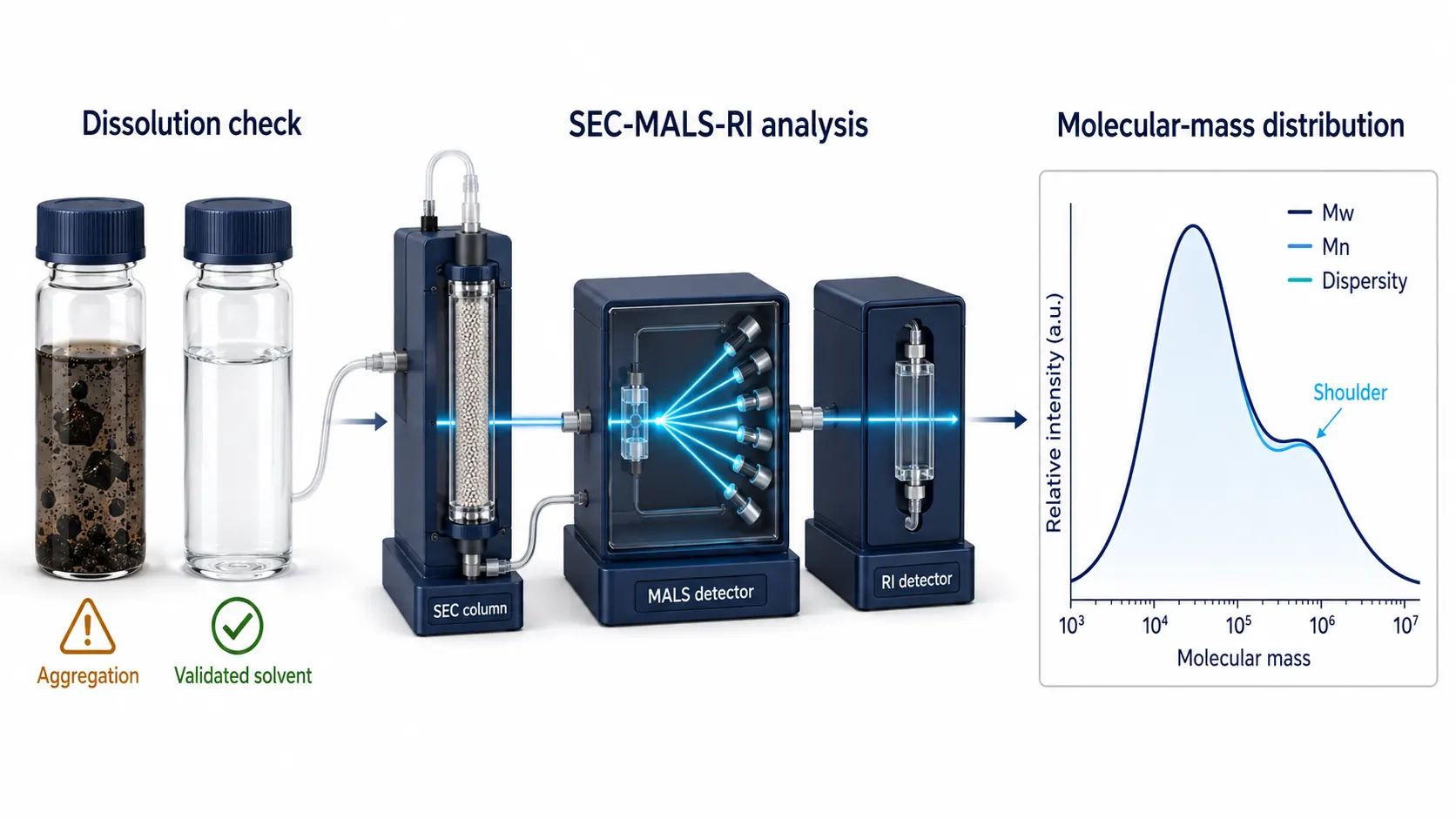 Figure 3: SEC-MALS Readiness Check: Dissolution, Separation, and Molecular-Mass Distribution
Use NMR to Link Functional Groups and Bonding Patterns to Chemical Options
Quantitative 31P NMR answers a functional-group question
Phosphitylation followed by quantitative 31P NMR is a well-established route to classify and quantify hydroxyl functionality in lignin. It can distinguish aliphatic hydroxyls, phenolic hydroxyl populations, and carboxylic-acid groups when sample preparation, internal standard, relaxation conditions, peak boundaries, and integration rules are controlled. This makes it especially useful when a downstream route depends on accessible reactive functionality rather than simply total lignin content.
Do not transfer chemical-shift windows or absolute group values from a paper into a release specification without method verification. Solvent, derivatization completeness, line width, signal overlap, and integration conventions matter. In a materials project, the result should answer a practical question: does the selected fraction contain the functional-group pattern required for the next reaction, and is that pattern reproducible across lots? For structural characterization of polymeric fractions, NMR based polymers analysis can provide the context needed to connect functionality to molecular architecture.
HSQC describes a linkage landscape, not a guaranteed product yield
Two-dimensional 1H-13C HSQC NMR helps map aromatic units and inter-unit linkages such as beta-O-4, beta-beta, and beta-5 motifs. For black-liquor lignin, the relative abundance of ether linkages, condensed structures, and aromatic-unit populations can explain why two fractions with similar average molecular mass behave differently in a reaction or thermal step. It is particularly valuable for deciding whether a fraction should proceed to a structure-sensitive conversion study or be redirected to a less demanding materials route.
Conventional HSQC integration is generally best treated as comparative or semi-quantitative unless the acquisition and processing strategy has been developed for quantitative interpretation. It should not be used alone to promise a monomer yield or a downstream performance outcome. Combine it with molecular-mass and compositional data. For complex assignments or cross-validation with other NMR experiments, an NMR based analysis service can support a fit-for-purpose structural evidence package.
HSQC and 31P NMR answer different questions. HSQC tracks inter-unit linkage signals and aromatic-unit patterns, whereas quantitative 31P NMR supplies controlled functionality data. If both change after recovery or fractionation, investigate structural change; if only one changes, review preparation and interpretation assumptions before assigning a process cause.
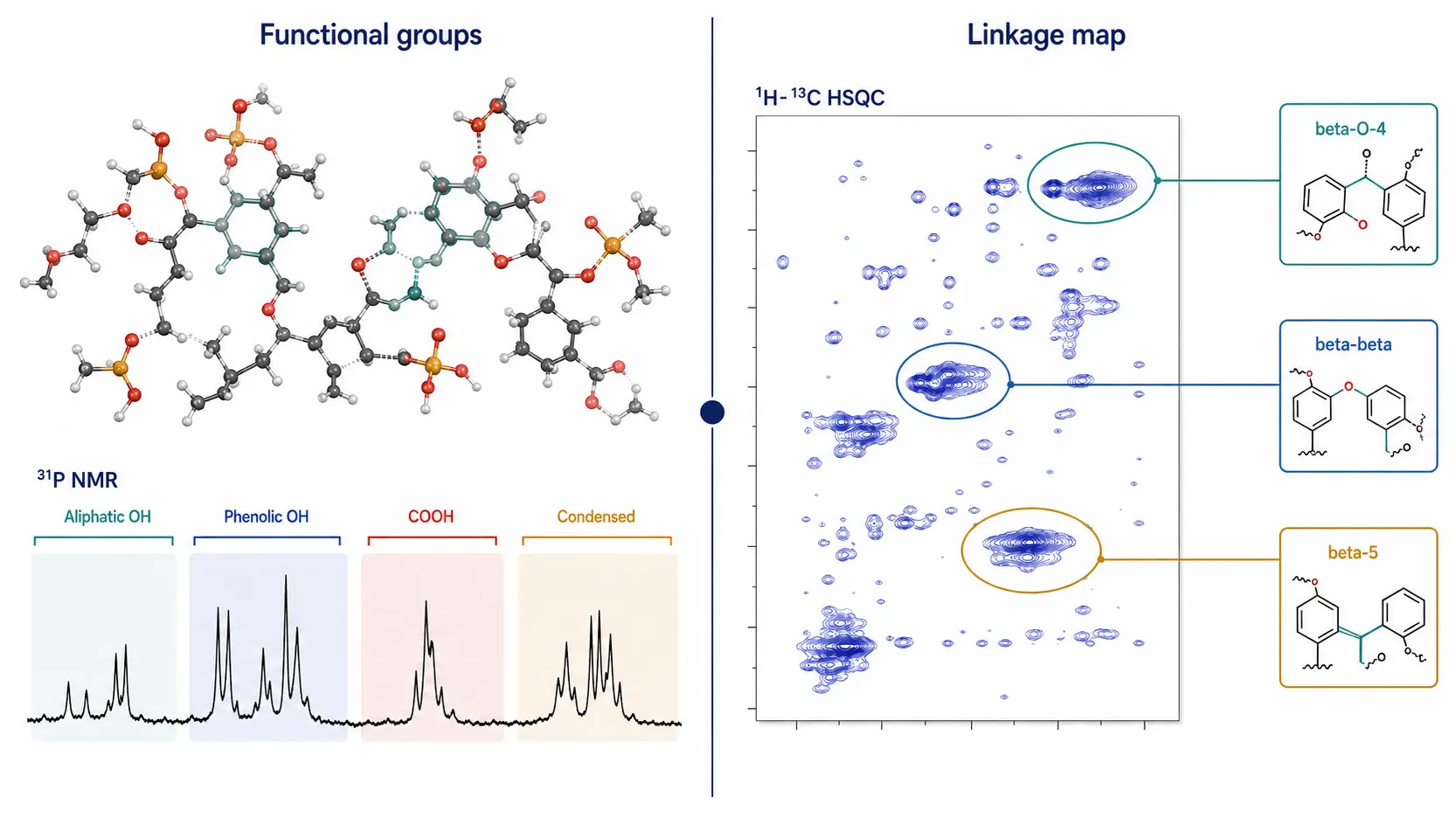 Figure 4: Complementary NMR Readouts for Lignin Functional Groups and Linkages
Use FTIR, Thermal Analysis, and Rheology as Processability Tests
FTIR is fast and useful for monitoring broad chemical changes, including hydroxyl-associated bands, carbonyl development, aromatic features, and relative changes after modification. Its limitation is equally important: FTIR is rarely sufficient by itself to quantify the group population that will determine a formulation or reaction decision. Use FT IR based analysis as a rapid identity and trend tool, then escalate to a quantitative method when the decision depends on a specific functional group or a structural linkage.
TGA identifies moisture loss, onset behavior under a stated atmosphere, mass-loss regions, and final residue. DSC may reveal a glass-transition region, but lignin transitions can be broad, history dependent, and obscured by water, residual solvent, or ongoing chemistry. The relevant question is not whether a sample has a "good" glass transition. It is whether its thermal response leaves an adequate operating interval between softening or flow and damaging reaction, degradation, or crosslinking for the intended process. A thermal stability analysis is therefore most useful when the atmosphere, heating program, sample conditioning, and decision threshold are stated before testing.
For processes involving heating and shaping, pair thermal data with dynamic rheology or a defined melt-flow experiment. A fraction can show a plausible DSC transition yet remain unsuitable for consistent processing because viscosity drifts, non-melting particles remain, or thermal history triggers rapid crosslinking. DSC based analysis and DTA based analysis are complementary observations, not substitutes for a direct processability assessment.
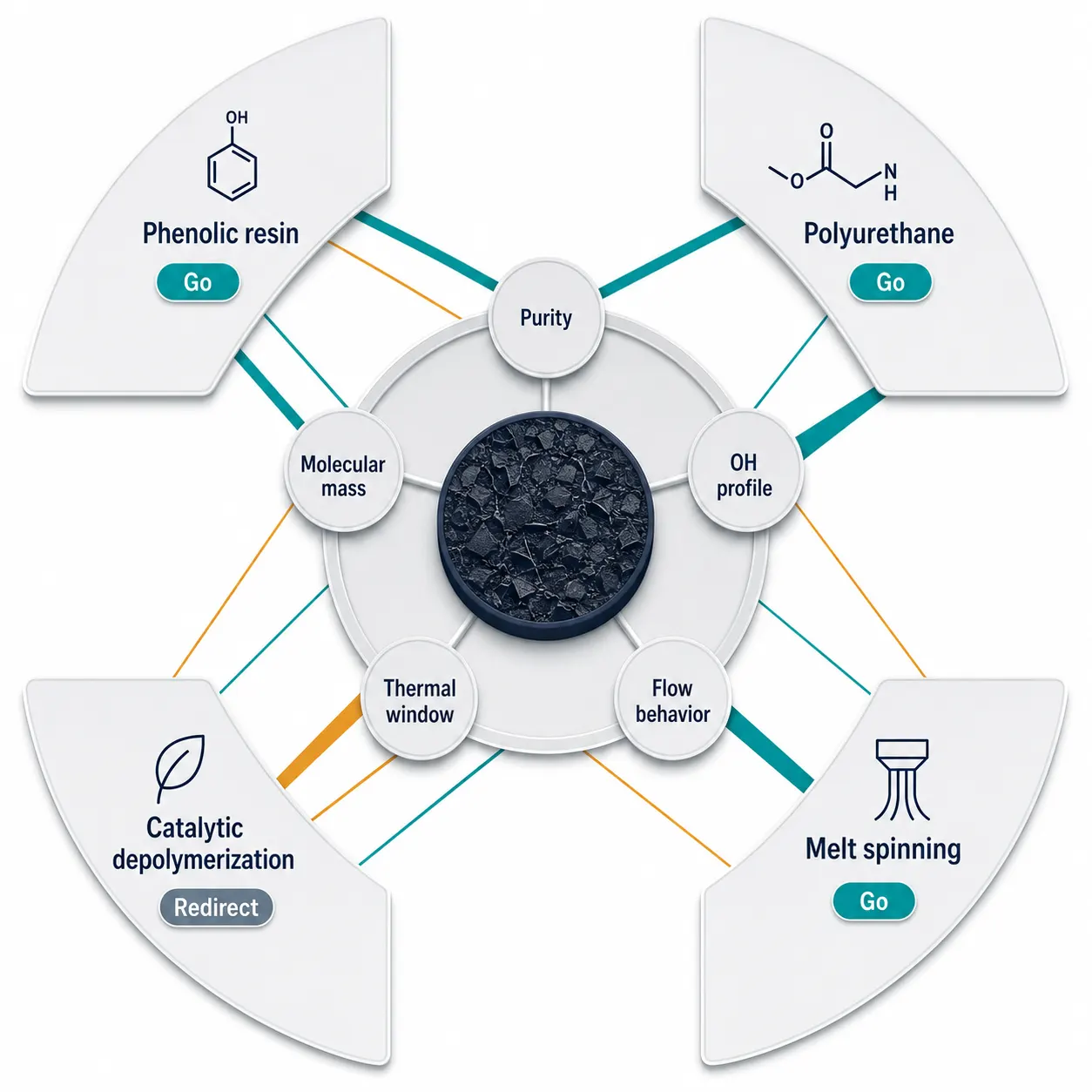 Figure 5: Thermal Window and Melt-Flow Assessment for Lignin Processability
Translate Test Results into Route-Specific Fitness Decisions
A defensible application map uses a small number of linked tests, not every available instrument. The table below shows how the same lignin attribute can matter differently across routes.
| Target route | Primary decision variables | Evidence package | Typical hold reason |
|---|---|---|---|
| Phenolic resins and adhesives | Phenolic functionality, ash, molecular distribution, batch-to-batch consistency | 31P NMR, SEC/GPC, ash, FTIR trend check | Reactive-group pattern or inorganic carryover does not support a reproducible formulation screen |
| Polyurethane materials | Accessible hydroxyl groups, acid groups, solubility, low-mass fraction | 31P NMR, SEC/GPC, moisture and compositional checks | Functionality and sample behavior are incompatible with the intended reaction or dispersion route |
| Melt-spun precursor studies | Purity, residual carbohydrates, ash, distribution, thermal window, melt stability | Composition, SEC-MALS, TGA/DSC, rheology or controlled flow test | No stable flow interval or excessive insoluble/non-melting material |
| Catalytic depolymerization | Linkage landscape, condensation, sulfur/inorganics, solubility | HSQC, elemental/ash profile, SEC/GPC, controlled solubility test | Structural or contaminant profile is mismatched to the catalyst and conversion question |
These are decision frameworks, not universal specifications. A project team should convert each "hold reason" into a predefined next action: additional washing, fractionation, a solvent-change study, a different reaction route, or an explicit decision not to advance the lot. This is more useful than treating every atypical result as an analytical failure.
Define a release band, not a single pass/fail number
For early process development, the most useful specification is often a release band with an escalation rule. Set a target range for the few attributes that directly affect the route, then identify conditions that require review rather than automatic rejection. A lignin fraction with slightly wider dispersity, for example, may still be suitable for a solution-phase resin screen if ash, reactive functionality, and solubility are within the agreed window. The same lot may be unsuitable for a melt-processing study without additional fractionation. This distinction keeps the team from importing an inflexible material specification before the application has generated enough evidence to justify one.
Each band should be tied to a defined analytical basis: sample conditioning, extraction or derivatization protocol, solvent system, detector configuration, and calculation rule. A limit is not transferable if those conditions change. When a recovery modification is being compared with a historical process, use a qualified reference lot or an internal control fraction in the same analytical run. That provides a practical bridge between method variation and real material variation, and makes trend charts more informative than an isolated certificate of analysis.
Use small downstream screens to close the analytical loop
Analytical evidence should inform process screening, and the screening result should refine the analytical package. After a first-pass quality profile, run the smallest controlled experiment that tests the critical route assumption: a defined resin substitution trial, a solvent-dissolution test at processing concentration, a catalyst compatibility screen, or a limited thermal-flow experiment. Link the outcome back to the measured attributes. If the screen fails, the next question is not simply whether the lignin was "out of specification"; it is whether a contaminant, a molecular fraction, a functional-group balance, or processing history is the plausible cause. This loop gradually converts broad characterization into project-specific acceptance criteria.
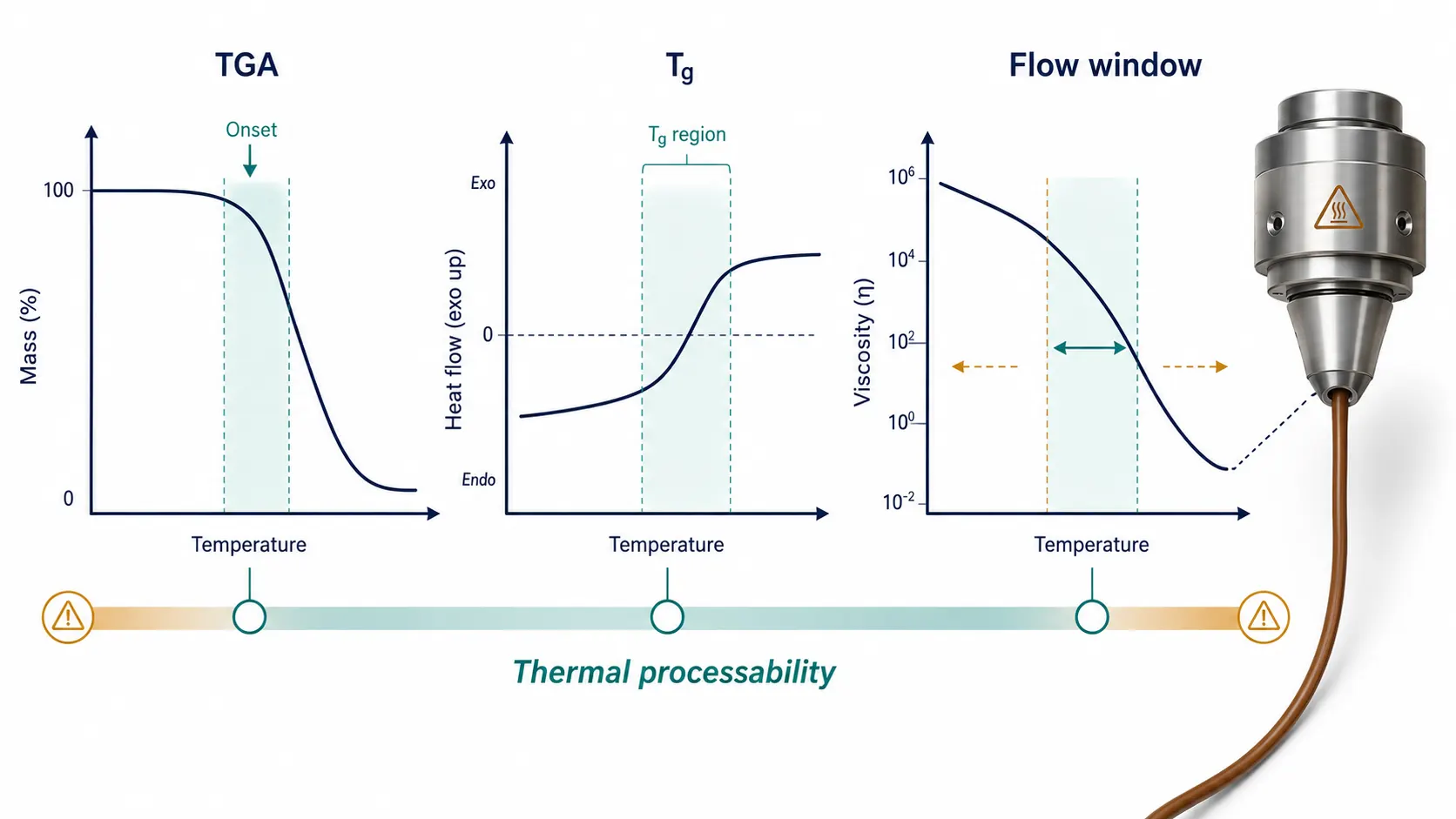 Figure 6: Process-Fitness Map: Matching Lignin Evidence to Valorization Routes
Use Orthogonal Tests When Results Disagree
Disagreement is often the most valuable result. A lignin lot may show acceptable total lignin content but poor dissolution; a favorable SEC profile but weak thermal flow; or a promising hydroxyl-group profile alongside high ash. Do not average conflicting evidence into an optimistic conclusion. Use the conflict to identify the next experiment. For example, a suspicious SEC shift should trigger a dissolution and aggregation review before it is interpreted as a recovery-driven molecular change. A broad thermal event should trigger conditioning and residual-volatiles checks before it is called a glass transition.
This discipline is shared across the wider natural-product and polymer-analysis matrix. The companion resource on HPTLC botanical identity testing without a single standard uses multiple positive and negative features instead of a one-marker claim. For related macromolecular challenges, planned guides on SEC-MALS for highly charged biopolymers and polysaccharide structural analysis extend the same principle: evidence is only useful when the sample state, method assumptions, and decision endpoint are explicit.
Recommended Four-Phase SOP for Lignin Quality Assessment
Recover and document
Define the recovery route, collect the material passport, retain a representative sample, and document fractionation, washing, drying, and storage. Reject untraceable sample history as a release basis, even if an initial spectrum looks familiar.
Profile composition and contaminants
Measure the lignin-related fractions, residual carbohydrates, ash, elemental balance, and any route-specific inorganic risk. Establish whether the lot is chemically comparable to previous material before interpreting structure-property data.
Characterize architecture and functionality
Run SEC/GPC under validated dissolution conditions. Use quantitative 31P NMR and HSQC when functionality and linkage structure matter to the route. Add FTIR as a fast consistency screen, not as a substitute for these higher-information methods.
Decide, trend, and escalate
Apply the route-specific fitness map. Record go, hold, refine, or redirect decisions with their evidence basis. Trend comparable lots over time, and use an orthogonal method when a key result conflicts with recovery history or another measurement. This creates a transferable knowledge base rather than a series of isolated test reports.
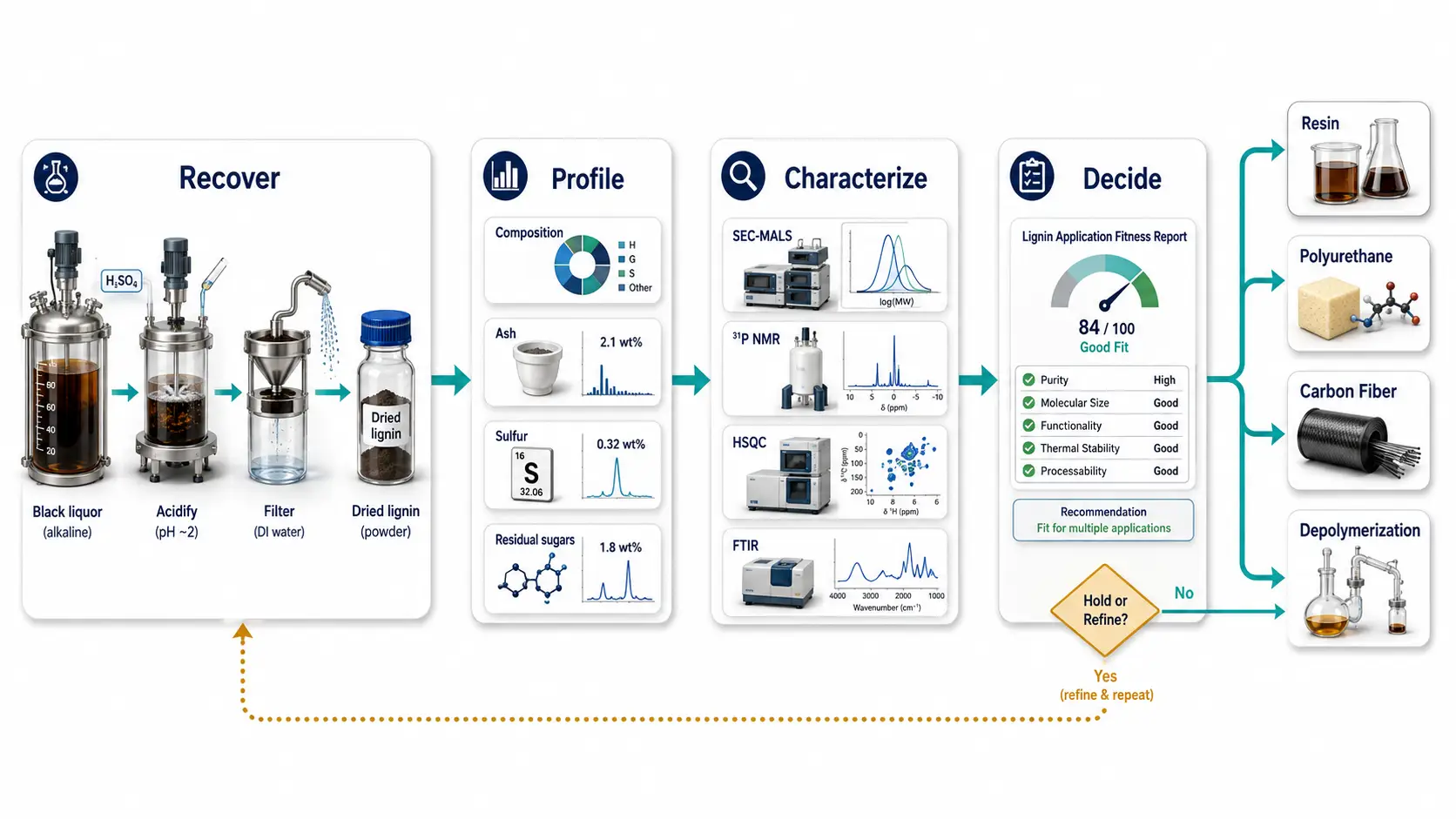 Figure 7: Four-Phase Lignin Quality Assessment SOP
Frequently Asked Questions
Is total lignin content enough to release a recovered fraction?
No. Total lignin-related content does not reveal residual sugars, ash, molecular distribution, functional-group pattern, or thermal behavior. The minimum evidence package depends on the intended route.
Why can two lignin lots with similar Mw behave differently?
Average molecular mass does not capture aggregation, dispersity, functional groups, branching, condensed linkages, ash, or residual solvent. Review the full SEC trace and pair it with compositional and structural evidence.
Can 31P NMR predict resin or polyurethane performance by itself?
No. It provides functional-group information, which is valuable but must be interpreted alongside molecular distribution, impurities, solubility, and the formulation or reaction conditions.
When is aqueous GPC preferable?
It can be preferable when the fraction is more stably dissolved and interpretable in a controlled aqueous or alkaline system than after organic-solvent preparation. The method should be chosen by demonstrated dissolution and separation behavior.
Does a high glass-transition temperature prove that a lignin is suitable for melt spinning?
No. Melt spinning requires a usable and stable flow window, not a single thermal number. Evaluate thermal response together with viscosity behavior, particulate burden, and degradation tendency.
What should happen when a lot falls outside the expected profile?
First distinguish an analytical issue from a material difference. Then choose a defined action: re-check preparation, fractionate, wash, use an alternate route, or hold the lot from the target process.
References:
- Wang W, Chen X, Katahira R and Tucker M (2019). Characterization and Deconstruction of Oligosaccharides in Black Liquor From Deacetylation Process of Corn Stover. Frontiers in Energy Research, 7:54. doi: 10.3389/fenrg.2019.00054
- Singh S, Cheng G, Sathitsuksanoh N, Wu D, Varanasi P, George A, Balan V, Gao X, Kumar R, Dale BE, Wyman CE and Simmons BA (2015). Comparison of Different Biomass Pretreatment Techniques and Their Impact on Chemistry and Structure. Frontiers in Energy Research, 2:62. doi: 10.3389/fenrg.2014.00062
- Zieglowski M, Trosien S, Rohrer J, Mehlhase S, Weber S, Bartels K, Siegert G, Trellenkamp T, Albe K and Biesalski M (2019). Reactivity of Isocyanate-Functionalized Lignins: A Key Factor for the Preparation of Lignin-Based Polyurethanes. Frontiers in Chemistry, 7:562. doi: 10.3389/fchem.2019.00562
- Hong S, Shen X-J, Sun Z and Yuan T-Q (2020). Insights into Structural Transformations of Lignin Toward High Reactivity During Choline Chloride/Formic Acid Deep Eutectic Solvents Pretreatment. Frontiers in Energy Research, 8:573198. doi: 10.3389/fenrg.2020.573198
- Farzin S, Johnson TJ, Chatterjee S, Zamani E and Dishari SK (2020). Ionomers From Kraft Lignin for Renewable Energy Applications. Frontiers in Chemistry, 8:690. doi: 10.3389/fchem.2020.00690
- Jassal V, Dou C, Sun N, Singh S, Simmons BA and Choudhary H (2022). Finding Values in Lignin: A Promising Yet Under-Utilized Component of the Lignocellulosic Biomass. Frontiers in Chemical Engineering, 4:1059305. doi: 10.3389/fceng.2022.1059305