Salivary Metabolomic Reprogramming Induced by the Tobacco Carcinogen Dibenzo[def,p]chrysene
Sun YW, Chen KM, Aliaga C, El-Bayoumy K. (2024) Metabolic reprogramming in saliva of mice treated with the environmental and tobacco carcinogen dibenzo[def,p]chrysene. Scientific Reports, 14: 29517.
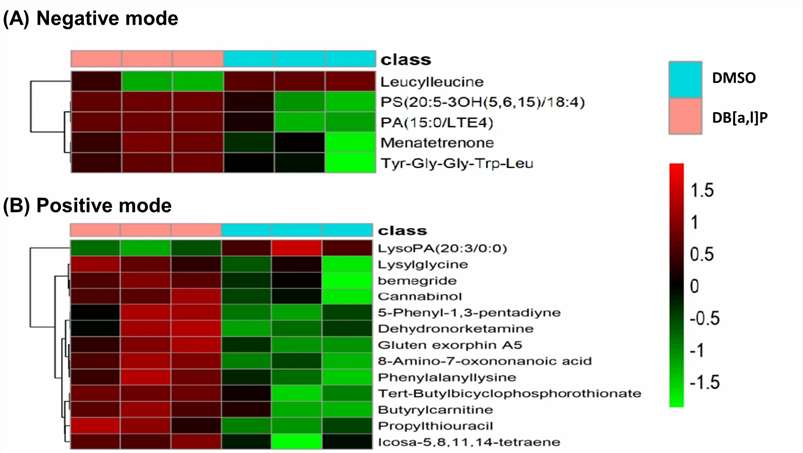
Study design: Dibenzo[def,p]chrysene (DB[a,l]P) is a polycyclic aromatic hydrocarbon (PAH) found in tobacco smoke and environmental combustion products. Its carcinogenicity depends on CYP450-mediated metabolic activation — oxidation of the bay-region diol to a diol-epoxide that forms covalent DNA adducts, a process directly analogous to the SET oxidation pathways simulated by EC-MS. The research team at Penn State College of Medicine applied DB[a,l]P topically to the oral cavity of mice (25 umol, 3x/week for 6 weeks) to model tobacco-related oral squamous cell carcinoma (OSCC). Saliva was collected 24 hours after the last dose, and Creative Proteomics performed untargeted metabolomic profiling by UPLC-ESI-MS in both positive and negative ionization modes to characterize the metabolic consequences of carcinogen exposure in this readily accessible biofluid.
Key results: Untargeted metabolomics identified phosphatidic acid as significantly enriched in the saliva of DB[a,l]P-treated mice relative to DMSO controls. Phosphatidic acid is a known activator of mTORC, a central regulator of cell proliferation and survival — its elevation in saliva directly links carcinogen exposure to a pro-proliferative signaling pathway relevant to OSCC initiation. Pathway enrichment analysis further revealed alterations in phospholipid biosynthesis and glycerolipid metabolism, indicating that DB[a,l]P reprograms lipid metabolism in the oral epithelium. These metabolic signatures, detected non-invasively in saliva, provide candidate biomarkers for early OSCC detection and suggest lipid metabolism as a targetable vulnerability for cancer interception.
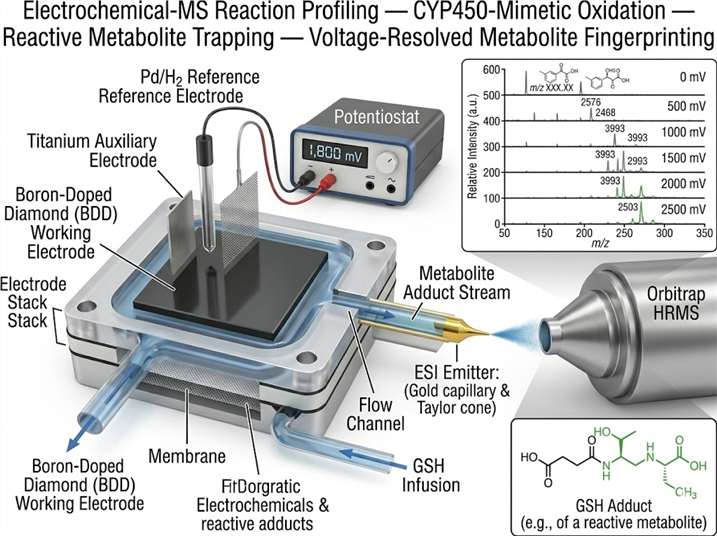
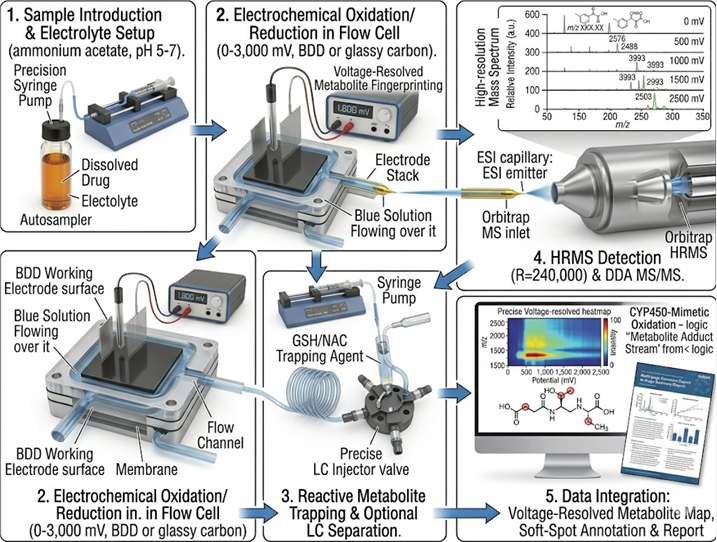
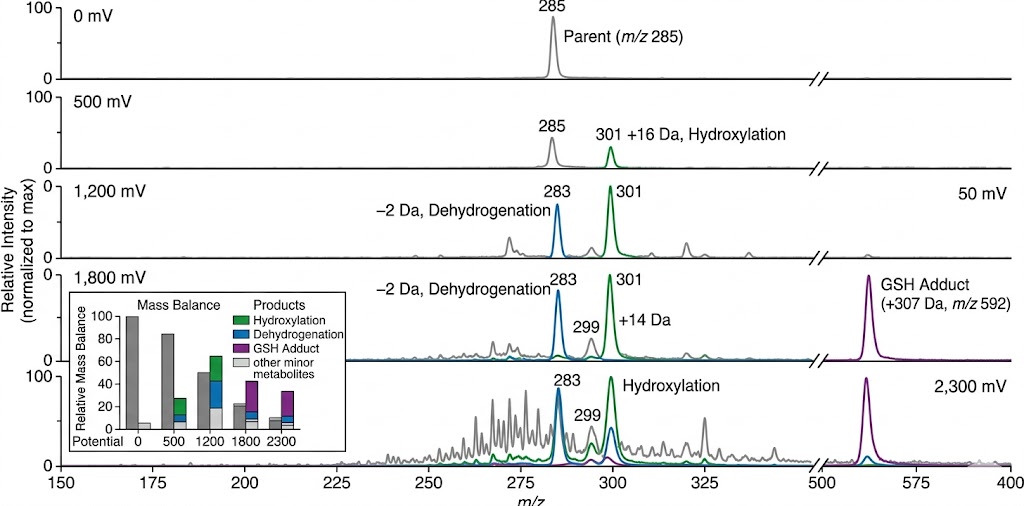
Relevance to our EC-MS services: This study illustrates the central importance of understanding how xenobiotics are metabolically activated and how that activation remodels the cellular metabolome — the two questions our EC-MS platform addresses in an integrated workflow. The CYP450-mediated bay-region diol-epoxide formation that activates DB[a,l]P is precisely the type of SET oxidation chemistry that EC-MS with a BDD electrode simulates. Using Mode 1 (Oxidative Drug Metabolism Simulation), we would generate DB[a,l]P oxide metabolites electrochemically, identify their oxidation onset potentials by voltage-resolved profiling, and map reactive sites. Mode 2 (Reactive Metabolite Generation & Trapping) would then characterize the electrophilic diol-epoxide intermediate as its GSH adduct — providing, in a single instrument run, the metabolic activation profile that predicts carcinogen-DNA adduct formation risk. For drug discovery teams, this same EC-MS workflow identifies whether a lead compound carries a latent electrophilic liability before it manifests as an in vivo toxicity finding.