Off-Target Profiling Service for Drug Safety and Selectivity Assessment

Six integrated approaches for comprehensive off-target identification — Kinobeads, ABPP, TPP, PAL-MS, reactive residue profiling, and ADME integration.

Your team has a lead compound with promising on-target activity. But as it advances toward preclinical development, the critical question emerges: what else does it bind? Unrecognized off-target interactions are a leading cause of clinical candidate attrition, responsible for adverse effects that can halt programs late in development.

The MassTarget platform addresses this challenge through six complementary off-target profiling approaches designed to provide comprehensive off-target landscapes for drug candidates at any stage of development.

Key Advantages:

  • Six complementary profiling approaches for comprehensive off-target coverage
  • Kinobeads panels for kinome-wide selectivity profiling
  • TPP detects off-targets without compound modification
  • Residue-level mapping for covalent inhibitors
  • Integrated ADME assessment for metabolite-mediated off-targets
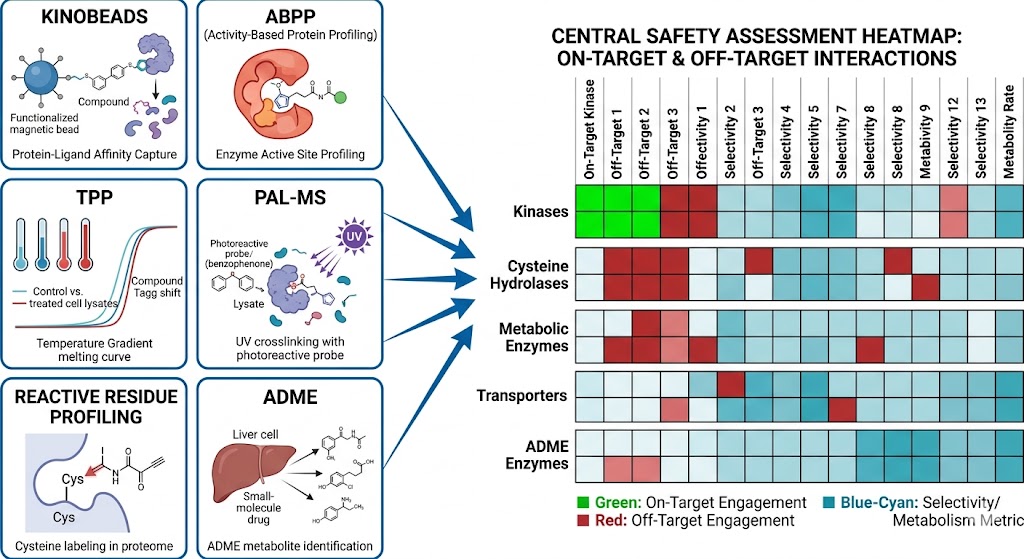
Off-target profiling platform showing six chemical proteomics approaches converging on comprehensive off-target landscape map for drug safety assessment.
Overview Service Lines Workflow Applications Demo Data Sample Bioinformatics Why Choose Case Study FAQ

The Critical Need for Comprehensive Off-Target Profiling

Off-target profiling is fundamentally different from target identification. When the goal is target ID, one is looking for the single most confident hit. When the goal is off-target profiling, one needs comprehensive coverage — every protein that a compound engages, even with low affinity, could represent a safety liability. This requires methods that are unbiased, proteome-wide, and capable of detecting weak interactions that might still produce functional consequences in vivo.

The MassTarget platform addresses this challenge through an integrated suite of six complementary off-target profiling approaches — Kinobeads/Affinity Pull-Down MS, Activity-Based Protein Profiling (ABPP), Thermal Proteome Profiling (TPP), Photoaffinity Labelling (PAL-MS), Reactive Residue Profiling, and ADME/DMPK Integration — that together provide comprehensive off-target landscapes for drug candidates at any stage of development. For complementary label-free cellular target engagement profiling, see our thermal proteome profiling (TPP) service.

Six Service Lines for Comprehensive Off-Target Discovery

Each approach detects different types of off-target engagement. Comprehensive profiling uses combinations matched to the compound's properties and mechanism.

Kinobeads/Affinity Pull-Down MS

The most direct approach. The compound is immobilized on agarose or magnetic beads and incubated with cell or tissue lysate. Binding proteins are retained, eluted, and identified by LC-MS/MS. Competition with excess free compound distinguishes specific off-targets. Particularly powerful for kinase inhibitors, where broad-spectrum kinobeads profile the entire kinome simultaneously.

Activity-Based Protein Profiling (ABPP)

Competitive ABPP reveals which enzymes the compound engages across the proteome. The compound competes with broad-spectrum activity-based probes that selectively label enzyme active sites. Ideal for profiling covalent inhibitors, natural products with electrophilic warheads, and compounds targeting enzyme families. Our activity-based protein profiling (ABPP) service covers global, family-specific, and competitive formats.

Thermal Proteome Profiling (TPP)

Requires no compound modification and provides unbiased proteome-wide coverage. The compound is added to live cells or lysates, and the thermal stability of thousands of proteins is measured simultaneously. Off-targets show shifted melting curves. Detects both high-affinity and low-affinity interactions, including those with proteins that may not survive detergent-based purification.

Photoaffinity Labelling (PAL-MS)

For weak or transient off-target interactions that cannot survive pull-down conditions. A photocrosslinkable probe captures nearby proteins upon UV irradiation in live cells or lysates. Crosslinked proteins are conjugated via click chemistry, enriched, and identified by MS. Our photoaffinity labelling (PAL-MS) service covers probe design and optimization.

Reactive Residue Profiling

For covalent inhibitors and electrophilic compounds, identifies every amino acid residue modified across the proteome. Provides a complete off-target modification map essential for assessing selectivity risk and guiding medicinal chemistry optimization.

ADME/DMPK Integration

Metabolic transformation can produce reactive metabolites that engage off-targets through different mechanisms. Our ADME/DMPK research platforms and metabolite identification (MetID) services characterize metabolic fate and identify reactive metabolite formation.

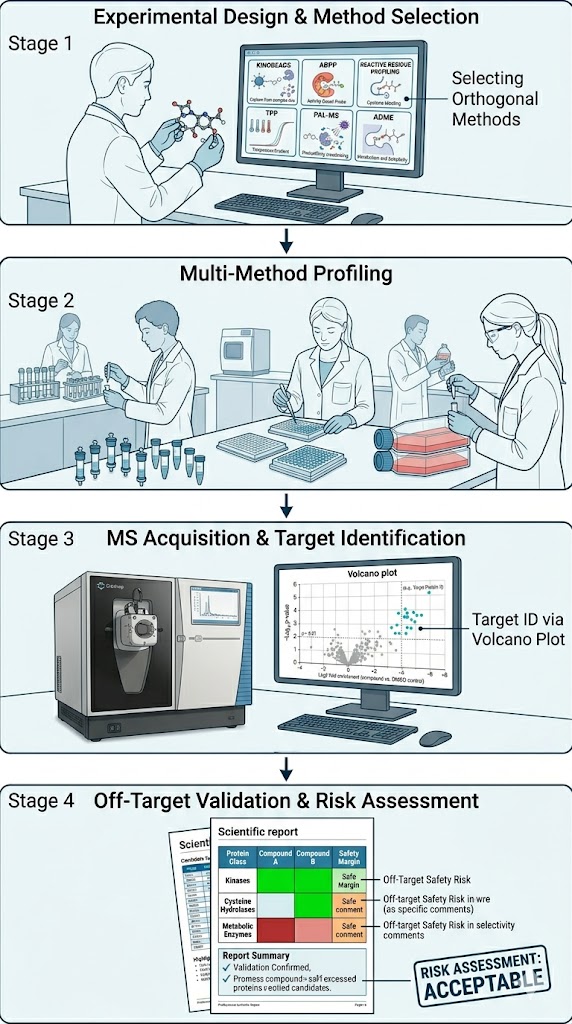
Our Workflow — From Compound to Comprehensive Off-Target Map

A four-stage process designed to deliver a complete off-target landscape with risk-prioritized results.

1

Compound Assessment and Method Selection

We evaluate your compound's properties — solubility, mechanism of action, target class, and known off-target concerns — to design the optimal profiling strategy. Kinase inhibitors route to kinobeads profiling. Covalent inhibitors route to ABPP and reactive residue profiling. Compounds that cannot be derivatized proceed to TPP.

2

Multi-Method Profiling

Samples are processed through the selected workflows in parallel. All approaches include competition controls, vehicle-only controls, and statistical comparison to distinguish specific off-targets from background binding.

3

MS Acquisition and Target Identification

Enriched or stabilized proteins are analyzed by high-resolution LC-MS/MS. Label-free quantification or TMT multiplexing enables quantitative comparison. Off-targets are ranked by enrichment ratio, statistical significance, and reproducibility across replicates.

4

Off-Target Validation and Risk Assessment

Candidate off-targets are filtered by functional relevance, tissue expression, and known safety associations. Orthogonal validation by SPR or BLI confirms binding. The final report includes a comprehensive off-target landscape, selectivity metrics, and recommended follow-up strategies.

Four-stage workflow for off-target profiling: compound assessment, multi-method profiling, MS acquisition and target identification, and off-target validation and risk assessment.

Key Applications

Off-target profiling is applied across multiple stages of drug discovery and development.

Lead Optimization Selectivity Screening

Structural variants are compared for their off-target profiles. TPP or kinobeads profiling identifies which modifications reduce off-target engagement while maintaining on-target potency, directly guiding medicinal chemistry decisions toward the most selective candidate.

Output: Comparative off-target heatmap across compound series; selectivity scores for each analogue.

Preclinical Safety Assessment

Before preclinical advancement, comprehensive off-target profiling provides the safety data needed for candidate selection. Multi-method profiling combining TPP, ABPP, and kinobeads covers the broadest possible off-target space for risk assessment.

Output: Comprehensive off-target landscape; risk-prioritized off-target list with safety annotations.

Kinase Inhibitor Selectivity Profiling

Kinase inhibitors are notoriously promiscuous due to the conserved ATP-binding pocket. Kinobeads-based chemical proteomics provides kinome-wide selectivity profiles, identifying both expected off-targets (related kinases) and unexpected off-targets (unrelated protein classes).

Output: Kinome-wide selectivity tree; S(10) and S(35) scores; rank-ordered off-target list.

Covalent Inhibitor Off-Target Mapping

For drugs with reactive warheads, knowing every protein modified by the compound is essential. Reactive residue profiling with isotopically labeled probes provides quantitative, proteome-wide maps of residue-specific off-target modification.

Output: Proteome-wide residue modification map; modification stoichiometry per site; off-target prioritization.

Clinical Candidate Rescue

When a promising candidate shows unexplained toxicity, retrospective off-target profiling identifies the responsible off-target interaction, enabling mechanism-based risk assessment and, where possible, structural modification to eliminate the liability.

Output: Toxicity-associated off-target identification; pathway context for observed adverse effects.

Metabolite Safety Assessment

Reactive metabolites can engage off-targets through mechanisms distinct from the parent compound. MetID and ADME profiling identify metabolic soft spots and reactive metabolite formation, providing a complete picture of both parent and metabolite off-target liability.

Output: Metabolite identification and reactive metabolite assessment; dual parent/metabolite off-target profile.

Representative Results

Kinobeads Profiling of a Kinase Inhibitor

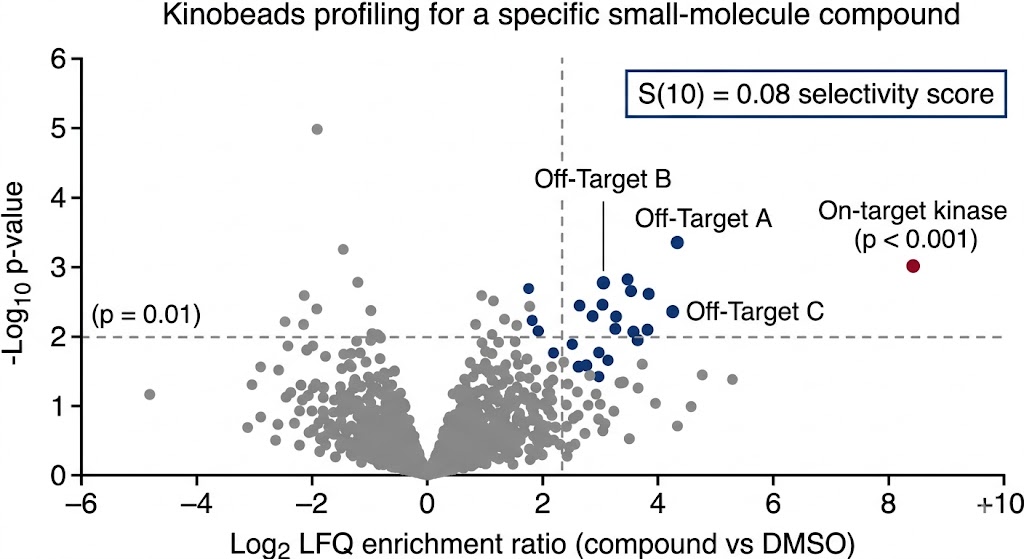
A clinical-stage kinase inhibitor was profiled by kinobeads-based chemical proteomics in HEK293T cell lysate. On-target kinase confirmed (rank 1, LFQ ratio > 50). Fourteen off-target kinases identified with significant enrichment (LFQ ratio > 5, p < 0.01), including three kinases in unrelated signaling pathways and one lipid kinase. Selectivity score S(10) = 0.08.

Competitive ABPP for Covalent Inhibitor Selectivity

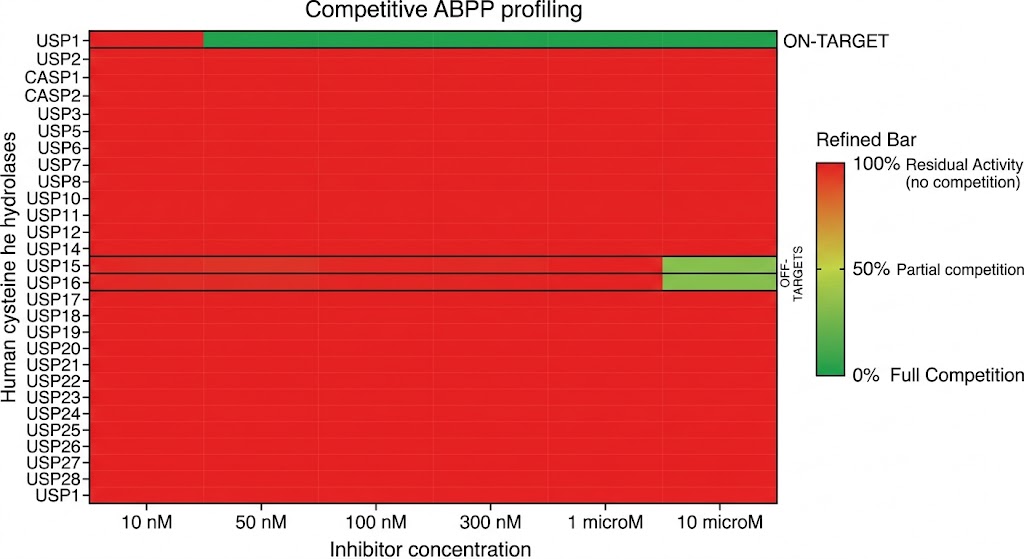
A targeted covalent inhibitor was profiled by competitive ABPP against 30 cysteine hydrolase probes. The compound showed >500-fold selectivity for its on-target over 28 of 30 detectable hydrolases. Two off-targets showed partial competition at 10 microM, flagged for medicinal chemistry follow-up.

TPP Off-Target Discovery Without Modification

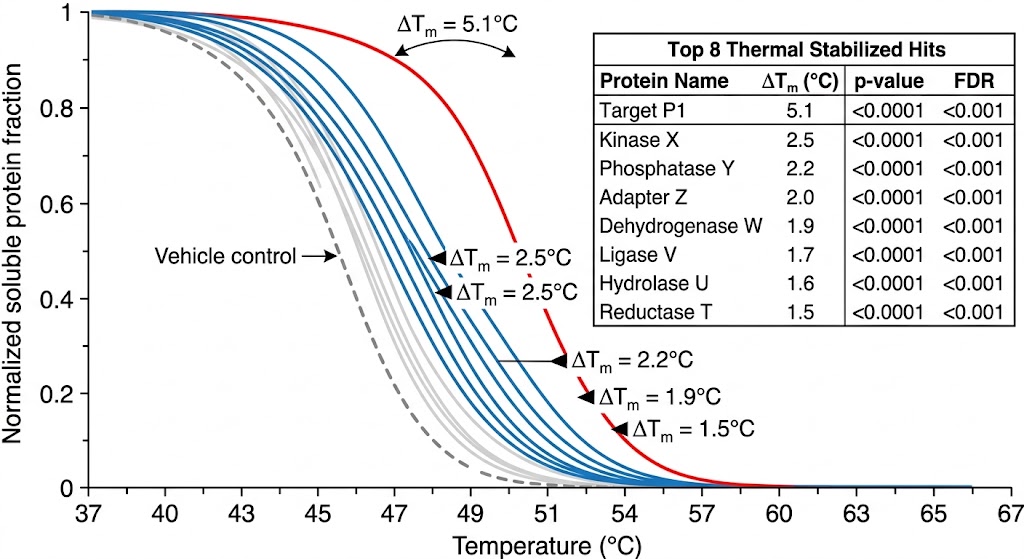
A preclinical candidate was profiled by TPP in HepG2 cells. The primary target showed deltaTm = 5.1 degrees C. Seven off-target proteins with deltaTm > 1.5 degrees C were identified, including an ion channel subunit and a mitochondrial transporter not previously known to bind this compound class.

Demo Results — Off-Target Profiling Data

Kinobeads profiling volcano plot showing on-target kinase and 14 off-target kinases significantly enriched by a clinical-stage kinase inhibitor, with selectivity scores annotated.

Kinobeads profiling: on-target and off-target kinase identification

Volcano plot from kinobeads-based chemical proteomics. On-target kinase shown in red (LFQ ratio > 50, p < 0.001). Fourteen off-target kinases in blue (LFQ ratio > 5, p < 0.01). Three off-targets in unrelated signaling pathways labeled. Selectivity score S(10) = 0.08, indicating 8% of the detectable kinome is engaged at 10 microM compound concentration.

Competitive ABPP selectivity heatmap for a covalent inhibitor tested against 30 cysteine hydrolases, showing >500-fold selectivity with two off-targets flagged.

Competitive ABPP: covalent inhibitor off-target selectivity

Selectivity heatmap from competitive ABPP profiling. Thirty detectable cysteine hydrolases shown as rows across six inhibitor concentrations (columns). Color scale: red (100% residual activity, no competition) to green (0%, full competition). On-target shows complete competition at 50 nM. Two off-targets show partial competition at 10 microM. Twenty-eight hydrolases show no competition at any concentration tested.

TPP melt curve shifts for a preclinical candidate showing primary target at deltaTm 5.1 degrees C and seven off-targets with shifts above 1.5 degrees C.

TPP label-free off-target discovery in live cells

Thermal stability shift plot from TPP analysis of an unmodified compound in HepG2 cells. Primary target shows deltaTm = 5.1 degrees C (red curve). Seven off-target proteins show deltaTm > 1.5 degrees C (blue curves), including an ion channel subunit and a mitochondrial transporter. Six additional hits at lower significance in gray. No compound modification required for this analysis.

Sample Requirements

Sample TypeMinimum per ConditionRecommendedAmountFormat
Compound (kinobeads)1 mg5-10 mg10 mM stockDMSO or compatible
Compound (TPP)0.5 mg2 mg10 mM stockDMSO or compatible
Compound (ABPP competitive)0.5 mg2 mg10 mM stockDMSO
Cell lysate or live cells2 conditions3-5 conditions2 x 107 cellsSnap-frozen pellet
Reference compound (control)0.1 mg0.5 mg10 mM stockDMSO

Note: For kinobeads/affinity pull-down, the compound must have a suitable functional group for immobilization. For TPP, no compound modification is needed. For covalent inhibitors, the compound can be used directly in ABPP without derivatization.

Bioinformatics and Data Analysis

Our bioinformatics pipeline is designed specifically for off-target profiling data, where the key challenge is distinguishing true off-target interactions from both on-target signal and nonspecific background.

Data Processing and Statistical Analysis. Raw MS data is processed using MaxQuant or Proteome Discoverer. Proteins are quantified by label-free LFQ intensities or TMT reporter ions. Statistical significance is assessed with FDR-controlled testing. For kinobeads, competition with excess free compound provides the primary specificity filter.

Off-Target Prioritization. Candidate off-targets are ranked by a composite score incorporating enrichment ratio, statistical significance, and functional relevance. Known safety-associated proteins are flagged based on integrated safety databases. Off-targets are categorized by risk level based on affinity, functional impact, and tissue expression.

Selectivity Metrics. Kinome-wide selectivity scores (S(10), S(35)) are calculated for kinase inhibitor profiling. For covalent inhibitors, residue-level modification stoichiometry is reported across all detectable targets.

Why Choose Our Service

CriterionAcademic CollaborationStandard CROOur Integrated Service
Method coverage1-2 methods1 method6 methods (kinobeads + ABPP + TPP + PAL + residue + ADME)
Kinobeads/kinome profilingCustom preparationRarely availableValidated panels for human and mouse
TPP capabilityExpensive to set upRarely availableFully validated pipeline
ABPP probe panelsLimited accessSingle probe typeMultiple enzyme-class panels
Reactive residue profilingSpecialized expertiseNot availableDedicated Cys/Lys pipeline
ADME integrationSeparate engagementNot includedIntegrated metabolic assessment

What sets us apart: Six complementary off-target profiling approaches within a single engagement. Kinobeads panels and TPP pipeline rarely available from standard CROs. ABPP with multiple enzyme-family panels. Residue-level profiling for covalent inhibitors. Integrated ADME/DMPK assessment. Automated safety database integration for risk-prioritized reporting.

Case Study: Kinobeads-Based Chemical Proteomics Reveals Off-Target Kinase and Enables Selective Inhibitor Development

Yoshida A, Ohtsuka S, Matsumoto F, et al. "Development of a novel AAK1 inhibitor via Kinobeads-based screening." Scientific Reports, 2024, 14, 6723. DOI: 10.1038/s41598-024-57051-9 (CC BY 4.0).

Background

TIM-063 was originally developed as a CaMKK (Ca2+/calmodulin-dependent protein kinase kinase) inhibitor. However, its broader off-target profile remained uncharacterized, limiting its utility as a chemical probe and raising questions about whether its cellular effects were mediated solely through CaMKK inhibition. The study aimed to comprehensively identify off-targets of TIM-063 using Kinobeads-based chemical proteomics.

Methods

The research team immobilized TIM-063 on agarose beads to create TIM-063-Kinobeads, then incubated the beads with mouse brain tissue lysate. Bound proteins were eluted, digested, and identified by LC-MS/MS. Competition experiments with excess free compound distinguished specific binders from nonspecific background.

  • TIM-063 immobilized on NHS-activated Sepharose beads via a PEG linker.
  • Mouse brain tissue lysate incubated with TIM-063-Kinobeads; bound proteins eluted with SDS and identified by LC-MS/MS.
  • Competition with excess free TIM-063 (100 microM) to distinguish specific from nonspecific binding.
  • Biochemical validation of identified off-targets by in vitro kinase assays.

Results

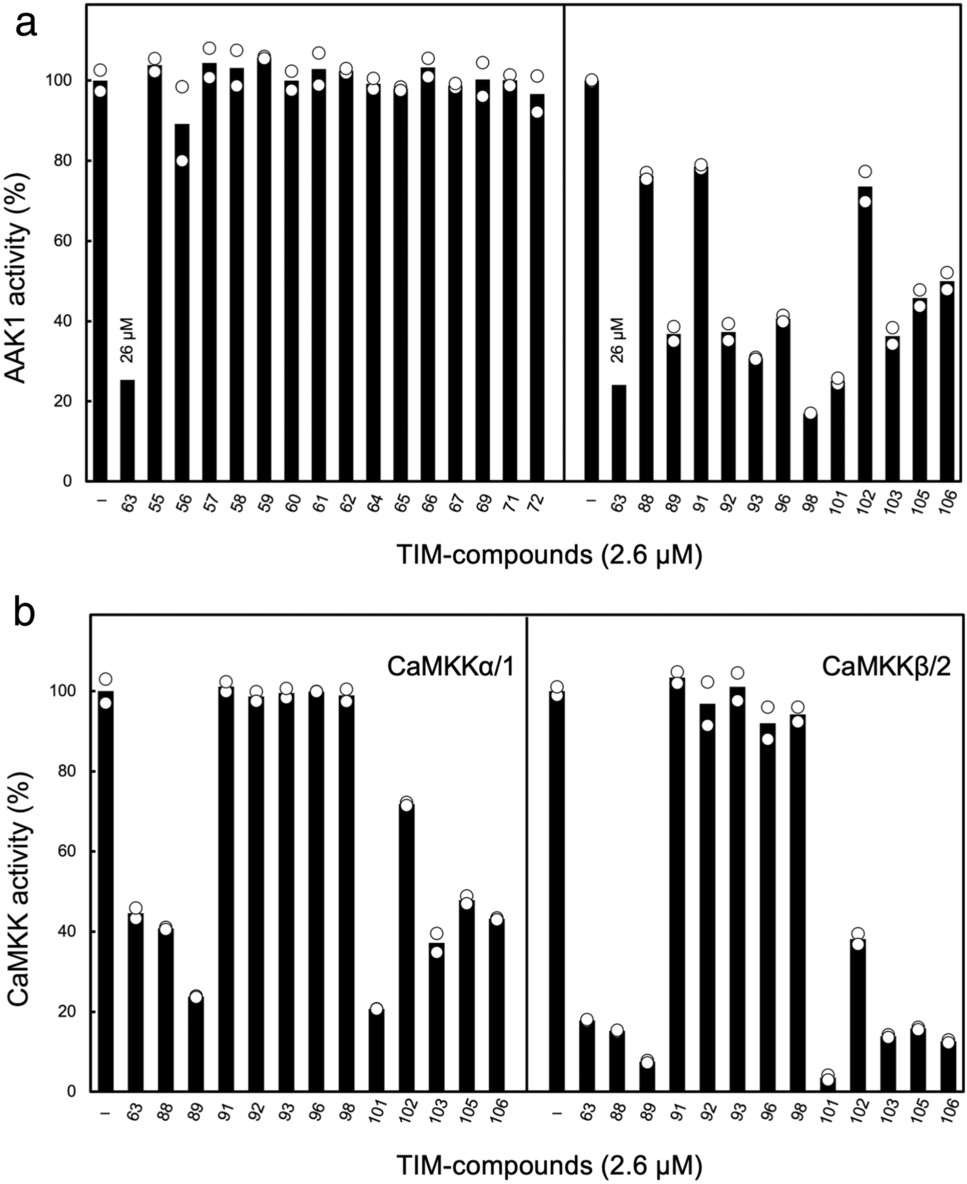
Kinobeads profiling successfully identified the intended on-targets (CaMKK-alpha, CaMKK-beta) and unexpectedly revealed AAK1 (AP2-associated protein kinase 1) as a major off-target (Fig. 2). Biochemical validation confirmed TIM-063 inhibits AAK1 with IC50 = 8.51 microM. Using TIM-063 as a scaffold, the team synthesized and screened derivatives. The optimized compound TIM-098a showed 35-fold improved AAK1 potency (IC50 = 0.24 microM) with no detectable CaMKK activity — a complete selectivity switch. Cellular assays confirmed TIM-098a inhibited AAK1-dependent endocytosis (IC50 = 0.87 microM).

Conclusions

This study exemplifies how chemical proteomic off-target profiling can transform a tool compound with unknown selectivity into a selective chemical probe. The off-target interaction identified by Kinobeads became the starting point for developing a novel, selective AAK1 inhibitor — demonstrating that off-target identification serves not only as a safety assessment tool but also as a discovery engine for new therapeutic leads.

Fig. 2 from Yoshida et al. 2024: Kinobeads-based chemical proteomics identifies on-target CaMKK and off-target AAK1 of TIM-063, leading to development of selective AAK1 inhibitor TIM-098a.

Fig. 2 from Yoshida A, et al. 2024 (Scientific Reports). Kinobeads-based target identification showing on-target CaMKK and off-target AAK1 identification. CC BY 4.0.

FAQ

Frequently Asked Questions

Q: What is the difference between off-target profiling and target identification?

Target identification aims to find the primary protein target of a compound. Off-target profiling aims to find every protein the compound binds, including low-affinity interactions that may cause safety liabilities. Off-target profiling requires broader coverage, lower affinity thresholds, and comprehensive statistical filtering.

Q: How many off-targets are typically detected per compound?

The number varies widely. Highly selective kinase inhibitors may show 5-15 off-target kinases; promiscuous compounds may show 50-100. Covalent inhibitors typically modify 10-50 proteins. Our reporting threshold is statistically defined per experiment with FDR control.

Q: Do I need to immobilize or modify my compound?

Not necessarily. TPP requires no compound modification. ABPP uses competition with pre-existing probes. Kinobeads profiling requires compound immobilization, which we assess for feasibility during initial compound evaluation.

Q: Can off-target profiling detect interactions with non-protein targets?

The methods described here detect protein targets. For off-target effects on DNA, RNA, or lipids, orthogonal approaches are required. We can coordinate these with partner laboratories or recommend appropriate platforms.

Q: How long does a comprehensive off-target profiling project take?

A single-method project (TPP or kinobeads) requires 4-6 weeks. Multi-method profiling combining 2-3 approaches takes 8-12 weeks. Full six-method characterization with integrated ADME assessment typically requires 12-16 weeks for complete analysis.

References

  1. Yoshida A, Ohtsuka S, Matsumoto F, et al. "Development of a novel AAK1 inhibitor via Kinobeads-based screening." Scientific Reports, 2024, 14, 6723. DOI: 10.1038/s41598-024-57051-9
  2. Klaeger S, Heinzlmeir S, Wilhelm M, et al. "The target landscape of clinical kinase drugs." Science, 2017, 358(6367), eaan4368. DOI: 10.1126/science.aan4368
  3. Klaeger S, Heinzlmeir S, Wilhelm M, et al. "Chemical proteomics reveals the target landscape of 1,000 kinase inhibitors." Nature Chemical Biology, 2024, 20, 406-417. DOI: 10.1038/s41589-023-01459-3

Design your off-target profiling strategy with the MassTarget team

Tell us about your compound — its structure, target class, and development stage — and our scientists will recommend the optimal profiling approach and provide a detailed project proposal.

For Research Use Only (RUO). Not intended for diagnostic, therapeutic, or clinical decision-making purposes. Creative Proteomics services are designed to support preclinical research, drug discovery, and mechanism of action studies only.

Online Inquiry

Please submit a detailed description of your project. We will provide you with a customized project plan to meet your research requests. You can also send emails directly to for inquiries.

* Email
Phone
* Service & Products of Interest
Services Required and Project Description