Identify Metabolic Soft-Spots with Atom-Level Resolution to Guide Lead Optimization

Identify exactly where your drug candidate is metabolized.

Our metabolic soft-spot analysis service uses a validated single variable incubation time approach combined with LC-HRMS to pinpoint atom-level metabolic liabilities.

Why our soft-spot analysis delivers actionable chemistry guidance:

  • Atom-level resolution — Identifies the specific functional group or position undergoing biotransformation
  • Validated MSSID methodology — Based on the published single variable incubation time approach (Zhu et al., 2022)
  • LC-UV + HRMS dual detection — UV quantification corrects for MS ionization bias
  • Integrated with stability screening — Uses the same incubation samples
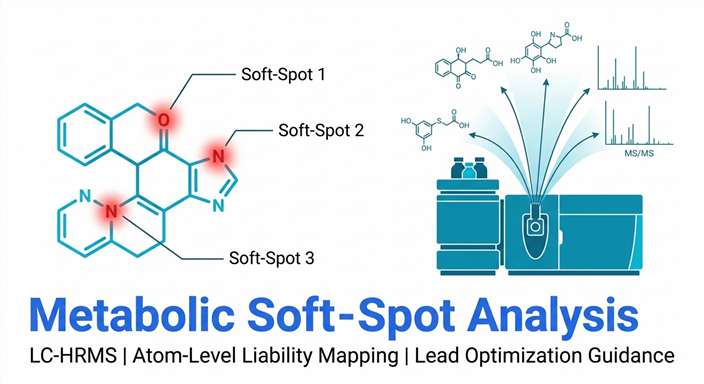
Metabolic soft-spot analysis service overview with LC-HRMS platform
Overview Advantages When to Use Methodology Workflow Data Mining Optimization Sample Deliverables Case Study FAQ

Metabolic Soft-Spot Analysis: Pinpoint the Molecular Origin of Metabolic Instability

Metabolic stability screening tells you how fast your compound is cleared. Metabolic soft-spot analysis tells you where the clearance happens.

This distinction is critical for medicinal chemistry decision-making. A compound with a short half-life in human liver microsomes (HLM) could be rapidly cleared through oxidation at a single vulnerable position, N-dealkylation of a terminal amine, or O-demethylation of a methoxy group. Each requires a different structural intervention.

Our metabolic soft-spot analysis service bridges this gap. We employ a validated single variable incubation time approach using LC/UV/MS designed for high-throughput lead optimization.

This service is an integral part of our broader ADME/DMPK/PK-PD research platforms and works with our metabolic stability assessment.

Why Choose Our Metabolic Soft-Spot Analysis Service

Validated MSSID Methodology

Our approach is adapted from the published single variable incubation time method (Zhu et al., 2022), validated across seven model compounds representing diverse structural classes.

LC-UV + HRMS Dual Detection

We combine UV detection with high-resolution mass spectrometry (Q-TOF or Qtrap) to overcome MS ionization bias, ensuring accurate metabolite abundance assessment.

Multiple Data Acquisition Modes

Our platform supports Full MS/dd-MS2, MSE, and MIM-EPI acquisition modes for high-throughput workflows without compound-specific optimization.

Advanced Data Mining Capabilities

We apply MDF, NLF, PIF, and EIC techniques to ensure comprehensive metabolite detection across all abundance levels.

Expert Review of Spectral Assignments

Every soft-spot assignment is reviewed by experienced mass spectrometrists for accurate, actionable atom-level maps.

Seamless Integration with Stability Screening

Our workflow accepts samples directly from metabolic stability experiments, eliminating the need for separate incubations.

When to Invest in Metabolic Soft-Spot Analysis During Drug Discovery

Lead Series Shows High Clearance

Your lead series consistently shows short half-lives (t1/2 < 10 min) in HLM or hepatocyte assays. Soft-spot analysis reveals whether high clearance is driven by a single vulnerable position or multiple sites.

SAR Optimization Needs Guidance

You have synthesized 20–50 analogs but the SAR is flat. Soft-spot analysis provides the structural rationale for observed stability trends.

PROTAC or Macrocycle Liability

Novel modalities present unique metabolic challenges. For PROTACs, the linker region or E3 ligand may be the soft-spot rather than the warhead.

Cross-Species Comparison Needed

Soft-spot analysis in multiple species (human, rat, dog, monkey) identifies species-specific pathways critical for tox species selection.

Prioritize Blocking Strategies

When multiple soft-spots are identified, our UV quantification data helps prioritize the most significant liabilities. Complemented by our MetID service.

Our MSSID Methodology: Single Variable Incubation Time Approach

The single variable incubation time approach is the methodological foundation of our metabolic soft-spot analysis service. It was developed to address a fundamental challenge: the complexity of metabolite profiles generated under standard incubation conditions makes it difficult to distinguish primary clearance pathways from downstream metabolism.

PRINCIPLE

The Principle

When a compound is incubated with liver microsomes under standard conditions (1–10 µM, 30–60 min), extensive metabolism often produces a complex mixture of primary, secondary, and tertiary metabolites. The single variable incubation time approach solves this by:

  • Using a lower substrate concentration (3–5 µM) to approximate physiological conditions
  • Tailoring the incubation time to the compound's pre-determined metabolic stability t1/2
  • Targeting 20–40% parent depletion — sufficient to generate detectable primary metabolites but limited enough to avoid significant secondary metabolism
ANALYTICAL

The Analytical Workflow

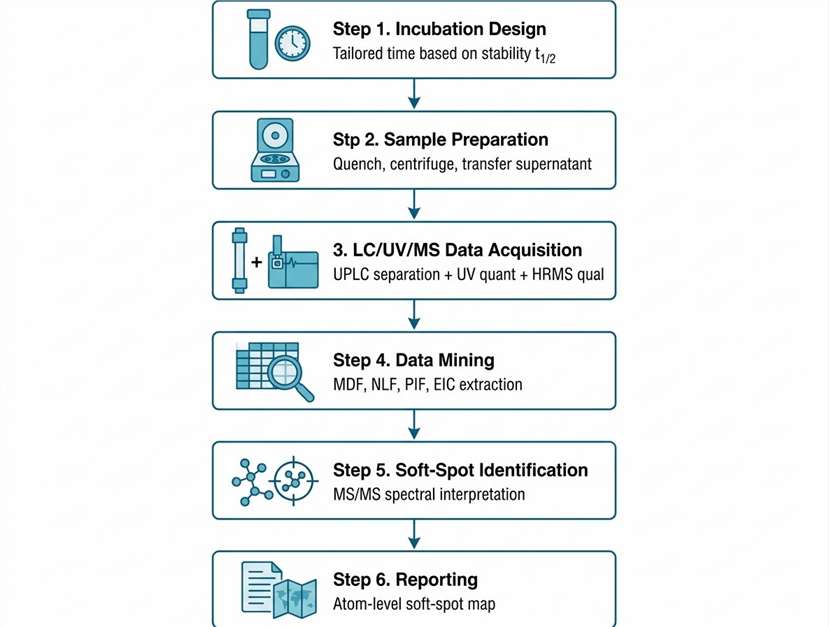
Step 1 — Incubation Design: The compound is incubated with HLM (0.5 mg/mL) and NADPH in phosphate buffer. The incubation time is calculated based on the compound's stability t1/2, typically ranging from 1 to 60 minutes.

Step 2 — Sample Preparation: The reaction is quenched with ice-cold acetonitrile containing internal standard, followed by centrifugation. The supernatant is transferred for LC/UV/MS analysis.

Step 3 — LC/UV/MS Data Acquisition: Two complementary platforms are used — LC/UV/Q-TOF for Full MS/dd-MS2 acquisition, and LC/UV/Qtrap for MIM-EPI acquisition enabling generic, high-throughput data collection.

MINING

Data Mining & Soft-Spot ID

Step 4 — Data Mining: Four techniques are applied in parallel: Mass Defect Filtering (MDF) to isolate drug-related ions, Neutral Loss Filtering (NLF) to detect metabolites with common fragmentation, Product Ion Filtering (PIF) to identify metabolites sharing substructures, and Extracted Ion Chromatogram (EIC) for targeted biotransformation searches.

Step 5 — Soft-Spot Identification: MS/MS spectra are interpreted to determine the exact site of modification on the parent molecule. UV peak areas are used to estimate relative metabolite abundance, correcting for MS ionization bias.

Step 6 — Reporting: A comprehensive report is delivered including the atom-level soft-spot map, annotated chromatograms, MS/MS spectra, and structural optimization recommendations.

VALIDATION

Validation Data

The method was validated using seven model compounds with diverse structures and metabolic rates: verapamil, dextromethorphan, buspirone, mirtazapine, saquinavir, midazolam, and amodiaquine (Zhu et al., 2022). In each case, the optimized incubation conditions successfully limited metabolism to primary metabolites, enabling direct UV quantification of major clearance pathways.

Key soft-spots correctly identified included verapamil N-dealkylation (V1/VM2), dextromethorphan O-demethylation (DM2), and midazolam mono-oxidation (MM2). An important finding was that UV quantification corrected for MS ionization bias — for example, saquinavir metabolites S6 and S7 showed similar UV responses but significantly different MS responses.

Metabolic Soft-Spot Analysis Workflow: From Sample to Structural Assignment

Our technical process follows six well-defined stages from sample receipt to final report delivery.

1

Incubation Design

We receive your compound and any available metabolic stability data. Based on the pre-determined t1/2, we calculate the optimal incubation time to achieve 20–40% parent depletion. If stability data is not available, we run a brief pre-screen to establish the metabolic rate.

2

Sample Preparation

The incubation is quenched at the calculated time point. A zero-time control sample is also prepared. Samples are processed by protein precipitation with acetonitrile, centrifugation, and transfer of the supernatant for analysis.

3

LC/UV/MS Data Acquisition

Samples are analyzed on our LC/UV/HRMS platform. UV detection at 190–350 nm provides quantitative data on parent depletion and metabolite formation. HRMS (Q-TOF or Qtrap) acquires full-scan MS and data-dependent MS/MS spectra for structural characterization.

4

Data Mining

Raw data is processed using our software suite (Compound Discoverer, MetabolitePilot, or PeakView). MDF, NLF, PIF, and EIC techniques are applied to detect all drug-related components. UV chromatograms are integrated for relative abundance estimation.

5

Soft-Spot Identification

MS/MS spectra of each detected metabolite are interpreted to determine the exact site of biotransformation. The metabolite structure is proposed, and the corresponding soft-spot on the parent molecule is identified and annotated.

6

Reporting

A comprehensive report is compiled containing the atom-level soft-spot map, annotated LC/UV and LC/MS chromatograms, MS/MS spectra with fragment assignments, a relative abundance table, and structural optimization recommendations.

Metabolic soft-spot analysis workflow diagram showing 6 steps from incubation design to reporting

Service Process Overview:

1. Consultation — We discuss your project goals, compound characteristics, and any existing data to design the optimal study plan.

2. Sample Submission — You provide the test compound (50–200 µg, ≥95% purity) along with any available metabolic stability data.

3. Study Execution — Our team performs the incubation, LC/UV/MS analysis, and data processing according to the agreed-upon plan.

4. Data Review — Preliminary results are reviewed by our senior mass spectrometrist. Any ambiguities in soft-spot assignment are flagged for additional analysis.

5. Report Delivery — The final report is delivered in PDF format, with raw data files available upon request.

6. Follow-Up Support — Our scientists are available to discuss the results with your team and advise on structural optimization strategies.

Advanced HRMS Data Mining for Confident Soft-Spot Assignment

The confidence of a soft-spot assignment depends on the quality of the MS/MS data and the rigor of the data mining approach. Our laboratory employs four complementary techniques to ensure comprehensive and accurate metabolite detection.

Mass Defect Filtering (MDF)

MDF distinguishes drug-related components from endogenous matrix based on their mass defect — the fractional part of the m/z value. Drug molecules typically have mass defects in a characteristic range (0.1–0.4 Da for most small molecules), while endogenous components span a much wider range. By applying a mass defect window around the parent drug, MDF efficiently filters out matrix background and reveals drug-related metabolites that might be invisible in the total ion chromatogram.

Neutral Loss Filtering (NLF)

NLF identifies metabolites that share a common fragmentation pathway with the parent drug. If the parent drug undergoes characteristic neutral losses (e.g., loss of H2O, CO2, or a specific functional group), metabolites that retain that structural feature will show the same neutral loss in their MS/MS spectra. NLF is particularly useful for detecting metabolites at low abundance or those that co-elute with matrix components.

Product Ion Filtering (PIF)

PIF detects metabolites that contain a specific substructure of the parent molecule. If a metabolite retains a diagnostic fragment ion from the parent drug, PIF can identify it even if the intact metabolite ion is not obvious in the full-scan MS data. This technique is complementary to NLF and is especially valuable for detecting metabolites where the modification occurs in a different region of the molecule than the diagnostic fragment.

Extracted Ion Chromatogram (EIC)

EIC is the most targeted approach, where specific m/z values corresponding to predicted biotransformations (e.g., +16 Da for oxidation, +176 Da for glucuronidation, +42 Da for acetylation) are extracted from the full-scan MS data. While EIC requires some prior knowledge of expected metabolic pathways, it is highly sensitive for detecting known or predictable biotransformations.

Integration Across Techniques: No single data mining technique is sufficient for comprehensive soft-spot analysis. Our workflow integrates all four techniques in parallel, with results cross-validated to minimize false positives and false negatives. Metabolites detected by multiple techniques are assigned higher confidence, while those detected by only one technique are flagged for additional scrutiny.

From Soft-Spot Data to Structural Optimization: Strategies for Medicinal Chemists

Identifying a metabolic soft-spot is only half the story. The real value lies in translating that information into a structural modification strategy. Based on the soft-spot data we provide, medicinal chemists can apply one or more of the following approaches.

Site Blocking

The most direct strategy is to introduce a blocking group at the identified soft-spot position. Common approaches include:

  • Fluorine substitution — The most widely used blocking group due to its small size and strong electron-withdrawing effect. Replacing a hydrogen at the soft-spot with fluorine can effectively prevent oxidative metabolism at that position.
  • Chlorine or cyano substitution — For positions where fluorine is not suitable, chlorine or cyano groups can provide effective steric or electronic blocking.
  • Deuteration — Replacing C-H bonds with C-D bonds at the soft-spot position can slow metabolism due to the kinetic isotope effect.

Scaffold Modification

When site blocking is not feasible — for example, the soft-spot is at a position critical for target binding — scaffold-level changes may be necessary:

  • Ring size modification — Changing ring size can alter the metabolic accessibility of vulnerable positions.
  • Ring opening or closing — Opening a metabolically vulnerable ring or forming a new ring to protect a soft-spot.
  • Scaffold hopping — Replacing the entire core scaffold with a bioisostere that lacks the metabolic vulnerability.

Prodrug Design

If the soft-spot cannot be blocked without losing activity, prodrug design may be an option. The metabolically labile position is temporarily masked with a pro-moiety that is cleaved in vivo to release the active drug. This approach is particularly useful when the soft-spot is essential for target engagement.

Combined Approaches

In practice, the most successful optimization campaigns often combine multiple strategies. A compound might undergo site blocking at the primary soft-spot while also receiving a scaffold modification to reduce the accessibility of a secondary soft-spot. Our team can advise on which strategy is most appropriate for your compound. For compounds where reactive metabolite formation is a concern, we also offer toxic metabolite detection services.

Sample Requirements for Metabolic Soft-Spot Analysis

Sample TypeMinimum QuantityPurity / ConcentrationFormatNotes
Test compound (powder)1 mg≥95% purityDry powder in glass vialStable compounds only; avoid hygroscopic or light-sensitive samples
Test compound (solution)50 µL of 10 mM stock≥95% purity, 10 mM in DMSOSealed vial, -20°C storageDMSO stock preferred; other solvents acceptable with discussion
Metabolic stability data (if available)N/AN/APDF or Excel reportPre-determined t1/2 in HLM or hepatocytes helps optimize incubation time
Reference compound (optional)1 mg≥95% purityDry powder or 10 mM DMSO stockUseful for method development if compound has unusual properties

Important notes: If metabolic stability data is not available, we can perform a brief pre-screen (3–5 time points) to establish the metabolic rate before proceeding with the full soft-spot analysis. For compounds with limited solubility in DMSO, alternative solvents can be discussed during the consultation phase. The minimum quantity assumes a single incubation condition; multiple species or replicate analyses require proportionally more compound.

What You Receive: Comprehensive Soft-Spot Analysis Deliverables

  • Atom-Level Metabolic Soft-Spot Map — A visual representation of the parent molecule with each identified soft-spot highlighted and annotated with the type of biotransformation and relative abundance.
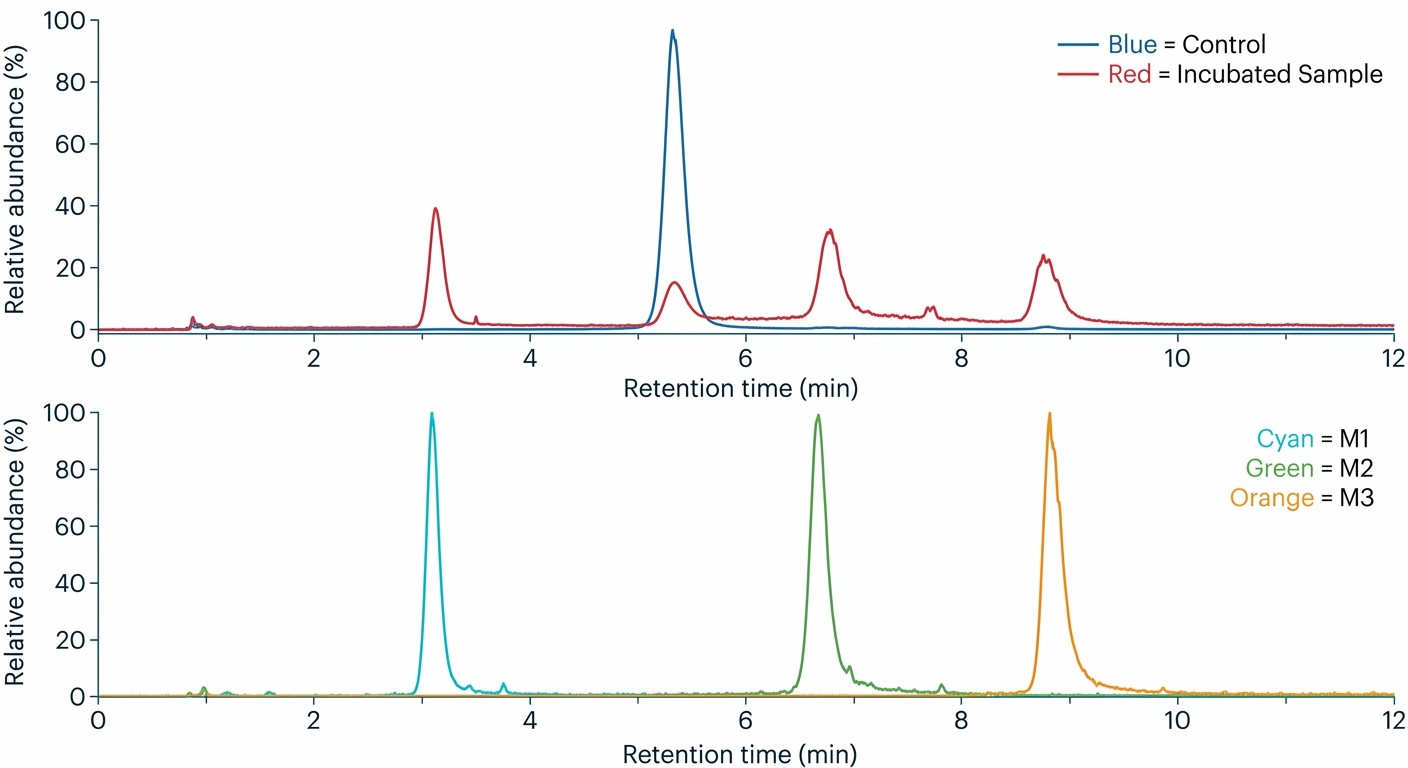
  • Annotated LC/UV Chromatograms — Overlay of control and incubated sample UV chromatograms, with parent and metabolite peaks labeled with retention times and relative peak areas.
  • HRMS Extracted Ion Chromatograms — EICs for each detected metabolite, showing the chromatographic separation and peak shape.
  • MS/MS Spectra with Fragment Assignments — Full MS/MS spectra for each metabolite, with diagnostic fragment ions annotated to support the structural assignment.
  • Relative Abundance Table — A quantitative summary of parent depletion and metabolite formation, reported as percentage of total drug-related material based on UV peak area.
  • Proposed Metabolic Pathway Diagram — A schematic showing the biotransformation pathway from parent to each detected metabolite, with soft-spot positions clearly indicated.
  • Structural Optimization Recommendations — A brief summary of recommended blocking strategies based on the identified soft-spots.

Optional Add-Ons: Cross-species comparison (rat, dog, monkey, human), quantitative time-course profiling, and reactive metabolite trapping with GSH or other trapping agents.

Representative Data Outputs

Representative LC/UV chromatogram overlay showing parent drug depletion and primary metabolite formation with EIC traces

Example LC/UV chromatogram overlay and extracted ion chromatograms (EICs)

Our metabolic soft-spot analysis produces a comprehensive set of data outputs that enable confident decision-making. A typical result set includes UV chromatograms showing clear parent depletion and one to three primary metabolite peaks, with corresponding HRMS data confirming the elemental composition and fragmentation pattern of each metabolite. The relative abundance table enables the chemistry team to prioritize the most significant metabolic liabilities for structural intervention.

Case Study: High-Throughput MSSID of Seven Model Compounds Using Single Variable Incubation Time Approach

Zhu Y, Chen G, Zhang K, et al. "High-Throughput Metabolic Soft-Spot Identification in Liver Microsomes by LC/UV/MS: Application of a Single Variable Incubation Time Approach." Molecules, 2022, 27(22):8058. https://doi.org/10.3390/molecules27228058 [CC BY 4.0]

Background

Metabolic soft-spot identification (MSSID) is a routine requirement in lead optimization, but conventional methods require extensive LC-MS analysis time and manual data interpretation. The goal of this study was to develop and validate a simple, effective, and high-throughput MSSID assay suitable for early drug discovery.

Methods

Seven model compounds with diverse structures and metabolic rates were selected: verapamil, dextromethorphan, buspirone, mirtazapine, saquinavir, midazolam, and amodiaquine. Each compound was incubated at 3 or 5 µM with human liver microsomes (0.5 mg/mL) and NADPH. The incubation time for each compound was individually calculated based on its pre-determined metabolic stability t1/2, targeting 20–40% parent depletion.

Two LC/UV/MS platforms were used: LC/UV/Q-TOF (TripleTOF 4600) with Full MS/dd-MS2 acquisition for saquinavir, verapamil, mirtazapine, and buspirone; and LC/UV/Qtrap with MIM-EPI acquisition for verapamil, dextromethorphan, midazolam, and amodiaquine. Data mining was performed using MetabolitePilot and PeakView software with MDF, NLF, PIF, and EIC techniques.

Results

The single variable incubation time approach successfully limited metabolism to primary metabolites for all seven compounds. Key findings included:

  • Verapamil — Major soft-spots identified at N-dealkylation (V1/VM2) and N-demethylation (V5/VM8) positions
  • Dextromethorphan — Primary soft-spot at O-demethylation (DM2)
  • Midazolam — Primary soft-spot at mono-oxidation (MM2)
  • Amodiaquine — Primary soft-spot at N-deethylation (AM1)

An important methodological finding was that UV quantification corrected for MS ionization bias. For saquinavir, metabolites S6 and S7 showed similar UV responses, but S7's MS response was significantly underestimated, demonstrating that MS-only quantification could lead to inaccurate soft-spot prioritization.

Conclusion

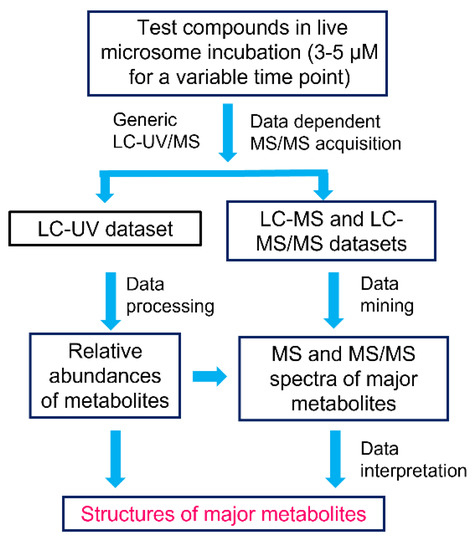
The single variable incubation time approach substantially simplifies metabolic soft-spot identification and is well-suited for high-throughput lead optimization. The combination of LC/UV quantification with HRMS structural characterization provides both accurate abundance assessment and confident structural assignment. The analytical workflow used in this study is illustrated in Figure 2 of the publication.

Analytical workflow for metabolic soft-spot identification using LC/UV/MS from Zhu et al. 2022

Figure 2 from Zhu et al. (2022): Analytical workflow for metabolic soft-spot identification using LC/UV/MS. Reproduced under CC BY 4.0 license.

FAQ

Frequently Asked Questions About Metabolic Soft-Spot Analysis

Q: What is the difference between metabolic soft-spot analysis and standard metabolite identification (MetID)?

Standard MetID identifies the structures of all metabolites formed from a drug candidate. Metabolic soft-spot analysis goes one step further — it pinpoints which specific atom or functional group on the parent molecule is being modified by metabolizing enzymes. This atom-level resolution directly guides medicinal chemists on where to make structural modifications to improve metabolic stability.

Q: How long does a typical metabolic soft-spot analysis study take?

Standard studies are completed within 7–15 business days from sample receipt. The timeline depends on compound complexity and whether metabolic stability data is already available for incubation time optimization. Studies involving multiple species or additional time points may require additional time.

Q: What sample amount and purity do you need?

We typically require 50–200 µg of test compound at ≥95% purity. A 10 mM stock solution in DMSO is preferred. If metabolic stability data (t1/2 in HLM) is available, it helps us optimize the incubation time for best results. For compounds with limited solubility in DMSO, we can discuss alternative solvents during the consultation.

Q: Can I combine soft-spot analysis with my existing metabolic stability screening?

Yes — this is one of the main advantages of our approach. The same incubation samples from stability screening can be used for soft-spot analysis, eliminating the need for separate experiments and reducing compound consumption. If you already have stability data, we use the pre-determined t1/2 to optimize the soft-spot incubation time.

Q: What types of compounds can you analyze?

Our MSSID methodology is applicable across a wide range of chemotypes including small molecules, PROTACs, macrocycles, peptides, and natural products. We have experience with diverse structural classes and can adapt the approach for novel modalities. For compounds with unusual properties, a brief method development step may be needed before the full analysis.

Q: How do your results help medicinal chemists make better decisions?

Our deliverables include an atom-level soft-spot map that highlights exactly which positions are metabolically labile. This allows chemists to prioritize blocking strategies — such as introducing fluorine, chlorine, cyano groups, or deuterium at the soft-spot position — or consider scaffold modifications to eliminate the liability entirely. The relative abundance data from UV quantification further helps prioritize which soft-spots to address first.

References

  1. Zhu Y, Chen G, Zhang K, Chen C, Chen W, Zhu M, Jiang H. "High-Throughput Metabolic Soft-Spot Identification in Liver Microsomes by LC/UV/MS: Application of a Single Variable Incubation Time Approach." Molecules, 2022, 27(22):8058. DOI: 10.3390/molecules27228058 [CC BY 4.0]
  2. Brink A, Pähler A, Funk C, Schuler F, Schäfer S. "Metabolic Soft Spot Identification and Compound Optimization in Early Discovery Phases Using MetaSite and LC-MS/MS Validation." Journal of Medicinal Chemistry, 2009, 52(6):1597–1607. DOI: 10.1021/jm8008663
  3. Paiva AA, Klakouski C, Li S, Johnson BM, Shu YZ, Josephs J, Zvyaga T, Zamora I, Shou WZ. "Development, Optimization and Implementation of a Centralized Metabolic Soft Spot Assay." Bioanalysis, 2017, 9(7):503–515. DOI: 10.4155/bio-2016-0299

Ready to Identify the Metabolic Soft-Spots in Your Drug Candidates?

Send us your compound details and any existing stability data you have. We'll review it and get back to you with a study plan within one business day.

Disclaimer: All products and services provided by Creative Proteomics are for research use only (RUO). They are not intended for use in diagnostic, therapeutic, or clinical procedures.

Online Inquiry

Please submit a detailed description of your project. We will provide you with a customized project plan to meet your research requests. You can also send emails directly to for inquiries.

* Email
Phone
* Service & Products of Interest
Services Required and Project Description