Mechanism-of-Action (MoA) Analysis Service — From Phenotypic Activity to Confirmed Mechanism

You have a compound that works. The question is how.

Target identification tells you which protein your compound binds. Target engagement tells you whether it binds in cells. MoA analysis goes further: it reveals the downstream consequences of that binding — which signaling cascades are activated or suppressed, which metabolic pathways shift, how protein interaction networks rewire, and ultimately, how the cellular phenotype emerges from the molecular interaction.

At Creative Proteomics MassTarget, we deploy an integrated multi-omics MoA analysis platform combining thermal proteomics, phosphoproteomics, metabolomics, interactomics, and multi-omics integration to deliver a complete mechanistic picture. Our service is built for drug discovery teams who need to understand not just what their compound engages, but how that engagement produces the observed biology. For dedicated target identification workflows, our thermal proteomics for MoA service provides the first critical layer of mechanistic evidence.

Key Advantages:

  • Multi-platform MoA elucidation — proteomics + phosphoproteomics + metabolomics under one project.
  • Quantitative pathway-level readouts with statistical confidence.
  • Cellular context preserved throughout — no buffer artefacts.
  • Orthogonal cross-platform validation built into every MoA study.
  • Low compound consumption: 2–10 mg sufficient for comprehensive multi-omics MoA.
  • Turnaround: 3–8 weeks depending on platform scope.
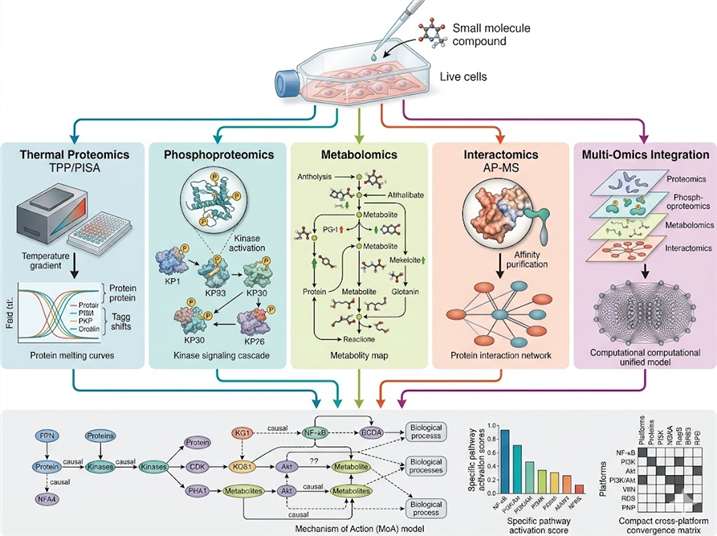
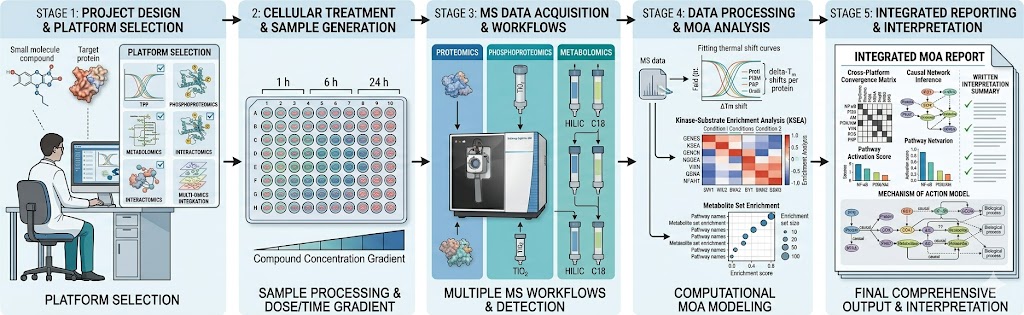
Mechanism-of-action analysis service overview: compound-treated live cells analysed by five orthogonal MS platforms — thermal proteomics (TPP), phosphoproteomics, metabolomics, interactomics (AP-MS), and multi-omics integration — converging on a systems-level MoA model with pathway maps and causal network inference for drug discovery teams.
What Is MoA Analysis Platform Suite Tech Comparison Sample Demo Case Study FAQ

What Is Mechanism-of-Action (MoA) Analysis?

Mechanism-of-action analysis is the systematic investigation of how a compound produces its biological effects. Unlike target identification, which asks a binary question (what protein does my compound bind?), MoA analysis addresses a network question: what signaling pathways does my compound modulate? Which metabolic processes shift as a consequence? How do protein interaction networks respond? And which of these changes are causally related to the therapeutic effect versus being adaptive or off-target responses?

The distinction is critical for drug development. A compound that binds its intended target with high affinity may produce its therapeutic effect through a different mechanism than expected — or through multiple mechanisms simultaneously. Understanding the full MoA landscape informs combination therapy design, resistance prediction, biomarker selection, and differentiation from competitor compounds. It also provides the mechanistic narrative required for high-impact publications, patent claims, and preclinical documentation.

Our integrated MoA analysis approach combines five complementary MS-based methodologies. Thermal proteomics identifies proteins whose thermal stability changes upon compound treatment — capturing direct targets and downstream effectors. Phosphoproteomics maps kinase signaling cascades activated or suppressed by compound treatment. Metabolomics quantifies the metabolic consequences of target engagement and pathway modulation. Interactomics (AP-MS) reveals how protein interaction networks rewire in response to compound exposure. When integrated through our multi-omics integration platform, these layers provide a complete, systems-level understanding of the compound's MoA that no single method can deliver.

MoA analysis is distinct from target identification: target ID identifies the protein(s) a compound physically binds; MoA analysis reveals how that binding changes cellular behaviour. The two are complementary — target ID answers "who?", MoA answers "how?" and "what happens next?"

Why Multi-Platform MoA Analysis Changes the Mechanistic Understanding Equation

Reveals the full causal chain from target to phenotype

Single-method studies leave gaps in the causal narrative. Thermal proteomics identifies direct targets; phosphoproteomics maps the signaling response; metabolomics captures metabolic consequences. Together, they provide an unbroken chain from molecular engagement to phenotypic outcome — essential for understanding how a compound actually works in a biological system.

Distinguishes on-target from off-target mechanisms

When thermal proteomics identifies a target and phosphoproteomics shows the expected downstream signature, the mechanism is confirmed as on-target. When a pathway is perturbed but no direct target is found in thermal proteomics, the effect is likely indirect or off-target. Cross-referencing direct binding evidence with functional readouts enables confident mechanism assignment.

Captures time-dependent mechanistic evolution

Early time points reveal direct target engagement and immediate signaling responses. Late time points capture adaptive mechanisms, compensation pathways, and resistance signatures. The trajectory of the MoA signature over time provides insight that single-time-point studies cannot reveal — informing combination therapy strategies and resistance prediction.

Delivers publication and regulatory-ready data packages

An integrated MoA analysis — proteomics + phosphoproteomics + metabolomics with cross-platform convergence — provides the depth of evidence required for high-impact publications, patent claims supporting mechanism-of-action claims, and preclinical documentation packages. Each data layer can be presented independently or as part of the integrated narrative.

Our MoA Analysis Platform Suite

We deploy five primary MoA analysis platforms, each providing a distinct layer of mechanistic evidence about the compound's effect on cellular systems. Platform selection is matched to the compound properties, the biological question, and the desired depth of mechanistic insight. Our scientists recommend a platform combination during project design — typically starting with thermal proteomics as the primary method.

PLATFORM 1

Thermal Proteomics (TPP/PISA) — Protein-Level Stabilisation Signatures

Drug binding alters the thermal stability of target proteins and, in many cases, of downstream pathway members whose conformation or interaction state changes upon pathway modulation. Cells treated with compound or vehicle are heated across a temperature gradient; soluble protein fractions are analysed by quantitative DIA-MS to identify proteins whose thermal stability changes.

  • MoA metric: thermal shift signature per protein; pathway-level enrichment of shifted proteins
  • Detects: direct targets and downstream pathway members affected by target modulation
  • Proteome coverage: 5,000–8,000 proteins per experiment
  • Best for: first-line MoA assessment; identifying direct targets and immediate downstream effectors
PLATFORM 2

Phosphoproteomics — Signaling Pathway Activation Mapping

Compound treatment alters kinase and phosphatase activities across the proteome, producing a phosphopeptide-level signature that reveals which signaling cascades are activated or suppressed. Quantitative phosphoproteomics (TMT or label-free) measures thousands of phosphosites across biological triplicates, enabling pathway-level inference of MoA.

  • MoA metric: phosphosite-level fold-change and significance; kinase-substrate enrichment analysis (KSEA)
  • Detects: active signaling pathways; upstream kinase inference; pathway activation/repression states
  • Coverage: 10,000–30,000 phosphosites per experiment depending on cell type and fractionation
  • Best for: kinase inhibitor MoA; pathway activation studies; resistance mechanism mapping
  • Our phosphoproteomics activation mapping service provides kinase-substrate network analysis alongside quantitative phosphosite data
PLATFORM 3

Metabolomics — Metabolic Pathway Perturbation Analysis

Target engagement produces metabolic consequences that can be detected as altered metabolite levels across central carbon metabolism, lipid metabolism, nucleotide metabolism, and other pathways. High-resolution LC-MS metabolomics quantifies hundreds of metabolites across treated and control samples, identifying pathways whose flux is altered by compound treatment.

  • MoA metric: metabolite-level fold-change and significance; pathway enrichment score
  • Detects: metabolic pathway engagement; on-target metabolic consequences; off-target metabolic effects
  • Coverage: 200–1,000+ annotated metabolites per experiment
  • Best for: metabolic targets; cancer metabolism MoA; compound-induced metabolic vulnerability identification
  • Our untargeted metabolomics for MoA service pairs deep metabolic profiling with pathway-level MoA analysis
PLATFORM 4

Interactomics (AP-MS) — Protein Interaction Network Rewiring

Drug binding often alters the interaction partners of the target protein and of downstream pathway members. Affinity purification–MS (AP-MS) captures protein complexes from treated and control cells, identifying changes in interaction networks that reveal pathway modulation and functional consequences of compound treatment.

  • MoA metric: interaction enrichment change per bait protein; network-level rewiring score
  • Detects: protein complex remodelling; interaction network rewiring; signalling scaffold changes
  • Coverage: varies by bait protein; typically 50–300 interaction partners per bait
  • Best for: complex-modulating compounds; PROTAC ternary complex confirmation; signalling scaffold modulation
  • Our interactomics (AP-MS / proximity) service provides bait-specific interaction network analysis
PLATFORM 5

Multi-Omics Integration — Cross-Platform MoA Synthesis

The most comprehensive MoA analysis is achieved when thermal proteomics, phosphoproteomics, and metabolomics data are integrated into a unified mechanistic model. Our multi-omics integration platform combines data across MS platforms using pathway enrichment, network analysis, and causal inference algorithms to deliver a systems-level MoA narrative.

  • MoA metric: integrated pathway activation score; cross-platform concordance; causal network inference
  • Detects: comprehensive MoA from target to phenotype
  • Coverage: proteomics (5,000–8,000 proteins) + phosphoproteomics (10,000–30,000 sites) + metabolomics (200–1,000 metabolites)
  • Best for: full MoA characterisation; publication-grade integrated datasets; preclinical documentation support
  • Our multi-omics integration and proteomics drug-response services provide the computational framework and data processing pipeline for integrated MoA analysis

Integrated MoA Analysis Workflow

Five stages from compound receipt to integrated mechanistic report:

1

Project design and platform selection

Compound properties, biological context, and project objectives are assessed. The optimal platform combination is selected — typically thermal proteomics as the primary method with phosphoproteomics or metabolomics as the orthogonal secondary platform. For comprehensive MoA studies, all three platforms are deployed in parallel. This stage takes approximately 1 week and defines the project plan and acceptance criteria.

2

Cellular treatment and sample generation

Cells are treated with compound at the specified concentration and time points. For time-course MoA studies, multiple time points (e.g., 1 h, 6 h, 24 h) are selected to capture early direct effects vs adaptive cellular responses. Triplicate biological replicates are prepared per condition per time point. Cell pellets are harvested, washed, and processed according to the platform-specific protocol.

3

MS data acquisition

Samples are processed through the selected platform workflows. Thermal proteomics uses PISA with DIA acquisition on Orbitrap Exploris 480 or Q Exactive HF-X platforms. Phosphoproteomics uses TiO2 or IMAC enrichment with TMT labelling. Metabolomics uses HILIC and C18 LC-MS in positive and negative ionisation modes for broad metabolite coverage. Interactomics uses GFP-Trap or antibody-based affinity purification with DDA acquisition.

4

Data processing and MoA analysis

Each data layer is processed through its dedicated pipeline. Thermal shift data are fitted, tested for significance, and subjected to pathway enrichment. Phosphosite data are quantified and analysed by kinase-substrate enrichment analysis (KSEA) for upstream kinase inference. Metabolite data are annotated against spectral libraries and subjected to metabolite set enrichment analysis (MSEA). For multi-omics integration, data layers are combined via integrative pathway analysis with network inference algorithms.

5

Integrated reporting

Deliverables include per-platform quantitative data with statistical analysis, cross-platform integrated MoA model with pathway-level interpretation, causal network inference visualisation, raw MS data files, processed quantification tables, platform-specific QC reports, and a written interpretation report summarising the compound's MoA with supporting evidence from each platform, comparison to reference compounds, and recommended follow-up experiments.

Mechanism-of-action analysis workflow: project design and platform selection, cellular treatment with compound at multiple time points, MS data acquisition across thermal proteomics/phosphoproteomics/metabolomics platforms, data processing with KSEA and pathway enrichment analysis, and integrated MoA reporting with cross-platform convergence model and causal network inference.

Applications Across Drug Discovery

MoA analysis is most impactful where understanding how a compound works — not just what it binds — determines the next investment decision.

Phenotypic Hit MoA Elucidation

A compound active in a phenotypic assay has an unknown mechanism. Thermal proteomics identifies stabilised proteins and pathway members, providing a mechanism hypothesis within 2–3 weeks. Phosphoproteomics confirms or refutes the hypothesis by showing the expected downstream signaling signature.

Output: Ranked mechanistic hypothesis with thermal proteomics direct target evidence and phosphoproteomics pathway confirmation.

Signaling Pathway Mapping for Kinase Inhibitors

Kinase inhibitors modulate specific signaling cascades. Phosphoproteomics maps the full landscape of phosphosite changes at single-site resolution, identifying which pathways are suppressed, which adaptive pathways are activated, and whether compensation mechanisms engage.

Output: Comprehensive phosphoproteome with pathway enrichment analysis; kinase-substrate network map; adaptive pathway identification.

Metabolic Inhibitor MoA Characterisation

Compounds targeting metabolic enzymes produce specific metabolite signatures. Targeted and untargeted metabolomics captures these changes, revealing the metabolic pathway engaged, the blockade point, and the metabolic vulnerabilities created.

Output: Metabolite-level fold-change with pathway enrichment; blockade point identification; metabolic vulnerability map for combination therapy design.

Polypharmacology Unravelling

Compounds that engage multiple targets produce complex MoA landscapes. Multi-omics integration separates on-mechanism from off-mechanism effects by cross-referencing thermal proteomics (which targets are bound) with phosphoproteomics and metabolomics (which pathways are functionally affected).

Output: Multi-target engagement map with pathway-level consequences; on- vs off-mechanism separation; prioritised MoA contributions.

Resistance Mechanism Investigation

Cells that acquire resistance to a compound often activate alternative pathways. Phosphoproteomics compared between sensitive and resistant cells reveals the bypass mechanism, guiding rational combination therapy design.

Output: Resistance-associated signaling signature; bypass pathway identification; combination therapy hypotheses.

Preclinical MoA Package for Candidate Advancement

Before advancing a candidate, a comprehensive MoA package is needed. Multi-omics integration (thermal proteomics + phosphoproteomics + metabolomics) provides the complete mechanistic narrative suitable for preclinical documentation, partnership discussions, and publication. Our ubiquitinomics service provides complementary data for PROTAC and degrader MoA studies.

Output: Integrated multi-omics MoA report with cross-platform convergence; causal network model; data package for advancement decisions.

Technology Comparison: Multi-Omics MoA vs Alternative Approaches

ApproachMoA Evidence TypeCellular ContextCoverageTurnaroundCompound Required
Multi-Omics MoA (this service)Direct targets + pathways + metabolic effectsLive cells throughout5,000+ proteins, 10,000+ phosphosites, 200+ metabolites3–8 weeks2–10 mg
Biochemical assay panelPre-defined pathway activitiesBuffer only50–200 assays per panel1–2 weeksµg
Western blot pathway markersSingle-pathway readoutsLive cells1–10 proteins1–3 weeks1–5 mg
Transcriptomics (RNA-seq)Gene expression changesLive cells~19,000 genes2–4 weeksN/A (compound only)
CRISPR viability screenGenetic modifier identificationLive cells~19,000 genes4–8 weeksN/A (compound only)

For projects where a focused thermal proteomics approach is sufficient as a first-line MoA assessment, our thermal proteomics for MoA platform provides standalone TPP/PISA workflows. For proteome-wide drug-response profiling without multi-omics integration, our proteomics drug-response service delivers deep proteome coverage for global protein-level characterisation of compound effects.

Sample Requirements

ComponentFormat OptionsRecommended InputMinimum InputKey Notes
Compound (test article)Powder or DMSO stock5–10 mg (or 10 mM stock, 100 µL)2 mg (or 5 mM stock, 50 µL)Provide MW, purity, known solubility; note any light/oxygen/moisture sensitivity
Cell line (live-cell methods)Adherent or suspension; frozen pellet2 × 107 cells per condition (triplicate)5 × 10⁶ cells per conditionProvide cell type, passage, culture conditions; confirm compound activity in cell line
Reference compound (positive control)10 mM DMSO stock≥ 50 µL10 µLKnown MoA compound recommended as positive control; provide expected pathway readout if available
Lysate (lysate-based methods)Clarified lysate in MS-compatible buffer2–5 mg total protein per condition0.5 mg per conditionSpecify lysis buffer; avoid glycerol >5% or detergents above CMC
Target antibody (AP-MS only)Validated antibody for IP5–10 µg per IP2 µg per IPProvide specificity validation data; GFP-Tag system available as alternative

All samples should be shipped on dry ice with completed sample submission forms. Biological triplicates are recommended for all quantitative comparisons; minimum two independent biological replicates for publication-grade data. For time-course MoA studies, coordinate sample collection schedule with our team before project initiation.

Deliverables

  • Per-platform quantitative data: protein thermal shift magnitudes with p-values, phosphosite fold-changes with significance, metabolite abundance changes with pathway enrichment
  • Kinase-substrate enrichment analysis (phosphoproteomics): upstream kinase activity inference, pathway activation scores, kinase inhibition/activation fingerprint
  • Metabolic pathway analysis (metabolomics): pathway enrichment scores, metabolic flux inference, blockade point identification
  • Integrated multi-omics MoA model: cross-platform convergence matrix showing which pathways are supported by multiple data layers, causal network inference visualisation
  • Raw MS data: full .raw or .mzML files for independent re-analysis or regulatory submission
  • Processed quantification tables: protein-level, phosphosite-level, and metabolite-level quantification with statistical metrics per method
  • QC report: coverage depth, CV distribution, replicate correlation, platform-specific quality metrics
  • Written interpretation report: integrated mechanistic narrative summarising the compound's MoA with supporting evidence from each platform, comparison to reference compounds, and recommended follow-up experiments

Representative Results

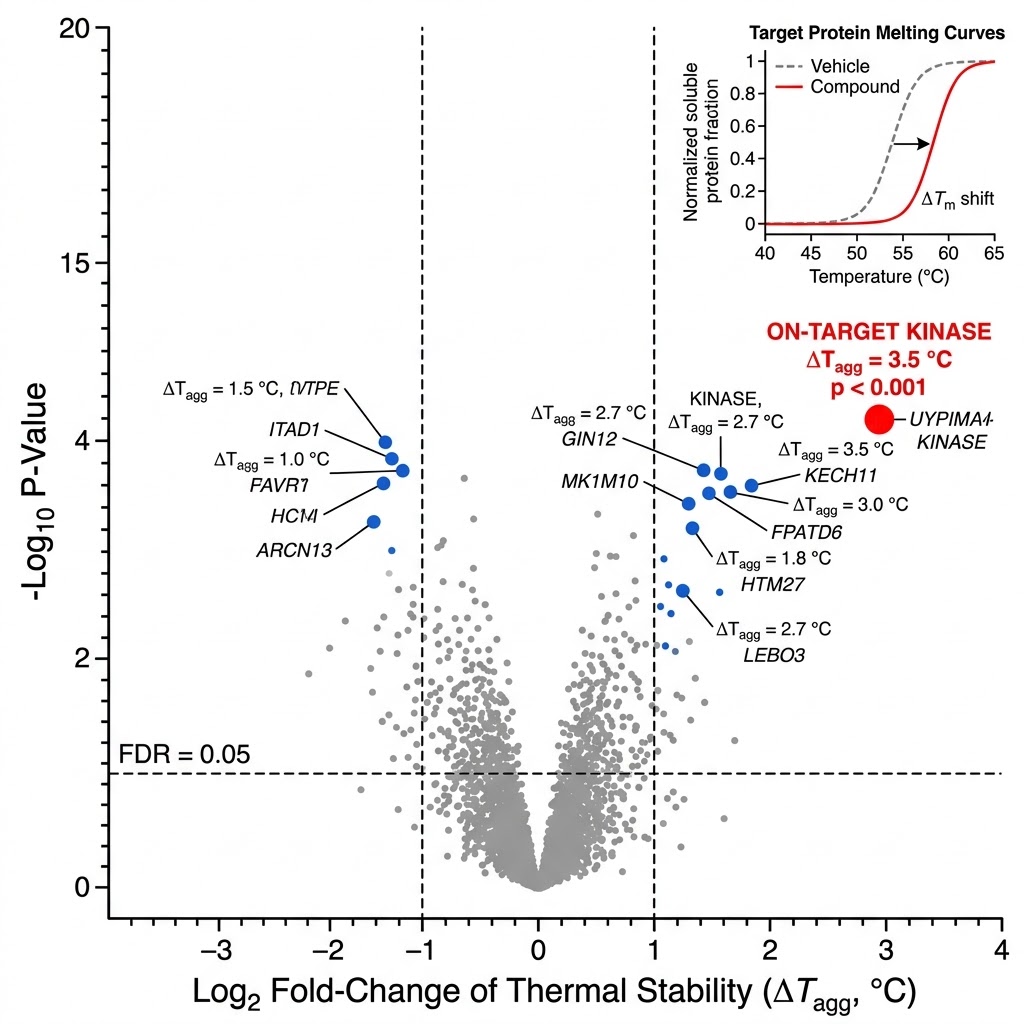
Thermal proteome profiling (TPP) volcano plot from a compound MoA study, showing log2 fold-change of thermal stability on x-axis versus -log10 p-value on y-axis, with direct target highlighted in red and downstream pathway members in blue.

TPP thermal shift signature: target identification and pathway members

Thermal proteome profiling of a phenotypic hit compound (1 µM, 1 h treatment) in live HCT116 cells. Approximately 6,500 proteins were quantified across the temperature gradient. The volcano plot reveals the direct target (red, ΔTagg = 3.5°C, p < 0.001) and nine additional significantly shifted proteins (blue, FDR < 0.05) that represent downstream pathway members affected by target modulation. Triplicate measurements per condition; Z-factor = 0.68. The thermal shift signature provides the first layer of MoA evidence — target identity and immediate downstream effectors.

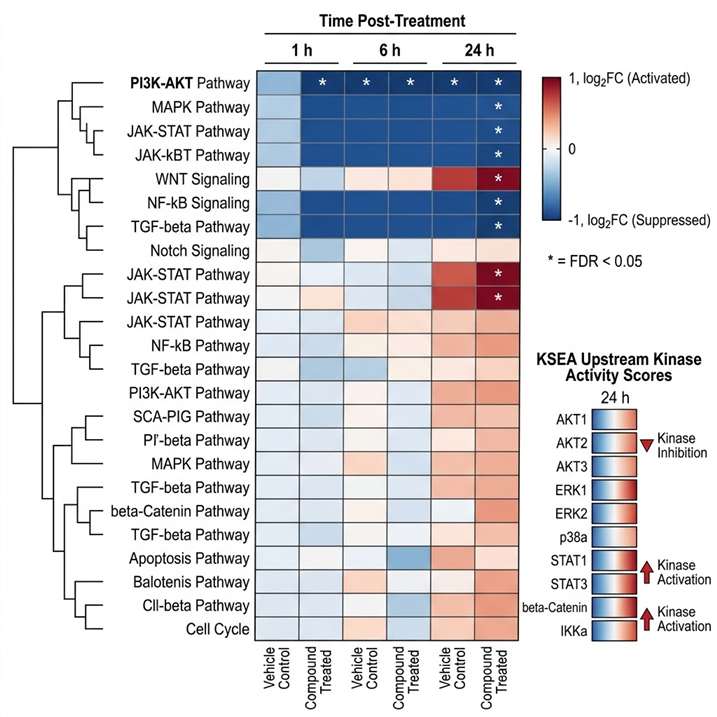
Phosphoproteomics signaling pathway heatmap from a kinase inhibitor MoA study, showing phosphosite fold-changes across multiple signaling pathways with KSEA-inferred upstream kinase activity scores and hierarchical clustering by pathway.

Phosphoproteomics pathway heatmap: signaling cascade response to compound treatment

Quantitative phosphoproteomics profiling of a kinase inhibitor at 1 µM for 6 h in K562 cells, measuring 18,423 phosphosites across 5,211 proteins. The heatmap displays pathway-level phosphosite changes across 24 signaling pathways, with hierarchical clustering by pathway activation score. Four pathways are significantly suppressed (blue, FDR < 0.05) including the intended target pathway, while two adaptive pathways show compensatory activation (red). KSEA upstream kinase inference identifies the inhibited kinase and three compensatory kinases — providing the second MoA layer: which pathways are modulated and how the cell adapts.

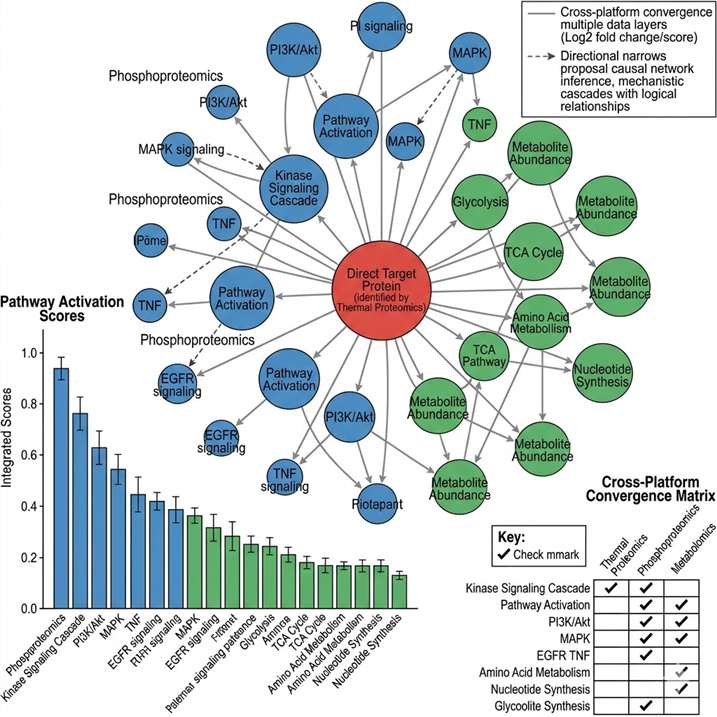
Integrated multi-omics MoA model network visualization showing cross-platform convergence of thermal proteomics, phosphoproteomics, and metabolomics data, with pathway-level integration and causal network inference arrows.

Integrated MoA model: cross-platform convergence of proteomics, phosphoproteomics, and metabolomics

Multi-omics integration of thermal proteomics (6,500 proteins), phosphoproteomics (18,423 phosphosites), and metabolomics (486 annotated metabolites) data from a single compound treatment experiment. The network visualisation shows the direct target (center node), downstream signaling pathways (blue nodes), metabolic consequences (green nodes), and cross-platform convergence edges (grey lines) where two or more data layers support the same pathway-level finding. Causal network inference (directional arrows) proposes the mechanistic cascade from target engagement through pathway modulation to metabolic phenotype — the complete MoA narrative supported by three independent data layers.

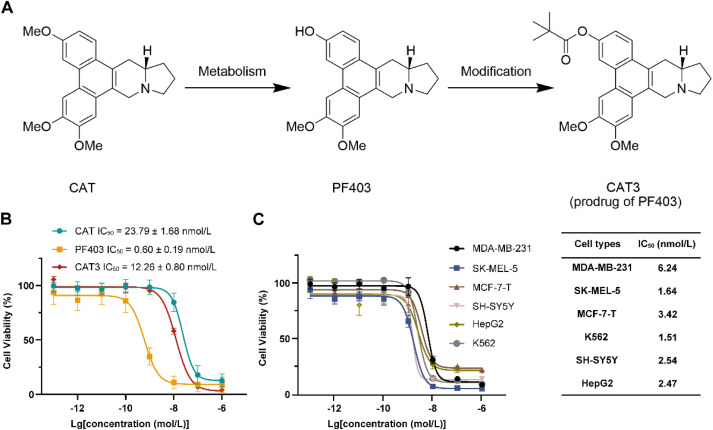
Case Study: Thermal Proteome Profiling Reveals NAMPT as the Anti-Glioma Target of Natural Product PF403

Zheng Y., Chen Y., Gao Q., et al. "Thermal proteome profiling (TPP) reveals NAMPT as the anti-glioma target of phenanthroindolizidine alkaloid PF403." Acta Pharmaceutica Sinica B 2025;15(4):2103–2116. https://doi.org/10.1016/j.apsb.2025.02.027 (Open Access).

Background

Natural products have historically been rich sources of drug leads, but their complex polypharmacology often makes MoA elucidation challenging. PF403, a phenanthroindolizidine alkaloid, exhibited potent anti-glioma activity in vitro and in vivo, but its molecular target and mechanism of action were unknown. Traditional affinity-based approaches had been difficult to apply because of the compound's modest affinity and the lack of a suitable immobilisation handle without activity loss.

Methods

The authors applied thermal proteome profiling (TPP) across a temperature range (TPP-TR) in U87 glioma cells treated with PF403 or vehicle. Approximately 4,000 proteins were quantified across the temperature gradient. Proteins showing significant thermal shift upon PF403 treatment were identified by melt-curve fitting and statistical testing. The top candidate was validated by microarray-scale thermophoresis (MST), surface plasmon resonance (SPR), isothermal titration calorimetry (ITC), X-ray crystallography (PDB 8Y55), cellular thermal shift validation, and lentiviral knockdown in U87 xenograft mouse models.

Results

TPP identified nicotinamide phosphoribosyltransferase (NAMPT) as the top shifted protein, with a stabilisation signature consistent with direct binding. MST and SPR confirmed direct binding of PF403 to recombinant NAMPT protein (Kd = 340 nM). ITC measurements indicated a 1:1 binding stoichiometry with favourable enthalpy-driven thermodynamics. X-ray crystallography resolved the PF403–NAMPT complex at 2.3 Å, revealing that PF403 occupies the nicotinamide-binding pocket of NAMPT, forming hydrogen bonds with key residues D93 and R311. Cellular thermal shift validation confirmed NAMPT stabilisation in live cells upon PF403 treatment. NAMPT knockdown by lentiviral shRNA significantly reduced the anti-proliferative effect of PF403 in U87 cells and in an orthotopic xenograft mouse model, confirming NAMPT as the functionally relevant target mediating PF403's anti-glioma activity.

Significance for MoA Analysis

This study demonstrates several principles central to our MoA analysis service. First, it shows that thermal proteome profiling can identify the molecular target of a natural product with modest affinity (µM range) where affinity-based methods had been inconclusive. Second, it illustrates the multi-platform validation cascade — from proteome-wide thermal profiling to biophysical binding confirmation to structural biology to functional genetic validation — that builds confidence in MoA assignments. Third, it demonstrates that TPP-based MoA analysis can be completed with standard compound amounts (1–5 mg) and within timelines compatible with active drug discovery programmes.

Case study workflow diagram from Zheng et al. 2025 Acta Pharmaceutica Sinica B, showing the thermal proteome profiling (TPP-TR) workflow identifying NAMPT as the anti-glioma target of PF403, with MST/SPR/ITC binding confirmation, X-ray crystallography structure (PDB 8Y55) showing PF403 bound in the NAMPT nicotinamide-binding pocket, and in vivo shRNA knockdown validation in U87 xenograft model.

Figure 1 from Zheng et al. 2025 (Acta Pharm Sin B, DOI: 10.1016/j.apsb.2025.02.027). Thermal proteome profiling (TPP-TR) workflow identifying NAMPT as the molecular target of PF403, with multi-platform validation cascade from biophysical binding to X-ray crystallography to functional genetic validation in an orthotopic glioma xenograft model. CC BY 4.0.

FAQ

Frequently Asked Questions

Q: How is MoA analysis different from target identification?

Target identification answers "what protein does my compound bind?" MoA analysis answers "how does that binding produce the observed biological effect?" Target ID identifies the molecular target; MoA analysis maps the downstream pathways, signaling cascades, and metabolic consequences. The two are complementary — target ID provides the starting point, and MoA analysis provides the mechanistic narrative.

Q: What is the minimum amount of compound required for a comprehensive MoA study?

A single-platform thermal proteomics MoA assessment requires 1–5 mg. A two-platform campaign (e.g., thermal proteomics + phosphoproteomics) typically requires 3–5 mg. A comprehensive multi-omics MoA study (proteomics + phosphoproteomics + metabolomics) requires 5–10 mg. We optimise experimental design to extract maximum mechanistic insight from available material.

Q: Can I integrate previously generated data into a new MoA analysis?

Yes. If you have existing target ID data, we can incorporate it as a starting point and design the MoA platform combination to build upon that foundation. This integrated approach reduces redundant measurements and accelerates the path to a complete mechanistic picture. We assess what data you have during the project design phase.

Q: How do you distinguish direct target effects from downstream adaptive responses?

Time-course experiments are essential for this distinction. Early time points (1–6 h) capture direct target engagement and immediate downstream pathway effects. Late time points (24–48 h) reveal adaptive cellular responses, compensation mechanisms, and secondary effects. By comparing early vs late signatures, we separate causal from consequential changes in the MoA model.

Q: Do you provide pathway-level analysis or just a list of changed proteins?

Pathway-level analysis is a core component of every MoA deliverable. Thermal proteomics data undergo pathway enrichment against KEGG, Reactome, and GO databases. Phosphoproteomics data undergo kinase-substrate enrichment analysis (KSEA) and upstream kinase inference. Metabolomics data undergo metabolite set enrichment analysis (MSEA). The integrated report synthesises these findings into a unified mechanistic narrative with cross-platform convergence.

Q: How long does a full multi-omics MoA study take?

A single-platform thermal proteomics MoA study takes 2–3 weeks. A two-platform study (thermal proteomics + phosphoproteomics) takes 3–5 weeks. A full multi-omics MoA campaign (proteomics + phosphoproteomics + metabolomics) takes 5–8 weeks. Timelines are confirmed during project design and depend on cell culture requirements, number of time points, and platform scope.

Q: Can MoA analysis distinguish on-target from off-target effects?

Yes — this is one of the most valuable outputs of multi-platform MoA analysis. Thermal proteomics identifies which proteins are directly bound by the compound. Phosphoproteomics and metabolomics reveal the functional consequences. If a pathway is perturbed but the target is not identified in thermal proteomics, the effect is likely indirect or off-target. Cross-referencing direct binding evidence with functional readouts enables confident on-target vs off-target separation.

Q: What cell lines are compatible with your MoA analysis platforms?

Most adherent and suspension cell lines are compatible. Commonly used lines include K562, HEK293T, HCT116, HepG2, A549, Jurkat, U87, and primary cells. You can provide your own cell line, or we can use standard lines from our cell culture bank. We assess target expression levels and recommend the most appropriate cell line during project design based on your compound's known activity profile.

Design Your MoA Analysis Campaign with the MassTarget Team

Submit your compound and project background — our scientists will recommend the optimal platform combination and design an MoA analysis strategy matched to your discovery stage, compound properties, and decision timeline.

For Research Use Only (RUO). Not intended for diagnostic, therapeutic, or clinical decision-making purposes. Creative Proteomics services are designed to support preclinical research, drug discovery, and mechanism of action studies only.

Online Inquiry

Please submit a detailed description of your project. We will provide you with a customized project plan to meet your research requests. You can also send emails directly to for inquiries.

* Email
Phone
* Service & Products of Interest
Services Required and Project Description