Hematoxylin and Eosin (H&E) Staining Service
Hematoxylin and Eosin (H&E) staining is the cornerstone of histopathology, providing essential morphological context for spatial omics analysis. Creative Proteomics utilizes advanced Leica systems to deliver slides with exceptional clarity and batch-to-batch consistency. Whether for routine pre-clinical studies or complex clinical tumor profiling, our service transforms diverse tissue samples into high-quality, diagnostic-grade data, laying a solid foundation for spatial omics applications and advanced digital analysis.
Submit Your Request Now
×
- Definition
- Our service
- Workflow
- Methodology
- Platform
- Deliverables
- Applications
- Why choose
The foundation of histopathology
Hematoxylin and Eosin (H&E) staining remains the gold standard in biological research and diagnostics, serving as the critical "first look" at tissue architecture. While it is the most routine assay in histology, achieving the balance of contrast and definition required for modern digital pathology demands exceptional precision.
At its core, H&E staining relies on a fundamental chemical affinity between cellular components and dyes to create a comprehensive map of tissue structure. The process utilizes two opposing stain properties to generate contrast. However, routine does not mean simple. Variations in reagent quality or differentiation times can lead to "muddy" slides that obscure subtle pathological changes. Our H&E services combine state-of-the-art automated staining platforms with rigorous pathologist oversight to deliver slides with crisp nuclear detail, distinct cytoplasmic contrast, and batch-to-batch reproducibility suitable for peer-reviewed publication, and AI-driven image analysis.
Our Service
We provide precise H&E staining services, designed to meet the diverse needs of researchers. Whether you are analyzing standard FFPE blocks, frozen sections, or delicate needle biopsies, our protocols optimize stain intensity to highlight the specific morphological features relevant to your study.
Universal Sample Compatibility
We accept a diverse range of biological matrices, eliminating the need to split your project across multiple vendors. Our validated protocols cover:
- Multi-Species Capability: From standard pre-clinical models (Mouse, Rat, Rabbit) and non-model organisms (Zebrafish, Drosophila) to clinical Human biopsies.
- Tissue Diversity: We routinely process varying tissue densities and sizes, including:
- Oncology: Solid tumors, xenografts, and tumor microarrays (TMAs).
- Neurology: Lipid-rich brain tissue and spinal cord sections.
- Developmental: Whole mouse embryos and fragile zebrafish larvae.
- Clinical: Large surgical resections, needle core biopsies, and whole-organ cross-sections.
Adaptive Sectioning & Precision Microtomy
We recognize that optimal visualization depends on the physics of the tissue. We do not apply a rigid "one-size-fits-all" approach to sectioning. Instead, our technicians evaluate every block to determine the ideal cutting thickness based on:
- Physical Properties: We adjust thickness to accommodate the hardness and density of the sample—ensuring integrity for everything from calcified bone and fibrous tumors to soft, edematous tissue.
- Downstream Requirements: We customize sectioning for subsequent assays. Whether you need ultra-thin sections (2–3 µm) for high-resolution digital scanning or thicker sections (5–8 µm) to enhance contrast for specific Special Stains (e.g., Congo Red, Silver stains), we tailor the preparation to your specific research goals.
Workflow

Our Methodology: Rigor and Reproducibility
Inconsistent staining (e.g., "muddy" cytoplasm or weak nuclear definition) can lead to diagnostic errors. We treat H&E with the same rigor as advanced molecular assays.
Quality Assurance: We utilize a "Control Slide" system. Every staining run includes a control tissue with known heterogeneous architecture (e.g., Tonsil or Intestine) to verify the correct pH balance and differentiation of the dyes.
| Feature | Standard Lab H&E | Our Premium H&E Service |
|---|---|---|
| Method | Manual or Dip-Tank | Fully Automated Robotic Stainer |
| Reagent Quality | Reused until depletion | Filtered & cycled strictly per SOP |
| Differentiation | Variable | Precise chemical differentiation |
| Slide Cleanliness | Frequent residue/artifacts | Mounting media optimized for clarity |
Integrated Technology Platform
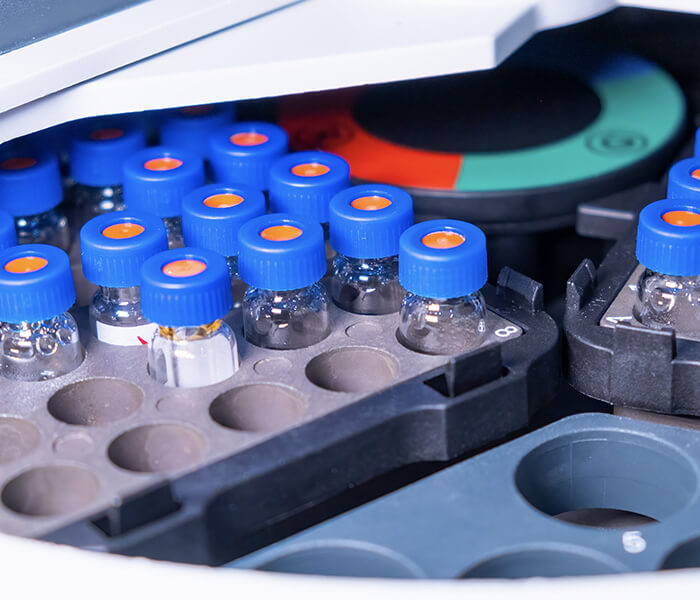
Leveraging state-of-the-art Leica instrumentation, we provide a comprehensive, one-stop service that seamlessly integrates every stage of the workflow—from initial sample preparation and precision staining to advanced data processing.

Seamless Integration with Multi-Omics and Spatial Biology
Our H&E staining service is designed not just as a standalone assay, but as a foundational step that seamlessly integrates with downstream multi-omics and spatial biology analyses. By combining precise tissue staining with advanced analytical workflows, we provide researchers with a comprehensive solution for in-depth tissue characterization.
Compatible Spatial and Multi-Omics Services:
- Spatial Transcriptomics: Capture gene expression patterns within tissue context.
- Spatial Proteomics: Quantify protein distribution across tissue sections.
- Imaging Mass Spectrometry (DESI-MSI, MALDI-MSI): Map metabolites, lipids, and small molecules with spatial resolution.
- Multi-Omics Integration: Combine transcriptomic, proteomic, and metabolomic data for comprehensive tissue profiling.
Your Deliverables
Depending on your project requirements, our deliverables include:
1. Diagnostic-Grade Glass Slides
High-clarity, coverslipped slides free of "muddy" cytoplasm or knife artifacts.
Compatible with long-term archiving and peer-reviewed publication standards.
2. High-Resolution Digital Images
- Whole-slide images (WSI) scanned at 20x or 40x magnification.
- Data ready for AI-driven image analysis and quantitative morphometry.
3. Pathology Report (Optional)
Expert annotation and phenotyping (e.g., tumor grading, inflammation scoring) provided by our pathologists.
Key Applications
- Toxicology & Safety Assessment: Identifying necrotic lesions, hypertrophy, or cellular degeneration in pre-clinical animal models.
- Oncology Phenotyping: Grading tumors based on nuclear atypia, mitotic index, and tissue architecture (e.g., Gleason scoring).
- Inflammatory Disease: Assessing leukocyte infiltration and edema in tissues.
- Xenograft Studies: Monitoring tumor growth and vascularization in mouse models.
Why Partner With Us?
- Expert Oversight: Our team carefully monitors staining quality to ensure consistently high-quality, reliable slides for downstream analysis.
- Integrated Workflow: Seamlessly transition from H&E assessment to Special Stains (Masson's Trichrome, PAS) or IHC/ISH on serial sections from the same block.
- Artifact Reduction: Our technicians are experts in microtomy, minimizing common artifacts like chatter, folds, and knife marks that disrupt automated analysis.
- Multi-Omics Integration: We not only provide high-quality H&E staining but also support downstream multi-omics analyses, enabling comprehensive spatial biology studies.