Protease MS Substrate/Product Assays — Label-Free Enzyme Activity Screening by Mass Spectrometry

Accelerating protease inhibitor discovery and enzyme characterization through direct, interference-free MS-based detection of substrate depletion and product formation.

Proteases represent one of the largest and most therapeutically important enzyme families, yet traditional fluorescence-based activity assays bring persistent challenges: compound interference, limited availability of suitable fluorogenic substrates, and an inability to monitor more than one substrate per well. Mass spectrometry (MS)-based protease substrate/product assays solve these problems at their root by detecting substrates and cleavage products directly — by their mass — without any fluorescent label at all.

We built our protease MS assay platform around three complementary technologies — RapidFire MS, LC-MS/MS, and MALDI-TOF — to deliver high-throughput inhibitor screening, multiplex substrate specificity profiling (MSP-MS), and full kinetic characterization across serine, cysteine, metallo, aspartyl, and threonine proteases.

Key Advantages:

  • Label-free direct detection of substrates and products by accurate mass — no fluorophore required.
  • Compatible with serine, cysteine, metallo, aspartyl, and threonine proteases.
  • Multiplex substrate profiling (MSP-MS) for comprehensive specificity fingerprinting.
  • RapidFire MS and MALDI-TOF platforms for medium-to-high-throughput inhibitor screening.
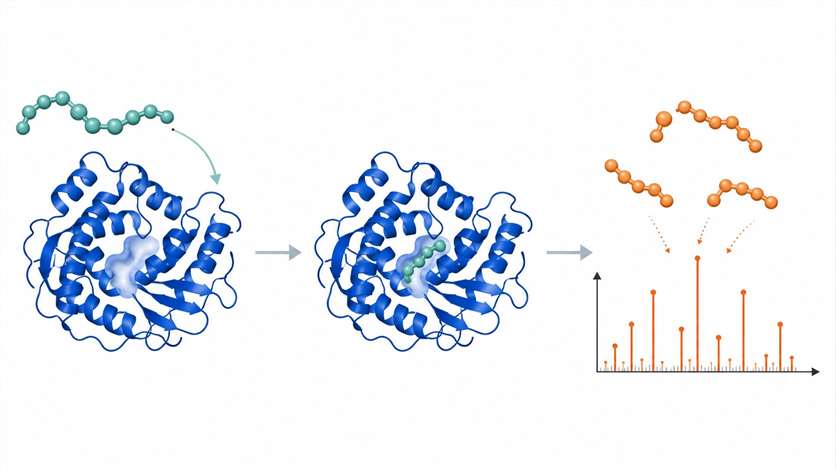
Protease MS substrate/product assay workflow showing substrate peptide with enzyme leading to MS detection and product quantification with label-free advantage.
What Are Protease MS Assays Key Advantages Service Overview Workflow Technology Comparison Applications Sample Demo Case Study FAQ

What Are Protease MS Substrate/Product Assays?

Protease MS substrate/product assays are label-free biochemical assays that use mass spectrometry to directly monitor the enzymatic conversion of peptide or protein substrates into cleavage products. Unlike fluorescence-based methods that require a synthetic fluorophore conjugated to the substrate — which can alter substrate recognition, cause steric hindrance, or generate interfering signal from test compounds — MS-based detection simply measures the mass difference between intact substrate and cleaved fragments.

The core principle is straightforward: a protease is incubated with its substrate, the reaction is quenched, and the mixture is analyzed by mass spectrometry. Substrate depletion and product accumulation are quantified by extracted ion chromatograms or spectral peak areas. From these direct molecular readouts, we derive quantitative kinetic parameters including initial velocities, Michaelis-Menten constants, and inhibitor IC50 values — all without the confounding effects of fluorescent labels.

This approach was pioneered by the Multiplex Substrate Profiling by Mass Spectrometry (MSP-MS) method, which uses a synthetic library of 124–228 tetradecapeptides to comprehensively map protease cleavage specificity in a single experiment.

Key Advantages of MS-Based Protease Assays Over Fluorescence-Based Methods

No Fluorophore Interference

Fluorescence-based protease assays are susceptible to compound interference: autofluorescent compounds produce false positives, while quenching compounds mask genuine inhibition. MS-based detection measures the mass of the substrate and product directly, completely bypassing optical interference pathways.

Compatible with Native and Difficult Substrates

MS-based assays work with unmodified peptides of any sequence, enabling the use of native cleavage site sequences or full-length protein substrates. This is valuable for deubiquitinases, viral proteases, and signal peptidases where fluorogenic substrate development has proven challenging.

Multiplex Substrate Profiling in a Single Experiment

MSP-MS evaluates protease activity across 124–228 distinct peptide substrates simultaneously. Each peptide serves as an independent reporter of cleavage preference, yielding a comprehensive specificity profile including P4–P4′ residue preferences and cleavage site entropy.

Direct Quantitative Kinetics Without Label Artifacts

Because MS quantifies the actual molecular species rather than a surrogate fluorescent signal, kinetic parameters (KM, kcat, kcat/KM) reflect the native enzyme-substrate interaction, supporting more accurate SAR interpretation.

Reduced Assay Development Time

MS-based assays reduce assay development time dramatically: the substrate needs only to be a peptide of defined sequence, and detection parameters can be established in a pilot experiment — versus weeks to months for fluorogenic substrate development.

Service Overview — Creative Proteomics Protease MS Assay Capabilities

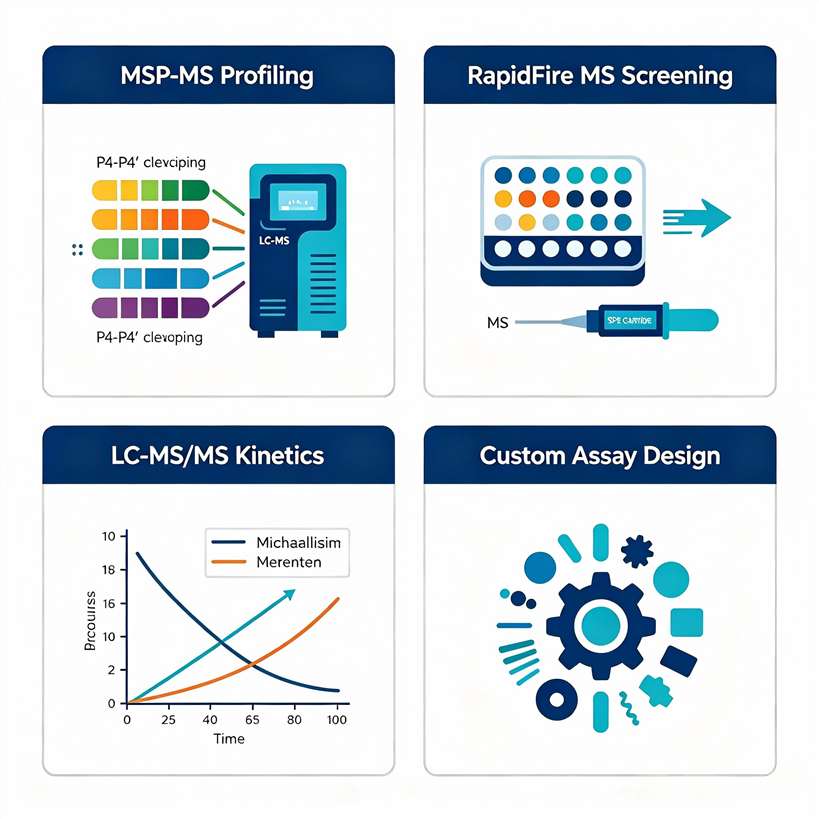
Our protease MS substrate/product assay platform is built on complementary mass spectrometry technologies, each optimized for specific screening and characterization needs. We offer four integrated service modes that can be combined into a complete protease drug discovery workflow.

MODE 1

MSP-MS Substrate Specificity Profiling

Comprehensive mapping of protease cleavage preferences using a synthetic 14-mer peptide library and LC-MS/MS detection.

  • 124–228 tetradecapeptide library spanning diverse P4–P4′ sequence space.
  • Identifies preferred and disfavored residues at each subsite.
  • Quantifies cleavage site entropy and generates sequence logo representations.
MODE 2

RapidFire MS Inhibitor Screening

High-throughput, label-free inhibitor screening using solid-phase extraction coupled to direct MS injection.

  • Sample cycle time of 6–10 seconds per injection.
  • Direct MRM-based quantification of substrate/product.
  • Eliminates fluorescence interference with orthogonal MS confirmation.
MODE 3

LC-MS/MS Enzyme Kinetics

Quantitative kinetic characterization of individual substrate-protease pairs with high-resolution mass spectrometry.

  • Time-course monitoring of substrate-to-product conversion.
  • KM, kcat, and kcat/KM determination from MS peak area quantification.
  • Supports mechanism-of-action studies for lead inhibitors.
MODE 4

Custom Protease Assay Design

Tailored assay development for unique protease targets, substrates, or screening requirements.

  • Custom peptide substrate design based on MSP-MS profiling data.
  • Buffer and reaction condition optimization.
  • Specialized formats: MALDI-TOF DUB assays, quenched-time-course screening.

Protease MS Assay Workflow

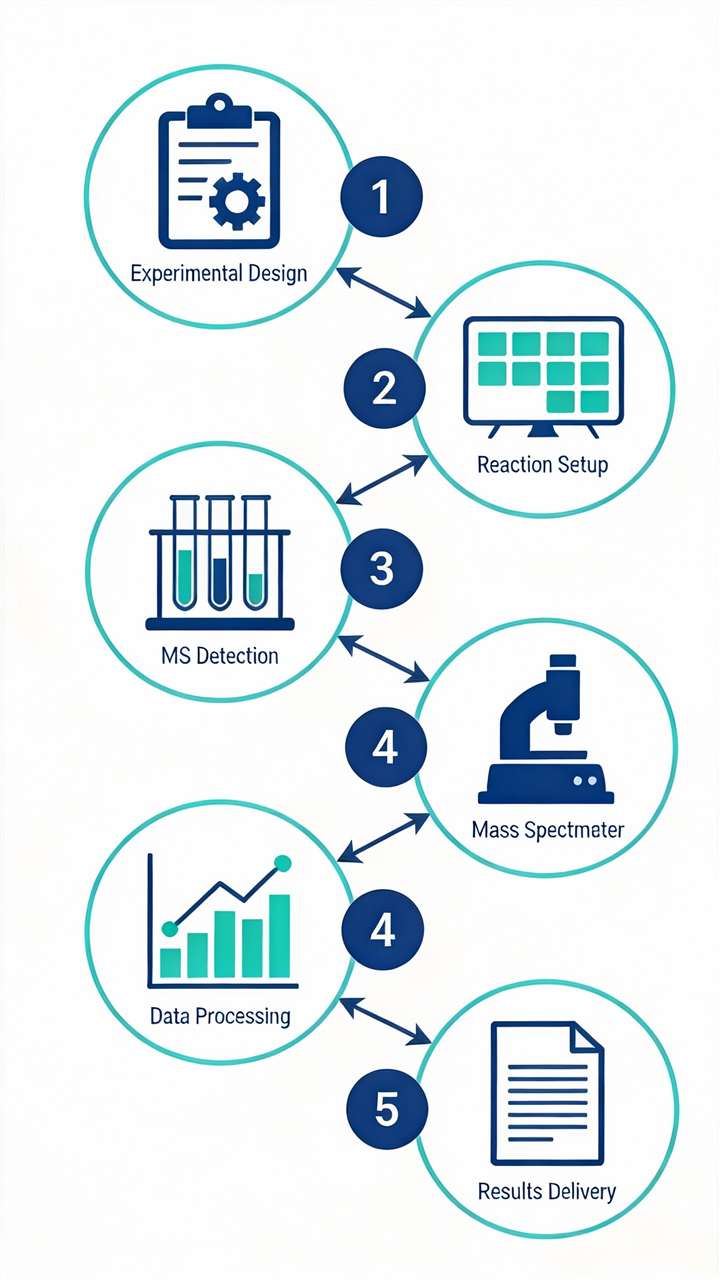
Our standard protease MS assay workflow integrates experimental design, MS detection, and bioinformatics analysis into a streamlined five-step process.

1

Experimental Design and Substrate Selection

We work with your team to define assay objectives and select the appropriate MS platform and substrate panel.

2

Reaction Setup and Incubation

Protease and substrate are combined in MS-compatible buffer. For inhibitor screening, test compounds are pre-incubated with the protease before substrate addition.

3

MS Detection

Samples are analyzed by RapidFire MS (high-throughput quantification), LC-MS/MS (multiplex MSP-MS), or MALDI-TOF MS (plate-based rapid screening).

4

Data Processing and Quantification

Raw MS data is processed to extract ion chromatograms for substrate and product species. Peak areas are integrated, normalized, and converted to percent inhibition or kinetic parameters.

5

Results Compilation and Delivery

Data is compiled into a comprehensive report with kinetic parameters, cleavage frequency matrices, dose-response curves, and QC metrics.

To explore specific high-throughput MS screening formats, see:

Technology Comparison: MS Platforms for Protease Assays

FeatureRapidFire MSLC-MS/MS (MSP-MS)MALDI-TOF MS
Throughput6–10 sec/sample; ~5,000/day10–20 min/run; multiplexed1–3 sec/sample; plate-based
Substrate Multiplexing1–4 substrates (MRM)124–228 peptides in one run1–10 substrates per spot
Quantitative AccuracyHigh (MRM quantification)High (extracted ion chromatograms)Moderate (relative intensity)
Best ForIC50 screening, single-substrate kineticsSubstrate specificity profilingPrimary screening, DUB assays

For ultra-high-throughput applications, also see our Acoustic Ejection MS (AEMS) and MALDI-TOF HTS platforms.

Applications of MS-Based Protease Assays

MS-based protease substrate/product assays are most impactful when conventional approaches fall short. Below are representative scenarios where MS-based detection provides a clear advantage.

When Fluorescent Substrates Are Unavailable

Many therapeutically important proteases — deubiquitinases, viral proteases, intramembrane proteases — lack robust fluorogenic substrates. MS-based detection works with unmodified peptide substrates of any sequence, enabling screening without months of substrate development.

For covalent inhibitor programs, see our Covalent Fragment Screening (MS-based) service.

Inhibitor Potency and Selectivity Profiling

MS-based assays enable rapid IC50 determination across compound panels. The same method can be applied across multiple protease targets without redesigning substrates, facilitating selectivity profiling across an entire protease family.

Substrate Specificity Fingerprinting

MSP-MS maps a protease's cleavage preferences comprehensively. This specificity fingerprint can distinguish closely related proteases and reveal allosteric effects of inhibitor binding on substrate recognition.

Orthogonal Hit Validation

For hits from virtual screening or biochemical HTS, MS-based substrate/product assays provide orthogonal confirmation that eliminates fluorescence or absorbance artifacts—reducing false positive rates entering hit-to-lead.

Mechanism-of-Action Studies

MS-based time-course kinetics at multiple substrate and inhibitor concentrations can distinguish competitive, uncompetitive, non-competitive, and mixed-mode inhibition—critical for lead prioritization.

Sample Requirements

Sample TypeRequired AmountConcentrationPurityBuffer ConditionsNotes
Recombinant Protease50–200 µg1–10 µM≥90%MS-compatible (no glycerol, ≤0.01% detergents)Provide sequence and active site class
Peptide Substrate1–5 mg10 mM stock≥90%DMSO or aqueousProvide sequence and monoisotopic mass
Compound Library1–5 µL per compound10 mM in DMSO≥90%DMSOPlate map with compound IDs
Inhibitor (IC50)1–5 mg10 mM stock≥90%DMSO or aqueousKnown IC50 range if available

Deliverables

  • Raw MS data files in vendor format (.wiff, .raw, or .d)
  • Processed peak area tables with substrate/product quantification
  • MSP-MS cleavage frequency matrices and sequence logo graphics
  • IC50 dose-response curves with four-parameter logistic fit statistics
  • Kinetic parameters (KM, kcat, kcat/KM) for substrate characterization
  • Comprehensive methods report with instrument parameters and QC metrics
  • Optional: custom bioinformatics analysis and publication-ready figures

Representative Protease MS Assay Data

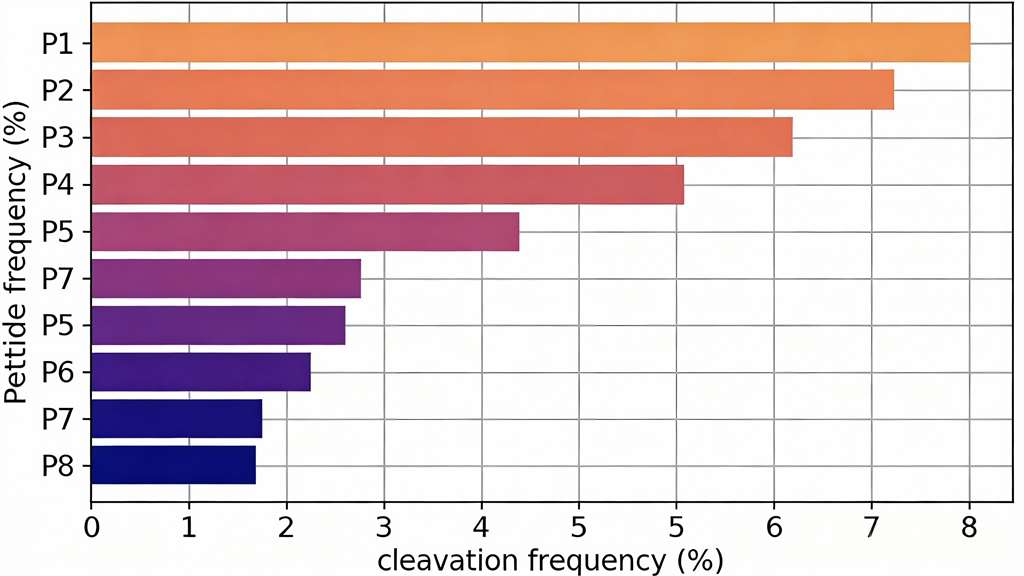
MSP-MS substrate cleavage frequency bar chart showing peptide cleavage profile for a protease across a 14-mer peptide library.

MSP-MS Substrate Cleavage Profile

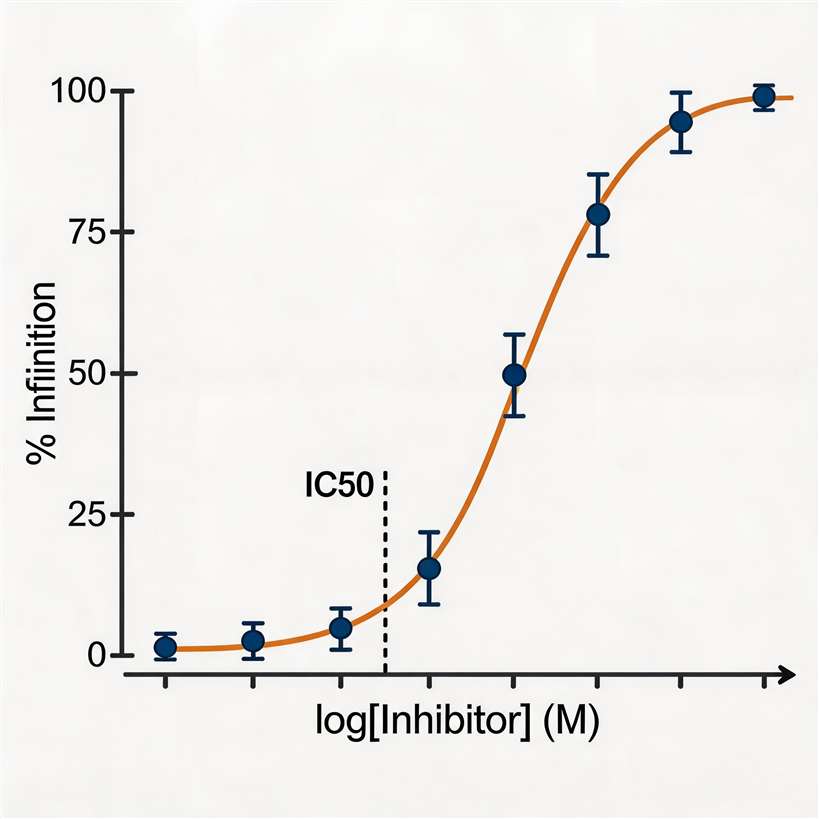
RapidFire MS IC50 dose-response curve showing percent inhibition vs log inhibitor concentration with sigmoidal fit.

RapidFire MS IC50 Dose-Response Curve

Case Study: RapidFire MS-Based High-Throughput Screening Identifies Potent and Selective LAPTc Inhibitor

Izquierdo M, Lin D, O'Neill S, et al. "Identification of a Potent and Selective LAPTc Inhibitor by RapidFire-Mass Spectrometry, with Antichagasic Activity." PLOS Neglected Tropical Diseases. 2024;18(2):e0011956. https://doi.org/10.1371/journal.pntd.0011956

Background

Chagas disease, caused by Trypanosoma cruzi, affects millions worldwide with limited treatment options. The M17 leucyl-aminopeptidase from T. cruzi (LAPTc) was identified as a promising drug target, but screening was hampered by the lack of a robust, interference-free assay. Izquierdo et al. sought to develop a RapidFire MS-based high-throughput screening assay to identify potent and selective LAPTc inhibitors.

Methods

The team developed two parallel assay formats: a conventional Leu-AMC fluorogenic assay and a RapidFire MS-based assay using the LSTVIVR peptide. A protease-focused library of 3,329 compounds was screened at 30 µM. The RapidFire MS assay directly monitored the cleavage product by MRM with ~8 seconds per sample, achieving a Z' factor of 0.76 and signal-to-noise ratio of 64.

Results

The screen identified 30 initial hits. Of 28 compounds progressed to dose-response, 12 showed reproducible inhibition with IC50 values below 34 µM. Compound 4, the most potent, exhibited a pIC50 of 6.36 (IC50 = 0.44 µM) with competitive inhibition (Ki = 0.27 µM). It showed >500-fold selectivity against human LAP3 and cellular activity with an EC50 of 0.7 µM against T. cruzi amastigotes. The fluorogenic assay suffered from compound interference, generating false positives resolved by MS.

Conclusions

This study validates RapidFire MS-based screening for delivering high-quality protease inhibitors while avoiding fluorescence interference. Compound 4 — potent, selective, and cellularly active — demonstrates the value of label-free MS detection in protease drug discovery.

Potency determination for LAPTc screening hits identified by RapidFire-MS showing structures and pIC50 values.

Potency determination for LAPTc screening hits identified by RapidFire-MS (Fig. 3 from Izquierdo et al., 2024).

FAQ

Frequently Asked Questions

Q: What types of proteases are compatible with MS-based substrate/product assays?

MS-based assays are compatible with all major protease classes including serine, cysteine, metallo, aspartyl, and threonine proteases. Because detection relies on mass measurement rather than a specific fluorescent chemistry, the method works for any protease that generates a detectable mass shift upon substrate cleavage — including challenging targets like deubiquitinases and viral proteases.

Q: How does the throughput of MS-based protease assays compare to traditional fluorescence HTS?

RapidFire MS systems process samples at 6–10 seconds per injection, enabling screening of thousands of compounds per day. MALDI-TOF achieves even faster readout at 1–3 seconds. While plate-reader HTS can exceed 100,000 compounds per day, MS-based screening compensates by eliminating fluorescence-based false positives and negatives, reducing total screening cascade time.

Q: Can you design custom substrates for my protease of interest?

Yes. For proteases with unknown specificity, we start with MSP-MS to map cleavage preferences, then design optimized single-substrate sequences from the specificity profile. For proteases with known cleavage motifs, we can synthesize custom peptides directly based on reported or predicted cleavage sites.

Q: What is the difference between MSP-MS and RapidFire MS for protease screening?

MSP-MS uses a library of 124–228 tetradecapeptides analyzed by LC-MS/MS to comprehensively map protease cleavage specificity — answering "what does this protease cleave?" RapidFire MS monitors a single substrate-product pair with automated solid-phase extraction and direct MS injection, optimized for inhibitor IC50 screening. MSP-MS is typically used first for characterization, followed by RapidFire MS for compound screening.

Q: How do you calculate IC50 values from MS data?

Product ion intensity is quantified by extracted ion chromatogram peak area at each inhibitor concentration point. Percent inhibition is plotted against log inhibitor concentration and fit to a four-parameter logistic model, yielding IC50, Hill slope, and 95% confidence intervals. For tight-binding inhibitors, Ki is determined by Morrison equation fitting.

Q: What data deliverables can I expect, and in what format?

Standard deliverables include raw MS data files (vendor-native formats), processed peak area spreadsheets (.xlsx), dose-response curve graphics (.png/.pdf), and a comprehensive report (.pdf) with methods, results, and QC metrics. For MSP-MS projects, we additionally provide cleavage frequency matrices, sequence logo graphics, and specificity dendrograms.

References

  1. O'Donoghue AJ, Eroy-Reveles AA, Knudsen GM, et al. Global identification of peptidase specificity by multiplex substrate profiling. Nat Methods. 2012;9(11):1095-1100.
  2. Ivry SL, Meyer NO, Winter MB, et al. Global substrate specificity profiling of post-translational modifying enzymes. Protein Sci. 2018;27(3):584-594.
  3. Rohweder PJ, Jiang Z, Hurysz BM, O'Donoghue AJ, Craik CS. Multiplex substrate profiling by mass spectrometry for proteases. Methods Enzymol. 2023;682:375-411.

Plan a protease MS assay campaign with the MassTarget™ team

Share your protease target and screening goals and our scientists will design a tailored MS-based assay strategy for your discovery program.

Online Inquiry

Please submit a detailed description of your project. We will provide you with a customized project plan to meet your research requests. You can also send emails directly to for inquiries.

* Email
Phone
* Service & Products of Interest
Services Required and Project Description