Ligand Discovery for Challenging Targets — Affinity Selection MS and Label-Free MS for PPI, Membrane Protein, RNA, and Allosteric Site Ligand Identification

When conventional screening fails: MS-based ligand discovery enables hit identification for the targets that fluorescence-based HTS cannot reach.

A substantial fraction of therapeutically relevant targets fall outside the scope of fluorescence-based high-throughput screening. Protein-protein interaction interfaces are large, flat, and devoid of the deep hydrophobic pockets that traditional drug targets require. Membrane proteins require detergent or lipid environments incompatible with most fluorescence formats. RNA targets present highly charged, conformationally dynamic surfaces. Allosteric sites are remote from the active site and invisible to activity-based assays. These challenging targets represent both the greatest unmet need in drug discovery and the greatest limitation of current screening technologies. Mass spectrometry-based ligand discovery addresses this gap through affinity selection mass spectrometry (ASMS) and direct native MS — label-free, immobilisation-free, activity-independent readouts that are compatible with virtually any target class. Our ligand discovery service deploys ASMS, native MS, and chemoproteomic workflows tailored to each target class, enabling hit identification for PPI targets, membrane proteins, RNA, allosteric sites, and other systems that have failed in fluorescence-based campaigns.

Key Advantages:

  • Target-agnostic detection — ASMS reads bound ligand mass regardless of target optical properties, activity, or purity.
  • Compatible with crude lysates, membrane preparations, and unpurified targets — no requirement for purified, tagged, or immobilised protein.
  • Broad chemical space coverage — compatible with fragment libraries, drug-like libraries, natural product extracts, and peptide libraries.
  • Low target consumption — 10–100 µg of target per screening campaign is typically sufficient.
  • Parallel screening of multiple targets in a single ASMS experiment for selectivity profiling.
  • Orthogonal validation within the same platform — native MS, HDX-MS, and crosslinking MS confirm and characterise hits.
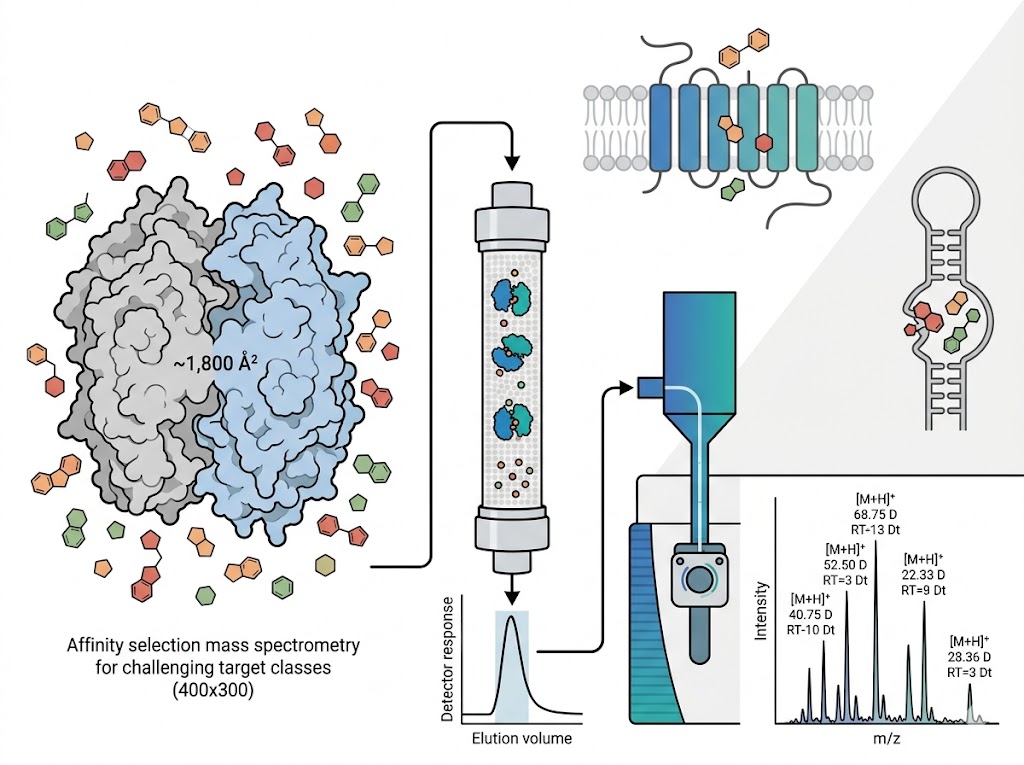
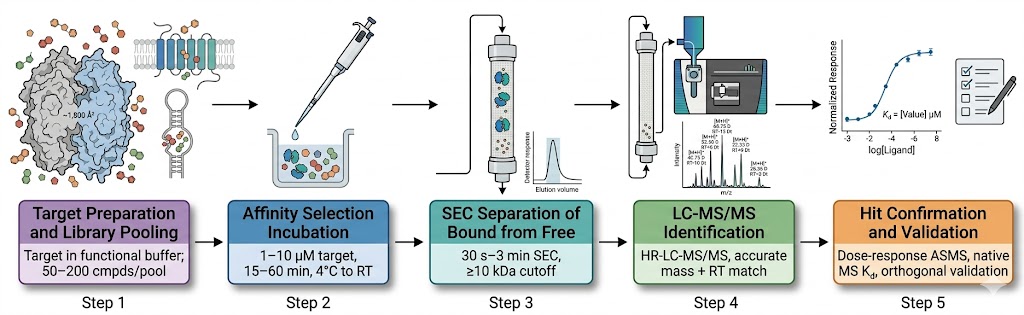
Ligand discovery for challenging targets by MS overview: affinity selection mass spectrometry workflow showing target incubation with compound pools, SEC separation of bound from free, and LC-MS/MS identification of bound ligands — enabling hit identification for PPI, membrane protein, RNA, and allosteric site targets.
What Is MS Ligand Discovery Service Modes Tech Comparison Sample Demo Case Study FAQ

What Is MS-Based Ligand Discovery for Challenging Targets?

MS-based ligand discovery for challenging targets encompasses two complementary readout strategies — Affinity Selection Mass Spectrometry (ASMS) and direct native MS — each adapted to the specific biophysical constraints of the target class.

ASMS operates through a three-step process. The target — which can be a purified protein, a protein complex, a membrane protein in detergent or nanodisc, an RNA construct, or a crude cell lysate overexpressing the target — is incubated with a pooled compound library. Target-ligand complexes are then separated from unbound compounds by size-exclusion chromatography (SEC), centrifugal filtration, or bead-based capture — a step that typically takes 30 seconds to 5 minutes. The bound ligands are dissociated from the target and identified by LC-MS/MS. The identity and relative abundance of each ligand are determined by its accurate mass and retention time relative to the compound library database. The key advantage of ASMS is that it decouples binding from detection: the binding step occurs in solution under near-native conditions, while detection is performed by mature LC-MS/MS technology, making it compatible with any target format and any buffer condition.

Direct native MS — analysis of intact target-ligand complexes by nano-ESI under non-denaturing conditions — provides complementary information when the target can be purified and buffer-exchanged into volatile buffers. Native MS delivers binding stoichiometry, fractional occupancy, and Kd from dose-response titration, but requires higher target purity and MS-compatible buffer conditions. Both approaches are deployed within our integrated Target → Drug Discovery platform, where they serve as the primary modalities for ligand identification against the most demanding target classes.

Why MS for Challenging Target Ligand Discovery

PPI targets: binding surface topology is irrelevant to the readout

PPI interfaces are large (1,500–3,000 Ų), flat, and devoid of deep pockets. Fluorescence-based PPI assays require a labelled partner and measure disruption of the PPI — a secondary readout prone to false positives from aggregation and fluorescence interference. ASMS reads the ligand mass directly: the target is incubated with compounds, and ligands that bind are detected by their mass regardless of where on the protein surface they bind, enabling identification of both orthosteric PPI inhibitors and allosteric modulators.

Membrane proteins: compatible with detergents, nanodiscs, and native membranes

Membrane proteins require a hydrophobic environment that is incompatible with most fluorescence formats due to light scattering and detergent interference. ASMS tolerates these environments because the SEC or centrifugal separation step isolates the target-ligand complex from bulk solution, and the LC-MS/MS detection is unaffected by detergent or lipid composition. GPCRs, ion channels, transporters, and solute carriers in detergent micelles or nanodiscs are all compatible with ASMS screening.

RNA targets: detection by mass, not by fluorescence

RNA-targeted drug discovery has been limited by the lack of robust screening assays. RNA is highly charged, conformationally dynamic, and lacks hydrophobic pockets. Fluorescence RNA assays require labelled constructs or FRET-based sensors — available for only a handful of targets. ASMS circumvents these limitations: RNA-ligand complexes are separated by SEC, and bound ligands are identified by LC-MS/MS regardless of RNA sequence, structure, or labelling status.

Allosteric and cryptic sites: detection independent of catalytic activity

Allosteric sites are remote from the active site and cannot be detected by activity-based turnover assays. Cryptic sites are absent in the apo structure and open only upon ligand binding — invisible to both activity-based and structure-based approaches. ASMS detects binding to any site on the target, known or unknown, because the readout is the mass of the ligand bound, not a functional consequence of binding. Competition ASMS with an active-site probe classifies hits as orthosteric or allosteric.

Works with crude lysates and unpurified targets

For targets that are difficult to purify — membrane proteins, unstable complexes, low-expression proteins — ASMS can be performed directly on crude cell lysates or membrane preparations. The LC-MS/MS readout identifies bound ligands by their mass and retention time, with no interference from co-eluting cellular components. The only requirements are sufficient target concentration (typically 0.1–1 µM) and the absence of competing endogenous ligands.

Parallel screening and selectivity profiling

Multiple targets can be screened in parallel within a single ASMS experiment by including targets of different molecular weights (for SEC-based separation) or by using multiplexed LC-MS/MS methods. This enables selectivity profiling at the primary screening stage — identifying which compounds bind only the target of interest and which also bind related family members, providing early selectivity data without a separate assay campaign.

Service Modes — Target-Class-Specific Ligand Discovery by ASMS and Native MS

We offer four target-class-specific service modes within our ligand discovery platform, each optimised for the biophysical properties and handling requirements of the target class. All modes share the same core ASMS or native MS detection principle but differ in target preparation, separation method, and data output.

MODE 1

ASMS for PPI Target Ligand Discovery

ASMS screening against protein-protein interaction targets. The target protein (one partner of the PPI) is incubated with compound pools in solution, with or without the second partner present. Bound ligands are separated by SEC or centrifugal filtration and identified by LC-MS/MS. Competition experiments with a known PPI probe classify hits as orthosteric or allosteric.

  • Format: Target at 1–10 µM in aqueous buffer; compound pools of 50–200 per pool; SEC or centrifugal separation; LC-MS/MS identification.
  • Output: Bound ligand list with relative abundance; hit ranking by MS signal intensity; competition binding site classification.
  • Target classes: Bcl-2 family, MDM2-p53, KEAP1-NRF2, β-catenin-TCF, RAS-effector, and other PPI systems.
MODE 2

Membrane Protein Ligand Discovery by ASMS / Native MS

Ligand discovery for detergent-solubilised or nanodisc-reconstituted membrane proteins. The membrane protein target is maintained in its stabilised environment throughout the binding incubation and separation steps. ASMS is used for broad library screening where target purity is limited; native MS is available for purified membrane protein targets in MS-compatible detergents, providing binding stoichiometry and Kd data.

  • Format: Membrane protein in detergent or nanodisc at 1–5 µM; ASMS for primary screening; native MS for hit validation and Kd determination.
  • Output: Bound ligand list with relative abundance; native MS confirmation with binding stoichiometry and Kd (purified targets).
  • Target classes: GPCRs, ion channels, solute carriers (SLCs), transporters.
MODE 3

RNA-Targeted Ligand Discovery by ASMS

ASMS screening against RNA constructs — aptamers, riboswitches, viral RNA elements, regulatory RNA motifs, and non-coding RNA. RNA is folded in the appropriate buffer conditions, incubated with compound pools, and RNA-ligand complexes are separated by SEC. Bound ligands are eluted and identified by LC-MS/MS.

  • Format: RNA construct at 2–10 µM in folding buffer; compound pools of 50–200 per pool; SEC-based separation; LC-MS/MS identification.
  • Output: Bound ligand list with relative abundance; hit ranking by MS signal intensity; selectivity counterscreen against an unrelated RNA construct.
  • Selectivity counterscreening is included to distinguish specific RNA-ligand interactions from electrostatic or intercalative non-specific binding.
MODE 4

Allosteric and Cryptic Site Ligand Discovery

ASMS or native MS screening designed to identify ligands at sites distinct from the active site. The target is incubated with compound pools either alone or in the presence of an active-site probe. Ligands that bind concurrently with the probe are classified as allosteric. For targets without known active-site probes, unmodified ASMS screening is performed and the binding site is determined post-hoc by HDX-MS or crosslinking MS — both available through our structural and biophysical hit validation service.

  • Format: Target ± active-site probe; ASMS primary screen; HDX-MS or crosslinking MS for binding site localisation on priority hits.
  • Output: Bound ligand list with allosteric/orthosteric classification; binding site map for confirmed hits.
  • Applicable to any target with a known active-site probe or substrate that can be detected by MS.

Analytical Workflow

Five stages from target preparation to confirmed hit list:

1

Target preparation and library pooling

The target — protein, membrane protein preparation, RNA, or lysate — is prepared in its functional buffer. For ASMS, any buffer that preserves target structural integrity is acceptable, including those containing detergents, low-concentration chaotropes, physiological salts, and reducing agents. The compound library is formatted in 96-well plates at defined stock concentrations and pooled at 50–200 compounds per pool to balance throughput with LC-MS/MS detection sensitivity.

2

Affinity selection incubation

The target is incubated with each compound pool at a defined concentration (typically 1–10 µM target; 1–50 µM per compound) in binding buffer. Incubation is optimised for the target — typically 15–60 minutes at room temperature or 4°C. Control incubations are performed in parallel: target-only (no compounds), compound-only (no target), and target + known positive control to confirm assay performance.

3

Separation of bound from free ligands

Target-ligand complexes are separated from unbound compounds by SEC (~30 s to 3 min, collecting the early-eluting target fraction), centrifugal filtration (for targets >10 kDa), or bead-based capture (for His-tagged, GST-tagged, or biotinylated targets). The separation speed is optimised to minimise dissociation of weak-binding ligands during the separation window — a critical determinant of ASMS sensitivity for low-affinity interactions.

4

Ligand elution and LC-MS/MS identification

The separated target-ligand fraction is denatured to dissociate bound ligands. Eluted ligands are injected onto a reversed-phase LC column and analysed by high-resolution LC-MS/MS. Compound identification matches accurate mass and retention time to the compound library database, with MS/MS confirmation where needed. Relative binding is quantified from extracted ion chromatogram peak areas normalised to an internal standard.

5

Hit confirmation and validation

Primary hits are confirmed by repeat ASMS as single compounds. Confirmed hits are ranked by dose-response ASMS at 3–5 concentrations. For targets that can be purified in MS-compatible buffers, native MS titration provides Kd determination and binding stoichiometry. Orthogonal validation by SPR, thermal stabilisation assay, or target-appropriate biochemical assay is available for priority hits advancing to lead optimisation.

Ligand discovery by ASMS analytical workflow: target preparation and compound library pooling, affinity selection incubation, SEC or centrifugal separation of bound from free ligands, LC-MS/MS identification and quantification of eluted ligands, and hit confirmation by dose-response ASMS and native MS validation.

Applications by Target Class

Each target class presents specific challenges that our MS-based ligand discovery platform is designed to address.

PPI target ligand discovery

For protein-protein interaction targets — including Bcl-2 family, MDM2-p53, KEAP1-NRF2, β-catenin-TCF, and RAS-effector interactions — ASMS provides a direct binding readout without requiring the second PPI partner or a functional assay. Hits are classified as orthosteric or allosteric by competition ASMS with the tagged partner protein.

Output: PPI ligand hit list with binding site classification; native MS Kd for confirmed hits (purified target permitting); HDX-MS epitope mapping for binding site localisation on priority hits.

Membrane protein ligand discovery

Membrane proteins in detergent micelles, nanodiscs, or native membrane vesicles are screened by ASMS without workflow modification — the detergent or lipid environment is compatible with SEC and centrifugal separation. This makes the platform applicable to GPCRs, ion channels, solute carriers, and transporters — target classes that represent a substantial fraction of the druggable genome but are excluded from fluorescence-based HTS.

Output: Membrane protein ligand hit list; native MS confirmation for detergent-solubilised purified targets; binding stoichiometry or competition with known probe.

RNA-targeted ligand discovery

RNA targets — riboswitches, viral RNA elements, regulatory RNA motifs, and non-coding RNA — are screened with the RNA folded in its functional conformation. RNA-ligand complexes are separated by SEC, and hits are confirmed by dose-response ASMS. Selectivity counterscreening against an unrelated RNA construct distinguishes specific from non-electrostatic binding.

Output: RNA-binding ligand hit list with relative binding ranking; selectivity assessment against unrelated RNA.

Allosteric and cryptic site ligand discovery

For enzymatic targets where the active site is known but allosteric modulation is desired, ASMS screening with a saturating concentration of an active-site probe identifies ligands that bind concurrently — the hallmark of an allosteric interaction. For targets with no prior binding information, unmodified ASMS identifies any ligand that binds, and the binding site is determined post-hoc by HDX-MS or crosslinking MS.

Output: Allosteric ligand hit list with competition classification; binding site map by HDX-MS or crosslinking MS for priority hits.

Technology Comparison: ASMS vs Alternative Screening Platforms for Challenging Targets

PlatformTarget Format RequiredLabel or Modification?ThroughputKey StrengthKey Limitation
ASMS (this service)Purified, complex, membrane, RNA, lysate — any SEC/centrifugation-compatible formatNone5,000–20,000 cmpds/wkAny target, any buffer; no modification requiredWeak binders may dissociate during separation
Native MSPurified protein in volatile bufferNone1,000–5,000 cmpds/2–4 wkBinding stoichiometry, Kd, solution-phase readoutPurified target required; buffer constraints
Fluorescence HTSPurified protein in assay bufferRequired — fluorescent probe or labelled substrate>100,000 cmpds/daySpeed; established infrastructureFails for PPI, membrane protein, RNA targets
DEL (DNA-Encoded Libraries)Purified protein — tagged or immobilisedRequired — DNA tag; often His/GST tagBillions of compoundsUltra-large library sizeRequires tagged target; DNA interference with some targets
SPRPurified, surface-immobilised proteinNone (immobilisation required)Low–moderateReal-time kinetics; label-freeImmobilisation required; throughput limited
NMR (STD/WaterLOGSY)Purified protein — any bufferNoneLow (~1–2 cmpds/hr)Any buffer; detects weak bindersHigh protein consumption; low throughput

Sample Requirements

ComponentFormat OptionsRecommended InputMinimum InputKey Notes
Target (soluble protein)Purified, complex, or lysate; any buffer50–200 µg total10 µg per 1,000 cmpdsAny buffer is acceptable; no MS-compatibility required for ASMS
Target (membrane protein)Detergent-solubilised, nanodisc, or membrane vesicles100–500 µg total25 µg per 1,000 cmpdsSpecify detergent/lipid composition
Target (RNA)Purified RNA in folding buffer50–200 µg total10 µg per 1,000 cmpdsProvide folding protocol and buffer conditions
Compound Library96- or 384-well plate, DMSO stocks5–10 µL/well at 10 mM2 µL at 10 mMProvide SDF with molecular weights; any chemical class accepted
Reference LigandIndividual vial or well10 µL at 10 mM5 µL at 1 mMKnown binder (any affinity) for assay validation

For targets that are only available as crude lysates, we assess the target concentration in the lysate during the feasibility phase. For membrane proteins in novel detergents or buffer compositions, we recommend a compatibility assessment before committing to a full screening campaign.

Deliverables

  • ASMS screening report: per-pool extracted ion chromatograms and mass spectra; compound-to-well mapping table; hit list ranked by MS signal intensity with retention time and accurate mass confirmation.
  • Hit confirmation data: individual compound ASMS confirmation at screening concentration; dose-response ASMS binding ranking (3–5 concentrations) for confirmed hits.
  • Native MS validation report (where applicable): intact target-ligand complex mass spectra, binding stoichiometry, dose-response Kd with fitted binding isotherm.
  • Binding site classification (ASMS competition): orthosteric vs allosteric assignment for targets with available active-site or binding-site probes.
  • Optional orthogonal data: SPR sensograms and affinity data; HDX-MS binding epitope maps; crosslinking MS distance constraints.
  • Written interpretation report: hit triage recommendations, target-class-specific considerations, selectivity assessment, and recommended follow-up strategy.
  • Raw MS data files in standard formats (mzXML, raw) for customer re-processing.

Representative Results

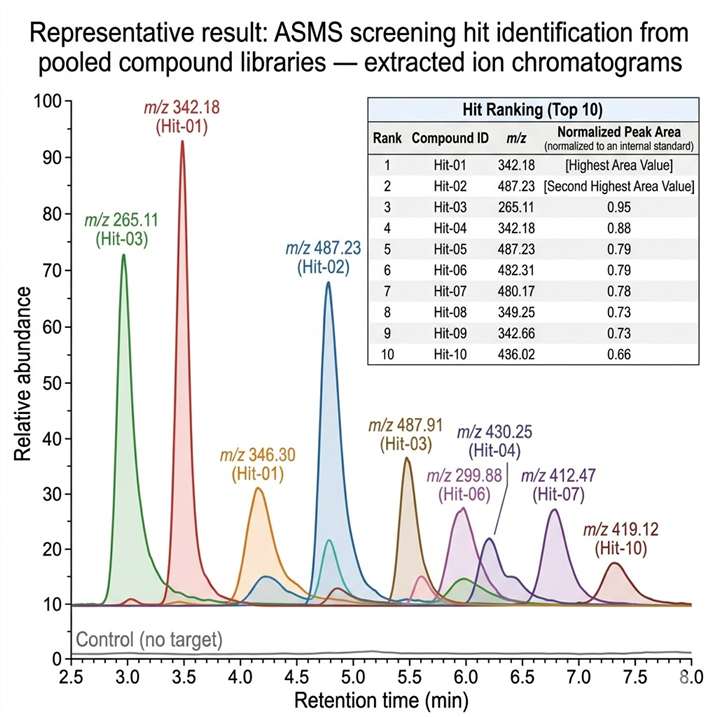
ASMS screening data from a PPI target campaign: representative extracted ion chromatograms (EICs) showing bound ligands identified from a 100-compound pool after SEC separation and LC-MS/MS analysis, with hit peaks labelled by compound mass and retention time.

ASMS screening hit identification from pooled compound libraries

Representative LC-MS/MS data from an ASMS screening campaign against a PPI target. Extracted ion chromatograms (EICs) for the top 10 hits from a 100-compound pool are shown, with each compound identified by its monoisotopic mass and retention time. The hit ranking is determined by integrated peak area normalised to an internal standard. The control (no target) run shows no detectable compounds in the eluted fraction, confirming that all observed hits are target-dependent.

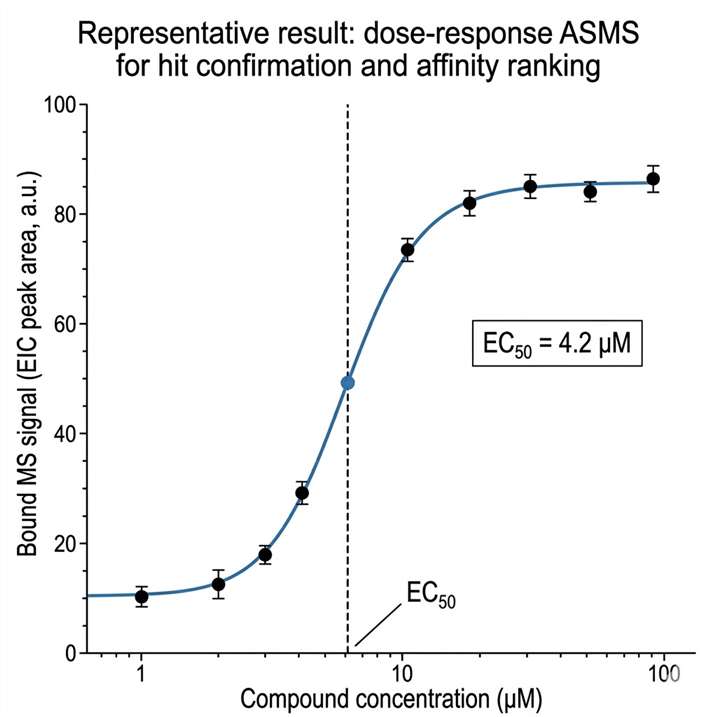
Dose-response ASMS binding data for a confirmed hit: MS signal intensity (bound) plotted against compound concentration (log scale) across 5 concentrations, showing a saturable binding response with EC50 annotation.

Dose-response ASMS for hit confirmation and affinity ranking

Dose-response ASMS binding data for a confirmed hit from a membrane protein screening campaign. The bound MS signal (extracted ion chromatogram peak area) is plotted against compound concentration across 5 points (1–100 µM). The saturable, concentration-dependent binding confirms specific target engagement. The estimated EC₅₀ from the dose-response ASMS fit is 4.2 µM. This approach enables relative affinity ranking of hits without requiring purified target for SPR or native MS.

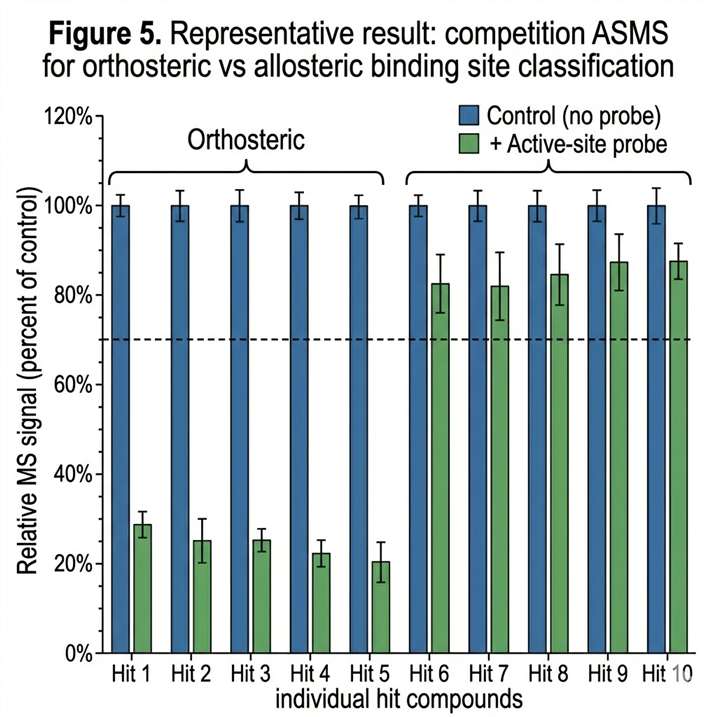
Competition ASMS data for allosteric vs orthosteric binding site classification: bar chart showing the MS signal of bound ligand with and without the presence of a known active-site probe, illustrating reduced binding for orthosteric competitors and unchanged binding for allosteric ligands.

Competition ASMS for binding site classification

Competition ASMS data classifying hits as orthosteric or allosteric. The target is pre-incubated with a saturating concentration of a known active-site probe, then the ASMS screen is repeated. Hits whose binding is reduced by ≥70% in the presence of the probe (left group) are classified as orthosteric — they bind at or near the active site and compete with the probe. Hits whose binding is unchanged (<20% reduction, right group) are classified as allosteric — they bind at a distinct site that does not overlap with the probe.

Case Study: Enantioselective ASMS Discovers Ligands for Low-Ligandability Proteins — WD40 Repeats, E3 Ligase Adaptors, and Scaffold Proteins

Wang X., Sun J., Ahmad S., et al. "Enantioselective protein affinity selection mass spectrometry for low-ligandability proteins." Nature Communications. 2025;17:651. https://doi.org/10.1038/s41467-025-67403-2 Open Access.

Background

A substantial fraction of the human proteome consists of "low-ligandability" proteins — lacking deep hydrophobic pockets, presenting large flat surfaces, or functioning through protein-protein interactions. These proteins — including WD40 repeat domains, E3 ligase adaptors, and scaffold proteins — are systematically excluded from conventional screening campaigns because they lack both a screenable biochemical activity and defined binding pockets. The authors sought to develop a broadly applicable method for ligand discovery against this target class using enantioselective affinity selection mass spectrometry (E-ASMS).

Methods

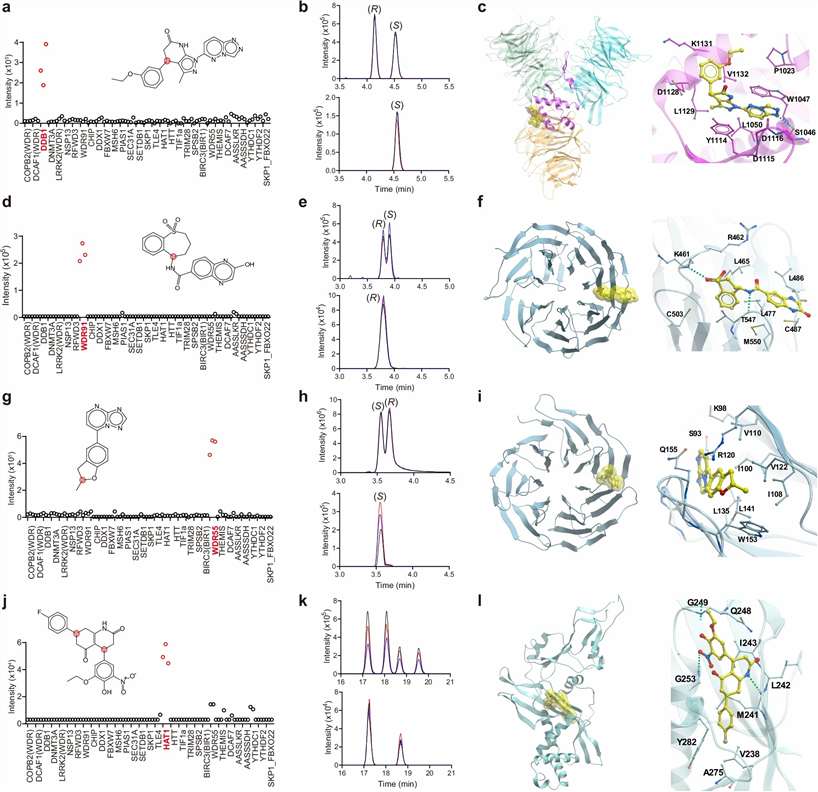
The E-ASMS method combines ASMS with a library of 8,217 racemic compounds (each pair of enantiomers). The key insight is that for a specific binding interaction, only one enantiomer typically binds with measurable affinity. By measuring the enantiomeric enrichment of the eluted ligand — the ratio of the two enantiomers in the bound fraction compared to the input racemate — E-ASMS provides an internal confirmation of specific binding. An enrichment ratio significantly different from 1.0 indicates stereoselective, target-specific binding, distinguishing true hits from non-specific binders. The authors screened 31 low-ligandability protein targets spanning WD40 repeat proteins (WDR91, WDR55, WDR70, WDR82), E3 ligase components and adaptors (DDB1, HAT1, TRIM21, TRIM33), and other scaffold and regulatory proteins.

Results

From the 31 targets screened, 16 confirmed hits were identified across 12 different proteins — a hit rate comparable to conventional ASMS campaigns but achieved against protein classes that have historically resisted ligand discovery. KD values ranged from 2 to 87 µM, confirmed by dose-response ASMS and orthogonal biophysical methods (SPR or ITC). Seven of the 16 hits showed significant enantioselectivity (enantiomeric enrichment ratio ≥2:1 or ≤1:2), providing built-in confirmation of stereospecific target engagement. X-ray crystal structures for several target-hit pairs confirmed the binding mode and the stereochemical basis of enantioselectivity. Notably, the method identified hits against WDR91 — a WD40 repeat protein with no previously known ligands — and against DDB1, a substrate adaptor for the CUL4 E3 ubiquitin ligase complex, demonstrating that the method is effective for true orphan targets.

Significance for MS-Based Ligand Discovery

This study demonstrates that ASMS is effective against the most challenging target class in drug discovery — low-ligandability proteins with flat surfaces and no functional activity. The enantiomeric enrichment strategy provides an internal specificity control that is particularly valuable for targets where orthogonal validation assays may not exist. The broad applicability across WD40 proteins, E3 ligase components, and scaffold proteins confirms that ASMS-based ligand discovery is not limited by target topology, surface chemistry, or prior binding knowledge — exactly the value proposition for challenging target campaigns.

Figure adapted from Wang et al. 2025, Nature Communications, showing E-ASMS results for low-ligandability protein screening: enantiomeric enrichment ratios for identified hits, dose-response ASMS binding curves, and X-ray crystal structures confirming stereoselective binding modes for hit compounds against WDR91 and DDB1.

Figure adapted from Wang et al. 2025 (Nature Communications, DOI: 10.1038/s41467-025-67403-2). Enantioselective ASMS screening results for low-ligandability proteins — enantiomeric enrichment, dose-response binding, and crystal structures confirming stereoselective target engagement. CC BY 4.0.

FAQ

Frequently Asked Questions

Q: Can ASMS detect weak binding ligands (Kd > 100 µM)?

Yes, with appropriate experimental design. The key parameter is the separation speed relative to the ligand dissociation rate. For SEC-based ASMS with a 30–60 second separation, ligands with Kd up to approximately 500 µM can be detected provided the on-rate is diffusion-limited. For weaker binders, we can increase the compound concentration or reduce the separation temperature to slow dissociation. We optimise the separation method based on the expected affinity range during the assay design phase.

Q: How does ASMS compare with DEL for challenging target screening?

DEL offers larger library sizes (billions of compounds) but requires tagged or immobilised target and can suffer from DNA interference with certain target classes. ASMS is compatible with any target format — crude lysate, membrane preparation, RNA, or protein complex — without target modification. For targets where protein production is limiting or purification is difficult, ASMS is often the more practical choice. Many clients use both platforms: DEL for ultra-large library exploration and ASMS for focused library screening and orthogonal hit validation.

Q: What compound libraries are compatible with ASMS screening?

Any soluble compound library is compatible. We routinely screen fragment libraries (150–300 Da), drug-like libraries (200–500 Da), natural product extracts, peptide libraries, and covalent fragment libraries. The only requirement is that compounds are soluble in the binding buffer at the screening concentration. The pooling strategy is determined by LC-MS/MS detection sensitivity and expected hit rate — typically 50–200 compounds per pool for drug-like libraries and 100–500 per pool for fragments.

Q: Can ASMS work with targets available only as crude lysates?

Yes — this is one of the most powerful features of ASMS. The target can be present in crude cell lysate, membrane preparation, or partially purified fraction. The LC-MS/MS readout identifies bound compounds by their mass and retention time — co-eluting cellular components do not interfere. The critical requirements are sufficient target concentration in the lysate (typically 0.1–1 µM) and the absence of a competing endogenous ligand. We assess lysate suitability during the feasibility phase.

Q: How are false positives from non-specific binding controlled?

Non-specific binding is controlled by compound-only control incubations — compounds that appear in the bound fraction without target are flagged as non-specific binders. For targets available in multiple buffer conditions, concordance across conditions provides additional specificity evidence. For well-characterised targets, a known positive control ligand is included in each screening plate. The enantiomeric enrichment approach (E-ASMS) provides an elegant additional specificity filter for targets where racemic libraries are available.

Q: What is the typical throughput of an ASMS campaign?

With 100 compounds per pool and a 10-minute LC-MS/MS run, a 10,000-compound library is screened in approximately 20 hours of instrument time (200 pools including controls). Full campaign timelines — including library formatting, screening, data analysis, and hit confirmation — are typically 2–4 weeks for 10,000–50,000 compounds. Larger libraries can be accommodated by increasing pool size or extending the campaign timeline. Fragment libraries of 1,000–5,000 compounds can be completed in 1–2 weeks.

References

  1. Oliveira P.C.A., Amaral B.S., Cardoso C.L., Cass Q.B., Moraes M.C. Breaking the boundaries of affinity selection-mass spectrometry: from ligand screening to target-ligand interaction insights. J Pharm Anal. 2025;15(4):101379.
  2. Prudent R., Lemoine H., Walsh J., Roche D. Affinity selection mass spectrometry speeding drug discovery. Drug Discov Today. 2023;28(11):103760.
  3. Prudent R., Annis D.A., Dandliker P.J., Ortholand J.Y., Roche D. Exploring new targets and chemical space with affinity selection-mass spectrometry. Nat Rev Chem. 2021;5:62–71.

Design Your Challenging Target Ligand Discovery Campaign with the MassTarget Team

Tell us your target class, available material, and screening goals — our scientists will assess feasibility, recommend the optimal ASMS or native MS strategy, and design a campaign plan matched to your programme timeline.

For Research Use Only (RUO). Not intended for diagnostic, therapeutic, or clinical decision-making purposes. Creative Proteomics services are designed to support preclinical research, drug discovery, and mechanism of action studies only.

Online Inquiry

Please submit a detailed description of your project. We will provide you with a customized project plan to meet your research requests. You can also send emails directly to for inquiries.

* Email
Phone
* Service & Products of Interest
Services Required and Project Description