Hydroxyl Radical Footprinting (HRF-MS) Services

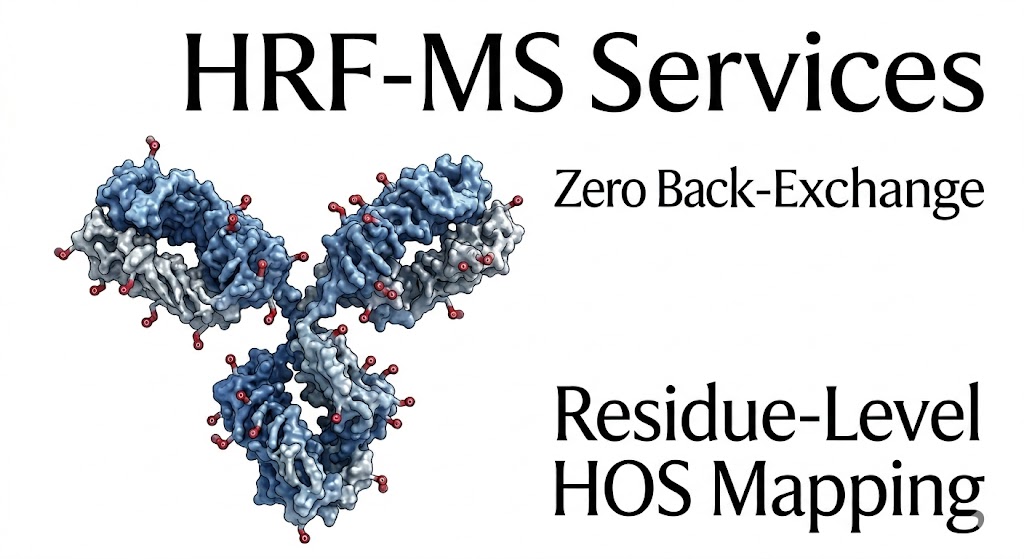
Secure high-resolution, irreversible structural data with our advanced Hydroxyl Radical Footprinting (HRF-MS) services. By permanently labeling solvent-accessible residues while your proteins remain in their native physiological state, we completely eliminate the back-exchange issues that plague other structural techniques. We deliver robust Higher-Order Structure (HOS) comparability and precise epitope mapping for your most challenging biologics, biosimilars, and multi-subunit protein complexes.

  • 100% irreversible covalent labeling (zero back-exchange)
  • Strict dosimetry QC prevents protein over-oxidation
  • Residue-level 3D solvent accessibility mapping
Hydroxyl Radical Footprinting (HRF-MS) Services
What is HRF-MS?Service CapabilitiesTechnology ComparisonWorkflow & Dosimetry QCDemo ResultsSample RequirementsCase StudyBioinformaticsFAQ

What is HRF-MS? (Irreversible Covalent Footprinting)

Hydroxyl Radical Footprinting (HRF-MS) is an advanced structural mass spectrometry technique that maps protein topography. By exposing samples to microsecond bursts of hydroxyl radicals, it covalently and irreversibly labels solvent-accessible amino acid side chains, permanently freezing the protein's native conformational state before any unfolding can occur.

This irreversible covalent labeling is the absolute core advantage of HRF-MS compared to traditional structural mass spectrometry methods. In standard HDX-MS assays, the isotopic deuterium labels are highly labile; they can easily reverse back to normal hydrogen (a phenomenon known as back-exchange) during the required downstream liquid chromatography and enzymatic digestion steps. If a complex protein requires long digestion times—such as heavily glycosylated monoclonal antibodies or tightly folded membrane proteins—the HDX signal is frequently lost entirely.

Because HRF-MS creates a stable, covalent oxygen addition (typically generating +16 Da or +32 Da mass shifts) directly on the amino acid side chains, the structural footprint is permanently locked into place. This allows our analytical scientists to perform extensive, aggressive downstream processing, including prolonged multi-protease digestions or extreme pH purifications, without losing any of your vital structural data. The result is unparalleled residue-level resolution for highly complex protein targets. As a broader class of covalent labelling mass spectrometry, HRF encompasses several highly specialized, rapid techniques, including its premier subset, Fast Photochemical Oxidation of Proteins (FPOP-MS).

Service Capabilities & Boundaries (Epitopes, HOS & PPIs)

Our mass spectrometry platform is specifically engineered to handle complex biophysical challenges that standard analytical biochemical assays simply cannot resolve. We utilize HRF-MS to provide actionable structural insights for early drug discovery, lead optimization, and stringent regulatory compliance submissions.

Projects We Excel At:

Higher-Order Structure (HOS) Comparability for Biosimilars

Regulatory agencies (such as the FDA and EMA) increasingly demand robust, high-resolution proof that a biosimilar candidate shares the exact same three-dimensional folding and conformational dynamics as the originator biologic. We use HRF-MS to generate residue-level structural fingerprints, proving lot-to-lot consistency and conformational equivalence to confidently support your regulatory filings.

High-Resolution Epitope Mapping

We precisely map the binding interfaces between antigens and advanced therapeutics, including monoclonal antibodies, bispecific antibodies (bsAbs), and nanobodies. Because HRF-MS labels specific amino acid side chains (particularly aromatics and sulfurs) rather than just the protein backbone, we frequently achieve much higher spatial resolution than alternative methods, perfectly pinpointing the therapeutic binding pocket to secure your intellectual property.

Antibody-Drug Conjugate (ADC) Structural Profiling

The conjugation of cytotoxic payloads can sometimes alter the native conformation of the carrier antibody, impacting target binding and pharmacokinetics. We deploy HRF-MS to verify that the higher-order structure of the antibody remains completely intact after the chemical conjugation process.

Intrinsically Disordered Proteins & PPIs

HRF-MS captures the native solution-state dynamics of highly flexible ensembles (IDPs). We map the direct contact surfaces of massive, multi-subunit protein assemblies (including viral capsids like AAVs) by comparing the oxidation footprints of the individual apo-proteins versus the fully assembled holo-complex. We also easily detect distant allosteric conformational changes induced by small molecule binding.

Technology Comparison: HRF-MS vs. HDX-MS vs. XL-MS

Selecting the appropriate structural mass spectrometry tool is a critical strategic decision that dictates the quality, depth, and reliability of your mechanism-of-action data.

FeatureHRF-MSHDX-MSCross-Linking Mass Spectrometry (XL-MS)
Labeling NatureIrreversible (Covalent side-chain modification)Reversible (Isotopic backbone exchange)Irreversible (Covalent physical linker between residues)
Structural ResolutionResidue-level (Side-chain specific)Peptide-level (Backbone segments)Distance constraints between specific reactive residues
Downstream ProcessingExcellent (Survives harsh digestion, strong denaturants, and complex purification)Poor (Requires strict sub-zero temperatures and extremely fast LC to prevent signal loss)Good (Survives standard sample processing protocols)
Best Used ForComplex samples requiring long digestions, stringent HOS comparability, high-resolution epitope mappingRoutine dynamic conformational mapping of highly stable, easily digested complexesMapping topological distance constraints of massive, multi-subunit assemblies

Our Solution Selection Strategy:

  • Choose HDX-MS for routine, high-throughput dynamic conformational mapping of stable protein complexes where standard, rapid pepsin digestion protocols are sufficient to achieve necessary sequence coverage.
  • Choose XL-MS when your primary goal is to map the topological distance constraints of large, multi-subunit assemblies to build highly accurate 3D architectural models of the protein interaction network.
  • Choose HRF-MS when you need strict residue-level resolution, require irreversible labeling due to complex or lengthy downstream sample processing requirements, or need stringent HOS comparability data that completely avoids the severe risk of back-exchange signal loss.

End-to-End HRF Workflow & Strict Dosimetry QC

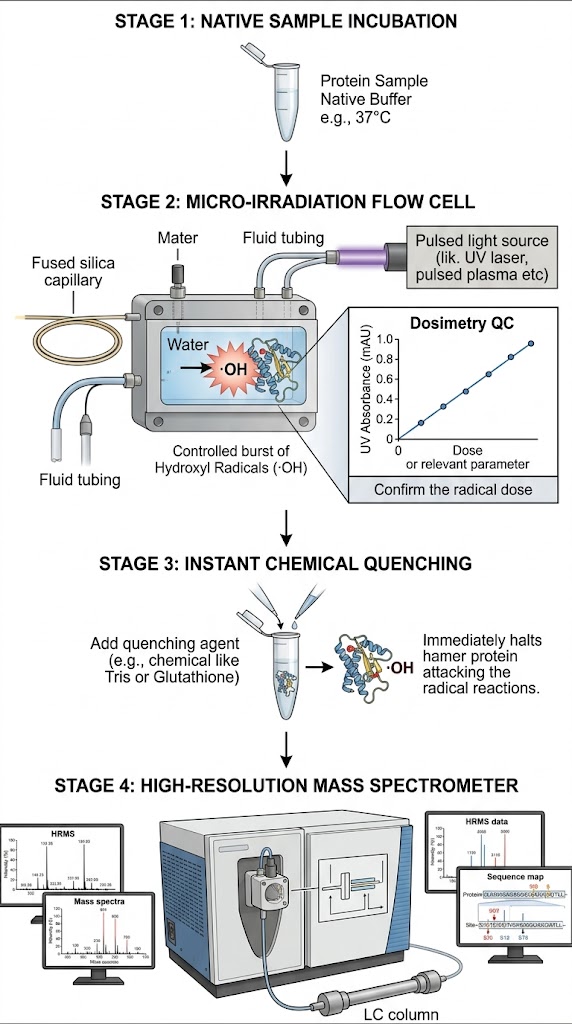
The greatest fear researchers have regarding radical footprinting is the inherent risk of over-oxidation. If a protein receives too many hydroxyl radicals, the oxidative energy can physically force the protein to unfold, completely destroying the native physiological structure you are trying to measure. We have engineered a highly controlled, automated workflow featuring strict in-line dosimetry to guarantee your protein remains safely in its native fold throughout the entire labeling process.

1

Native Sample Incubation

We prepare your protein complexes in a native, non-scavenging physiological buffer. For interaction studies, we gently incubate the target with its respective ligand or therapeutic antibody to reach full binding equilibrium. We then introduce a highly precise, minimal concentration of a radical precursor (such as hydrogen peroxide).

2

Controlled Radical Generation & Dosimetry QC

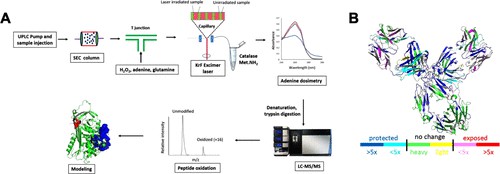
The sample flows continuously through our customized irradiation system. We generate hydroxyl radicals using extremely fast, microsecond energy pulses. Crucially, we include a specific "dosimeter" molecule (often an internal reporter peptide or adenine) in every single sample. By monitoring the UV absorbance loss of the dosimeter in real-time, we perfectly control and quantify the exact radical dose delivered to the sample. This guarantees that the radicals only graze the surface of your protein (modifying less than one residue per protein molecule on average) without causing macroscopic structural damage or unfolding.

3

Instant Quenching

Immediately after irradiation, the sample enters a quench buffer containing potent radical scavengers (like free methionine or catalase). This instantly stops all oxidative chemistry in less than a microsecond, safely freezing the structural footprint.

4

Complete Digestion

Because the HRF labels are entirely covalent and irreversible, we have the luxury of using long, multi-protease digestions (utilizing Trypsin, Chymotrypsin, or Glu-C) at elevated temperatures overnight. This allows us to achieve near 100% sequence coverage, even for heavily glycosylated antibodies or highly disulfide-bonded membrane proteins.

5

High-Resolution LC-MS/MS

The digested peptides are analyzed on our advanced Orbitrap mass spectrometers utilizing robust data-dependent acquisition (DDA) or data-independent acquisition (DIA) modes to locate the exact mass shifts indicating solvent exposure.

HRF-MS workflow highlighting strict in-line dosimetry to prevent over-oxidation and preserve native structure.

Demo Results: 3D Mapping & Residue-Level Oxidative Profiles

We do not simply deliver raw fragmentation spectra. Our structural bioinformatics team transforms highly complex mass spectrometry data arrays into beautiful, intuitive data visualizations that your entire discovery team, CMC group, and regulatory reviewers can easily interpret.

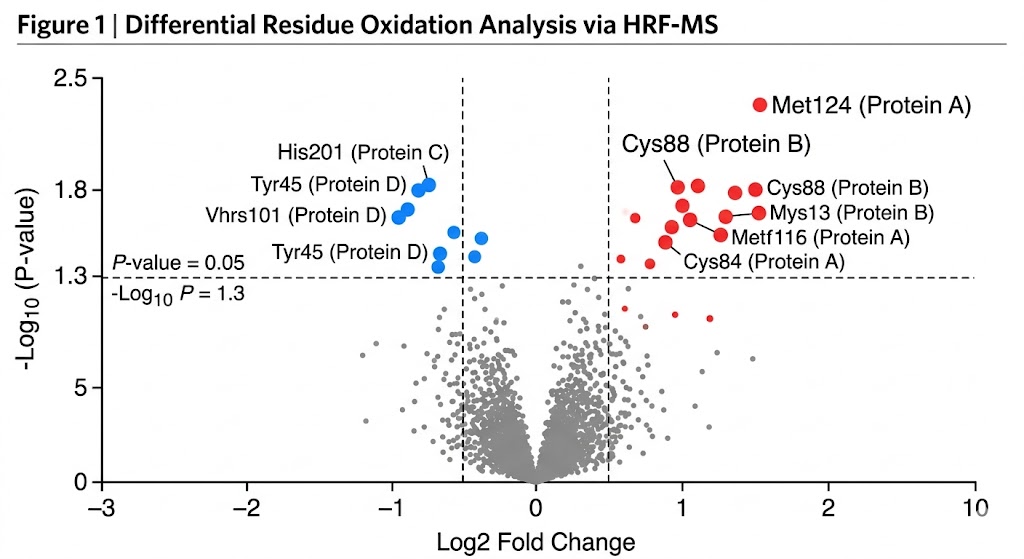
Residue-Level Differential Oxidation Plot highlighting exact amino acid side chains

Residue-Level Differential Oxidation Plot (Volcano Plot)

We provide rigorous statistical plots that highlight the exact amino acid side chains that change their solvent accessibility upon ligand binding. For example, if an exposed tryptophan residue is highly oxidized in the free protein but strongly protected when your drug binds, it will appear as a distinct, statistically significant data point, instantly pinpointing your active binding pocket.

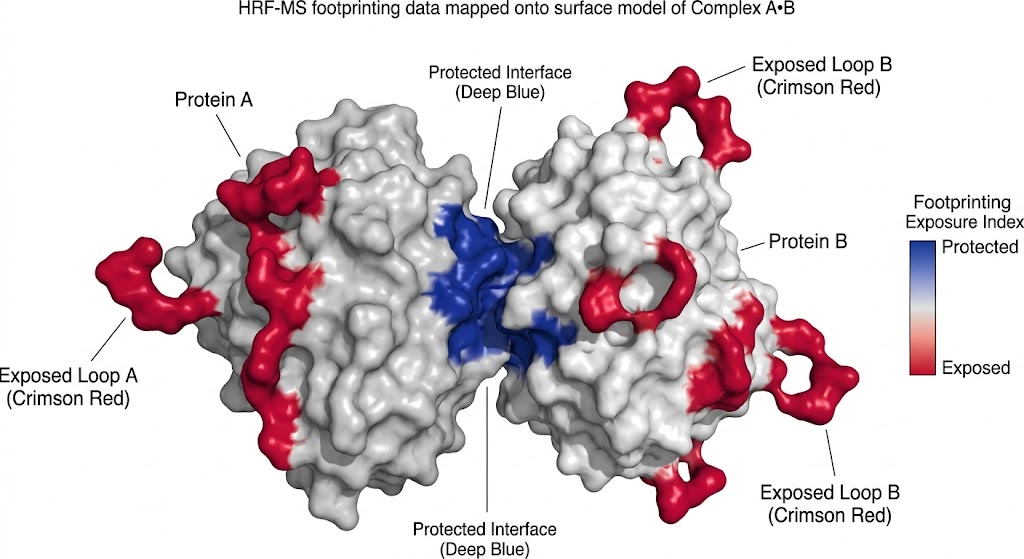
3D Structural Footprinting Heatmap highlighting shielded interaction interfaces

3D Structural Footprinting Heatmap

We take the raw quantitative oxidation percentage data and map it directly onto your target's PDB crystal structure or high-confidence AlphaFold model. Using a rigorous red and blue color scale, we visually highlight the shielded interaction interfaces (blue) and the highly flexible, exposed loops (red) in stunning three-dimensional space.

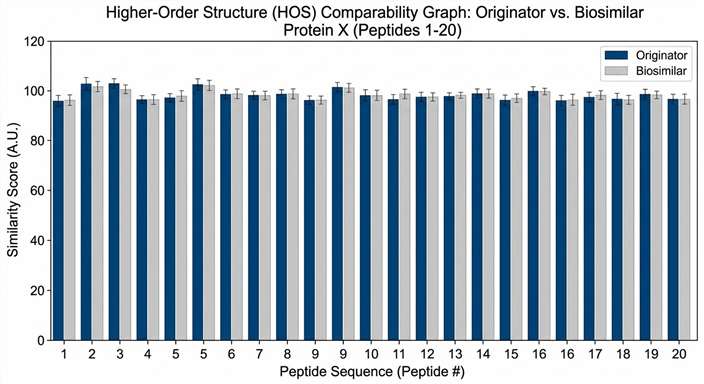
HOS Comparability Graph tracking oxidation fraction profiles

HOS Comparability Graph

For biosimilar development programs, we provide side-by-side oxidation fraction bar charts. We meticulously track the footprinting pattern of the biosimilar against the originator biologic across the entire amino acid sequence. A statistically matched oxidation profile provides unparalleled, court-tested proof of 3D structural equivalence.

Sample Requirements & Buffer Restrictions

Because HRF-MS relies on the precise chemical reactivity of highly transient hydroxyl radicals, the sample buffer environment must be strictly and carefully controlled. Many common laboratory buffers actively absorb and destroy radicals before they can label the protein, which will cause the experiment to fail completely with zero signal. To ensure the absolute success of your structural project, please adhere to the following stringent sample preparation guidelines:

Sample TypeMinimum AmountStrict Buffer RestrictionsPurity Requirement
Purified Biologics (mAbs, ADCs) / Proteins> 2 mg total protein (Concentration > 2 mg/mL)Strictly NO radical scavengers: Absolutely avoid TRIS, HEPES, DTT, Glycerol, DMSO, or high concentrations of sugars. PBS or water is preferred.> 90% purity (verified via SEC or SDS-PAGE)
Ligands / Small Molecules> 1 mgMust be highly soluble in aqueous buffers. If DMSO is required for solubility, it must be kept to an absolute minimum (< 1% final assay concentration) to prevent radical scavenging.> 95% purity

Note: Please ship all purified protein samples overnight on ample dry ice to preserve structural integrity. Do not ship samples at room temperature.

Case Study: Structural Characterization via HRF-MS

Hydroxyl Radical Protein Footprinting: A Mass Spectrometry-Based Structural Method for Studying the Higher Order Structure of Proteins. https://pubs.acs.org/doi/10.1021/acs.chemrev.1c00432

Background

Understanding the higher-order structure (HOS) of proteins and their biological complexes is vital for developing safe and effective biotherapeutics. Traditional structural biology methods like X-ray crystallography often struggle with highly flexible proteins or force the molecules into rigid, unnatural crystal lattices that do not reflect their true dynamic behavior in the human body. Furthermore, evaluating the structural comparability of biosimilars requires robust methods that can sensitively detect minute conformational deviations in solution. Researchers required a powerful analytical method to map solvent-accessible surfaces in a native liquid environment without suffering from the back-exchange limitations of standard techniques.

Methods

Researchers utilized Hydroxyl Radical Protein Footprinting (HRF-MS) to accurately probe the structural topography of therapeutic target proteins in their native solution state. By exposing the proteins to a carefully controlled, brief burst of hydroxyl radicals, they irreversibly labeled the solvent-exposed amino acids. Crucially, the radical dosage was strictly monitored in real-time using an internal dosimeter to prevent protein unfolding or biologically irrelevant over-oxidation. The stably labeled samples were then subjected to thorough, aggressive enzymatic digestion—which would have easily destroyed a traditional reversible HDX label—and analyzed using high-resolution liquid chromatography-tandem mass spectrometry (LC-MS/MS) to identify and quantify the exact sites of oxidation.

Results

As detailed in the comprehensive footprinting data and structural mapping models, HRF-MS successfully mapped the complex solvent-accessible surfaces of the target proteins. The mass spectrometry data accurately quantified specific, localized oxidation events—such as stable +16 Da and +32 Da oxygen additions to exposed aromatic residues (tyrosine, tryptophan, phenylalanine) and sulfur-containing residues (methionine). This massive, high-confidence dataset allowed the researchers to build high-fidelity, residue-level topographical maps that precisely pinpointed critical interaction interfaces and revealed subtle conformational changes that other analytical methods completely missed.

Conclusion

The extensive review demonstrates that HRF-MS is an exceptionally robust, mass spectrometry-based structural method. Its unique irreversible covalent labeling mechanism makes it uniquely powerful for evaluating the higher-order structure of challenging protein therapeutics, surviving rigorous downstream processing, and securing the critical, high-resolution structural data necessary for advanced drug development and rigorous regulatory evaluation by agencies worldwide.

Residue-level oxidative profiles, 3D structural footprinting heatmaps, and quantitative HOS comparability data

HRF-MS successfully mapped the complex solvent-accessible surfaces of target proteins, securing critical structural data.

Bioinformatics & Structural Data Deliverables

Our dedicated structural bioinformatics pipeline converts millions of raw mass spectrometry data points into actionable, regulatory-ready structural insights. We employ strict statistical thresholds and false-discovery rate (FDR) controls to eliminate background noise, artifactual oxidations, and ionization variances.

Minimum Deliverables:

  • Comprehensive residue-level oxidation percentage tables detailing every detected modification site across the protein sequence.
  • Statistical differential analysis comparing different structural states (e.g., Apo-protein vs. Holo-complex for epitope mapping, or Biosimilar vs. Originator for comparability).
  • Advanced PTM (Post-Translational Modification) filtering algorithms to ensure endogenous oxidations are subtracted from the final footprinting data.
  • A robust HOS comparability matrix demonstrating statistical structural equivalence across all protein domains, specifically tailored for CMC regulatory submissions.
  • A detailed methodology and quality control report outlining precise dosimetry parameters, radical yield, and digestion efficiency metrics.

Optional Add-ons:

  • High-Resolution 3D Mapping: We project the differential footprinting data directly onto PyMOL or Chimera 3D models, delivering publication-ready, high-resolution rendering files ready to be handed off to your molecular modeling team or included directly in your FDA/EMA regulatory filings.
FAQ

Frequently Asked Questions

Q: Will hydroxyl radicals destroy my protein's native structure?

No. While hydroxyl radicals are incredibly reactive, we completely prevent structural damage through strict in-line dosimetry control. We expose the protein to radicals for only a microsecond—orders of magnitude faster than the time it takes for a protein to physically unfold. We also use internal dosimeter peptides to ensure the radical dose is kept extremely low (modifying only a tiny fraction of the protein population), guaranteeing the protein remains in its pristine native fold at the exact moment it is covalently labeled.

Q: Why are buffers like TRIS, HEPES, and Glycerol strictly forbidden in sample submission?

Chemicals like TRIS, HEPES, DTT, DMSO, and glycerol are highly effective at scavenging (absorbing) hydroxyl radicals. If these chemicals are present in your sample buffer, they will instantly consume all the generated radicals before the radicals have any chance to interact with and label your target protein. This results in a completely failed experiment with zero structural signal. We require samples to be submitted in simple, non-reactive buffers like PBS or ultrapure water.

Q: Is HRF-MS data accepted by regulatory agencies for HOS comparability?

Yes. Regulatory agencies such as the FDA and EMA increasingly expect and request advanced, orthogonal mass spectrometry data to thoroughly support Higher-Order Structure (HOS) comparability claims for biosimilars and novel biologics. Because HRF-MS provides highly reproducible, residue-level structural fingerprints that are completely free from the back-exchange artifacts of older methods, it is widely recognized as a powerful and highly suitable technique for robust regulatory submissions.

Capture irreversible structural data with the MassTarget™ team

Share your target details and our scientists will design a custom HRF-MS strategy to deliver rigorous HOS comparability and precise epitope mapping.

Online Inquiry

Please submit a detailed description of your project. We will provide you with a customized project plan to meet your research requests. You can also send emails directly to for inquiries.

* Email
Phone
* Service & Products of Interest
Services Required and Project Description