Covalent Drug Discovery and Reactive Site Profiling

MS-based platform for reactive residue profiling, covalent fragment screening, SuFEx chemoproteomics and proteome-wide selectivity assessment — from warhead selection through lead optimization.

Covalent drug discovery has undergone a renaissance. From targeted covalent inhibitors (TCIs) like osimertinib and ibrutinib to covalent PROTACs, reactive fragments, and SuFEx-based probes, the field has moved beyond the historical concern about off-target reactivity to embrace the unique advantages of covalent engagement. But with these advantages comes a critical responsibility: knowing exactly which proteins and which amino acid residues your covalent compound engages across the proteome.

The MassTarget covalent discovery platform provides a suite of MS-based approaches — from proteome-wide reactive residue profiling and covalent fragment screening to SuFEx chemoproteomics and orthogonal target engagement validation — designed to answer these questions at every stage of covalent drug development.

Key Advantages:

  • Proteome-wide coverage: 15,000-25,000 cysteine sites per experiment
  • Residue-level resolution: exact modification site identified
  • Multiple warhead chemistries: chloroacetamide, acrylamide, SuFEx, epoxide
  • Live-cell and lysate formats available
  • Integrated covalent fragment screening library
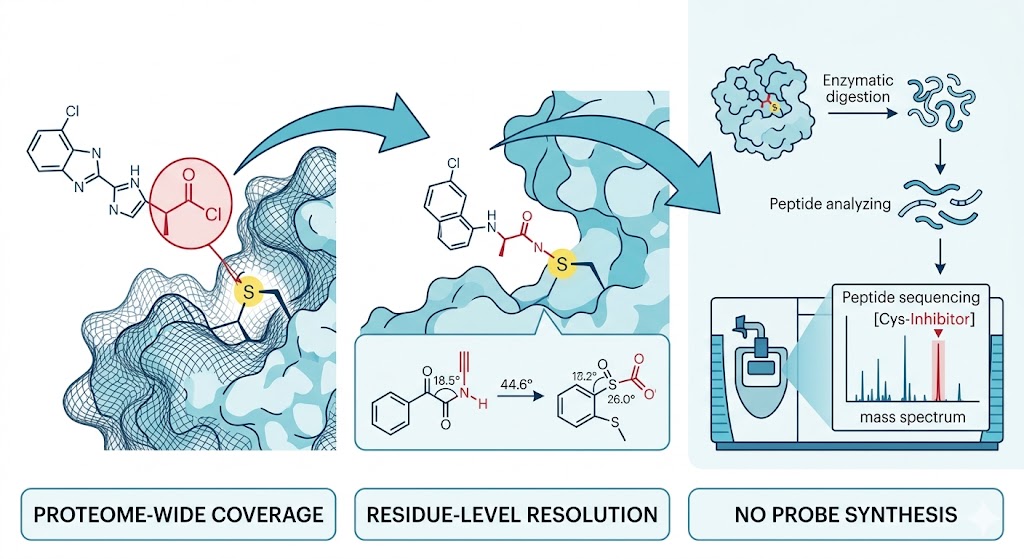
Covalent drug discovery platform showing reactive residue profiling, ABPP, covalent fragment screening, SuFEx chemoproteomics and ligandability mapping for comprehensive covalent inhibitor development.
Overview Approaches Residue Profiling Fragment Screen SuFEx Workflow Applications Demo Data Sample Why Covalent Case Study FAQ

Why a Dedicated Covalent Discovery Platform Matters

Covalent inhibitor development presents unique challenges that reversible drug discovery programs do not face. The first is selectivity. A reversible inhibitor's selectivity is determined by its binding affinity (KD) and residence time. A covalent inhibitor's selectivity depends on both recognition (non-covalent binding) and reactivity (the intrinsic electrophilicity of the warhead and the nucleophilicity of the target residue). Two compounds with identical warheads and similar recognition elements can show dramatically different selectivity profiles based on subtle differences in the geometry of the warhead-protein interaction.

The second challenge is residue-level resolution. When a covalent inhibitor binds its target, you need to know not just which protein is modified, but which specific cysteine (lysine, tyrosine, or serine) residue carries the modification. This information is essential for medicinal chemistry optimization — changing the warhead position by a single bond length can shift the modification site from an on-target cysteine to an off-target one.

The third challenge is the scope of the ligandable proteome. Proteome-wide studies have demonstrated that cysteine-reactive fragments can engage more than 700 cysteine residues across the proteome, many on proteins previously considered undruggable. Comprehensive proteome-wide profiling is therefore essential for any covalent drug discovery program.

Covalent Discovery Approaches at MassTarget

Our covalent discovery platform is built around five complementary technical approaches, each addressing a specific question in the covalent drug development workflow.

Activity-Based Protein Profiling (ABPP)

ABPP uses chemical probes targeting specific enzyme classes (serine hydrolases, cysteine proteases, kinases) through mechanism-based reactivity. Competitive ABPP compares probe labeling between treated and control samples to identify targets engaged by your compound. Available in gel-based and MS-based formats. Our activity-based protein profiling (ABPP) service provides global, family-specific, and competitive ABPP formats.

Reactive Cysteine Profiling

Proteome-wide reactive cysteine profiling uses isotopically labeled probe competition to quantify the engagement of thousands of cysteine residues simultaneously. Each experiment reports which cysteines are liganded, by which compound, and with what potency — producing a complete selectivity map for your covalent compound. See our reactive residue profiling service for full details.

Covalent Fragment Screening

For fragment-based covalent drug discovery, we offer screening of covalent fragment libraries against native proteomes or purified target panels. Hits are identified by direct MS detection of fragment-modified peptides, providing both the identity of the target protein and the exact residue modified. Our covalent fragment screening service is optimized for this workflow.

SuFEx Chemoproteomics

Sulfur(VI) fluoride exchange (SuFEx) chemistry represents a next-generation approach to covalent probe development. SuFEx probes access a distinct set of ligandable residues — including tyrosine, lysine, and serine in addition to cysteine — through their unique sulfonyl fluoride reactivity. Our SuFEx chemoproteomics service covers both direct probe profiling and competitive fragment screening.

Ligandability Mapping

For target discovery teams, ligandability mapping uses a panel of electrophilic fragments to systematically probe which cysteine residues across the proteome are capable of engaging covalent small molecules. This identifies new druggable sites on proteins of interest, providing starting points for covalent inhibitor development against previously intractable targets. Our ligandability mapping service covers comprehensive cysteine survey across disease-relevant proteomes.

Orthogonal Covalent Validation

For direct binding confirmation of identified covalent interactions, our thermal proteome profiling (TPP) service provides orthogonal evidence of target engagement in live cells, while our drug-target interaction validation service offers follow-up biophysical characterization by BLI and SPR.

Reactive Residue Profiling Across the Proteome

Reactive residue profiling is the cornerstone of covalent drug discovery. The technology works through a competitive labeling format: a reporter probe (typically an isotopically labeled iodoacetamide or chloroacetamide derivative) labels all accessible cysteine residues in a proteome sample. When your covalent compound is pre-incubated with the sample, it competes with the reporter probe for labeling. Residues engaged by your compound show reduced reporter labeling, which is quantified by LC-MS/MS.

The key advantage is proteome-wide scope. A single experiment can monitor engagement at tens of thousands of cysteine residues across thousands of proteins, providing a comprehensive selectivity map. The data reports which specific cysteine residues — not just which proteins — are engaged, essential information for guiding medicinal chemistry optimization.

The same platform extends beyond cysteines. For compounds targeting other nucleophilic residues, we offer reactive profiling for lysine (amine-reactive warheads), tyrosine (phenol-reactive warheads such as SuFEx), and serine (covalent inhibitors of serine hydrolases). Each profiling modality uses a tailored reporter probe and optimized sample processing workflow.

Covalent Fragment Screening and Selectivity Assessment

Fragment-based covalent drug discovery starts with a library of low-molecular-weight electrophilic fragments (~200-300 Da) screened against either a specific target protein or the entire proteome. Our covalent fragment screening service uses label-free LC-MS/MS detection of fragment-modified peptides. Each fragment is incubated with the proteome or purified target, and the resulting covalent adducts are identified by MS-based proteomics.

Selectivity assessment is built into the workflow. By comparing the modification profile of each fragment across the entire proteome, selective fragments (engaging one or a few proteins) are immediately distinguished from promiscuous fragments (engaging many proteins). This information is critical for prioritizing fragments for medicinal chemistry follow-up.

SuFEx and Electrophilic Probe Chemoproteomics

Sulfur(VI) fluoride exchange (SuFEx) chemistry has emerged as a powerful addition to the covalent chemoproteomics toolkit. Unlike conventional warheads (chloroacetamides, acrylamides) that react primarily with cysteine thiols, SuFEx probes — particularly aryl fluorosulfates and sulfonyl fluorides — show reactivity with a broader range of nucleophilic residues, including tyrosine, lysine, serine, and threonine.

This expanded reactivity profile opens up covalent targeting of protein surfaces that lack accessible cysteines. SuFEx probes often show slower reaction kinetics than chloroacetamides, which can translate to better selectivity in complex proteomes. The unique reactivity of SuFEx warheads also identifies a different set of ligandable residues, expanding the coverage of the ligandable proteome.

Our SuFEx chemoproteomics service includes SuFEx probe synthesis support, proteome-wide reactivity profiling, competitive fragment screening, and identification of exact modification sites for each SuFEx-protein interaction.

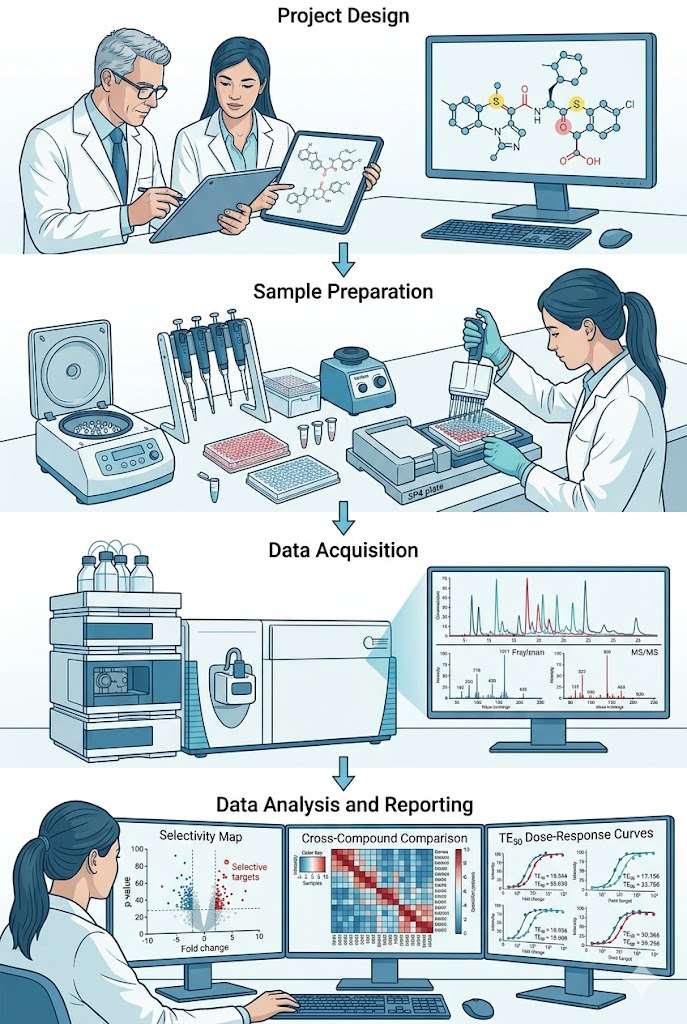
Our Workflow — From Warhead to Selectivity Map

A structured four-stage process for covalent drug discovery projects.

1

Project Design

We discuss your compound series, target biology, and stage of development. For early-stage discovery, we recommend proteome-wide reactive profiling or ligandability mapping. For lead optimization, we design focused selectivity panels and dose-response experiments.

2

Sample Preparation

Your compound is prepared at required concentrations. Our team selects the appropriate proteome sample (cell lysate, live cells, tissue, or purified target) and the correct probe chemistry for your warhead type.

3

Data Acquisition

Samples processed through our standardized LC-MS/MS workflow. Each experiment includes technical replicates and appropriate controls. For proteome-wide experiments, we quantify 15,000-25,000 cysteine sites per run.

4

Data Analysis and Reporting

The report includes: complete list of modified residues with quantification, selectivity analysis across the proteome, dose-response curves, and prioritized list of on-target and off-target engagements with structural annotation.

Four-stage workflow for covalent drug discovery: project design, sample preparation, data acquisition by LC-MS/MS, and comprehensive data analysis and reporting with selectivity maps.

Applications

Covalent drug discovery and reactive site profiling are applied across therapeutic areas and discovery stages.

Fragment-Based Covalent Lead Discovery

Screening covalent fragment libraries against targets of interest to identify starting points. Includes modified residue identification, selectivity ranking, and initial SAR.

Output: Prioritized fragment hits with residue-level binding site and selectivity data.

Covalent Inhibitor Selectivity Profiling

Comprehensive profiling of lead covalent compounds against the proteome to assess selectivity risk and identify off-target engagements.

Output: Proteome-wide selectivity map with quantitative engagement ratios for each modified residue.

Covalent PROTAC and Degrader Development

Profiling covalent E3 ligase recruiters and covalent warhead-containing PROTACs to confirm intended engagement and identify off-target neo-modifications.

Output: E3 ligase engagement confirmation with proteome-wide off-target assessment.

Target Deconvolution for Covalent Phenotypic Hits

Identifying protein targets of covalent compounds from phenotypic screens. The covalent nature of the interaction facilitates direct target identification via modified peptide mapping.

Output: Target protein with specific modified residue and engagement stoichiometry.

Resistance Mechanism Investigation

Profiling covalent inhibitor-resistant cell lines to identify cysteine mutations or compensatory modifications that reduce compound engagement.

Output: Mutation map with residue-level changes in engagement.

Chemoproteomic Target Discovery

Using ligandability mapping to identify new druggable proteins and cysteine residues in disease-relevant proteomes.

Output: Prioritized list of ligandable targets with fragment engagement profiles.

Representative Results

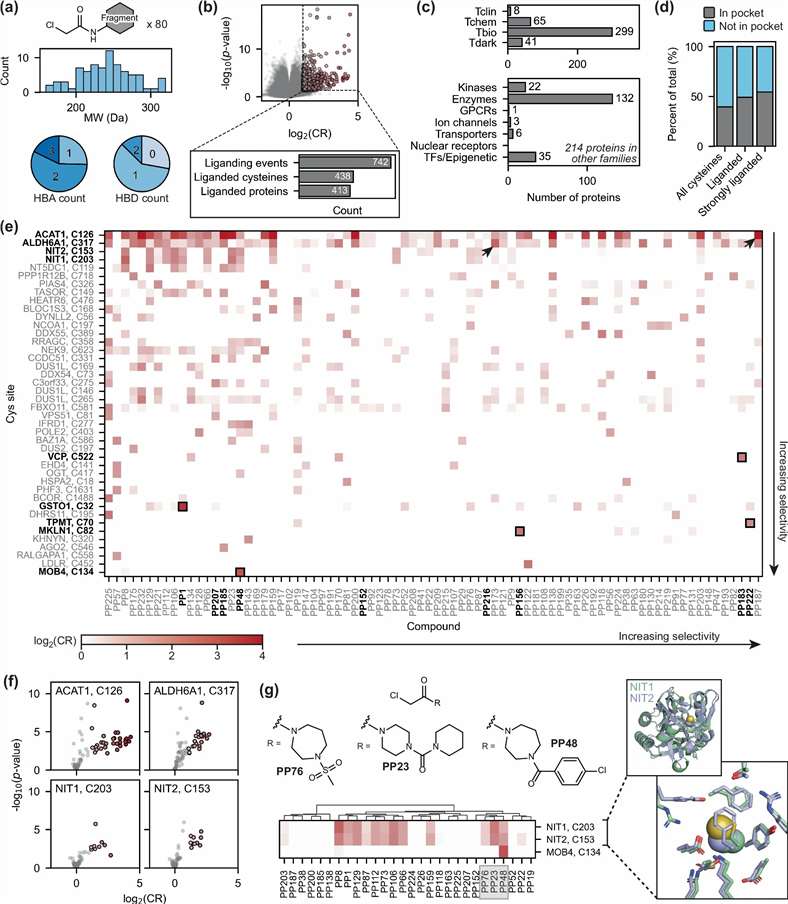
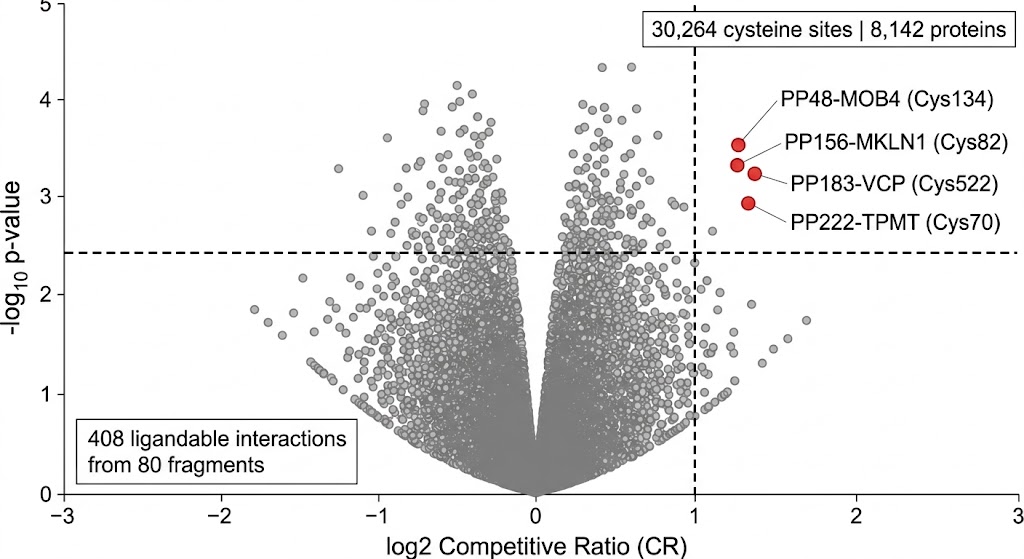
Proteome-wide cysteine reactivity volcano plot showing >30,000 cysteine sites quantified from >8,000 proteins, with selective fragment-protein interactions highlighted.

Proteome-wide cysteine reactivity profiling

Volcano plot showing the competitive engagement profile of a chloroacetamide fragment across the HEK293T proteome. Over 30,000 cysteine sites quantified from more than 8,000 proteins. Four highly selective fragment-protein interactions are highlighted: PP48-MOB4 (Cys134), PP156-MKLN1 (Cys82), PP183-VCP (Cys522), and PP222-TPMT (Cys70). Each shows a strong competitive signal (log2 CR > 3) without significant off-target engagement.

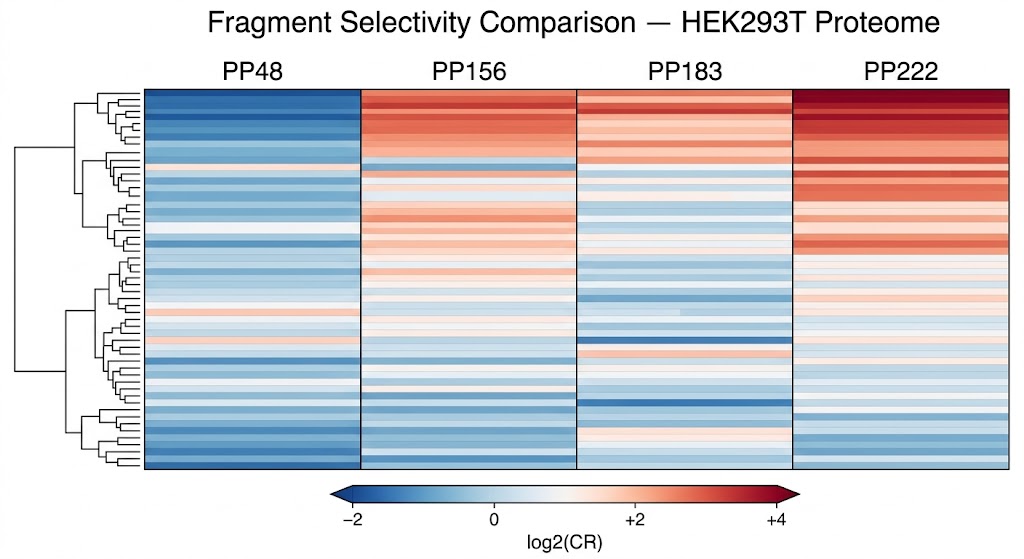
Selectivity heatmap comparing four structurally related chloroacetamide fragments across all quantified cysteine sites, showing how subtle structural changes shift selectivity profiles.

Selectivity heatmap across compound series

Heatmap comparing the selectivity profiles of four structurally related chloroacetamide fragments. Each column represents one compound, each row represents a quantified cysteine site. Subtle structural changes — a single methyl group or ring substitution — dramatically shift the selectivity profile, highlighting the importance of comprehensive profiling during lead optimization.

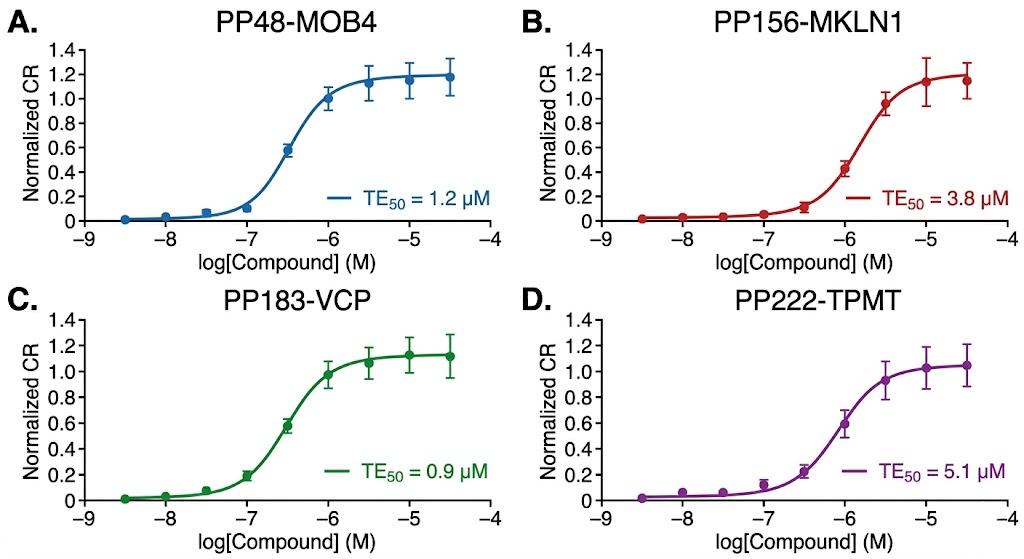
Dose-response covalent engagement curves showing TE50 values for four validated fragment-protein interactions across a 100-fold concentration range.

Dose-response covalent engagement curves

Concentration-response curves showing TE50 values for four validated fragment-protein interactions. Curves span a 100-fold concentration range, each data point representing a single competitive labeling experiment. TE50 values correlate with functional activity in follow-up cellular assays, confirming the physiological relevance of the observed covalent engagements.

Sample Requirements

Sample TypeMinimum per ConditionRecommendedAmountFormat
Cell lysate (proteome-wide)35-6500 microg protein8 M urea, no DTT
Live cells (in situ profiling)35-65 x 106 cellsLive cell suspension
Purified target protein23-410-50 microgBuffer, no reducing agent
Compound stock (covalent)1 mg2-5 mg10-100 mMDMSO
Fragment library0.1 mg/compound0.5 mg10-100 mMDMSO in 96-well plate

Note: For cysteine-reactive profiling, samples must be prepared without reducing agents (DTT, TCEP) as these will quench probe labeling. We provide detailed lysis buffer and sample preparation protocols upon project initiation. For SuFEx probes, specialized buffers optimized for fluorosulfate reactivity are used.

Why Integrated Profiling Matters

CriterionSingle-Target Binding AssayGeneric ABPP ServiceOur Integrated Covalent Platform
Proteome-wide coverageNoPartial (enzyme family)Yes (15,000-25,000 sites)
Residue-level resolutionNoNoYes (exact cysteine identified)
Multiple warhead typesNoLimited (one probe)Yes (chloroacetamide, acrylamide, SuFEx)
Live-cell profilingNoYes (limited)Yes (in situ and in vivo)
Fragment screeningNoNoYes (covalent fragment library)
Selectivity rankingNoYes (within enzyme family)Yes (entire proteome)
SAR by MSNoNoYes (direct residue mapping)
Ligandability mappingNoNoYes (systematic cysteine survey)
Orthogonal validationNoLimitedYes (TPP, BLI, SPR)

What sets this approach apart: Our platform combines ABPP, reactive residue profiling, covalent fragment screening, SuFEx chemoproteomics, and ligandability mapping — delivering proteome-wide residue-level selectivity data that single-technique approaches cannot match.

Case Study: Proteome-Wide Profiling of Cysteine-Reactive Fragments Reveals >400 Ligandable Interactions

Biggs GS, Cawood EE, Vuorinen A, et al. "Robust proteome profiling of cysteine-reactive fragments using label-free chemoproteomics." Nature Communications, 2025, 16, 73. DOI: 10.1038/s41467-024-55057-5 (CC BY 4.0).

Background

Most cysteine-reactive fragment screening relied on specialized probe-based approaches (isotopic labeling, click chemistry) that limited throughput. The field lacked a robust, label-free platform capable of profiling cysteine-reactive fragments directly against the native proteome without customized probe synthesis for each fragment.

Methods

The team developed a high-throughput label-free quantitative chemoproteomics (HT-LFQ) platform. Key elements included SP4 96-well plate-based sample processing enabling parallel processing of 80 compounds, label-free quantification of cysteine-containing peptides from over 8,000 proteins per experiment, competitive profiling with a universal cysteine-reactive reporter probe, and data-independent acquisition (DIA) for robust quantification.

  • SP4 96-well plate sample processing for high-throughput covalent fragment screening.
  • Label-free quantification of cysteine-containing peptides across >8,000 proteins per run.
  • Competitive profiling format with universal cysteine-reactive reporter probe.
  • Data-independent acquisition (DIA) for robust label-free quantification.

Results

The platform profiled 80 chloroacetamide fragments against more than 30,000 cysteine sites, identifying over 400 ligandable fragment-protein interactions. Four highly selective interactions were validated: PP48-MOB4 (Cys134), PP156-MKLN1 (Cys82), PP183-VCP (Cys522), and PP222-TPMT (Cys70). Dose-response profiling of 8 compounds across 10 concentrations yielded TE50 values confirming concentration-dependent engagement. Structure-activity relationship exploration around PP48 identified analogs with improved selectivity.

Conclusions

This study demonstrates that label-free chemoproteomics achieves the depth and robustness required for covalent fragment screening at scale, identifying over 400 ligandable interactions from 80 fragments in a single campaign. The platform's compatibility with native proteomes and direct identification of modification sites makes it a powerful tool for covalent drug discovery.

Fig. 2 and Fig. 3 from Biggs et al. 2025 showing volcano plot of 80 fragments screened against >30,000 cysteine sites and four validated selective fragment-protein interactions.

Fig. 2, 3 from Biggs GS, et al. 2025 (Nature Communications). Proteome-wide cysteine reactivity profiling identified >400 ligandable fragment-protein interactions with four validated highly selective pairs. CC BY 4.0.

FAQ

Frequently Asked Questions

Q: What types of covalent warheads can be profiled?

Our platform covers chloroacetamides, acrylamides, vinyl sulfonamides, sulfonyl fluorides (SuFEx), epoxides, and other common electrophiles. Each warhead type uses an optimized sample processing workflow.

Q: What is the difference between ABPP and reactive residue profiling?

ABPP uses activity-based probes targeting specific enzyme classes and reports on active-site engagement. Reactive residue profiling uses generic electrophilic probes for comprehensive coverage of all accessible cysteine residues across the proteome.

Q: How is selectivity quantified in covalent profiling?

Selectivity is quantified by the competitive ratio (CR) — the fold reduction in probe labeling caused by compound pre-incubation. High CR at few sites indicates selectivity; moderate CR across many sites indicates promiscuity.

Q: Can the platform distinguish on-target from off-target modifications?

Yes. On-target modifications show engagement of the intended target's active-site or binding-site cysteine. All other significantly engaged cysteines represent off-target modifications, providing a complete selectivity map.

Q: What sample types are compatible with covalent profiling?

Cell lysates, live cells, tissue homogenates, and purified proteins. Live-cell profiling captures the physiologically relevant redox state and protein interaction context affecting cysteine reactivity.

References

  1. Biggs GS, Cawood EE, Vuorinen A, et al. "Robust proteome profiling of cysteine-reactive fragments using label-free chemoproteomics." Nature Communications, 2025, 16, 73. DOI: 10.1038/s41467-024-55057-5 (CC BY 4.0)
  2. Backus KM, Correia BE, Lum KM, et al. "Proteome-wide covalent ligand discovery in native biological systems." Nature, 2016, 534, 570-574. DOI: 10.1038/nature18002
  3. Bar-Peled L, Kemper EK, Suciu RM, et al. "Chemical Proteomics Identifies Druggable Vulnerabilities in a Genetically Defined Cancer." Cell, 2017, 171(3), 696-709. DOI: 10.1016/j.cell.2017.08.051

Design your covalent discovery strategy

Tell us about your covalent compound series, target biology, and development stage — our scientists will recommend the optimal profiling approach and provide a detailed project proposal.

For Research Use Only (RUO). Not intended for diagnostic, therapeutic, or clinical decision-making purposes. Creative Proteomics services are designed to support preclinical research, drug discovery, and mechanism of action studies only.

Online Inquiry

Please submit a detailed description of your project. We will provide you with a customized project plan to meet your research requests. You can also send emails directly to for inquiries.

* Email
Phone
* Service & Products of Interest
Services Required and Project Description