Intracellular Accumulation Assay by LC-MS/MS

Direct, label-free quantification of intracellular compound concentration for drug discovery and lead optimization.

Intracellular accumulation MS is a direct LC-MS/MS-based analytical approach that quantifies the steady-state concentration of a compound inside living cells after incubation. Unlike permeability assays (such as Caco-2 Papp) which measure the rate of membrane crossing, intracellular accumulation MS measures the actual amount of compound that has entered and been retained within cells — the parameter that ultimately drives target engagement and pharmacological activity.

At Creative Proteomics, our Intracellular Accumulation Assay by LC-MS/MS is designed to provide drug discovery teams with actionable intracellular exposure data at every stage of lead optimization. Leveraging validated LC-MS/MS methods and standardized cell-based workflows — including our cell-based MS drug screening capabilities — we deliver reproducible, compound-specific accumulation data — without fluorescent tags, radiolabels, or surrogate readouts.

Key Advantages:

  • Label-free, direct quantification of unmodified parent compound inside cells.
  • High-throughput screening of up to 50 compounds per run (single time-point mode).
  • Compatible with traditional small molecules, PROTACs, macrocycles, and bRo5 modalities.
  • Validated wash protocols to distinguish intracellular from membrane-bound compound.
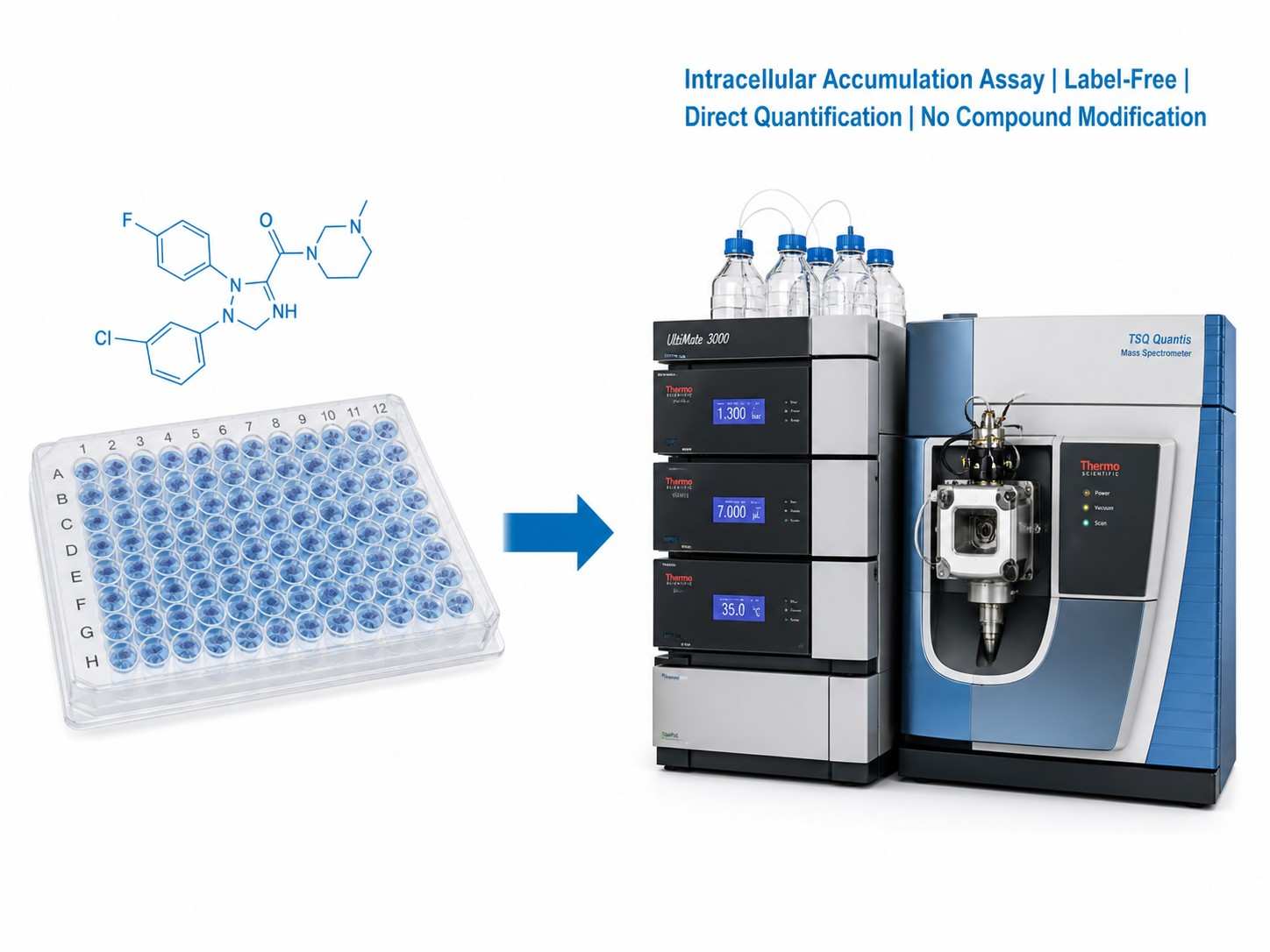
Intracellular accumulation assay by LC-MS/MS technology platform showing cell incubation, wash, lysis, and MS quantification workflow with key advantages.
Overview Why Direct Measurement Service Overview Workflow Parameters Applications Comparison Sample Case Study FAQ

What Is Intracellular Accumulation MS?

Intracellular accumulation MS is a direct, label-free LC-MS/MS-based analytical approach that quantifies the steady-state concentration of a compound inside living cells after incubation. Unlike cell permeability assays (such as Caco-2 Papp) which measure the rate at which a compound crosses a membrane, intracellular accumulation MS measures the actual amount of compound that has entered and been retained within cells — the parameter that ultimately drives target engagement and pharmacological activity.

The distinction is critical. A compound with high permeability may still achieve low intracellular concentration if it is rapidly effluxed by transporters such as P-glycoprotein (P-gp), sequestered in lysosomes via ion trapping, or metabolized by intracellular enzymes. Conversely, a compound with moderate permeability but low efflux and high retention can achieve superior intracellular exposure. Direct LC-MS/MS quantification resolves this uncertainty by providing compound-specific, quantitative data on the mass of parent compound inside cells — without requiring fluorescent tags, radiolabels, or surrogate readouts.

Why Direct Measurement of Intracellular Concentration Matters

The pharmaceutical industry has long relied on cell permeability as a surrogate for intracellular exposure. While permeability data are valuable for ranking compounds, they do not tell the full story. Three key reasons explain why direct intracellular accumulation measurement is essential for modern drug discovery:

Permeability ≠ Intracellular Concentration

Multiple studies have documented a poor correlation between Caco-2 Papp values and measured intracellular compound concentrations. Efflux transporters, lysosomal trapping, and intracellular binding all reduce the free fraction of compound available at the target site. A compound with excellent permeability can still fail in cellular assays if its intracellular concentration is insufficient.

bRo5 Compounds Have Unpredictable Accumulation

PROTACs, macrocycles, cyclic peptides, and other beyond-Rule-of-5 modalities are increasingly important in drug discovery pipelines. Their physicochemical properties — high molecular weight, high polar surface area, and conformational flexibility — make their cellular accumulation difficult to predict from permeability data alone. Direct measurement is often the only reliable way to determine whether these compounds reach therapeutic intracellular concentrations.

Drug Resistance Involves Altered Accumulation

Reduced intracellular compound concentration is a common mechanism of acquired drug resistance, often mediated by upregulation of efflux transporters such as P-gp, BCRP, or MRP family members. Direct measurement of intracellular accumulation in parental versus resistant cell lines can distinguish between resistance due to reduced accumulation and resistance due to target mutation — information that guides medicinal chemistry strategy.

MethodWhat It MeasuresThroughputLabel RequiredKey Limitation
Caco-2 PappRate of membrane crossingHighNoDoes not measure actual intracellular concentration
Fluorescent dye/imagingFluorescence intensityMediumYesDye alters compound properties; not compound-specific
Radiolabeled tracerTotal radioactivityLowYesCannot distinguish parent from metabolites
LC-MS/MS direct quantification (our service)Mass of parent compound per cellHighNoDirect, label-free, compound-specific
Computational predictionEstimated accumulationN/AN/APoor accuracy for bRo5 and novel chemotypes

Service Overview — Intracellular Accumulation MS Capabilities

At Creative Proteomics, our Intracellular Accumulation Assay by LC-MS/MS is designed to provide drug discovery teams with actionable intracellular exposure data at every stage of lead optimization. We offer four service modes to match the specific needs of each project:

MODE 1

Single Time-Point Accumulation Screening

A rapid, cost-effective screen to rank compounds by their intracellular accumulation at a single incubation time (typically 60–120 min). Ideal for triaging large compound sets (50–200 compounds) and identifying candidates with poor cellular exposure early in the optimization cycle.

  • Single incubation time point.
  • 3 biological replicates per compound.
  • Deliverable: ranked list with intracellular concentration (pmol/10⁶ cells).
  • Turnaround: 5–7 business days for up to 50 compounds.
MODE 2

Multi Time-Point Accumulation Profiling

A comprehensive time-course analysis (4–6 time points from 0 to 240 min) that captures both the rate and extent of intracellular accumulation. Provides steady-state concentration, time to reach steady state, and evidence of time-dependent accumulation or efflux.

  • 4–6 time points per compound.
  • 3 biological replicates per time point.
  • Deliverable: time-concentration curves, Css (steady-state concentration), Tss (time to steady state).
  • Turnaround: 10–14 business days for up to 20 compounds.
MODE 3

Concentration-Dependent Accumulation

Evaluates intracellular accumulation across a range of extracellular compound concentrations (typically 0.1–100 µM) to assess whether accumulation is linear, saturable, or involves active transport. Essential for understanding the relationship between dose and intracellular exposure.

  • 5–7 concentrations per compound.
  • Single or multiple time points.
  • Deliverable: concentration-accumulation curves, apparent Km and Vmax (if active transport).
  • Turnaround: 10–14 business days for up to 10 compounds.
MODE 4

Custom Cell Model Development

For projects requiring non-standard cell models — primary cells, 3D spheroids, drug-resistant lines, or CRISPR-edited cell lines — we develop and validate custom accumulation assays tailored to the specific biological system.

  • Cell model development and assay optimization.
  • Method validation (specificity, linearity, LLOQ, precision, accuracy).
  • Deliverable: fully validated assay with complete method development report.
  • Timeline: 3–5 weeks depending on cell model complexity.

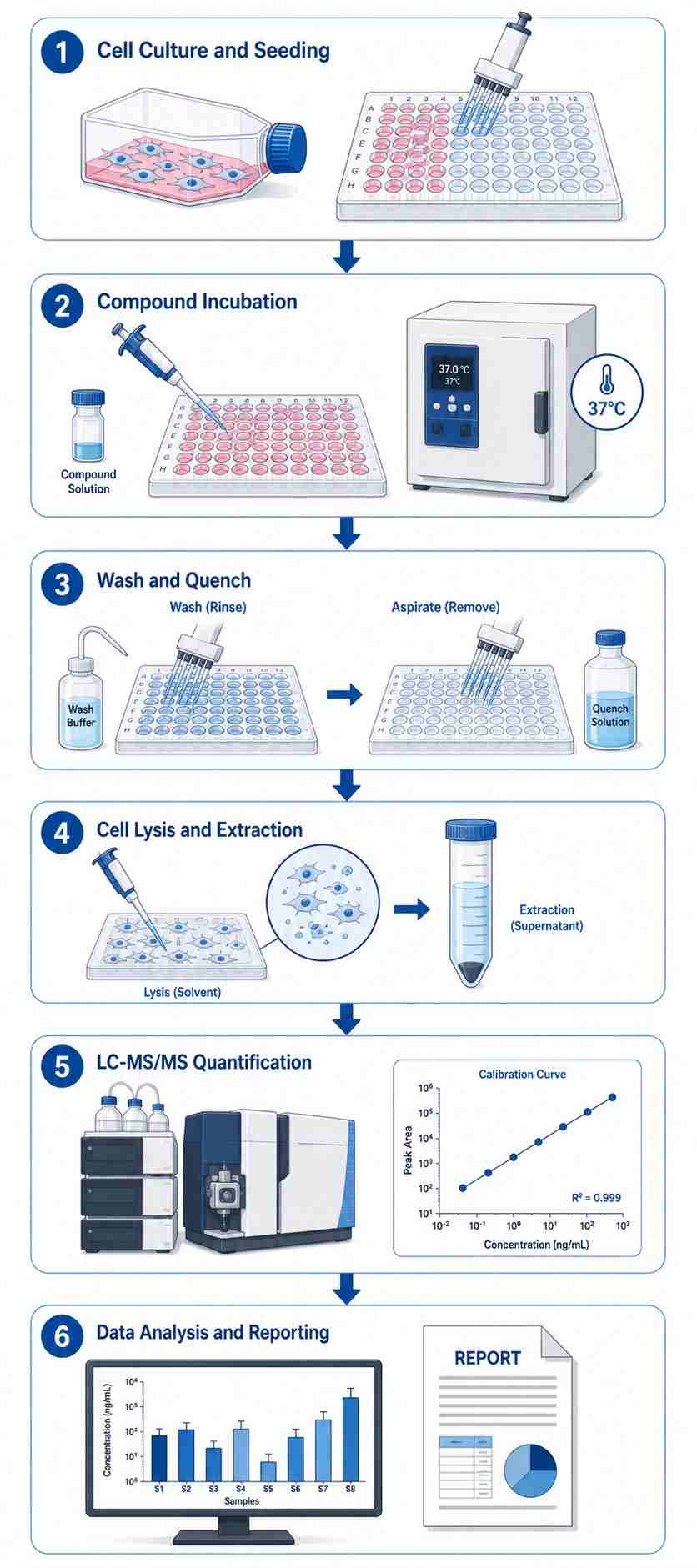
Intracellular Accumulation MS Workflow

Our standardized workflow ensures reproducible, high-quality intracellular accumulation data across all service modes. For higher-throughput applications, our RapidFire MS screening platform can accelerate sample analysis. For detailed method development, our LC-MS/MS MRM analysis service provides compound-specific quantification.

1

Cell Culture and Seeding

Cells are cultured under standard conditions and seeded into multi-well plates (96-well or 24-well format) at optimized density. Cell number is determined for each experiment to enable normalization of intracellular concentration per cell or per mg protein.

2

Compound Incubation

Test compounds are added to the culture medium at defined concentrations. Plates are incubated at 37 °C with 5% CO₂ for the specified incubation time. For time-course experiments, plates are harvested at each time point.

3

Wash and Quench

After incubation, the medium is rapidly removed and cells are washed 3–5 times with ice-cold PBS containing 0.1% BSA to remove extracellular and membrane-bound compound. The final wash is collected and analyzed to confirm complete removal of extracellular compound.

4

Cell Lysis and Extraction

Cells are lysed using an organic solvent mixture (typically acetonitrile:water, 80:20, with internal standard). The lysate is centrifuged, and the supernatant is collected for LC-MS/MS analysis. Cell pellets are reserved for protein quantification to enable normalization.

5

LC-MS/MS Quantification

The extracted samples are analyzed by LC-MS/MS using a validated method specific to each compound. A calibration curve prepared in blank cell lysate matrix is used for quantification. Quality control samples at three concentration levels are included in every analytical run.

6

Data Analysis and Reporting

Raw LC-MS/MS data are processed to calculate intracellular concentration (pmol/10⁶ cells or ng/mg protein). Results are reported with individual replicate values, mean ± SD, %CV, and QC performance metrics. A summary report with graphical presentation of accumulation data is provided.

Intracellular accumulation MS workflow diagram showing 6 steps from cell culture and seeding through compound incubation, wash and quench, cell lysis and extraction, LC-MS/MS quantification, to data analysis and reporting.

Key Assay Parameters and Deliverables

ParameterSpecification
Lower limit of quantification (LLOQ)Typically 0.1–1 ng/mL in cell lysate (compound-dependent)
Linear range3–4 orders of magnitude
Reproducibility%CV ≤ 20% across biological replicates
Cell number per condition1×10⁵ – 1×10⁶ cells (depending on cell type and plate format)
Incubation time15 min – 24 h (customizable)
Compound concentration range0.1 – 100 µM
ThroughputUp to 50 compounds per run (single time-point mode)

Deliverables:

  • Raw LC-MS/MS data files (vendor format).
  • Processed calibration curve with back-calculated concentrations.
  • Intracellular concentration values (pmol/10⁶ cells or ng/mg protein) for each replicate.
  • Mean ± SD and %CV for each compound/condition.
  • Time-concentration curves (for multi time-point mode).
  • Concentration-accumulation curves (for concentration-dependent mode).
  • Final summary report with QC metrics and data interpretation notes.

Applications in Drug Discovery

Intracellular accumulation MS supports a wide range of drug discovery applications, providing direct experimental evidence of cellular exposure to guide decision-making.

Lead Optimization — Ranking Compounds by Intracellular Exposure

During lead optimization, medicinal chemists need to prioritize compounds not only by potency and selectivity but also by their ability to reach the intracellular target at sufficient concentration. Intracellular accumulation MS provides a direct ranking metric that complements biochemical and cellular potency data, enabling teams to select candidates with the best combination of target engagement and cellular exposure. For a comprehensive assessment, combine with our cell permeability MS service for a complete permeability-accumulation profile.

PROTAC and Macrocycle Characterization

PROTACs and macrocyclic peptides operate in the intracellular space and must achieve adequate cytosolic concentrations to engage their targets. Their large molecular size and complex physicochemical properties make intracellular accumulation highly unpredictable. Direct LC-MS/MS measurement is often the only reliable method to determine whether these novel modalities achieve therapeutically relevant intracellular concentrations.

Drug Resistance Mechanism Elucidation

When a compound loses efficacy in resistant cell lines, the cause may be reduced intracellular accumulation (efflux upregulation), target mutation, or pathway rewiring. By measuring intracellular accumulation in parental versus resistant cell lines, researchers can rapidly distinguish between these mechanisms and guide medicinal chemistry efforts toward the appropriate solution. Our CYP450 inhibition assay can further help identify metabolic contributions to reduced intracellular exposure.

Intracellular PK/PD Correlation

Understanding the relationship between intracellular drug concentration and pharmacological effect is essential for translational PK/PD modeling. Intracellular accumulation MS provides the concentration data needed to build robust in vitro-in vivo correlations (IVIVC) and to predict human efficacious doses.

Formulation and Delivery Optimization

For compounds with poor cellular accumulation, formulation strategies such as prodrug design, nanoparticle encapsulation, or ion-pairing can improve intracellular delivery. Direct measurement of intracellular concentration enables quantitative comparison of different formulations and identification of the most effective delivery strategy.

Comparison with Alternative Methods

MethodWhat It MeasuresThroughputLabel RequiredKey Limitation
LC-MS/MS direct quantification (our service)Mass of parent compound inside cellsHigh (up to 50 cmpds/run)NoRequires LC-MS/MS method development per compound
Fluorescent dye/imagingFluorescence intensity (surrogate)MediumYesDye alters compound properties; not compound-specific
Radiolabeled tracerTotal radioactivityLowYesCannot distinguish parent from metabolites; regulatory burden
MALDI-MSISpatial distribution in cells/tissueLow–MediumNoSemi-quantitative; lower throughput
Computational predictionEstimated accumulationN/AN/APoor accuracy for bRo5; requires experimental validation

Why choose LC-MS/MS direct quantification? It is the only method that provides compound-specific, quantitative data on the unmodified parent compound inside cells — without requiring structural modifications (fluorescent tags, radiolabels) that can alter the very property being measured. This makes it the gold standard for intracellular accumulation measurement in drug discovery.

Sample Requirements

Sample TypeRequired AmountConcentrationBuffer ConditionsNotes
Adherent cells (HeLa, HepG2, Caco-2, etc.)1×10⁶ cells per conditionN/AComplete culture mediumProvide cell line name and passage number
Suspension cells (Jurkat, HL-60, etc.)2×10⁶ cells per conditionN/AComplete culture mediumProvide cell line name and passage number
Primary cells (hepatocytes, etc.)1×10⁶ viable cells per conditionN/ASpecialized mediumProvide isolation protocol and viability data
Test compound100 µL of 10 mM stock in DMSO10 mMDMSO (or alternative if solubility limited)Provide compound MW, exact mass, and structure (SDF preferred)
Internal standard (if available)100 µL of 1 mM stock1 mMDMSO or methanolStable isotope-labeled analogue preferred
Reference standard1 mgN/AN/AFor method development and calibration

Notes:

  • For cell lines not listed above, please contact our team to confirm compatibility and optimize assay conditions.
  • Compounds must be soluble in the culture medium at the desired test concentration (final DMSO ≤ 0.5%).
  • For time-course experiments, additional compound may be required depending on the number of time points.
  • Samples should be shipped on dry ice. Cells are cultured in-house from validated stocks.

Deliverables

  • Raw LC-MS/MS data files (vendor format).
  • Processed calibration curve with back-calculated concentrations.
  • Intracellular concentration values (pmol/10⁶ cells or ng/mg protein) for each replicate.
  • Mean ± SD and %CV for each compound/condition.
  • Time-concentration curves (for multi time-point mode).
  • Concentration-accumulation curves (for concentration-dependent mode).
  • Final summary report with QC metrics and data interpretation notes.

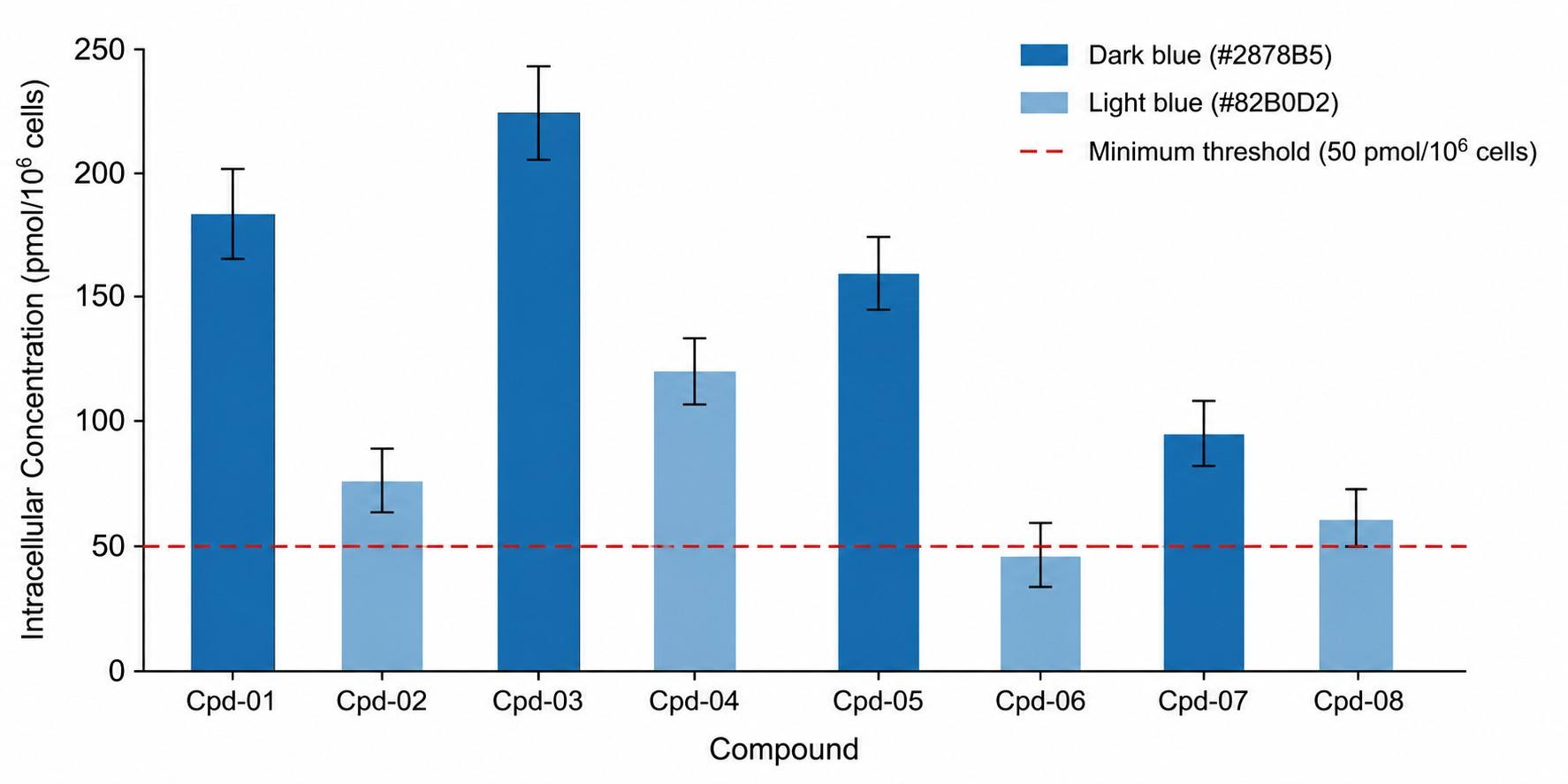
Representative Demo Data

Example intracellular accumulation data from a representative LC-MS/MS assay, illustrating the type of quantitative results delivered to our clients.

Intracellular accumulation bar chart showing compound ranking by intracellular concentration (pmol/10⁶ cells) for a panel of test compounds, with error bars and QC limits.

Example intracellular accumulation ranking plot

Case Study: RapidFire MS Direct Measurement of Intracellular Compound Concentration

Gordon LJ, Allen M, Artursson P, Hann MM, Leavens BJ, Mateus A, Readshaw S, Valko K, Wayne GJ, West A. "Direct Measurement of Intracellular Compound Concentration by RapidFire Mass Spectrometry Offers Insights into Cell Permeability." Journal of Biomolecular Screening 21(2):156-164 (2016). https://doi.org/10.1177/1087057115604141

Background

A central challenge in early drug discovery is understanding why compounds with good biochemical potency often show poor activity in cell-based assays. The missing link is direct measurement of intracellular compound concentration. Gordon et al. aimed to develop a high-throughput, label-free assay using RapidFire mass spectrometry to quantify intracellular compound concentrations in mammalian cells, providing direct evidence to bridge the gap between permeability data and cellular activity.

Methods

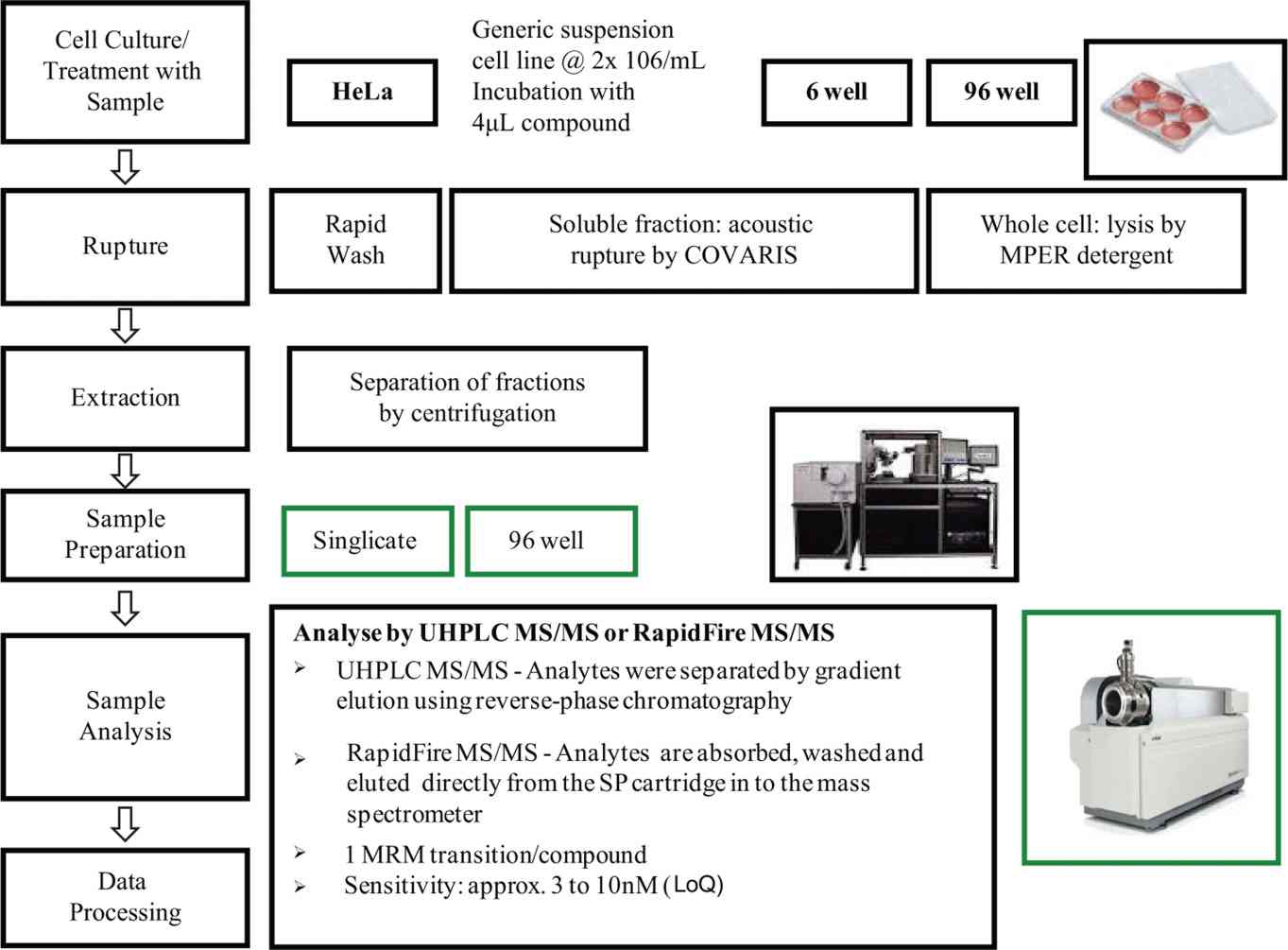
The study used HeLa cells as the model system. Cells were seeded in 96-well plates and incubated with test compounds at defined concentrations. After incubation, cells were washed extensively to remove extracellular and membrane-bound compound, then lysed. The initial assay validation was performed using ultra-high performance liquid chromatography tandem mass spectrometry (UPLC-MS/MS), and the assay was subsequently transferred to a RapidFire tandem mass spectrometry platform for higher throughput. Key steps included optimization of wash conditions to ensure complete removal of extracellular compound, assessment of non-specific binding, and validation of linearity, recovery, and reproducibility.

Results

The validated assay demonstrated robust performance across a panel of test compounds. The RapidFire MS platform enabled a throughput of up to 100 compounds per day, representing a substantial improvement over conventional LC-MS/MS approaches. Intracellular concentration values were reproducible across biological replicates, and the measured values showed a correlation with compound physicochemical properties. The direct measurement of intracellular concentration provided insights that could not be obtained from permeability data alone — compounds with similar Papp values showed markedly different intracellular accumulation, highlighting the importance of direct quantification.

Conclusions

The study demonstrated that direct measurement of intracellular compound concentration by RapidFire mass spectrometry is a practical, high-throughput approach for routine support of lead optimization programs. The authors concluded that direct intracellular concentration data provide a more complete picture of cellular exposure than permeability measurements alone, enabling better-informed decisions during compound progression. For comprehensive characterization of lead compounds, combine accumulation data with our drug uptake and retention analysis service.

Case study figure from Gordon et al. 2016 showing intracellular compound concentration measured by RapidFire MS for a panel of test compounds.

RapidFire MS workflow for direct intracellular compound concentration measurement (adapted from Gordon et al., 2016).

FAQ

Frequently Asked Questions

Q: What is intracellular accumulation and how is it different from cell permeability?

Cell permeability (Papp) measures the rate at which a compound crosses a cell membrane, typically in a Caco-2 or MDCK monolayer assay. Intracellular accumulation measures the actual amount of compound present inside cells after incubation — the endpoint concentration that drives target engagement. A compound can have high permeability but low intracellular accumulation due to efflux, metabolism, or sequestration.

Q: What types of compounds can be analyzed by this assay?

Any small molecule that is amenable to LC-MS/MS analysis can be quantified. This includes traditional small molecules, PROTACs, molecular glues, macrocycles, cyclic peptides, and other beyond-Rule-of-5 modalities. The only requirement is that the compound can be ionized by electrospray ionization (ESI) and has a detectable mass-to-charge ratio.

Q: How many cells are needed per condition?

For most adherent cell lines, 1×10⁶ cells per condition (in a 96-well or 24-well format) is sufficient. For suspension cells, 2×10⁶ cells per condition is recommended. The exact cell number depends on the sensitivity of the LC-MS/MS method for each specific compound and can be optimized during method development.

Q: What is the turnaround time for a typical project?

For single time-point screening (Mode 1), results are typically delivered within 5–7 business days for up to 50 compounds. Multi time-point profiling (Mode 2) requires 10–14 business days. Custom cell model development (Mode 4) requires 3–5 weeks depending on complexity.

Q: Can you measure intracellular accumulation for PROTACs and macrocycles?

Yes. PROTACs, macrocycles, and other bRo5 compounds are fully compatible with our LC-MS/MS-based assay. In fact, these compound classes benefit most from direct intracellular measurement, as their accumulation is difficult to predict from physicochemical properties alone.

Q: Do I need to provide a fluorescently labeled or radiolabeled compound?

No. Our assay uses direct LC-MS/MS quantification of the unmodified parent compound. No fluorescent tags, radiolabels, or other structural modifications are required — the compound is measured in its native form.

Q: How do you distinguish intracellular compound from membrane-bound compound?

After incubation, cells are washed extensively with ice-cold buffer containing 0.1% BSA to remove membrane-bound and extracellular compound. The final wash is collected and analyzed to confirm complete removal. This washing protocol has been validated in published studies to effectively remove surface-bound compound without causing efflux of intracellular compound.

Q: Can you measure time-dependent accumulation (uptake kinetics)?

Yes. Our Mode 2 service (Multi Time-Point Accumulation Profiling) provides time-course data with 4–6 time points from 0 to 240 minutes, enabling calculation of steady-state concentration, time to steady state, and initial uptake rate.

Q: What data deliverables will I receive?

You will receive raw LC-MS/MS data files, processed calibration curves, intracellular concentration values for each replicate (with mean ± SD and %CV), time-concentration curves (for Mode 2), concentration-accumulation curves (for Mode 3), and a final summary report with QC metrics and data interpretation notes.

Q: How does this service compare with the Drug Uptake & Retention Analysis service?

The Drug Uptake & Retention Analysis service provides comprehensive time-course uptake kinetics (0–120 min), efflux/retention profiling, and subcellular fractionation. The Intracellular Accumulation Assay focuses on steady-state accumulation measurement — a simpler, faster, and more cost-effective option for screening larger compound sets. The two services are complementary: use accumulation screening for early triage, and full uptake/retention analysis for detailed characterization of lead compounds.

References

  1. Gordon LJ, Allen M, Artursson P, Hann MM, Leavens BJ, Mateus A, Readshaw S, Valko K, Wayne GJ, West A.Direct Measurement of Intracellular Compound Concentration by RapidFire Mass Spectrometry Offers Insights into Cell Permeability. J Biomol Screen. 2016;21(2):156-164.
  2. Mateus A, Matsson P, Artursson P.Rapid measurement of intracellular unbound drug concentrations. Mol Pharmaceutics. 2013;10(6):2467-2478.
  3. Hann MM, Simpson GL.Intracellular drug concentration and disposition — the missing link?. Methods. 2014;68(2):283-285.
  4. Geddes EJ, Li Z, Hergenrother PJ.An LC-MS/MS assay and complementary web-based tool to quantify and predict compound accumulation in E. coli. Nat Protoc. 2021;16:4833-4854.

Plan an intracellular accumulation study with the MassTarget™ team

Share your compound and cell model details and our scientists will design a tailored intracellular accumulation assay strategy for your drug discovery program.


* For research use only. Not for use in diagnostic procedures.

Online Inquiry

Please submit a detailed description of your project. We will provide you with a customized project plan to meet your research requests. You can also send emails directly to for inquiries.

* Email
Phone
* Service & Products of Interest
Services Required and Project Description