Cytokine MS Quantification Service

Antibody-free, absolute quantification of 20+ cytokines from serum, plasma, and cell culture supernatants using LC-MS/MS MRM with isotope-labeled peptide standards.

MassTarget™ Cytokine MS Quantification delivers antibody-free, absolute quantification of 20+ cytokines from serum, plasma, and cell culture supernatants using LC-MS/MS MRM with isotope-labeled peptide standards. Eliminate ELISA cross-reactivity and Luminex batch variability — get true multiplex precision from as little as 50 µL sample.

  • Antibody-free — no cross-reactivity, no batch variation
  • Absolute quantification with isotope-labeled standards
  • 20+ cytokines in a single LC-MS/MS run
  • Validated for serum, plasma, and cell culture
  • Low sample volume — from 50 µL
  • Orthogonal validation for immunoassay results
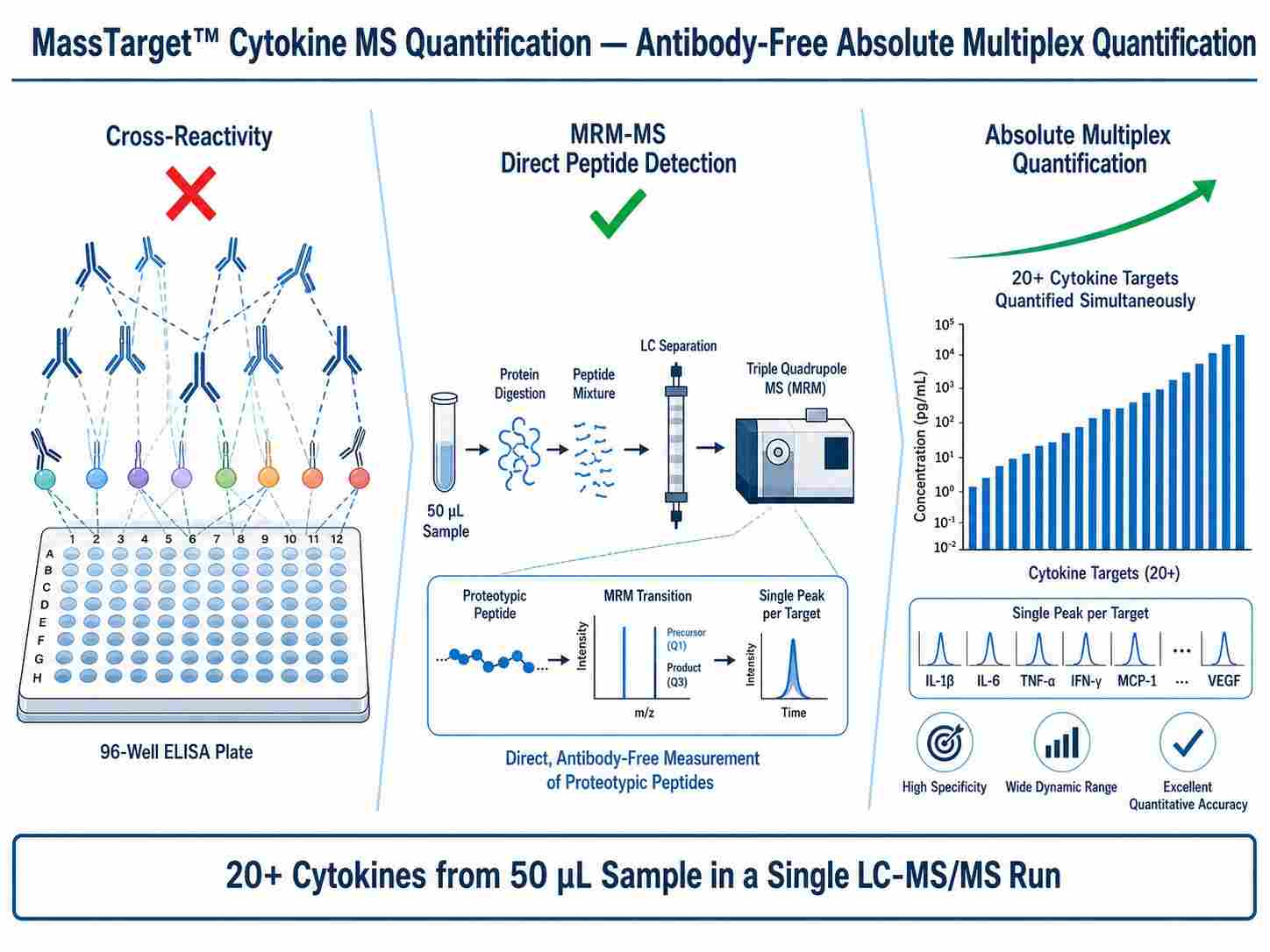
MassTarget Cytokine MS Quantification service overview showing the transition from ELISA cross-reactivity to MRM-MS antibody-free absolute multiplex quantification of 20+ cytokines from serum, plasma, and cell culture samples.
Overview Why Choose Panel Coverage Workflow Applications Comparison Data Case Study FAQ

What Is Cytokine MS Quantification?

Cytokines are small signaling proteins that mediate intercellular communication in the immune system. Their precise quantification is essential for understanding inflammatory responses, immune regulation, and disease mechanisms in immuno-oncology, autoimmune disorders, infectious diseases, and vaccine development.

MassTarget™ Cytokine MS Quantification uses liquid chromatography-tandem mass spectrometry (LC-MS/MS) in multiple reaction monitoring (MRM) mode to achieve antibody-free, absolute quantification of cytokines from biological matrices. Unlike traditional immunoassays that rely on antibody binding, MRM-MS directly measures signature peptides derived from each cytokine after proteolytic digestion, using stable isotope-labeled (SIL) peptide standards for absolute quantification.

The core workflow involves:

  • Sample preparation — Protein extraction and digestion from serum, plasma, cell culture supernatant, or tissue lysate
  • LC-MS/MS MRM acquisition — Targeted detection of signature peptides for each cytokine using scheduled MRM transitions
  • Absolute quantification — Comparison of endogenous peptide signal against SIL internal standard calibration curves
  • Data processing — Peak integration, quality control, and concentration reporting in ng/mL

This approach delivers several fundamental advantages: it eliminates antibody cross-reactivity, provides true absolute concentrations rather than relative fluorescence units, enables multiplexing of 20+ cytokines in a single injection, and allows isoform-specific quantification that antibody-based methods cannot achieve.

Learn more about LC-MS MRM quantification →

Why Choose MassTarget™ for Cytokine Quantification?

1. Antibody-Free Specificity

ELISA and bead-based multiplex assays (Luminex, MSD) depend on antibody pairs for each target. Cross-reactivity — particularly within cytokine families sharing structural homology (IL-1 family, TNF superfamily, chemokines) — is a well-documented limitation. MRM-MS bypasses this entirely by measuring signature peptide mass-to-charge transitions, providing unambiguous identification even for closely related isoforms.

2. Absolute Quantification

Immunoassays report relative units (optical density, fluorescence intensity, electrochemiluminescence counts) that are converted to concentrations via kit-specific standard curves. MRM-MS with SIL peptide internal standards delivers true absolute quantification traceable to gravimetrically prepared standards, enabling cross-study and cross-platform comparability.

3. True Multiplex Capacity

Where ELISA measures one analyte per well and Luminex panels typically plateau at 15–30 targets with potential cross-reactivity, MassTarget™ delivers 20+ cytokines in a single LC-MS/MS run from as little as 50 µL sample. The multiplex panel can be customized to include additional targets without redeveloping antibody reagents.

4. Low Sample Volume

For precious samples — pediatric, longitudinal clinical trial, or FACS-sorted cell populations — sample volume is often the limiting factor. MassTarget™ requires only 50 µL of serum or plasma, or 200 µL of cell culture supernatant, for full panel quantification.

5. Isoform Discrimination

Cytokine isoforms (e.g., IL-1α vs. IL-1β, TNF-α vs. TNF-β) share high sequence homology and are often indistinguishable by antibodies. MRM-MS targets isoform-specific signature peptides, enabling unambiguous discrimination.

6. Orthogonal Validation

Use MassTarget™ as an orthogonal validation platform for immunoassay results. When ELISA or Luminex data need independent confirmation — especially for regulatory submissions or high-impact publications — MRM-MS provides a fundamentally different measurement principle with traceable absolute quantification.

Explore the MassTarget platform →

Service Overview & Cytokine Panel Coverage

MassTarget™ offers a pre-validated panel of 20+ cytokines organized by functional family. Custom panel development is also available for targets not listed below.

Cytokine FamilyTargetsTypical LLOQMatrix Compatibility
InterleukinsIL-1β, IL-2, IL-4, IL-6, IL-8, IL-10, IL-12p70, IL-17A, IL-185–50 pg/mLSerum, Plasma, Cell Culture
InterferonsIFN-α, IFN-γ10–50 pg/mLSerum, Plasma, Cell Culture
TNF SuperfamilyTNF-α, TNF-β (LT-α), sTNFR1, sTNFR210–100 pg/mLSerum, Plasma, Cell Culture
ChemokinesMCP-1 (CCL2), MIP-1α (CCL3), MIP-1β (CCL4), RANTES (CCL5), IP-10 (CXCL10)5–50 pg/mLSerum, Plasma, Cell Culture
Growth FactorsGM-CSF, TGF-β1, VEGF10–100 pg/mLSerum, Plasma, Cell Culture

Sample Requirements

ParameterSpecification
Sample TypesSerum, Plasma (EDTA/heparin), Cell culture supernatant, Tissue lysate
Minimum Volume50 µL (serum/plasma), 200 µL (cell culture supernatant)
Storage-80°C, avoid freeze-thaw cycles
ShippingDry ice
Replicates2–3 technical replicates recommended

Performance Specifications

  • Dynamic range: 3–4 orders of magnitude
  • Inter-assay CV: <15% for majority of targets
  • Intra-assay CV: <10%
  • Accuracy: 85–115% (spike recovery)
  • Turnaround time: 3–4 weeks for standard panel

MassTarget™ Cytokine MS Quantification Workflow

A standardized, quality-controlled process from project consultation to final report delivery. Each project is tailored to the specific cytokine targets, sample matrix, and research question.

1

Consultation

Discuss project goals, sample types, cytokine targets, and experimental design with our scientific team. We help select the optimal panel configuration and provide a detailed project proposal including timeline and pricing.

2

Sample Submission

Ship samples on dry ice with completed submission form. We verify sample quality, log all metadata, and confirm receipt. Samples are stored at -80°C until processing.

3

Sample Preparation

Protein extraction, reduction, alkylation, and tryptic digestion. Stable isotope-labeled (SIL) peptide internal standards are spiked at known concentrations for absolute quantification. Quality control samples are included in each batch.

4

LC-MS/MS MRM Acquisition

Scheduled MRM method on triple quadrupole mass spectrometer. Each cytokine is monitored via 2–3 signature peptide transitions and corresponding SIL internal standards. Multi-point calibration curves are acquired with each batch.

5

Data Processing

Peak integration, calibration curve fitting (1/x² weighted), concentration calculation, and QC assessment. Data are reviewed by senior scientists before release.

6

Report Delivery

Comprehensive report including raw chromatograms, calibration curves, calculated concentrations, CV%, and QC metrics. Our team is available for follow-up data discussions and interpretation support.

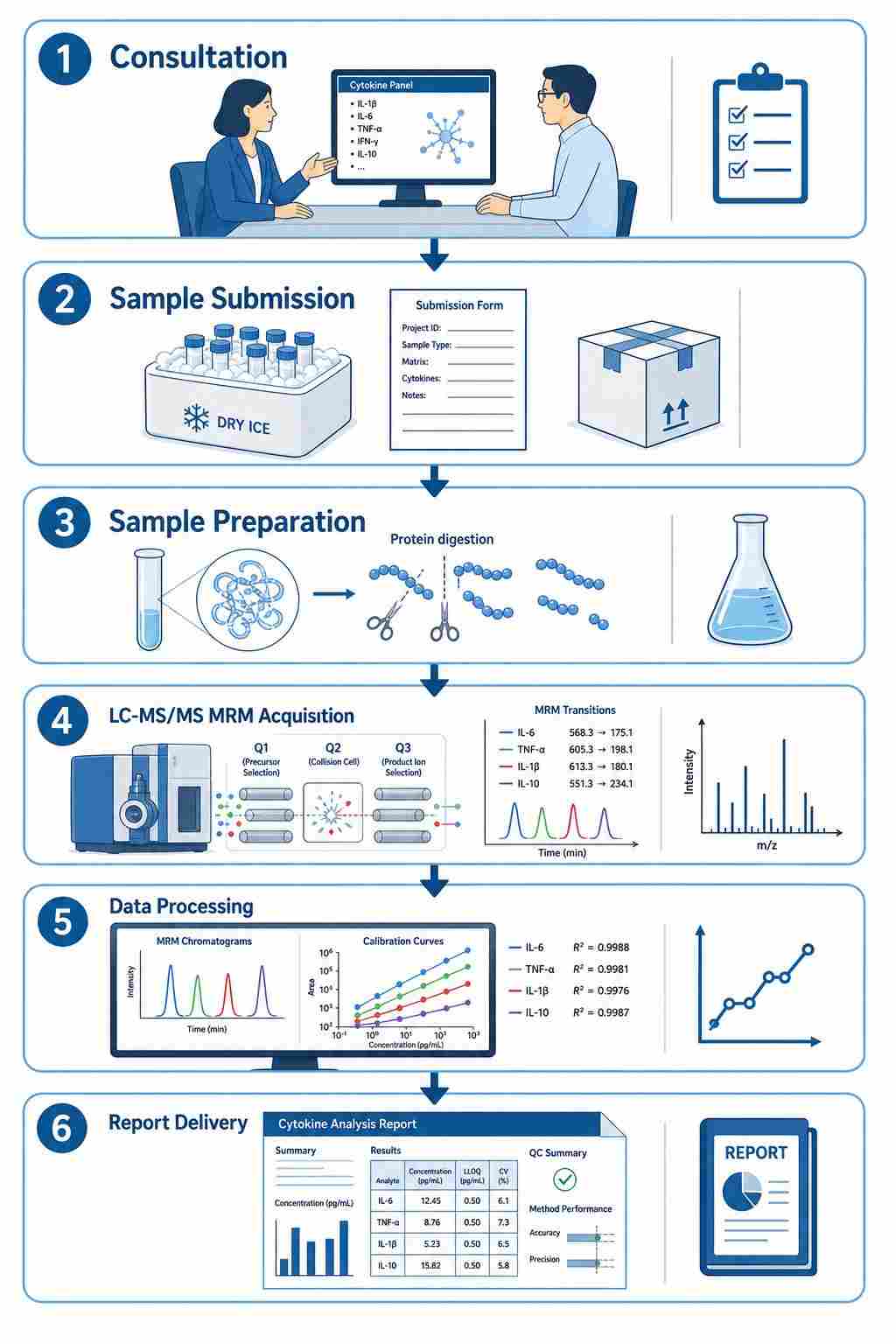
MassTarget Cytokine MS Quantification workflow diagram showing six steps from consultation through sample submission, sample preparation, LC-MS/MS MRM acquisition, data processing, and final report delivery.

Applications of Cytokine MS Quantification

MassTarget™ Cytokine MS Quantification supports a wide range of research applications across drug discovery, preclinical development, and translational research.

Immuno-Oncology

Quantify cytokine profiles in tumor microenvironment models, CAR-T cell therapy supernatants, and checkpoint inhibitor response studies. Monitor IL-2, IFN-γ, TNF-α, and IL-10 dynamics in anti-tumor immune responses.

Autoimmune Disease Research

Profile pro-inflammatory (IL-1β, IL-6, TNF-α, IL-17A) and anti-inflammatory (IL-10, TGF-β1) cytokines in rheumatoid arthritis, inflammatory bowel disease, multiple sclerosis, and lupus models.

Infectious Disease & Vaccine Development

Measure cytokine responses to pathogen challenge and vaccine candidates. Multiplex panels enable comprehensive Th1/Th2/Th17 profiling from limited sample volumes.

Inflammation Biomarker Discovery

Screen panels of inflammatory cytokines in longitudinal cohorts for biomarker identification. Absolute quantification enables cross-study comparison and meta-analysis.

Orthogonal Assay Validation

Validate immunoassay results using a fundamentally different measurement principle. MRM-MS provides independent confirmation of ELISA, Luminex, or MSD findings for regulatory submissions and high-impact publications.

Related services: biomarker discovery services | CYP450 inhibition panel | cell-based MS screening

Cytokine MS vs. Immunoassay Methods

A detailed comparison of MassTarget™ MRM-MS with traditional immunoassay platforms for cytokine quantification.

DimensionMassTarget™ MRM-MSELISALuminex MultiplexMSD (ECL)
SpecificityExcellent (peptide-level)Good (antibody-dependent)Moderate (cross-reactivity risk)Good (antibody-dependent)
Multiplex Capacity20+ per run1 per well15–30 per wellUp to 10 per well
Absolute QuantificationYes (SIL standards)Relative (kit standard curve)Relative (kit standard curve)Relative (kit standard curve)
LLOQ (typical)5–50 pg/mL1–10 pg/mL1–10 pg/mL0.5–5 pg/mL
Dynamic Range3–4 orders2–3 orders3–4 orders3–4 orders
Sample Volume50 µL50–100 µL25–50 µL25–50 µL
Antibody DependencyNoneRequiredRequiredRequired
Isoform DiscriminationYesLimitedLimitedLimited
Batch ReproducibilityHigh (SIL standards)Moderate (kit lot variation)Moderate (bead lot variation)Moderate (plate lot variation)
Turnaround Time3–4 weeks1–2 days (per target)1–2 days1–2 days

Key takeaway: MassTarget™ MRM-MS excels where specificity, multiplex capacity, absolute quantification, and isoform discrimination are critical. For ultra-high-sensitivity single-plex applications (LLOQ <1 pg/mL), immunoassay methods may still be preferred, and MRM-MS serves as an orthogonal validation platform.

Representative Data

Our MassTarget™ Cytokine MS Quantification platform delivers robust, reproducible performance across the full panel. Representative data are shown below.

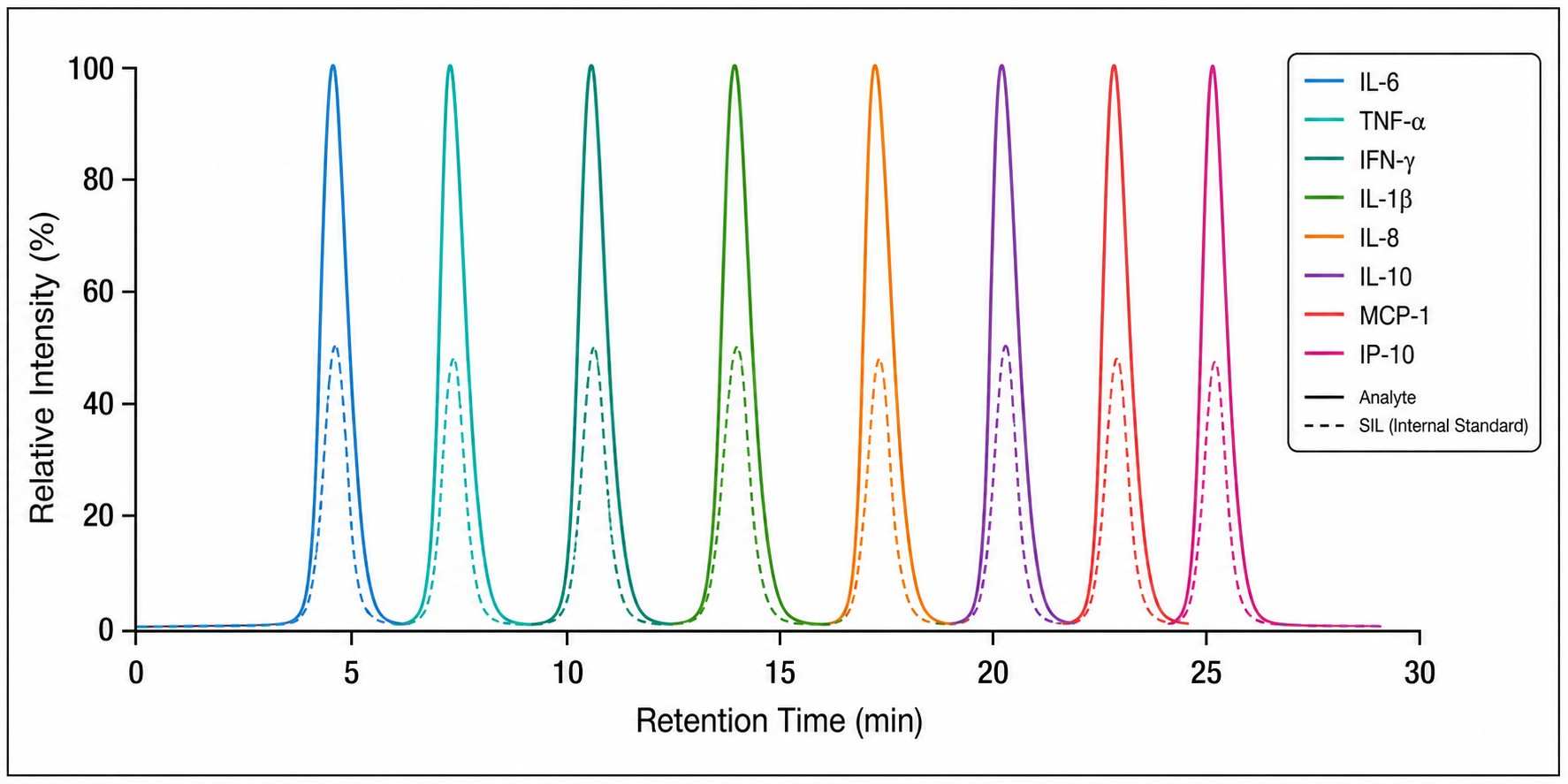
Overlaid extracted ion chromatograms showing multiple cytokine peptide MRM transitions from a single 30-minute LC-MS/MS run, with each trace representing a unique signature peptide and corresponding SIL internal standard.

MRM Chromatogram

Overlaid extracted ion chromatograms showing multiple cytokine peptide MRM transitions from a single 30-minute LC-MS/MS run. Each trace represents a unique signature peptide with corresponding SIL internal standard, demonstrating the multiplex capacity of the MRM-MS approach.

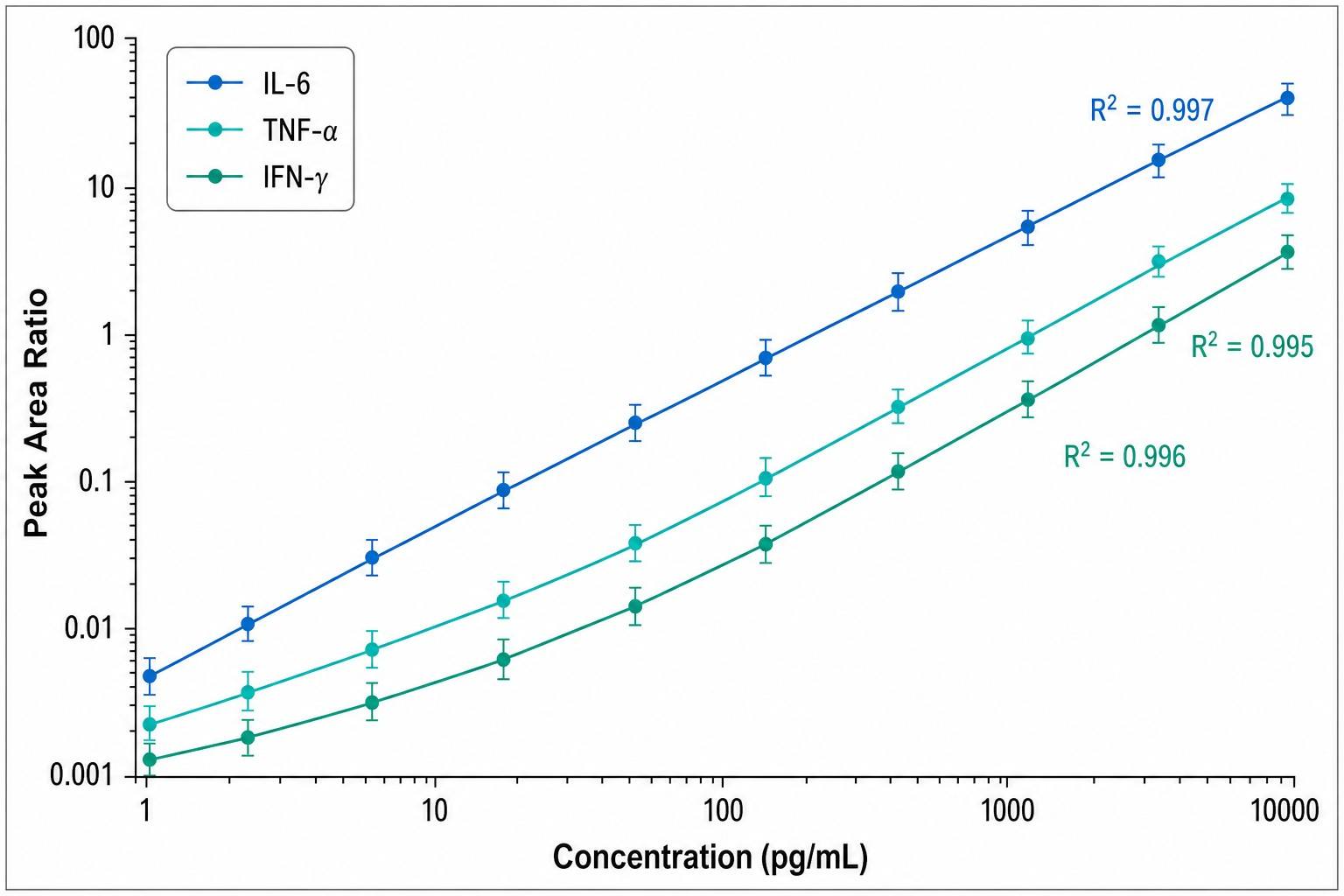
Linear dynamic range spanning 3-4 orders of magnitude for representative cytokines IL-6, TNF-alpha, and IFN-gamma, with calibration standards prepared in surrogate matrix and SIL internal standards demonstrating R-squared greater than 0.99.

Calibration Curves

Linear dynamic range spanning 3–4 orders of magnitude for representative cytokines (IL-6, TNF-α, IFN-γ). Calibration standards prepared in surrogate matrix with SIL internal standards, demonstrating R² > 0.99 across the full range.

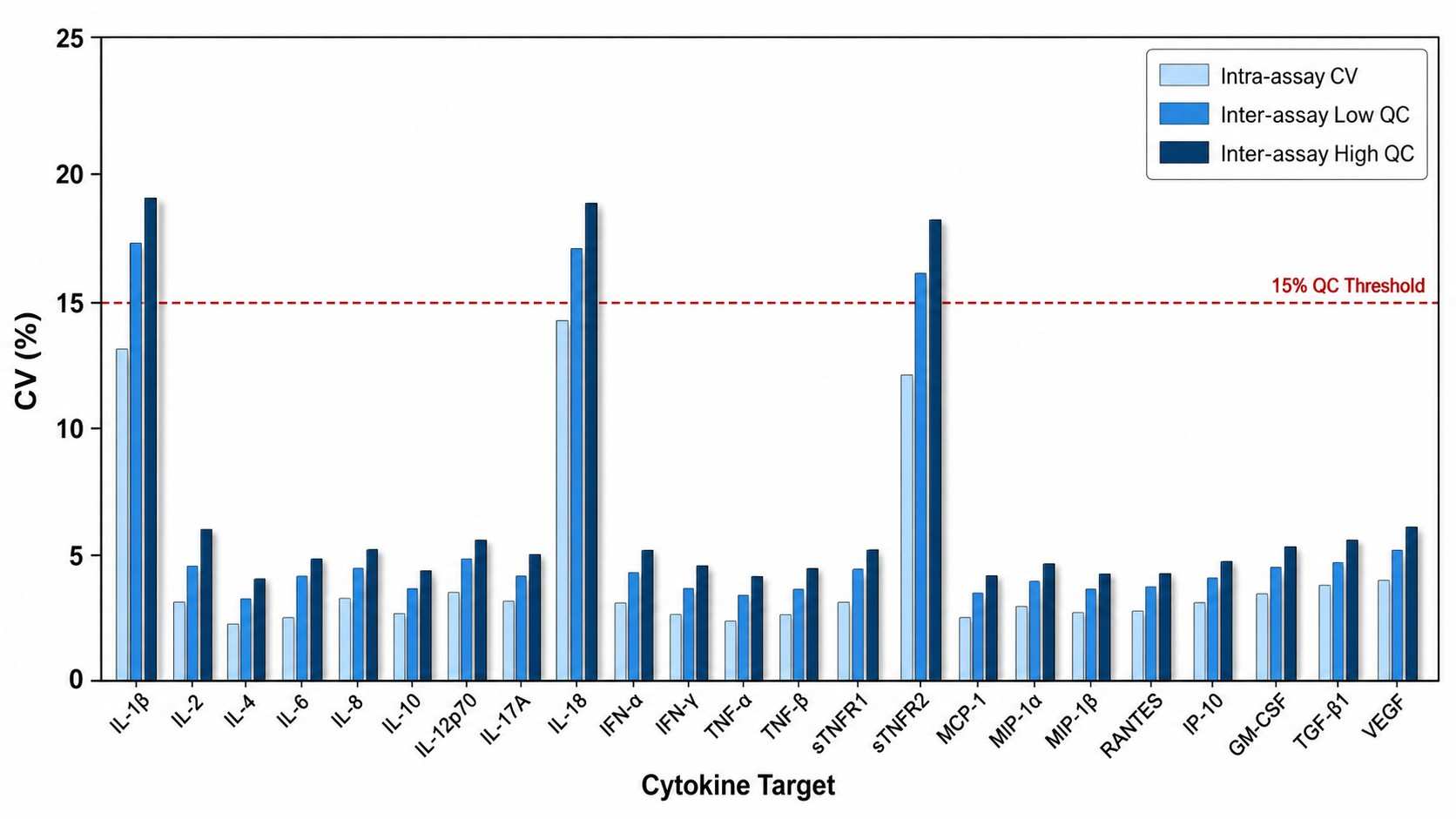
Bar chart showing inter- and intra-assay CV percentage across the full 20-plus cytokine panel at low, mid, and high QC concentration levels, demonstrating CV less than 15 percent for the majority of targets.

Multiplex Reproducibility

Inter- and intra-assay CV% across the full 20+ cytokine panel. QC samples at three concentration levels (low, mid, high) analyzed across multiple days demonstrate CV% < 15% for the majority of targets.

Case Study — Antibody-Free Multiplex Measurement of 23 Human Cytokines in Primary Cell Culture Secretome Using Targeted Mass Spectrometry

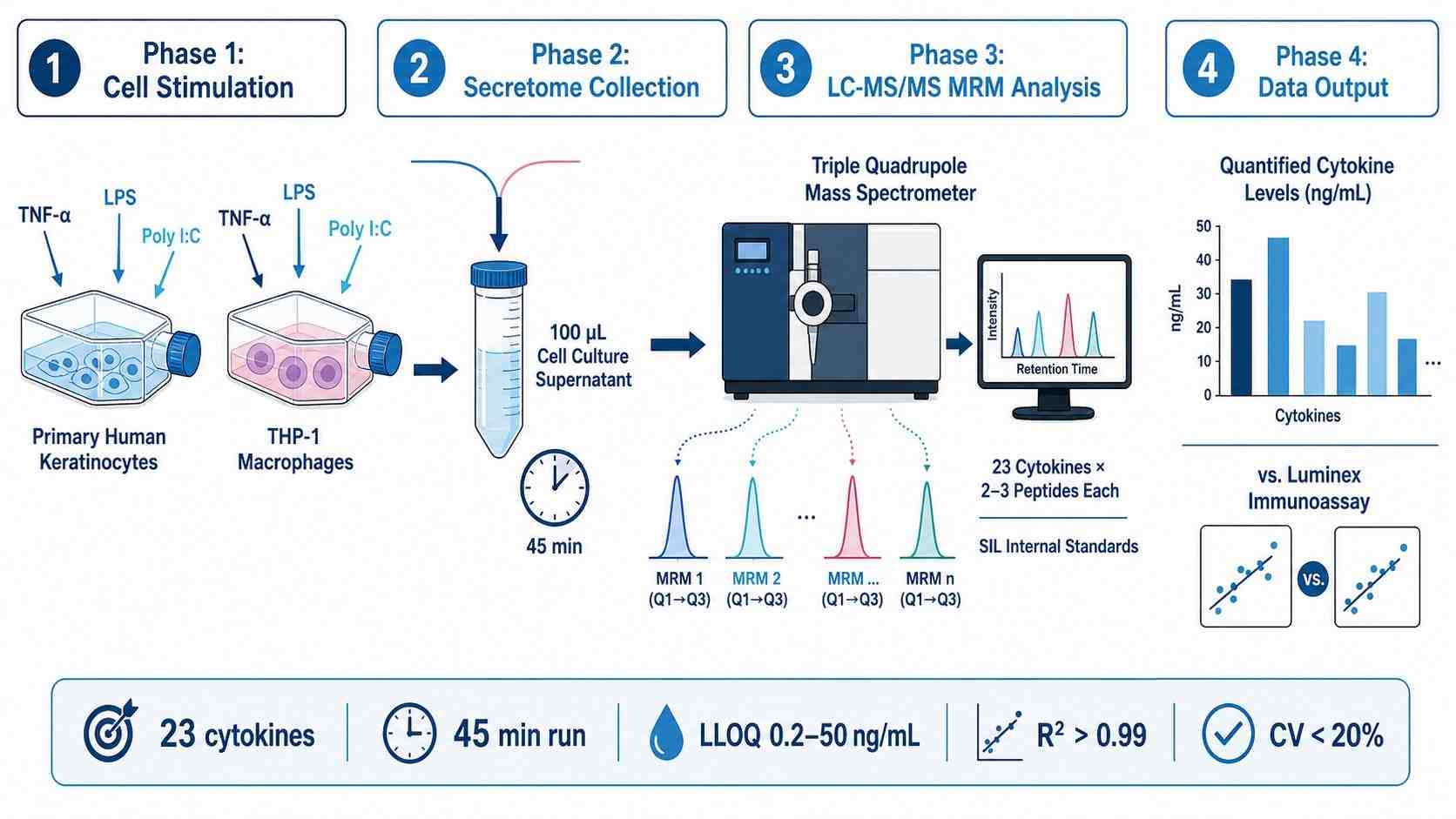
Study design schematic for Krueger et al. 2020: antibody-free multiplex MRM quantification of 23 human cytokines from primary cell culture secretome, showing the workflow from cell stimulation to MRM data acquisition and analysis.

Krueger A, Stoll T, Shah AK, Sinha R, Frazer IH, Hill MM. "Antibody-Free Multiplex Measurement of 23 Human Cytokines in Primary Cell Culture Secretome Using Targeted Mass Spectrometry." Analytical Chemistry 92(6):4349-4357 (2020). https://doi.org/10.1021/acs.analchem.9b05028

Objective

To develop and validate an MRM-MS method for the antibody-free, multiplex quantification of 23 human cytokines from primary cell culture secretome, and to evaluate its performance against conventional immunoassay methods.

Method

The authors developed a targeted MRM assay using a triple quadrupole mass spectrometer with scheduled MRM transitions for 2–3 signature peptides per cytokine. Stable isotope-labeled peptide standards were used for absolute quantification. The method was applied to quantify cytokines secreted by primary human keratinocytes and THP-1 macrophage-like cells under various stimulation conditions.

Key Results

  • 23 cytokines quantified in a single 45-minute LC-MS/MS run from 100 µL cell culture supernatant
  • LLOQ ranged from 0.2 to 50 ng/mL across the panel
  • Linear dynamic range of 3–4 orders of magnitude (R² > 0.99)
  • Inter-assay CV < 20% for the majority of targets
  • Good correlation with multiplex immunoassay (Luminex) for high-abundance cytokines
  • Successful detection of stimulus-dependent cytokine secretion profiles (TNF-α, IL-6, IL-8, IL-10, IFN-γ, and others)

Significance

This study demonstrated that MRM-MS provides a robust, antibody-free alternative for multiplex cytokine quantification in cell culture models. The method eliminates cross-reactivity concerns inherent to immunoassays and enables absolute quantification without the need for antibody reagents. The authors noted that additional enrichment steps (e.g., immunoaffinity depletion or peptide enrichment) would be needed for low-abundance cytokines in complex matrices like serum or plasma.

Relevance to MassTarget™ Service

Krueger et al.'s foundational work validates the core MRM-MS approach that MassTarget™ Cytokine MS Quantification builds upon. Our service extends this methodology to serum and plasma matrices, incorporates additional enrichment steps for enhanced sensitivity, and offers a broader, customizable cytokine panel with validated performance specifications for preclinical and clinical research applications.

FAQ

Frequently Asked Questions

Q: What is the difference between MS-based cytokine quantification and ELISA?

MS-based quantification measures signature peptides from digested cytokine proteins using mass-to-charge ratio detection, providing absolute concentrations without antibody reagents. ELISA measures cytokine concentration via antibody binding and enzymatic signal amplification. MS offers superior specificity and multiplex capacity; ELISA offers higher sensitivity for single-plex applications.

Q: How many cytokines can be quantified in a single run?

Our standard panel covers 20+ cytokines across interleukins, interferons, TNF superfamily, chemokines, and growth factors. Custom panel expansion is available upon request.

Q: What is the minimum sample volume required?

50 µL for serum or plasma; 200 µL for cell culture supernatant. Smaller volumes may be accommodated with prior consultation.

Q: Can you analyze clinical trial samples?

Yes. Our laboratory operates under strict QA/QC protocols suitable for preclinical and clinical research samples. Please contact us to discuss GLP/GCLP requirements for your specific study.

Q: How does sensitivity compare to MSD or Luminex?

Typical LLOQ for our MRM-MS method is 5–50 pg/mL for most cytokines. MSD (ECL) and Luminex can achieve lower LLOQ (0.5–10 pg/mL) for some targets. The key advantage of MS is specificity and absolute quantification rather than raw sensitivity. For ultra-low-abundance cytokines, hybrid immunocapture LC-MS approaches can achieve pg/mL-level sensitivity.

Q: What sample types are accepted?

Serum, plasma (EDTA, heparin, citrate), cell culture supernatant, and tissue lysates. Other matrices may be accepted after feasibility assessment.

Q: Is the service GLP-compliant?

We offer analysis under QA-controlled protocols suitable for regulated preclinical studies. Please inquire about specific GLP/GCLP documentation requirements.

Q: What is the turnaround time?

Standard panel: 3–4 weeks from sample receipt. Custom panel development: additional 2–4 weeks depending on complexity.

Q: Can you develop custom cytokine panels?

Yes. We can develop custom MRM assays for cytokines not included in our standard panel, including species-specific targets (mouse, rat, non-human primate).

Q: How do you ensure data quality?

Each run includes: SIL internal standards for every target, multi-point calibration curves, QC samples at three concentration levels, blank and zero controls, and replicate analysis. CV% and spike recovery are reported for each analyte.

References

  1. Krueger A, Stoll T, Shah AK, Sinha R, Frazer IH, Hill MM. Antibody-Free Multiplex Measurement of 23 Human Cytokines in Primary Cell Culture Secretome Using Targeted Mass Spectrometry. Anal Chem. 2020;92(6):4349-4357. doi:10.1021/acs.analchem.9b05028. https://doi.org/10.1021/acs.analchem.9b05028
  2. Muqaku B, Slany A, Bileck A, Kreutz D, Gerner C. Quantification of cytokines secreted by primary human cells using multiple reaction monitoring: evaluation of analytical parameters. Anal Bioanal Chem. 2015;407:6525-6536. doi:10.1007/s00216-015-8817-9. https://doi.org/10.1007/s00216-015-8817-9
  3. Illiano A, Pinto G, Gaglione R, Arciello A, Amoresano A. Inflammation protein quantification by multiple reaction monitoring mass spectrometry in lipopolysaccharide-stimulated THP-1 cells. Rapid Commun Mass Spectrom. 2021;35(20):e9166. doi:10.1002/rcm.9166. https://doi.org/10.1002/rcm.9166
  4. Fu Q, Johnson C, Inker LA, Van Eyk JE, et al. A targeted LC-MS/MS assay of a health surveillance panel and its application to chronic kidney disease. bioRxiv. 2025. doi:10.1101/2025.03.14.643399. https://doi.org/10.1101/2025.03.14.643399

Plan your cytokine quantification study with the MassTarget team

Tell us about your cytokine targets, sample types, and research questions — our scientists will recommend the optimal panel configuration and design a tailored study for your project.


For research use only. Not for use in diagnostic procedures. Creative Proteomics provides cytokine MS quantification services exclusively for research and development purposes. Results are not intended for clinical diagnosis or medical decision-making.

Online Inquiry

Please submit a detailed description of your project. We will provide you with a customized project plan to meet your research requests. You can also send emails directly to for inquiries.

* Email
Phone
* Service & Products of Interest
Services Required and Project Description