MS‑Based Proteome‑Wide Thermal Stability Profiling Service

Unlock drug‑target insights without licensing constraints.

Our proteome‑wide thermal stability profiling combines precise thermal or proteolytic perturbations with high‑resolution mass spectrometry to monitor stability shifts across thousands of proteins. This label‑free approach reveals direct binding, off‑target effects and allosteric modulation in native cellular contexts.

By partnering with Creative Proteomics, you gain access to a turnkey workflow for phenotypic hit deconvolution, off‑target profiling and allosteric site discovery when functional assays are unavailable or purification is challenging.

Key Advantages:

  • Label‑free, proteome‑wide coverage
  • Detect off‑targets & allosteric binders
  • High‑resolution MS & advanced analytics
  • Flexible sample compatibility (cells, tissues, complexes)
  • Optional integration with LiP‑MS & dose‑response profiling
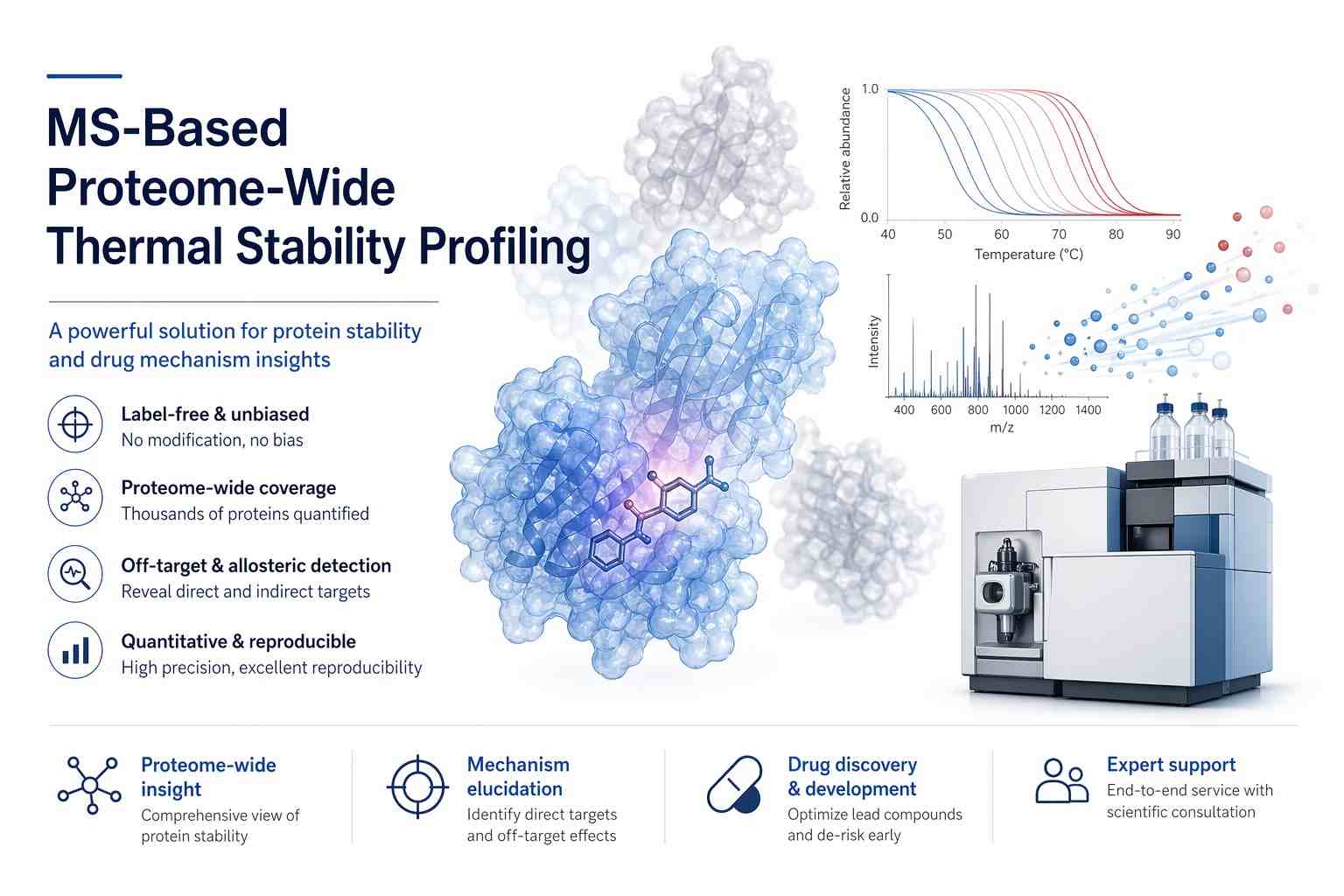
Conceptual illustration of proteome-wide thermal stability profiling using mass spectrometry
What Is Thermal Stability Profiling Platform & Capabilities Projects & Applications Workflow Technique Comparison Samples Deliverables Demo Case Study FAQ

What Is Proteome‑Wide Thermal Stability Profiling?

Proteome‑wide thermal stability profiling is a mass‑spectrometry‑based technique that monitors how ligand binding affects the melting behaviour of thousands of proteins in parallel. By heating native cell or tissue lysates through a temperature gradient, or applying limited proteolysis, the abundance of each protein is measured at each condition. Stabilised proteins suggest direct or allosteric binding, while destabilised proteins may indicate off‑target interactions or downstream network effects.

This technology offers a label‑free, solution‑phase method to interrogate native proteomes, making it ideal for phenotypic hit deconvolution, off‑target profiling and discovery of cryptic binding pockets when functional assays are unavailable.

For a detailed introduction to the original thermal proteome profiling method and how our approach differs, see our Thermal Proteome Profiling (TPP) service.

Our Platform & Unique Capabilities

Label‑Free & Proteome‑Wide

Measure stability shifts across thousands of proteins without chemical tags or antibodies.

Allosteric & Cryptic Site Detection

Identify stabilisation at allosteric or cryptic sites distant from the active site to guide medicinal chemistry.

Flexible Sample Compatibility

Process cell lysates, tissues, organelles, membrane proteins and complex mixtures in native buffers.

Integrated LiP‑MS & Dose Response

Combine thermal perturbation with Limited Proteolysis–MS (LiP‑MS) or dose‑response thermal stability analysis to map conformational changes and estimate binding affinities.

Advanced Data Analytics

Leverage machine‑learning algorithms to fit melting curves, generate volcano plots and stability landscapes, and annotate hits with functional context.

Why It Matters for Discovery Teams

Drug discovery programs often struggle with phenotypic hits of unknown mechanism, limited access to high‑end mass spectrometry or challenging target classes such as membrane proteins. Our proteome‑wide thermal stability profiling offers a streamlined alternative to conventional screening, enabling rapid deconvolution of hits, detection of off‑targets and exploration of allosteric pockets in physiologically relevant samples.

Projects & Applications

Our platform supports a variety of research scenarios across early discovery and translational programs. Example project categories include:

1

Phenotypic Hit Deconvolution

Identify direct targets of phenotypic screen hits and rank off‑target liabilities.

  • Rapidly map binding partners without overexpressing or purifying the target.
  • Prioritise compounds based on on‑target engagement and off‑target profiles.
  • Support MoA elucidation during early screening campaigns.
2

Off‑Target Profiling & Safety Assessment

Screen for unintended interactions to support safety and toxicity studies.

  • Comprehensive assessment of compound selectivity across the proteome.
  • Identify proteins destabilised by treatment to anticipate potential adverse effects.
  • Facilitate lead optimisation by comparing off‑target profiles.
3

Allosteric & Cryptic Site Discovery

Discover binding pockets beyond the active site to expand therapeutic options.

  • Detect stabilisation at allosteric sites that modulate protein function.
  • Uncover cryptic pockets that emerge upon ligand binding.
  • Guide medicinal chemistry toward novel binding hotspots.
4

Native Environment & Complex Mixtures

Validate target engagement in native lysates and complex samples.

  • Analyse membrane‑rich fractions, natural product extracts and tissue homogenates.
  • Maintain physiological context without purification or immobilisation.
  • Complement other MS techniques such as LiP‑MS and FPOP‑MS.

Workflow & Quality Control

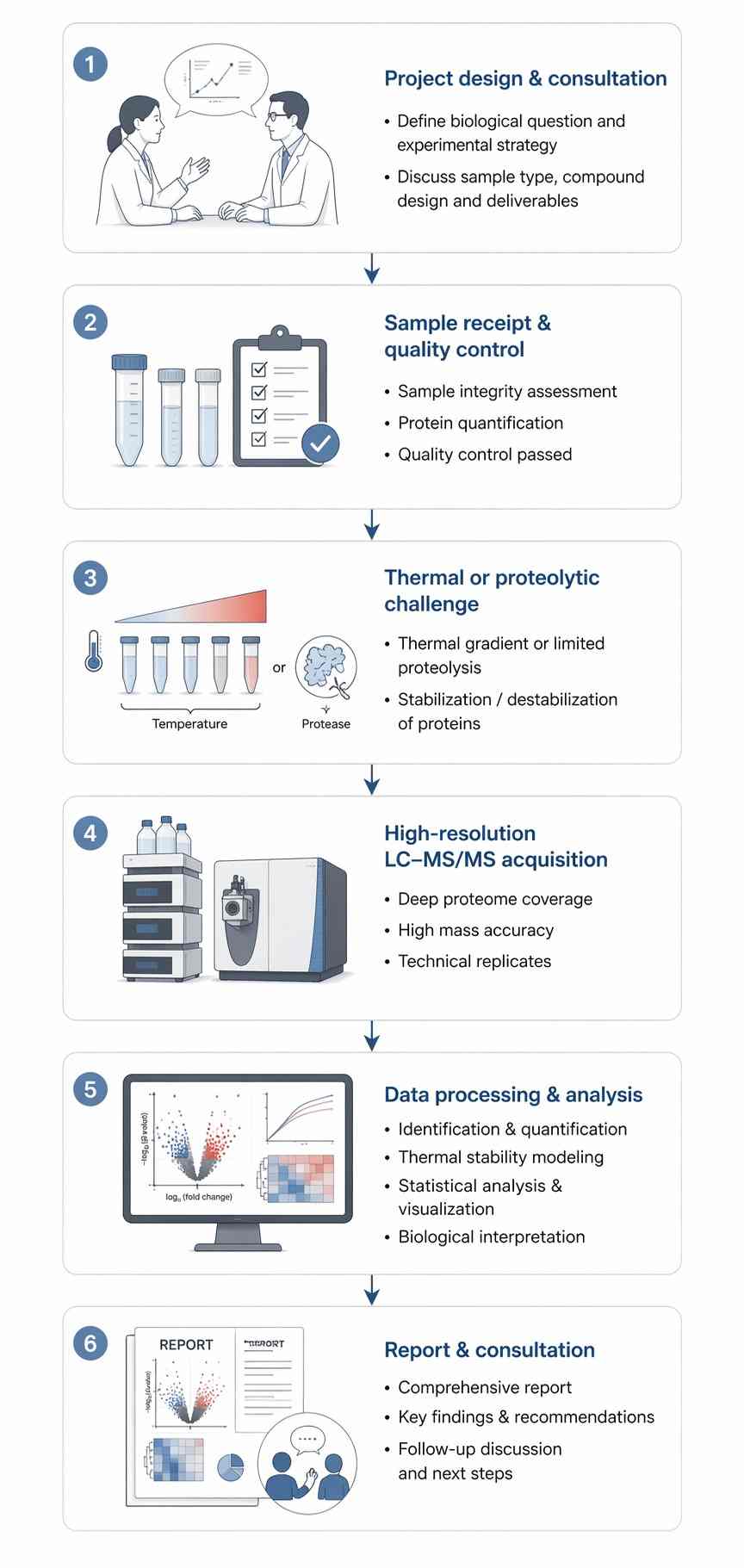
The workflow consists of six essential stages integrating technical steps and service checkpoints:

1

Project Design & Consultation

Define objectives, sample types and desired coverage with our scientists. Select from proteome‑wide profiling, targeted TSA‑MS or LiP‑MS options.

2

Sample Receipt & QC

Upon arrival, samples are logged and evaluated for integrity. We recommend at least three biological replicates and consistent collection conditions.

3

Thermal or Proteolytic Challenge

Native lysates are aliquoted and exposed to a temperature gradient or limited proteolysis. Proteins are precipitated and digested with trypsin. QC checkpoints include measuring protein recovery and digestion completeness.

4

High‑Resolution LC–MS/MS Acquisition

Peptides are analysed on high‑resolution instruments, generating raw files for each condition. Mass accuracy and peptide identification rates are monitored throughout the run.

5

Data Processing & Analysis

Our bioinformatics pipeline aligns peptide intensities, fits melting curves and identifies statistically significant stability shifts. Outputs include volcano plots, melting curves and stability landscapes annotated with functional information.

6

Report & Consultation

You receive a detailed report with interactive figures, hit lists and QC metrics. A scientist walks you through the results and recommends next steps.

Thermal stability workflow diagram showing sample preparation, thermal perturbation, mass spectrometry and data analysis

To explore related techniques, see:

When to Use Thermal Stability Profiling

Thermal stability profiling provides unique advantages in scenarios where conventional assays fall short. Below are representative situations where our service delivers clear value.

When Targets Lack Functional Assays

Some proteins lack measurable biochemical activity or require complex multi‑component systems. Thermal profiling offers a direct binding readout without developing a reporter assay.

Common scenarios:

  • Novel protein folds or non‑enzymatic targets
  • RNA or protein complexes with no known substrate
  • Early hit identification before assay development

Our service solves: identifying binders early without needing assay development.

When Off‑Target Risk Must Be Assessed

Lead optimisation and safety studies demand early visibility into off‑target liabilities. Proteome‑wide thermal profiling screens thousands of proteins simultaneously to highlight destabilised or stabilised proteins.

  • Assess selectivity across the proteome
  • Prioritise compounds with favourable off‑target profiles
  • Guide medicinal chemistry decisions

Our service solves: comprehensive off‑target profiling in a single experiment.

When Investigating Allosteric or Cryptic Binding

Allosteric modulators and cryptic pockets can modulate protein function beyond the active site. Thermal profiling detects stabilisation at these sites without prior knowledge of binding epitopes.

  • Discover novel binding hotspots
  • Evaluate allosteric inhibitors or activators
  • Expand chemical space beyond orthosteric sites

Our service solves: uncovering hidden binding pockets that enable innovative drug design.

When Working with Complex or Membrane‑Rich Samples

Tissues, organelles and membrane fractions often pose challenges for purification and immobilisation. Our label‑free workflow preserves native conditions and handles heterogeneous mixtures.

  • Analyse natural product extracts and organoid cultures
  • Maintain membrane proteins in detergent or nanodisc environments
  • Capture interactions in physiologically relevant matrices

Our service solves: screening complex samples without compromising native context.

Platform Instrumentation

Our thermal stability profiling platform integrates precise thermal perturbation, advanced chromatography, high‑resolution mass spectrometry and informatics to ensure sensitive and reproducible results.

Module CategoryInstrument / SystemCore CapabilityWhy It Matters
Thermal Gradient & Sample PrepProgrammable heat block & digestion modulePrecise temperature control and protease digestionEnsures reproducible melting curves and complete digestion
ChromatographyNano‑LC / UPLCHigh‑resolution peptide separationReduces sample complexity for confident identification
Mass SpectrometryHigh‑Resolution Orbitrap or Q‑ToF MSAccurate‑mass, high‑resolution detectionSensitive to weak binders and broad dynamic range
InformaticsCustom ML pipelineMelting‑curve fitting & hit annotationAutomates data processing and prioritisation

Technique Comparison: Thermal Stability Profiling vs. Alternatives

TechniqueCore PrincipleTypical ApplicationsKey StrengthsKey Limitations
Proteome‑Wide Thermal Stability ProfilingApply a temperature or proteolytic gradient to native lysates; monitor protein stability shifts by MSPhenotypic hit deconvolution, off‑target profiling, allosteric site discovery, membrane proteins
  • Label‑free and proteome‑wide
  • Applicable to complex and native samples
  • Detects allosteric and cryptic binding
  • No kinetic information
  • Requires sufficient sample quantity
  • Sensitivity depends on proteome coverage
Targeted TSA‑MSMonitor melting temperature shifts of a single protein with and without ligandLead validation, affinity ranking for specific targets
  • High sensitivity and quick turnaround
  • Minimal sample requirements
  • Quantitative ΔTm values
  • Single target per assay
  • Requires enriched or purified protein
  • May miss allosteric sites
Affinity Pull‑Down / ABPPTag or immobilise compound/protein; capture interacting proteins; analyse by MSIdentification of binding partners, covalent inhibitor profiling
  • Direct identification of interacting proteins
  • Applicable to covalent inhibitors
  • Suitable for chemoproteomics
  • Requires chemical tag or immobilisation
  • May perturb native binding
  • Limited to strong or covalent interactions
SPR / BLIImmobilise target on sensor chip; flow analyte; monitor real‑time binding kineticsKinetic and affinity profiling for purified targets
  • Provides kon, koff and Kd
  • Highly sensitive for high‑affinity binders
  • Widely used for biophysical characterisation
  • Low throughput for large libraries
  • Requires purified protein and immobilisation
  • Not suitable for complex mixtures

Sample Requirements

Sample TypeRecommended AmountReplicates (Min)Buffer & AdditivesShipping & StorageNotes
Hard tissues (bone, hair)300–500 mg≥350 mM HEPES, pH 7.4, 150 mM NaCl + detergentsFlash‑freeze in liquid N₂, store at –80 °C, ship on dry iceRemove non‑target tissue before freezing
Soft tissues (leaves, flowers)100 mg≥350 mM HEPES, pH 7.4, 150 mM NaClRinse with PBS, flash‑freeze, ship on dry iceHandle rapidly to avoid degradation
Plant roots, bark, seeds3–5 g≥350 mM HEPES, pH 7.4, 150 mM NaClWrap in foil or tubes, flash‑freeze, ship on dry iceRemove impurities prior to processing
Microbes (bacteria, fungi)50 µL pellet≥3PBS wash; resuspend in lysis bufferSnap‑freeze; ship on dry iceProvide both pellet and supernatant if needed
Cultured cells5 × 106–1 × 10⁷ cells≥3Wash with PBS; remove mediumSnap‑freeze pellets; store at –80 °CSuitable for cell lines, organoids or primary cells
Fluids (plasma, serum)20–100 µL≥3Add protease inhibitors immediatelyCentrifuge, aliquot, freeze at –80 °CDepletion options available

For trace samples (30–50 mg tissues or 200–5 000 cells), label‑free DIA protocols are available. Please contact us if your sample type is not listed.

Deliverables

  • Raw MS data and processed peptide tables
  • Ranked list of stabilised and destabilised proteins
  • Volcano plots, melting curves and stability landscapes
  • Interactive data files compatible with downstream analysis
  • Comprehensive report with QC metrics and functional annotation
  • Recommended follow‑up validation experiments

Representative Demo Data

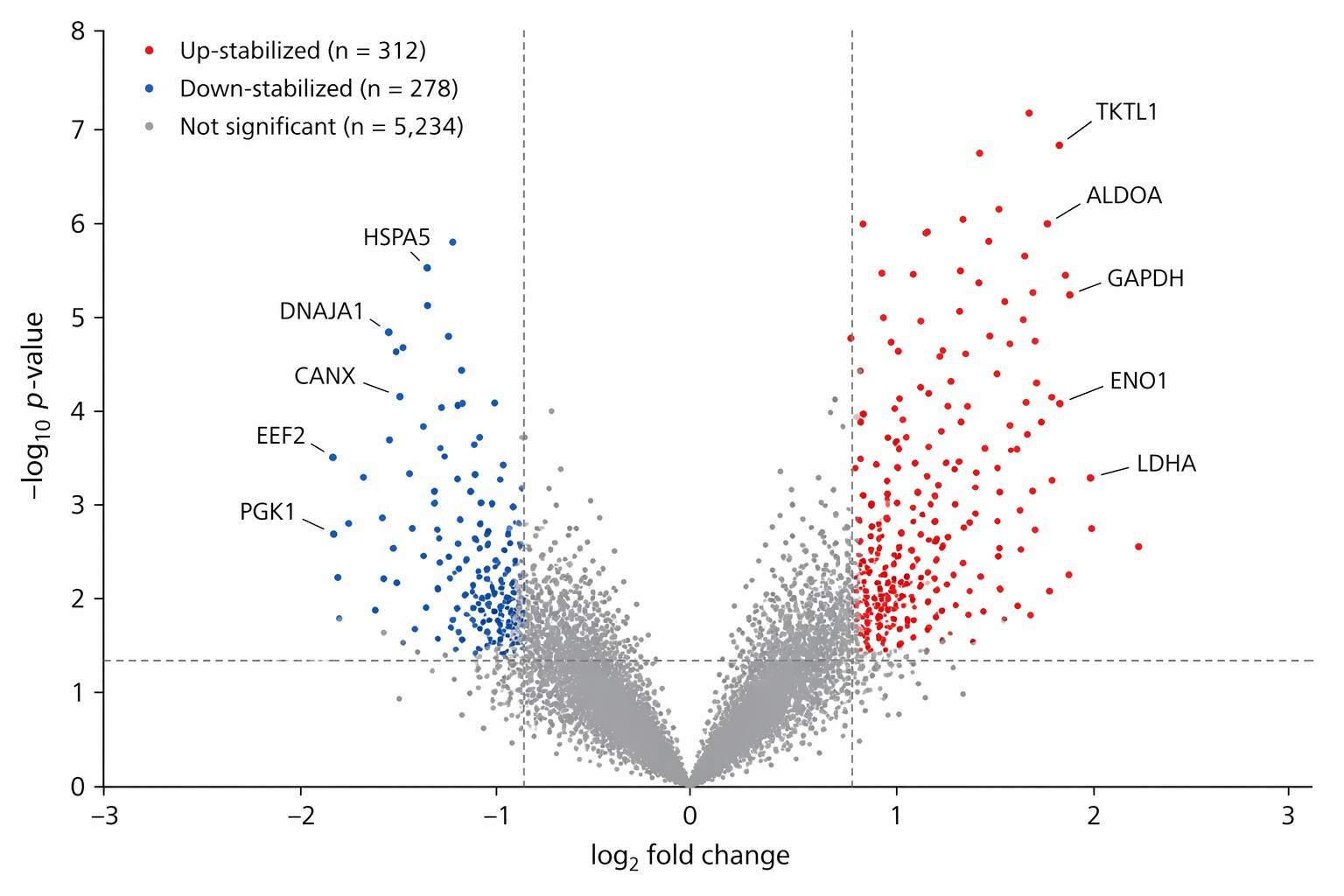
Volcano plot highlighting proteins with significant stability shifts upon compound treatment

Volcano Plot

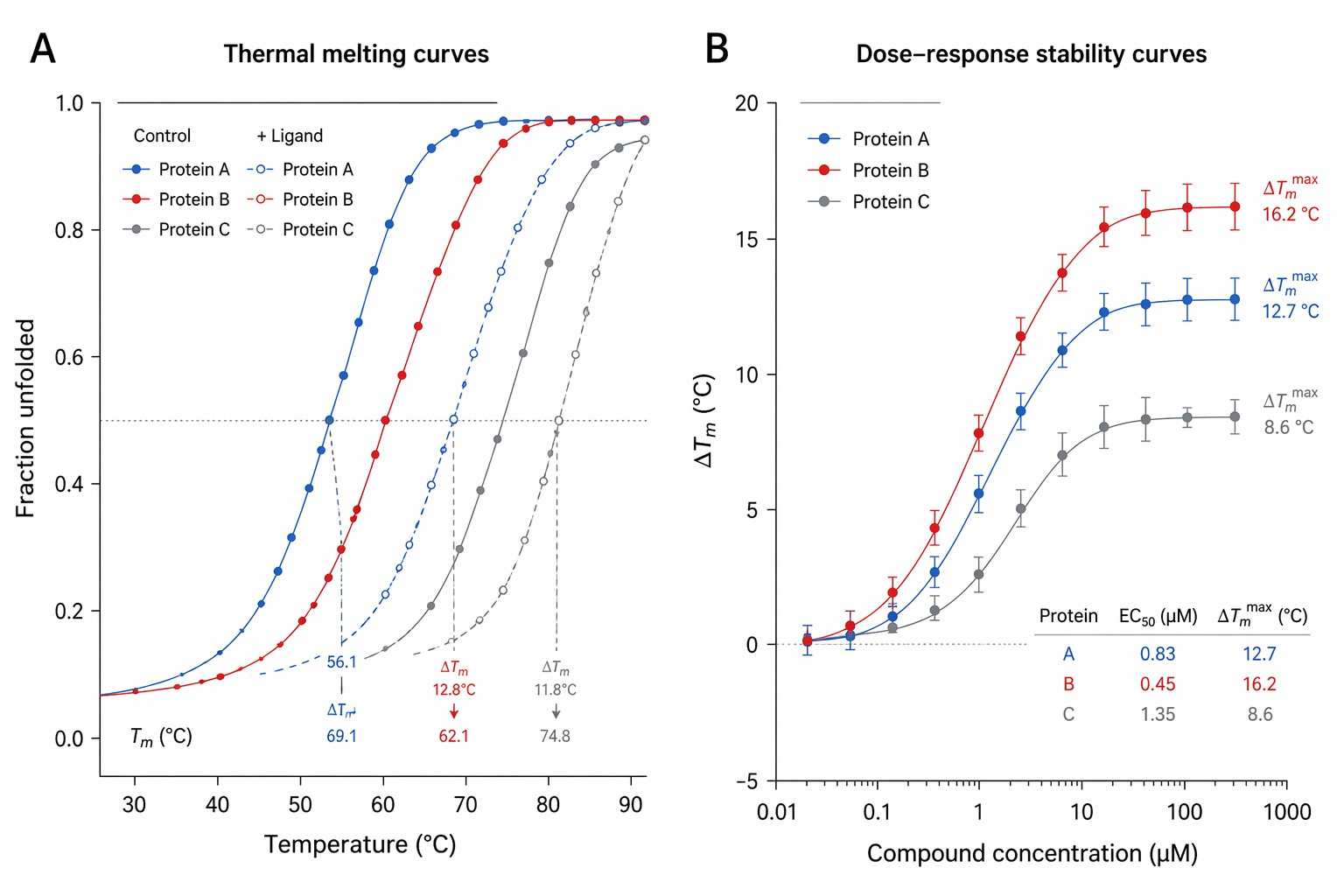
Melting curves and dose–response stability curves for protein targets

Melting & Dose–Response Curves

Two‑dimensional stability landscape combining temperature and concentration dimensions

2D Stability Landscape

Case Study: Membrane‑Mimetic Thermal Proteome Profiling

Jandu et al. “Membrane‑mimetic thermal proteome profiling toward mapping membrane protein–ligand dynamic interactions.” eLife 2025. https://elifesciences.org/articles/104549

Background

Membrane proteins play pivotal roles in signalling and transport but are challenging to study due to their hydrophobicity. This study developed a membrane‑mimetic thermal proteome profiling (MM‑TPP) approach to investigate ligand interactions with membrane proteins under near‑native conditions.

Methods

E. coli membrane proteins were extracted into a detergent‑free membrane‑mimetic system and incubated with ATP–VO₄, a non‑hydrolysable ATP analogue. Samples were heated across a temperature gradient, precipitated and digested. Peptides were analysed by high‑resolution MS, and melting curves were fitted for each protein. SDS‑PAGE and scatter plots ensured sample consistency.

Results

Figure 2 of the paper shows multi‑panel results: SDS‑PAGE analysis indicating similar protein profiles between control and ligand‑treated samples; scatter plots of protein intensities across temperatures; melting curves demonstrating ligand‑induced stabilisation of specific transporters; and a volcano plot highlighting proteins significantly stabilised or destabilised by ATP–VO₄. Hits included known ATP‑binding proteins and several transporters, validating the method’s sensitivity.

Conclusion

This case demonstrates that proteome‑wide thermal stability profiling can capture ligand‑induced stabilisation of membrane proteins in a near‑native environment and identify both expected and novel interactors. Similar methodology can be applied to your project to uncover drug targets, off‑targets and allosteric sites.

Multi‑panel MM‑TPP results illustrating SDS‑PAGE analysis, scatter plots, melting curves and volcano plots from the Jandu et al. case study.

Figure 2 from Jandu et al.: SDS‑PAGE, scatter plots, melting curves and volcano plot.

FAQ

Frequently Asked Questions

Q: How does thermal stability profiling differ from CETSA/TPP?

Our method is conceptually similar to thermal proteome profiling but avoids trademarks and proprietary protocols. It uses mass‑spectrometry‑based workflows and a neutral name, providing a research‑use‑only service without licensing constraints.

Q: What types of samples can you analyse?

We accept cell lysates, tissues, organelles and complex mixtures such as natural product extracts. See the sample requirements table above for recommended amounts and handling guidelines.

Q: Do I need to provide replicates?

Yes. At least three biological replicates are recommended to ensure statistical confidence and reproducibility.

Q: Is bioinformatics analysis included?

Basic analysis such as melting curves, volcano plots and ranked hit lists is included. Advanced pathway enrichment and network analyses are available as optional add‑ons.

Q: Can this be combined with other MS services?

Absolutely. Our platform integrates seamlessly with targeted thermal shift assays, dose‑response profiling and limited proteolysis–MS. These complementary services help validate hits and reveal structural details.

Plan a Thermal Stability Profiling Project with the MassTarget™ Team

Share your targets and sample details and our scientists will design a tailored thermal stability profiling strategy for your discovery program.


For Research Use Only. Not for use in diagnostic procedures.

Online Inquiry

Please submit a detailed description of your project. We will provide you with a customized project plan to meet your research requests. You can also send emails directly to for inquiries.

* Email
Phone
* Service & Products of Interest
Services Required and Project Description