Transferase (HAT/HMT) MS Activity Assays

Label-free mass spectrometry-based activity assays for histone acetyltransferase and histone methyltransferase inhibitor screening.

Transferase MS activity assays use label-free mass spectrometry to directly measure enzyme-catalysed group transfer reactions — acetylation by histone acetyltransferases (HATs) and methylation by histone methyltransferases (HMTs). Unlike fluorescence- or antibody-based methods, MS detects the mass shift of the substrate peptide directly (+42 Da for acetylation, +14/28/42 Da for mono-/di-/trimethylation), giving you an unambiguous, quantitative readout of enzyme activity without interference from compound autofluorescence or antibody cross-reactivity.

At Creative Proteomics, our Transferase MS service is designed to address the challenges of epigenetic drug discovery: compound interference in fluorescence-based assays, the need for site-specific resolution, and the demand for a single assay platform that works across both HAT and HMT targets.

Leveraging our MALDI-TOF and LC-MS platforms, we deliver high-throughput, label-free activity data for small-molecule inhibitors, fragments, and tool compounds targeting HATs and HMTs.

Key Advantages:

  • Direct mass readout eliminates compound autofluorescence and quenching interference.
  • Single assay format works for both HATs (p300/CBP, PCAF, GCN5, MYST) and HMTs (G9a, EZH2, DOT1L, SETD7, PRMT family).
  • Site-specific resolution — identifies exactly which lysine residue is modified on multi-site substrates.
  • MALDI-TOF HTS format with <5 s acquisition per sample in 384-well plates.
  • Compatible with peptide and full-length recombinant nucleosome substrates.
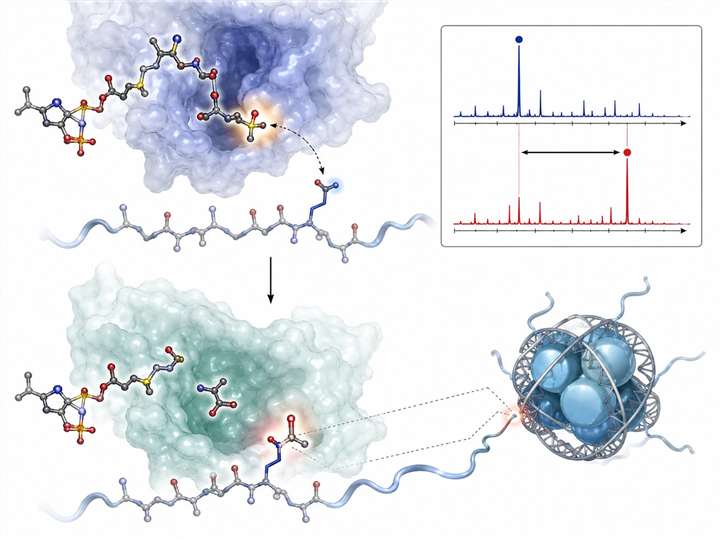
HAT enzyme catalysing histone acetylation with transferase MS readout
What Is Advantages Service Overview Comparison Sample Case Study FAQ

What Is Transferase (HAT/HMT) MS Activity Assay?

Transferase MS activity assays use label-free mass spectrometry to directly measure enzyme-catalysed group transfer reactions — acetylation by histone acetyltransferases (HATs) and methylation by histone methyltransferases (HMTs). Unlike fluorescence- or antibody-based methods, MS detects the mass shift of the substrate peptide directly (+42 Da for acetylation, +14/28/42 Da for mono-/di-/trimethylation), giving you an unambiguous, quantitative readout of enzyme activity without interference from compound autofluorescence or antibody cross-reactivity.

The process begins with incubating your HAT or HMT enzyme with a peptide or nucleosome substrate, the required cofactor (acetyl-CoA for HATs, SAM for HMTs), and your compound of interest. After the enzymatic reaction, samples are analysed by MALDI-TOF MS or LC-MS to measure the ratio of modified to unmodified substrate — a direct readout of enzyme activity and inhibition.

Key Advantages of Transferase MS Activity Assays

Direct Mass Readout Eliminates Assay Interference

Fluorescent HAT and HMT assays suffer from compound interference — roughly 5–10% of screening compounds autofluoresce or quench signal. MS reads mass, not light. Your hits are real, not artefacts.

Single Assay Format for Both HATs and HMTs

Whether you are screening against a HAT (p300/CBP, PCAF, GCN5, MYST family) or an HMT (G9a, EZH2, DOT1L, SETD7, PRMT family), the same label-free MS workflow applies. No need to develop separate assay formats for different enzyme classes.

Site-Specific Resolution

Antibody-based HAT/HMT assays report bulk modification levels. MS tells you exactly which lysine residue is modified on a peptide substrate containing multiple potential sites — information that matters when evaluating selectivity across the histone code.

Compatible with Peptide and Nucleosome Substrates

We support both short peptide substrates (typically 15–25 residues around the modification site) and full-length recombinant nucleosomes for physiologically relevant readouts.

High-Throughput MALDI-TOF Format

For large compound libraries, we deploy MALDI-TOF MS in 384-well plate format with acquisition times under 5 seconds per sample — true HTS-compatible throughput without compromising data quality. This builds on our broader high-throughput MS screening capabilities for early drug discovery.

Service Overview — Creative Proteomics Transferase MS Capabilities

We offer six service modes, each tailored to a different stage of epigenetic drug discovery. For related enzyme activity MS services, see our Kinase MS Activity Assays page.

MODE 1

HAT Activity MS Assay (Single-Concentration Screening)

Single-concentration screening of compound libraries against your HAT target of interest.

  • Compatible with p300/CBP, PCAF, GCN5, Tip60, MOF, and other HAT family members.
  • Peptide or nucleosome substrate options.
  • Acetylation detected by +42 Da mass shift.
  • Z′ factors typically > 0.6.
MODE 2

HMT Activity MS Assay (Single-Concentration Screening)

Single-concentration screening against lysine and arginine methyltransferases.

  • Compatible with G9a/GLP, EZH2, DOT1L, SETD7, SETDB1, PRMT1/4/5/6, and others.
  • Mono-, di-, and tri-methylation resolved by mass shift.
  • SAM cofactor titration included.
MODE 3

Dose-Response IC₅₀ Determination

Full dose-response curves for confirmed hits.

  • 10-point, half-log dilution series.
  • IC₅₀ with 95% confidence intervals.
  • Hill slope and curve quality metrics.
MODE 4

Selectivity Profiling Across HAT/HMT Panels

Profile your compound across a panel of epigenetic enzymes in a single campaign.

  • Multi-HAT panel (p300, PCAF, GCN5, Tip60).
  • Multi-HMT panel (G9a, EZH2, SETD7, PRMT1/4/5).
  • Custom panel design available.
MODE 5

Mechanism-of-Action Studies

Determine whether your compound acts competitively with the peptide substrate, the cofactor (acetyl-CoA or SAM), or allosterically.

  • Substrate velocity experiments at multiple cofactor concentrations.
  • Mode-of-inhibition classification.
  • Ki value determination.
MODE 6

Custom Substrate and Assay Development

For non-standard HAT or HMT targets, or when using modified peptide substrates.

  • Substrate peptide design and synthesis support.
  • Assay buffer and condition optimisation.
  • Miniaturisation to 384- or 1536-well format.

Transferase MS Activity Assay Workflow

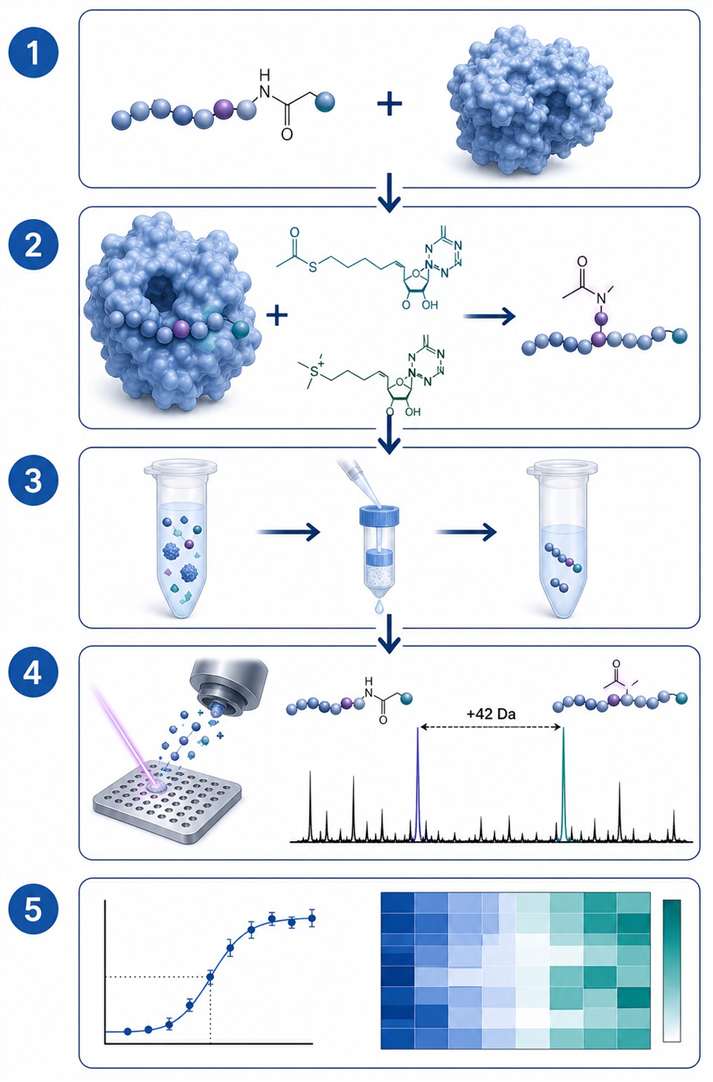
Our standard workflow runs through five stages:

1

Assay Design and Substrate Preparation

We design peptide substrates (typically 15–25 residues) centred on the modification site of interest. For nucleosome-based assays, recombinant histones are assembled into octamers and loaded onto DNA.

2

Enzymatic Reaction

The HAT or HMT enzyme is incubated with substrate, cofactor (acetyl-CoA or SAM), and compound (or DMSO control) in optimised buffer conditions. Reaction time and temperature are calibrated for linear initial-rate conditions.

3

Reaction Quenching and Sample Cleanup

The enzymatic reaction is quenched, and samples are desalted to remove buffer components that interfere with MS detection.

4

Mass Spectrometry Acquisition

Samples are analysed by MALDI-TOF MS (for high-throughput screening) or LC-MS/MS (for detailed mechanistic studies). The mass shift between substrate and product peaks is measured directly.

5

Data Analysis and Reporting

Peak ratios (product / [substrate + product]) are calculated to determine percent conversion. IC₅₀ curves, Z′ factors, and selectivity heatmaps are generated and delivered with full documentation.

Transferase MS activity assay workflow from design to data analysis

Platform Instrumentation

Creative Proteomics' Transferase MS platform integrates high-throughput MALDI-TOF mass spectrometry, high-resolution LC-MS, automated liquid handling, and advanced informatics to support sensitive and reproducible epigenetic enzyme activity screening.

Module CategoryInstrument / SystemCore Capability
MALDI-TOF MSBruker RapifleX / AutoflexHigh-throughput acquisition, <5 s/sample, 384-well plate compatible
LC-MS SystemACQUITY UPLC + Xevo G3 QTofHigh-resolution accurate-mass detection for mechanistic studies
Liquid HandlingHamilton STAR / Echo 550Automated assay setup, compound addition, and plate replication
InformaticsMassTarget custom pipeline + waters_connectPeak integration, conversion calculation, IC₅₀ fitting, selectivity heatmap
Substrate QCMALDI-TOF + HPLCSubstrate purity and identity verification before assay

Technology Comparison: Transferase MS vs. Alternative Assay Formats

TechniqueDetection PrincipleLabel-Free?Site-Specific?HTS Compatible?Interference Risk
Transferase MS (Creative Proteomics)Direct mass shift (MALDI-TOF or LC-MS)YesYesYes (384-well, <5 s/sample)Low (mass-based)
Fluorescence-based HAT/HMT assayFluorophore or antibody+fluorescenceNoNoYesHigh (autofluorescence, quenching)
Radioactive filter-binding assay³H-SAM incorporationNoNoModerateLow (but radioactive waste)
ELISA/AlphaLISAAntibody-based detectionNoPartial (antibody-dependent)YesModerate (antibody cross-reactivity)
SAM-e ELISA (for HMTs)SAH detection by antibodyNoNoYesModerate
LC-MS/MS (discovery mode)Full peptide sequencing by MSYesYesNo (low throughput)Low

Selection Strategy: We recommend Transferase MS as the primary screening format when assay interference is a concern, when site-specific resolution is required, or when you need a single platform that works across both HAT and HMT targets. For related epigenetic enzyme targets, we also offer HDAC Activity MS and DNMT Activity MS services. For ultra-high-throughput primary screens (>100K compounds), our MALDI-TOF HTS platform may be used as a first pass, with MS-based confirmation of all hits.

Sample Requirements

Sample TypeRequired AmountConcentrationBuffer ConditionsNotes
HAT or HMT enzyme (purified)1–10 µg per assay point0.1–1 µM stockTris/HEPES, ≤5% glycerolProvide sequence, tag info, and activity QC data
Peptide substrate1–5 mg total1–10 mM stockMS-compatible (no detergents)15–25 residues around modification site
Nucleosome substrate5–20 µg per assay0.5–2 µMLow-salt, no glycerolRecombinant or native; specify histone source
Compound library1–5 µL per well at 10 mM10 mM in DMSODMSOProvide plate map and compound IDs
Cofactor (acetyl-CoA/SAM)Provided by usIncluded in service cost

Note: Sample requirements may vary depending on the specific enzyme and substrate pair. We recommend a preliminary consultation to determine optimal conditions for your project.

Deliverables

  • Raw mass spectra for each sample (MALDI-TOF or LC-MS).
  • Substrate-to-product conversion ratios (% conversion).
  • IC₅₀ curves with 95% confidence intervals (for dose-response studies).
  • Z′ factor and assay quality metrics.
  • Selectivity heatmaps (for panel profiling).
  • Mode-of-inhibition analysis (for MoA studies).
  • Full experimental report with methods and recommendations.

Case Study: Label-Free MALDI-TOF MS Screening for Histone Acetyltransferase Inhibitors

Rye, P.T., Frick, L.E., Ozbal, C.C., Lamarr, W.A. "Advances in Label-Free Screening Approaches for Studying Histone Acetyltransferases." J Biomol Screen 16, 1186–1195 (2011). https://doi.org/10.1177/1087057111418653

Background

Histone acetyltransferases (HATs) are attractive therapeutic targets in oncology and inflammatory disease, but screening for HAT inhibitors has been hampered by the lack of robust, high-throughput assay formats. Fluorescence-based HAT assays suffer from compound interference, and radioactive methods require specialised handling. The authors set out to evaluate whether label-free mass spectrometry could provide a reliable alternative for HAT screening.

Methods

The study developed and compared three label-free MS approaches for measuring HAT activity: (1) direct MALDI-TOF MS detection of peptide acetylation by mass shift, (2) acetyl-CoA consumption monitoring by LC-MS, and (3) intact protein acetylation detection by MALDI-TOF MS. All three methods were tested using p300/CBP HAT as the model enzyme, with known inhibitors used for validation.

Results

All three label-free MS methods successfully detected HAT activity and inhibition. The MALDI-TOF peptide acetylation assay achieved Z′ factors above 0.6, confirming HTS compatibility. IC₅₀ values for known inhibitors were consistent across all three MS methods and matched literature values from orthogonal assays. The direct mass shift readout eliminated false positives from compound autofluorescence — a known issue with fluorescence-based HAT assays.

Conclusions

The study demonstrated that label-free MS screening is a versatile, robust, and biologically relevant approach for HAT inhibitor discovery. The MALDI-TOF format in particular offers HTS-compatible throughput while maintaining the specificity of direct mass detection. These findings directly support the use of MS-based transferase activity assays as a primary screening platform for epigenetic drug discovery.

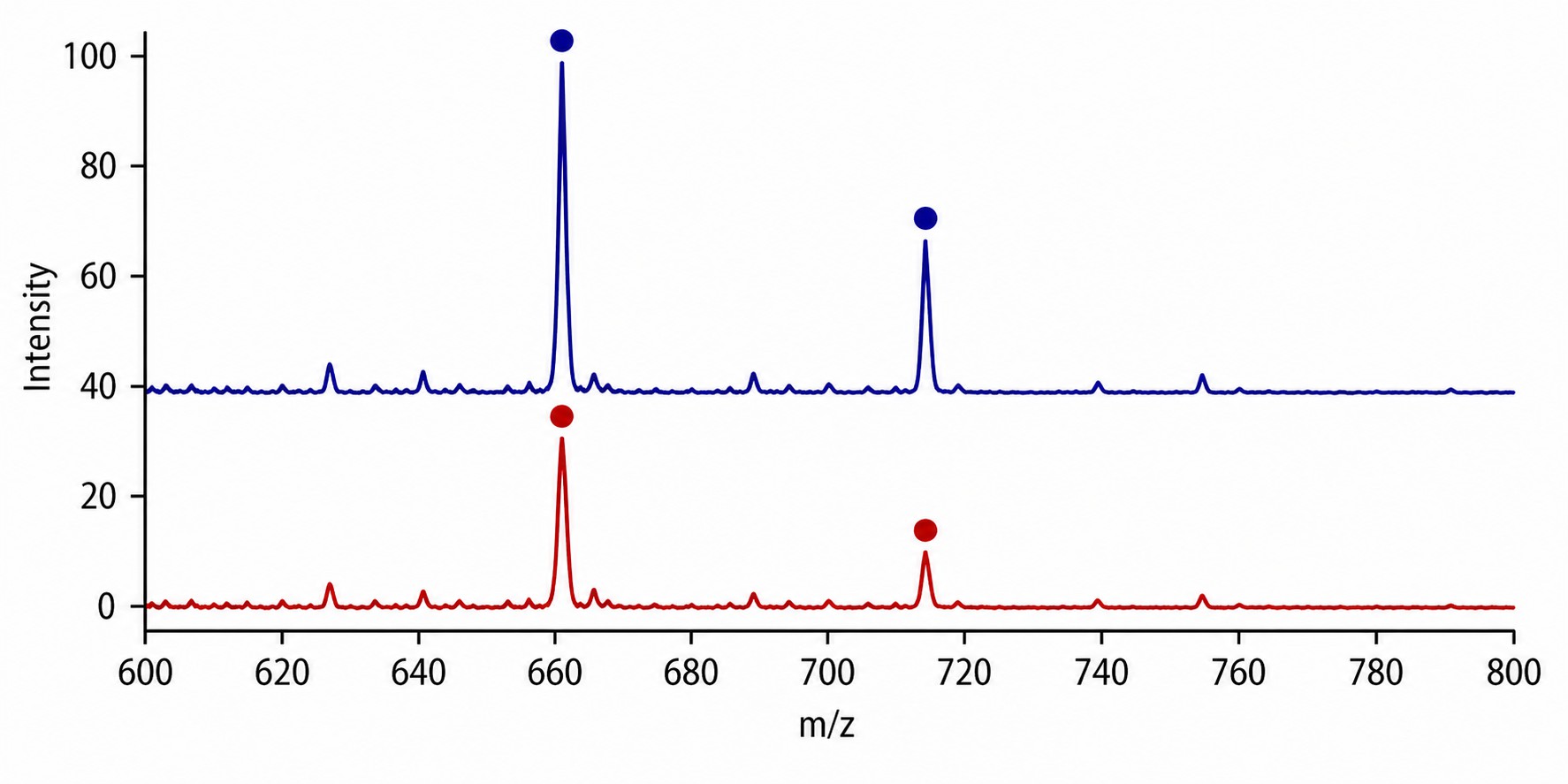
MALDI-TOF MS spectra for HAT activity assay with inhibitor

MALDI-TOF MS spectra showing substrate-to-product conversion for HAT activity assay. The +42 Da mass shift confirms acetylation, and the reduced product peak in the inhibitor-treated sample demonstrates dose-dependent inhibition.

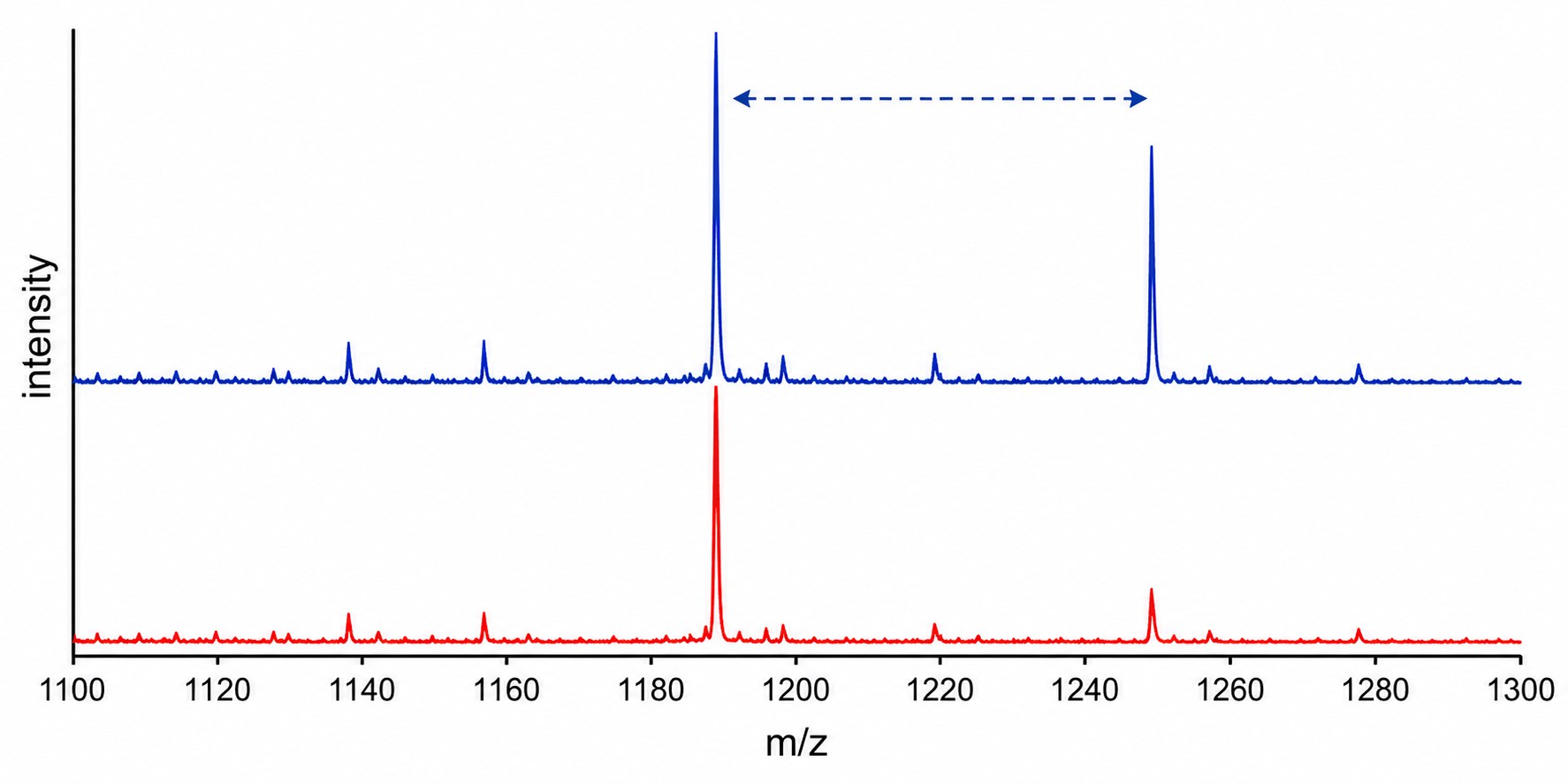
Representative Demo Data

MALDI-TOF mass spectrum overlay for transferase MS assay

Example MALDI-TOF MS spectra for HAT activity assay

FAQ

Frequently Asked Questions

Q: What is the difference between HAT and HMT MS activity assays?

Both use the same label-free MS principle, but HAT assays measure a +42 Da acetylation mass shift, while HMT assays measure +14 Da (mono-), +28 Da (di-), or +42 Da (tri-) methylation shifts. The workflow, throughput, and data analysis are otherwise identical.

Q: Can you distinguish between different methylation states (me1, me2, me3)?

Yes. Each methylation state produces a distinct mass shift (+14, +28, or +42 Da), and MALDI-TOF MS resolves these easily. This is a key advantage over antibody-based methods that may cross-react between states.

Q: What is the typical throughput for MALDI-TOF-based HAT/HMT screening?

With our Bruker RapifleX platform, we acquire data at <5 seconds per sample, which translates to approximately 5,000–10,000 data points per 8-hour shift in 384-well format.

Q: Do you work with full-length nucleosome substrates?

Yes. We offer both peptide and recombinant nucleosome substrate formats. Nucleosome-based assays provide more physiologically relevant readouts, particularly for HMTs that recognise higher-order chromatin structure.

Q: How do you handle compound interference in MS-based assays?

Since MS detects mass directly, compound autofluorescence and fluorescence quenching do not affect the readout. However, compounds that form adducts with the substrate or enzyme may still interfere — we include control wells to detect such cases.

Q: Can you determine the mode of inhibition (competitive vs. non-competitive)?

Yes. Our MoA service mode includes substrate and cofactor titration experiments to classify inhibition as competitive with peptide substrate, competitive with cofactor (acetyl-CoA or SAM), or non-competitive/allosteric.

References

  1. Rye, P.T., Frick, L.E., Ozbal, C.C., Lamarr, W.A.Advances in Label-Free Screening Approaches for Studying Histone Acetyltransferases. J Biomol Screen 16, 1186–1195 (2011).
  2. Guitot, K., Scarabelli, S., Drujon, T., et al.Label-free measurement of histone lysine methyltransferases activity by matrix-assisted laser desorption/ionization time-of-flight mass spectrometry. Anal Biochem 456, 25–31 (2014).
  3. Cantone, N., Cummings, R.T., Trojer, P.Screening for Small-Molecule Inhibitors of Histone Methyltransferases. Methods Mol Biol 2529, 477–490 (2022).

Plan a Transferase MS screening campaign with the MassTarget™ team

Share your enzyme target and compound details and our scientists will design a tailored HAT or HMT MS activity assay strategy for your epigenetic drug discovery program.

Online Inquiry

Please submit a detailed description of your project. We will provide you with a customized project plan to meet your research requests. You can also send emails directly to for inquiries.

* Email
Phone
* Service & Products of Interest
Services Required and Project Description