Cell Permeability Assessment by LC-MS/MS

Direct, quantitative measurement of drug transport across living cell monolayers — Papp, efflux ratio, and intracellular concentration delivered via high-sensitivity LC-MS/MS.

Cell permeability is one of the most critical determinants of oral drug bioavailability and intracellular target engagement. Yet for decades, drug discovery teams have relied on indirect estimates — logD predictions, artificial membrane assays (PAMPA), or computational models — that often fail to predict real cellular permeability. Our Cell Permeability Assessment by LC-MS/MS service fills this gap by providing direct, quantitative measurement of drug transport across living cell monolayers using high-sensitivity liquid chromatography-tandem mass spectrometry.

We deliver apparent permeability coefficients (Papp), efflux ratios, recovery rates, and intracellular concentrations for your compounds, enabling data-driven decisions during lead optimization.

Key Capabilities:

  • Direct LC-MS/MS quantification of apical-to-basolateral and basolateral-to-apical transport
  • Multiple validated cell models: Caco-2, MDCK-MDR1, MDCK-WT, primary cells, and custom models
  • Papp values, efflux ratios (ER), recovery rates, and intracellular concentrations
  • High-throughput capacity: 100+ compounds per week via automated sample preparation
  • Bidirectional transport assays with P-gp, BCRP, and MRP substrate assessment
  • Compatible with small molecules, PROTACs, macrocycles, peptides, and beyond-Rule-of-5 compounds
  • Integrated with our cell-based MS drug screening platform
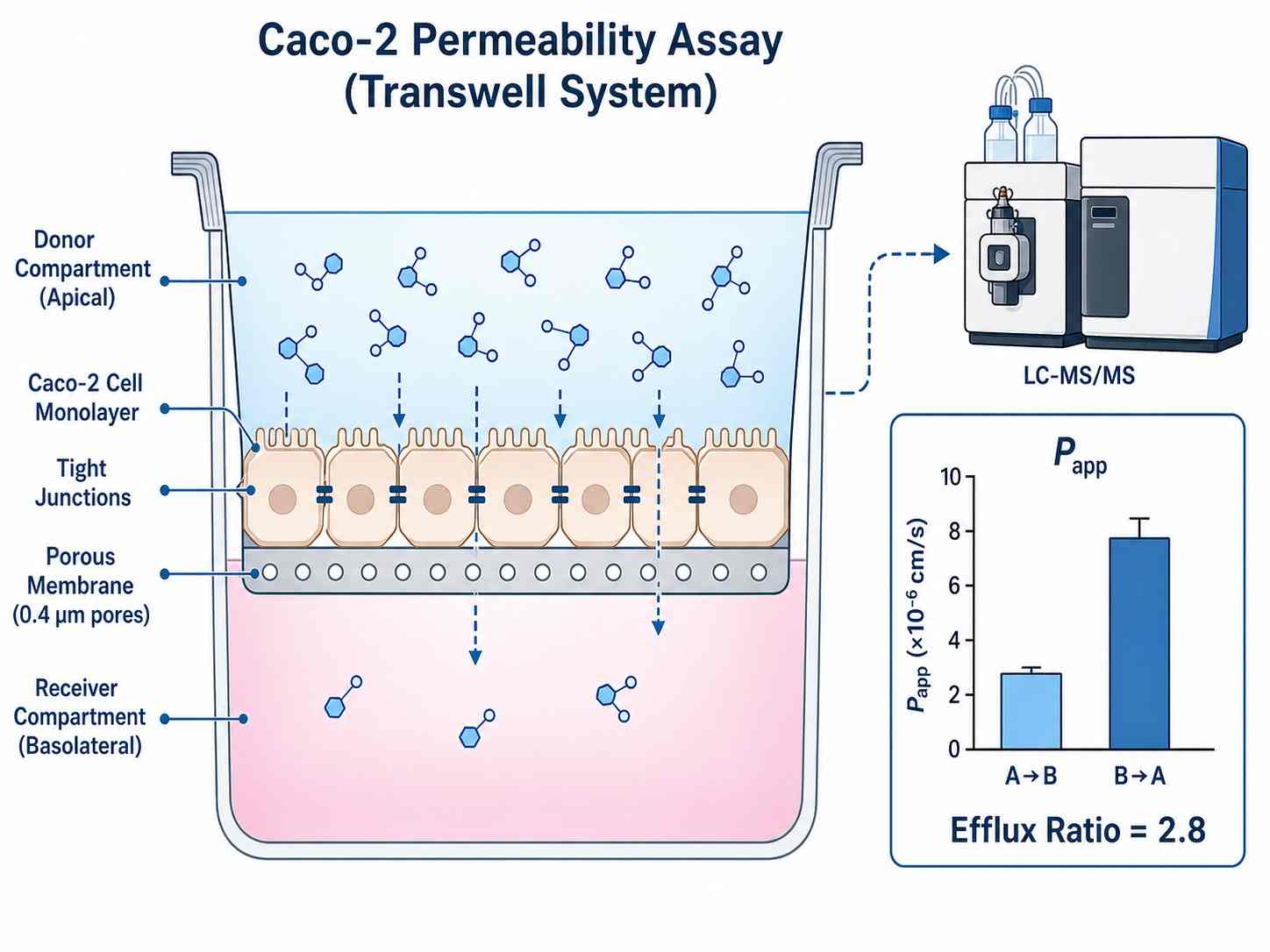
Cell permeability assessment platform overview showing drug molecule crossing a cell membrane monolayer on a Transwell support, with LC-MS/MS analysis and data output including Papp values and efflux ratio bar chart.
Overview Cell Models Workflow Parameters Applications Case Study Sample Requirements FAQ

Why Direct LC-MS/MS Measurement Matters

Traditional permeability assessment methods each have significant limitations that can lead to incorrect go/no-go decisions in drug discovery. logD/logP prediction does not account for active transport, efflux, or cell membrane complexity. PAMPA uses an artificial lipid membrane with no transporters, no efflux pumps, and no cellular metabolism — it overestimates permeability for transporter substrates. Caco-2 assays using fluorescent probes are limited to fluorescent compounds and do not provide compound-specific Papp values.

The key advantage of LC-MS/MS-based permeability assessment is that it measures the compound itself — not a surrogate marker. Using multiple reaction monitoring (MRM), we achieve sub-nanomolar sensitivity for virtually any small molecule, regardless of its fluorescent or chromophoric properties. This means we can quantify permeability for compounds that cannot be measured by any other method.

MethodWhat It MeasuresKey Limitation
logD/logP predictionPartition coefficient between octanol and waterDoes not account for active transport, efflux, or cell membrane complexity
PAMPAPassive diffusion across artificial lipid membraneNo transporters, no efflux pumps, no cellular metabolism
Caco-2 (fluorescent probe)Transport of fluorescent marker compoundsLimited to fluorescent compounds; no compound-specific Papp
LC-MS/MS cell permeability (our service)Direct quantification of your compound across living cell monolayersMeasures actual drug transport including active uptake and efflux

Cell Models & Assay Formats

Selecting the right cell model is critical for generating permeability data that translates to in vivo absorption. We offer a range of validated models, each with specific applications.

Caco-2 (Standard)

21-day differentiation; expresses multiple transporters (P-gp, BCRP, MRP2). Gold standard for FDA BCS classification and human intestinal permeability prediction.

Caco-2 (Short, 3-Day)

Accelerated protocol with comparable Papp values. Suitable for early-stage rank ordering and rapid screening campaigns.

MDCK-WT

3-4 day culture with low endogenous transporter expression. Ideal for measuring intrinsic passive permeability without transporter interference.

MDCK-MDR1

Human MDR1-transfected for specific P-gp substrate evaluation and efflux ratio determination. Essential for CNS drug discovery programs.

MDCK-BCRP

Human BCRP-transfected for specific BCRP substrate evaluation. Supports transporter-mediated DDI assessment.

Primary Human Hepatocytes

Fresh or cryopreserved; active uptake transporters (OATP, NTCP). For hepatic uptake assessment and biliary excretion studies.

BBB Models (hCMEC/D3, Primary)

Tight junction formation for blood-brain barrier permeability assessment. CNS drug delivery and brain penetration evaluation.

Custom Cell Models

We can validate your proprietary cell line for permeability studies, including protocol optimization and transporter expression profiling.

Assay Formats Available: Bidirectional transport assay (standard), intracellular accumulation assay, and cocktail assay (up to 5 compounds per experiment with MRM multiplexing).

Our Cell Permeability Workflow

A standardized, quality-controlled process from cell culture to final report. Each project is tailored to your specific compound, cell model, and research question.

1

Cell Culture & Monolayer Formation

Cells are seeded on Transwell permeable supports (24-well or 96-well format) and cultured until monolayer integrity is confirmed. For Caco-2, this requires 21 days of differentiation with TEER monitoring (>300 Ω·cm²) and Lucifer Yellow permeability (<1% per hour) as quality gates. For MDCK models, 3-4 days of culture achieves monolayer confluence.

2

Compound Preparation & Dosing

Test compounds are prepared at specified concentrations (typically 1-10 µM) in transport buffer (HBSS with 10 mM HEPES, pH 7.4). For poorly soluble compounds, we optimize DMSO concentration (≤0.5% final) or use alternative solubilization strategies. Reference compounds are included in every experiment: atenolol (low permeability), propranolol (high permeability), and digoxin (P-gp substrate).

3

Transport Experiment

Compound-containing buffer is added to the donor compartment (apical for A→B, basolateral for B→A). Samples are collected from the receiver compartment at specified time points (0, 30, 60, 90, 120 min) and replaced with fresh buffer. For intracellular accumulation, cell monolayers are washed and lysed with 50% acetonitrile at the end of the experiment.

4

LC-MS/MS Analysis

Samples are analyzed on a Sciex Triple Quad 6500+ or Thermo Q Exactive HF-X mass spectrometer coupled with a UHPLC system. Each compound is monitored using optimized MRM transitions with 3-5 minute analytical run time per sample. Internal standards (isotope-labeled or structural analogs) are used for all quantifications. Method validated for linearity (R² >0.99), accuracy (85-115%), and precision (CV<15%).

5

Data Calculation & QC

Papp is calculated using the equation: Papp = (dQ/dt) / (A × C₀). Efflux ratio (ER) = Papp(B→A)/Papp(A→B). Recovery (%) = (total compound in receiver + donor at end) / (initial donor amount) × 100. QC acceptance criteria: Lucifer Yellow Papp<1×10⁻⁶ reference="" compound="" papp="" within="" historical="" recovery="">80%.

6

Deliverables

Comprehensive report including: individual Papp values for each compound in each direction, mean ± SD, efflux ratio, recovery, intracellular concentration (if requested), comparison to reference compounds, and BCS classification recommendation. Raw LC-MS/MS data files are available upon request. Typical turnaround: 3-4 weeks from sample receipt.

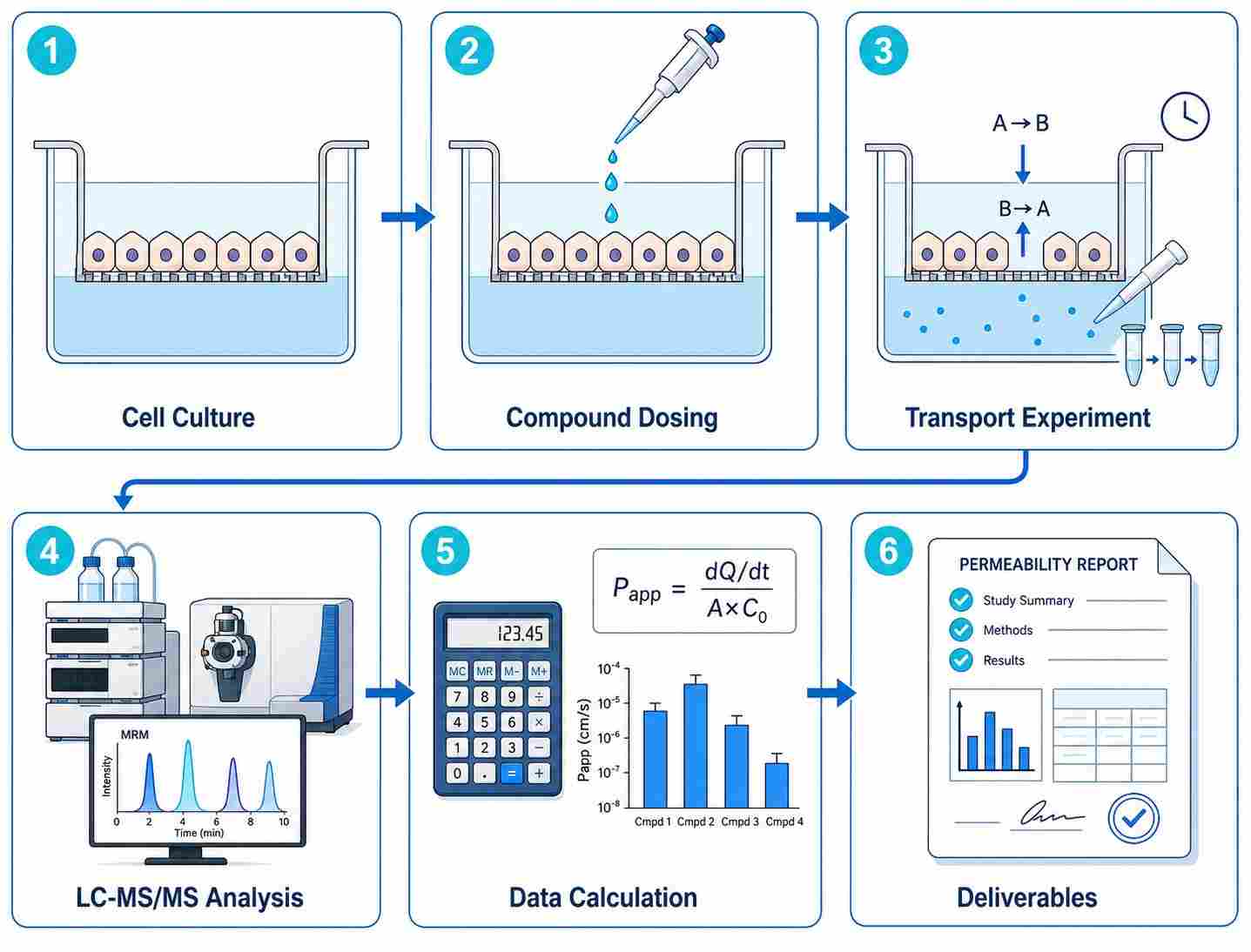
Cell permeability workflow diagram showing six steps from cell culture and monolayer formation through compound dosing, transport experiment, LC-MS/MS analysis, data calculation, and deliverable report generation.

Key Parameters & Data Outputs

Our LC-MS/MS platform delivers quantitative permeability data with defined quality metrics. Each parameter is calculated using standardized equations and validated against reference compounds.

ParameterDescriptionTypical Range
Papp (A→B)Apical-to-basolateral apparent permeability0.1-50 × 10⁻⁶ cm/s
Papp (B→A)Basolateral-to-apical apparent permeability0.1-50 × 10⁻⁶ cm/s
Efflux Ratio (ER)Papp(B→A)/Papp(A→B)<2 no="" 2-3="">3 (significant)
RecoveryMass balance check>80% (acceptable)
Intracellular concentrationCompound amount per cell or per mg proteinVariable by compound
TEERMonolayer integrity>300 Ω·cm² (Caco-2)

Permeability Classification (based on FDA guidance): High permeability: Papp ≥10 × 10⁻⁶ cm/s (Caco-2); Moderate permeability: Papp 1-10 × 10⁻⁶ cm/s; Low permeability: Papp<1 × 10⁻⁶ cm/s.

Applications

Cell permeability assessment by LC-MS/MS is most impactful when researchers need to understand why compounds show discrepancies between biochemical and cellular activity, or when optimizing absorption properties during lead optimization.

Lead Optimization Permeability Screening

Medicinal chemists need rapid feedback on how structural modifications affect permeability. Our service provides Papp values for 20-50 compounds per week, enabling structure-permeability relationship (SPR) analysis.

We provide: Papp values at 3+ concentrations to identify concentration-dependent effects and potential saturation of active transport.

P-gp Substrate Assessment for CNS Programs

P-gp efflux at the blood-brain barrier is a major obstacle for CNS drug discovery. Our MDCK-MDR1 assay specifically evaluates whether your compound is a P-gp substrate.

We provide: Efflux ratio with verapamil or elacridar inhibition confirmation, indicating P-gp-mediated efflux that may limit brain penetration.

PROTAC & Macrocycle Permeability Profiling

PROTACs and macrocycles present unique permeability challenges due to high molecular weight (>800 Da). Our LC-MS/MS platform is label-free and detects compounds by mass-to-charge ratio.

We provide: Validated permeability protocols for compounds up to 1500 Da, including passive diffusion, active uptake, and efflux assessment.

BCS Classification for Regulatory Submission

FDA Biopharmaceutics Classification System requires permeability data for Class I and III designation. Our Caco-2 assay follows FDA guidance (2017) for BCS classification.

We provide: Data that can support biowaiver requests for immediate-release solid oral dosage forms.

Formulation Development Support

Low-permeability compounds may benefit from lipid-based formulations, permeation enhancers, or prodrug strategies.

We provide: Baseline permeability measurement against which formulation-enabled permeability enhancement can be benchmarked.

Transporter-Mediated DDI Assessment

Regulatory agencies (FDA, EMA) require assessment of transporter-mediated drug-drug interactions for new drug applications.

We provide: Bidirectional transport assays in Caco-2 and transporter-transfected MDCK cells to determine victim or perpetrator status.

For related ADME services, see our CYP450 inhibition panel, continuous-flow MS kinetics, drug uptake & retention MS, and intracellular accumulation MS services. Explore our cell-based MS drug screening platform for the full suite of cellular ADME profiling capabilities.
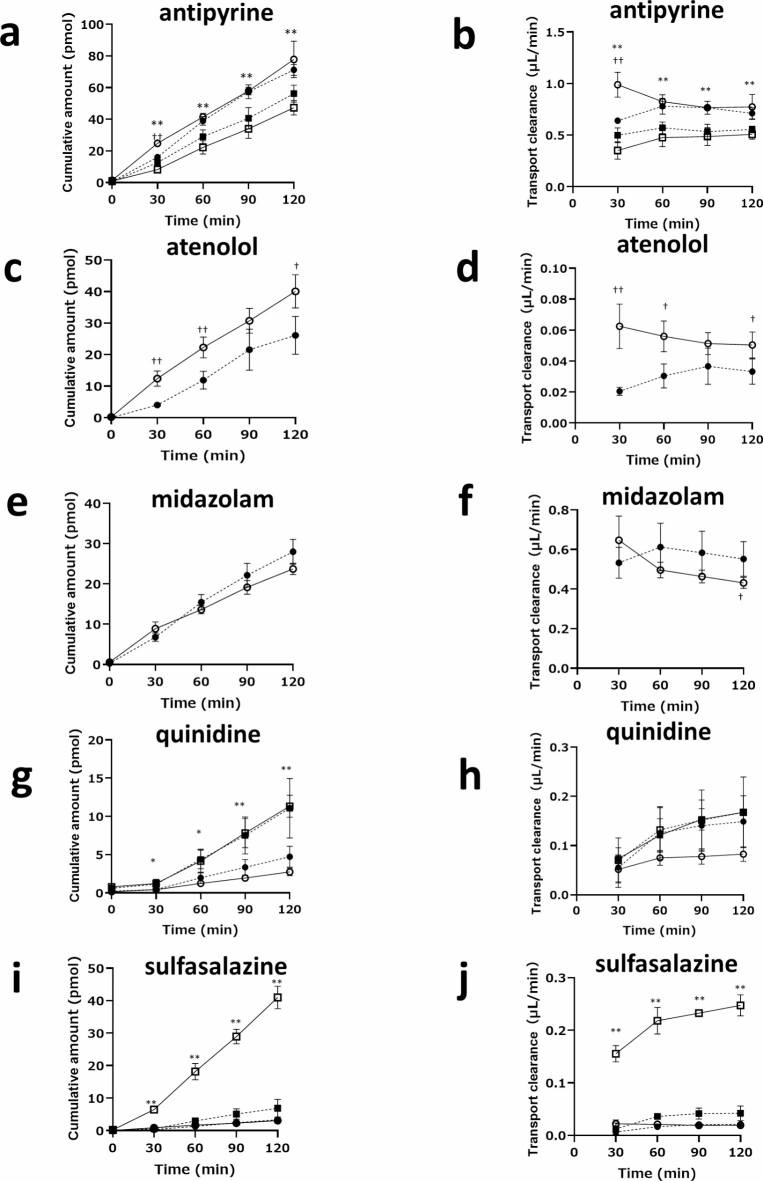
Case Study: Gut Microphysiological System for Drug Absorption Kinetics

Imaoka T, Onuki-Nagasaki R, Kimura H, et al. Development of a novel gut microphysiological system that facilitates assessment of drug absorption kinetics in gut. Scientific Reports 2024;14:29921. https://doi.org/10.1038/s41598-024-80946-6 (CC BY 4.0)

Background

Traditional Caco-2 monolayer models, while widely used for permeability assessment, lack the fluid flow, three-dimensional architecture, and physiological shear stress that characterize the human intestinal epithelium. These static conditions can lead to underestimation of drug absorption, particularly for compounds that are transporter substrates or undergo extensive first-pass metabolism. Imaoka et al. (2024) addressed this gap by developing a novel gut microphysiological system (MPS) — the Fluid3D-X — that incorporates microfluidic flow, air-liquid interface culture, and human iPS cell-derived small intestinal epithelial cells (hiSIECs).

Study Design

The authors constructed a PDMS-free MPS device with a double-layered microchannel structure separated by a porous membrane. hiSIECs were seeded on the membrane and cultured under continuous microfluidic flow (0.5-5 µL/min) with air-liquid interface conditions. After 7-14 days of culture, the system was characterized for monolayer integrity via TEER and Lucifer Yellow permeability, transporter function using P-gp substrate digoxin and BCRP substrate estrone-3-sulfate, CYP3A4 metabolic activity using midazolam, and drug absorption kinetics using a panel of reference compounds with known human absorption fractions (Fa%).

Key Findings

The gut MPS formed a tight monolayer within 7 days (TEER >200 Ω·cm²), significantly faster than the 21 days required for conventional Caco-2 models. The system demonstrated functional P-gp and BCRP activity, with digoxin efflux ratios comparable to Caco-2 monolayers. Importantly, the MPS showed higher CYP3A4 activity than Caco-2 cells, more closely recapitulating human intestinal metabolism. When tested with midazolam, the MPS predicted an intestinal availability (Fg) of 0.57, consistent with the clinically reported value of 0.55-0.57. LC-MS/MS analysis of drug transport across the MPS revealed absorption kinetics that correlated well with human Fa% values.

Relevance

This case study demonstrates how advanced cell-based models combined with LC-MS/MS analysis can provide more physiologically relevant permeability data than traditional static Caco-2 assays. The same analytical approach — LC-MS/MS quantification of drug transport across cell monolayers — is the foundation of our Cell Permeability Assessment service.

Fig. 3 from Imaoka et al. (2024): hiSIEC monolayer characterization in the gut MPS showing TEER values, Lucifer Yellow permeability, and transporter function assessment with digoxin and estrone-3-sulfate in the Fluid3D-X device (adapted from Scientific Reports, CC BY 4.0).

Adapted from Imaoka et al. (2024), Fig. 3: hiSIEC monolayer characterization and transporter function in the gut microphysiological system. LC-MS/MS analysis revealed drug absorption kinetics correlating with human Fa% values.

Sample Requirements for Cell Permeability Assessment

Our protocols are optimized for a wide range of compound types and cell models. The table below provides recommended starting conditions for standard projects.

ParameterRequirement
Compound amount≥50 µL of 10 mM DMSO stock (or ≥1 mg solid) per compound
Number of compounds≥10 per project (minimum)
Cell modelCaco-2 (standard), MDCK-MDR1, MDCK-WT, primary cells, or custom
Replicates3 per condition (triplicate wells); 2 independent experiments recommended
Control compoundsProvided by us (atenolol, propranolol, digoxin, estrone-3-sulfate)
Time points0, 30, 60, 90, 120 min (standard); custom schedules available
Compound concentration1-10 µM (standard); solubility-limited concentrations accepted
DMSO tolerance≤0.5% final concentration
ShippingDry ice for cell lysates; ambient temperature for DMSO stock solutions
Turnaround time3-4 weeks (standard project); 2 weeks (expedited, 20-compound minimum)

For rare or proprietary cell models, we offer assay development and validation services. Contact our scientific team to discuss your specific requirements.

FAQ

Frequently Asked Questions

Q: What is the difference between PAMPA and cell-based permeability assays?

PAMPA uses an artificial lipid membrane and measures only passive diffusion. Cell-based assays (Caco-2, MDCK) use living cell monolayers that express transporters, efflux pumps, and metabolic enzymes. Cell-based assays provide more physiologically relevant data, particularly for compounds that are transporter substrates or undergo efflux.

Q: Which cell model should I choose for my compound?

Caco-2 is the standard for intestinal permeability prediction and BCS classification. MDCK-WT is preferred for measuring intrinsic passive permeability without transporter interference. MDCK-MDR1 is specifically used to assess P-gp efflux. For CNS programs, we recommend MDCK-MDR1 or BBB models. Contact us for guidance on model selection.

Q: How is efflux ratio calculated and what does it mean?

Efflux ratio (ER) = Papp(B→A) / Papp(A→B). An ER<2 indicates="" no="" significant="" efflux.="" an="" er="" of="" 2-3="" suggests="" weak="">3 indicates significant efflux, typically mediated by P-gp, BCRP, or MRP2. Confirmation studies with specific inhibitors (verapamil for P-gp, Ko143 for BCRP) are available.

Q: What is the minimum compound amount needed?

We recommend ≥50 µL of 10 mM DMSO stock or ≥1 mg of solid compound per compound. For cocktail assays (up to 5 compounds per experiment), the minimum amount per compound can be reduced. Contact us for specific guidance on your compounds.

Q: Can you measure permeability of PROTACs, macrocycles, or peptides?

Yes. Our LC-MS/MS platform is label-free and detects compounds by mass-to-charge ratio, so fluorescent labeling is not required. We have validated protocols for compounds up to 1500 Da, including PROTACs, cyclic peptides, and macrocycles. The MRM transitions are optimized for each compound individually.

Q: How do you ensure reproducibility across experiments?

Reproducibility is ensured through: standardized cell culture protocols with defined passage numbers; monolayer integrity verification (TEER + Lucifer Yellow) before each experiment; reference compounds in every experiment for historical comparison; internal standards for LC-MS/MS quantification; triplicate wells per condition; and acceptance criteria for Papp CV (<25%) and="" recovery="">80%).

Q: What is your throughput capacity?

Our standard capacity is 20-50 compounds per week for bidirectional transport assays. With cocktail dosing (5 compounds per experiment), throughput can reach 100+ compounds per week. For large screening campaigns, we can scale up with automated liquid handling.

Q: Do you provide regulatory-compliant data?

Yes. Our Caco-2 permeability assay follows FDA guidance for BCS classification (2017). We provide documentation suitable for IND submissions, including detailed methods, raw data, and QC metrics. Our laboratory operates under GLP-like conditions.

Q: Can you work with our proprietary cell line?

Yes. We can validate your proprietary cell line for permeability studies. The validation process includes: monolayer formation and integrity testing; transporter expression profiling; reference compound testing; and protocol optimization for your specific cell model.

Q: How do you handle poorly soluble compounds?

For poorly soluble compounds, we optimize DMSO concentration (≤0.5% final), use alternative co-solvents (PEG 400, ethanol), or prepare compound in transport buffer with BSA (0.1-1%). For compounds that precipitate during the experiment, we still report Papp based on the soluble fraction and note the solubility limitation in the report.

References

  1. Imaoka T, Onuki-Nagasaki R, Kimura H, et al. Development of a novel gut microphysiological system that facilitates assessment of drug absorption kinetics in gut. Sci Rep. 2024;14:29921. doi:10.1038/s41598-024-80946-6. https://doi.org/10.1038/s41598-024-80946-6 (CC BY 4.0)
  2. Gordon LJ, Allen M, Artursson P, et al. Direct Measurement of Intracellular Compound Concentration by RapidFire Mass Spectrometry Offers Insights into Cell Permeability. SLAS Discov. 2016;21(2):156-164. doi:10.1177/1087057115604141. https://doi.org/10.1177/1087057115604141
  3. Artursson P, Palm K, Luthman K. Caco-2 monolayers in experimental and theoretical predictions of drug transport. Adv Drug Deliv Rev. 2001;46(1-3):27-43. doi:10.1016/S0169-409X(00)00128-9. https://doi.org/10.1016/S0169-409X(00)00128-9
  4. Kerns EH, Di L. Drug-like Properties: Concepts, Structure Design and Methods from ADME to Toxicity Optimization. 2nd ed. Academic Press; 2016.

Plan your cell permeability study with the MassTarget™ team

Tell us about your compounds, cell model preferences, and research questions — our scientists will design a tailored permeability assessment for your drug discovery program.


For research use only. Not for use in diagnostic procedures. Creative Proteomics provides cell permeability assessment services exclusively for research and development purposes. Results are not intended for clinical diagnosis or medical decision-making.

Online Inquiry

Please submit a detailed description of your project. We will provide you with a customized project plan to meet your research requests. You can also send emails directly to for inquiries.

* Email
Phone
* Service & Products of Interest
Services Required and Project Description