Background
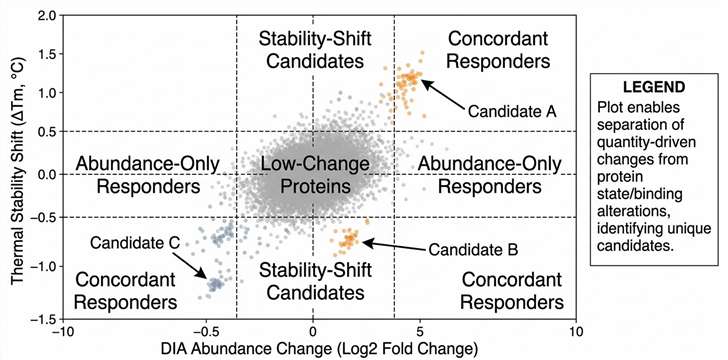
Protein abundance does not always explain protein function. A protein can remain at a similar abundance level while its binding state, interaction partners, modification state, or soluble fraction behavior changes.
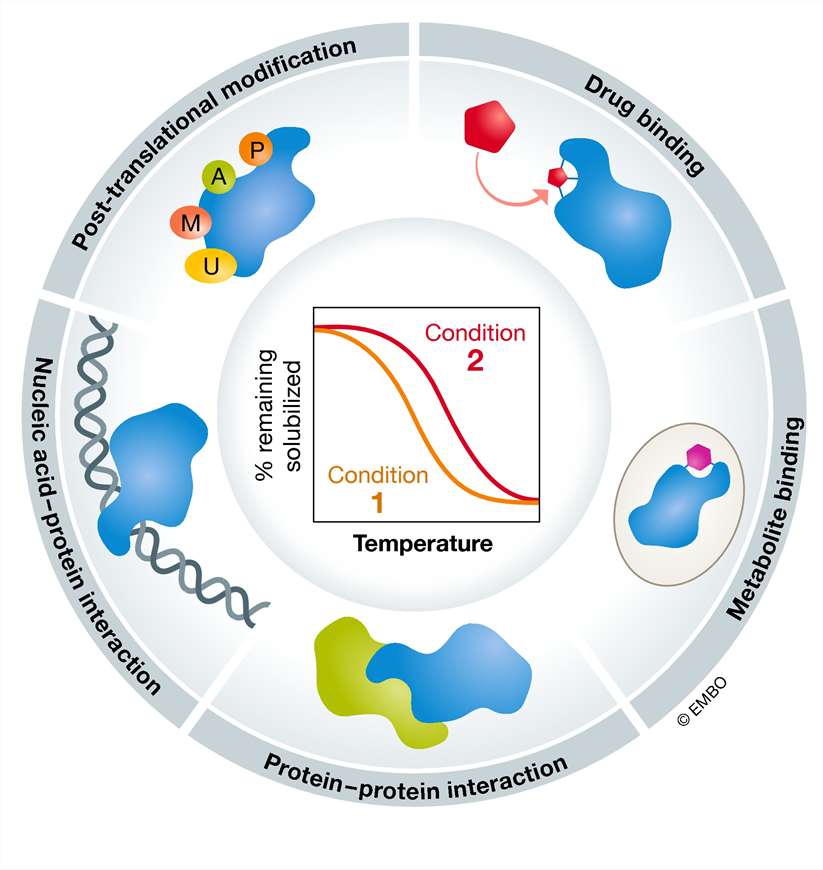
Mateus and colleagues described how proteome-wide thermal profiling can be used to study protein states and interactions. The paper explains that proteins can change thermal stability when they interact with small molecules, nucleic acids, other proteins, or when their post-translational state changes.
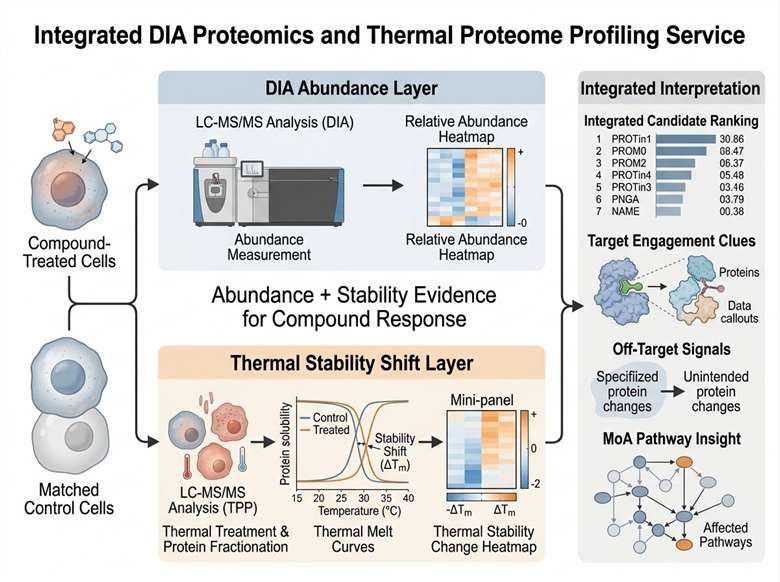
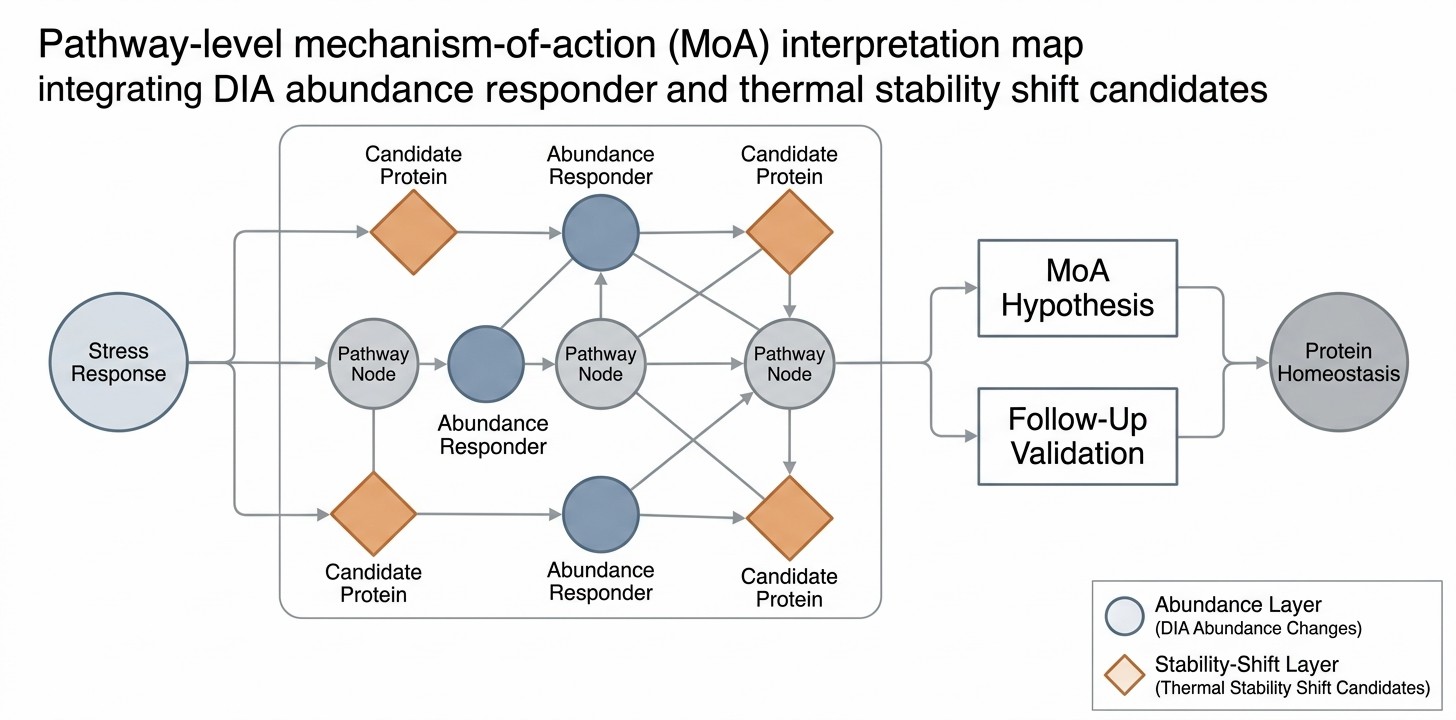
This is directly relevant to integrated DIA and thermal stability shift profiling. DIA measures abundance response. Thermal stability shift profiling adds a protein-state evidence layer.
Methods
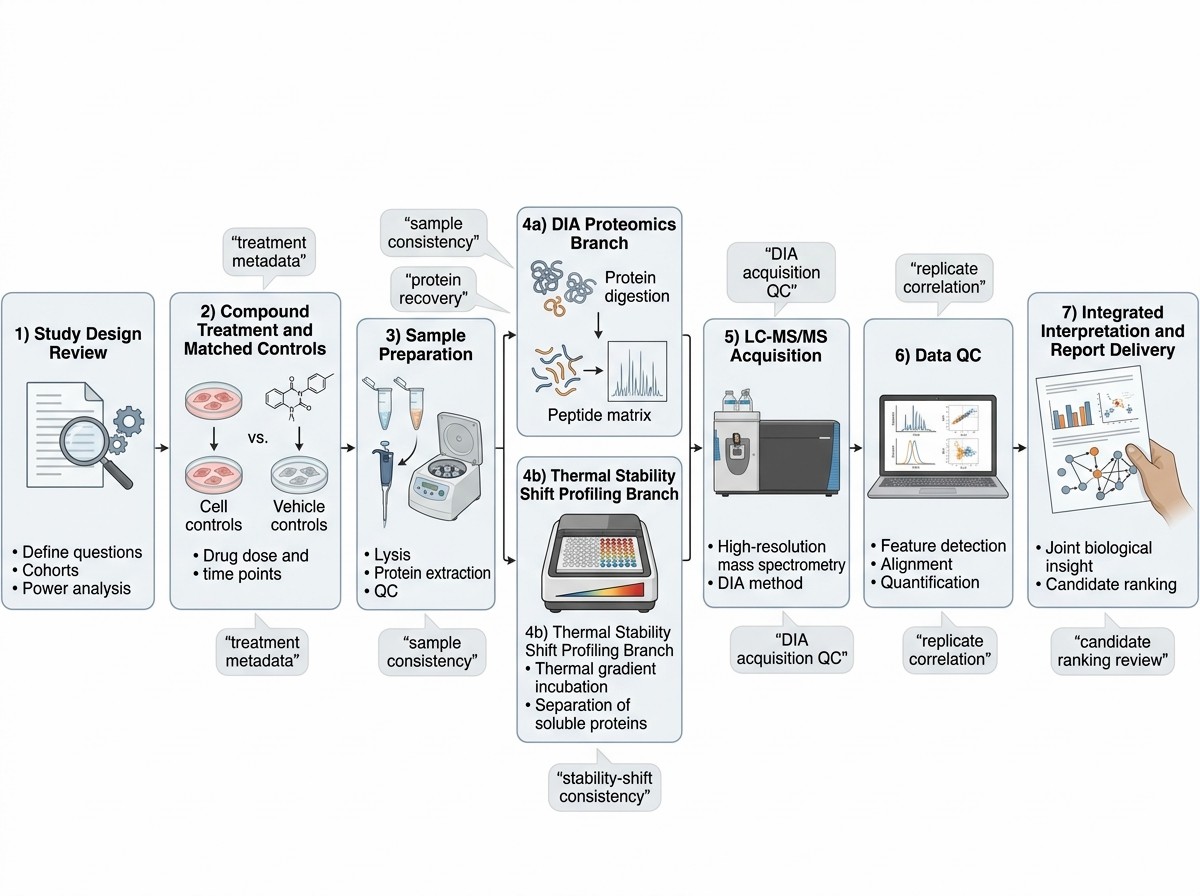
The paper describes a mass spectrometry-based proteomics workflow in which protein solubility is measured across heat conditions. The authors explain that a typical experiment includes selecting cellular material, applying a perturbation, applying heat treatment, collecting the soluble protein fraction, analyzing proteins by mass spectrometry-based proteomics, and interpreting thermal profiles across detected proteins.
The paper also describes different biological systems that can be used, including extracts, intact cells, tissues, and biological fluids.
Results
Figure 1 in the paper provides the key conceptual result for this service page. It shows that proteome-wide thermal profiles can provide information about protein states and interactions.
The article explains that protein thermal profiles can change when proteins interact with small molecules, nucleic acids, other proteins, or post-translational modifications. It also explains that proteome-wide profiling can be used to study targets and off-targets of drug-like molecules, that protein complex members can show related melting behavior, and that thermal stability behavior is not the same as protein half-life.
These observations support the logic of our integrated service: abundance data and stability-shift data answer different but complementary questions.
Conclusion
This publication supports the value of adding a protein-state evidence layer to standard abundance-based proteomics.
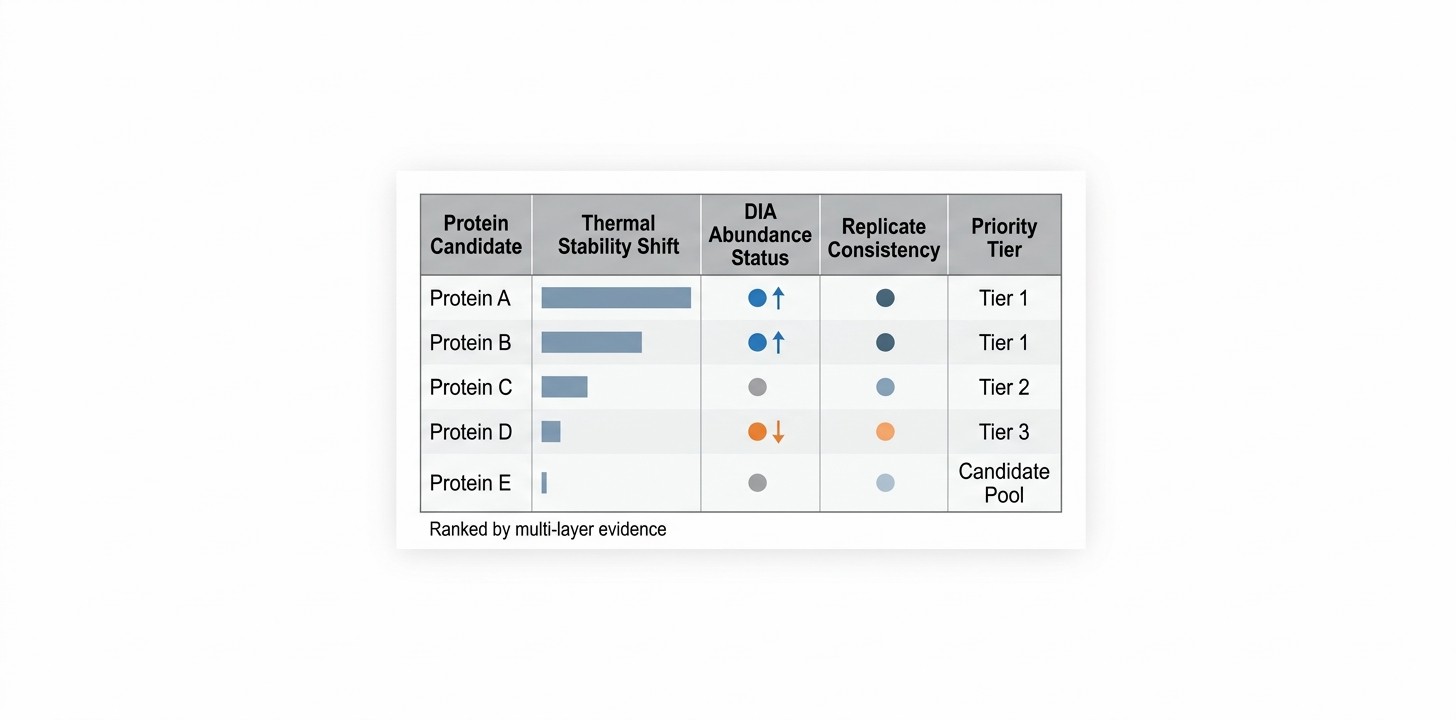
For drug discovery projects, integrated DIA proteomics and thermal stability shift profiling can help teams avoid relying on abundance data alone. The combined view can help prioritize target engagement-associated candidates, interpret pathway response, and choose proteins for follow-up validation.