Meta Intent: A practical guide to recognizing, measuring, and localizing D-amino-acid impurities in synthetic peptides by matching the analytical route to the decision required: early impurity triage, residue-level chiral composition, or site-specific structural confirmation.
A synthetic peptide can meet its expected molecular mass, show a clean-looking reversed-phase peak, and still contain a stereochemical impurity. A single L-to-D inversion changes neither elemental composition nor nominal mass. That is precisely why this quality attribute deserves a separate strategy rather than being treated as a routine extension of intact LC-MS identity testing. The question is not whether a mass spectrometer is sufficiently high resolution. It is whether the workflow creates, preserves, or separates evidence for stereochemistry.
Racemization can arise from the amino-acid starting material or during activation, coupling, base exposure, cleavage, and deprotection in peptide synthesis. The practical consequence varies with sequence and intended use. A low-level epimer may alter conformation, receptor recognition, protease susceptibility, aggregation behavior, or a downstream analytical comparison. It should not, however, be assumed that every D-residue has the same functional consequence. The analytical aim is to establish what is present at a defined level of confidence, then connect that result to the product-specific quality question.
A conventional peptide purity analysis workflow remains useful for truncated sequences, deletion sequences, oxidation, deamidation, and many synthesis-related impurities. It is not by itself a chiral assay. This guide explains the blind spot, the hydrolysis correction needed for residue-level D/L measurement, and the escalation path when a total D-amino-acid result must be assigned to a particular residue position.
In practice, the most efficient program is staged. Use standard intact characterization to determine whether the lot is otherwise coherent, reserve chiral testing for a sequence-informed risk panel or an observed investigation, and escalate to site assignment only when the decision requires it. This avoids two opposite errors: asking a routine LC-MS assay to answer a stereochemical question it cannot answer, or using a complex positional-confirmation workflow when a residue-level screening result would already resolve the process decision. It also preserves scarce material for the orthogonal experiment that may actually decide the investigation.
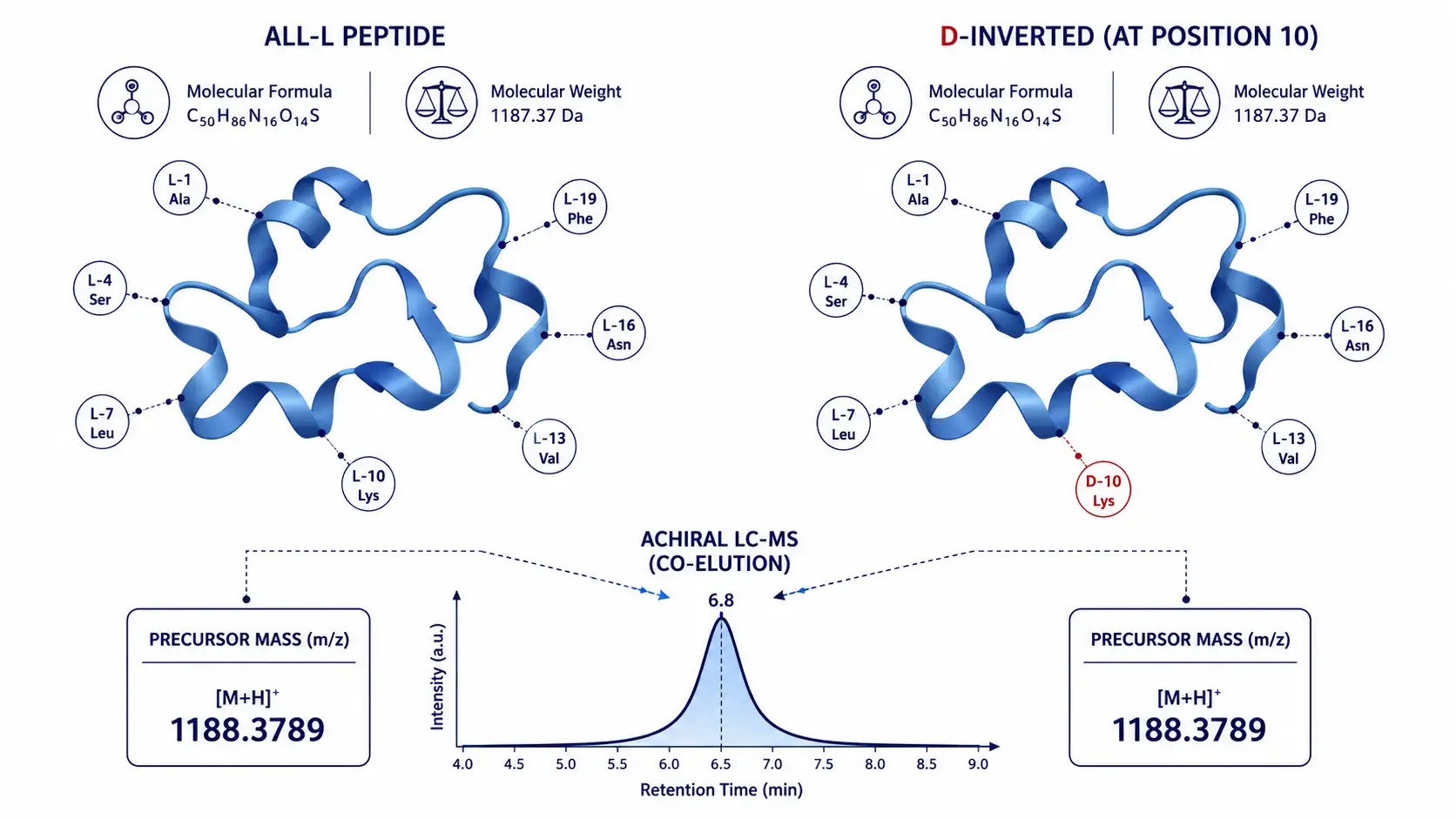 Figure 1. An all-L peptide and a single-D-residue diastereomer can have identical mass spectra even when their stereochemistry and biological behavior differ.
The stereochemical problem begins before the LC-MS run
Peptide synthesis offers several points at which stereochemical integrity can be challenged. Carboxyl activation may produce intermediates that are prone to epimerization; difficult coupling sites may invite prolonged activation or repeated coupling; and sequence context can make residues such as Cys, His, Asp, and selected activated derivatives particularly demanding. Fmoc removal, side-chain protection strategy, solvent, temperature, reagent excess, and hold time all affect the risk profile. The correct lesson is not to predict a universal ranking of vulnerable residues. It is to identify sequence-specific high-risk positions before defining the analytical control strategy.
For quality investigations, separate three distinct events: a D-amino acid introduced with a starting material, an epimer generated during synthesis, and an apparent D-amino acid generated during the analytical preparation itself. These events can produce the same measured D/L composition after ordinary hydrolysis, yet they imply different corrective actions. A well-designed peptide characterization program therefore starts with the synthetic route, the impurity question, and the material available for confirmatory work.
There is also an important language point. In a peptide with more than one stereocenter, a single epimer is generally a diastereomer of the parent peptide, not simply an isolated enantiomer. Diastereomers can sometimes show different retention on an achiral reversed-phase column, especially with favorable sequence context or a long gradient. But such behavior is empirical, not guaranteed. A shoulder peak may be worth investigating; its absence does not prove the absence of a D-residue impurity.
Why intact LC-MS can be blind to a D-residue impurity
An L-to-D inversion has a mass difference of zero. Accurate-mass MS1 therefore reports the same precursor composition for the all-L parent and its epimer. Standard collision-induced fragmentation commonly produces the same b/y ion series as well, because the backbone cleavage positions and elemental formulas are unchanged. A high-resolution instrument improves mass accuracy and may reveal coexisting non-isomeric impurities, but it cannot turn identical formulas into a stereochemical distinction.
Achiral C18 chromatography does not solve this by default. It may fully resolve some peptide diastereomers, partly resolve others, or provide a single composite peak. Resolution depends on sequence, position of the inversion, mobile phase, temperature, gradient, column chemistry, and load. A clean intact chromatogram should consequently be described as evidence of chromatographic purity under that method, not as proof of residue-level chiral purity. The companion guide to peptide purity analysis by HPLC and LC-MS is useful for defining what that first screen can and cannot establish.
Intact analysis still has a critical role in the chiral workflow. It verifies the starting material, identifies split or asymmetric peaks worth fractionating, and provides the anchor for impurity isolation. A molecular mass determination service and an intact LC-MS purity screen are sensible first controls before hydrolysis. They prevent a residue-level chiral result from being interpreted without knowing whether the material contains other sequence or modification variants.
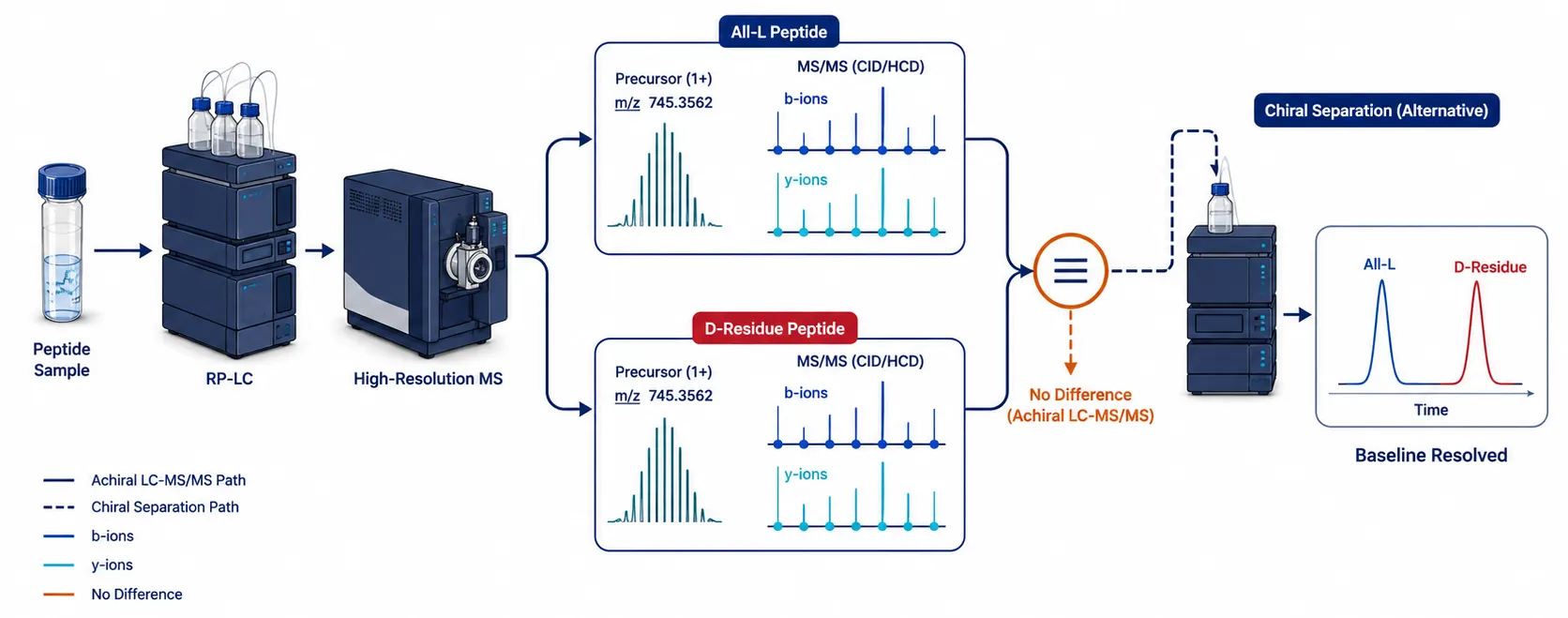 Figure 2. Standard accurate-mass LC-MS can confirm composition and sequence-related fragments, but it does not intrinsically encode the L or D configuration of a residue.
Hydrolysis creates a second, controllable source of racemization
Total hydrolysis is attractive because it reduces a complex peptide to free amino acids that can be separated as D/L pairs. Yet the acid and heat required to cleave peptide bonds can also racemize selected residues. The magnitude depends on amino-acid identity, peptide sequence position, hydrolysis conditions, and exposure time. As a result, a small D-amino-acid peak after conventional HCl hydrolysis may reflect the original peptide, analytical artifact, or both.
That is why deuterated-acid hydrolysis is more informative than simply minimizing hydrolysis time. Under DCl/D2O conditions, an amino acid that racemizes during hydrolysis can exchange the alpha hydrogen for deuterium during the racemization process. The newly generated configurational product is therefore shifted by approximately one mass unit relative to the non-racemized amino acid. LC-MS can distinguish the labeled preparation artifact from an unlabeled D-amino acid that was already present in the peptide before hydrolysis. This is a correction strategy, not an assertion that DCl/D2O eliminates all analytical uncertainty.
Use appropriate controls. Analyze the all-L reference material through the same hydrolysis and derivatization sequence, include D/L amino-acid standards where available, and test recovery and signal behavior around the decision-relevant range. A targeted amino acid analysis service can establish amino-acid composition, while the chiral protocol must separately demonstrate that D/L resolution, isotope-channel assignment, and blank behavior are fit for purpose.
Not every analyte will behave identically in deuterated media. Side-chain exchange, incomplete deuterium incorporation, coeluting isotopologues, and derivatization effects must be evaluated for the particular residue and instrument method. The defensible claim is therefore: the method discriminates the targeted native D/L species from the hydrolysis-generated labeled channel under validated conditions. It is not: every D/L impurity in every peptide has been universally corrected.
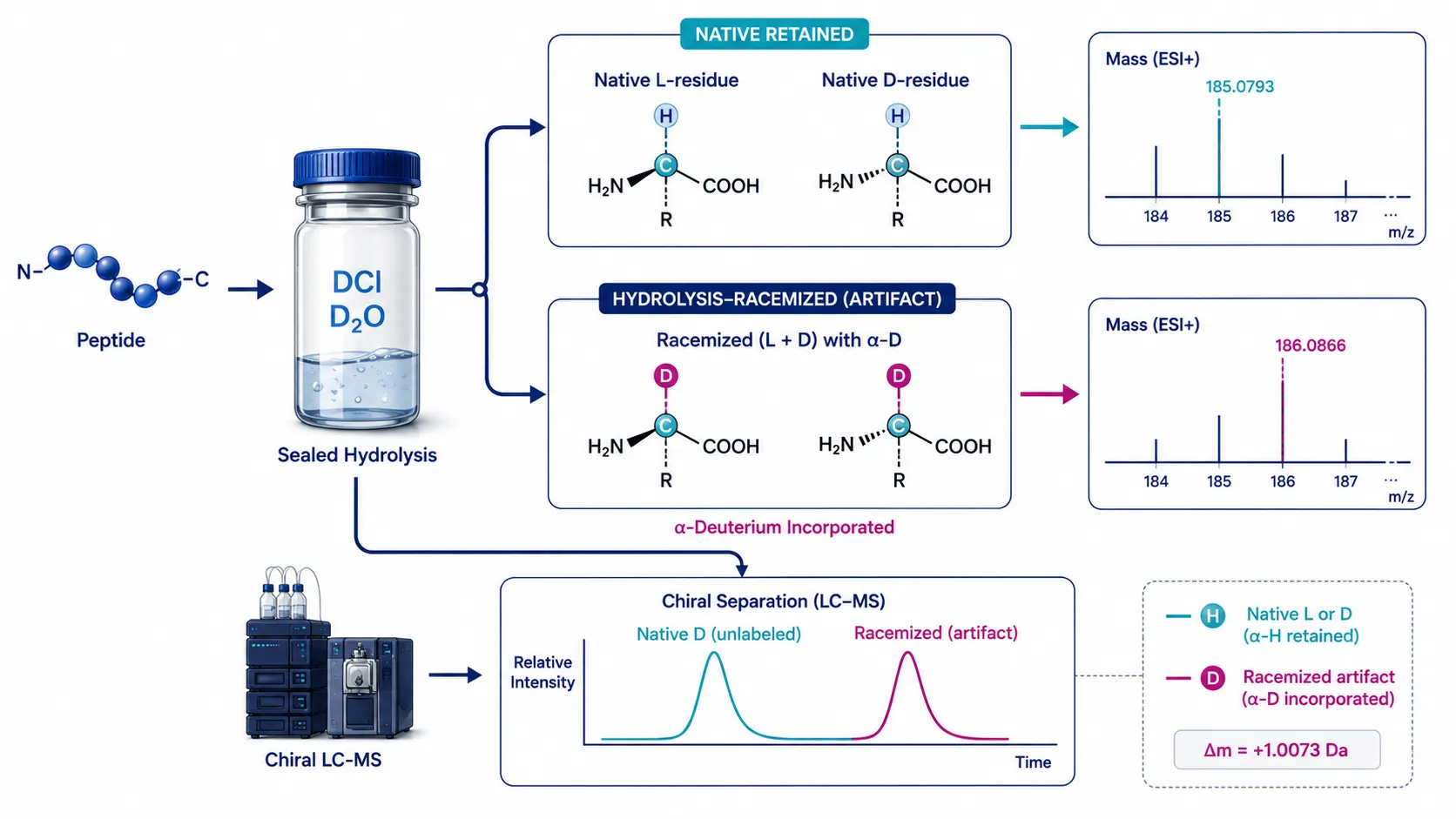 Figure 3. Deuterated hydrolysis makes hydrolysis-generated racemization analytically visible by linking it to alpha-deuterium incorporation.
Choose the chiral separation route for the actual decision
Direct chiral stationary-phase LC-MS
Direct chiral LC separates underivatized D/L amino acids on a chiral stationary phase. It avoids a derivatization reaction and can be attractive when a targeted residue panel is defined and the selected column provides adequate resolution. The method still needs attention to mobile phase compatibility, ionization, dwell time, calibration, and the behavior of each amino acid. A method that resolves Ala and Val well should not be presumed to resolve all sequence-relevant amino acids at the same sensitivity.
Indirect derivatization with Marfey-type reagents
Marfey's reagent, often called FDAA, reacts with the free amino group of an amino acid to convert D/L enantiomers into diastereomeric derivatives. These derivatives can be separated on a conventional reversed-phase LC system and detected by UV or MS. The approach is widely used because it pairs familiar C18 chromatography with a configurable chiral auxiliary. It also introduces variables: reagent excess, reaction temperature and time, pH, quench conditions, derivative stability, and response-factor differences must be managed rather than assumed away.
For either route, do not report a trace percentage from a single chromatographic peak alone. Confirm retention using relevant standards, assess peak purity and mass transitions, and define how the result is calculated. When a sequence contains repeated residues, total-hydrolysate data answer a composition question: for example, the proportion of D-Ser in the released Ser pool. They do not automatically identify which Ser position carried the inversion.
The right analytical support may combine a targeted amino-acids and derivatives analysis platform with an orthogonal peptide mapping service. The former supports D/L composition after hydrolysis; the latter retains sequence context and can narrow the source of a stereochemical finding.
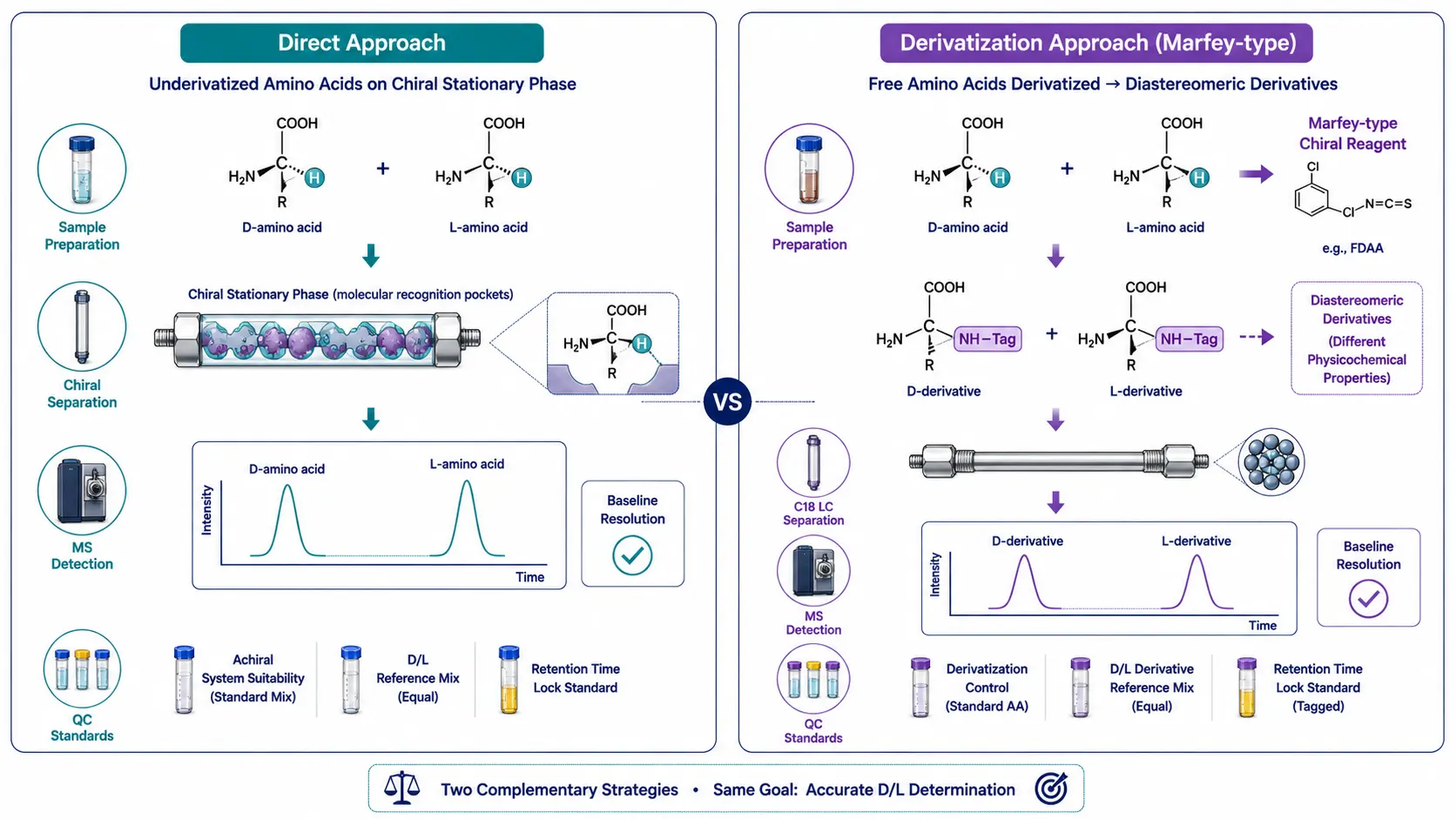 Figure 4. Direct chiral LC and indirect Marfey derivatization can both resolve D/L amino-acid pairs, but they distribute complexity differently across preparation and chromatography.
Resolve the residue-position problem before making a structural claim
Consider a 30-residue peptide that contains Ser at three positions. A total hydrolysate may show a measurable D-Ser fraction, but it cannot state whether the signal came from Ser3, Ser8, or Ser20. That limitation matters when the purpose is root-cause analysis of a synthesis step, confirmation of a named impurity, or comparison with a position-specific reference standard.
One escalation route is intact or large-fragment fractionation followed by residue-level chiral analysis of collected fractions. First, develop a separation that distinguishes a minor diastereomeric peak or enriched fraction from the all-L peak. Then hydrolyze each fraction under the selected chiral workflow. The relationship between an intact fraction and its chiral amino-acid composition supplies stronger evidence than either dimension alone. This may be implemented as offline fractionation or as a deliberately developed multidimensional LC-MS approach; it should not be represented as a turnkey solution for every peptide.
A second route is targeted enzymatic digestion or peptide mapping designed around the candidate region. A short peptide that contains only one candidate residue can retain enough positional context for comparison with synthetic L and D analogues. A sequence analysis of peptides or proteins helps define the expected fragments, while de novo peptide sequencing can be useful when the isolated impurity has an unexpected sequence-related component. Neither technique alone proves chirality; each needs to be combined with chiral evidence or a well-designed reference comparison.
For high-confidence site assignment, compare the candidate fraction with synthesized all-L and single-D-position standards under the same separation. Concordance in retention, accurate mass, fragment pattern, and chiral amino-acid result is substantially more informative than an inferred peak identity. The related resources on terminal sequencing strategies and mapping cleavage sites and fragment boundaries can help frame sequence-context experiments without treating them as substitutes for a chiral assay.
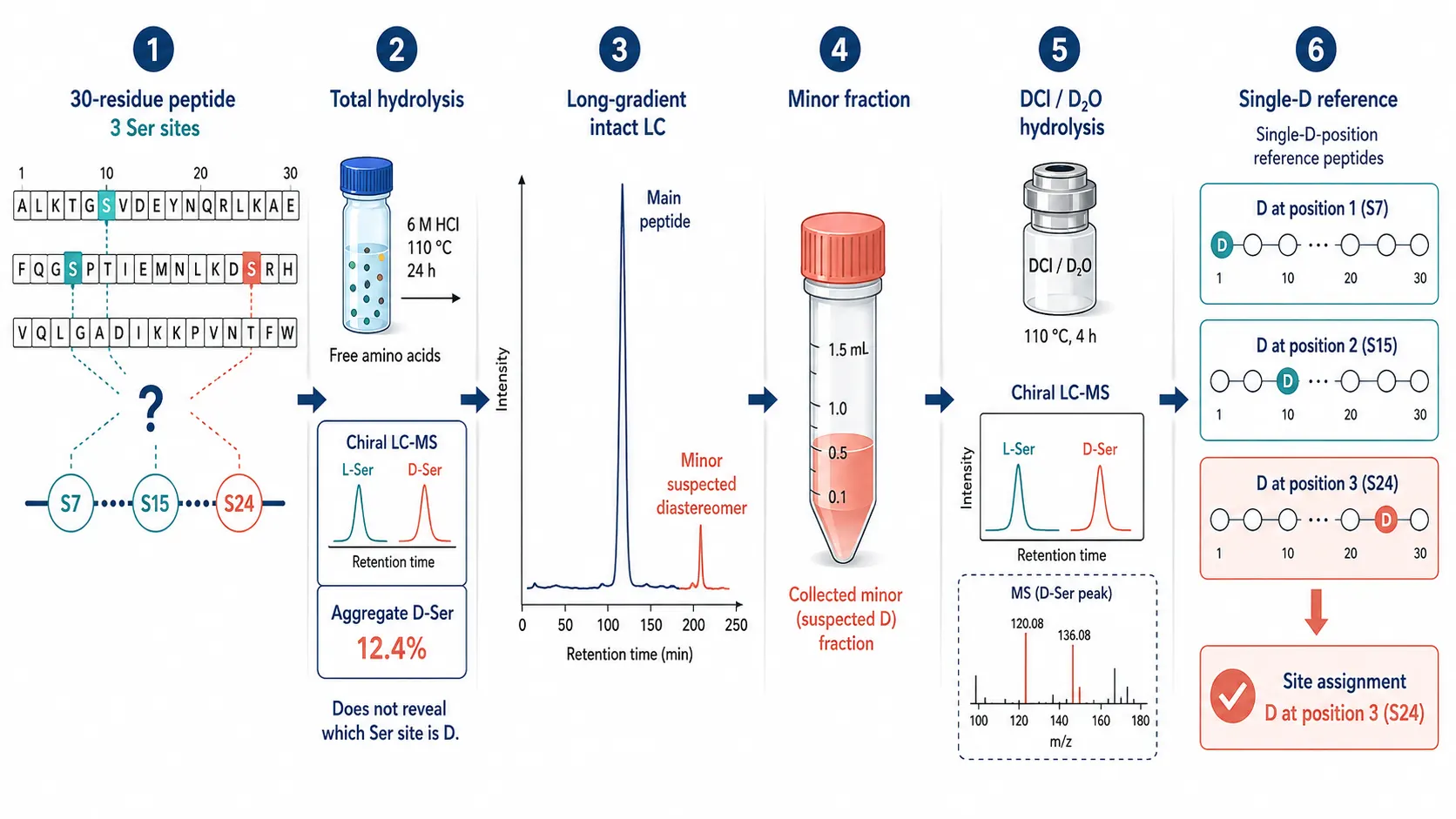 Figure 5. Total hydrolysis can reveal D/L composition, whereas fractionation or sequence-context fragments are needed to connect a chiral finding to a particular residue position.
A practical decision matrix for chiral peptide characterization
| Question | First-line approach | What it can establish | Key limitation |
|---|---|---|---|
| Is the intended peptide mass and major impurity profile consistent? | Intact RP-HPLC/LC-MS | Mass, gross purity, and candidate split peaks | No direct D/L discrimination |
| Does the peptide contain a D form of a targeted amino acid? | DCl/D2O hydrolysis plus direct chiral LC-MS or derivatization | Residue-level D/L composition with hydrolysis-artifact tracking | Does not locate repeated residues |
| Which residue position contains the D form? | Fractionation or mapping plus orthogonal chiral analysis | Evidence linked to sequence context | Requires reference materials and development |
| Is a named minor impurity structurally confirmed? | Reference-standard comparison using multiple orthogonal dimensions | Support for a specific diastereomer assignment | May be resource-intensive at trace level |
Start with the decision, not the most elaborate instrument configuration. If the immediate need is synthesis-process triage, total D/L composition at the highest-risk amino acids may be enough. If the result will be used to assign a specific positional epimer, budget for reference peptides, fractionation, and a sequence-context experiment. A peptide sequencing service can complement this escalation path by confirming the peptide backbone and fragment identities that support the final interpretation.
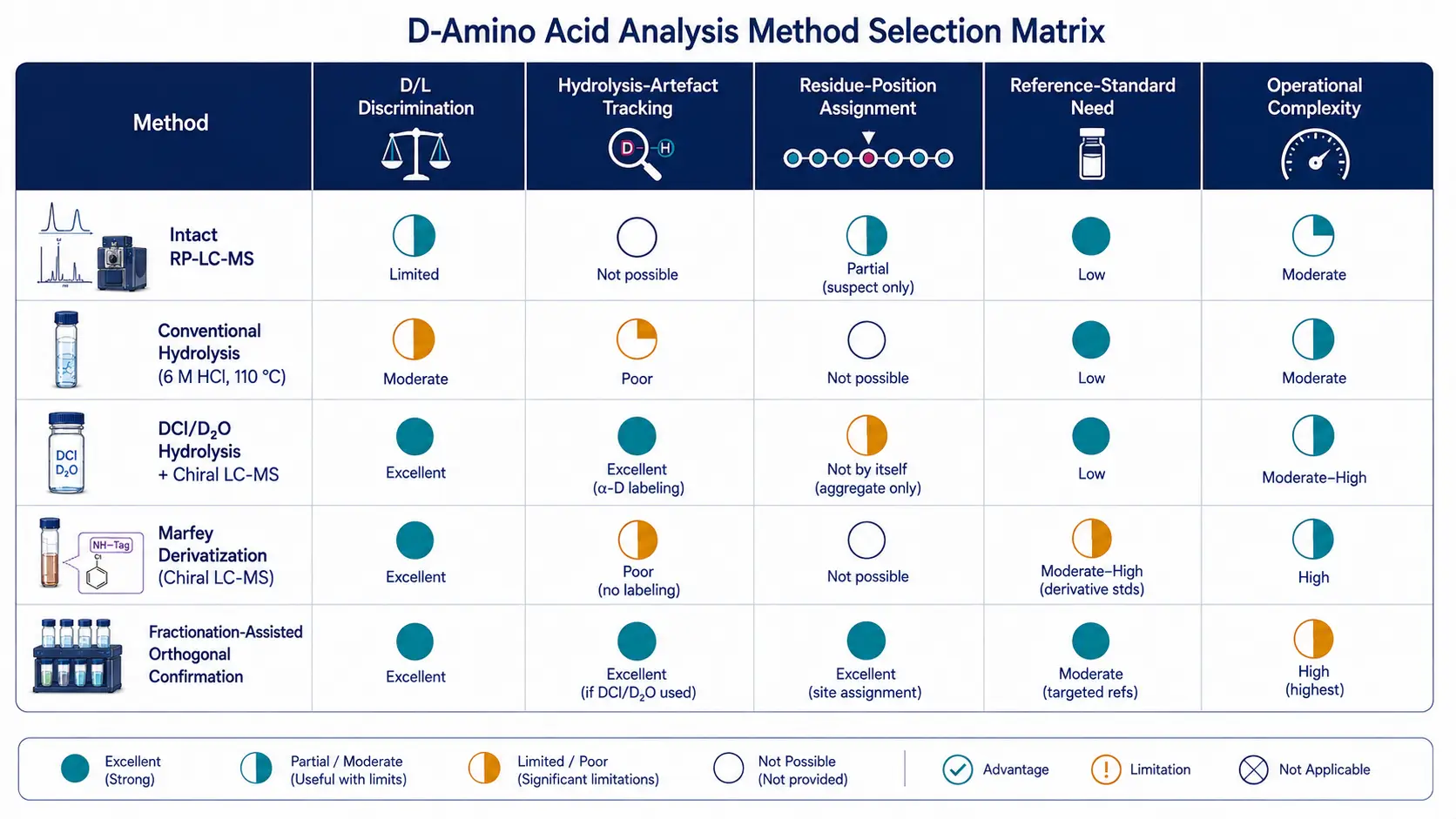 Figure 6. The appropriate method depends on whether the study needs impurity screening, residue-level chiral composition, or position-specific confirmation.
Build controls that separate analytical performance from sample history
A chiral result is credible only when the controls answer the failure modes of that exact workflow. At the intact stage, use a qualified all-L reference and, when practical, a deliberately enriched or synthesized D-residue comparator to establish whether the LC method can reveal a split peak or a retention shift. During hydrolysis, process the reference peptide, hydrolysis blank, and amino-acid standards alongside the unknown. The reference peptide establishes the method-generated background; the blank reveals reagent or carryover contribution; and the standards define retention and expected ion channels.
For a DCl/D2O method, distinguish three measurements in the acquisition and data review plan: the unlabeled L form, the unlabeled D form, and the deuterium-shifted species associated with preparation-stage racemization. Integration rules should specify how partially resolved peaks, isotope overlap, and low-level signals are handled. When derivatization is used, include a derivative-reaction control and avoid comparing uncorrected response areas across amino acids as if they share one response factor. Calibration material should reflect the specific D/L pair that is being quantified.
Replicate logic matters too. Replicate injections test instrument precision; independently prepared hydrolysates test the preparation sequence; and independently synthesized or separately handled peptide lots help distinguish an analytical artifact from a process-related trend. These are different sources of evidence. A result that is repeatable across injections but changes substantially between hydrolysis preparations is a preparation-control issue, not a secure estimate of product chiral composition.
Report the result at the right level. If the method measured D-Asp among all released Asp residues, state that explicitly and identify the hydrolysis, derivatization, separation, and calculation basis. Do not relabel the result as D-Asp at a named position unless the experiment supplied positional evidence. Likewise, report a value below the method's established reporting capability as such rather than converting it into a claim of complete absence. A mass-spectrometry-based protein sequencing workflow can add sequence information, but its contribution should remain distinct from the chromatographic evidence for D/L identity.
Analytical comparability should be designed before reviewing a batch of historical data. If one synthesis lot was evaluated by conventional hydrolysis and another by DCl/D2O-assisted hydrolysis, their apparent D/L values may not be directly comparable without bridging work. The same caution applies when changing a chiral column, Marfey reagent lot, detector mode, or integration rule. Preserve the raw chromatograms, standard traces, sample-preparation record, and the versioned processing method with the reported result. That documentation makes it possible to revisit a borderline impurity signal when the process, sequence, or intended decision changes.
Use a four-phase plan that preserves evidence
Phase A: Risk map. Review sequence, coupling chemistry, protected amino-acid source, known difficult residues, and the intended decision. Define the candidate D/L analytes and whether total composition or positional attribution is required.
Phase B: Intact-material screen. Confirm expected mass and impurity profile, then identify peaks or fractions suitable for comparison. Do not use an apparently clean C18 peak as the stop rule for chiral risk.
Phase C: Chiral measurement. Select direct chiral LC-MS or Marfey derivatization. Where hydrolysis-induced racemization is relevant to the decision, use DCl/D2O controls and establish the native-versus-labeled channels with standards and blanks.
Phase D: Structural resolution. If the D/L result could arise from repeated residues or a mixed impurity, use fractionation, mapping, and matched synthetic references to locate and confirm the candidate. Document what was directly measured and what remains inferred.
This plan connects naturally with broader peptide quality work. The resource on mass confirmation and primary-structure verification of synthetic peptides explains the complementary identity question. Chiral purity should be reported beside, not collapsed into, molecular-mass confirmation, sequence verification, and conventional purity values.
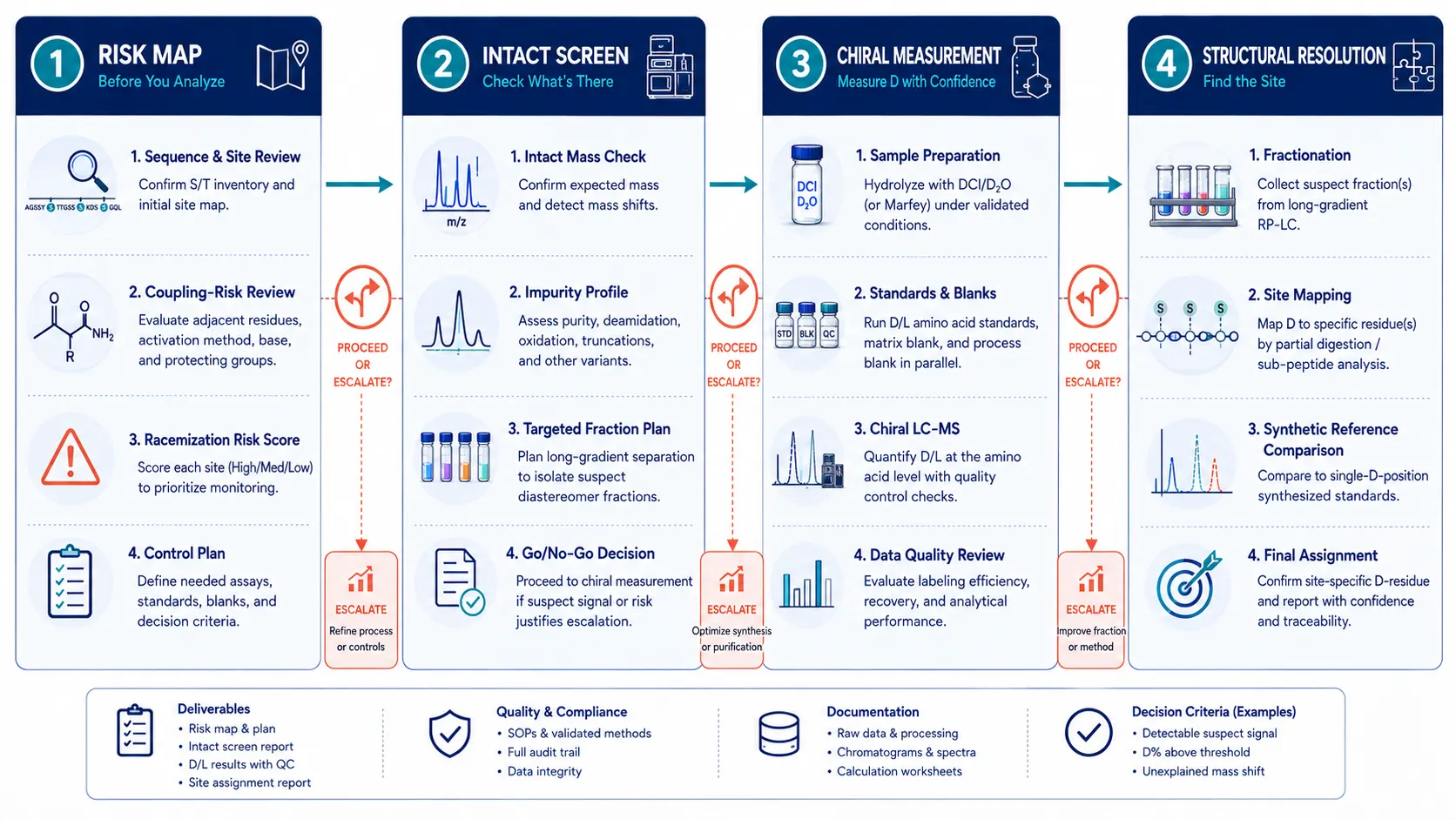 Figure 7. A staged workflow prevents an intact LC-MS result from being overinterpreted as a complete assessment of peptide stereochemical purity.
Frequently asked questions
Which residues deserve early attention during peptide chiral-purity assessment?
Risk depends on the sequence and coupling chemistry. Cys-, His-, and Asp-containing positions often merit early review, but the final target panel should be based on the actual synthesis route, activated intermediates, and observed impurity behavior.
Can a high-resolution Orbitrap or Q-TOF distinguish L from D by accurate mass?
No. L and D forms have the same elemental composition and accurate mass. Their distinction requires a stereochemistry-sensitive separation, derivatization, reference comparison, or another orthogonal chiral approach.
Does deuterated hydrolysis prevent all racemization?
No. It makes hydrolysis-generated racemization more traceable through deuterium incorporation. Method-specific controls are still needed to evaluate exchange, recovery, and chromatographic resolution.
Can Marfey derivatization locate the D-residue position in a repeated sequence?
Not after total hydrolysis alone. It reports the D/L composition of the released amino-acid pool. Use fractionation, targeted digestion, mapping, and reference peptides when positional assignment is required.
Does a single intact HPLC peak prove chiral purity?
No. Some peptide diastereomers coelute or are insufficiently resolved under ordinary achiral conditions. An intact peak is useful screening evidence, not a complete stereochemical conclusion.
Should chiral purity targets be set to one universal percentage?
No. The fit-for-purpose reporting and control level should reflect the peptide, intended use, process knowledge, reference standards, and the decision that the method is expected to support.
References
- Detection and Quantification of D-Amino Acid Residues in Peptides and Proteins Using Acid Hydrolysis. 2018.
- Generation of Enantiomeric Amino Acids During Acid Hydrolysis of Peptides Detected by LC-MS/MS. 2010.
- Two-Dimensional HPLC-MS/MS Combined with DCl/D2O Hydrolysis for Trace D-Amino Acid Residues. 2015.
- Non-Targeted Identification of D-Amino-Acid-Containing Peptides Through Enzymatic Screening, Chiral Amino Acid Analysis and LC-MS. 2018.
- Absolute Stereochemistry Determination of Bioactive Cyclopeptides by Liquid Chromatography Methods. 2023.