Meta Intent: A practical planning guide for rare tissues, sorted cells, organoids, and other low-biomass studies that need sufficient metabolite signal without sacrificing biological replication or data-quality evidence.
Low-input metabolomics does not begin with an extraction solvent. It begins with a decision about what information the study can afford to lose. A microdissected tissue region, a rare sorted-cell population, a small organoid, or a short conditioned-medium collection may contain too little material for a conventional discovery workflow. The usual reaction is to combine specimens until the vial looks comfortable. That may increase total signal, but it can also average away the individual variation that the experiment was designed to measure.
The useful question is not simply, "Can this material be pooled?" It is, "What job would pooling perform, and what biological evidence would it remove?" This article separates input pooling, pooled quality control, and technical replication; then turns that distinction into a low-input LC-MS decision workflow. The aim is to protect independently collected samples wherever they carry the inferential weight of the study.
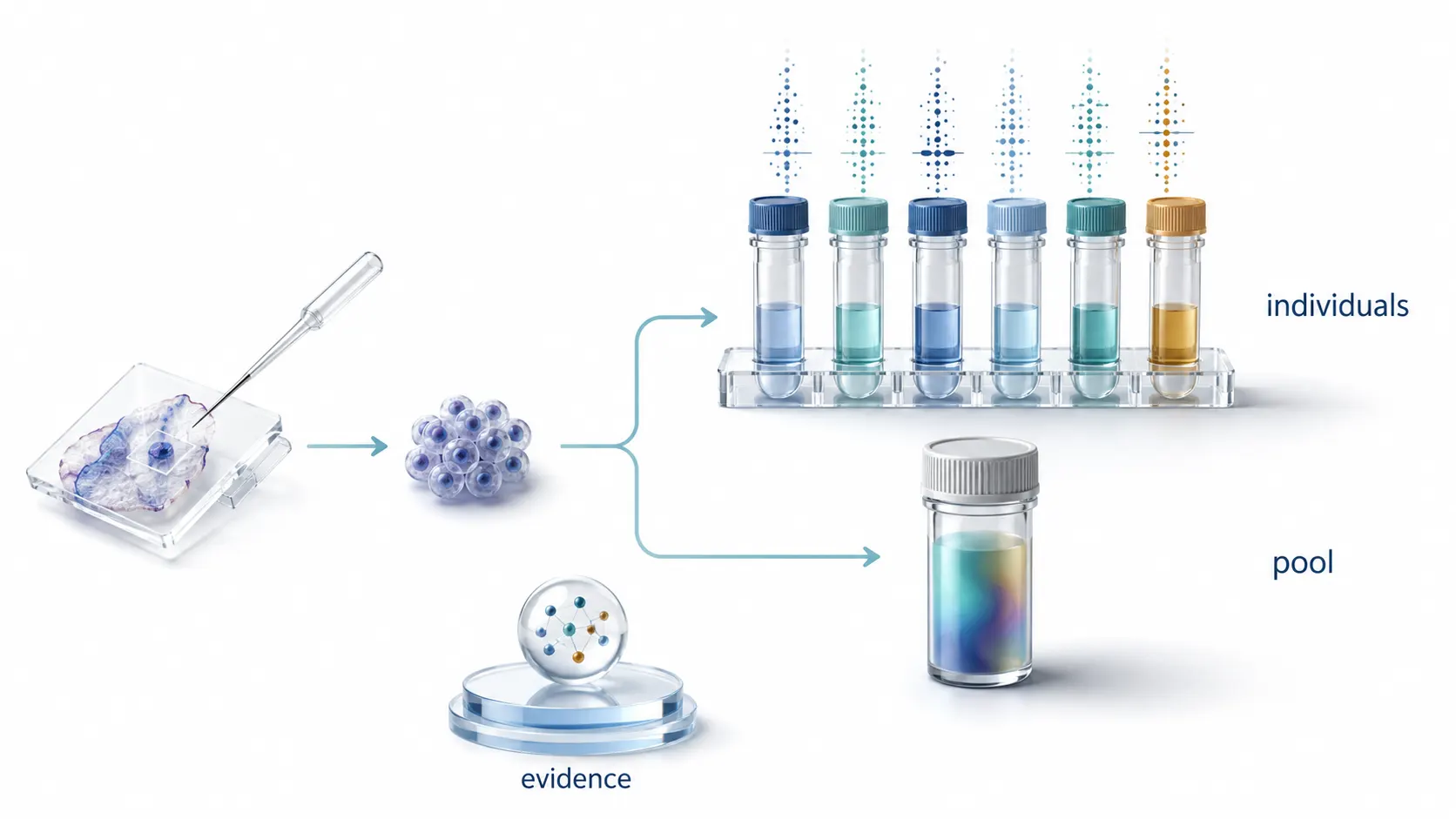 Figure 1. Low-input metabolomics is a balance between measurable signal and preserved biological replication; more combined material is not automatically more evidence.
Start with the inferential unit, not the available tube volume
Before choosing a platform, write one sentence that identifies the inferential unit. Is it an individual animal, donor, organoid, culture well, sorted-cell preparation, or a matched tissue region? That unit, rather than the number of injections, determines the biological sample size. If 15 animals are combined into five three-animal pools, the analysis has five biological observations for the pooled comparison. Repeated injections of those five extracts estimate analytical repeatability; they do not restore the ten individual-level observations that were mixed away.
This distinction becomes urgent when heterogeneity is part of the biology. A pooled mean can conceal a responder subgroup, a bimodal cell-state distribution, or one damaged specimen that would otherwise be visible during QC review. Pooling may still be defensible for a pre-specified group-level question, but the report should state the composition of every pool and should not present pool-level data as independent individual measurements. A planned metabolomics service should therefore begin with a sample manifest that records the original unit, contribution rule, and downstream statistical unit.
Low biomass does not automatically mean untargeted profiling is impossible. It means the requested coverage, sample allocation, and claim level need to be matched. A discovery project may support fewer confidently filtered features. A hypothesis-led project may be stronger when it measures a smaller, chemically coherent panel in every independent sample. Treat the material limit as a design constraint that guides the question, rather than a reason to remove replication by default.
Separate the three kinds of pooling before they enter the same conversation
Pooling for input combines biological material before or during extraction so that one analytical sample has more mass. It is appropriate only when the study explicitly accepts the pool as the unit of comparison, or when a pilot has shown that individual material is below the fit-for-purpose measurement range and no narrower strategy can answer the question. It is not a neutral preparation trick. It changes the variance structure of the dataset.
Pooled QC is different. It is a small, representative aliquot from independent study extracts or samples, combined to make a recurring analytical reference. It should appear repeatedly across the run sequence to show retention-time stability, signal drift, and feature precision. A pooled QC is not included in the biological group test. It is an assay-control material, and it can also be used for supplementary MS/MS acquisition or a reference feature list.
Technical replicates repeat an extraction, injection, or acquisition to estimate procedural or instrument variability. They are useful for method development, stability checks, and a small number of pre-specified critical samples. They do not substitute for independently collected biological replicates. The most defensible design labels all three materials separately in the sample sheet, acquisition sequence, and final data package.
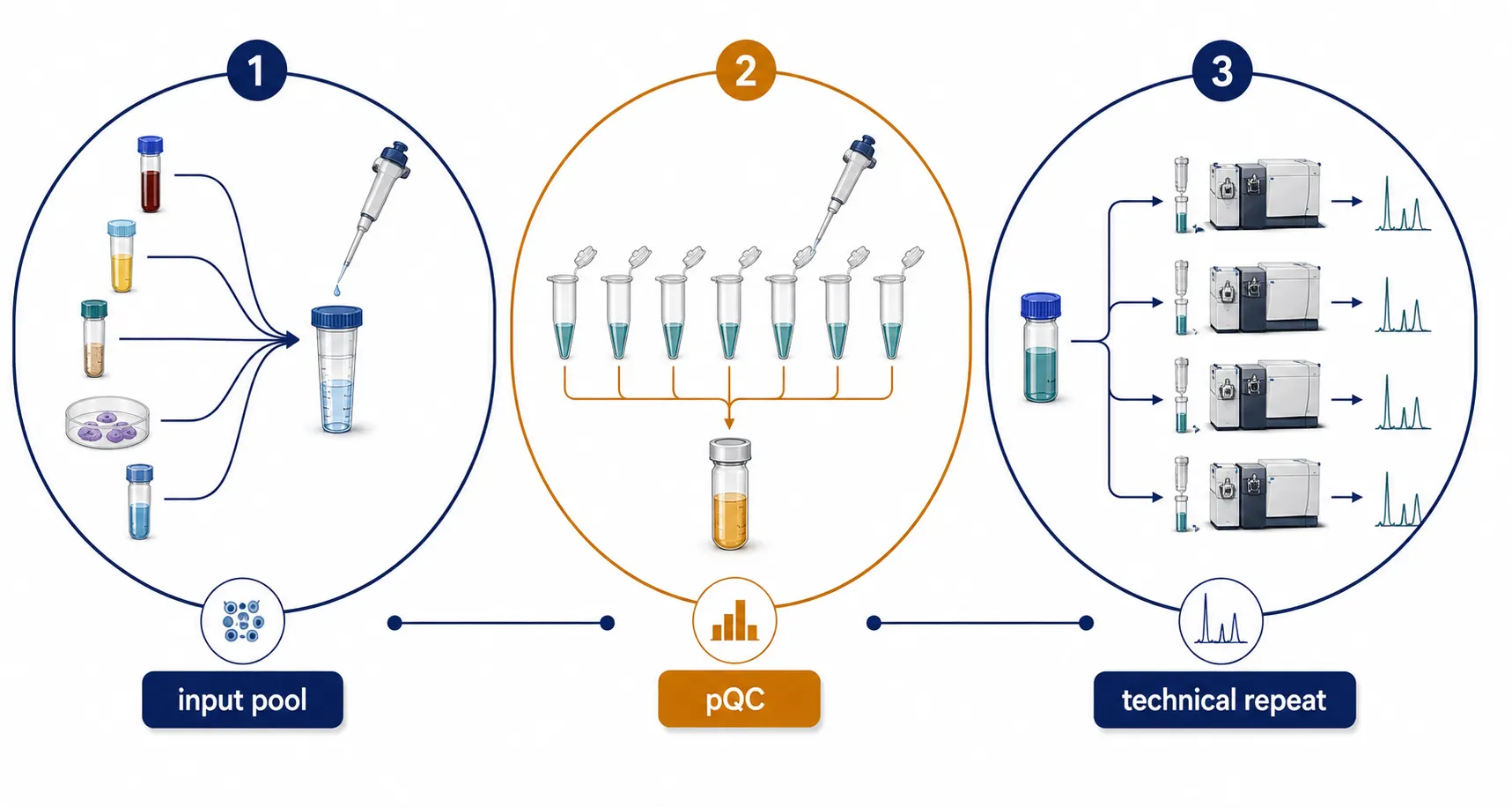 Figure 2. Input pooling, pooled QC, and technical replication may use similar pipetting steps, but they answer different questions and must not be counted as the same kind of evidence.
Use a decision tree when individual biomass is limited
First, measure or estimate what can be allocated from one independent specimen after stabilization, extraction, and a QC contribution. Then ask whether an individual extract can support the minimum injection volume and expected concentration range for the requested method. A quick pilot using representative material is more useful than a generic mass threshold because different matrices, metabolite classes, and ionization conditions behave differently.
If the individual extract is viable for global profiling, preserve it. Use an untargeted metabolomics workflow with a deliberately constrained injection sequence, blanks, internal standards, and a small pooled QC allocation. If individual discovery sensitivity is marginal, a focused targeted metabolomics workflow can often retain the individual samples by concentrating effort on the metabolites or pathway nodes that test the hypothesis. The correct switch is not "untargeted is weak, targeted is better"; it is "which evidence can this specimen support independently?"
Write the decision in the study brief before specimens are combined. State the biological unit, the planned comparison, the feature or pathway scope, and the smallest result that would be useful. For example, a study asking whether a treatment shifts an organic-acid pathway across independent organoids needs individual organoids in the final model. A study building a spectral library for a rare biopsy type can use a composite material, because the immediate output is a library rather than a group-level effect estimate. This distinction protects downstream statistics: the number of independent specimens, not the number of injections or peak lists, determines how much biological variation can be assessed.
Also separate analytical feasibility from biological priority. If only a subset of specimens can be measured individually, choosing those samples after inspecting a pooled discovery result creates a selection problem. A better plan defines the individual follow-up subset, the inclusion criteria, and the confirmatory measurement before acquisition. Where the clinical or experimental question requires a full cohort comparison, redesigning extraction, limiting the analyte scope, or collecting additional material is preferable to creating an apparently large but biologically unreplicated dataset.
For a genuinely unknown chemical space, a hybrid design is often strongest. Use a composite discovery pool for method scouting or MS/MS support, but acquire the actual comparison on individual samples using a narrower verified feature set or a targeted follow-up. This keeps the exploratory pool in its proper role: it expands annotation opportunity without becoming the source of biological replication.
Micro-scale and single-cell approaches can be useful when the scientific question requires spatially restricted or rare-cell information. They should be selected for their fit to the sample and coverage objective, not described as automatic rescue technologies. A single-cell metabolomics service has different constraints on throughput, coverage, and technical variance than bulk low-input LC-MS, so its data model must be planned separately.
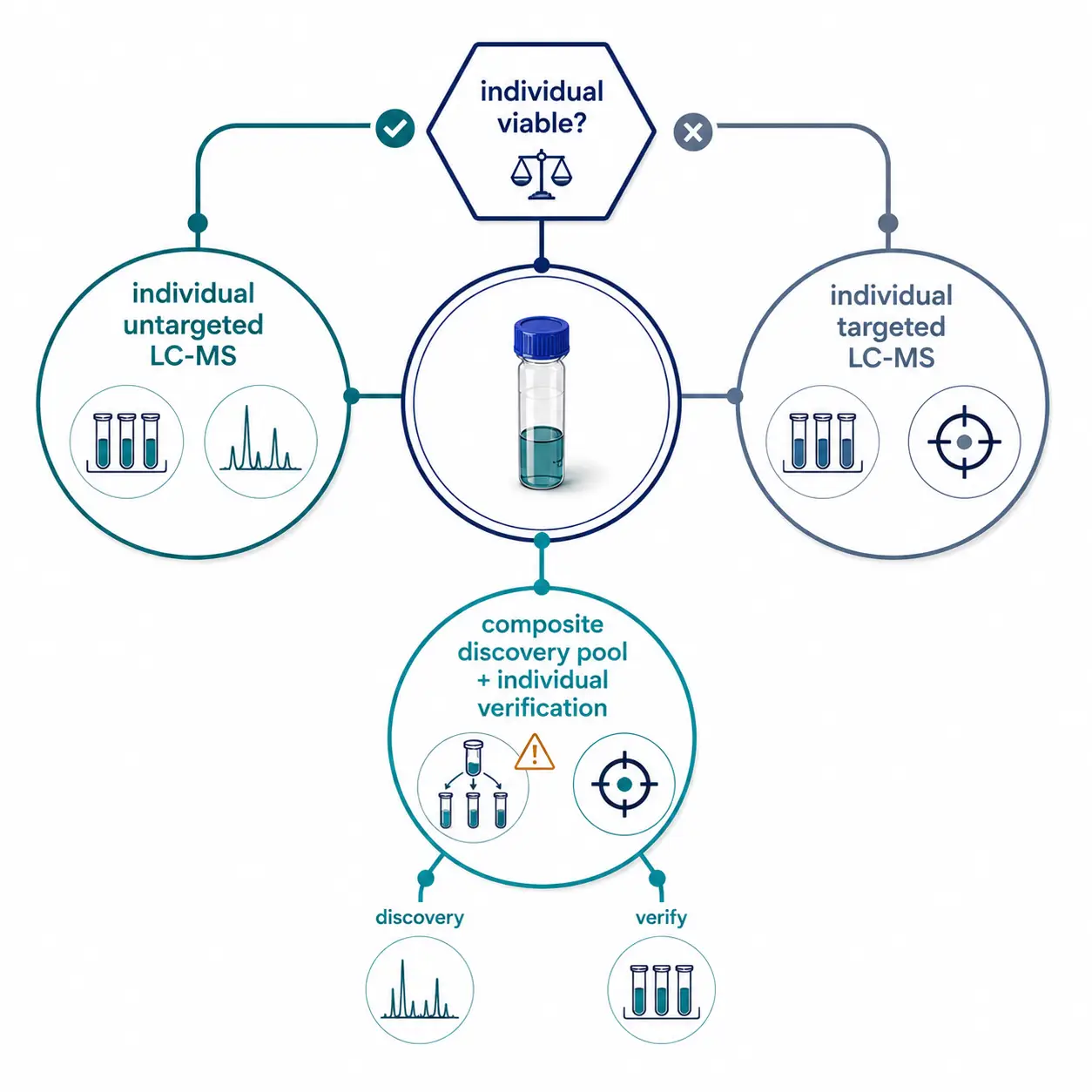 Figure 3. The first low-input decision is whether independent samples can support the intended claim; pooling becomes one branch of a decision tree, not the default solution.
Downscale extraction before pooling biology
Many low-input failures originate in avoidable dilution and transfer loss. A conventional extraction volume may be appropriate for a large tissue piece but leave a microdissected region in a volume that is too large for the analyte concentration. The response is not necessarily to use less solvent without validation. Instead, map every step that can lose analyte: tube wall adsorption, pellet handling, phase transfer, dry-down, reconstitution, and dead volume in the vial or insert.
Micro-volume methods use proportionate solvent volumes, low-dead-volume containers, and a reconstitution volume that is compatible with injection and chromatography. Recovery must be checked with relevant internal standards and matrix-matched pilot material. A smaller volume that creates precipitation, unstable reconstitution, or a solvent mismatch is not an improvement. The goal is to preserve concentration and process consistency at the same time.
Preanalytical handling deserves the same attention as the extraction ratio. Low biomass has little reserve against delays in quenching, temperature excursions, hemolysis, residual culture medium, or inconsistent wash steps. Record the interval from collection to stabilization, the extraction batch, the operator, the storage history, and any sample-specific deviation. These fields are not administrative extras: when a sparse feature pattern follows one processing event, they help distinguish a real group difference from a preparation effect. For sorted cells, record the sorting buffer, cell count or estimated biomass, viability context, and post-sort dwell time; for organoids, document the wash and medium-removal step.
Use a pilot to evaluate the entire micro-scale chain, not merely the instrument response of a standard mixture. Compare recovery and blank contribution after the real collection, extraction, transfer, dry-down, and reconstitution sequence. Include the intended injection solvent and an injection amount that leaves enough extract for a justified repeat. If a step changes the balance between polar and hydrophobic species, report that constraint rather than presenting the output as universal metabolome coverage.
When the question concerns defined polar metabolites, use a chemically focused panel rather than attempting to collect every class in one compromised extract. For example, TCA-cycle analysis, an organic acids analysis, or a targeted amino acids and derivatives analysis can provide a more interpretable answer from limited material when those analytes align with the hypothesis. These choices should be declared before the first group comparison, not selected after a broad screen fails to detect the desired signal.
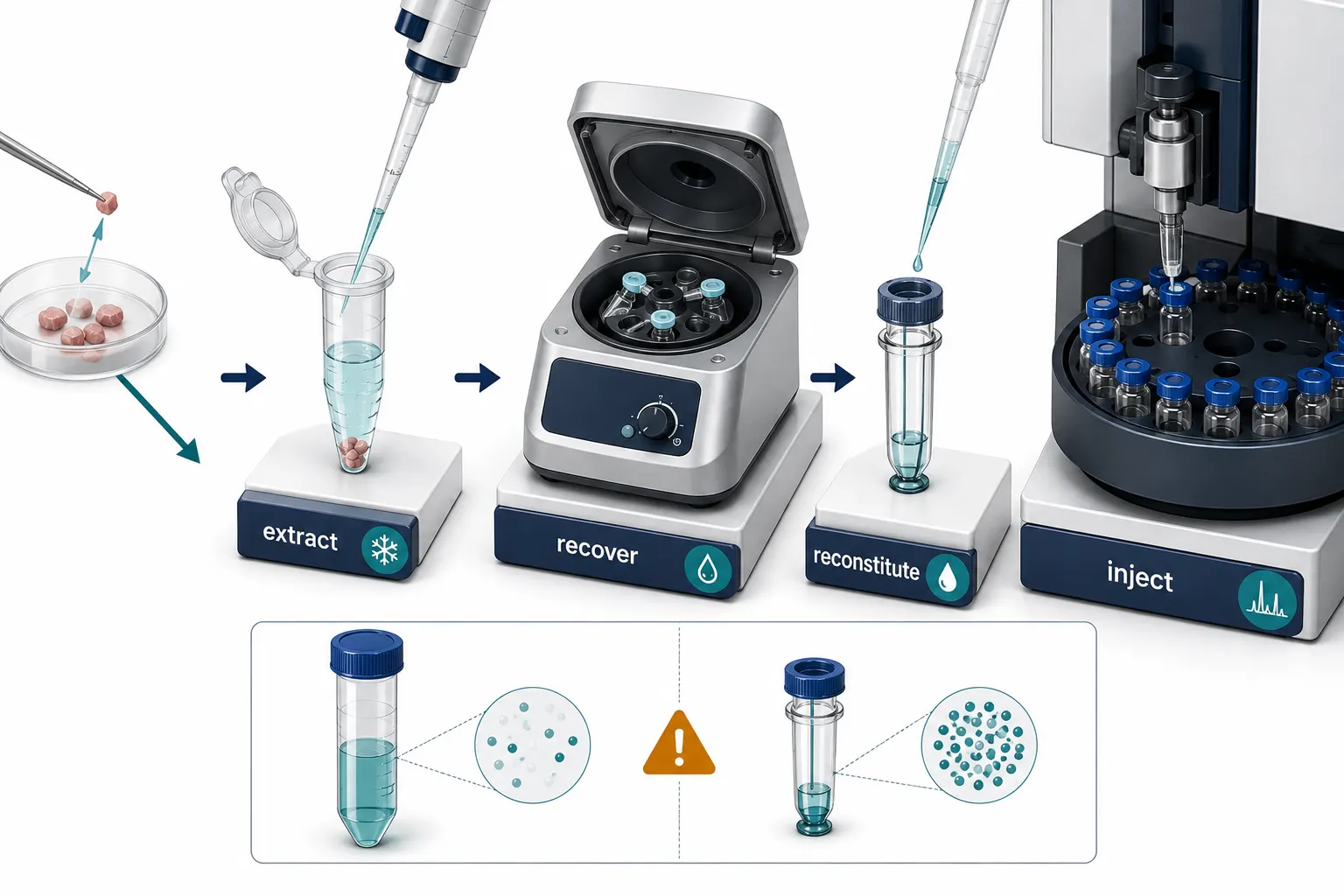 Figure 4. A low-input workflow should reduce avoidable dilution and transfer loss while preserving recovery, reconstitution stability, and chromatographic compatibility.
Build pooled QC without exhausting the individual samples
A pooled QC is only useful if it is representative and plentiful enough to serve the run. In a low-volume cohort, allocate the QC contribution at the study-design stage rather than taking an arbitrary remainder after all samples have been reconstituted. A small equal-volume aliquot from each independent extract can create a representative QC while leaving enough individual material for the planned injection and a limited contingency. If that is impossible, document the alternative, such as a representative subset, a matrix-matched reference material, or a separate phenotypic QC.
Do not make a pQC so small that it disappears after conditioning injections and repeat analyses. The pQC budget should include initial system conditioning, periodic injections, a possible reinjection, and any pooled material reserved for MS/MS. Blanks and internal-standard mixtures remain distinct controls. A pQC can reveal drift in the shared analytical material; it cannot prove that a feature in every individual specimen was stable during collection or extraction.
Plan the run order around the pQC rather than adding QC injections after the batch has been built. Start with conditioning injections that are excluded from final precision summaries, then place pQC injections at regular intervals that are dense enough to reveal a time-dependent change. Put process blanks near the samples whose preparation they are intended to monitor, and retain solvent blanks where carryover is plausible. The exact frequency should follow method duration, run length, and expected stability, but the rationale should be written down before data review. A pQC injection placed only at the beginning and end of a long batch cannot describe what happened between them.
Representativeness also has a boundary. A pooled extract dominated by one group, one matrix type, or a few high-yield samples may be a stable instrument reference but a poor control for other samples. When subgroups differ materially in matrix composition, consider whether separate matrix-matched QCs, a balanced pooled design, or an external reference is needed. This does not mean every subgroup requires its own QC by default; it means the chosen control should match the analytical question it is being asked to answer.
For untargeted work, a dilution series made from the pooled QC can add a second layer of evidence. Instead of relying only on apparent peak presence, review whether signal changes coherently across planned pQC dilutions and whether precision remains acceptable in recurring QC injections. Use these results as feature-specific filters, with thresholds pre-specified for the platform and matrix. A LC-MS/MS untargeted metabolomics study should retain the before-and-after feature counts so readers can see what was excluded and why.
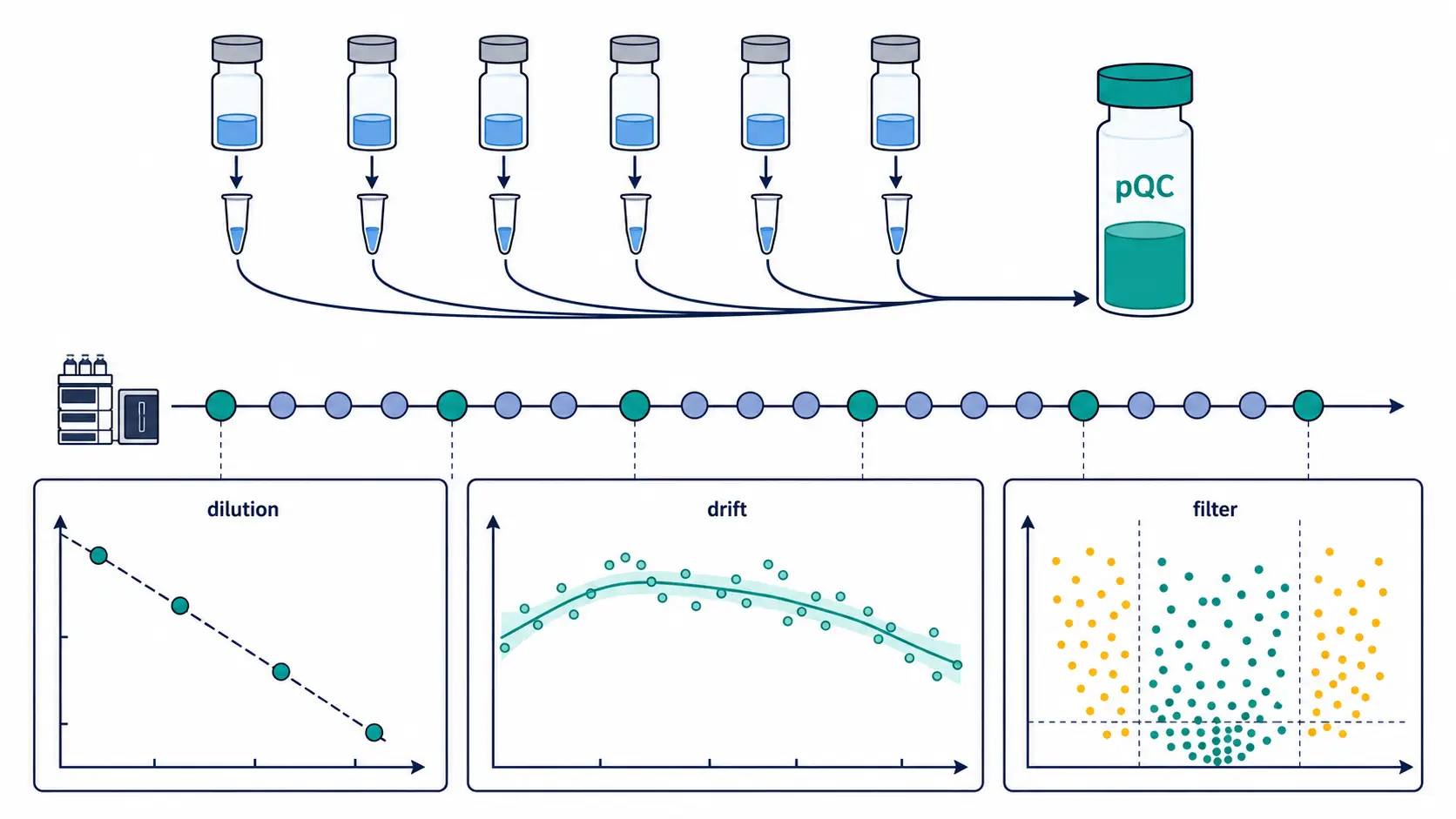 Figure 5. A low-input pQC plan combines representative aliquots, injection-order monitoring, dilution-response checks, and documented feature filtering.
Filter data in a way that respects missingness and batch structure
Low-input datasets often contain more missing or near-limit signals. Do not treat every missing value as a zero, a random absence, or a value that can be imputed without consequence. First determine whether the feature is absent from pQC, present in blanks, sporadic within one batch, or associated with a particular sample type. These patterns point to different causes: chemical background, extraction inconsistency, signal instability, or a potentially real low-abundance biological difference.
Randomize biological groups across extraction order and injection order whenever the study design permits. Then use pQC trajectories to review analytical drift before applying a correction. QC-based smoothing can reduce a measured instrument trend, but it cannot repair a batch in which one biological group was processed on a different day, by a different collection method, or after a different storage interval. Preserve the run order, blanks, pQC results, and correction rationale alongside the feature table.
Use a feature-level review before a sample-level rescue. A feature that is consistently absent from pQC, unstable across pQC injections, or non-responsive in a planned dilution series should not gain credibility because statistical imputation produces a complete matrix. Conversely, a low-abundance feature that is reproducible in pQC, absent from blanks, and observed in a biologically coherent subset may be worth retaining with clearly stated limits. Keep raw and filtered feature counts, pQC precision summaries, blank rules, and the reason each major filter was applied. That record makes the final dataset easier to challenge, reproduce, and interpret.
Batch correction should be treated as an adjustment to an observed analytical pattern, not an invisible default. Inspect data before and after correction with pQC trends, total signal summaries, principal-component plots that label run order, and sample metadata. If a correction changes the separation of biological groups more than it reduces an evident QC drift, revisit the design and assumptions. A method that cannot separate run-order artifacts from the experimental variable may require a narrower claim or a new batch, rather than more sophisticated normalization.
A data preprocessing and normalization workflow should therefore report the sequence of decisions: blank filtering, pQC precision, dilution response where used, missingness review, drift assessment, normalization, and the final model. Broad bioinformatics for metabolomics is valuable when it preserves this audit trail, rather than reducing the workflow to a single normalized matrix.
Choose the evidence level before selecting a workflow
| Design route | What it preserves | What it sacrifices | Best use |
|---|---|---|---|
| Blind input pooling for untargeted analysis | More combined mass | Individual variance and sample-level outlier review | Only when the pool itself is the stated experimental unit |
| Individual targeted panel | Biological replication and quantitative evidence for chosen metabolites | Broad discovery coverage | A defined pathway or metabolite-class hypothesis |
| Micro-volume individual extraction | Individual samples and concentrated extract | Method-development time and limited injection reserve | Rare tissue or small cultured systems |
| Composite discovery pool plus individual verification | Annotation support and individual follow-up | Requires two linked analytical stages | Unknown feature space with a clear verification plan |
The table is a planning aid, not a hierarchy. A composite pool can be scientifically useful for library generation, while an individual targeted panel can be the stronger endpoint for a low-input group comparison. The choice should align the sample-consuming step with the question that requires the most reliable evidence.
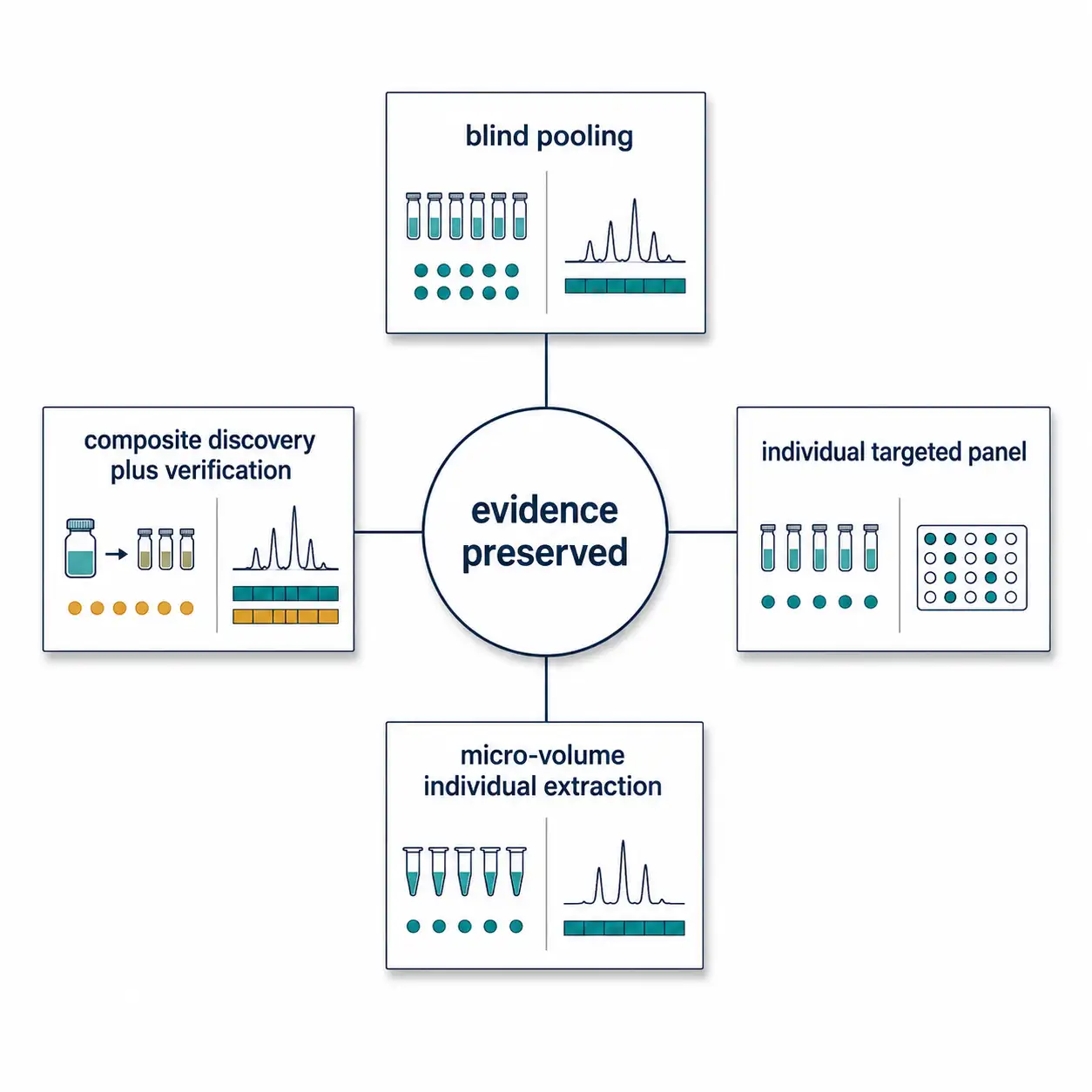 Figure 6. Low-input metabolomics options should be compared by the evidence they preserve, not only by the amount of material entering the instrument.
Connect low-input metabolomics to the wider study design
Low-input metabolomics is often part of a larger allocation problem. If the same organoid, tissue piece, or cultured sample will support more than one omics layer, decide extraction order and material reservation before collection. The companion guide to proteomics and metabolomics from the same organoid sample addresses that split-sample logic. The present article stays focused on the metabolomics question: how much individual material must remain to support a defensible comparison.
Archived or delayed-processing material adds a different risk. A future topic-cluster resource on archived samples for NAD metabolomics will address analyte stability and sample suitability. Do not use pooling to conceal instability introduced before extraction. If collection history differs across groups, establish whether the source of variation is biological or preanalytical before expanding the panel or the statistical model.
Integrated designs work best when each omics layer keeps its own QC logic. An integrated proteomics and metabolomics analysis can relate data layers after each has passed its own sample, batch, and identification checks. Integration is not a substitute for adequate replication or feature reliability within either layer.
Use a four-phase implementation plan
Scope: define the inferential unit, analyte question, specimen availability, and whether individual untargeted, individual targeted, or hybrid work is feasible. Protect: stabilize samples, set micro-volume extraction and internal-standard rules, reserve pQC aliquots, and randomize processing. Verify: use blanks, pQC conditioning, recurring pQC injections, dilution response when applicable, and recovery or stability checks. Interpret: filter and correct with documented criteria, analyze the true biological unit, and qualify claims that are not supported by individual-level evidence.
Each phase has a stop rule. Do not pool just because a first extraction is dilute. Pause when individual signal is outside the useful range, when pQC material is insufficient to monitor the batch, when pQC trends show uncorrectable instability, or when missingness is linked to processing order. At that point, narrow the panel, redesign extraction, use a targeted method, or collect more material. A smaller dataset with intact replication is usually more informative than a larger feature list built on pooled biological uncertainty.
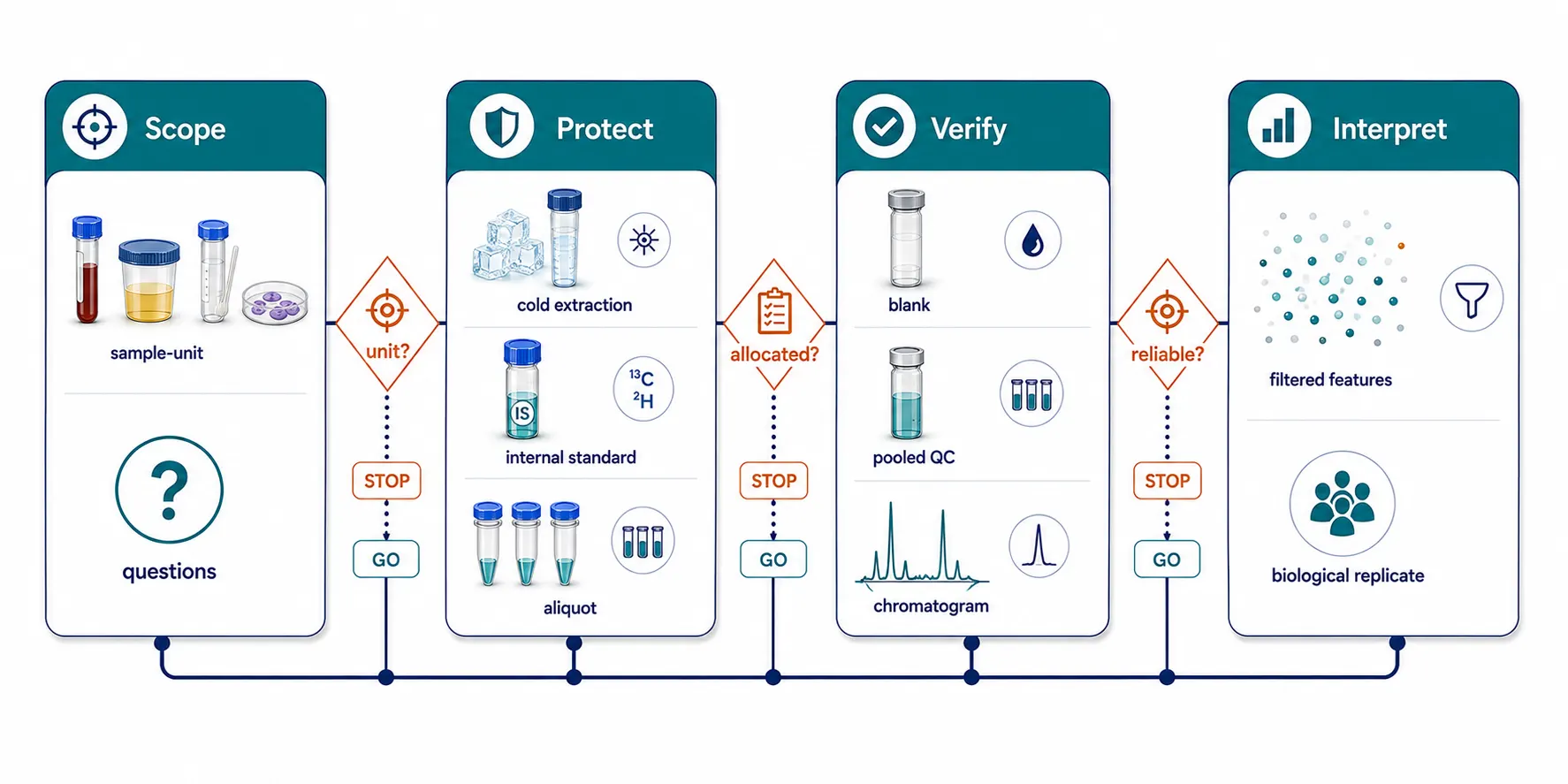 Figure 7. A four-phase low-input plan turns material scarcity into explicit decisions about replication, allocation, QC evidence, and interpretation.
Frequently asked questions
Must untargeted metabolomics be abandoned below 1 mg of tissue?
No. Feasibility depends on matrix, extraction, platform, and the coverage claim. Use a representative pilot to decide whether individual untargeted work is fit for purpose.
Can technical replicates replace biological replicates after pooling?
No. They estimate technical variability, not the variance among independently collected biological units.
How much of each low-volume sample should go into pooled QC?
Set the aliquot prospectively after budgeting individual injections, pQC conditioning, periodic QCs, and contingency. There is no universal volume that fits every matrix.
Can a pQC dilution series prove metabolite identity?
No. It supports response and reliability filtering. Identification still requires appropriate mass, retention, MS/MS, and reference evidence.
Can precipitated material be used for protein normalization?
Potentially, but only if the workflow validates that the measurement is compatible with the extraction and the biological interpretation. Do not add a normalization layer by assumption.
What should be done when one group has more missing features?
Review blanks, pQC behavior, run order, sample history, and expected abundance before imputation. Missingness may be analytical, biological, or both.
References:
- Quality assurance and quality control reporting in untargeted metabolic phenotyping: mQACC recommendations for analytical quality management. Metabolomics. 2022. doi:10.1007/s11306-022-01926-3
- Establishing a framework for best practices for quality assurance and quality control in untargeted metabolomics. Metabolomics. 2024. doi:10.1007/s11306-023-02080-0
- Metabolomics 2023 workshop report: moving toward consensus on best QA/QC practices in LC-MS-based untargeted metabolomics. Metabolomics. 2024. doi:10.1007/s11306-024-02135-w
- Recent developments in single-cell metabolomics by mass spectrometry: a perspective. Journal of Proteome Research. 2025. doi:10.1021/acs.jproteome.4c00646
- Single cell metabolism: current and future trends. Metabolomics. 2022. doi:10.1007/s11306-022-01934-3