Spatial transcriptomics has transformed how we study tissue biology. By mapping gene expression across intact tissue sections, it has revealed cellular heterogeneity in tumors, defined new cell states in the brain, and charted developmental trajectories in ways bulk analysis never could. Platforms such as Visium HD (2 μm resolution), Xenium (subcellular, 5,000 genes), and Stereo-seq (500 nm center-to-center) now offer transcriptional resolution that was unthinkable a decade ago.
But here is the question too few researchers pause to ask: does knowing where a gene is expressed tell you what a cell is actually doing?
The answer, increasingly backed by quantitative evidence, is that it does not — not reliably. Messenger RNA abundance correlates with protein levels only weakly in many tissue contexts, and for metabolites and small molecules there is no transcriptional correlate at all. A gene may be actively transcribed in one cell type, but its protein product may be rapidly degraded, sequestered, or post-translationally modified into an inactive form — none of which is detectable by RNA sequencing. Conversely, a protein may persist and function in a tissue region long after its mRNA has been degraded.
Spatial transcriptomics captures what cells are preparing to do. Spatial proteomics, spatial metabolomics, and mass spectrometry imaging (MSI) capture what they are actually doing. The distinction is not merely academic — it has direct consequences for drug development, biomarker validation, and translational research.
This article provides a practical, evidence-based framework for deciding when spatial transcriptomics alone is sufficient — and when you must add additional molecular layers to answer your biological question.
The mRNA-Protein Gap Is Amplified in Tissue Context
The fundamental limitation of spatial transcriptomics is not technical — it is biological. mRNA and protein levels are governed by different rates of transcription, translation, folding, post-translational modification, transport, and degradation. In tissue, this gap is amplified by cellular heterogeneity and local microenvironmental gradients.
A landmark multi-modal spatial profiling study directly measured RNA and protein on the same tissue section. The results revealed a striking cell-type dependence. In B-cell-rich regions of human spleen, mRNA and protein showed a Pearson correlation of r = 0.53. In macrophage-enriched regions, that correlation collapsed to r = 0.23. The gap widened further in tissue regions where key cell types were present at low abundance: in breast tumor immune infiltrates, mRNA expression correlated with immunofluorescence protein signal at only r = 0.05, while protein-based detection rescued this to r = 0.22 — a fourfold improvement.
Figure 1: mRNA-Protein Correlation Gap Across Tissue Regions
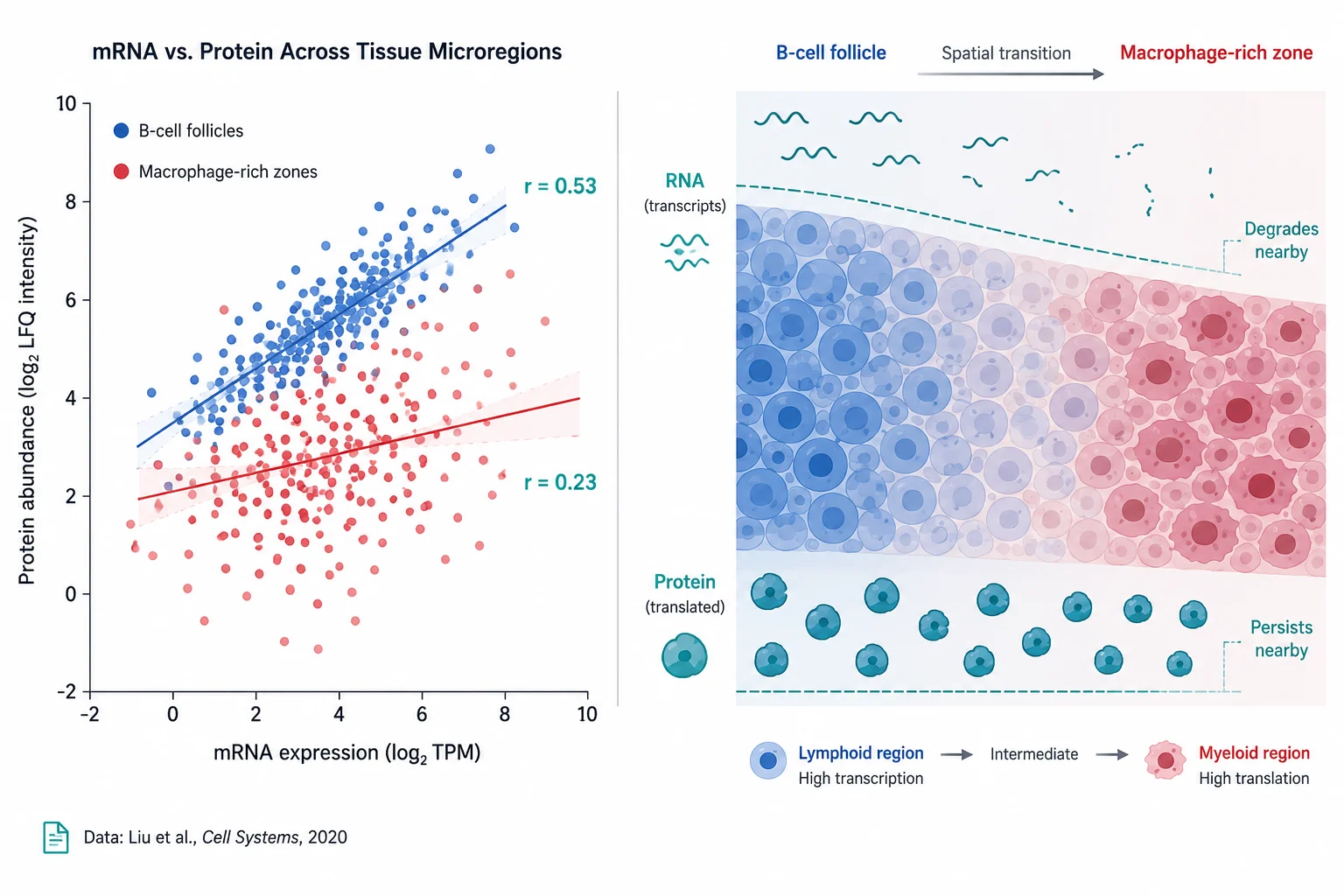
These numbers matter because they reveal a systematic dropout problem: mRNA measurements disproportionately miss low-abundance transcripts in rare cell types, and this dropout is concentrated in precisely the cell populations most likely to be biologically relevant in immune microenvironments.
Beyond detection sensitivity, there are fundamental biological phenomena that RNA alone cannot capture. Post-translational modifications — phosphorylation, glycosylation, acetylation — define protein function and signaling pathway activation but are invisible at the RNA level. Secreted proteins such as cytokines, chemokines, and growth factors act at distances of hundreds of micrometers from their source cells, meaning their mRNA localization provides no information about where the functional protein is actually active.
Three Questions Spatial Transcriptomics Cannot Answer
The table below maps specific research questions to the spatial modality required to answer them:
| Research Question | Can ST Answer? | Why Not | Required Modality |
|---|---|---|---|
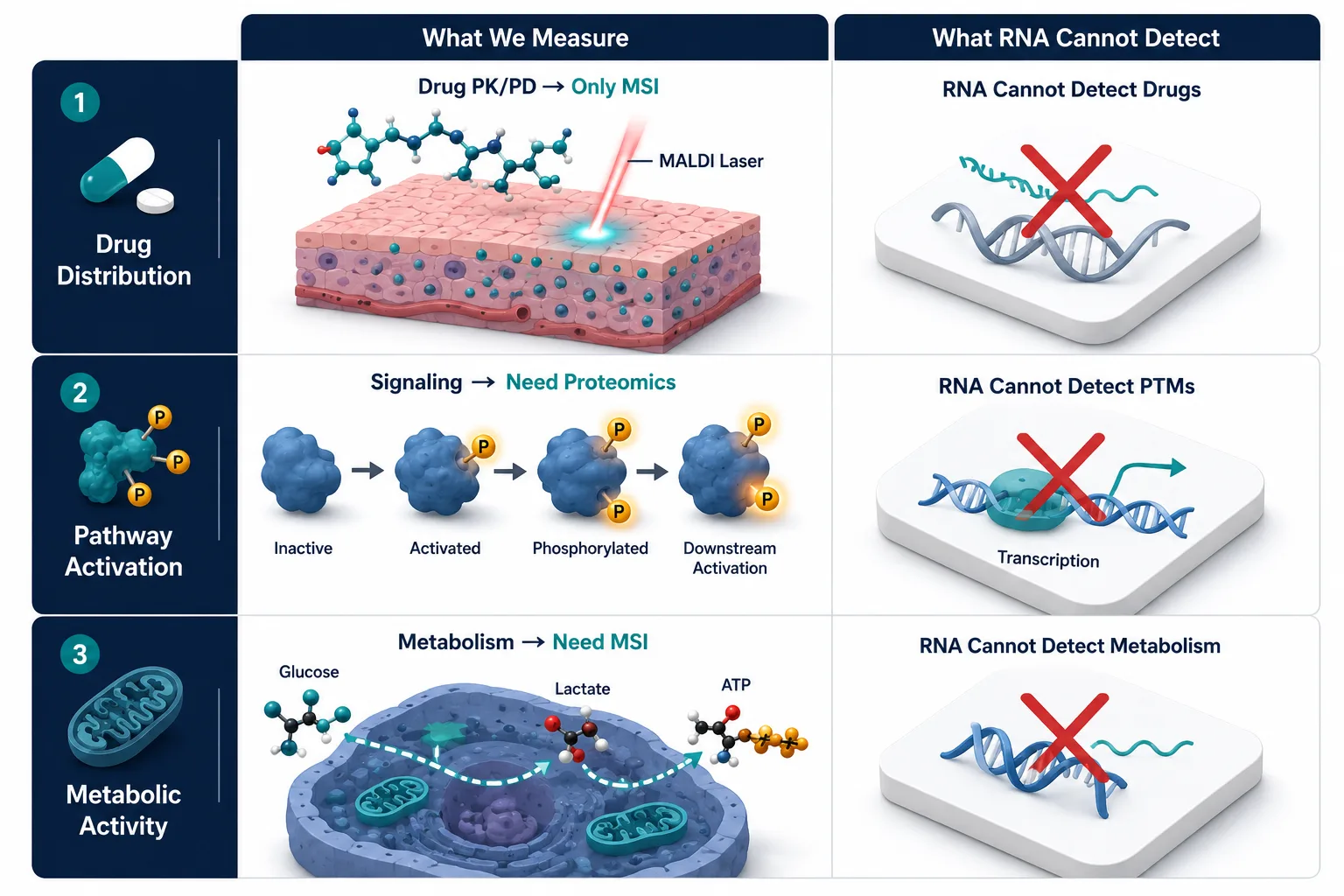
| Where is the drug distributed in tissue? | No | Most small-molecule drugs lack antibodies and have no RNA target | MSI (MALDI, DESI, LA-ICP-MS) |
| Is a signaling pathway activated? | Partial | Phosphorylation and other PTMs are post-translational | Spatial proteomics (PTM-specific antibodies) |
| What is the metabolic activity of a tumor region? | No | Metabolites are end products of cellular processes, not transcribed | Spatial metabolomics / MSI |
| What is the local tissue lipid composition? | No | Lipids are synthesized enzymatically, not transcribed | MALDI-MSI lipidomics |
| Are immune cells functionally active or exhausted? | Partial | Surface markers do not equal functional markers | Spatial proteomics |
| Where are neurotransmitters localized? | No | Neurotransmitters are small molecules, not RNA | MALDI-MSI metabolomics |
Figure 2: Three Spatial Questions That Transcriptomics Cannot Answer
The translational relevance is clear. Researchers have built decades of experience using protein-level readouts — immunohistochemistry, immunofluorescence, enzyme-linked assays — as research tools. Spatial proteomics is a natural extension of this framework. Spatial transcriptomics, while powerful for discovery, requires a separate interpretive infrastructure for translational deployment.
When to Add Spatial Proteomics: Functional Phenotyping
Spatial proteomics should be added when the research question involves cellular function rather than cellular identity. The distinction between identity and function is critical: two cells expressing the same lineage markers may be in completely different functional states, and that functional difference determines cellular response output.
Immune cell functional state is the clearest example. Spatial transcriptomics can identify CD8+ T cells by their gene expression signature. But it cannot distinguish a cytotoxic, tumor-killing T cell from an exhausted, non-functional one. That distinction requires protein-level markers: Granzyme B and IFN-γ for cytotoxic activity, PD-1 and LAG-3 for exhaustion — markers routinely assessed through MS-based spatial proteomics. In HER2+ breast cancer, spatial protein profiling across tumor and stromal compartments revealed significantly higher immune infiltration and immune-related protein expression (CD3, CD8, CD45) in primary tumors compared to metastases — a functional difference that RNA-level analysis of the same regions had suggested but could not definitively confirm.
Signaling pathway activation is another domain where spatial proteomics is irreplaceable. RNA-level pathway analysis captures transcriptional output — which genes are being transcribed in response to a signal. But pathway activation itself is a post-translational event, driven by phosphorylation cascades (p-STAT, p-ERK, p-AKT, p-S6). Spatial profiling of phosphoproteins — accessible via dedicated phosphoproteomics service — reveals which cells in a tissue have actually received and processed a signal, versus those simply expressing the receptor.
The spatial multi-omics field is converging on the view that multimodal approaches yield the most biological insight. A 2025 review encompassing 25+ spatial omics technologies concluded that data integration across transcriptomic, proteomic, and metabolomic layers is essential for moving from descriptive atlases to functional understanding of tissue biology. While spatial transcriptomics remains the most commercially mature modality, the value of complementary proteomic information is increasingly recognized across both discovery and translational contexts.
When to Add Spatial Metabolomics or MSI: Metabolic Activity and Drug Distribution
Spatial metabolomics and MSI address questions that no other spatial technology can reach. Metabolites are the end products of cellular processes — the closest molecular readout of actual phenotype. They cannot be amplified like RNA nor detected by generic antibodies, but they carry information about cellular state that is invisible in both transcript and protein data.
Tumor metabolic heterogeneity is a prime example. The Warburg effect — aerobic glycolysis — varies dramatically across microregions of the same tumor. A study using kinetic MSI with in vivo deuterium labeling revealed six spatially distinct lipid synthesis zones within a single tumor: proliferative regions (Ki-67 positive) showed high rates of new lipid synthesis while necrotic zones showed virtually none. This metabolic heterogeneity has direct biological implications: tumor subregions with different metabolic profiles exhibit distinct treatment response profiles — underscoring the value of spatial metabolomics analysis for studying tumor heterogeneity in research models.
Drug tissue distribution is perhaps the most clear-cut case for choosing MSI. Most small-molecule drugs lack suitable antibodies for immunohistochemistry-based detection, and their mechanism of action has no RNA-level correlate. MALDI-MSI directly detects drug molecules and their metabolites in intact tissue sections at 5-50 μm resolution, without labels or antibodies — a capability offered by mass spectrometry imaging services. This makes it the only spatial technology capable of answering pharmacokinetic and pharmacodynamic questions in tissue context.
Neurotransmitter and lipid spatial mapping similarly demands MSI. Dopamine, serotonin, glutamate, and their metabolites — molecules at the center of neurobiology and neurodegeneration — have no RNA or antibody detection path in tissue. MALDI-MSI at 5-20 μm resolution can map hundreds of lipid species per run and has revealed lipid remodeling around amyloid plaques in Alzheimer's disease and region-specific lipid signatures in Parkinson's disease, as demonstrated by MALDI-imaging lipidomics.
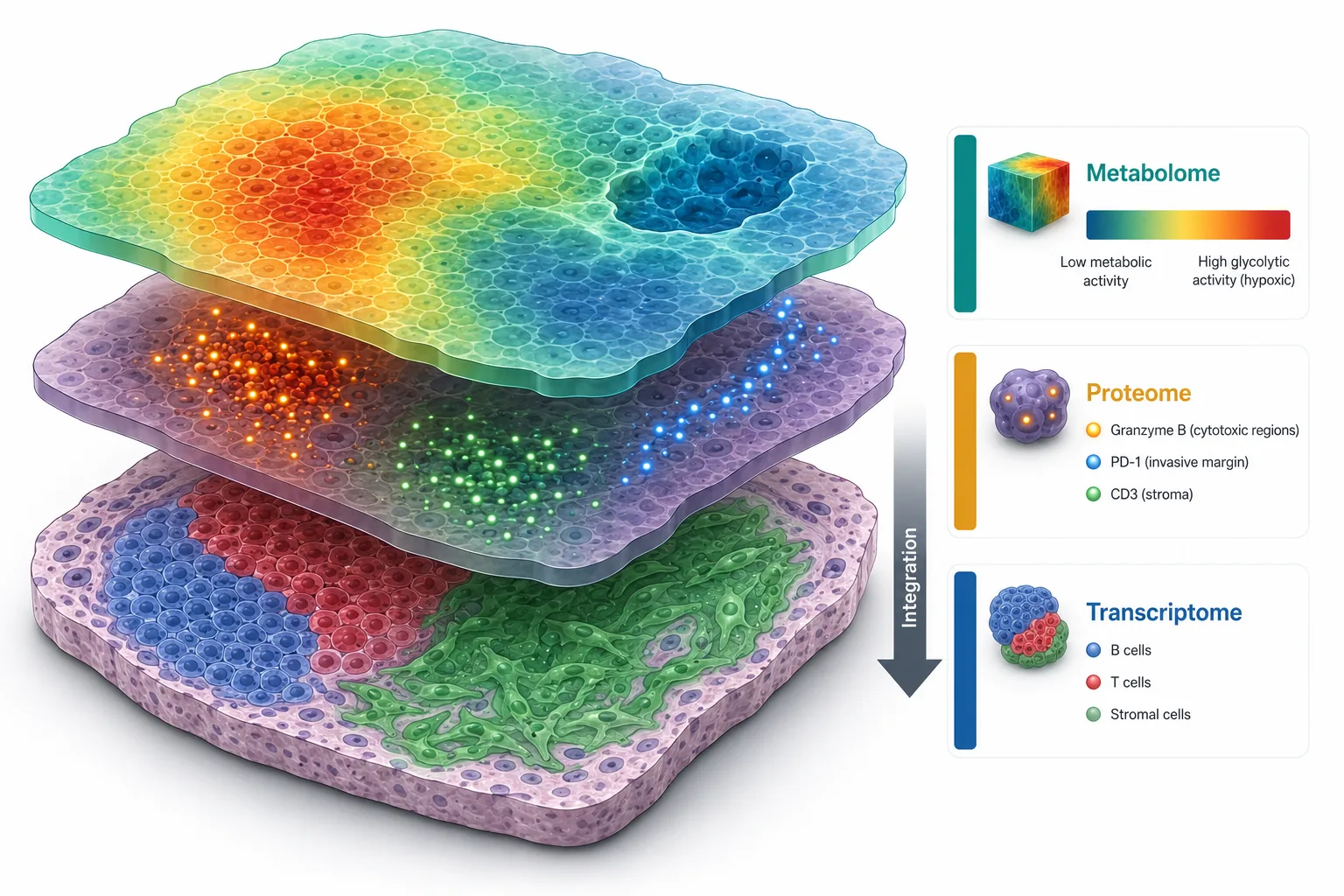
Figure 3: Tissue Multi-Layer Information — RNA, Protein, and Metabolite Co-Mapping
The technology landscape for spatial metabolomics has advanced rapidly. The most widely used platforms include MALDI-MSI (5-100 μm resolution, best balance of coverage and resolution), DESI-MSI (50-200 μm, ambient ionization, minimal sample preparation, no matrix interference), and SIMS (~50 nm, subcellular resolution, limited mass range, ideal for elemental imaging). LA-ICP-MS offers quantitative elemental mapping and is particularly useful for metal-based drugs and metallomics. Each technique presents a different trade-off between spatial resolution, molecular coverage, and sample preparation complexity. For example, MALDI-MSI requires matrix application, which can cause analyte delocalization at very high resolutions, while DESI operates under ambient conditions with no matrix but at lower spatial resolution. The choice between them depends on the specific analyte class of interest — lipids are best detected by MALDI in positive ion mode, while many metabolites ionize more efficiently in negative mode or require derivatization.
Bruker's timsTOF fleX MALDI-2 and Shimadzu's iMScope QT represent the latest generation of MSI instrumentation. The timsTOF fleX integrates MALDI with trapped ion mobility spectrometry (TIMS), adding a gas-phase separation dimension that resolves isobaric metabolites and reduces chemical noise. The iMScope QT combines an optical microscope with an ion trap mass spectrometer, enabling high-resolution morphological imaging co-registered with MS data. These hardware advances are expanding the range of biological questions addressable by MSI. MSI publication output has grown from approximately 80 articles per year in 2010 to over 378 per year — a greater than 350% increase — reflecting the accelerating adoption of spatial metabolomics across the life sciences.
The Technology Landscape at a Glance
| Modality | Platform Examples | Resolution | Coverage | Best For |
|---|---|---|---|---|
| Spatial Transcriptomics | Visium HD, Xenium, Stereo-seq, CosMx | Subcellular (0.5-2 μm) | 500-18,000 genes | Cell type classification, lineage tracing, cell-cell communication |
| Spatial Proteomics (Ab-based) | PhenoCycler, COMET, IMC, GeoMx DSP | Single-cell | 40-637+ proteins | Immune phenotyping, signaling, translational applications |
| Spatial Proteomics (MS-based) | Deep Visual Proteomics, LCM-MS | Cell-scale | Thousands of proteins | PTM mapping, discovery proteomics |
| Spatial Metabolomics / MSI | MALDI-MSI, DESI-MSI, SIMS, LA-ICP-MS | 5-200 μm | Hundreds of metabolites | Metabolism, drug distribution, lipid mapping |
Figure 4: Spatial Multi-Omics Technology Comparison Matrix
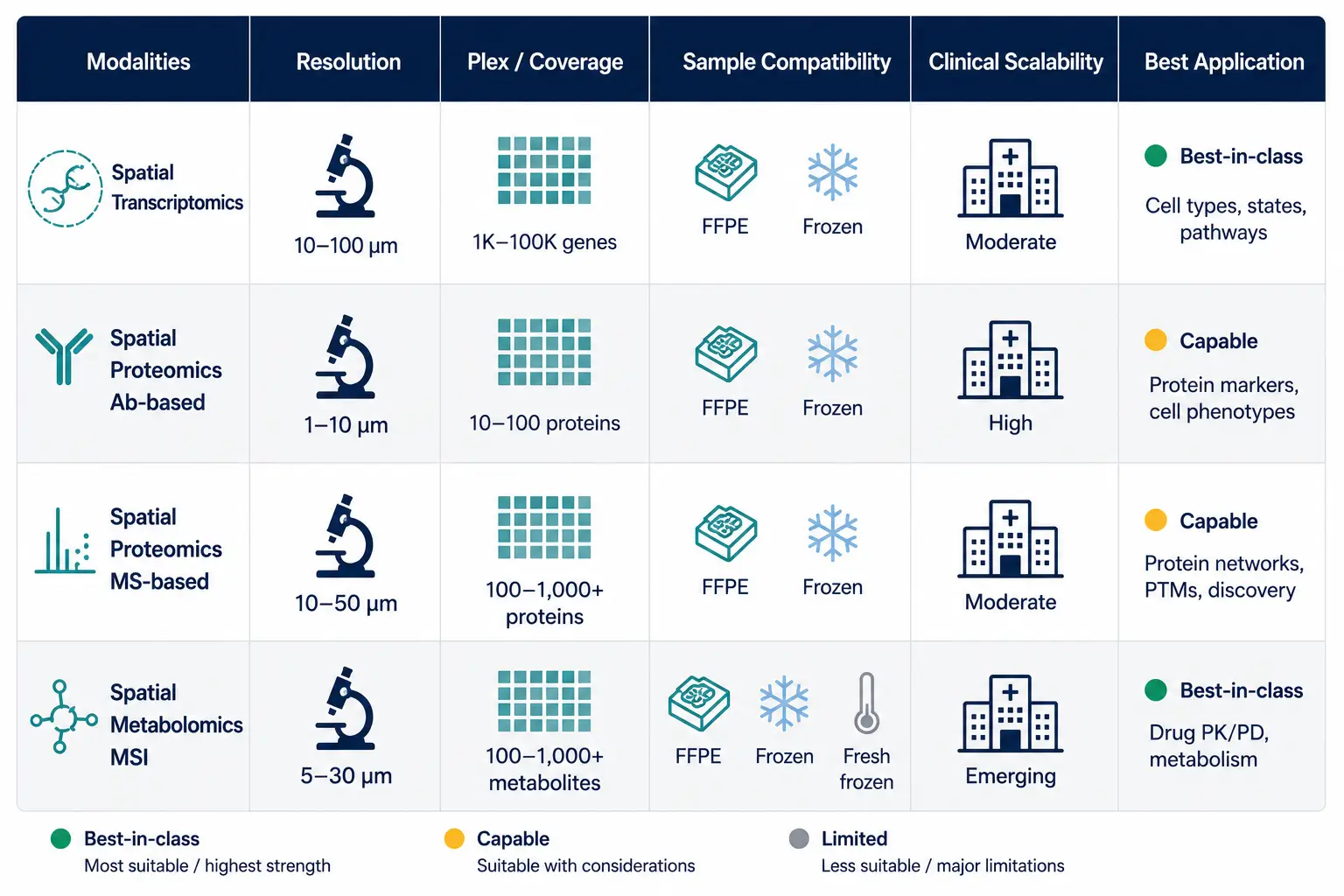
Choosing the right modality depends first and foremost on the biological question. Cell type classification and developmental trajectory mapping can be addressed with transcriptomics alone. Functional state assessment, pathway activation, and immune phenotyping require spatial proteomics. Metabolic activity, drug distribution, and small-molecule mapping demand MSI or spatial metabolomics. Many studies benefit from combining modalities on serial sections, and increasingly, same-section multi-modal platforms such as Xenium with protein detection, CosMx with protein panels, and GeoMx DSP with simultaneous RNA and protein readout are enabling truly integrated spatial multi-omics.
Sample preparation compatibility is a critical practical consideration that is often underestimated. Fresh-frozen tissue is the gold standard for MSI-based spatial metabolomics, as fixation and paraffin embedding extract and chemically modify most small molecules. For spatial proteomics, FFPE samples are broadly compatible with antibody-based platforms such as GeoMx DSP, COMET, and PhenoCycler, but the antigen retrieval step can introduce variability. Spatial transcriptomics works on both FFPE and fresh-frozen tissue, though RNA integrity in FFPE samples limits detection of low-abundance transcripts. When planning a multi-modal study, the sample preparation workflow must be designed from the outset to accommodate all intended assays — retrofitting is rarely successful.
2026: The Year Spatial Multiomics Goes Mainstream
The conference calendar for 2026 signals a clear inflection point. The International Spatial Biology Congress (May 2026) features dedicated spatial metabolomics sessions for the first time. The VIB Spatial Omics conference (June 2026) has adopted a dual-track structure — Unimodal and Multimodal — explicitly placing proteomics and metabolomics on equal footing with transcriptomics. At TICSSO-4 (March 2026), single-cell metabolomics earned its own dedicated forum for the first time. The Janelia Spatial Multi-Omics Conference (November 2026) brings together leaders in deep visual proteomics, spatial metabolomics, and MALDI-MSI, reflecting the convergence of these historically separate communities. For additional insights into transcriptomics mirna proteomics, explore our in-depth resource.
These trends point toward a broader recognition: the future of spatial biology is intrinsically multi-modal. No single technology provides a complete picture of tissue function, and the most impactful discoveries will come from integrating transcript, protein, and metabolite measurements on the same tissue within the same experimental framework.
The convergence is also visible in the commercial landscape. Platform vendors that historically specialized in a single modality are adding multi-modal capabilities — 10x Genomics added protein detection to Xenium, Bruker's CosMx now supports both RNA and protein panels, and Akoya's PhenoCycler can be integrated with transcriptomic data through computational alignment. This industry-wide shift confirms that the market is demanding integrated spatial multi-omics solutions, not standalone transcriptomics.
A Practical Decision Framework
Figure 5: Decision Framework — When to Add Spatial Multi-Omics
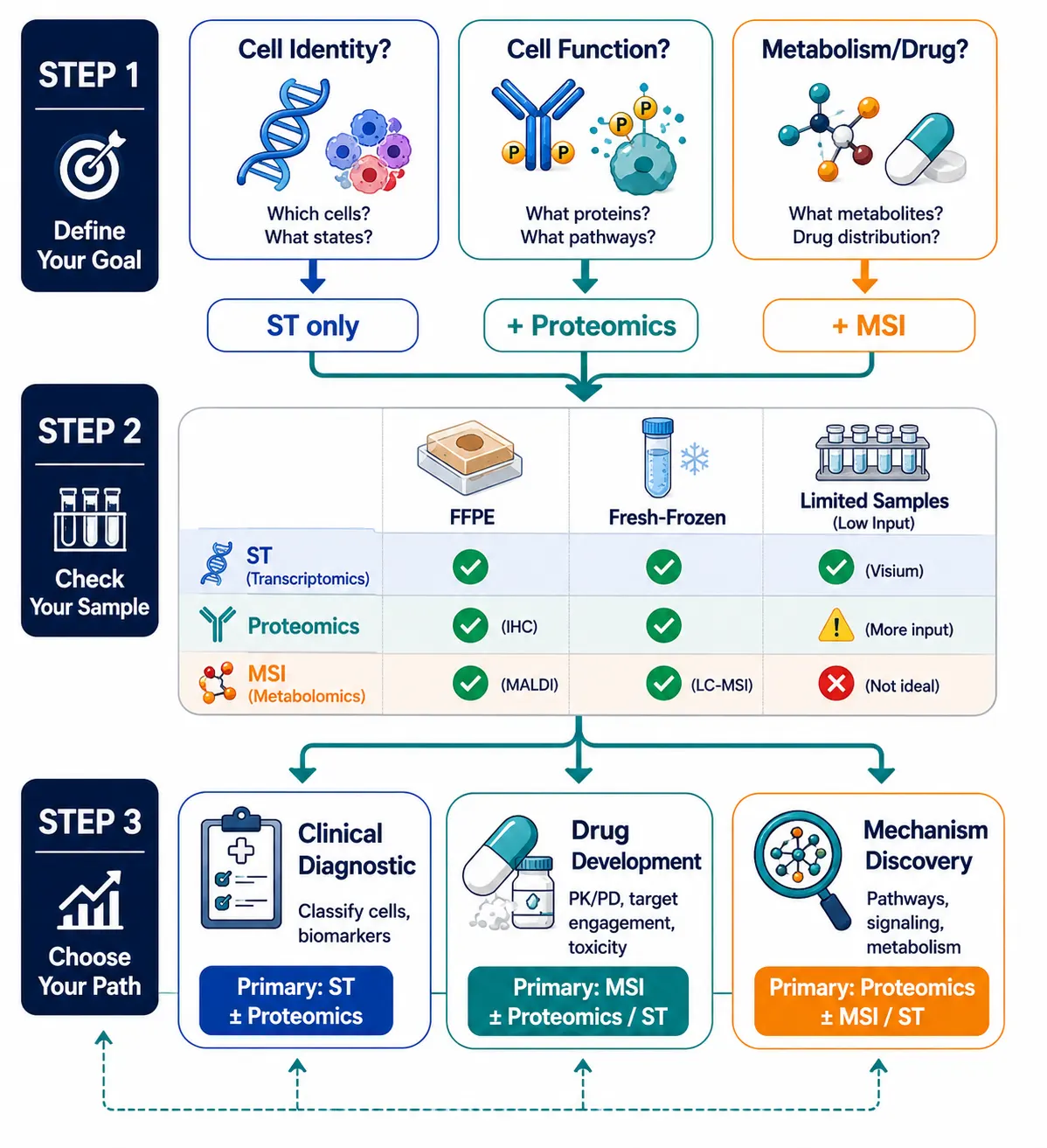
The following three-step framework is designed to help researchers systematically evaluate whether their study requires spatial multi-omics or can be addressed with spatial transcriptomics alone.
Step 1 — Define your core biological question:
If your question is about cell identity and location, spatial transcriptomics alone is sufficient. If your question involves cell functional state, add spatial proteomics. If your question involves metabolic activity, drug distribution, or small molecules, add MSI or spatial metabolomics.
Step 2 — Evaluate your sample constraints:
FFPE samples are compatible with GeoMx DSP, COMET, PhenoCycler, and Xenium but limit most MSI applications, which prefer fresh-frozen tissue. For limited samples, prioritize same-section multi-modal platforms such as Xenium with protein detection or GeoMx DSP — approaches supported by integrated spatial multi-omics profiling. For multi-cohort studies, consider cost and throughput: spatial proteomics is generally more scalable for large research cohorts than high-resolution spatial transcriptomics.
Step 3 — Consider your translational endpoint:
For biomarker discovery and translational research, lead with spatial proteomics — researchers and pathologists are well-versed in protein-level readouts and the validation infrastructure for protein targets is well established. For drug development programs, include MSI as it is the only modality that detects drug molecules directly. For mechanistic discovery, full multi-omics integration provides the most comprehensive picture.
A representative use case: a research team studying immunotherapy resistance in triple-negative breast cancer may begin with spatial transcriptomics to map immune cell populations across the tumor microenvironment. However, to determine whether the CD8+ T cells near the invasive margin are cytotoxic or exhausted, they need spatial proteomics (Granzyme B, PD-1, LAG-3). To assess whether metabolic reprogramming in hypoxic regions is driving immune suppression, they need MALDI-MSI for metabolite and lipid mapping. These three modalities can be applied to serial sections from the same tissue block or, increasingly, on the same section using multi-modal platforms that co-register RNA, protein, and metabolite data. The resulting integrated picture reveals not only which cell types are present, but what they are doing functionally and how their metabolic activity shapes the immune microenvironment — a level of mechanistic insight that no single modality can achieve on its own and that is critical for designing effective combination immunotherapies.
Conclusion
Spatial transcriptomics has opened a new window into tissue biology, but it is not a complete one. The mRNA-protein gap, the invisible world of post-translational modifications, and the vast space of metabolites and small molecules all demand additional analytical layers. By understanding when to add spatial proteomics, spatial metabolomics, or MSI to your experimental design, you can move beyond gene expression maps to a true functional understanding of tissue biology — and ensure that your spatial data answers the questions that matter most.
FAQ
How weak is the mRNA-protein correlation in tissue?
Cell-type dependent. The SPOTS study found Pearson r = 0.53 in B-cell regions but only r = 0.23 in macrophage-rich areas. For rare immune cells in tumors, correlation drops to r = 0.05.
When is spatial transcriptomics genuinely insufficient?
When your question involves functional state — pathway activation (needs phosphoproteomics), metabolic activity (needs MSI), drug distribution (needs MSI), or PTM status (needs proteomics).
Can I measure RNA and protein on the same tissue section?
Yes. Platforms such as Xenium + Protein, CosMx + Protein, GeoMx DSP, and SPOTS now support same-section multi-modal analysis, though sample preparation must be compatible with both assays.
Is spatial proteomics or spatial metabolomics more mature?
Spatial proteomics is more mature, with a broader installed base of platforms and more established commercial workflows. Spatial metabolomics is the fastest-growing segment, and MSI has experienced a >350% increase in annual publications since 2010.
Which modality is best for translational research?
Spatial proteomics currently has the most established path to translational applications, as researchers and pathologists are already trained on protein-level readouts and the experimental infrastructure is well developed. MSI is essential for drug development applications where no alternative modality exists.
References:
- Lee Y, Lee M, Shin Y, Kim K, Kim T. Spatial Omics in Clinical Research: A Comprehensive Review of Technologies and Guidelines for Applications. International Journal of Molecular Sciences. 2025;26(9):3949. DOI: 10.3390/ijms26093949
- Louie KB, Bowen BP, McAlhany SJ, Huang Y, Price JC, Mao JH, Hellerstein MK, Northen TR. Mass spectrometry imaging for in situ kinetic histochemistry. Scientific Reports. 2013;3:1656. DOI: 10.1038/srep01656
- Myers RJ, Tretter ZM, Daffron AG, et al. Spatially Resolved Plant Metabolomics. Metabolites. 2025;15(8):539. DOI: 10.3390/metabo15080539
- Jiang Y, et al. Spatial metabolomics in mental disorders and traditional Chinese medicine. Frontiers in Pharmacology. 2025;16:1449639. DOI: 10.3389/fphar.2025.1449639
- Lovicu FJ, et al. Spatial omics in 3D culture model systems: decoding cellular positioning mechanisms and microenvironmental dynamics. Journal of Translational Medicine. 2025;23:456. DOI: 10.1186/s12967-025-07390-6
- Zhang Y, et al. Application of Spatial Omics in the Cardiovascular System. Research. 2025;8:0628. DOI: 10.34133/research.0628