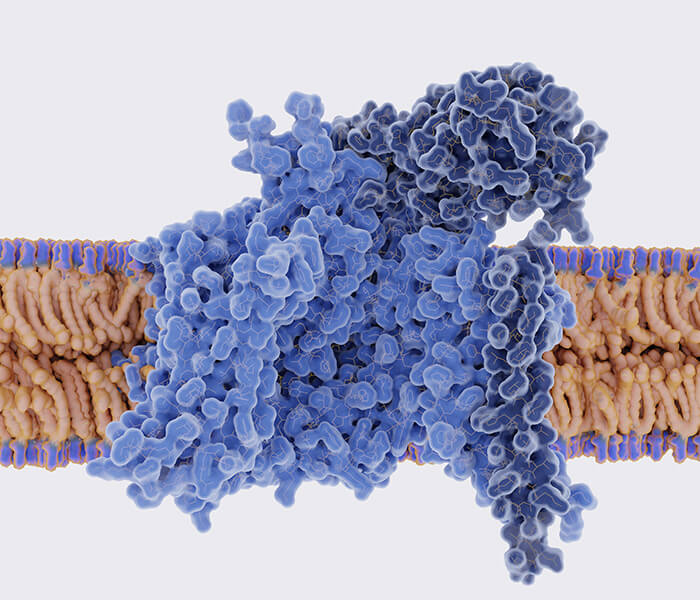
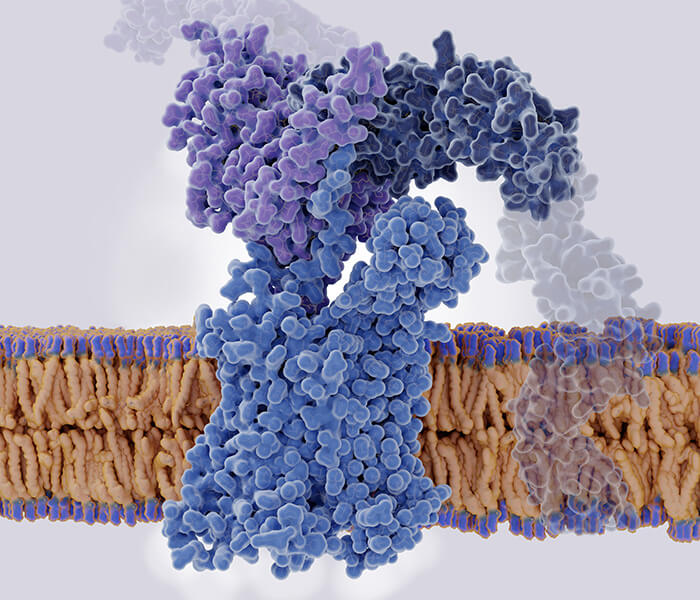
Plasmalogen analysis is increasingly useful in Research Use Only (RUO) projects because these ether phospholipids sit at the intersection of membrane composition, oxidation-sensitive chemistry, and lipid remodeling. Their vinyl ether bond gives them distinctive biophysical and analytical behavior, which is exactly why they can be informative in some research settings and easy to over-interpret in others. Reviews consistently describe plasmalogens as important contributors to membrane organization, redox-related processes, and lipid signaling, while analytical papers also emphasize that they are unusually challenging to quantify and annotate cleanly.
This page is written for RUO users who are not yet choosing instrument settings, but do need a defensible answer to three practical questions: which research questions are a good fit for plasmalogen measurement, what depth of readout is actually needed, and what kind of evidence the dataset can support without over-claiming. In most cases, the right answer is not "measure everything at the deepest possible level.” It is to match the biological question to the correct measurement level, define the main control points early, and choose an analysis route that can support the claims you want to make.
How to Use This Page: Match Your Research Question to a Measurement Level
A practical starting point is to separate plasmalogen readouts into three levels. Total level refers to overall plasmalogen abundance or a broad plasmalogen-related signal within a matrix. Class level refers to shifts within broader categories such as plasmenyl-PE or plasmenyl-PC. Species level refers to individual molecular species, where chain composition, unsaturation, and bond type matter. That distinction matters because current analytical strategies do not resolve the same research question equally well. Reviews of plasmalogen analytics repeatedly note that total quantification, class-wise profiling, and species-level mapping are not interchangeable tasks, and that plasmanyl/plasmenyl distinction plus isomer complexity become especially important as one moves toward species-level interpretation.
 Figure 1. Decision tree / matrix for matching research direction to plasmalogen measurement depth.
This figure should function as a decision-support matrix rather than a mechanism diagram. It should map research direction to recommended readout depth, main control point, interpretation ceiling, and next action.
Three steps to frame the project
Step 1: Define the research direction.
Ask whether the core question is mainly about a broad redox-associated shift, membrane composition and remodeling, or composition changes under defined dietary, formulation, or experimental conditions.
Step 2: State one key hypothesis.
Write the hypothesis in measurement language rather than mechanism language. For example:
- "This study condition is associated with a lower class-level plasmenyl-PE signal.”
- "This experimental condition changes the relative composition of selected plasmalogen species.”
- "This model shows a redistribution pattern rather than a global depletion.”
That phrasing is more useful than jumping directly to a functional explanation.
Step 3: Choose the lowest readout level that can answer the question.
For many exploratory RUO projects, total level is enough for a first-pass directional screen, class level is often the best middle ground for comparative studies, and species level is worth the extra complexity only when remodeling, selectivity, annotation confidence, or route selection genuinely depends on molecular detail.
A common mistake is to request a high-resolution workflow before defining the hypothesis and evidence level. Deep datasets are valuable, but only when the project also has the annotation controls, sample handling discipline, and interpretive boundaries to support them. Otherwise, the result is often a large feature table with weak biological traction. This is exactly why it helps to review plasmalogen fundamentals and composition levels before moving deeper into application-specific decisions.
Summary table: research question to recommended readout
| Research direction | Typical question | Recommended readout | Main control point | Most defensible output |
|---|---|---|---|---|
| Oxidative stress-related study | Is the condition associated with a reproducible plasmalogen shift? | Class first; species if selectivity matters | Sample handling, batch structure, normalization | Comparative depletion/enrichment pattern |
| Membrane biology study | Does membrane composition or remodeling differ across states? | Class or species | Comparative design, annotation confidence | Composition or remodeling pattern |
| Nutrition-framed RUO study | Does a defined condition shift plasmalogen composition? | Total or class first; species if source selectivity matters | Matrix definition, time points, wording discipline | Comparative compositional shift |
| Pilot or feasibility study | Is the signal stable enough to justify deeper profiling? | Total or class | Input amount, reproducibility, QC | Go / no-go decision |
| Workflow-selection stage | Is broader coverage or stronger confirmation more important? | Depends on hypothesis | Structural confidence versus coverage | Route recommendation for follow-up |
When a project starts to hinge on species specificity, annotation confidence, or clean P-/O- separation, route selection becomes more important than coverage alone. In those cases, targeted lipidomics or broader lipidomics service planning can be more defensible than a broad workflow with limited structural confirmation.
Oxidative Stress-Related Studies (RUO): What to Look For and How to Avoid Over-interpretation
Plasmalogens are often discussed in oxidative stress contexts because the vinyl ether linkage is chemically distinctive and oxidation-sensitive. Broadly, that makes them informative for RUO studies that want to examine whether a condition is associated with altered redox-linked lipid composition. At the same time, the same chemistry that makes them interesting also makes them vulnerable during handling and interpretation. Reviews and experimental studies note that plasmalogens participate in oxidation-related chemistry and can generate distinct oxidized products, but that does not mean every observed decrease in plasmalogen abundance should be read as direct evidence about the original biological process.
What readout level is usually appropriate?
For most oxidative stress-framed RUO studies, the most defensible starting point is class-level comparison, with optional movement to species-level if there is a strong reason to ask whether certain molecular species change preferentially. Total signal can be useful in an early pilot, but it is often too coarse to support interpretation beyond "something shifted.” Species-level analysis becomes valuable if the project is specifically about selective depletion, remodeling, or lipid-network context.
What should you actually look for?
Look for reproducible directional shifts across biological replicates, consistency across batches, changes that remain after normalization review, and a pattern that matches the study design rather than a single isolated feature. In other words, oxidative stress-related plasmalogen work is strongest when it is treated as comparative composition analysis, not as a shortcut to mechanistic proof.
Six conditions that should be written clearly
First, define the matrix and sample type. A tissue homogenate, cultured cells, vesicle preparation, or purified fraction will not behave the same way in extraction, recovery, or normalization.
Second, state the handling window. Because plasmalogens are chemically labile, collection-to-extraction timing matters.
Third, document the extraction and stabilization approach. A workflow that preserves vinyl ether integrity is not optional when the project centers on oxidation-sensitive ether lipids. The Creative Proteomics plasmalogen workflow description explicitly highlights redox-stabilized extraction for that reason.
Fourth, specify batch structure. If groups are processed separately, apparent biology can collapse into batch drift.
Fifth, define the normalization logic. State whether the analysis is absolute, semi-quantitative, class-normalized, sample-mass normalized, or relative-abundance based.
Sixth, set the interpretation boundary. The strongest wording is usually that the data show an association between study condition and plasmalogen composition, not proof that plasmalogen change caused the broader phenotype.
Common over-interpretation traps
The first trap is treating a lower signal as proof of oxidation in the original system. The second is assuming that any decrease is biologically specific, when handling loss can also depress the signal. The third is reporting species-level selectivity without adequate structural evidence. Analytical reviews emphasize that plasmalogen characterization is complicated by plasmanyl/plasmenyl isomerism, limited standards, and the need for stronger confirmation as one moves from broad profiling to molecular annotation.
A practical RUO workflow here often benefits from restrained front-end design plus downstream bioinformatic data preprocess and normalization or statistical analysis, especially when the goal is to separate directional biology from technical noise rather than maximize feature count.
Troubleshooting logic
If a large plasmalogen decrease appears only in one batch, handling drift is more likely than a meaningful biology signal. If class-level trends are inconsistent across replicates, matrix heterogeneity or normalization mismatch is often the first thing to check. If species-level findings look exciting but cannot be defended, the likely weak point is annotation confidence rather than biology. Projects that start broad and then narrow often work better than projects that start maximally deep; for that reason, an exploratory untargeted lipidomics phase followed by a narrower confirmation route is often easier to justify than an all-at-once design. (Frontiers)
Membrane Biology Studies: Composition, Remodeling, and Comparative Designs
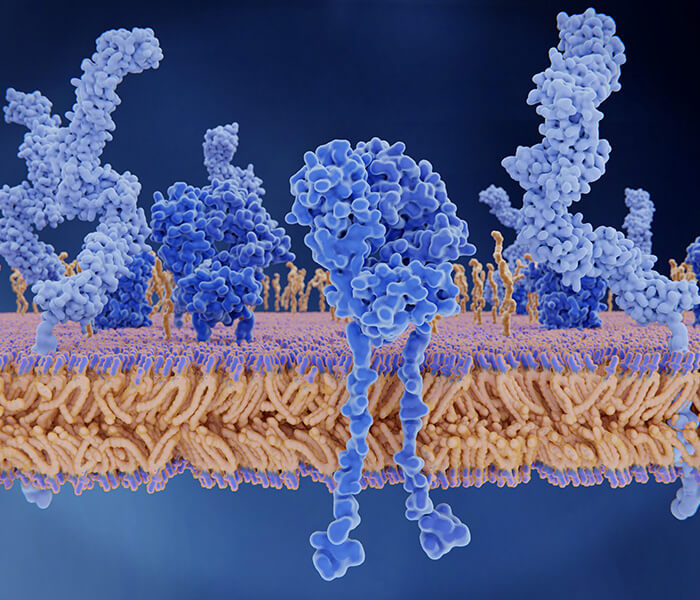
Membrane biology is one of the most natural RUO homes for plasmalogen analysis because plasmalogens are not just another lipid bucket. Reviews describe them as contributors to membrane physical properties, including fluidity, thickness, curvature-related behavior, and broader membrane morphology questions. At the same time, the membrane literature is careful: many insights are compelling, but not every structural observation translates into a generalized rule across systems.
Which study designs fit well here?
Three designs are especially well suited. The first is group comparison, where the question is whether two defined states differ in membrane-linked plasmalogen composition. The second is before/after perturbation, useful when the project asks whether membrane composition shifts after a defined perturbation. The third is time-series design, which is particularly valuable for remodeling questions because it can separate early adaptive shifts from later broad compositional drift. These designs work because membrane questions are usually comparative rather than absolute. You are rarely trying to interpret one number in isolation; you are asking whether composition or remodeling differs across defined states.
Class or species?
For membrane biology, class-level data are often enough when the hypothesis is about broad composition or membrane-type balance. Species-level readouts become much more useful when the project is about remodeling, curvature-related hypotheses, or selective enrichment patterns. That is where chain composition, unsaturation, and bond-type discrimination can matter materially for the story.
Design type to readout logic
A simple two-group membrane comparison often works well at class level, because the main risk is not missing subtle species information but over-interpreting broad compositional shifts. A remodeling or adaptation question more often justifies species-level work, but the main risk becomes insufficient annotation support for individual species. A time-course membrane response can start at class level and move to species level only if a patterned change emerges. Subcellular or enriched membrane fraction work often benefits from class plus selected species, but the core risk is fraction purity and carryover rather than readout depth alone. This is also where surrounding context from phospholipids analysis can help place plasmalogen shifts within broader membrane composition.
The biggest membrane-biology pitfalls
The first pitfall is assuming that any species-level call from a broad dataset is automatically secure. It is not. Plasmalogen and plasmanyl species can be difficult isomers, and analytical reviews stress that separation behavior, retention time logic, and orthogonal confirmation matter. The second pitfall is ignoring co-elution or weak annotation evidence. The third is forgetting that a membrane question often needs a stronger comparative frame than a general discovery study. In practice, a membrane story usually improves when the plasmalogen readout is interpreted alongside membrane-context measurements or systems-level comparisons, sometimes including integrated proteomics and lipidomics analysis.
What counts as a strong RUO membrane-biology output?
A strong output usually includes clear group structure, a well-described membrane-relevant hypothesis, class and/or species readouts matched to that hypothesis, annotation language that reflects confidence level, and interpretation limited to composition, remodeling, or association. In this context, the strongest defensible output is usually a comparative composition or remodeling pattern, not a generalized functional conclusion.
If the next decision is no longer "is this interesting?” but "which analytical route is proportionate to this application?”, the most useful next read is choose targeted vs untargeted based on your application.
Nutrition Research (RUO): Study Framing Without Health Claims
Nutrition-framed plasmalogen work is increasingly visible in the literature, including recent reviews on chemical diversity and dietary sources. For RUO resource writing, though, this area needs unusually careful wording. The safest and most useful frame is composition research under defined dietary, formulation, or experimental conditions, not outcome language. The right RUO question is straightforward: does a defined condition shift plasmalogen composition, class balance, or molecular distribution in a measurable way?
What measurement level is usually useful?
For many nutrition-framed studies, total or class-level readouts are enough at the start. If the goal is to compare matrices, formulations, processing conditions, or time points, broad composition may answer the question. Species-level work becomes more attractive when the study is explicitly about source-dependent selectivity, compositional signatures, or remodeling patterns after a defined experimental condition.
What are the main control points?
The first control point is matrix definition. Be precise about whether the project concerns raw material, extract, cultured system, animal-model tissue, or another RUO matrix. The second is time-point logic. One time point may show direction; multiple time points show pattern. The third is batch rhythm, especially when sample generation is staggered. The fourth is readout framing. Decide whether the evidence target is a broad shift, class redistribution, or molecular selectivity. The fifth is wording discipline. Stay with composition, association, enrichment, depletion, or remodeling. Avoid wording that implies a use claim.
 Figure 2. Three-column comparison chart for oxidative stress, membrane biology, and nutrition-framed studies.
This figure should compare the three application types side by side, with minimal text and a clear visual contrast in recommended readout depth, key control points, and claim boundaries.
Common mistakes in nutrition-framed plasmalogen work
The biggest mistake is turning a compositional observation into an effect statement. The second is forgetting that different matrices can make broad comparisons misleading if extraction performance or normalization logic are not aligned. The third is using species-level language when the annotation evidence supports only a broader class-level conclusion. Analytical reviews point to the same lesson: the interpretation should scale with the strength of the analytical evidence.
For readers who want to anchor the application discussion back to core concepts, plasmalogen fundamentals and composition levels remains the best conceptual companion article. Where the project expands into broader pathway context, lipidomics pathway analysis or fatty acids metabolomics service can add systems-level structure without forcing the article into a stronger claim frame.
What to Prepare for a Project Discussion
A productive plasmalogen project discussion does not start with "we want the deepest possible profiling.” It starts with an input package that makes the analytical route proportionate to the question. The minimum useful package usually includes research direction, one core hypothesis, intended readout level, sample matrix and sample count, batch rhythm, and the kind of evidence the output is expected to support.
 Figure 3. Checklist infographic for project preparation.
This figure should work as a clean checklist infographic rather than a process diagram. It should show hypothesis, sample information, batch plan, readout level, pilot decision, and expected evidence type.
The input package
Start with the research direction: oxidative stress-related, membrane biology-focused, nutrition-framed, or mixed. Then define the hypothesis in measurement language. Specify the readout level needed: total, class, or species. Document sample information, including matrix, expected biomass or volume, storage state, and collection rhythm. Add the batch plan, including likely preparation and acquisition batches. Finally, define the timing structure: single endpoint, before/after comparison, or time series.
When a pilot is the better first step
A pilot is usually justified when the matrix is unfamiliar, the expected effect size is unknown, species-level resolution is desired but annotation confidence is uncertain, or sample availability is tight. This kind of staged start is often more efficient than committing immediately to a maximal workflow. Depending on scope, a project may combine sample preparation with either unknown metabolites identification for exploratory follow-up or bioinformatics for metabolomics for downstream interpretation.
What should the deliverables support?
At minimum, the deliverable logic should match the question: comparative abundance tables, class-level summaries, selected species-level annotations where confidence is sufficient, QC summaries, and interpretation notes that distinguish observation from inference. If the project asks for broader context around membrane remodeling or pathway placement, supporting analyses can help, but the primary deliverable should still be a claim-bounded compositional readout rather than a generalized conclusion.
When to Use Plasmalogen Analysis, and When Not to
Plasmalogen analysis is a good fit when the project asks a membrane composition or remodeling question, the study is explicitly comparative, sample handling can be controlled, and the expected evidence level is defined before analysis begins. It is a poor centerpiece when the hypothesis is vague, the matrix and handling are poorly controlled, the project expects composition data alone to establish a broader mechanism, or the team wants species-level claims without a confirmation strategy. That is why the best use of plasmalogen analysis is usually not "as many features as possible,” but "a readout depth proportionate to the hypothesis.” (Frontiers)
QC and Troubleshooting Checklist
| QC stage | What to verify | Why it matters | If weak, downgrade claim to… |
|---|---|---|---|
| Pre-analytical QC | Sample timing, storage, freeze-thaw history, extraction consistency | Plasmalogens are chemically sensitive, so handling variation can look like biology | "Observed signal shift requiring confirmation” |
| Matrix and input QC | Matrix definition, biomass/volume consistency, group comparability | Different matrices and unequal input complicate normalization and comparability | "Preliminary matrix-associated difference” |
| Batch QC | Preparation order, acquisition order, batch balance across groups | Batch drift can mimic group separation | "Batch-associated trend” |
| Readout QC | Whether the workflow supports total, class, or species-level interpretation | Overstating readout depth creates unsupported claims | "Class-level or total-level pattern only” |
| Structural confidence QC | P-/O- distinction, chromatographic behavior, fragmentation support | Species-level calls depend on stronger analytical evidence | "Putative species pattern” or "broader class redistribution” |
| Interpretation QC | Wording stays aligned to comparative compositional evidence | Composition data rarely justify stronger statements on their own | "Association under defined experimental conditions” |
This downgrade-claim logic is often what separates a usable B2B RUO deliverable from an over-written resource page. When the data are strong, the language can become more specific. When the data are weaker, the claim should become narrower, not louder.
FAQ
1. Are plasmalogens a good target for every lipidomics project?
No. They are most useful when the research question genuinely depends on ether phospholipid composition, redox-associated shifts, or membrane remodeling. If the hypothesis does not specifically need that layer of biology, a broader lipidomics design may be more efficient.
2. Is species-level analysis always better than class-level analysis?
No. Species-level analysis is more informative only when the hypothesis depends on molecular selectivity and the analytical route can support that level of confidence. Otherwise, class-level data are often more robust and easier to defend.
3. Why is plasmalogen analysis more fragile than routine phospholipid profiling?
Because the vinyl ether linkage makes plasmalogens chemically distinctive and more sensitive to oxidation-related handling issues and structural ambiguity, especially when distinguishing plasmenyl from plasmanyl species.
4. Can I infer causality from a plasmalogen decrease in an oxidative stress study?
Not from composition data alone. In RUO work, the safer conclusion is that the tested condition is associated with a change in plasmalogen composition or abundance.
5. What is the best starting point for a new plasmalogen project?
Start with a clearly written comparative question, a defined matrix, a handling plan, and a choice of total, class, or species-level output. That usually matters more than beginning with the deepest workflow.
6. When should a pilot be considered?
When the matrix is new, effect size is unclear, sample amount is limited, or species-level interpretation is desired but not yet justified.
7. How should nutrition-related plasmalogen results be written in RUO language?
Use composition-focused language such as association, redistribution, enrichment, depletion, or remodeling under defined conditions. Avoid stronger effect wording.
8. What is the main analytical caution in membrane-biology applications?
Do not overstate species-level specificity if chromatographic separation, fragmentation evidence, or P-/O- discrimination are incomplete.
References
- Vítová M, Palyzová A, Řezanka T. Plasmalogens - Ubiquitous molecules occurring widely, from anaerobic bacteria to humans. Progress in Lipid Research. 2021;83:101111. DOI: https://doi.org/10.1016/j.plipres.2021.101111 (ScienceDirect)
- Koch J, Watschinger K, Werner ER, Keller MA. Tricky Isomers—The Evolution of Analytical Strategies to Characterize Plasmalogens and Plasmanyl Ether Lipids. Frontiers in Cell and Developmental Biology. 2022;10:864716. DOI: https://doi.org/10.3389/fcell.2022.864716 (Frontiers)
- Almsherqi ZA. Potential Role of Plasmalogens in the Modulation of Biomembrane Morphology. Frontiers in Cell and Developmental Biology. 2021;9:673917. DOI: https://doi.org/10.3389/fcell.2021.673917 (Frontiers)
- Hui SP, Chiba H, Kurosawa T. Liquid chromatography–mass spectrometric determination of plasmalogens in human plasma. Analytical and Bioanalytical Chemistry. 2011;400:1923-1931. DOI: https://doi.org/10.1007/s00216-011-4921-7
- Koch J, Lackner K, Wohlfarter Y, et al. Unequivocal Mapping of Molecular Ether Lipid Species by LC-MS/MS in Plasmalogen-Deficient Mice. Analytical Chemistry. 2020;92(16):11268-11276. DOI: https://doi.org/10.1021/acs.analchem.0c01933
- Zhang W, Jian R, Zhao J, Liu Y, Xia Y. Deep-lipidotyping by mass spectrometry: recent technical advances and applications. Journal of Lipid Research. 2022;63(7):100219. DOI: https://doi.org/10.1016/j.jlr.2022.100219 (ScienceDirect)
- Chen Z, Dong C, Lin C, Song M, Zhou X, Lv D, Li Q. The Changes in Plasmalogens: Chemical Diversity and Nutritional Implications—A Narrative Review. Nutrients. 2025;17(22):3497. DOI: https://doi.org/10.3390/nu17223497