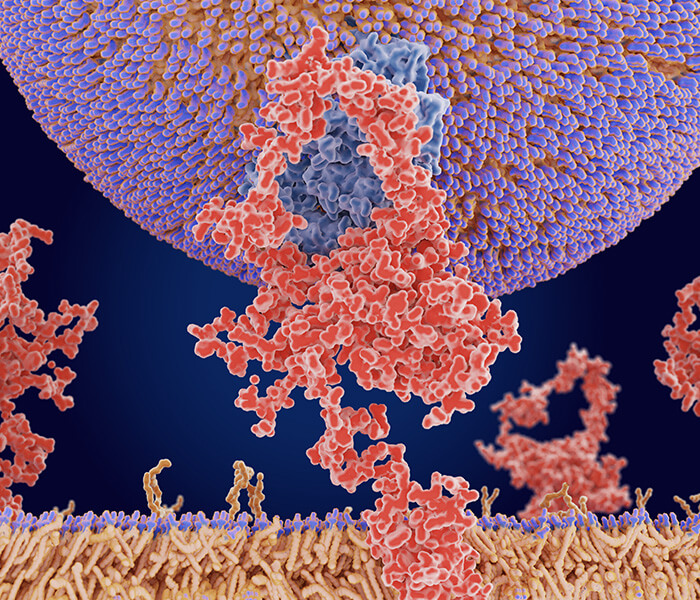
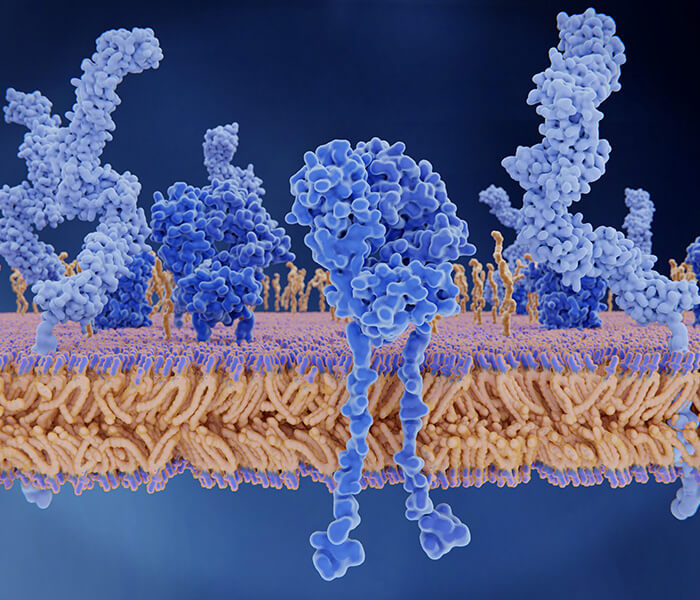
Glycan-focused microarray platforms are often grouped together under the broad label of "glycan arrays," but that shorthand hides an important distinction. A glycan microarray displays defined glycans on the slide and is typically used to test how a protein, lectin, antibody, enzyme, microbe, or virus-like binder interacts with those structures. A lectin microarray does the reverse: it displays lectins on the slide and uses the sample itself as the query, making it more suitable for pattern-level glycan profiling in complex materials. These are not just two versions of the same assay; they generate different evidence types and support different research questions.
Structural Foundations: What's on the Slide?
The simplest way to distinguish these platforms is to ask what is immobilized.
In a glycan microarray, the slide contains printed glycans or glycan-containing probes. The moving query is usually a glycan-binding entity such as a lectin, receptor, antibody, enzyme, pathogen-derived adhesin, or another glycan-binding protein. Because the printed glycans are defined, the experiment is naturally suited to mapping binding preference against a known structural panel. Public resources from the National Center for Functional Glycomics explicitly organize glycan microarray content, availability, references, and QC resources around this defined-panel logic.
In a lectin microarray, the slide contains lectins with known but often overlapping glycan-binding preferences. The sample, often after labeling, is introduced over that lectin surface. The output is usually not a one-to-one structural assignment of every glycan present, but a comparative profile of glycan features reflected by the lectin binding pattern. That is why lectin microarrays are commonly used for rapid glycopattern comparison across complex samples rather than exact structure calling from signal alone.
This difference in slide design also changes what counts as a good input. Glycan microarray generally works best when the query is relatively well defined and the project is asking a binder-centered question. Lectin microarray is more aligned with complex sample inputs, where the project is asking a sample-centered question and wants a broad glycan-feature overview. In practice, many teams do not struggle with the assay mechanics as much as they struggle with recognizing that these platforms occupy different positions in experimental logic.
For readers evaluating outsourcing options, service discussions should start here: whether the provider supports the right type of glycan microarray assay, lectin microarray assay, or broader glycan-related microarray assay workflow for the question at hand.
 Figure 1. Structural logic of glycan microarray versus lectin microarray.
Comparison of slide composition, query direction, and evidence type: glycan microarray presents defined glycans to test binder recognition, while lectin microarray presents lectins to read comparative glycan-feature patterns from complex samples.
Comparative Analysis: Throughput, Specificity, and Experimental Readout
Both platforms are high-throughput, but they are high-throughput in different ways.
A glycan microarray can screen one or more binders against a large panel of defined glycan structures in parallel. Its strength is not just speed, but controlled comparison across a known glycan universe. If a team wants to understand whether a receptor favors sialylated, fucosylated, sulfated, or otherwise modified motifs, glycan microarray provides a compact way to compare many candidates at once. Reviews of glycan microarrays consistently describe the platform as a key tool for evaluating glycan–protein interactions and binding patterns across defined structures.
A lectin microarray is also high-throughput, but here the efficiency comes from profiling many samples or conditions against a panel of lectins. The value lies in quick comparison across complex glycan-feature patterns, not in assigning an exact glycan sequence from each signal. This makes lectin microarray particularly useful when the project needs to compare sample groups, sample preparations, or experimental conditions without immediately moving into full structural glycomics.
Coverage means something different in each platform. In glycan microarray, coverage depends on the printed glycan panel. That gives the assay conceptual clarity, but it also creates a hard boundary: the assay cannot comment on glycans that are absent from the array. In lectin microarray, coverage depends on the composition of the lectin panel and the breadth or overlap of lectin specificities. A broad lectin panel can yield a useful glycopattern fingerprint, but the biological meaning of that fingerprint depends on how selective and interpretable the lectin set actually is.
Specificity also differs in practical terms. If the project needs motif-level specificity, glycan microarray is usually the stronger starting point. Data-analysis methods and databases such as GlyMDB were developed specifically because glycan array datasets are most valuable when signal is interpreted alongside structural context and motif discovery.
If the project needs comparative glycan-feature profiling, lectin microarray is often the more natural choice. Its output is more pattern-oriented than structure-resolved, but that is exactly what many sample-centered studies need at an early stage. In other words, glycan microarray is usually better for asking "which defined structures are recognized," while lectin microarray is usually better for asking "how do glycan features vary across samples."
Practical speed depends on project fit. Lectin microarray can be operationally convenient for complex-sample profiling because it supports comparative pattern analysis without first narrowing the question to one binder. Glycan microarray can be faster to decision when the recognition question is already well defined, because it directly tests that question against a structured glycan panel. The faster platform is therefore the one that reduces rework at the current stage.
For projects that may move beyond first-pass screening, comparative work can connect naturally to structural characterization of glycans, glycan sequencing, or glycan quantification when the study needs more than platform-level pattern recognition.
| Dimension | Glycan Microarray | Lectin Microarray |
|---|---|---|
| What is immobilized | Defined glycans | Lectins |
| Best research logic | Binder-centered | Sample-centered |
| Typical query/input | Glycan-binding entity | Complex labeled sample |
| Main output | Recognition against defined structures | Comparative glycan-feature pattern |
| Strength | Motif and specificity mapping | Rapid profiling across samples |
| Main limitation | Limited to printed panel content | Limited structural precision |
| Typical next step | Motif validation or focused follow-up | Structural glycomics or orthogonal profiling |
 Figure 2. Practical comparison of glycan microarray and lectin microarray.
At-a-glance summary of immobilized content, output type, specificity level, and likely next-step fit for each platform.
What Each Platform Is Best At
A useful way to frame these technologies is not "which is better," but "which type of information does each generate most efficiently."
Glycan microarray is strongest when the project is centered on a binder. That includes questions such as: Which glycan motifs does a receptor prefer? Does an antibody distinguish between related glycan substructures? Which printed glycans are recognized by a microbial adhesin or viral attachment factor? How broad or narrow is the recognition pattern of a glycan-binding protein? This is why glycan microarrays are prominent in studies of glycan-binding proteins, host–pathogen interactions, ligand discovery, and fine-specificity mapping.
Lectin microarray is strongest when the project is centered on a sample. That includes questions such as: Do two sample groups show different glycan-feature patterns? Does a preparation shift the glycoprofile? Which samples should be prioritized for deeper glycomics follow-up? Lectin microarrays are most useful when the team needs directional, comparative information from complex material rather than exact structure assignment from the first screen.
For study designs that touch multiple analyte classes, platform selection can also tie into adjacent workflows such as glycosylation analysis of protein, glycopeptides analysis, or glycomics service, depending on whether the project needs protein context, site-aware interpretation, or broader glycan-level characterization.
Common Misinterpretations to Avoid
One of the most common mistakes in this area is to describe the two platforms as if they generate the same kind of evidence with different capture molecules. They do not.
A glycan microarray does not directly describe the glycome of a complex sample. It shows how a defined query behaves across a defined glycan panel. That makes it extremely useful for recognition mapping, but it also means its conclusions are bounded by array content. A missing signal may reflect lack of binding, or it may simply reflect that the relevant glycan was not present on the slide. Public NCFG resources make this boundary unusually visible by documenting content and QC around defined glycan arrays.
A lectin microarray does not usually provide exact glycan sequence identification from signal alone. It is better understood as a glycan-feature profiling tool. Because lectins can recognize overlapping motif families and because the sample itself may be highly complex, the output should usually be read as comparative feature-level evidence rather than exact structural assignment.
Another common mistake is to over-read signal intensity. Stronger signal does not automatically mean stronger structural specificity or broader scientific importance. Surface presentation, multivalency, labeling strategy, binding context, and panel composition can all shape the readout. This is one reason resources for glycan array analysis focus not only on storage and visualization, but also on interpretation alongside structural context.
How These Platforms Fit Into a Broader Glycomics Workflow
These two technologies are often presented as alternatives, but in real projects they can also be sequential.
A lectin microarray may be the better first step when the team has a set of complex samples and wants to know whether glycan-feature differences are present at all. It can function as a screening layer that identifies which samples, conditions, or sample groups deserve more detailed follow-up.
A glycan microarray may come first when the team already has a binder-focused hypothesis. If the objective is to map how a receptor, antibody, lectin, or other glycan-binding molecule behaves across a range of defined glycans, then glycan microarray offers a more direct route to prioritizing likely motifs and narrowing downstream validation. NCFG assay protocols reflect this binder-specific workflow by centering many array protocols on glycan-binding proteins and defined slide formats.
In some workflows, these roles connect naturally. A lectin microarray may reveal that two sample groups differ in glycan-feature patterning, and that result may then motivate deeper structural characterization or focused binder studies. In other projects, a glycan microarray may identify a compelling recognition signature that later needs richer interpretation, database linkage, or supporting glycoproteomic context. That is part of the broader analysis ecosystem reflected in GlyMDB and related glycan-array resources.
This is also where serious glycan microarray data analysis becomes important. The analysis step is not just formatting output; it is where binder thresholds, motif patterns, and structure-linked interpretation begin to matter.
For B2B readers, the broader workflow view also helps evaluate service breadth. Some projects may need only the array screen. Others may need screening plus interpretation, or screening plus downstream support such as bioinformatics for proteomics, functional annotation and enrichment analysis service, or customized experiments when the study expands beyond one isolated assay.
 Figure 3. Workflow-positioning view of glycan microarray and lectin microarray.
Decision-oriented figure showing where each platform typically sits in RUO discovery workflows, including screening logic, interpretation level, and likely follow-up implications.
What Good Deliverables Look Like in Practice
For a project manager or Senior Scientist, the most practical question is often not "which platform exists," but "what kind of answer will this platform return?"
A useful glycan microarray deliverable should make the binder-centered nature of the experiment clear. The report should communicate which array content was used, which recognition patterns stood out, and how those signals relate to defined glycan structures or motifs. A meaningful summary should not read like a generic fluorescence report detached from panel composition. That principle aligns with the way glycan-array resources and databases organize interpretation around defined content and motif analysis.
A useful lectin microarray deliverable should make the profiling nature of the experiment clear. The report should describe differential glycan-feature patterns across samples and explain those patterns at the level the platform can support. It should not collapse directly into overconfident structure claims. The strongest summaries help the team understand what changed, how robust the comparative pattern is, and which RUO follow-up analyses would strengthen interpretation.
When evaluating a provider, ask whether the report specifies panel composition, signal normalization logic, quality-control summary, and the interpretation boundaries of the platform rather than only presenting heatmaps or ranked signals. Also ask whether the provider explains recommended next steps, such as deeper glycan-structural follow-up, orthogonal profiling, or integration with neighboring workflows. Those expectations are especially important when project decisions will depend on the difference between pattern discovery and structure-linked interpretation.
For projects involving complex extracellular material or broader RUO multi-omics interpretation workflows, readers may also want adjacent support in exosome proteomics, exosome lipidomics, or integrated proteomics and metabolomics analysis.
How to Choose, in One Paragraph
If the primary question is what a receptor, lectin, antibody, enzyme, or adhesin recognizes across defined structures, glycan microarray is usually the better first choice. If the primary question is whether complex samples differ in glycan-feature patterning, lectin microarray is usually the more efficient starting point. In workflows that need both screening breadth and follow-up specificity, the two platforms can also be used sequentially rather than treated as substitutes. The practical decision is less about which platform sounds more comprehensive and more about which one produces the evidence type the project actually needs at that stage.
Conclusion
Glycan microarray and lectin microarray should not be treated as near-synonyms. They are complementary technologies built around different experimental logics. Glycan microarray is most informative when the project needs to understand recognition across a defined glycan landscape. Lectin microarray is most informative when the project needs to compare glycan-feature patterns across complex samples. For RUO teams, the better platform is the one that matches the evidence type required at the current stage of the workflow, supports realistic interpretation, and connects cleanly to the next analytical step.
FAQ
1) Are glycan microarray and lectin microarray interchangeable?
No. Glycan microarray is generally binder-centered and uses defined glycans on the slide, whereas lectin microarray is generally sample-centered and uses lectins on the slide to profile glycan features in complex inputs.
2) Which platform is better for studying glycan-binding proteins?
Glycan microarray is usually the better starting point because it directly compares binding across defined glycans.
3) Which platform is better for complex samples?
Lectin microarray is often the more natural first-pass option because it is designed for comparative glycan-feature profiling rather than exact structure mapping of each component.
4) Can lectin microarray identify exact glycan structures?
Usually not on its own; it is more appropriate to interpret it as providing feature-level glycopattern information.
5) Does glycan microarray describe the full glycome of a sample?
Not directly. It measures how a query interacts with the glycans present on the array, so the conclusion is bounded by array content.
6) Do these platforms replace deeper glycomics methods?
Usually no. They are powerful screening and profiling tools, but they often sit within a larger workflow that may later include structural characterization or broader RUO multi-omics interpretation.
7) Why is data analysis important if the assay already gives a signal map?
Because glycan array data often need structure-linked interpretation, motif analysis, or database support before the result becomes decision-useful.
8) Can one project use both platforms?
Yes. In some workflows, lectin microarray is used first for broad comparative profiling, while glycan microarray is used later for more focused binder-specific questions. (DOI)
References
- Kailemia MJ, Park D, Lebrilla CB. Glycan microarrays from construction to applications. Chemical Society Reviews. 2022;51(19):8486-8530. DOI: 10.1039/D2CS00452F.
- Kletter D, Singh S, Bern M, Haab BB. Lectin microarrays: concept, principle and applications. Chemical Society Reviews. 2013;42(10):4443-4458. DOI: 10.1039/C3CS35419A.
- Cao Y, Park SJ, Mehta AY, Cummings RD, Im W. GlyMDB: Glycan Microarray Database and analysis toolset. Bioinformatics. 2020;36(8):2438-2442. DOI: 10.1093/bioinformatics/btz934.
- Cholleti SR, Agravat S, Morris T, Saltz JH, Song X, Cummings RD, Smith DF. Motif-based analysis of glycan array data to determine the specificities of glycan-binding proteins. Glycobiology. 2010;20(3):369-380. DOI: 10.1093/glycob/cwp187.
- National Center for Functional Glycomics (NCFG). Microarrays. Beth Israel Deaconess Medical Center resource page. (OpenScholar)
- National Center for Functional Glycomics (NCFG). Protocols. Beth Israel Deaconess Medical Center resource page. (OpenScholar)
- National Center for Functional Glycomics (NCFG). Consortium for Functional Glycomics Information. Beth Israel Deaconess Medical Center resource page. (OpenScholar)
- Maupin KA, Liden D, Haab BB. The fine specificity of mannose-binding and galactose-binding lectins revealed using outlier-motif analysis of glycan array data. Glycobiology. 2012;22(1):160-169. DOI: 10.1093/glycob/cwr112.