One-carbon metabolism is often introduced as a single pathway, but that framing becomes limiting as soon as a project moves from pathway awareness to mechanism-driven study design. In eukaryotic cells, one-carbon reactions are partitioned across mitochondria, cytosol, and nucleus, and that spatial separation changes how serine and glycine are processed, how folate-bound one-carbon units are handled, and how downstream readouts should be interpreted. Reviews and primary studies consistently describe compartmentalization as a core feature of folate-mediated one-carbon metabolism rather than a minor pathway detail. (Cell)
The Mitochondrial One-Carbon Powerhouse
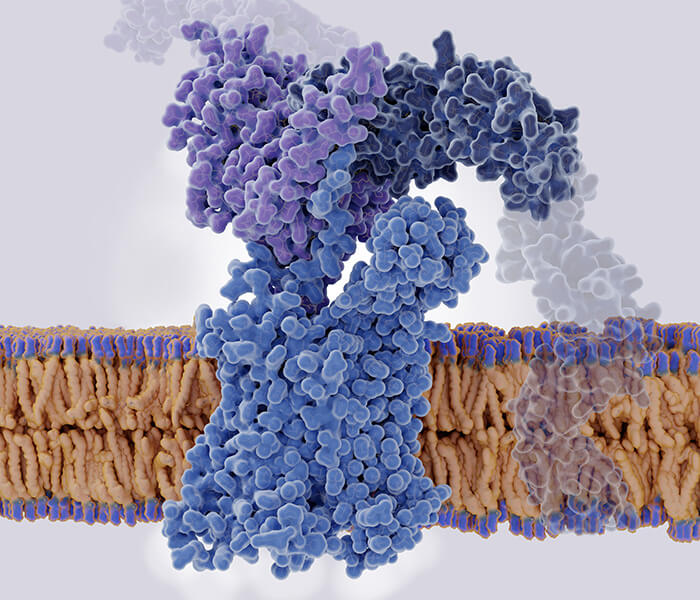
 Figure 1. Compartment map of mitochondrial production, cytosolic utilization, and inter-compartment transfer.
In many proliferative eukaryotic systems, mitochondria function as a major one-carbon output center. Serine can be catabolized in the mitochondrial matrix through SHMT2-linked entry into folate-dependent chemistry, followed by reactions involving MTHFD2 or MTHFD2L and MTHFD1L, ultimately contributing to formate generation that can support downstream cytosolic synthesis. This “mitochondria as producer, cytosol as user” model is not universally complete, but it remains one of the most useful organizing frameworks for assay planning and result interpretation. A solid starting point for that type of study is often a combination of Metabolomics Service plus Functional Annotation and Enrichment Analysis Service. (Cell)
The mitochondrial branch matters not only because it can generate transferable one-carbon output. It also supports organelle-internal functions. Mitochondrial folate metabolism contributes to mitochondrial DNA nucleotide balance, and a landmark Nature study showed that mammalian mitochondria use folate-bound one-carbon units for tRNA methylation required for mitochondrial translation and oxidative phosphorylation. In other words, mitochondrial one-carbon metabolism is not merely upstream of cytosolic synthesis; it can also sustain core mitochondrial function from within the organelle. (Nature)
That is why higher functional dependence on enzymes such as SHMT2 and MTHFD2 in experimental systems can indicate greater reliance on mitochondrial one-carbon processing. The interpretation should still remain mechanistic rather than biomarker-like: enzyme abundance alone is not enough, but in the right experimental context it can guide which compartment-specific assays deserve priority. Recent reviews on MTHFD2 also emphasize that its biology extends beyond a simplistic “more enzyme equals more pathway” reading, reinforcing the need for flux-aware study design. (Nature)
 Figure 2. Mitochondrial one-carbon metabolism as a support module for mt-tRNA methylation, translation competence, and respiratory function.
When this model is most useful
This framework is most helpful when a project is trying to answer questions such as: Where are one-carbon units primarily generated versus consumed? Could mitochondrial output explain downstream nucleotide effects? Could impaired mitochondrial one-carbon handling contribute to respiratory phenotypes? Or does a whole-cell signal likely hide different behaviors across compartments? When those are the real questions, compartment-aware logic is much more informative than a single pooled metabolite table. (Cell)
When not to overuse it
The producer-user model becomes less sufficient when transporter bottlenecks, altered folate pools, strong cytosolic compensation, or rapid metabolic state transitions dominate the system. In those settings, direct flux inference, subcellular sampling, or orthogonal validation becomes more important than relying on pathway diagrams alone. (Nature)
Cytosolic Utilization of One-Carbon Units
Once one-carbon units are available in the cytosol, they are heavily used for purine synthesis, thymidylate synthesis, and methionine-cycle-linked chemistry. This is often where downstream biological consequences become easiest to observe, but that does not mean the cytosol is always the primary origin of the change. Cytosolic readouts can reflect upstream mitochondrial supply, inter-compartment transport, carrier balance, or downstream demand. For projects starting with discovery-oriented profiling before moving into focused validation, a common pairing is LC-MS/MS Untargeted Metabolomics followed by Bioinformatics for Metabolomics. (Cell)
This is also where it helps to connect compartmentalized one-carbon metabolism to methyl-donor biochemistry without collapsing the two topics into the same mechanism. For a research-focused overview of how one-carbon supply interfaces with methyl-donor biochemistry, see biochemical links to methylation potential. That connection is real and important, but it is best understood as downstream utilization logic rather than proof that methylation demand alone explains pathway behavior. (Cell)
Compartment comparison table
| Compartment | Dominant one-carbon role | Readout that can mislead | Preferred confirming assay | Main QC risk |
|---|---|---|---|---|
| Mitochondria | Serine catabolism, folate-linked one-carbon processing, formate production, organelle-internal translation support | Whole-cell folate or NADPH-related changes assumed to be mitochondrial by default | Intact-cell isotope tracing with compartment-aware modeling; targeted subcellular metabolite profiling where feasible | Slow quenching, fraction leakage, weak purity evidence |
| Cytosol | Nucleotide synthesis, methionine-cycle-linked utilization, downstream consumption of one-carbon units | Cytosolic end-product change assumed to originate in cytosol rather than upstream supply | Targeted measurement of downstream metabolites plus labeling-based confirmation of source-sink logic | Overinterpretation of pooled abundance, normalization errors, transporter effects not accounted for |
This table is useful because it converts mechanism into assay-selection logic. It separates where one-carbon units are often produced from where they are often used, then pairs each branch with the type of confirming evidence that is strongest and the QC risk most likely to distort interpretation. (Cell)
Redox Regulation Through Compartmentalized Flux
Mitochondrial one-carbon metabolism also contributes to redox control. Prior mechanistic studies under hypoxia-linked metabolic stress showed that mitochondrial serine catabolism can reshape redox balance, helping explain why one-carbon metabolism cannot be reduced to nucleotide supply alone. That lesson remains useful well beyond the original stress-model context: compartmentalized one-carbon flux can influence how a system buffers reducing equivalents and responds to oxidative pressure. To extend pathway interpretation beyond single-analyte changes, Network Analysis Service and Bioinformatics for Proteomics can be especially helpful once metabolite and protein-level signals start to diverge. (AACR Journals)
A common research mistake is to treat a whole-cell NADPH-related shift as direct proof of compartment-specific biology. That inference is often too strong. A bulk redox readout can blur together mitochondrial support, cytosolic consumption, transport limitation, and compensation by other pathways. For broader context on how one-carbon flux is discussed in adaptive metabolic states, see one-carbon flux in metabolic reprogramming. The practical takeaway is simple: abundance-only redox readouts are informative, but they are not self-interpreting. (AACR Journals)
Transport logic is another underappreciated bottleneck. Folate transport, mitochondrial access, extraction timing, and organelle integrity can all shape apparent pathway behavior. If these constraints are ignored, researchers may over-attribute a weak or noisy signal to enzyme abundance alone. That is one reason why compartment-resolved studies benefit from explicit QC plans instead of post hoc explanation. (ScienceDirect)
 Figure 3. Why bulk redox readouts can mislead without compartment-aware interpretation.
Signal → likely cause → what to add next
| Observed signal | Likely cause | What to add next |
|---|---|---|
| Bulk NADPH-related shift with weak mechanistic confidence | Mixed mitochondrial and cytosolic contributions | Add isotope tracing or compartment-aware modeling |
| Redox change without strong one-carbon abundance shift | Flux redistribution or compensation by parallel pathways | Add labeling-based flux information and pathway-level integration |
| Strong mitochondrial phenotype but ambiguous metabolite table | Organelle-internal function affected more than pooled abundance | Add translation/respiratory context and targeted mitochondrial readouts |
| Inconsistent replicate behavior after fractionation | Leakage, carryover, or poor fraction purity | Tighten quench timing and add stronger purity controls |
This troubleshooting matrix is often more useful than another summary paragraph because it turns redox ambiguity into a next-step decision tree. (AACR Journals)
Advanced Methods for Subcellular Metabolomics
If the scientific question is compartment-specific, the method has to respect compartment-specific biology. Subcellular metabolomics is powerful, but it is also unusually sensitive to handling and interpretation. A recent review in the Journal of Pharmaceutical and Biomedical Analysis notes that the field still lacks universally standardized workflows for organelle isolation, characterization, and profiling, which makes QC logic central rather than optional. That is exactly why study design matters as much as instrument capability in this area. (ScienceDirect)
A practical workflow for compartment-specific one-carbon studies
A robust RUO workflow usually starts by defining the question before choosing the assay. Is the goal to support mitochondrial formate production, compare pool sizes across fractions, measure response after perturbation, or infer source-sink directionality? Once the question is clear, the workflow typically moves through fast quenching, carefully controlled fractionation, purity verification, metabolite extraction, and compartment-aware interpretation. For projects that need cross-layer integration rather than metabolite results alone, Integrated Proteomics and Metabolomics Analysis can add context that pooled metabolite tables cannot provide. (ScienceDirect)
The quality of this workflow is usually determined by three practical details: how quickly metabolism is stabilized after harvest, how convincingly fractions are validated, and whether abundance and labeling are interpreted together rather than in isolation. When a project requires customized sampling logic, pilot optimization, or non-standard fractionation steps, Customized Experiments become more valuable than a fixed menu workflow. (ScienceDirect)
QC checkpoints that should not be skipped
Before selecting a provider or locking a workflow, these are reasonable questions to ask:
- How will mitochondrial and cytosolic fraction purity be demonstrated?
- What is the harvest-to-quench timing?
- How is metabolite leakage monitored or minimized?
- Will labeling patterns be interpreted together with pool sizes?
- What normalization logic will be used across fractions?
- What final deliverables will be returned: raw peak tables, processed matrices, QC summaries, pathway notes, and isotope pattern files?
These questions matter because compartment fidelity is easy to claim and harder to defend. The strongest workflows usually make that defense explicit before the study starts. (ScienceDirect)
Vendor Evaluation Quick Check
Before selecting a provider for compartment-resolved one-carbon studies, ask whether the workflow can defend compartment fidelity rather than simply generate fraction-labeled peak tables.
- Yes / No: Is harvest-to-quench timing defined and justified?
- Yes / No: Are mitochondrial and cytosolic purity criteria stated in advance?
- Yes / No: Is leakage or carryover assessed rather than assumed negligible?
- Yes / No: Can isotope labeling be interpreted together with abundance changes?
- Yes / No: Are normalization and batch-handling rules described?
- Yes / No: Will the final package include QC summaries and interpretation notes, not just raw outputs?
- Yes / No: Can the provider explain what would trigger a repeat, pilot, or redesign?
 Figure 4. QC-centered workflow for compartment-resolved one-carbon studies.
This figure should present quench speed, fractionation, purity verification, LC-MS/MS, isotope tracing, and analysis checkpoints as an execution workflow rather than as a generic lab-process diagram.
Decision Framework: When to Use This Approach and When Not To
Use a compartmentalized one-carbon workflow when your model shows strong serine or glycine dependence, bulk metabolomics gives ambiguous one-carbon signals, mitochondrial function and nucleotide or redox phenotypes appear linked, or mechanistic confidence is needed before committing to a larger program. In those cases, a staged workflow can work well: Untargeted Metabolomics for initial discovery, then Metabolic Flux Analysis (MFA) or targeted compartment-aware follow-up once the first-pass data justify the added resolution. (ScienceDirect)
Do not begin with the most complex version of the workflow when the project only needs broad discovery, sample amount is extremely limited, fraction purity cannot be defended, or no downstream interpretation plan exists. In those situations, a simpler discovery-first design is often more credible than a superficially sophisticated compartment study with weak QC. (ScienceDirect)
What Strong Deliverables Usually Look Like
A useful report for this type of project should be scannable and decision-ready. It should usually include:
- an experimental schematic tied to the study question,
- fraction-purity evidence,
- metabolite abundance tables by fraction,
- isotope labeling summaries where applicable,
- pathway-level interpretation separating supply from utilization,
- normalization and statistics notes,
- a short limitations section with alternate explanations.
For outsourcing decisions, the key is not just whether data were generated, but whether the deliverables are strong enough to support internal review, next-step study design, and cross-functional discussion. (ScienceDirect)
Conclusion
Compartmentalization is what turns one-carbon metabolism from a textbook pathway into a practical study-design framework. In many eukaryotic systems, mitochondria act as a production and support hub, while the cytosol serves as a major site of downstream utilization. Once redox buffering, transport constraints, and organelle-specific function are added, pooled whole-cell averages stop being enough for mechanism-level interpretation. The practical selection logic is straightforward: use bulk discovery when the biology is still broad, move to targeted measurement when the hypothesis is defined, and add isotope-assisted compartment-aware workflows when source-sink logic or organelle-specific interpretation becomes central. (Cell)
FAQ
1) Is mitochondrial one-carbon metabolism mainly about formate export?
Not exclusively. Formate export is a useful framework, but mitochondrial one-carbon metabolism also supports organelle-internal functions, including folate-dependent tRNA methylation required for mitochondrial translation and oxidative phosphorylation.
2) Why can’t whole-cell metabolomics alone resolve compartmentalization?
Because whole-cell abundance averages together multiple pools and processes. Without fractionation, isotope tracing, or computational deconvolution, supply and consumption can be conflated.
3) Are SHMT2 and MTHFD2 useful markers of mitochondrial one-carbon activity?
They are important pathway nodes and can be informative, but abundance alone should not replace flux-aware interpretation. Context, labeling behavior, and downstream consequences matter.
4) What is the biggest technical risk in subcellular metabolomics?
Loss of compartment fidelity during handling. Slow processing, leakage, carryover, and weak purity validation can all distort conclusions.
5) When should isotope tracing be added?
When the study question is about source-sink directionality, production-versus-consumption logic, or compartment-specific inference rather than only relative abundance.
6) Is redox interpretation straightforward in this pathway?
No. Bulk redox measurements can be useful, but they are easy to overinterpret unless compartment logic and pathway coupling are considered.
7) When should a team choose targeted over untargeted measurement?
Targeted workflows are usually better once the hypothesis already centers on one-carbon carriers, serine/glycine handling, formate output, or linked redox effects. Untargeted workflows are more useful when the biology is still open-ended.
8) What combination of capabilities is most useful for this topic?
A common strong combination is targeted or semi-targeted metabolite measurement, isotope-assisted design where feasible, QC-aware fractionation, and a bioinformatics layer that integrates normalization, statistics, and pathway interpretation.
References:
- Ducker GS, Rabinowitz JD. One-Carbon Metabolism in Health and Disease. Cell Metabolism. 2017;25(1):27-42. DOI: 10.1016/j.cmet.2016.08.009. (Cell)
- Xiu Y, Field MS. The Roles of Mitochondrial Folate Metabolism in Supporting Mitochondrial DNA Synthesis, Oxidative Phosphorylation, and Cellular Function. Current Developments in Nutrition. 2020;4(10):nzaa153. DOI: 10.1093/cdn/nzaa153. (ScienceDirect)
- Morscher RJ, Ducker GS, Li SH-J, et al. Mitochondrial translation requires folate-dependent tRNA methylation. Nature. 2018;554:128-132. DOI: 10.1038/nature25460. (Nature)
- Meiser J, Schuster A, Pietzke M, et al. Increased formate overflow is a hallmark of oxidative cancer. Nature Communications. 2018;9:1368. DOI: 10.1038/s41467-018-03777-w. (Nature)
- Stern A, Fokra M, Sarvin B, et al. Inferring mitochondrial and cytosolic metabolism by coupling isotope tracing and deconvolution. Nature Communications. 2023;14:7525. DOI: 10.1038/s41467-023-42824-z. (Nature)
- Qin S, Zhang Y, Tian Y, Xu F, Zhang P. Subcellular metabolomics: Isolation, measurement, and applications. Journal of Pharmaceutical and Biomedical Analysis. 2022;210:114557. DOI: 10.1016/j.jpba.2021.114557. (ScienceDirect)
- Martínez-Reyes I, Chandel NS. Mitochondrial One-Carbon Metabolism Maintains Redox Balance during Hypoxia. Cancer Discovery. 2014;4(12):1371-1373. DOI: 10.1158/2159-8290.CD-14-1228. (AACR Journals)
- Pardo-Lorente N, Sdelci S. MTHFD2 in healthy and cancer cells: Canonical and non-canonical functions. npj Metabolic Health and Disease. 2024;2:5. DOI: 10.1038/s44324-024-00005-6. (Nature)