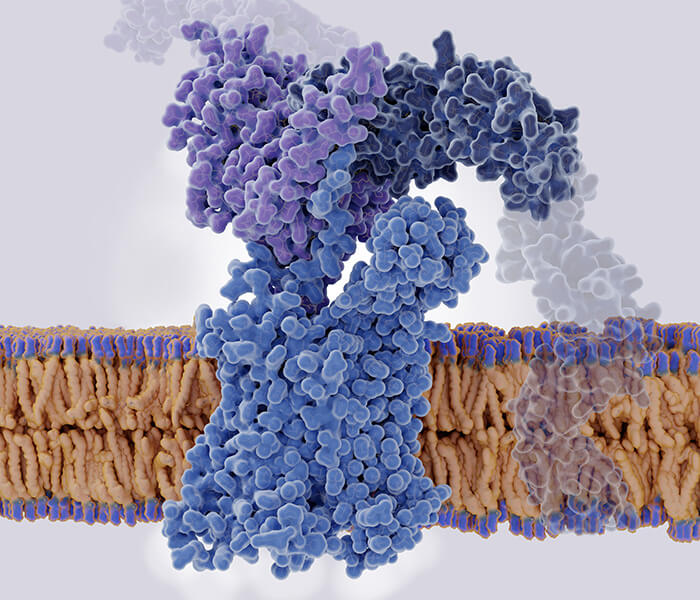
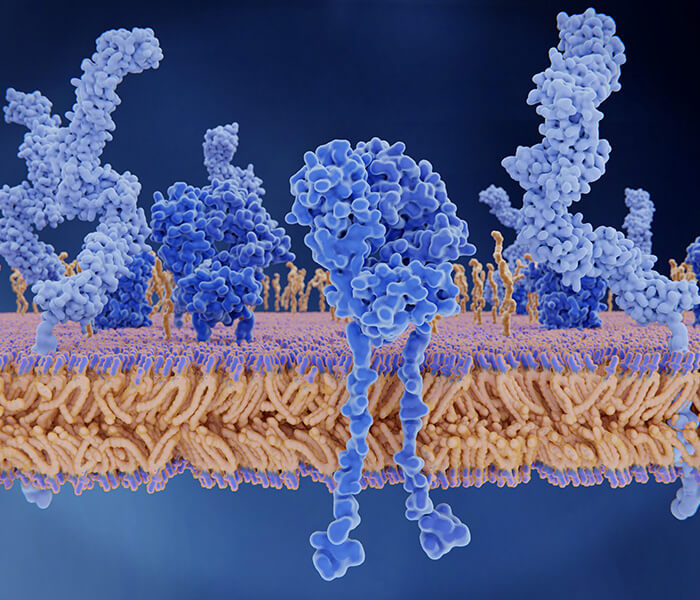
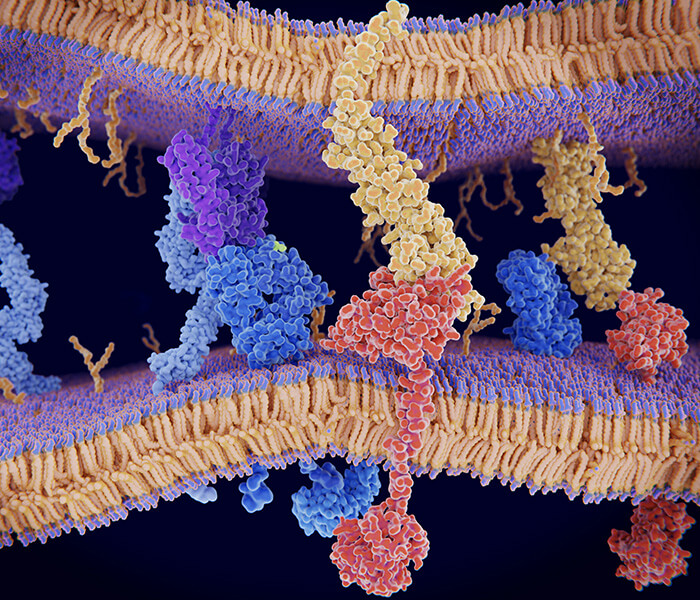
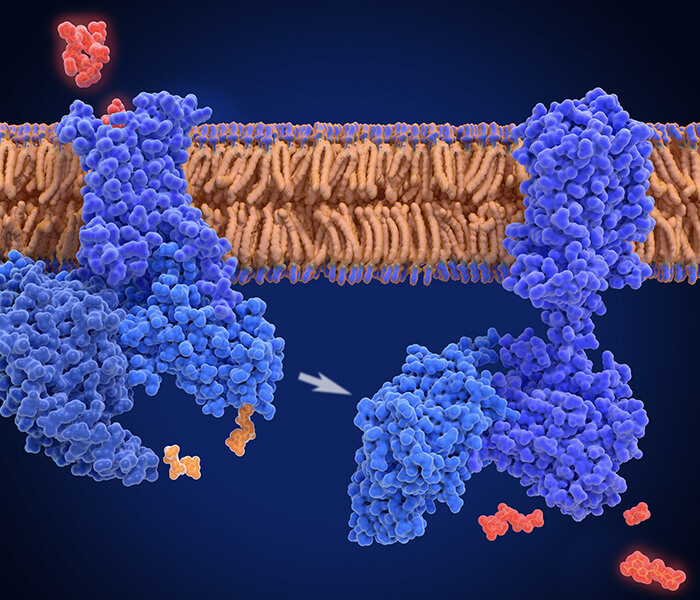
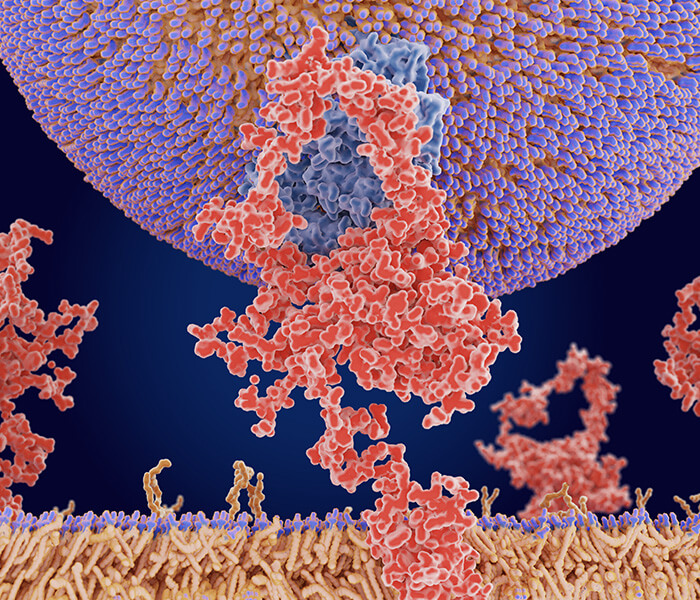
Protein palmitoylation serves as a reversible molecular switch, regulating protein function within cells. This process attaches fatty acids to specific sites on proteins, altering their behaviour. The added lipid acts as an anchor, controlling where proteins go in the cell and how they signal to other molecules. Studying this modification helps us understand the basics of cell biology and disease development.
This guide examines established and emerging laboratory techniques for detecting and characterizing protein palmitoylation. We will discuss the principles, advantages, and practical considerations for each method, helping researchers select the optimal approach for their specific experimental needs.
 Protein palmitoylation/depalmitoylation cycle (Li X et al., 2022)
Radioactive Labeling Methods for Detecting Protein Palmitoylation
While newer methods have emerged, radioactive labeling continues to serve as the gold-standard technique for detecting protein palmitoylation. These assays provide direct, unambiguous evidence of fatty acid attachment to proteins, delivering trusted results for researchers studying this reversible modification. The two primary approaches—³H-palmitate and ¹²⁵I-IC16 labeling—each present distinct advantages for different experimental scenarios.
³H-Palmitate Metabolic Labeling
The traditional method for detecting palmitoylation uses metabolic incorporation of ³H-labeled palmitic acid. This procedure begins by serum-starving cells in a specialized medium. Researchers then introduce a tagged form of palmitic acid for several hours. After incubation, cells are washed and broken open to isolate the target protein using antibody-based capture. The final separation and analysis are typically performed using SDS-PAGE.
Detection requires specialized processing to visualize the radioactive signal. Gels must be treated with water followed by sodium salicylate solution before drying. The critical limitation is the extended exposure time—the weak beta emissions from tritium often require days to weeks of exposure to X-ray film to generate a detectable signal.
¹²⁵I-IC16 Palmitate Analog Labeling
The IC16 palmitic acid analog represents an improved tool for studying protein modification. By incorporating an iodine atom at its terminal carbon, this compound addresses key limitations of traditional methods. When tagged with a radioactive iodine isotope (¹²⁵I), IC16 demonstrates superior performance in two crucial aspects: it remains more stable within cells, reducing unintended metabolic changes, and its signal can be detected much faster using standard imaging equipment.
The efficiency gain is remarkable. For instance, examining Fyn kinase modification typically demands 1-2 weeks with conventional techniques. With the IC16 approach, precise results emerge within a single day, substantially accelerating research progress.
Services you may be interested in:
Modern Non-Radioactive Detection Methods
While radioactive labeling established the field, contemporary protein palmitoylation analysis has been transformed by chemical biology approaches that eliminate radiation handling. These methods, particularly the Acyl-Biotin Exchange (ABE) and Acyl-Resin Assisted Capture (Acyl-RAC) techniques, have become the new standards for post-translational modification studies in both academic and drug discovery settings. They offer enhanced safety, greater accessibility, and compatibility with standard laboratory equipment.
Acyl-Biotin Exchange (ABE) Method
The ABE method offers a reliable method for measuring protein S-palmitoylation levels. This technique works through a series of chemical reactions that ultimately attach a biotin tag to previously modified sites. The process involves blocking existing thiol groups, specifically removing the palmitoyl modification, and then labeling the newly accessible sites. This approach enables highly sensitive detection of this dynamic protein modification.
This established method identifies protein palmitoylation through a series of specific chemical reactions:
- Block Unmodified Sites: First, all natural cysteine residues are permanently blocked using N-ethylmaleimide (NEM).
- Purify Proteins: Proteins are then purified using cold acetone to remove leftover reagents.
- Cleave Palmitoyl Groups: The sample is split. One portion is treated with hydroxylamine, which specifically breaks the bonds attaching palmitate, creating new reactive sites.
- Tag New Sites: These newly exposed sites are labeled with a biotin tag for easy detection.
- Detect and Analyze: The biotin-tagged proteins are captured and visualized using standard laboratory techniques to confirm palmitoylation.
 Schematic diagram of the ABE procedure (Buffa V et al., 2023)
Acyl-Resin Assisted Capture (Acyl-RAC) Method
Acyl-RAC utilizes the same chemical principles as the ABE method but introduces a valuable efficiency improvement. This technique employs direct resin-based capture to simplify the workflow while maintaining the core steps of thiol blocking and hydroxylamine cleavage.
The streamlined process involves three key stages:
- Comprehensive blocking of all existing thiol groups
- Selective release of palmitoyl modifications using hydroxylamine
- Immediate capture of newly exposed thiols onto thiopropyl sepharose resin
This integrated approach typically reduces processing time and can enhance recovery efficiency. Several research groups have reported approximately 25% better yield for membrane-associated prot
 The diagram of the detailed procedures of APEGS for cell samples (Li X et al., 2022)
Click Chemistry Methods for Dynamic Palmitoylation Studies
Click chemistry has revolutionised the study of protein palmitoylation by introducing particular chemical reporters. This innovative approach uses alkyne-tagged fatty acids that cells naturally incorporate into proteins at actual modification sites. Following this metabolic labeling, a specialized chemical reaction efficiently attaches fluorescent or purification tags, allowing for highly sensitive detection and analysis.
Streamlined 17-ODYA Labeling Procedure:
- Prepare Cells: Rinse cells with warm PBS to remove medium components
- Metabolic Labeling: Incubate cells with 17-ODYA labeling medium for 2 hours
- Harvest Samples: Wash cells with cold PBS and collect cell pellets
- Fractionate Proteins: Lyse cells and separate soluble and membrane fractions
- Click Conjugation: Combine membrane fractions with reaction components for tag attachment
This method excels at tracking palmitoylation dynamics over time. By performing pulse-chase experiments with 17-ODYA, researchers can monitor the rate of modification turnover at different time points, revealing crucial information about the temporal regulation of this important protein modification.
Mass Spectrometry for Precise Palmitoylation Mapping
Mass spectrometry now serves as the gold standard for precisely mapping palmitoylation sites and measuring modification degrees. Modern MS approaches allow researchers to analyze attached fatty acids, calculate modification ratios, and determine exact molecular weights of modification groups. This delivers unmatched accuracy for studying this dynamic protein modification.
Simplified Sample Preparation Workflow:
- Protein Preparation: Start with cell lysis followed by protein separation and purification
- Controlled Breakdown: Treat samples with acid under high temperature to carefully break down proteins
- Chemical Stabilization: Convert free amino groups into stable derivatives using specific reagents
- Targeted Digestion: Use enzymes to generate peptide fragments containing modification sites
For data analysis, specialized software handles peak detection and protein quantification. The crucial step involves comparing experimental results against reference libraries of known palmitoylated peptides. This comparative approach, combined with modern bioinformatics, has raised site identification confidence by approximately 30% compared to earlier methods.
For more information on protein palmitoylation assay analysis, please refer to "Protein Palmitoylation Assays: From Biochemical Tests to Omics Profiling".
For a comparative approach to the analysis of protein palmitoylation, see "Comparing Methods for Protein Palmitoylation Analysis".
Selecting the Right Approach: A Practical Guide to Palmitoylation Analysis
Choosing the optimal detection method for protein palmitoylation analysis requires balancing specificity, safety, and practical laboratory considerations. Each technique offers distinct advantages for different research scenarios in post-translational modification studies. Understanding these trade-offs helps researchers design efficient experimental workflows that deliver reliable results while conserving valuable time and resources.
Method Selection Guide
| Method | Key Advantages | Primary Limitations | Ideal Use Cases |
|---|---|---|---|
| Radioactive Labeling | High specificity; Direct detection | Safety concerns; Long exposure times | Historical validation; When other methods aren't feasible |
| ABE/Acyl-RAC | Endogenous protein analysis; No special reagents needed | Potential false positives; Multi-step protocol | General screening; Antibody-compatible detection |
| Click Chemistry | High sensitivity; Dynamic analysis capability | Requires specialized reagents; Optimization needed | Turnover studies; Multiplexed experiments |
Critical Experimental Considerations
Several factors consistently impact experimental success across all methodologies:
- Sample Integrity: Maintain protein activity through gentle, cold processing. Always include protease and acyltransferase inhibitors during lysis.
- Appropriate Controls: Hydroxamine treatment controls are essential for verifying signal specificity in exchange-based methods.
- Condition Optimization: Metabolic rates vary significantly across cell lines—systematically optimize labeling concentration and duration for each model system.
- Oxidation Prevention: Treat purified proteins with N-ethylmaleimide to minimize air oxidation of free thiols during processing.
Troubleshooting Common Challenges
Low modification abundance presents the most frequent detection challenge. When signal is weak, consider these escalation strategies:
- Implement click chemistry approaches for their enhanced sensitivity
- Pre-enrich target proteins using immunoprecipitation before detection
- Systematically optimize labeling and chase durations
- For mass spectrometry, address the "stickiness" of palmitoylated peptides through specialized preparation techniques
Laboratories that systematically address these factors report significantly improved reproducibility, with one multi-center study noting a 40% reduction in technical variability when following standardized protocols.
Conclusion: The Evolving Landscape of Palmitoylation Analysis
The field of protein palmitoylation analysis has matured significantly, moving decisively from traditional radioactive methods to a versatile toolkit of non-radioactive techniques. For researchers today, selecting the right approach is a strategic decision based on your specific experimental goals, available instrumentation, and sample characteristics.
The most powerful advancements have come from integrating complementary methods. The combination of click chemistry with advanced mass spectrometry, for instance, now allows for both dynamic tracking and system-wide profiling of this key post-translational modification. These integrated approaches are unlocking new dimensions of understanding, revealing how the reversible palmitoylation network dynamically regulates cellular signaling and trafficking.
This methodological evolution is directly accelerating both basic research and drug discovery efforts, providing unprecedented insight into a modification once considered technically challenging to study.
To learn more about the role of protein Palmitoylation in diseases, please refer to "Protein Palmitoylation: Role in Diseases, Research Methods, and Therapeutic Implications".
References
- Resh MD. Use of analogs and inhibitors to study the functional significance of protein palmitoylation. Methods. 2006 Oct;40(2):191-7.
- Martin BR. Nonradioactive analysis of dynamic protein palmitoylation. Curr Protoc Protein Sci. 2013 Sep 24;73:14.15.1-14.15.9.
- Buffa V, Adamo G, Picciotto S, Bongiovanni A, Romancino DP. A Simple, Semi-Quantitative Acyl Biotin Exchange-Based Method to Detect Protein S-Palmitoylation Levels. Membranes (Basel). 2023 Mar 21;13(3):361.
- Li X, Shen L, Xu Z, Liu W, Li A, Xu J. Protein Palmitoylation Modification During Viral Infection and Detection Methods of Palmitoylated Proteins. Front Cell Infect Microbiol. 2022 Jan 27;12:821596.