Why the Kynurenine Pathway Keeps Showing Up in Immunology and Neuroscience
Tryptophan is more than a protein building block. In most mammalian systems, it is also a precursor for signaling molecules that reshape immune behavior and cellular energy balance.
The kynurenine pathway converts tryptophan into metabolites that can dampen inflammatory activity, influence tissue tolerance, and feed NAD+ biosynthesis. When this pathway is pushed out of balance, it can rewire local immune tone and stress responses in complex disease models.
This resource summarizes the core enzymes, the immune-facing mechanisms (especially AhR signaling), and the analytical strategies used to quantify pathway flux in research settings.
What Measuring Kynurenine Metabolism Helps You Solve
Kynurenine pathway readouts help answer questions that simple tryptophan measurements cannot. They can show whether a system is depleting tryptophan, accumulating immunoregulatory ligands, or shifting toward oxidative downstream chemistry.
Common research questions that benefit from pathway-level profiling include:
- Is immune suppression driven by tryptophan depletion, kynurenine accumulation, or both?
- Is AhR signaling likely to be engaged by endogenous ligands in a given model?
- Are downstream branches biased toward kynurenic acid (often anti-inflammatory) or toward more oxidative metabolites?
- Do interventions shift pathway balance, or simply change total tryptophan availability?
Biochemistry and Key Enzymes of the Kynurenine Pathway
In mammals, most free tryptophan is funneled through the kynurenine pathway. The first committed step is the conversion of tryptophan to N-formylkynurenine by TDO (tryptophan 2,3-dioxygenase) or IDO enzymes (indoleamine 2,3-dioxygenase), followed by rapid formation of kynurenine. For additional insights into melatonin metabolism circadian, explore our in-depth resource.
The entry-point enzymes differ in where they act and how they are induced:
- IDO1 is strongly induced by inflammatory signaling and is frequently discussed as an immune "brake" in immunometabolism studies.
- TDO is enriched in liver tissue and contributes to systemic tryptophan homeostasis, with context-dependent re-expression reported in some tumor models.
- IDO2 has a narrower expression profile and generally lower catalytic activity than IDO1, but it may contribute under specific inflammatory or regulatory contexts.
For additional insights into indole metabolome, explore our in-depth resource.
After kynurenine forms, metabolism branches into several directions. KAT enzymes convert kynurenine to kynurenic acid (KYNA). KMO drives kynurenine toward 3-hydroxykynurenine (3-HK) and other downstream products, which can increase oxidative stress when elevated.
If you need a focused LC-MS/MS panel for tryptophan, kynurenine, and related aromatic amino acid metabolites, see our Aromatic Amino Acids Analysis Service, which supports pathway-specific profiling including kynurenine pathway mapping.
For broader pathway coverage across serotonin, indole, and kynurenine branches, our Tryptophan Metabolism Analysis Service is designed for qualitative and quantitative profiling in research matrices.
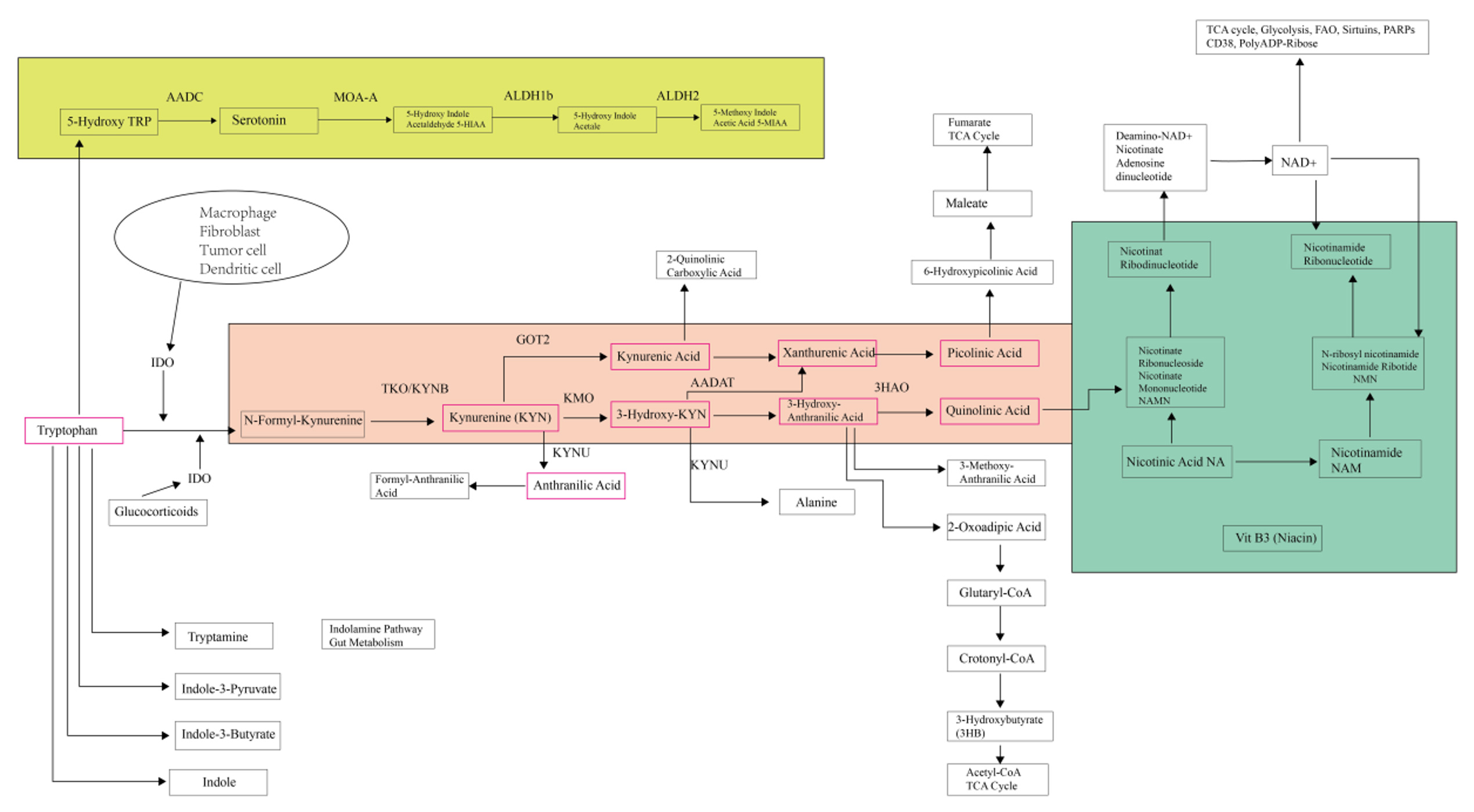 Figure 1. The metabolic pathways of kynurenine.
At a systems level, enzyme expression often tracks the immune state of the local microenvironment. For example, macrophages and dendritic cells can upregulate IDO1 in response to inflammatory cues, shifting the local tryptophan-to-kynurenine balance and changing effector T-cell behavior.
Kynurenine in Immune Regulation: Metabolism as Signaling
Immunometabolism treats metabolites as active regulators, not passive byproducts. In this framework, kynurenine can act as a signaling molecule that reshapes immune cell differentiation and function.
Regulating immune tone through AhR signaling
A key mechanism is activation of the aryl hydrocarbon receptor (AhR) by kynurenine and other tryptophan-derived ligands. AhR engagement can favor regulatory programs (such as regulatory T-cell differentiation) and reduce certain pro-inflammatory responses, depending on cell type and context.
In tumor microenvironment studies, sustained IDO1 activity can maintain high kynurenine levels, supporting an immunosuppressive niche that may counteract antitumor immunity.
Toxic vs. protective balance in downstream metabolites
Downstream chemistry matters. KYNA is often discussed as a protective metabolite in neuro-immune contexts, while 3-HK, 3-HAA, and quinolinic acid (QUIN) can promote oxidative stress when they accumulate.
In short-lived inflammatory responses, higher oxidative pressure may support antimicrobial programs. In prolonged or dysregulated states, the same bias can contribute to tissue stress and immune dysfunction.
To quantify kynurenine/tryptophan ratios and track multiple downstream nodes with calibration and internal standards, our Targeted Metabolomics Service can be customized to the kynurenine pathway and adjacent amino acid networks.
Kynurenine in the Nervous System: Neuroactive Metabolites and NAD+ Links
Kynurenine metabolism intersects with neurotransmission and energy biology. KYNA is an NMDA receptor antagonist that can reduce excitotoxic stress in experimental systems, while QUIN is an NMDA receptor agonist that can become neurotoxic when elevated.
Many neuroinflammation and neurodegeneration studies report a shift toward higher KMO-associated metabolites and lower KYNA, suggesting a branch imbalance that may reinforce chronic inflammatory signaling.
Kynurenine in the Tumor Microenvironment: A Metabolic Route to Immune Escape
Among disease-relevant contexts, the tumor microenvironment has one of the clearest kynurenine signatures. Tumor cells and tumor-associated antigen-presenting cells can increase IDO1 activity, depleting local tryptophan and accumulating kynurenine.
Low tryptophan can restrict effector T-cell proliferation, while kynurenine-AhR signaling can support regulatory phenotypes. Together, these mechanisms form a metabolically maintained "immune brake" in many solid-tumor models.
Literature example: baseline Kyn/Trp ratio and immunotherapy studies
In melanoma immunotherapy literature, higher baseline kynurenine-to-tryptophan ratios have been associated with less favorable outcomes in cohorts receiving PD-1 pathway blockade, alongside higher IDO1 signals and greater regulatory T-cell infiltration (Meireson et al., 2021). This finding is commonly used to motivate mechanistic studies and combination strategy design, not medical decision-making.
From Molecules to Multi-omics: Detect, Integrate, Apply
Analytical advances have moved kynurenine research from single-metabolite readouts to pathway-aware profiling. High-sensitivity LC-MS/MS can measure tryptophan, kynurenine, KYNA, 3-HK, 3-HAA, QUIN, and NAD+ precursors in complex research matrices when the assay is properly calibrated.
Pairing metabolite quantification with transcriptomics or proteomics helps separate enzyme regulation from substrate availability. Adding isotope tracing can further distinguish pool size changes from true pathway flux.
For discovery workflows that screen broad metabolite changes before narrowing to a validated kynurenine panel, see our LC-MS/MS Untargeted Metabolomics offering.
If your project needs flux-level interpretation (for example, distinguishing pathway activation from accumulation), our LC-MS-Based Metabolic Flux Analysis platform supports isotope-tracing study designs.
Practical notes for robust kynurenine measurements
For research-grade quantification, prioritize method design choices that protect selectivity and comparability:
- Use isotopically labeled internal standards where possible, especially for Kyn, KYNA, and QUIN.
- Report ratios (e.g., Kyn/Trp) alongside absolute concentrations to separate pathway shift from sample loading effects.
- Control pre-analytical variation with consistent quenching, storage, and freeze-thaw handling.
- Include pooled QC samples and calibration checks across batches for longitudinal studies.
Kynurenine Pathway FAQs
What is kynurenine metabolism?
Kynurenine metabolism is the main route that converts tryptophan into kynurenine and downstream metabolites, including KYNA, QUIN, and NAD+ precursors.
Which enzymes control the tryptophan-to-kynurenine step?
IDO1, IDO2, and TDO catalyze the first committed step. Their induction differs by tissue and inflammatory signaling context.
How does kynurenine influence immune regulation?
Kynurenine and related ligands can activate AhR, which can shift immune cell programs toward regulatory and tolerance-associated phenotypes.
What is the "KYNA vs QUIN" balance?
KYNA is often linked to protective, anti-excitotoxic signaling, while QUIN can be neurotoxic when elevated. The balance reflects pathway branch activity.
What is the best way to measure the kynurenine pathway in a study?
Targeted LC-MS/MS with internal standards is preferred for absolute quantification. Untargeted LC-MS can be used first to map broader metabolic shifts.
Turn Kynurenine Biology into Measurable Readouts
If kynurenine metabolism is a bottleneck in your immunology, neuroscience, or oncology research program, a pathway-aware LC-MS/MS strategy can replace single-marker guesses with quantitative, interpretable data.
Start with a pathway-focused scope discussion via our Tryptophan Metabolism Analysis Service, or request a customized panel through our Targeted Metabolomics Service.
References
- Samborski, W et al . (2024). The kynurenine pathway in patients with rheumatoid arthritis during tumor necrosis factor α inhibitors treatment. Reumatologia, 62(4), 220–225. https://doi.org/10.5114/reum/191752
- Lu, Y., Shao, M., & Wu, T. (2020). Kynurenine-3-monooxygenase: A new direction for the treatment in different diseases. Food science & nutrition, 8(2), 711–719. https://doi.org/10.1002/fsn3.1418
- Badawy, AA, Dawood, S., & Bano, S. (2023). Kynurenine pathway of tryptophan metabolism in pathophysiology and therapy of major depressive disorder. World journal of psychiatry, 13(4), 141–148. https://doi.org/10.5498/wjp.v13.i4.141
- Meireson, A.et al. (2021). Clinical Relevance of Serum Kyn/Trp Ratio and Basal and IFNγ-Upregulated IDO1 Expression in Peripheral Monocytes in Early Stage Melanoma. Frontiers in immunology, 12, 736498. https://doi.org/10.3389/fimmu.2021.736498