Aspartic acid metabolism has an outsized role in cellular biochemistry. Although aspartic acid is a nonessential amino acid, its functions extend well beyond protein synthesis.
In proliferating cells, metabolically active tissues, and host–microbiota systems, aspartate can act as a network hub. It helps coordinate carbon flow, nitrogen transfer, redox balance, and biosynthetic capacity.
If your project needs quantitative readouts of aspartate and connected pathways, amino acid analysis and targeted metabolomics are often the most direct starting points.
Aspartic Acid as a Metabolic Hub Rather Than a Single-Pathway Metabolite
Unlike metabolites that participate primarily in linear pathways, aspartic acid is embedded within a dense metabolic network. It directly interfaces with the tricarboxylic acid (TCA) cycle, the urea cycle, purine and pyrimidine synthesis, and multiple amino acid biosynthetic routes. These connections allow aspartate to coordinate cellular demands for energy, biomass production, and nitrogen disposal.
Aspartate availability is therefore not merely a reflection of amino acid abundance but a readout of mitochondrial function, redox state, and nitrogen balance. This integrative role becomes especially evident in conditions of rapid cell proliferation, metabolic stress, hypoxia, or nutrient limitation, where aspartate supply can become a critical bottleneck.
Generation of Aspartic Acid: Linking the TCA Cycle to Nitrogen Metabolism
Transamination of Oxaloacetate
The bulk of intracellular L-aspartate is generated inside mitochondria by the freely reversible transamination of oxaloacetate (OAA) with glutamate, a reaction catalyzed by aspartate aminotransferase-2 (GOT2/AST) . Because OAA is a committed TCA-cycle intermediate, this single step couples amino-acid output to carbon flux through the cycle; cytosolic GOT1 (AST) later reshuttles the carbon or nitrogen as needed, making the pair a metabolic bridge between energy metabolism and amino-acid turnover .
Consequently, any drag on the TCA cycle—hypoxia, mitochondrial dysfunction, or electron-transport chain (ETC) inhibition—starves the cell of OAA and directly limits de-novo aspartate synthesis[1].
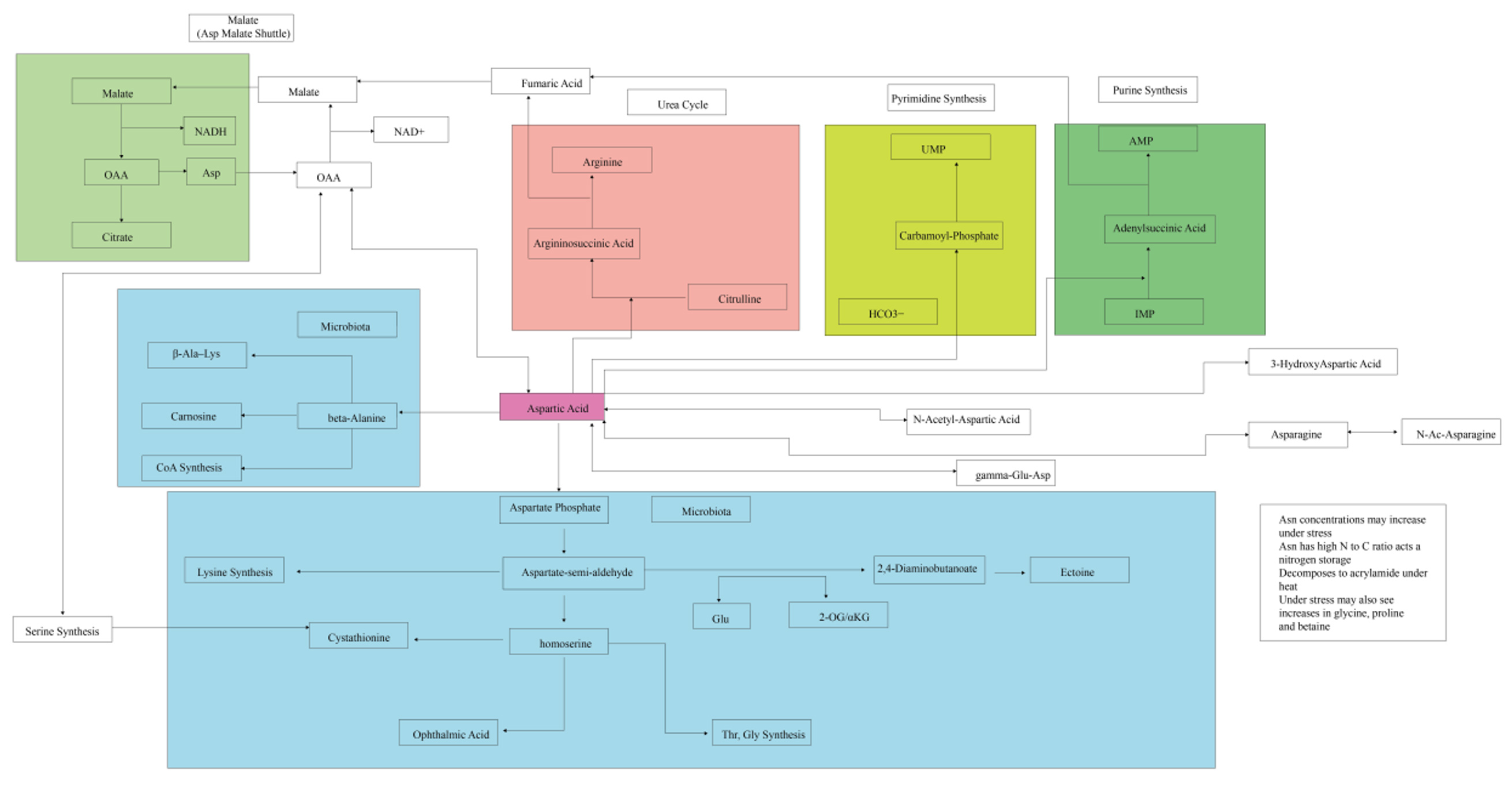 Figure 1. The metabolic pathways of aspartic acid.
The Aspartate–Malate Shuttle and Redox Homeostasis
Aspartate is a moving component of the malate–aspartate shuttle, which transfers reducing equivalents across the mitochondrial membrane.
In the cytosol, aminotransferase reactions help generate aspartate, which crosses the inner membrane. Inside the matrix, the same chemistry regenerates OAA and supports mitochondrial NADH production.
Because these steps are reversible, shuttle throughput depends on how fast NADH can be reoxidized. When oxygen is available and the electron transport chain is active, aspartate production is favored.
Under hypoxia or electron-transport inhibition, NADH accumulates and the reaction stalls. Aspartate can fall even when glucose and glutamine remain plentiful, making mitochondrial redox state a key gate on supply.
Aspartic Acid and the Urea Cycle: A Structural Nitrogen Donor
Aspartate as the Second Nitrogen Source
Within the urea cycle, aspartic acid contributes one of the two nitrogen atoms ultimately excreted as urea. The condensation of citrulline and aspartate to form argininosuccinate represents a key nitrogen incorporation step.
Unlike free ammonia, which provides the first nitrogen atom, aspartate supplies nitrogen in a carbon-bound, metabolically controlled form. This distinction allows precise regulation of nitrogen flux and links amino acid turnover directly to detoxification pathways.
Coupling of the Urea Cycle and the TCA Cycle
The urea cycle is metabolically coupled to the TCA cycle through the production of fumarate, which re-enters central carbon metabolism. This connection—often referred to as the aspartate–argininosuccinate shunt—illustrates how aspartate metabolism enables coordination between nitrogen disposal and energy production.
Disruption of this coupling is observed in liver disease, inherited urea cycle disorders, and cancer metabolism, where nitrogen handling becomes rewired to support biosynthesis rather than detoxification.
Aspartic Acid in Nucleotide Biosynthesis
Aspartate is a required building block for de novo pyrimidine synthesis. Together with carbamoyl phosphate, it forms N-carbamoyl-aspartate, establishing the pyrimidine ring skeleton.
Because nucleotides are needed for DNA and RNA synthesis, aspartate availability can set a pace limit on proliferation. Studies in tumor models and activated immune cells show that lowering aspartate can halt S-phase entry even when other nutrients remain available.
Purine Synthesis and Adenylosuccinate Formation
Aspartate is more than a bridge between the TCA cycle and amino-acid pools; it is also a gatekeeper for the purine ring. When inosine monophosphate (IMP) is converted to adenosine monophosphate (AMP), the enzyme adenylosuccinate synthetase uses one molecule of aspartate and GTP to build adenylosuccinate, which is then cleaved into AMP plus fumarate. In this two-step sequence, aspartate donates the nitrogen atom that distinguishes adenine from hypoxanthine, ensuring that the cell can replenish its ATP supply and keep energy homeostasis intact.
Because the same amino acid is already required for the first pyrimidine ring condensation, aspartate sits at the cross-roads of both purine and pyrimidine biosynthesis. Rapidly dividing cells—tumors, activated T-cells, or fast-growing bacteria—cannot finish either nucleotide without a steady aspartate stream, so they expose a metabolic vulnerability that can be exploited by limiting aspartate availability or blocking its mitochondrial export.
Aspartic Acid–Derived Metabolites and Functional Extensions
Asparagine and Nitrogen Storage
Asparagine is produced when asparagine synthetase (ASNS) transfers an amide group from glutamine to aspartate. Because asparagine carries two nitrogen atoms on a small carbon backbone, cells can use it as a compact nitrogen reservoir.
During metabolic stress, ASNS expression can rise and divert aspartate toward asparagine. This may buffer intracellular nitrogen when oxygen, glucose, or glutamine availability changes (Richards & Kilberg, 2006. DOI: https://doi.org/10.1146/annurev.biochem.75.103004.142520).
N-acetyl-aspartate (NAA) is synthesized in neurons by acetylation of aspartate. At high concentrations it can act as an osmolyte and a storage form of carbon and nitrogen, and it is widely tracked as a marker of neuronal integrity in MR spectroscopy (Rae et al., 2025. DOI: https://doi.org/10.1007/s11064-025-04454-3).
Non-Canonical Aspartate Derivatives
Aspartate metabolism also gives rise to less-characterized compounds, including 3-hydroxyaspartic acid, γ-glutamyl-aspartate, and ophthalmic acid. While their physiological roles are still being elucidated, these metabolites often emerge under oxidative stress or altered redox conditions, suggesting adaptive or protective functions.
The Aspartate Family of Amino Acids and One-Carbon Metabolism
Aspartate Semialdehyde as a Branch Point
Aspartate semialdehyde represents a crucial branching intermediate that links aspartate metabolism to the synthesis of lysine, threonine, and glycine. Through homoserine and cystathionine intermediates, aspartate feeds into amino acid networks that support protein synthesis and redox balance.
Integration with One-Carbon and α-Ketoglutarate Metabolism
Aspartate metabolism is closely intertwined with one-carbon metabolism and α-ketoglutarate (αKG) flux. Through glutamate and transamination reactions, aspartate indirectly influences methylation reactions and epigenetic regulation by modulating αKG-dependent dioxygenase activity.
Microbial Aspartic Acid Metabolism
In microbial systems, aspartic acid serves as a nitrogen source, carbon scaffold, and precursor for diverse functional molecules. Bacterial metabolism converts aspartate into β-alanine, carnosine-related compounds, and CoA intermediates, contributing to microbial growth and metabolic signaling.
Osmolyte Production and Functional Metabolites
Certain microbial pathways convert aspartate-derived intermediates into ectoine, a powerful osmolyte that protects cells from osmotic and environmental stress. Ectoine has gained interest not only in microbiology but also in dermatological and pharmaceutical applications due to its stabilizing properties.
These microbial transformations highlight the importance of aspartate metabolism in shaping host–microbiota metabolic crosstalk.
Dysregulation of Aspartic Acid Metabolism in Disease
Alterations in aspartate metabolism have been implicated in a wide range of pathological conditions. In cancer, aspartate limitation can restrict nucleotide synthesis and proliferation, while adaptive mechanisms enhance aspartate transport or synthesis. In liver disease, impaired urea cycle function disrupts nitrogen handling, leading to systemic toxicity.
Neurological disorders are associated with abnormal accumulation or depletion of N-acetyl-aspartic acid, reflecting mitochondrial dysfunction and neuronal stress. In immune and inflammatory contexts, aspartate metabolism supports rapid cellular activation and effector function.
Analytical Strategies for Studying Aspartic Acid Metabolism
Targeted Metabolomics and Untargeted Metabolomics
High-resolution LC–MS/MS enables precise quantification of aspartate and its derivatives, including asparagine, N-acetylated forms, and nucleotide intermediates. Isotope tracing approaches further allow dissection of metabolic flux through interconnected pathways.
Proteomics and Enzyme Regulation
Protein-level measurement helps interpret why flux changes occur. Quantitative proteomics can profile enzymes such as GOT1/2, ASNS, and adenylosuccinate pathway proteins, including regulatory PTMs when relevant.
When you need both layers in one package, integrated proteomics and metabolomics analysis supports joint pathway interpretation across molecules and enzymes.
Multi-Omics Integration
Combining metabolomics with transcriptomics, proteomics, and microbiome profiling offers a systems-level view of aspartic acid metabolism. Such integrative approaches are increasingly essential for understanding metabolic reprogramming in disease and therapeutic response.
Conclusion
Aspartic acid metabolism exemplifies how a single metabolite can orchestrate diverse biological processes through network integration. From mitochondrial energy production and nitrogen disposal to nucleotide biosynthesis and microbial interaction, aspartate functions as a central coordinator of cellular metabolism.
As research continues to move toward systems biology and multi-omics integration, Aspartic Acid metabolism is emerging as a critical lens through which metabolic plasticity, disease vulnerability, and therapeutic opportunity can be understood.
References
- Broeks, M. H.,et al. (2023). The malate-aspartate shuttle is important for de novo serine biosynthesis. Cell reports, 42(9), 113043. https://doi.org/10.1016/j.celrep.2023.113043
- Rae, C. D., Rowlands, B. D., & Balcar, V. J. (2025). Aspartate in the Brain: A Review. Neurochemical research, 50(3), 199. https://doi.org/10.1007/s11064-025-04454-3
- Richards, N. G., & Kilberg, M. S. (2006). Asparagine synthetase chemotherapy. Annual review of biochemistry, 75, 629–654. https://doi.org/10.1146/annurev.biochem.75.103004.142520