Edman degradation, developed by Pehr Edman in 1950, remains one of the few chemical methods capable of determining the N-terminal amino acid sequence of a protein or peptide without requiring prior knowledge of the sequence. The method cycles through three chemical reactions — coupling of phenylisothiocyanate (PITC) to the free N-terminal amino group, acid-catalyzed cleavage of the terminal peptide bond to release the derivatized residue as an anilinothiazolinone (ATZ), and conversion of the ATZ to the more stable phenylthiohydantoin (PTH) form for chromatographic identification — with each cycle removing and identifying one amino acid from the N-terminus. The existing resource on this topic provides a basic overview of these four steps. This guide extends that foundation by addressing the practical considerations that determine sequencing success: how to optimize the chemistry for difficult residues, how to troubleshoot blocked N-termini, how to compare Edman degradation with mass spectrometry-based approaches for specific applications, and how to apply Edman sequencing in biopharmaceutical quality control.
N-terminal Edman degradation sequencing services provide validated protocols for proteins and peptides requiring de novo N-terminal sequence determination.
Figure 1: The Edman degradation chemistry — PITC coupling, TFA cleavage, and PTH conversion with key reaction conditions

Recap: The Four Chemical Steps of Edman Degradation
The existing resource covers the four-step Edman cycle in detail. This section provides a concise chemical summary for reference before the optimization and troubleshooting discussion that follows.
Step 1 — Coupling: Phenylisothiocyanate (PITC) reacts with the free α-amino group of the N-terminal amino acid residue under mildly alkaline conditions (pH 8.0-9.0, typically in pyridine or trimethylamine buffer at 45-55°C for 10-30 minutes). The reaction produces a phenylthiocarbamyl (PTC) derivative of the peptide. The coupling efficiency at this step is the primary determinant of repetitive yield across multiple cycles — each percentage point of coupling failure accumulates geometrically across subsequent cycles.
Step 2 — Cleavage: Anhydrous trifluoroacetic acid (TFA) at 45-55°C for 5-10 minutes selectively cleaves the peptide bond at the derivatized N-terminal residue, releasing the amino acid as an anilinothiazolinone (ATZ) derivative while leaving the remaining peptide chain (now one residue shorter) intact for the next cycle. The selectivity of this cleavage for the derivatized residue over all other peptide bonds in the chain is the defining chemical innovation of the Edman method.
Step 3 — Conversion: The ATZ derivative is extracted into ethyl acetate or butyl chloride, transferred to a separate reaction vessel, and converted to the more stable phenylthiohydantoin (PTH) form by heating in 25% aqueous TFA at 60°C for 10-20 minutes. The PTH derivative is stable enough for chromatographic analysis and has a characteristic UV absorption at 269 nm. The conversion step also determines the yield of identifiable PTH-amino acid — incomplete conversion leaves ATZ that degrades before detection.
Step 4 — Analysis: The PTH-amino acid is identified by reversed-phase HPLC on a C18 column with a sodium acetate/acetonitrile gradient, comparing the retention time and UV absorbance profile to a standard mixture of all 20 PTH-amino acids analyzed under identical conditions. The automated Edman sequencer — the commercial instrument that mechanizes this four-step cycle — performs one complete cycle in 30-45 minutes, enabling approximately 15-20 residues to be sequenced in a 24-hour run. The residual peptide after cleavage is retained on a solid support (typically a polybrene-coated glass fiber filter) and proceeds to the next coupling step.
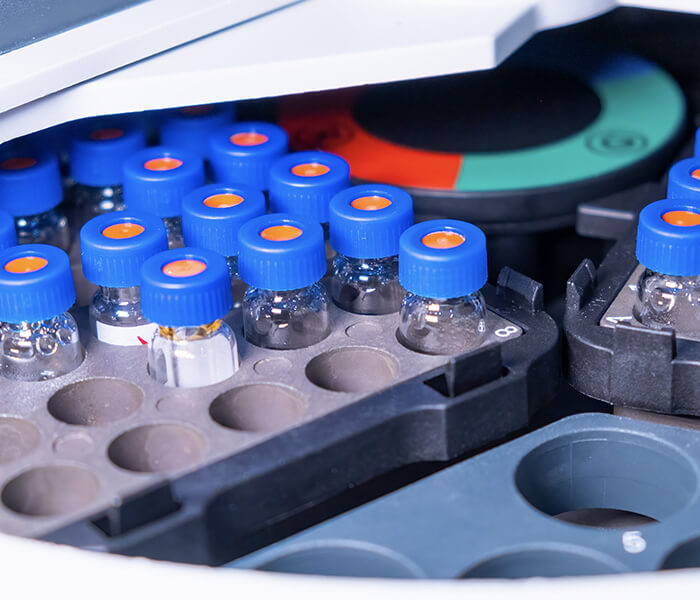
The automated Edman sequencer integrates all four steps into a single instrument with a reaction cartridge, a conversion flask, an HPLC system with a C18 column and UV detector, and a data system that identifies PTH-amino acids by retention time matching against a standard calibration mixture. Modern sequencers (such as the Shimadzu PPSQ series or the Applied Biosystems Procise series) use gas-phase delivery of TFA and PITC reagents to minimize reagent consumption and to reduce the solvent volumes that must be evaporated between cycles, improving the overall cycle time. The instrument operates continuously, with each full cycle taking 30-45 minutes, and can be programmed to run up to 50 cycles in an unattended overnight run. Between runs, the reaction cartridge and fluidic lines must be thoroughly washed to remove residual PTH-amino acids that would otherwise appear as carryover peaks in the next sample. N-terminal sequencing instrumentation includes automated Edman sequencers with standardized methods for routine protein characterization.
Figure 2: Edman degradation vs. mass spectrometry-based N-terminal sequencing — method comparison across key parameters

The Chemistry of PITC Coupling — Why pH, Temperature, and Solvent Matter
The coupling step is the most chemically sensitive stage of the Edman cycle, and its optimization directly determines the number of residues that can be reliably identified. PITC reacts with the N-terminal α-amino group through a nucleophilic addition-elimination mechanism: the amino nitrogen attacks the electrophilic carbon of the isothiocyanate group, forming a thiourea linkage. The reaction rate depends on the nucleophilicity of the amino group, which is governed by its pKa and the pH of the reaction medium.
The optimal pH for PITC coupling is 8.0-9.0 — sufficiently alkaline to deprotonate the α-amino group (pKa ~8.0 for most amino acids) to the reactive free base form, but not so alkaline as to promote PITC hydrolysis or peptide bond cleavage. Below pH 7.5, the amino group is predominantly protonated and unreactive; above pH 9.5, PITC hydrolysis to phenylthiourea becomes competitive with peptide coupling. The coupling buffer is typically 0.1-0.5 M trimethylamine or N-methylmorpholine in 60-70% pyridine or aqueous acetonitrile. Pyridine serves both as a base and as a solvent that maintains PITC solubility; its concentration must be controlled because pyridine catalyzes the conversion of PTC to ATZ, and premature conversion in the coupling step produces ATZ that cannot be cleaved and is lost.
Temperature also affects coupling selectivity. At 45-50°C, the coupling reaction is complete within 15-20 minutes for most residues. At higher temperatures (>55°C), side reactions including PITC polymerization and non-specific peptide bond cleavage increase, reducing the yield of the desired PTC derivative. Certain N-terminal residues require extended coupling times: proline (secondary amine, lower nucleophilicity than primary amines) requires 30-45 minutes at 50°C, and glycine (minimal steric hindrance on either side, allowing PITC access from multiple angles) couples efficiently even at 40°C. Automated sequencers use a standard 20-30 minute coupling at 48°C as a compromise that achieves >98% coupling for the 18 common primary-amine N-terminal residues, accepting that proline will be under-coupled and may be misidentified or missed in some sequencing runs.
The solvent composition also affects coupling. PITC is delivered as a 5% (v/v) solution in heptane or acetonitrile. Heptane is preferred for automated sequencers because it does not strip the polybrene coating from the glass fiber filter; acetonitrile is a stronger solvent but can gradually dissolve the polybrene support, reducing peptide retention over extended runs. The PITC concentration must be maintained at a sufficient excess (typically 100-1,000 fold molar excess over the peptide) to drive the equilibrium toward complete coupling, but excess PITC must be thoroughly removed after coupling by washing with heptane or ethyl acetate to prevent it from reacting with the newly exposed N-terminus in the next cycle — a source of carryover signal that produces ghost peaks in subsequent chromatograms.
Figure 3: Automated Edman sequencer workflow — instrument components and cycle timing

Edman Degradation vs. Mass Spectrometry — When to Use Which for N-Terminal Sequencing
The choice between Edman degradation and mass spectrometry (MS)-based approaches for N-terminal sequencing is not a matter of which technique is technologically superior but of which technique matches the analytical question, sample characteristics, and required information content. Each method has specific strengths and limitations that define its optimal application domain.
Sensitivity and sample requirements: Edman degradation requires 5-100 pmol of purified protein or peptide for reliable sequencing; below 5 pmol, the PTH-amino acid signal approaches the detection limit of the HPLC UV detector. Mass spectrometry-based approaches — including de novo peptide sequencing by LC-MS/MS — can operate with 10-100 fold less material (0.1-1 pmol for a high-resolution Orbitrap instrument), making MS the method of choice for samples where protein quantity is severely limited. However, Edman degradation provides absolute sequence information without reference to a database, whereas MS-based identification typically requires matching experimental spectra to a protein sequence database. For a protein from an organism without a sequenced genome, Edman degradation can provide the only route to an N-terminal sequence that enables the design of degenerate PCR primers for gene cloning — an application for which MS-based database searching is useless.
N-terminal blocking tolerance: This is the single most important practical distinction between the two methods. Edman degradation requires a free α-amino group for the PITC coupling reaction. If the N-terminus is chemically blocked — by N-acetylation, N-formylation, pyroglutamate formation (cyclization of N-terminal glutamine or glutamate), or fatty acylation — Edman degradation cannot proceed and will produce no sequence data unless the blocking group is first removed enzymatically or chemically. Mass spectrometry detects the intact protein mass regardless of N-terminal modification status, and MS/MS fragmentation can provide internal sequence information even when the N-terminus is blocked. This makes MS the default approach for samples where the N-terminal status is unknown or where N-terminal blocking is suspected. In practice, approximately 70-80% of eukaryotic cytosolic proteins are N-acetylated, meaning that the majority of proteins isolated from eukaryotic cells will fail Edman sequencing without deblocking. Prokaryotic proteins have a much lower frequency of N-terminal modification and are generally amenable to Edman degradation without preprocessing.
Sequence length and throughput: Edman degradation reliably determines 20-40 residues from the N-terminus, with the limit set by the cumulative loss of peptide through repetitive yield. A repetitive yield of 98% per cycle — achievable with well-optimized chemistry — means that after 30 cycles, approximately 55% of the original peptide remains; after 50 cycles, only 36% remains. MS-based approaches can sequence entire proteins in a single experiment but typically produce fragmentary data that must be assembled computationally. For a protein of unknown sequence, Edman provides a continuous stretch of 20-40 N-terminal residues in a single experiment; MS provides fragmentary coverage from multiple peptides that must be assembled by database searching or de novo algorithms. De novo protein sequencing services combine MS-based fragmentation data with Edman degradation data for complete sequence determination when database searching is not applicable.
Cost and throughput comparison: A single Edman sequencing run identifies 15-20 residues in 24 hours at a cost that scales linearly with the number of residues sequenced. An LC-MS/MS run on a high-resolution instrument identifies peptides from a complex mixture in 1-2 hours of instrument time, with the data analysis adding 1-4 hours of computational time. For a single purified protein requiring N-terminal sequence confirmation, Edman is faster and less expensive than MS-based approaches. For a complex mixture of 100 proteins, MS is the only practical approach. The two methods are complementary: Edman provides the definitive N-terminal sequence of a purified protein, while MS provides the identity and relative abundance of all proteins in a mixture, with N-terminal information obtained indirectly through database matching of tryptic peptides. Protein identification services using LC-MS/MS provide complementary data when Edman sequencing is not applicable or when the protein identity, rather than the N-terminal sequence, is the primary question.
Figure 4: Common Edman degradation troubleshooting problems and solutions

Practical Workflow Optimization and Troubleshooting
Edman degradation is a robust method when applied to purified proteins and peptides with free N-termini, but several common problems can reduce sequence quality or prevent sequencing entirely. Recognizing these problems from the sequencing chromatogram and applying the appropriate corrective action distinguishes successful Edman sequencing runs from failed ones.
Blocked N-terminus: If the first cycle produces no PTH-amino acid signal above background, the N-terminus is likely chemically blocked. The most common blocking groups are acetyl (from N-α-acetylation, the most common co-translational modification in eukaryotes), formyl (from N-formylmethionine in prokaryotes, though deformylase removes this in most cases), and pyroglutamate (from spontaneous cyclization of N-terminal glutamine or, more slowly, glutamate). Enzymatic deblocking with acylaminoacyl peptidase can remove acetyl groups, but the efficiency is variable (50-80%) and the additional handling steps risk sample loss. Pyroglutamate aminopeptidase specifically removes N-terminal pyroglutamate. For samples where deblocking fails, the protein must be sequenced by MS-based approaches or by generating internal peptides through proteolytic digestion followed by Edman sequencing of individual HPLC-purified peptides — any of which will have a free N-terminus created by the protease cleavage.
Incomplete coupling: If the PTH-amino acid signal decreases sharply after the first few cycles and stabilizes at a low level, PITC coupling is incomplete. The most likely cause is insufficient PITC concentration (check that the PITC bottle in the sequencer has not degraded — PITC oxidizes to phenylisocyanate over time, which is unreactive), incorrect pH of the coupling buffer (pH should be 8.0-9.0), or the presence of a residual acid, salt, or detergent from the protein purification step that neutralizes the coupling base. SDS from SDS-PAGE is a common contaminant; even trace amounts of SDS suppress PITC coupling by competing for the N-terminal amino group and by altering the wetting properties of the glass fiber filter. Proteins purified by HPLC with TFA in the mobile phase must be neutralized before Edman sequencing because residual TFA protonates the amino group.
Repetitive yield decline: The repetitive yield — the fraction of peptide that survives each cycle — should be 96-98% for most residues. A sudden drop in repetitive yield at a specific cycle often indicates a residue that is partially extracted during the ATZ extraction step. Hydrophobic residues (leucine, isoleucine, valine, phenylalanine) are particularly susceptible to extraction loss because their ATZ derivatives partition more efficiently into the organic extraction solvent. Reducing the extraction time or using a less aggressive solvent (ethyl acetate instead of butyl chloride) can improve the recovery of these residues. The most common problematic residue is serine: the PTH-serine derivative is unstable and decomposes partially during the conversion and HPLC steps, producing a characteristic pattern of serine (low recovery) plus the dehydroalanine decomposition product (a shoulder on the adjacent peak). Recognizing this pattern prevents serine from being misidentified as a different residue or as no residue at all. Threonine exhibits similar instability, with PTH-threonine dehydrating to PTH-dehydrothreonine, which co-elutes with or near PTH-serine on many HPLC gradient systems — requiring careful peak deconvolution or the use of a gradient specifically optimized to separate these derivatives. Cysteine residues present a special challenge because the free sulfhydryl group reacts with PITC and with acrylamide (if the protein was electrophoresed), producing multiple derivative forms. Reduction and alkylation of cysteine residues (with iodoacetamide to form the carbamidomethyl derivative, or with 4-vinylpyridine to form the pyridylethyl derivative) before Edman sequencing produces a single, well-behaved PTH-cysteine derivative with a characteristic retention time. Without alkylation, cysteine may appear as a blank cycle or as a low, broad peak that cannot be confidently assigned. Edman degradation optimization services include cysteine alkylation and other pre-treatment steps for difficult samples.
Carryover and lag: If a PTH-amino acid peak appears in cycle n+1 that was the major peak in cycle n, this is carryover — residual PTH from the previous cycle that was not completely washed out. Carryover of<5% is normal and is automatically subtracted by the sequencer software. Carryover above 10% indicates that the extraction step is incomplete and requires longer wash times or a more efficient extraction solvent. Lag — the appearance of the same residue across multiple cycles at declining intensity — indicates incomplete cleavage, where a fraction of the peptide was not cleaved in the previous cycle and undergoes coupling and cleavage in the current cycle, producing an overlapping signal. Edman degradation troubleshooting services include method optimization for difficult residues and interpretation of complex chromatograms from partially blocked or contaminated samples.
Edman Degradation in Biopharmaceutical Quality Control
The Edman degradation method has a specific niche in biopharmaceutical quality control that mass spectrometry has not fully replaced: the absolute confirmation of the N-terminal sequence of recombinant protein products. Regulatory guidances for biosimilar development require demonstration that the N-terminal sequence of the biosimilar matches that of the reference product. While intact mass analysis by high-resolution MS can confirm the absence of large truncations or extensions, it cannot distinguish between a protein with the correct N-terminal sequence and one with an isobaric rearrangement of the first few residues that produces the same mass. Edman degradation provides the definitive N-terminal sequence through direct chemical determination.
The Food and Drug Administration and European Medicines Agency guidances for characterization of biotechnology-derived products reference N-terminal sequencing as part of the identity testing for protein therapeutics. A typical biopharmaceutical QC application sequences 10-15 N-terminal residues of the purified drug substance and compares the result to the expected sequence from the expression construct. Any discrepancy — an additional methionine (incomplete processing of the initiator methionine), a missing residue (N-terminal truncation), or an unexpected residue (mutation or cloning error) — is flagged for investigation. The limit of detection for a minor N-terminal variant species by Edman sequencing is approximately 5-10% of the total protein, meaning that a variant present at 5% abundance will produce a secondary PTH-amino acid peak at 5-10% of the major peak intensity.
N-terminal heterogeneity — the presence of multiple N-terminal forms of the same protein — is a common quality attribute of recombinant proteins. Monoclonal antibodies frequently exhibit N-terminal pyroglutamate formation on the heavy chain (cyclization of the N-terminal glutamine to pyroglutamate), which blocks Edman sequencing. The extent of pyroglutamate formation must be measured by an orthogonal method (intact mass or peptide mapping by LC-MS) and reported as a product quality attribute. N-terminal methionine processing efficiency varies with the expression system and the identity of the second residue — methionine followed by a small residue (alanine, glycine, serine) is efficiently removed by methionine aminopeptidase, while methionine followed by a large residue (arginine, lysine, leucine) may be retained. Edman degradation directly detects the retained methionine as an additional residue at the N-terminus.
Beyond identity confirmation, Edman degradation characterizes product-related variants in biopharmaceutical development. For monoclonal antibodies, the N-terminal pyroglutamate content of the heavy chain is monitored as a critical quality attribute. For Fc-fusion proteins, the N-terminal sequence at the junction between the Fc domain and the fused protein confirms correct expression and processing. For peptide therapeutics produced by solid-phase synthesis, Edman degradation provides definitive sequence confirmation required for regulatory filings, identifying deletion and truncation variants as common process-related impurities that must be controlled. N-terminal sequence analysis services support biopharmaceutical characterization with regulatory-compliant Edman sequencing protocols. PTM analysis services characterize N-terminal modifications affecting Edman sequencing success and protein product quality.
Figure 5: Edman degradation in biopharmaceutical QC — N-terminal confirmation workflow

Complementary Approaches — Integrating Edman Degradation with Mass Spectrometry
Edman degradation is most powerful when used as part of an integrated protein characterization strategy. The Dansyl-Edman method increases sensitivity by replacing UV-based PTH detection with fluorescence detection of dansylated amino acids after each cycle, achieving detection limits approximately 100-fold lower than standard Edman sequencing (0.05-1 pmol vs 5-100 pmol). For proteins where the N-terminus is blocked and enzymatic deblocking fails, a combined Edman-MS strategy provides the N-terminal sequence indirectly: LC-MS/MS obtains internal peptide sequences, these are used to design degenerate PCR primers for gene cloning, and Edman degradation of an internal peptide generated by specific proteolytic cleavage confirms the reading frame. This integrated approach leverages the absolute N-terminal determination of Edman with the sensitivity and database compatibility of MS, compensating for the weaknesses of each method when applied alone. De novo protein sequencing services combine Edman and MS data for complete sequence determination.
The future of N-terminal sequencing lies in the convergence of Edman chemistry with mass spectrometry detection. Recent developments in microscale Edman chemistry — performing the PITC coupling and TFA cleavage on peptides immobilized on MALDI plates or on nanoscale solid supports compatible with direct MS infusion — aim to replace the HPLC-UV detection step with MALDI-TOF or ESI-MS detection of the cleaved amino acid derivatives. This hybrid approach would combine the chemical selectivity of Edman degradation (sequential removal of N-terminal residues without fragmentation of the peptide backbone) with the sensitivity and mass accuracy of modern mass spectrometers, potentially extending the readable sequence length beyond 50 residues and reducing the required sample amount to sub-picomole levels. While this technology is currently at the research prototype stage, it represents a promising direction for the field and may ultimately bridge the divide between Edman degradation and MS-based proteomics for applications requiring definitive N-terminal sequence determination of individual purified proteins.
FAQ
How many residues can Edman degradation sequence?
20-40 residues reliably, with the limit set by the repetitive yield (typically 96-98% per cycle). After 30 cycles at 98% repetitive yield, approximately 55% of the original peptide remains.
What happens if my protein's N-terminus is blocked?
Edman degradation cannot proceed because PITC requires a free α-amino group. Approximately 70-80% of eukaryotic cytosolic proteins are N-acetylated. Enzymatic deblocking (acylaminoacyl peptidase for acetyl, pyroglutamate aminopeptidase for pyroglutamate) can remove some blocking groups, or the protein must be sequenced by MS-based approaches.
Why does proline give low signal in Edman sequencing?
Proline's secondary amine has lower nucleophilicity than the primary amines of other amino acids, reducing PITC coupling efficiency. Extended coupling times (30-45 minutes at 50°C) improve proline detection but may not achieve the same yield as primary-amine residues.
How does Edman degradation compare with mass spectrometry for N-terminal sequencing?
Edman provides direct, absolute N-terminal sequence data without database dependency. MS is more sensitive (0.1-1 pmol vs 5-100 pmol), handles N-terminally blocked proteins, and identifies proteins from complex mixtures. Edman is preferred for purified proteins requiring definitive N-terminal confirmation; MS is preferred for complex mixtures and blocked proteins.
What is the minimum amount of protein needed for Edman sequencing?
5-100 pmol of purified protein. For a 50 kDa protein, this corresponds to 0.25-5 µg. Higher amounts produce more reliable data, especially for the later cycles where the peptide amount has decreased due to repetitive yield losses.
Can Edman degradation detect post-translational modifications?
Yes, for modifications that alter the PTH-amino acid retention time. Phosphorylated serine and threonine produce characteristic PTH derivatives that elute differently from their unmodified forms. However, many modifications (acetylation, methylation, glycosylation) alter the PTH derivative's retention time or stability in ways that require prior knowledge of the modification for confident identification.
References
- The Dansyl-Edman method for peptide sequencing. Methods in Molecular Biology. 1997;64:329-337.
- Theory of Edman sequencing and PTH-amino acid identification. Shimadzu Scientific Instruments. 2025.
- Edman degradation — overview and applications in protein chemistry. ScienceDirect Topics. 2024.
- Recent advances in LC-MS-based proteomics. Mass Spectrometry Reviews. 2023;42:101-134.
- Data-independent acquisition-based SWATH-MS for quantitative proteomics. Molecular Systems Biology. 2018;14:e8126.