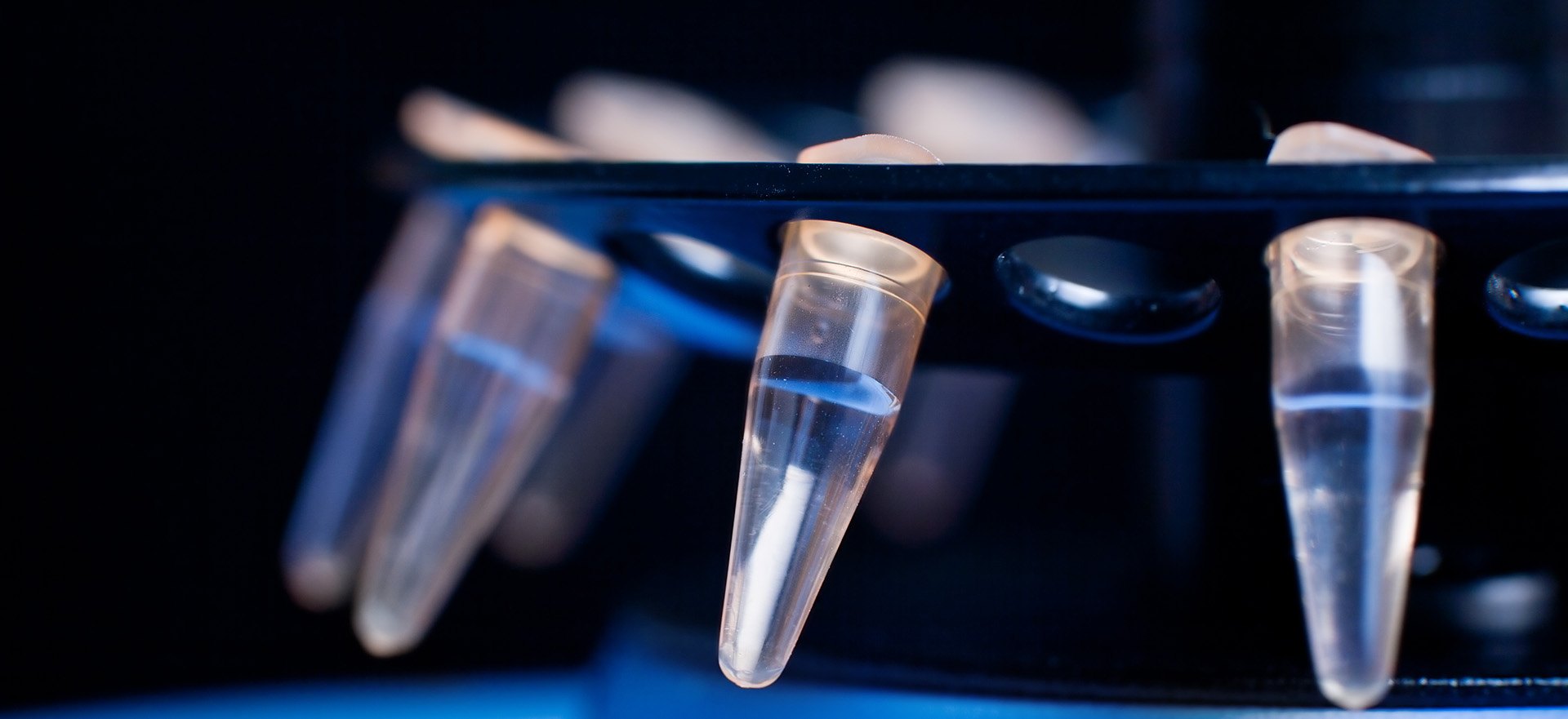
What Is Peptidomics Analysis?
Peptidomics measures peptide forms that already exist in a sample or that arise during a defined biological or development process. Unlike routine bottom-up proteomics, peptidomics often analyzes endogenous or application-specific peptides without assuming tryptic digestion. Peptide abundance, termini, post-translational modifications, molecular context, and susceptibility to degradation can all affect interpretation.
A plasma peptide biomarker study, an HLA ligand discovery program, a neuropeptide project, and a therapeutic-peptide stability assay may all use LC-MS/MS, but they require different pre-analytical controls, enrichment strategies, acquisition settings, and search logic. We begin with the decision your study must support and then define a fit-for-purpose analytical route.
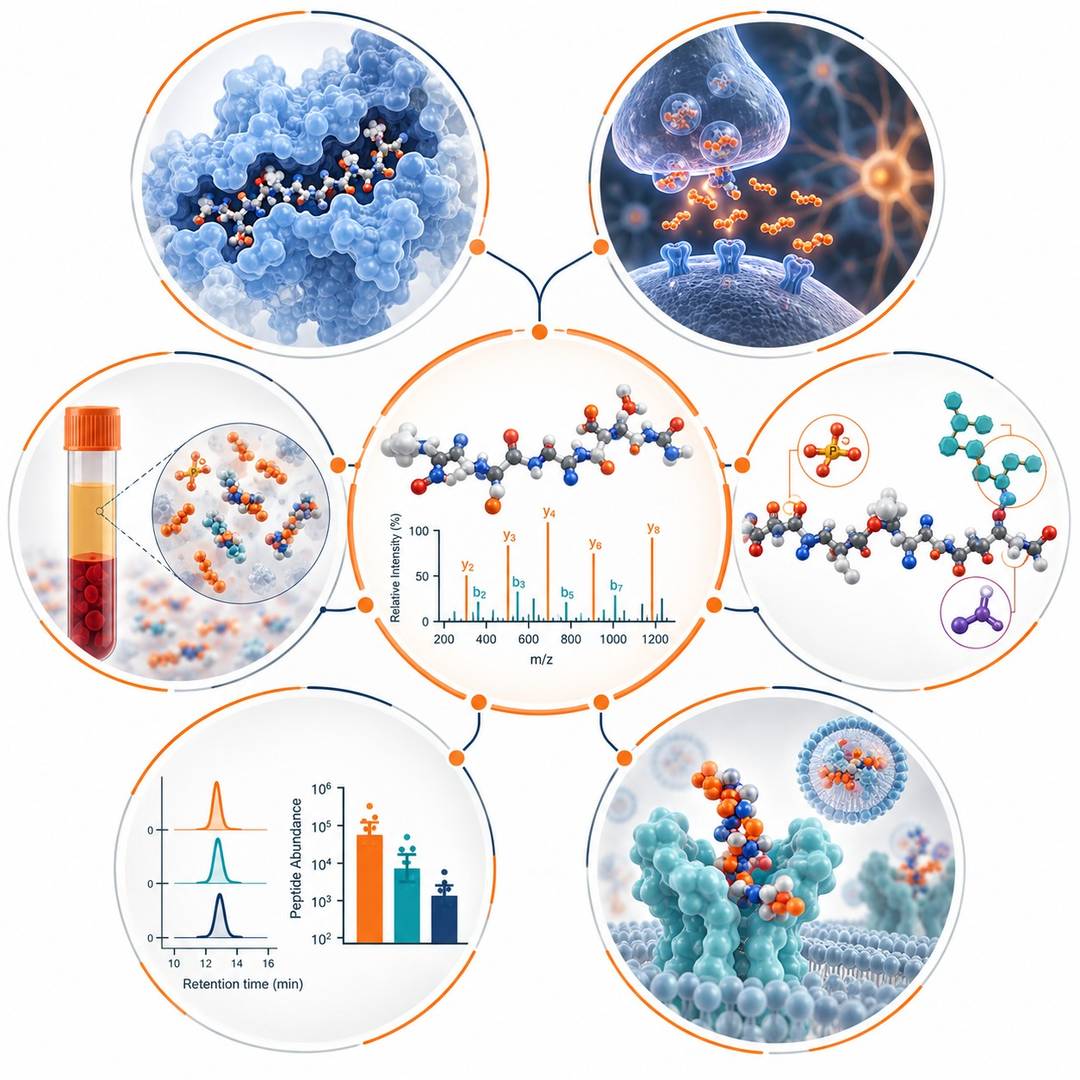
Our Peptidomics Service Portfolio
Choose a service family based on the peptide class, sample context, and evidence required. Each landing page provides the detailed analytical options for that decision path.
How to Choose the Right Peptidomics Analysis
| Your Starting Point | Primary Question | Recommended Route | Decision-Ready Output |
|---|---|---|---|
| Biological sample with unknown peptide composition | Which native or processed peptides are present? | Untargeted endogenous peptidomics or a specialized discovery workflow | Peptide list, PTM and termini annotation, precursor mapping, and exploratory comparison |
| Cells or tissues for antigen-presentation research | Which peptides are displayed by MHC/HLA molecules? | Immunopeptidomics with class-specific enrichment and HLA-aware interpretation | Presented-peptide evidence, binding motifs, source mapping, and prioritized antigen candidates |
| Brain region, CSF, neural model, or secretome | Which mature neuropeptides and processing products change? | Neuropeptidomics with stabilization, PTM-aware identification, and precursor analysis | Neuropeptide profile, PTM and cleavage annotation, and comparative or spatial interpretation |
| Known peptide or purified material | What is the peptide's identity, sequence, purity, or structural state? | Peptide characterization using orthogonal analytical methods | Attribute-specific characterization package with traceable analytical evidence |
| Comparative cohort or repeated study | Which peptide signals change reproducibly across samples? | Relative quantification selected for cohort size, matrix, and study design | Normalized abundance matrix, QC summary, statistics, and differential-peptide results |
| Shortlist of peptide candidates | Can the candidates be measured selectively and reproducibly? | PRM/MRM or another targeted verification route | Targeted assay parameters, peak-level evidence, quantitative results, and a project-specific performance summary |
| Therapeutic peptide candidate | How does the molecule behave in biological matrices or development studies? | Peptide bioanalysis, metabolic stability, degradation mapping, or ADME support | Concentration data, stability or metabolite profile, degradation sites, and candidate comparison |
For cohort-scale comparative profiling, DIA Peptidomics can improve consistency across repeated measurements. For development-stage molecules, Therapeutic Peptide Bioanalysis provides a dedicated route for PK/PD, metabolic stability, and related bioanalytical questions.
LC-MS/MS Peptidomics Workflow
Scientific Consultation
Define the peptide class, biological decision, controls, and evidence level.
Sample Strategy
Plan collection, stabilization, storage, extraction, and enrichment.
LC-MS/MS Analysis
Match separation, acquisition, and fragmentation to the analytes.
Identification
Apply peptide-aware search, de novo sequencing, and PTM analysis.
Interpretation
Quantify, annotate, compare, and integrate project-specific evidence.
Reporting
Deliver structured data, QC, visual summaries, and next-step guidance.
1
Scientific Consultation and Study Design
We define the analyte class, biological question, sample matrix, study groups, controls, required evidence level, and downstream use of the results. This separates exploratory discovery from quantitative verification.
2
Sample and Pre-analytical Strategy
Collection, stabilization, storage, shipping, and extraction are planned around peptide stability and matrix effects. Protease control, low-binding materials, fractionation, or affinity enrichment may be incorporated as needed.
3
Separation and Mass Spectrometry
Chromatography, acquisition mode, fragmentation, and scan settings are selected according to peptide length, charge, hydrophobicity, abundance, modifications, and quantitative objective.
4
Peptide Identification and Characterization
Data processing can combine database search, non-specific or semi-specific search, de novo sequencing, open-modification analysis, custom sequence databases, and precursor mapping.
5
Quantitative and Biological Interpretation
Depending on the study, analysis may include normalization, replicate and batch assessment, differential abundance, motif analysis, cleavage mapping, pathway interpretation, or multi-omics evidence integration.
6
Reporting and Next-Step Planning
You receive structured data tables, methods and QC documentation, visual summaries, and an interpretation aligned with the original decision. Candidates can be routed to targeted or orthogonal follow-up.
Peptidomics Sample Requirements and Study Design
Sample requirements are not universal across peptidomics. They depend on the peptide class, matrix complexity, target abundance, enrichment route, study design, and instrument method. We confirm project-specific requirements before sample shipment rather than publishing one minimum that may be inappropriate.
| Planning Factor | What to Provide or Discuss | Why It Matters |
|---|---|---|
| Sample matrix and species | Tissue, cells, plasma, serum, CSF, urine, conditioned medium, purified peptide, food, plant, microbial, or other material | Determines stabilization, extraction, cleanup, interference control, and database selection |
| Collection and storage history | Collection tubes, additives, processing delay, temperature, freeze-thaw history, and storage duration | Helps assess ex vivo proteolysis, adsorption, and comparability between samples |
| Experimental groups | Group definitions, biological replicates, batches, time points, treatments, and randomization constraints | Supports an acquisition and statistical design matched to the comparison |
| Peptide knowledge | Known sequences, expected PTMs, precursor proteins, HLA type, molecular form, or reference standards | Guides targeted settings, custom databases, enrichment, and confidence assessment |
| Controls and standards | Blank matrix, pooled QC, process control, reference material, or stable-isotope-labeled standards | Enables contamination checks, drift assessment, recovery monitoring, and quantitative traceability |
| Required evidence | Discovery list, relative change, absolute concentration, structural confirmation, or orthogonal validation | Determines the analytical route and what can be concluded from the data |
Limited sample availability? Contact us before collection or shipment. A design review can identify feasible objectives, high-value controls, and whether discovery and verification should be staged.
Peptidomics Data Analysis and Quality Control
Peptidomics Data and Report Deliverables
The exact package is defined in the project plan and may include:
- Identification tables: sequence, mass-to-charge ratio, charge state, retention time, modifications, and confidence metrics.
- Quantitative matrices: normalization notes, missing-value handling, replicate statistics, and group comparisons.
- Spectral evidence: representative annotated MS/MS spectra for priority peptides.
- Biological annotation: source protein, precursor, termini, cleavage site, or HLA assignment and binding-prediction context when included in the project scope.
- Quality documentation: sample, process, acquisition, and quantitative QC summaries.
- Visual and written report: decision-oriented figures, methods, findings, limitations, and recommended next steps.
- Data files: agreed raw and processed files in project-appropriate formats, where applicable.
Peptide Identification Evidence
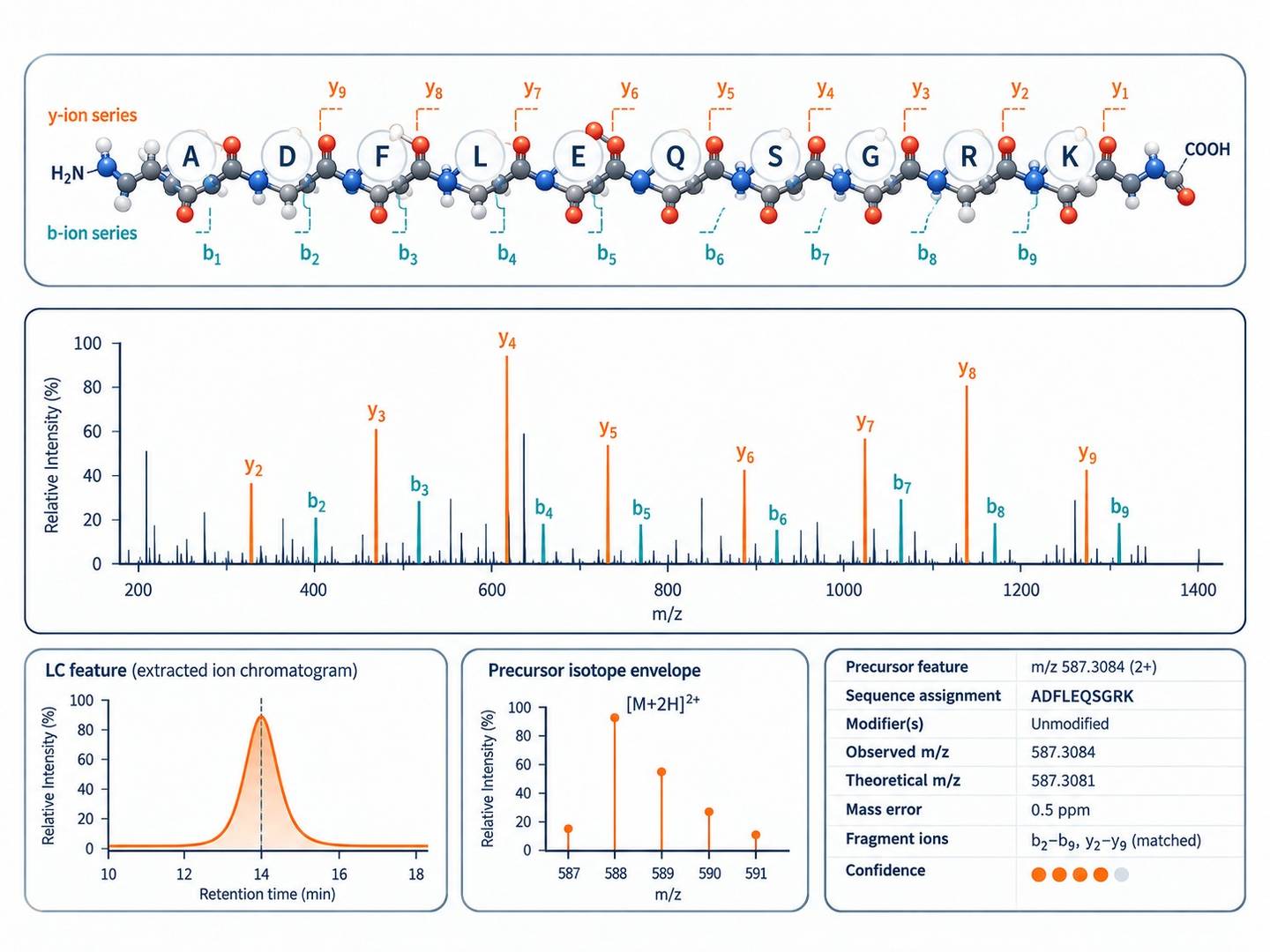
Sequence assignments can be supported by project-specific confidence fields and representative annotated MS/MS evidence for priority peptides.
Quantitative and Quality-Control Summary
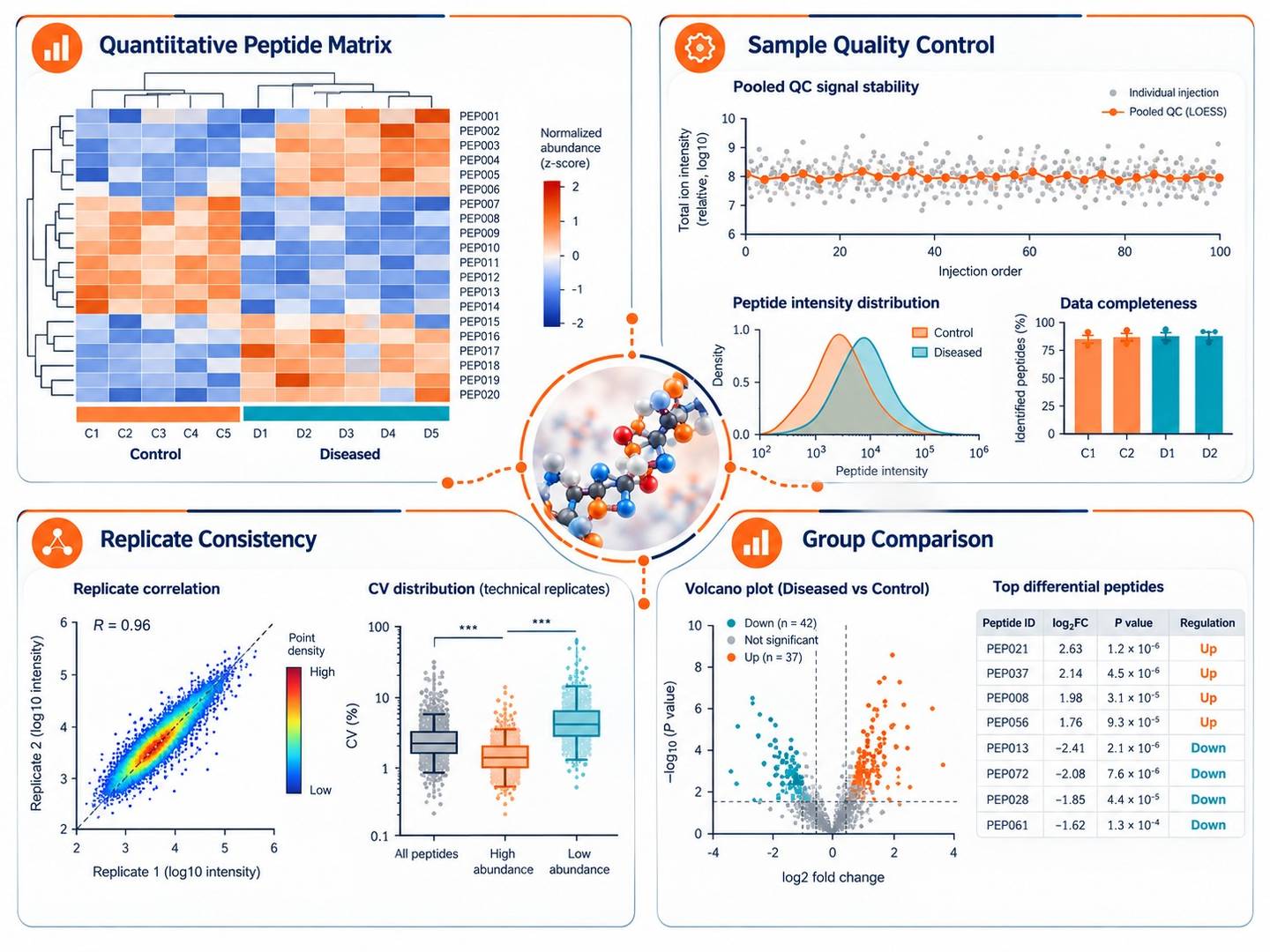
Comparative studies can include normalized abundance tables, sample-level QC, replicate assessment, and project-defined group comparisons.
Why Choose Creative Proteomics for Peptidomics Services?
Multiple Peptide Classes
Endogenous, immune, neural, natural-product, synthetic, and therapeutic peptides are routed to distinct workflows rather than one generic protocol.
Method Selection First
The scientific decision, sample reality, controls, and evidence needs are aligned before analytical work begins.
Integrated Design
Sample preparation, acquisition, search strategy, quantification, and interpretation are planned as one connected workflow.
Path Beyond Discovery
Promising candidates can progress to targeted mass spectrometry, orthogonal validation, interaction studies, or development-stage bioanalysis.
Ready to define the right workflow? Tell us what peptide class you are studying, what samples are available, and what decision the data must support. Creative Proteomics will help define a defensible analytical route and a clear set of deliverables.
References
- Hellinger R, Sigurdsson A, Wu W, et al. Peptidomics. Nature Reviews Methods Primers. 2023;3:25.
- Schrader M, Schulz-Knappe P, Fricker LD. Historical perspective of peptidomics. EuPA Open Proteomics. 2014;3:171–182.
- Finoulst I, Pinkse M, Van Dongen W, Verhaert P. Sample preparation techniques for the untargeted LC-MS-based discovery of peptides in complex biological matrices. Journal of Biomedicine and Biotechnology. 2011;2011:245291.
Peptidomics Services FAQs
How is peptidomics different from routine bottom-up proteomics? +
Bottom-up proteomics usually digests proteins into predictable peptides to infer protein identity and abundance. Peptidomics often measures native, endogenous, processed, or otherwise biologically relevant peptide forms directly. Sample preparation and database searching therefore need to account for non-tryptic termini, multiple mature forms, degradation, PTMs, and short-sequence ambiguity.
Which peptidomics service should I choose? +
Start with the analyte and decision. Choose immunopeptidomics for MHC/HLA-presented peptides, neuropeptidomics for neural signaling peptides, endogenous peptidomics for unbiased native-peptide discovery, characterization for a known or purified peptide, and quantification or bioanalysis when the objective is comparative or targeted measurement. If the fit is unclear, send us the sample type, study groups, and desired output for a design review.
Can one project combine discovery and targeted verification? +
Yes. A staged program can use untargeted LC-MS/MS to nominate candidates, followed by PRM/MRM or another fit-for-purpose method to verify a smaller panel. The transition requires a review of peptide uniqueness, signal quality, matrix interference, standards, and the level of quantitative evidence required.
Do you accept tissues, cells, biofluids, and purified peptides? +
The portfolio supports many sample types, but preparation and feasibility differ substantially by matrix and peptide class. Sample amount, preservation, collection history, expected abundance, controls, and any biosafety restrictions are reviewed before acceptance.
Can you identify unknown or modified peptides? +
Projects may combine database searching, non-specific searches, de novo sequencing, open-modification analysis, and precursor mapping. The appropriate combination depends on the search space and evidence required. Novel sequences or modification assignments may require synthetic standards or another orthogonal method for confirmation.
What quantitative approaches are available? +
Options can include label-free comparison, isotopic or isobaric labeling, DIA, PRM/MRM, and stable-isotope-standard approaches. Selection depends on whether the goal is broad discovery, cross-sample consistency, targeted verification, or absolute concentration measurement.
What information is needed for a project proposal? +
Provide the biological question, sample matrix and species, number of samples and groups, collection and storage history, known peptide targets or modifications, desired analytical output, and any downstream verification plan. This information allows the workflow and deliverables to be scoped without relying on generic assumptions.
Can you guarantee identification of a particular peptide? +
No analytical platform can guarantee detection in advance. Detectability depends on abundance, stability, extraction recovery, ionization, fragmentation, matrix interference, and sequence properties. For a critical target, a feasibility review and targeted method with an appropriate reference standard may be more informative than relying only on untargeted discovery.