Comprehensive Peptide Hormone Profiling Across Endocrine Axes
Peptide hormones orchestrate virtually every physiological process — from metabolism and growth to stress response and reproduction. Yet reliably quantifying these low-abundance signaling molecules across multiple endocrine axes remains a persistent analytical challenge. Traditional single-plex immunoassays suffer from cross-reactivity, limited dynamic range, and the inability to distinguish structurally similar hormone variants. Our peptide hormone panel services address these limitations through validated, multiplexed LC-MS/MS-based quantification workflows that deliver high-specificity, simultaneous measurement of 5–20+ peptide hormones from a single sample injection.
We have built a comprehensive portfolio of 10 specialized hormone panels, each targeting a distinct endocrine axis. Every panel is developed and validated on our standardized LC-MS/MS multiple reaction monitoring (MRM) platform, ensuring consistent sensitivity, reproducibility, and data quality across all service lines. Whether you are investigating gut-brain signaling in metabolic disorders, profiling stress-axis biomarkers in psychiatric research, or quantifying growth factor dynamics in oncology studies, our panel ecosystem provides matched analytical solutions that eliminate the need to piece together assays from multiple vendors.
Our Peptide Hormone Panel Portfolio
Each of our 10 specialized peptide hormone panels is pre-validated with defined target lists, optimized sample preparation protocols, and established lower limits of quantification — reducing method development time and accelerating your path to publication-ready data.
Can't find a panel that matches your targets? Each panel's target list can be customized — contact our team to add or remove specific hormones.
Key Research Applications Across Our Panel Portfolio
Our 10 hormone panels collectively support research across four major domains. Each domain below lists the most relevant panels for that research area.

Metabolic & Energy Homeostasis
Quantify appetite-regulating hormones, insulin, glucagon, leptin, and growth factors to study obesity, diabetes, and metabolic syndrome.
Panels: Gut-Brain Axis, Appetite & Metabolism, Growth Factor
Panels: Gut-Brain Axis, Appetite & Metabolism, Growth Factor
Neuroendocrine & Stress Biology
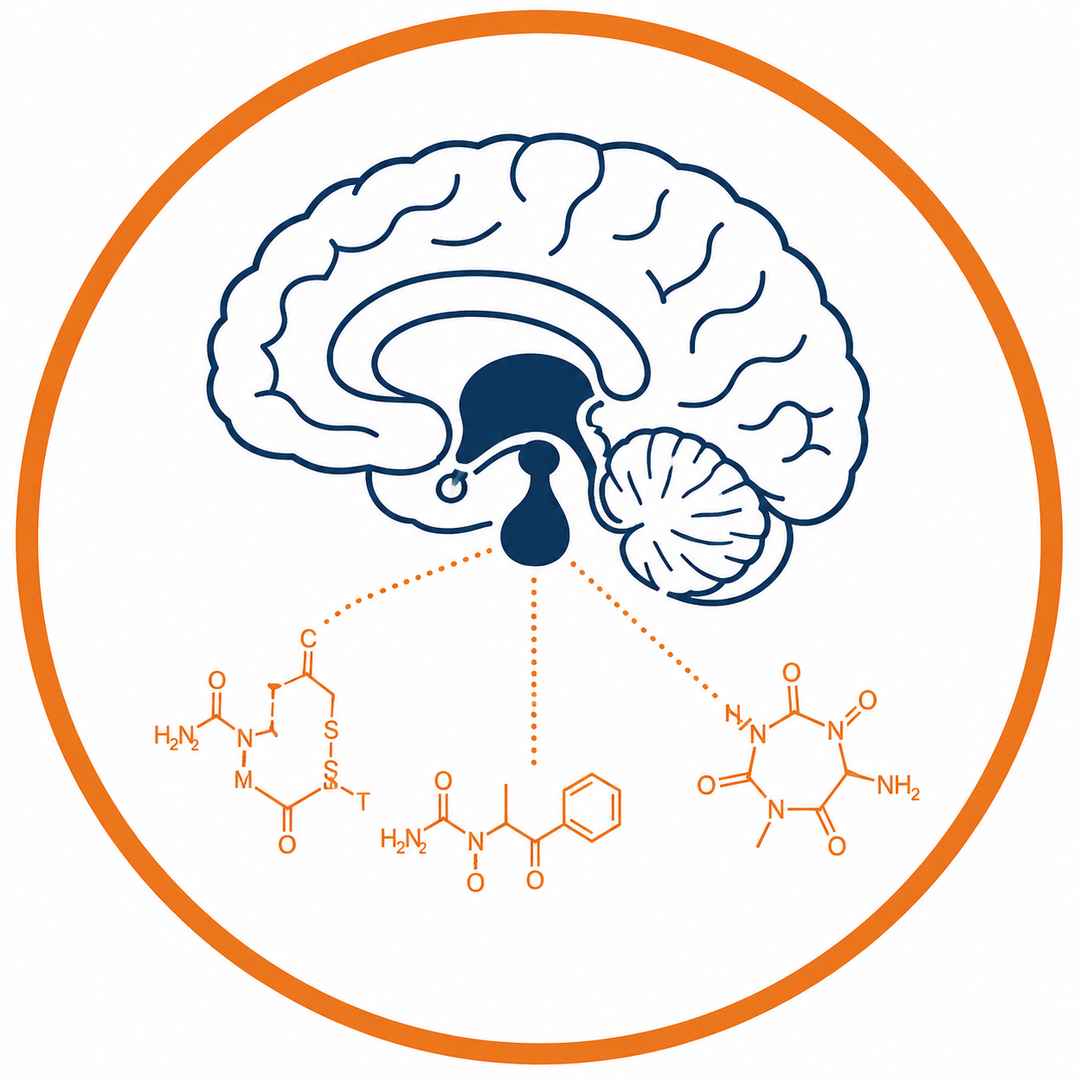
Profile HPA axis hormones, thyroid-regulating peptides, and neuropeptides for depression, chronic stress, migraine, and thyroid research.
Panels: HPA Axis, Thyroid, Gut-Brain Axis
Panels: HPA Axis, Thyroid, Gut-Brain Axis

Cardiovascular & Fluid Balance
Measure RAAS peptides, natriuretic peptides, and vasoactive hormones for hypertension, heart failure, and renal research.
Panels: RAAS & Vasoactive, ANP/BNP
Panels: RAAS & Vasoactive, ANP/BNP

Reproductive & Skeletal Biology
Quantify gonadotropins, bone metabolism regulators, and erythropoiesis factors for fertility, osteoporosis, and anaemia research.
Panels: Gonadotropin, Bone & Calcium, Erythropoiesis & EPO
Panels: Gonadotropin, Bone & Calcium, Erythropoiesis & EPO
LC-MS/MS Technology Platform for Hormone Quantification
All 10 panels operate on a unified LC-MS/MS platform built around targeted multiple reaction monitoring (MRM), a gold-standard approach for peptide quantification. Our workflows combine optimized sample preparation with stable isotope-labeled (SIL) internal standards, enabling absolute quantification with coefficients of variation typically below 15% across the analytical range. The standardized platform also means data from different panels share the same quality metrics and format, enabling seamless cross-panel comparisons in multi-arm studies.
Below is the standard service workflow we follow for every peptide hormone panel project, from sample receipt through data delivery.
Sample Receipt & QC
Visual inspection, volume/weight confirmation, protein content estimation.
Peptide Extraction & Cleanup
SPE with mixed-mode cation exchange and C18 sorbents under acidic conditions for each panel's target class.
LC-MS/MS MRM Analysis
C18 reversed-phase separation with high-resolution or triple quadrupole detection. SIL internal standards spiked before extraction.
Data Processing & QC
Skyline/TraceFinder peak integration, calibration curve fitting (R²>0.99), manual review of each MRM transition.
Report Generation
Quantified peptide concentrations, QA/QC metrics, chromatograms, and raw data files delivered in standardised format.
1
Sample Receipt & QC
All submitted samples undergo visual inspection and volume/weight confirmation. Sample integrity is assessed and protein/peptide content is estimated before extraction begins.
2
Peptide Extraction & Cleanup
Endogenous peptide hormones are enriched using solid-phase extraction with mixed-mode cation exchange and C18 sorbents under acidic conditions. Labile peptides (ghrelin, GLP-1, natriuretic peptides) receive pre-analytical stabilization with protease inhibitors and cold-chain handling. Neuropeptides from CSF or tissue use microelution SPE for low-volume sensitivity.
3
LC-MS/MS MRM Analysis
Peptides are separated on C18 reversed-phase columns with optimized gradient programs that resolve co-eluting isobaric variants (e.g., acyl vs. des-acyl ghrelin, Ang I vs. Ang II). Detection uses Q Exactive HF-X, Orbitrap Astral™, or Triple Quad 6500+ instruments with each MRM transition validated for linearity, matrix effects, and carryover.
4
Data Processing & QC
Raw data are processed in Skyline or TraceFinder with manual peak review. Calibration curves are fitted (R²>0.99), and each target peptide is quantified by peak area ratio to its internal standard. Inter-assay CVs are calculated to confirm reproducibility.
5
Report Generation
A structured data package is compiled: quantified peptide concentrations (Excel/CSV), QA/QC summary, representative chromatograms, raw MS files (.raw/.wiff), and Skyline project files. Optional journal-formatted methods sections are available.
Detection Performance and Quality Metrics
Our LC-MS/MS platform delivers consistent, high-quality peptide hormone quantification across all 10 panel services. The following performance characteristics are validated for each target peptide and documented in every project QA/QC report.
- pg/mL-Level Sensitivity
Achieves high-sensitivity detection for most peptide hormones using PRM/MRM with isotope-labeled internal standards, with typical LLOQs in the pg/mL range for plasma and serum matrices. - Inter-Assay CV Below 15%
Standardized SIL internal standard correction and automated peak integration keep inter-assay coefficients of variation consistently below 15% across the validated calibration range. - Multi-Sample Type Validation
Panels are validated for serum, plasma (EDTA/heparin), CSF, tissue homogenates, and cell culture supernatants, with panel-specific sample preparation protocols optimized for each matrix. - Comprehensive PTM Detection
Workflows detect amidated, phosphorylated, glycosylated, and pyroglutamylated peptide forms without requiring separate enrichment steps, preserving the native modification landscape. - 96-Well Plate Automation
Sample preparation and extraction are automated on 96-well plate formats for high-throughput projects, reducing manual handling variability and enabling batch processing of up to 96 samples per run.
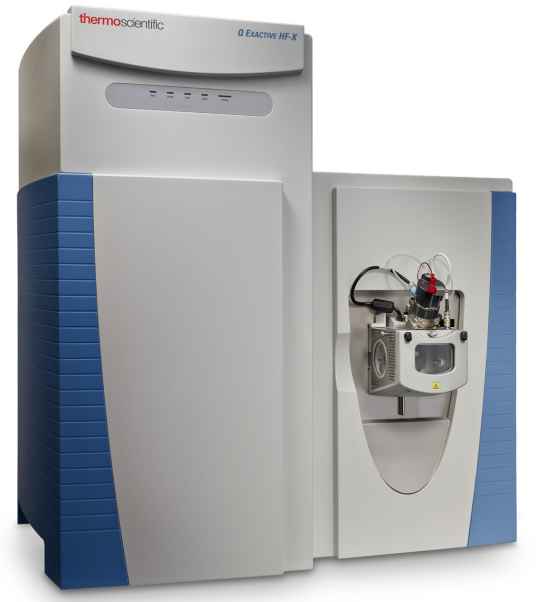 Q Exactive HF-X
(Fig from Thermo Fisher)
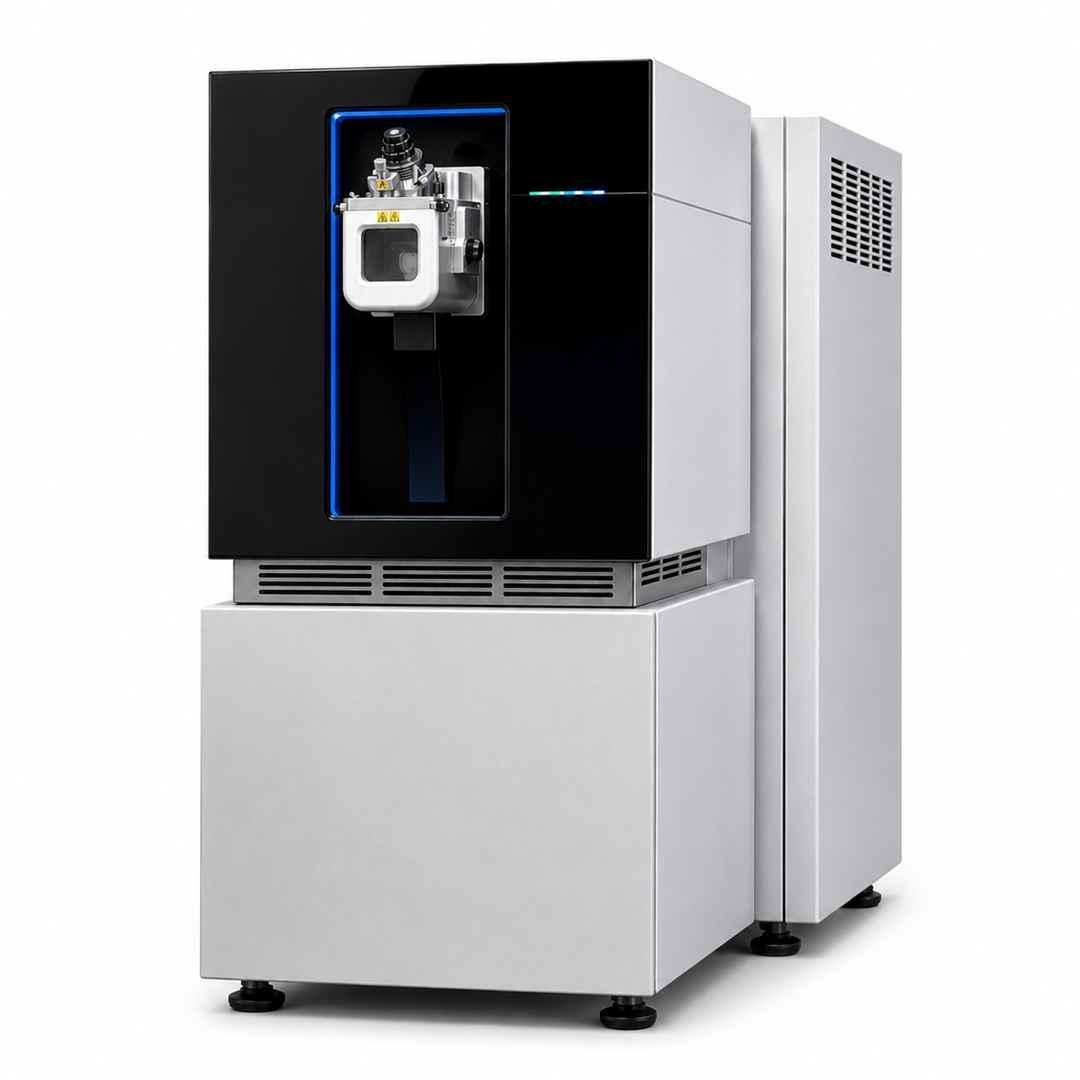 Orbitrap Astral™
(Fig from Thermo Scientific)
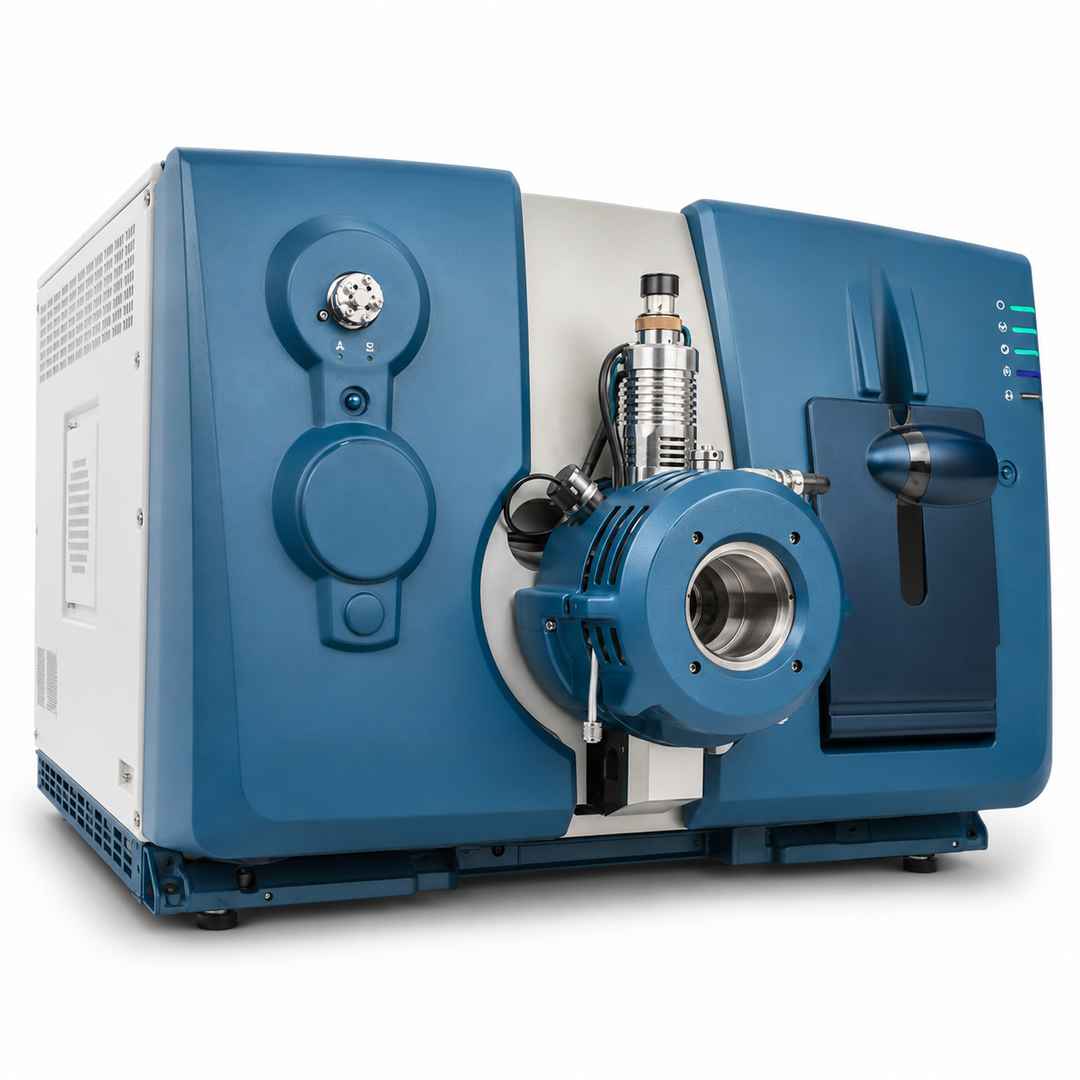 Triple Quad 6500+
(Fig from SCIEX)
Instrument Capability Overview
| Feature | Q Exactive HF-X | Orbitrap Astral™ | Triple Quad 6500+ |
|---|---|---|---|
| Scan Speed | ~20–25 Hz | Up to 200 Hz | Up to 100 MRM transitions/s |
| Quantification Modes | PRM, TMT, Label-free | PRM, SureQuant™, DIA | MRM, MRM³, Scheduled MRM |
| Resolution | Up to 240,000 (m/z 200) | Up to 480,000 (m/z 200) | Unit resolution (Q1/Q3) |
| Best For | Discovery profiling | Multi-peptide multiplex panels | Targeted MRM quantification |
Our Advantages in Peptide Hormone Quantification
Our 10-panel portfolio is built specifically for endocrine peptide research — not repurposed from general proteomics workflows. Six key advantages set it apart.
Why LC-MS/MS Over Immunoassay for Peptide Hormone Quantification
Choosing the right analytical platform directly impacts the quality and interpretability of peptide hormone data. The table below compares our LC-MS/MS approach with traditional immunoassay methods across the dimensions most relevant to endocrine researchers.
| Dimension | Creative Proteomics LC-MS/MS | ELISA / Immunoassay | Standard MS-Based CRO |
|---|---|---|---|
| Multiplexing Capacity | 5–20+ peptides per run | 1–4 targets per assay | Unlimited (discovery mode) |
| Quantification Type | Absolute with SIL internal standards | Relative (OD-based, single-plex) | Relative (label-free or TMT) |
| Cross-Reactivity Risk | Minimal — MRM selects specific m/z transitions | High — antibody cross-reacts with structural analogs | Minimal — MS-based detection |
| PTM Resolution | Yes — detects amidated, phosphorylated, glycosylated forms | Limited — antibody-dependent | Variable — depends on workflow |
| Isoform Discrimination | Yes — distinguishes acyl vs. des-acyl, Ang I vs. Ang II | Rarely — cross-reactivity between isoforms | Partial — requires DIA or targeted method |
| Panel Customization | Flexible — add/drop targets on request | Fixed kit content | Limited — designed for broad profiling |
| Sample Volume Needed | 100–200 µL (plasma/serum) | Varies by kit (typically 50–100 µL per target) | ≥50 µg protein equivalent |
This comparison illustrates why researchers increasingly choose LC-MS/MS for peptide hormone quantification — particularly when multiple targets, structural variants, or modified forms need to be measured from limited sample volumes in a single analytical run. Combined with our pre-validated panel design and flexible customization, these technical advantages translate directly into faster, more reliable project outcomes.
Sample Types Supported Across Our Panels
Our peptide hormone panels accept a wide range of biological matrices. Compatibility varies by panel depending on endogenous hormone abundance and matrix effects.
| Sample Type | Typical Minimum Volume | Key Considerations | Best-Suited Panels |
|---|---|---|---|
| Plasma (EDTA) | 100–200 µL | Add protease inhibitors; avoid repeated freeze-thaw; preferred for labile peptides (ghrelin, GLP-1, natriuretic peptides) | Gut-Brain Axis, Appetite & Metabolism, RAAS, ANP/BNP, HPA Axis |
| Serum | 200–300 µL | Collect in serum separator tubes; process within 2 h | Thyroid-Regulating, Bone & Calcium, Gonadotropin, Growth Factor, EPO |
| CSF | 200–500 µL | Low-protein-binding tubes; add protease inhibitors; ship on dry ice | Gut-Brain Axis, HPA Axis, Growth Factor (NGF, BDNF) |
| Tissue Homogenate | 10–50 mg wet weight | Snap-freeze immediately; avoid fixatives or embedding media | All panels (tissue-type dependent) |
| Cell Culture Supernatant | 500 µL–1 mL | Add protease inhibitors before freezing; prefer serum-free conditions | Growth Factor, Erythropoiesis & EPO, Gonadotropin |
Detailed collection protocols, tube specifications, and shipping instructions are provided with each panel. For rare or volume-limited samples, contact our team — we can often accommodate smaller amounts using optimised micro-extraction workflows.
Deliverables: What You Receive
Every peptide hormone panel project includes a standardised data package designed for immediate use in publications, grant applications, and internal reporting. All data are processed through the same quality-controlled pipeline regardless of which panel you select.
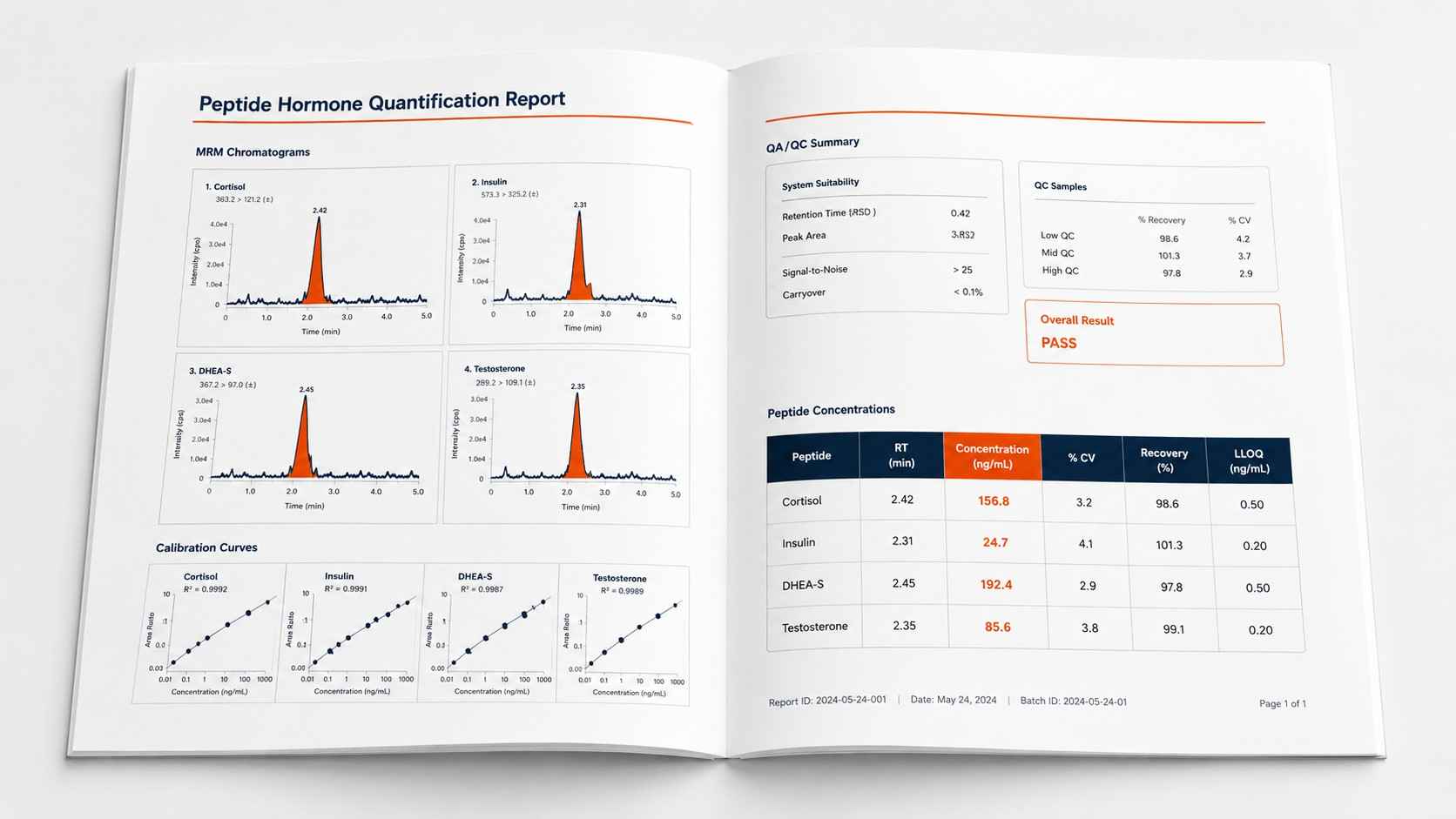
- Peptide Quantification Report (PDF)
Complete summary of all detected and quantified hormone targets across all samples, with statistical comparison where applicable. - Quantitative Data Table (Excel/CSV)
Peptide IDs, retention times, peak areas, calculated concentrations, internal standard recovery, and QC metrics. - QA/QC Summary
Calibration curve parameters (R², linear range), LLOQ verification, inter-assay CVs, and internal standard recovery rates. - Representative Chromatograms
Extracted ion chromatograms for each MRM transition with annotated retention times and peak integration boundaries. - Raw MS Data Files
Instrument-native .raw or .wiff files and Skyline/TraceFinder project files for independent data review. - Methods Section Draft (Optional)
Journal-formatted methods and supplementary table describing LC-MS/MS parameters and MRM transitions.
Explore our broader peptidomics capabilities: