Bioanalytical Support for Therapeutic Peptide Drug Development
Peptide therapeutics have expanded well beyond metabolic indications — into oncology, CNS, and antimicrobial applications — driving bioanalytical demands that conventional small-molecule CRO workflows cannot meet. Peptides degrade rapidly without proper stabilisation, adsorb to standard plastics at low concentrations, and often share near-identical sequences with endogenous counterparts. Our approach is built around three integrated service pillars — PK/PD bioanalysis, metabolic stability profiling, and comprehensive ADME/DMPK assessment — all on a shared LC-MS/MS platform with a single quality framework. The same analytical team develops your method, then carries it directly into stability and ADME assays — eliminating the re-validation and inter-lab variability that fragment multi-CRO workflows.
Our Peptide Bioanalysis Service Portfolio
Three service lines, one platform — contiguous coverage from first PK time point to IND-ready ADME package.
Peptide Bioanalysis Applications Across Drug Development Stages
Each development phase requires a different type of bioanalytical data — mapped below to the service pillar best positioned to answer its key questions.
Lead Optimisation & Candidate Screening
Compare analogues for plasma stability, identify metabolic hotspots, rank by CLint and t½ across species.
Service: Metabolic Stability Profiling
Output: CLint, t½, species comparison, metabolite profile
Service: Metabolic Stability Profiling
Output: CLint, t½, species comparison, metabolite profile
Preclinical PK/PD Characterisation
Quantify lead candidate in animal plasma after SC or IV dosing. Compare with endogenous hormone levels via multiplex.
Service: PK/PD Bioanalysis
Output: Cmax, AUC, t½, concentration-time curves
Service: PK/PD Bioanalysis
Output: Cmax, AUC, t½, concentration-time curves

IND-Enabling ADME Profiling
Build the regulatory package: MetID, protein binding (fu), Caco-2 permeability (Papp), CYP inhibition across 5 isoforms.
Service: ADME/DMPK Assessment
Output: MetID structures, fu%, Papp, CYP IC50
Service: ADME/DMPK Assessment
Output: MetID structures, fu%, Papp, CYP IC50

Integrated IND Package
All three pillars converge. One validated MRM method feeds PK, stability, and ADME data into a single cross-referenced report.
Services: All three pillars
Output: Unified report for regulatory submission
Services: All three pillars
Output: Unified report for regulatory submission
Example: a cyclic peptide candidate enters for mouse PK/PD in week 1. That same MRM method — transitions, ISTD, LC gradient unchanged — feeds plasma stability in week 3 and microsomal CLint in week 5. No re-development, no method transfer documentation.
LC-MS/MS Technology Platform for Peptide Bioanalysis
All three services share a unified LC-MS/MS platform. Targeted quantification runs on a Triple Quad 6500+ with scheduled MRM and SIL internal standard correction, delivering low ng/mL to pg/mL sensitivity. High-resolution metabolite identification uses an Orbitrap Astral with sub-1 ppm mass accuracy — critical for resolving closely related species (deamidated vs. oxidised, N-terminal truncations) indistinguishable on unit-resolution instruments.
All data — whether PK, stability, or ADME — flow through the same processing pipeline: Skyline for quantification, Compound Discoverer for MetID. One calibration model, one audit trail, zero format conversions.
Standard workflow across all projects:
Method Development & Validation
MRM optimisation, SIL-ISTD assignment, full validation (FDA/EMA guidance).
Sample Preparation & Peptide-Specific Handling
Stabiliser-matched collection kits, low-binding labware, SPE enrichment.
LC-MS/MS Acquisition
Scheduled MRM (6500+) + HR-MS/MS (Astral) on shared C18 gradient framework.
Data Processing & Cross-Assay QA
Skyline integration, WinNonlin NCA, cross-assay consistency verification.
Report & Senior Review
Structured data package, QA/QC summary, raw files, senior scientist sign-off.
1
Method Development & Validation
Multiple charge states and fragment ions are evaluated per peptide to select optimal MRM transitions. A SIL internal standard is paired with each analyte. Validation covers selectivity (6+ matrix lots), linearity (R² > 0.99), accuracy/precision (±15%), matrix effect, and stability per FDA/EMA guidance. The validated method transfers directly across all three pillars — same transitions, ISTD, gradient.
2
Sample Preparation & Peptide-Specific Handling
Peptide-specific protocols: DPP-IV inhibitor tubes for GLP-1 analog PK, protease inhibitor cocktails for stability, low-binding microcentrifuge tubes throughout. SPE with mixed-mode cation exchange and C18 sorbents enriches analytes while removing protein interferences. Labile peptides receive pre-analytical stabilisation and cold-chain handling.
3
LC-MS/MS Acquisition
Scheduled MRM on the Triple Quad 6500+ quantifies across all sample types — PK time points, stability aliquots, ADME incubations. The Orbitrap Astral runs in parallel for metabolite ID (DDA-MS/MS, up to 480,000 resolution). Both instruments share the same C18 gradient for chromatographic consistency.
4
Data Processing & Cross-Assay QA
Skyline processes all MRM data with manual peak review. Calibration curves: R² > 0.99, quantified by peak area ratio to SIL-ISTD. Phoenix WinNonlin NCA for PK parameters. Cross-assay consistency verified — same calibrator batch, same ISTD lot across PK, stability, and ADME data.
5
Report & Senior Review
Structured package: quantitative data (Excel/CSV), QA/QC summary with calibration parameters and inter-assay CVs, representative MRM chromatograms at LLOQ/mid-QC/high-QC, raw MS files (.wiff/.raw), Skyline project files. Every deliverable reviewed by a senior scientist with domain-specific peptide bioanalysis experience.
Detection Performance and Instrument Capabilities
Our unified LC-MS/MS platform delivers consistent, high-quality peptide bioanalysis across all data types — PK quantification, stability profiling, and ADME assessment. The following performance characteristics are validated for each MRM method and documented in every project QA/QC report.
- pg/mL-Level Sensitivity
Scheduled MRM on the Triple Quad 6500+ with SIL internal standard correction achieves typical LLOQs of 0.1–1.0 ng/mL in plasma; SPE enrichment pushes sensitivity to 0.05–0.5 ng/mL for low-dose formulations. - Inter-Assay CV Below 15%
Standardised SIL-ISTD correction and manual peak review in Skyline keep inter-assay coefficients of variation consistently below 15% at LLOQ and below 10% at mid/high QC across three validation runs. - Multi-Matrix Validation
Validated across plasma (EDTA, K₂EDTA), liver microsomes, cryopreserved hepatocytes, and cell culture media — with matrix-specific sample preparation protocols optimised for each peptide class. - 4–5 Orders Linear Dynamic Range
Calibration curves deliver R² > 0.990 across 4–5 orders of magnitude per MRM transition, covering the full expected concentration range from LLOQ to Cmax in preclinical PK studies. - Comprehensive Stability Coverage
Bench-top (4–6 h), freeze–thaw (3 cycles), and long-term (–80°C, 30+ days) stability validated per analyte per matrix, meeting FDA/EMA bioanalytical method validation requirements.
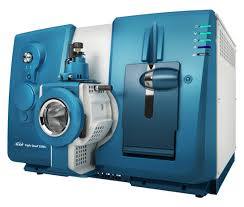 Triple Quad 6500+
(Fig from SCIEX)
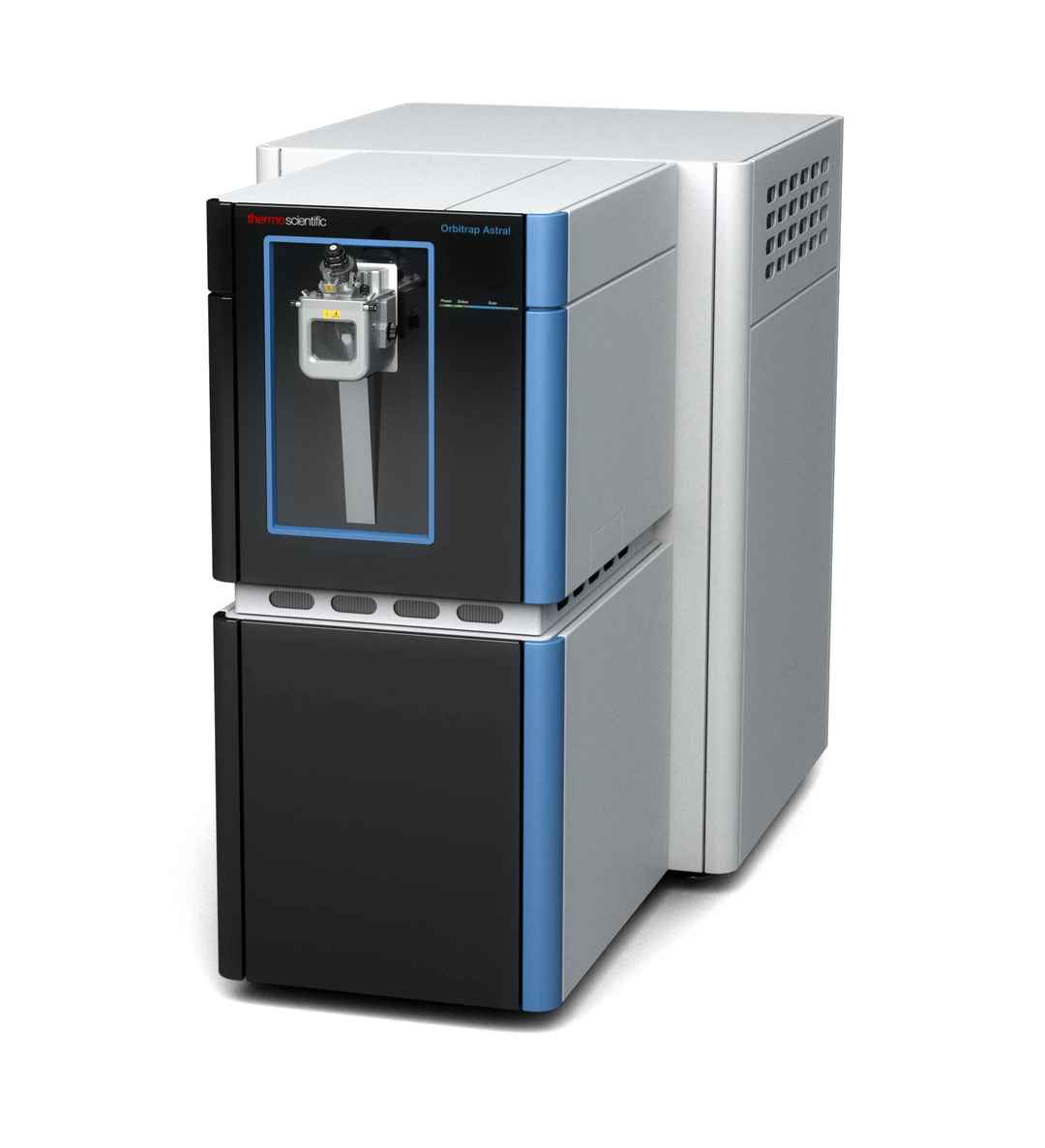 Orbitrap Astral™
(Fig from Thermo Scientific)
Instrument Capability Overview
| Feature | Triple Quad 6500+ | Orbitrap Astral™ |
|---|---|---|
| Primary Use | Targeted MRM quantification | High-resolution metabolite ID |
| Scan Speed | Up to 100 MRM transitions/s | Up to 200 Hz |
| Resolution | Unit resolution (Q1/Q3) | Up to 480,000 (m/z 200) |
| Mass Accuracy | ± 0.1 Da (unit) | Sub-1 ppm |
| Quantification Mode | MRM, Scheduled MRM, MRM³ | PRM, SureQuant™ |
| Best For | PK/PD, stability, protein binding | Metabolite ID, structural elucidation |
Why Choose Creative Proteomics for Peptide Drug Bioanalysis
Our three-pillar peptide bioanalysis platform is purpose-built for therapeutic peptide programmes — not repurposed from small-molecule CRO workflows. Six key advantages set it apart.
Sample and Material Requirements
| Matrix / Material | Volume per Time Point | Collection Requirements |
|---|---|---|
| Mouse plasma (PK) | 25 μL | K₂EDTA + DPP-IV inhibitor (GLP-1 analogs); protease inhibitor cocktail |
| Rat / dog / NHP plasma | 50–100 μL | K₂EDTA, cold centrifugation within 30 min |
| Human plasma | 100 μL | K₂EDTA; stabiliser matched to peptide class |
| Liver microsomes (stability) | 0.5 mg/mL protein | Pooled donors; species-specific NADPH cofactor |
| Cryopreserved hepatocytes | 1 × 10⁶ cells/mL | Viability ≥ 80%; suspension or plate format |
| Purified peptide (ADME panel) | 4–6 mg total | ≥ 95% purity (HPLC); exact mass and salt form |
Custom collection kits with pre-filled stabiliser tubes are available for multi-site studies. Contact our team for matrix-specific guidance or to request a sample collection protocol.
Deliverables: What You Receive
Every project includes a standardised data package designed for direct incorporation into regulatory submissions and internal decision-making. All deliverables pass the same quality-controlled pipeline regardless of which service pillar you engage.
- PK/PD Bioanalysis Report
Concentration–time data tables (Excel/CSV), non-compartmental PK parameters (Cmax, Tmax, AUC, t½, CL, Vd) from WinNonlin, mean ± SD concentration–time plots per dose group, and multiplex biomarker overlay (e.g., insulin, glucagon) where applicable. - Metabolic Stability Report
Parent depletion kinetics table, CLint and t½ per matrix and species, percent remaining vs. time plots, metabolite ID report with HR-MS/MS spectra and proposed structures, and degradation pathway diagram with species comparison summary. - ADME/DMPK Report
Plasma/microsomal/hepatocyte stability summary, metabolite ID dataset with fragmentation annotations, equilibrium dialysis protein binding (fu% per species), Caco-2 permeability Papp (A→B, B→A) with efflux ratio, and CYP inhibition IC50 values for 5 major isoforms. - Method Validation Report
Full documentation per FDA BMV (2018) and EMA guidance: selectivity data (6+ matrix lots), calibration curve linearity (R² > 0.99), accuracy and precision (±15%), matrix effect, recovery, and stability under all relevant conditions. - QA/QC Summary
Calibration parameters, inter-assay CVs, incurred sample reanalysis (ISR) data, internal standard recovery rates, and representative MRM chromatograms at LLOQ, mid-QC, and high-QC levels. - Raw Data Package
Instrument-native MS files (.wiff/.raw), Skyline project files with all MRM transitions and peak integrations, and Phoenix WinNonlin project files for independent data review and re-analysis.
Frequently Asked Questions
What is your typical turnaround time for a peptide PK study? +
Method development and validation: 2–3 weeks. Sample analysis (~100–200 time points): 1–2 weeks post-validation. A complete three-pillar IND package (overlapping samples) typically delivers in 6–8 weeks. Expedited discovery-screening timelines available.
Can you distinguish a therapeutic peptide from its endogenous counterpart? +
Yes. For peptides differing by fatty acid side chains (e.g., semaglutide vs. endogenous GLP-1), we develop MRM transitions specific to the modified residue. When mass differences are insufficient, HR-MS/MS on the Orbitrap Astral provides baseline chromatographic and mass resolution. Method selectivity is validated in 6+ individual matrix lots.
What are your minimum material requirements? +
PK: 25 μL plasma/time point (mouse). Full ADME panel: 4–6 mg purified peptide (≥ 95% purity). We routinely support discovery programmes where material is severely limited; contact us for feasibility assessment with your specific peptide.
Do you handle non-standard peptide modifications? +
Yes — cyclised, lipopeptides, PEGylated, stapled, and dual-agonist structures are all routine. Method development includes optimisation for each modification's chromatographic and ionisation behaviour. A 4-day feasibility assessment is available before committing to full validation.
Are your methods compliant with regulatory validation guidelines? +
Yes. Full validations follow FDA BMV (2018) and EMA guidance, aligned with ICH M10. Validation reports are formatted for direct IND/NDA/IMPD incorporation. Discovery-stage studies use fit-for-purpose validation with equivalent analytical rigour.
Integrated LC-MS/MS Bioanalysis of a GLP-1/GIP/Glucagon Triagonist Peptide — PK, Metabolic Stability, and ADME
Project Type: Multi-pillar peptide bioanalysis (confidential client project)
Timeline: 7 weeks from method development to final integrated report
Summary
A biotech developing a GLP-1/GIP/glucagon triagonist needed integrated bioanalytical support covering three data pillars — PK profiling in mouse and rat, metabolic stability in plasma and hepatocytes across four species, and a complete ADME package — all within 8 weeks for candidate selection. The triagonist carried a fatty acid conjugation causing non-specific binding to standard labware, and endogenous GLP-1 and GIP confounded quantification in single-plex ELISA format.
By deploying a single validated multiplex MRM method across all three pillars — with no method re-development between PK, stability, and ADME assays — the project delivered a cross-referenced integrated report in 7 weeks, used directly in the client's IND submission.
Methods
Key Technical Features:
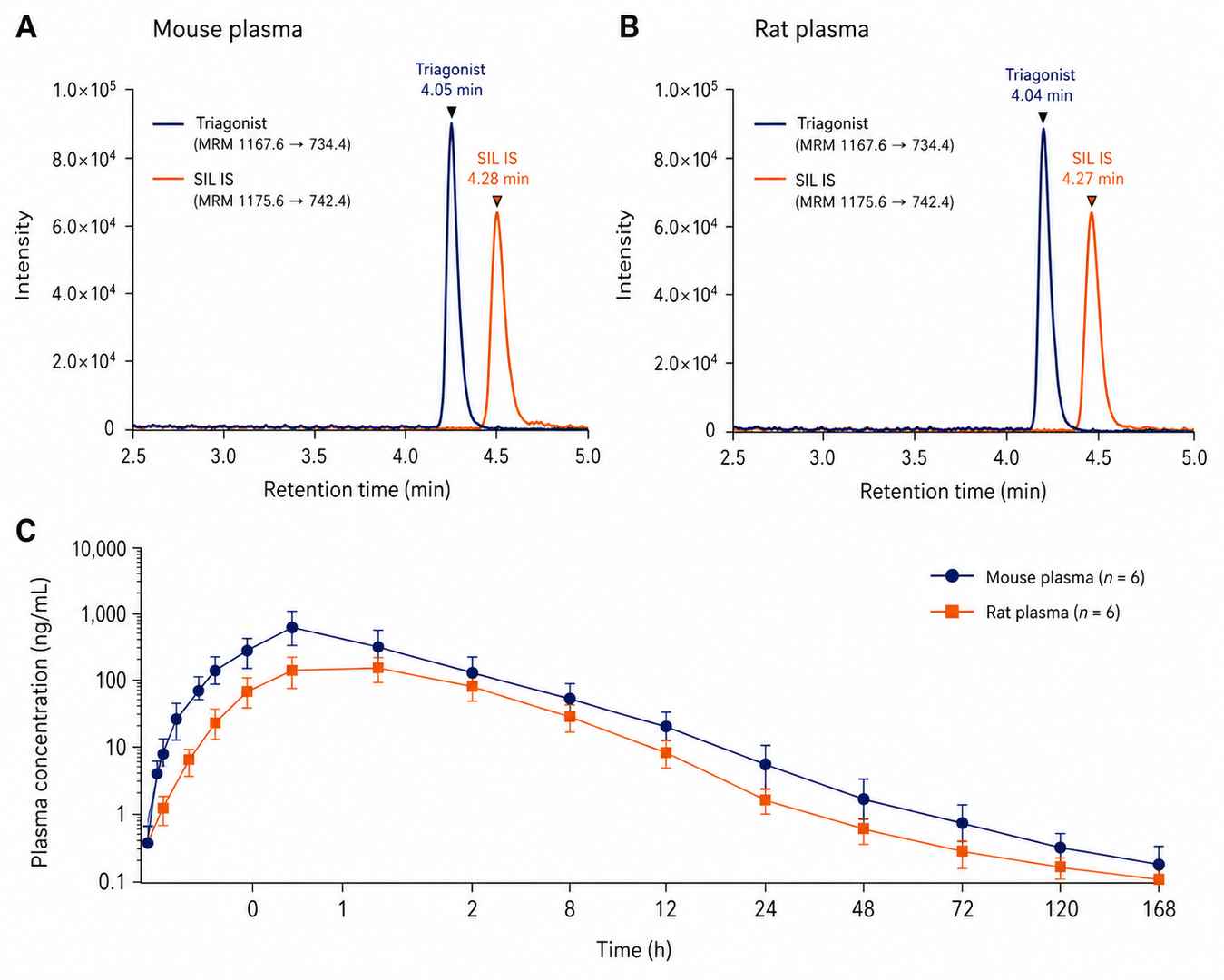
- Multiplex MRM method capturing the triagonist plus endogenous GLP-1, GIP, and glucagon in a single 12-minute C18 gradient
- SIL-labelled internal standards paired with each analyte for absolute quantification
- DPP-IV inhibitor collection tubes and low-binding polypropylene consumables to prevent adsorption loss
- Single validated method deployed unchanged across PK time points, stability incubations, and ADME assays — zero re-development, no method transfer
- SKyline quantification with manual peak review and Phoenix WinNonlin NCA for PK parameter calculation
Creative Proteomics offers integrated multi-pillar bioanalysis that mirrors this approach — from multiplex method development through cross-assay deployment to regulatory-ready integrated reporting.
- Targeted MRM peptide quantification for PK/PD studies
- Metabolic stability profiling across matrices and species
- In vitro ADME/DMPK panel with MetID, binding, permeability, CYP
- Unified QA/QC and reporting across all data pillars
Results
PK Profile
- Full concentration–time profiles in mouse (SC, 30 nmol/kg) and rat (SC/IV, 10 nmol/kg)
- Multiplex overlay showed the triagonist suppressed endogenous GIP and glucagon by 4 h post-dose
Metabolic Stability
- CLint in mouse plasma: 12.5 μL/min/mg; rat plasma: 8.7 μL/min/mg; human plasma: 5.1 μL/min/mg
- Mouse hepatocyte CLint: 22.3 μL/min/10⁶ cells
- MetID identified primary cleavage at the GIP-region backbone
ADME Parameters
- Protein binding fu: 2.1–4.7% across species
- Caco-2 Papp (A→B): 1.8 × 10⁻⁶ cm/s; efflux ratio: 2.3
- CYP inhibition IC50: all > 50 μM across 5 major isoforms
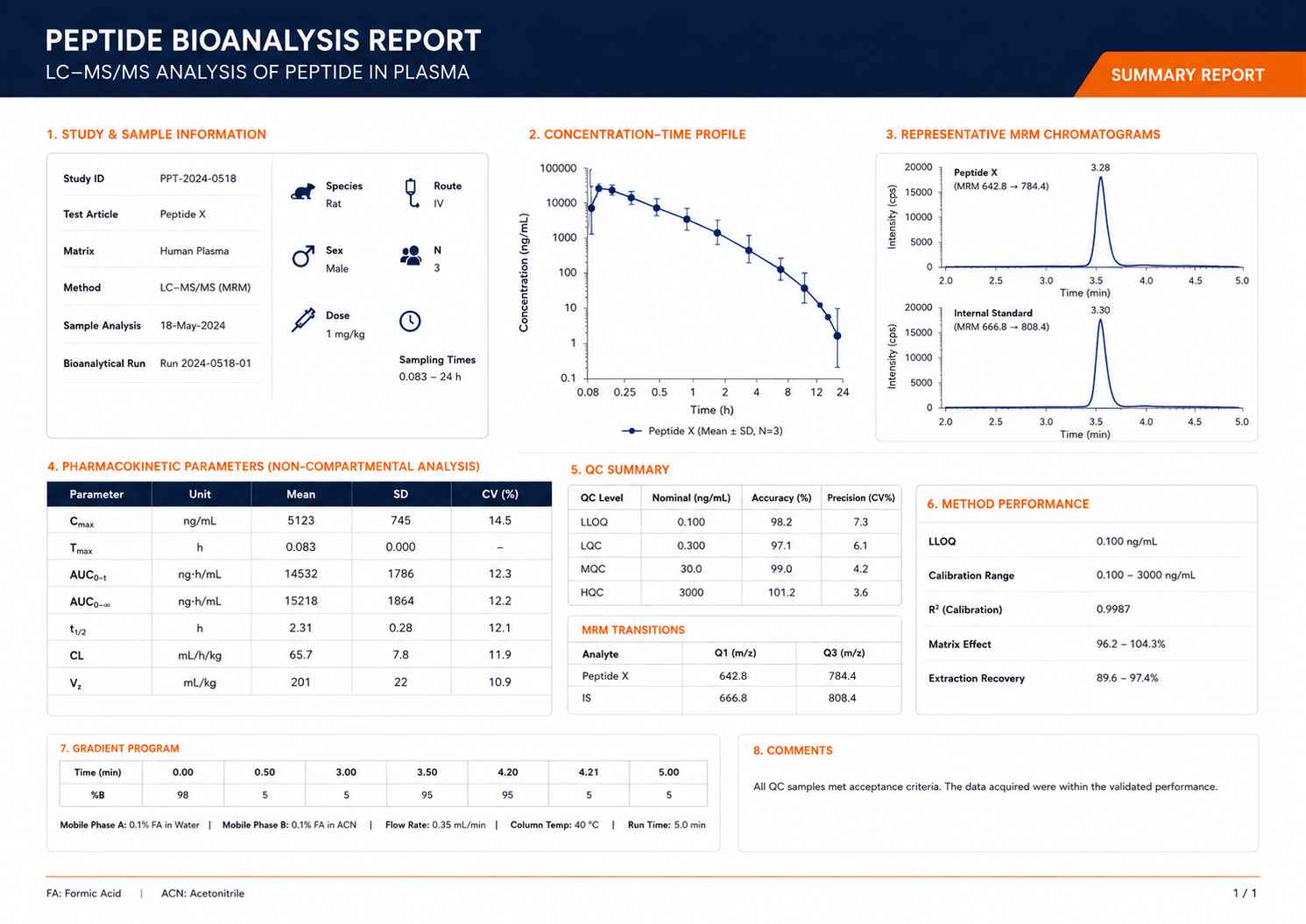
This integrated project demonstrates the value of a unified bioanalysis platform where PK, stability, and ADME data share one method, one calibration model, and one audit trail — eliminating the fragmentation typical of multi-CRO workflows.