Why Choose a Thyroid-Regulating Peptide Hormone Panel?
Thyroid-regulating peptide hormones — including thyrotropin-releasing hormone (TRH), calcitonin, calcitonin gene-related peptide (CGRP α/β), and parathyroid hormone-related peptide (PTHrP) — control essential physiological processes ranging from calcium homeostasis and bone metabolism to neural signaling and vascular regulation. Dysregulation of these peptides is implicated in thyroid cancer, metabolic bone disease, migraine pathophysiology, and endocrine disorders.
Traditional immunoassays face well-known limitations when quantifying these molecules: cross-reactivity between peptide isoforms, inability to distinguish amidated vs. non-amidated forms, and poor sensitivity for low-abundance species like CGRP in plasma.
Our Thyroid-Regulating Peptide Hormone Panel overcomes these barriers. We combine high-resolution LC-MS/MS with optimized peptide enrichment and PTM-aware bioinformatics to deliver multiplex quantification of 8+ peptide hormones from a single sample in a single analytical run.
Key Thyroid-Regulating Peptide Hormones We Detect
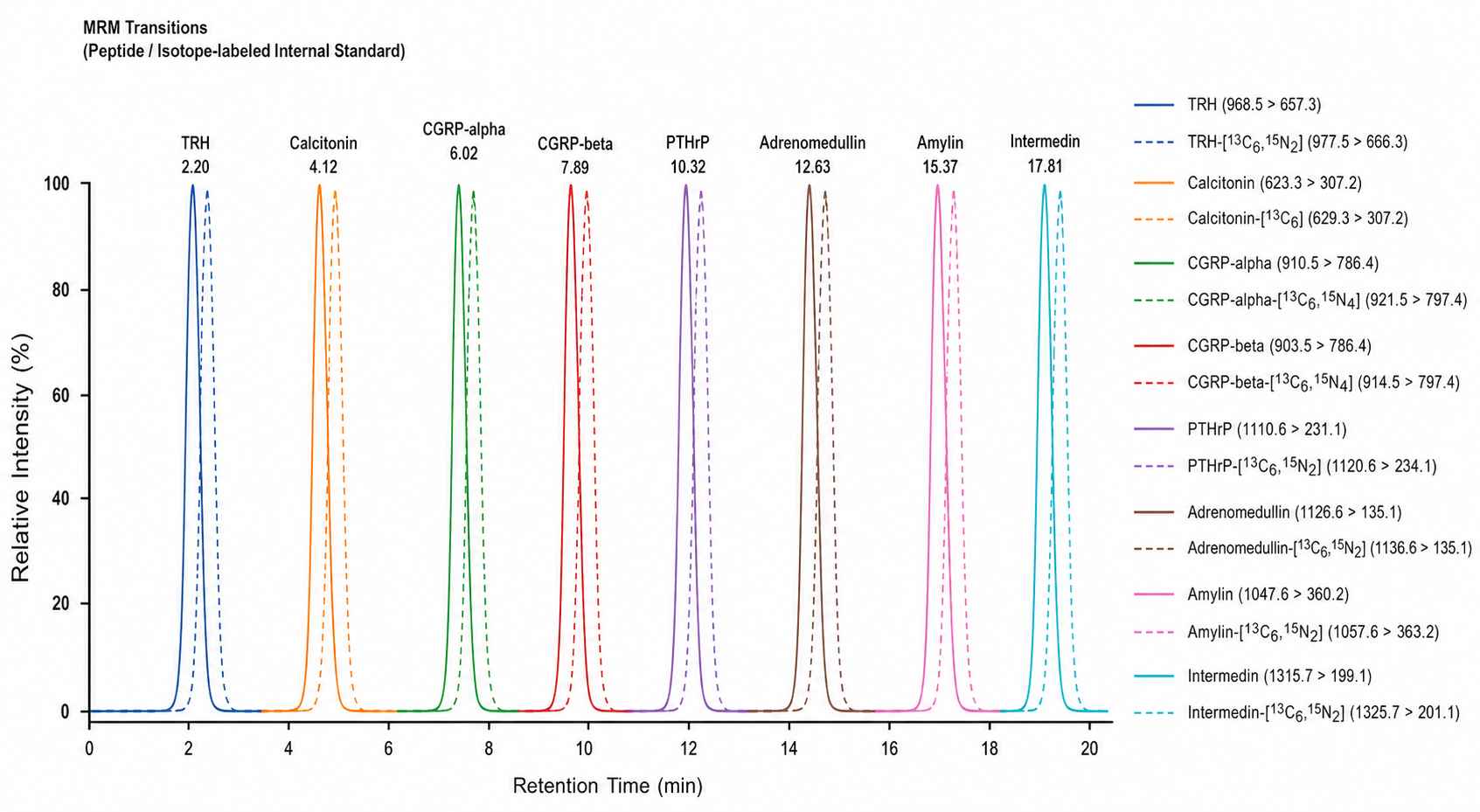
We cover a comprehensive range of thyroid-related and calcium-regulating peptide hormones. Each peptide is identified by its unique mass-to-charge signature and confirmed through retention time matching against synthetic or isotope-labeled standards.
| Peptide Hormone | Gene/Precursor | Key Biological Function | Clinical/Research Relevance |
|---|---|---|---|
| TRH (Thyrotropin-Releasing Hormone) | TRH | Stimulates TSH release from pituitary | Hypothalamic-pituitary-thyroid axis regulation |
| Calcitonin | CALCA | Lowers blood calcium by inhibiting osteoclast activity | Medullary thyroid carcinoma biomarker |
| CGRP-α (Calcitonin Gene-Related Peptide α) | CALCA | Vasodilation, pain signaling | Migraine pathophysiology, pain research |
| CGRP-β (Calcitonin Gene-Related Peptide β) | CALCB | Gut-brain signaling, inflammatory pain | Enteric nervous system research |
| PTHrP (Parathyroid Hormone-Related Peptide) | PTHLH | Regulates bone remodeling, calcium transport | Cancer-associated hypercalcemia, bone metastasis |
| Adrenomedullin | ADM | Vasodilation, angiogenesis | Cardiovascular research, tumor biology |
| Amylin (IAPP) | IAPP | Regulates gastric emptying, glucose metabolism | Metabolic syndrome, type 2 diabetes |
| Intermedin (ADM2) | ADM2 | Vasoactive peptide, cardioprotective | Cardiovascular homeostasis research |
Notes: Detection supports post-translationally modified forms: amidated CGRP, pyroglutamylated TRH, and sulfated calcitonin. We can add additional peptides upon request for customized panel design.
Service Workflow: From Sample to Data Report
Our workflow is designed for reproducibility, sensitivity, and minimal sample loss — especially critical for low-abundance peptide hormones.
Sample Receipt & QC
Visual inspection, volume/weight confirmation, and protein content estimation.
Peptide Extraction & Cleanup
SPE with mixed-mode cation exchange and C18 sorbents under acidic conditions.
High-Resolution LC-MS/MS
Orbitrap Astral™ or timsTOF Pro with targeted PRM/MRM acquisition.
Identification & Quantification
Spectral library search, targeted peak integration, PTM-aware algorithms.
Bioinformatics & Report
Peptide profiles, PTM assignments, and statistical comparisons across groups.
1
Sample Receipt & QC
All submitted samples undergo visual inspection, volume/weight confirmation, and protein content estimation. Sample integrity is verified before peptide extraction begins.
2
Peptide Extraction & Cleanup
Endogenous peptide hormones are enriched using solid-phase extraction (SPE) with mixed-mode cation exchange and C18 sorbents under acidic conditions. This step efficiently removes high-abundance proteins and concentrates the target peptide fraction.
3
High-Resolution LC-MS/MS Analysis
Peptides are separated by nanoLC and analyzed on an Orbitrap Astral™ or timsTOF Pro platform. We apply targeted PRM/MRM acquisition for absolute quantification, with isotope-labeled internal standards spiked before extraction to correct for recovery and matrix effects.
4
Peptide Identification & Quantification
Raw MS data are processed using a combination of spectral library search, targeted peak integration, and PTM-aware algorithms. Each peptide is quantified by peak area ratio relative to its internal standard.
5
Bioinformatics & Report Generation
Quantified peptide profiles are annotated with precursor protein information, PTM assignments, and statistical comparisons across experimental groups. Deliverables include a structured data package and an executive summary report.
Platform Specifications and Detection Performance
We deploy multiple high-performance LC-MS/MS platforms to ensure optimal coverage and quantification accuracy for each peptide in the panel.
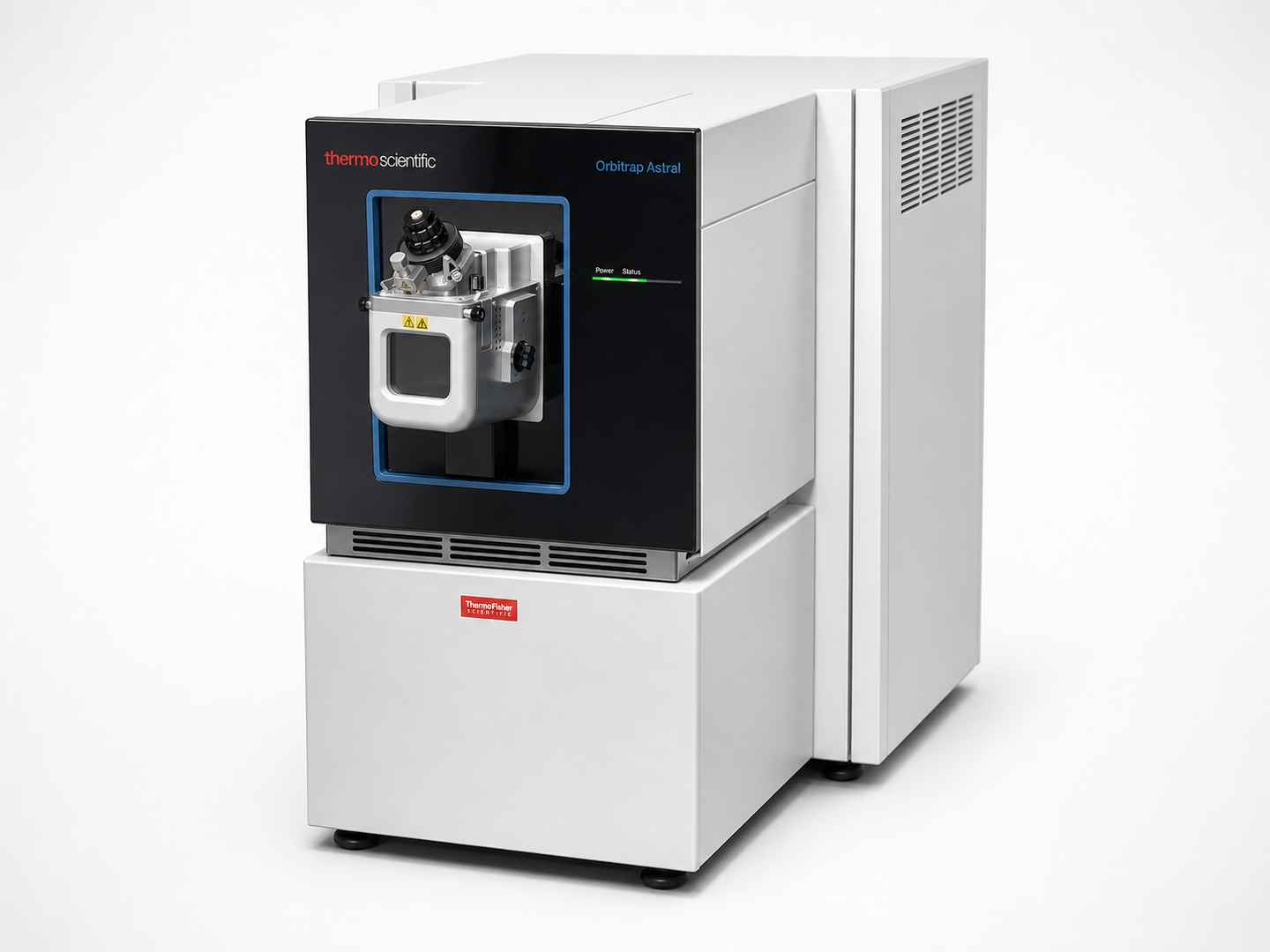 Orbitrap Astral™
(Fig from Thermo Scientific)
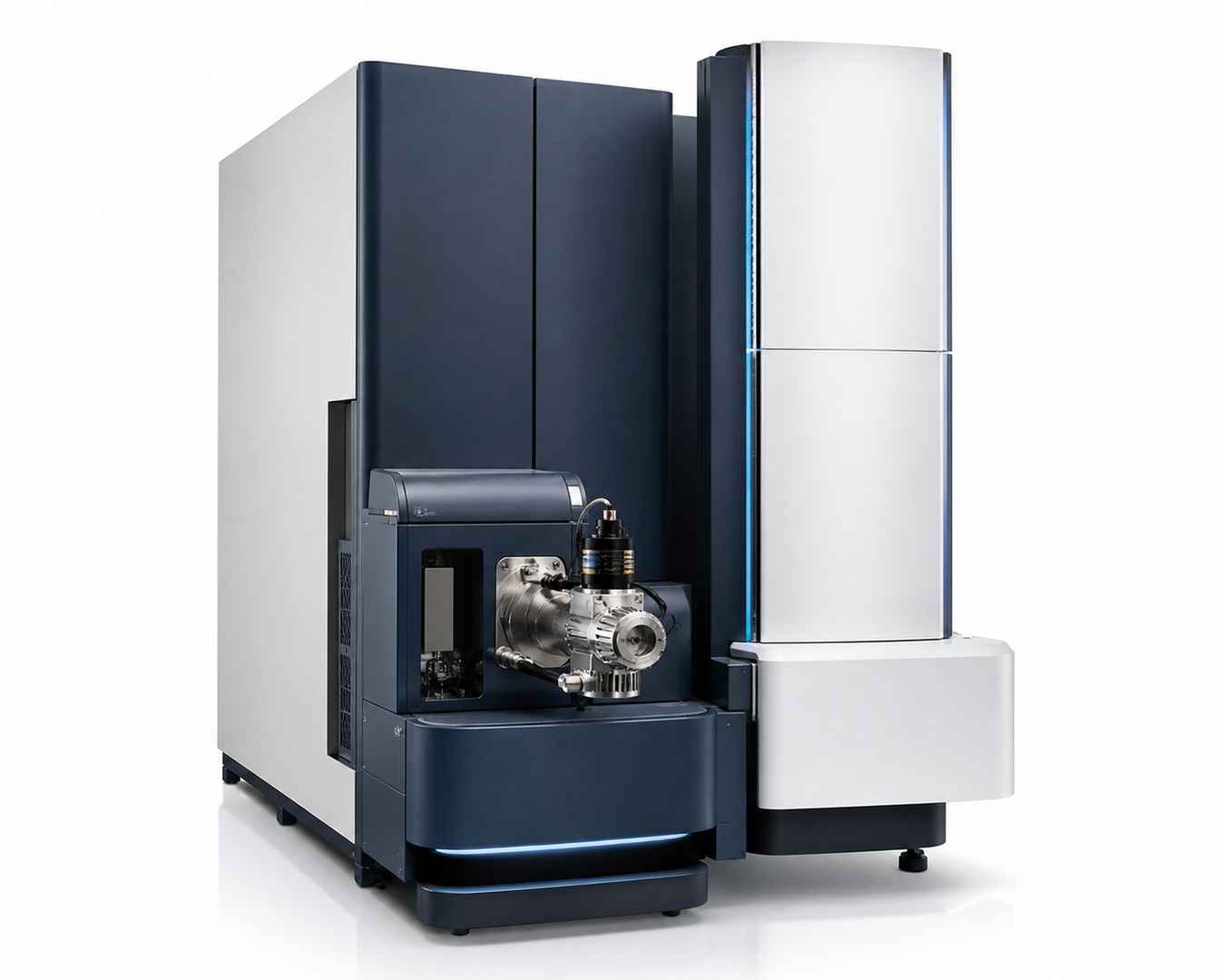 timsTOF Pro
(Fig from Bruker)
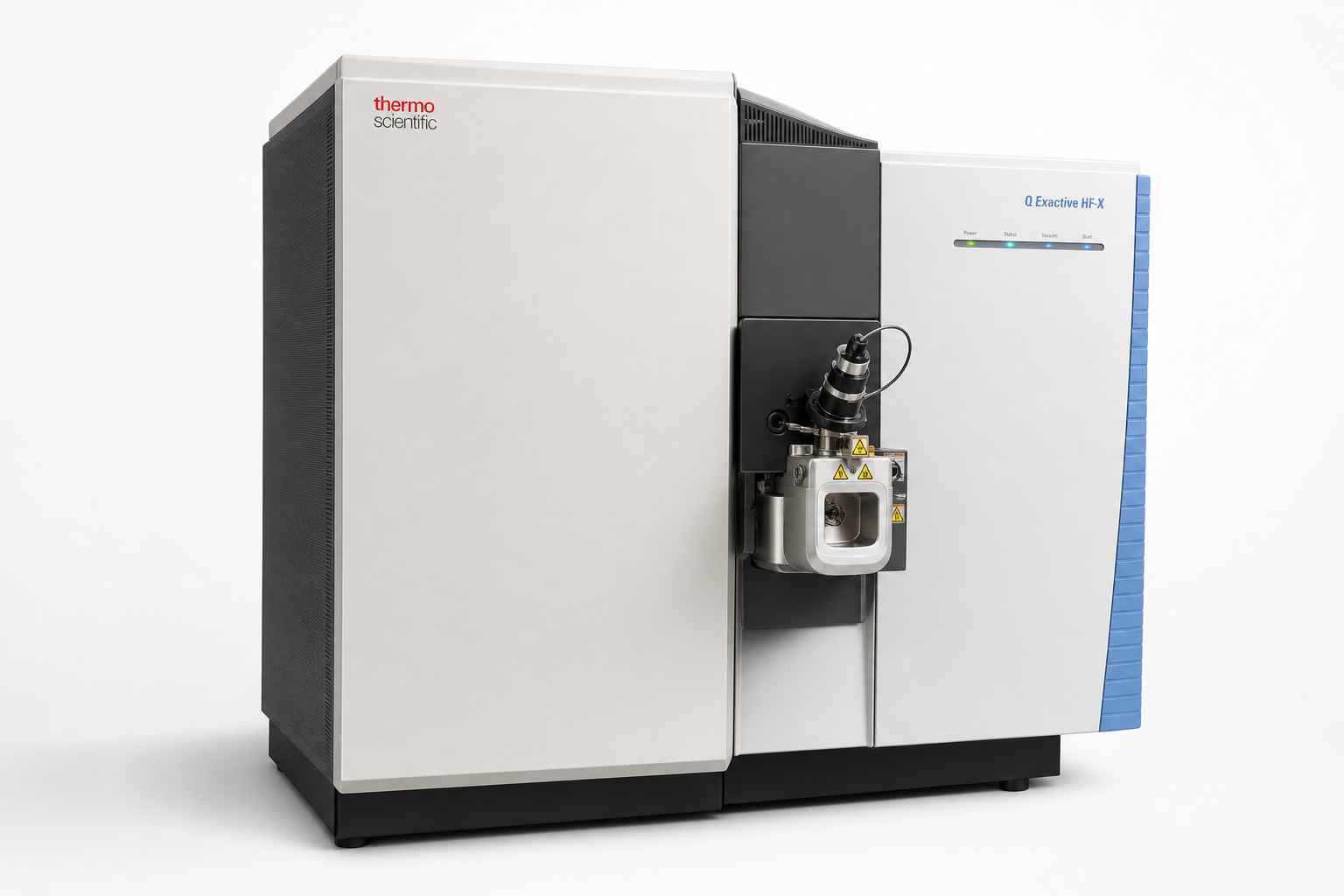 Q Exactive HF-X
(Fig from Thermo Fisher)
Instrument Capability Overview
| Feature | Orbitrap Astral™ | timsTOF Pro | Q Exactive HF-X |
|---|---|---|---|
| Scan Speed | Up to 200 Hz | ~100 Hz (PASEF) | ~20–25 Hz |
| Quantification Modes | Label-free, PRM, SureQuant™ | Label-free, DIA, PRM | Label-free, TMT |
| Peptide Coverage | >90% MS/MS | >90% MS/MS | ~85% MS/MS |
| Low-Abundance Detection | Single-peptide resolution | Ion mobility separation | Standard |
| Best For | Multi-peptide multiplex panels | Low-abundance capture | Discovery workflows |
- pg/mL-level sensitivity
Achieves high-sensitivity detection for most thyroid-regulating peptides using PRM with isotope-labeled internal standards. - >90% MS/MS Peptide Coverage
Advanced tandem MS with HCD and ETD fragmentation enables high-confidence identification of endogenous peptide hormones. - 1% FDR Stringent Filtering
Peptide and protein-level false discovery rate is controlled below 1%, ensuring data reliability across replicates. - PRM & SureQuant™ Quantification
Enables absolute quantification of low-abundance peptide hormones using high-sensitivity targeted acquisition strategies. - Comprehensive PTM Detection
Supports detection of amidated, pyroglutamylated, and sulfated peptide forms critical for peptide hormone bioactivity. - Low Input Compatibility
Delivers deep coverage from as little as 100 µL plasma or 10 mg tissue.
Sample Requirements and Preparation Guidelines
We accept a wide range of sample types for thyroid peptide hormone panel analysis. Proper collection and preservation are essential for reliable quantification.
| Sample Type | Minimum Amount | Preservation Method | Shipping Condition | Notes |
|---|---|---|---|---|
| Plasma (EDTA/Heparin) | ≥100 µL | Snap-frozen, aliquoted | Dry ice | Add protease inhibitors; avoid freeze-thaw cycles |
| Serum | ≥200 µL | Snap-frozen, aliquoted | Dry ice | Collect in serum separator tubes; process within 2 h |
| Thyroid/Bone Tissue | ≥10 mg | Snap-frozen preferred | Dry ice | Avoid fixatives or embedding; store at –80°C |
| Cell Culture Supernatant | ≥500 µL | Add protease inhibitors, flash-freeze | Dry ice | Record cell count and confluence at collection |
| Cerebrospinal Fluid (CSF) | ≥200 µL | Aliquoted, low-protein bind tubes | Dry ice | Use protease inhibitors; avoid multiple freeze-thaw cycles |
Note: For rare or limited samples, please consult with our team — we can often work with smaller volumes using optimized micro-extraction workflows.
Demo Results
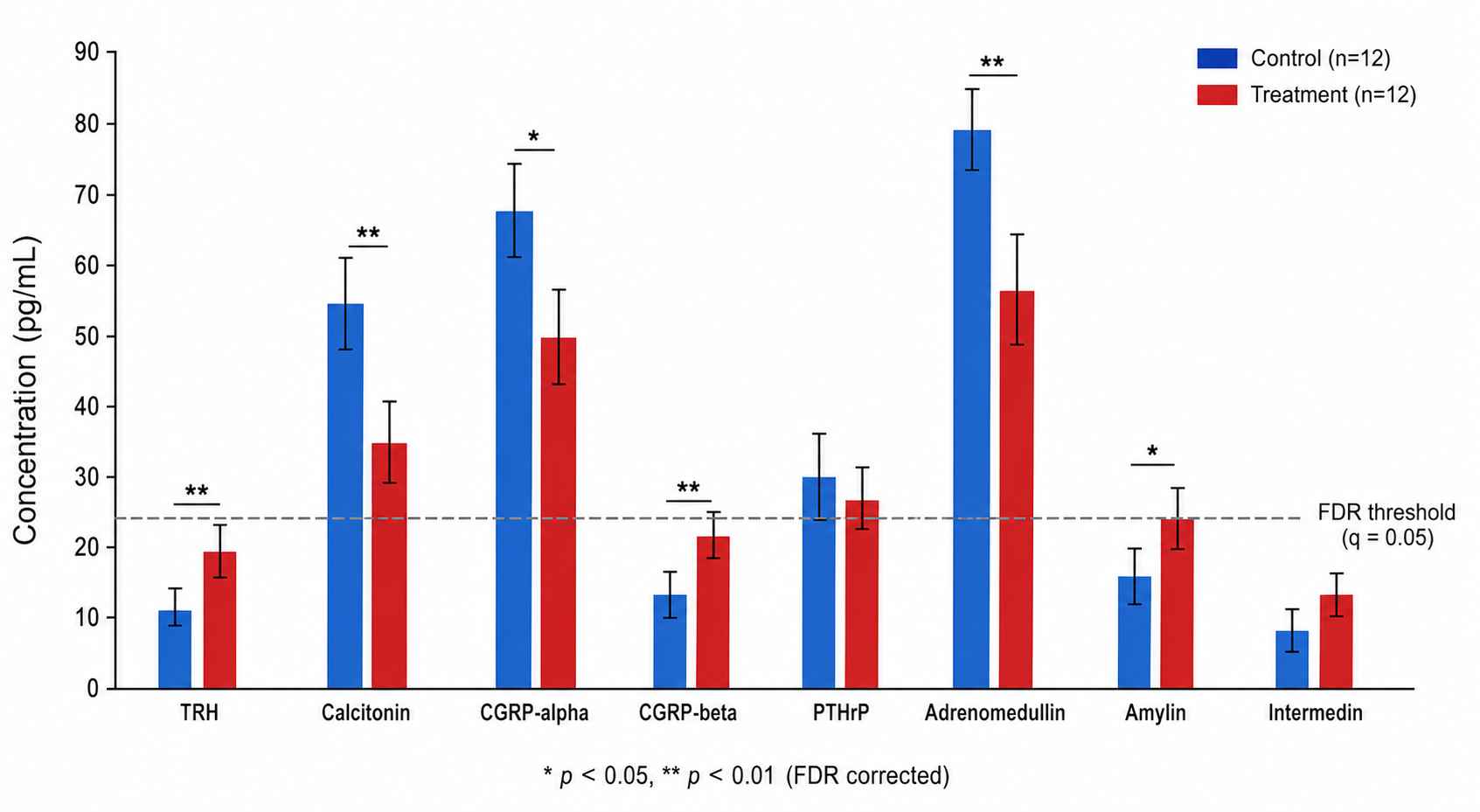
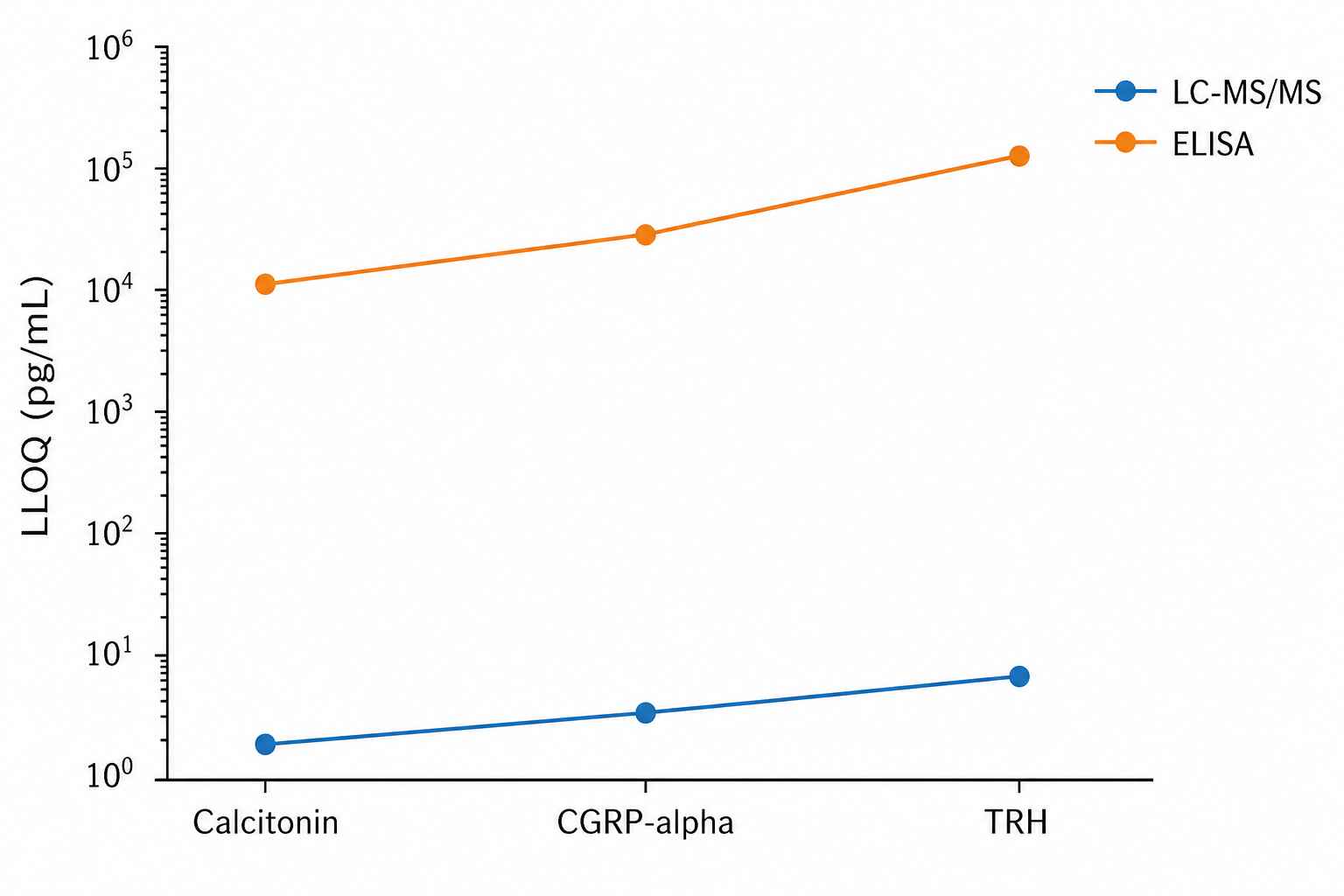
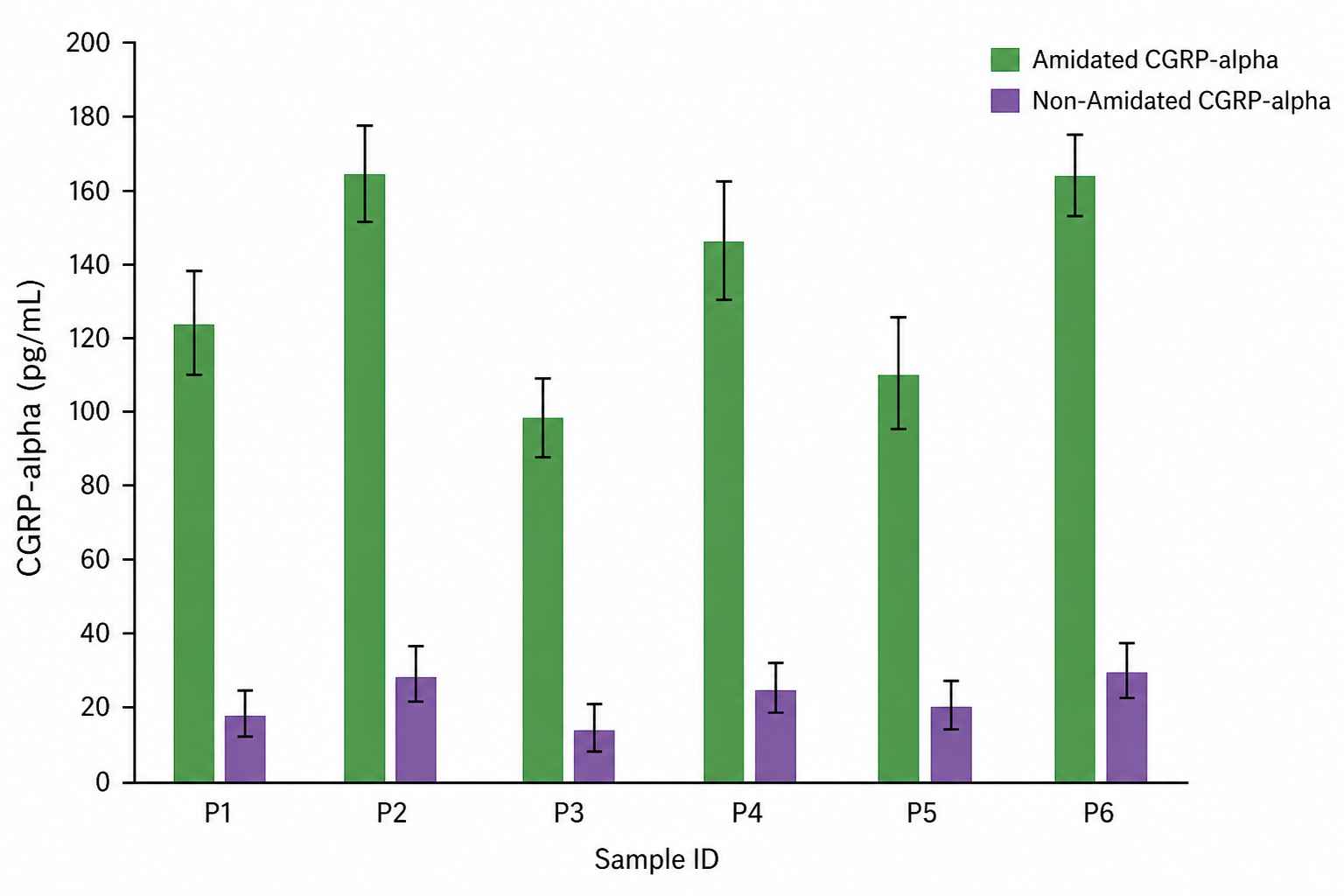
Below are representative examples of the data quality and analytical output from our thyroid-regulating peptide hormone panel. These demo results demonstrate the multiplex quantification capacity, sensitivity, and reproducibility of our LC-MS/MS platform.
Multiplex Quantification of 8 Thyroid Peptide Hormones
Peptide Hormone Detection Sensitivity Comparison
PTM-Resolved Quantification of Amidated vs. Non-Amidated CGRP
Representative MRM Chromatogram of Thyroid Peptide Hormones
Deliverables: What You Receive
- Peptide Quantification Report (PDF)
Complete summary of all detected and quantified peptides across all samples, with statistical analysis. - Raw Data Files
Full LC-MS/MS raw data in standard format (Thermo .raw or Bruker .d). - Quantification Table (CSV)
Peptide IDs, retention times, peak areas, concentrations, PTM assignments, and QC metrics. - Internal Standard Recovery Report
Recovery rates for each isotope-labeled standard. - Comparative Statistics
Fold-change analysis, p-values, and PCA plots for multi-group comparisons. - Optional: Functional Annotation
Precursor protein mapping, pathway enrichment, and GO term classification.
Why Choose Creative Proteomics for Thyroid Peptide Hormone Analysis?
Our thyroid peptide hormone panel is part of a comprehensive family of endocrine peptide quantification services. We combine deep analytical expertise with a dedicated focus on the unique challenges of peptide hormone detection.
| Dimension | Creative Proteomics | Typical ELISA/Immunoassay | General CRO (Discovery Proteomics) |
|---|---|---|---|
| Multiplexing | 8+ peptides per run | 1–4 per assay | Unlimited (discovery mode) |
| Sensitivity | pg/mL (PRM with ISTD) | pg/mL (cross-reactivity risk) | ng/mL range |
| PTM Resolution | Yes (amidation, pyroGlu, sulfation) | Limited (antibody-dependent) | No (standard tryptic workflow) |
| Sample Input | ≥100 µL plasma or ≥10 mg tissue | Varies by kit | ≥50 µg protein |
| Quantification Type | Absolute (with ISTD) or relative | Relative (OD-based) | Relative (label-free or TMT) |
| Panel Customization | Add/drop peptides on request | Fixed kit content | Limited |
Explore related hormone panel services:
What thyroid-regulating peptide hormones can you detect in this panel? +
We detect TRH, calcitonin, CGRP-α, CGRP-β, PTHrP, adrenomedullin, amylin, and intermedin. Additional peptides can be added for custom panel requests.
How much sample do you need for a full panel analysis? +
For plasma or serum, ≥100 µL is recommended. For tissue, ≥10 mg. We can accommodate smaller volumes with prior consultation.
Can you quantify both amidated and non-amidated forms separately? +
Yes. Our PTM-aware workflow resolves amidated and non-amidated peptide forms by their distinct mass shifts and retention times.
How does LC-MS/MS compare to ELISA for thyroid peptide quantification? +
LC-MS/MS offers superior specificity (no antibody cross-reactivity), higher multiplexing capacity (8+ vs 1–4 targets), and the ability to distinguish peptide isoforms and PTM variants that ELISAs cannot resolve.
Do you provide absolute quantification with internal standards? +
Yes. We spike isotope-labeled internal standards for each target peptide before extraction, enabling absolute quantification with recovery correction.
What types of samples can I submit? +
Plasma, serum, tissue (thyroid, bone, brain), cell culture supernatant, and CSF. See the Sample Requirements table for detailed guidelines.
Can this panel be customized to include additional peptides? +
Absolutely. We offer flexible panel customization. Contact our team to discuss your specific peptide targets.
How is the data reported and what bioinformatics analysis is included? +
You receive a quantified peptide table (CSV), a full report (PDF), raw MS data, internal standard recovery metrics, and optional pathway enrichment analysis.
References
1. De Angelis, M., et al. Development and validation of an LC-MS/MS methodology for the quantification of thyroid hormones in DKO MCT8/OATP1C1 mouse brain. Journal of Pharmaceutical and Biomedical Analysis, 2022. 10.1016/j.jpba.2022.115038
2. Jongejan, R.M.S., et al. A mass spectrometry-based panel of nine thyroid hormone metabolites in human serum. Clinical Chemistry, 2020. 10.1093/clinchem/66.4.556
3. Kirsch, S.H., et al. High-sensitivity LC-MS/MS quantification of peptides and proteins in complex biological samples. Analytical and Bioanalytical Chemistry, 2013. 10.1007/s00216-013-6936-2
4. Zhang, Y., et al. Recent advances in liquid chromatography-tandem mass spectrometry for the assessment of thyroid metabolism. Journal of Separation Science, 2024. 10.1002/jssc.202400466
5. Smith, D.F., et al. Mass spectrometry in measurement of thyroid biomarkers. Clinica Chimica Acta, 2024. 10.1016/j.cca.2024.119925
For research use only. Not for use in diagnostic or clinical procedures.