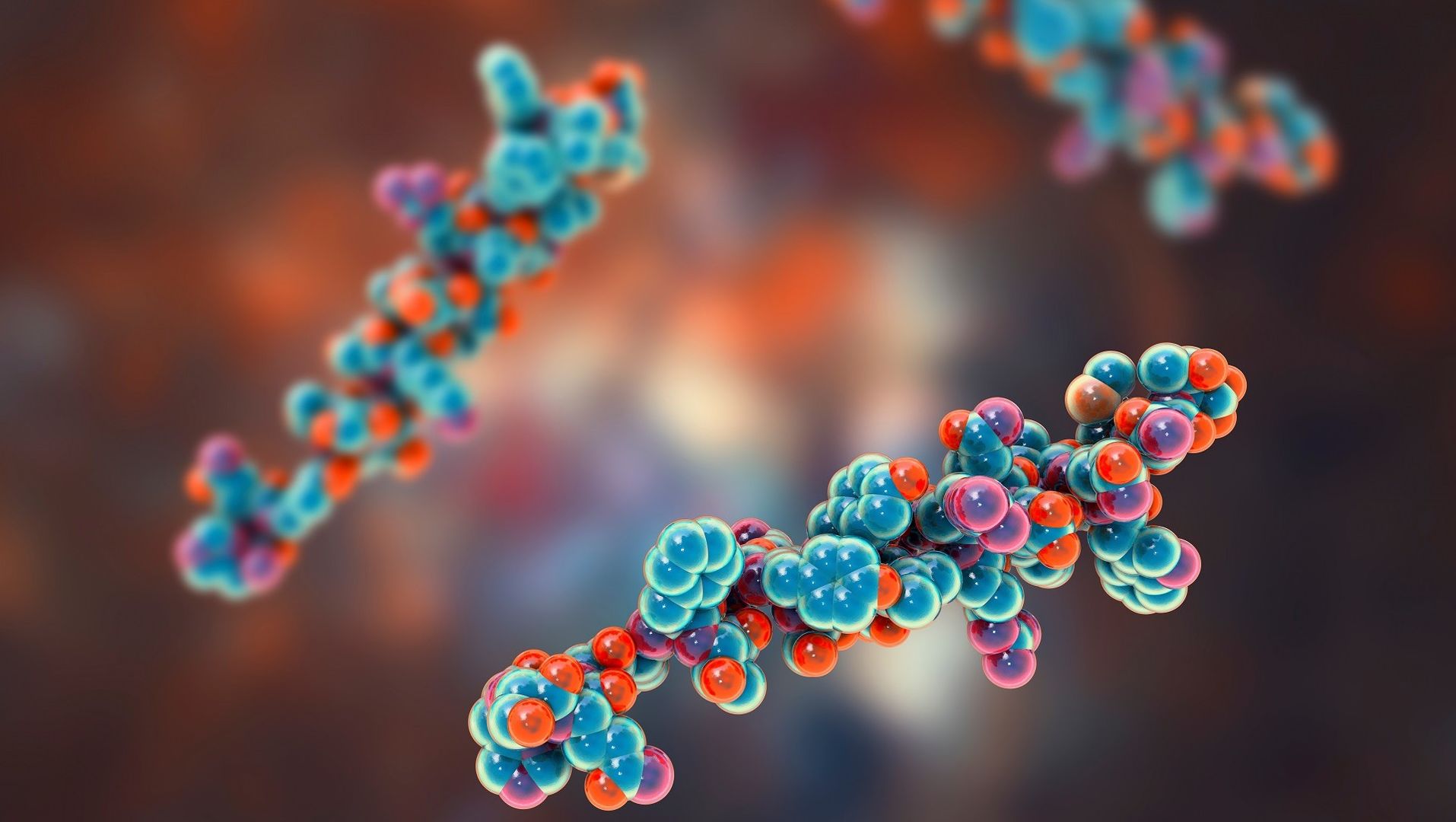
GPCR-Targeted Venom Peptide Discovery: Deorphanizing the GPCRome
G protein-coupled receptors (GPCRs) constitute one of the largest families of drug targets — yet over 100 human GPCRs remain classified as orphan, with no identified endogenous ligand. This gap represents a significant bottleneck in drug discovery, as deorphanized GPCRs open entirely new therapeutic pathways with reduced off-target risk.
Traditional GPCR screening relies on synthetic peptide libraries — approaches that carry inherent limitations: combinatorial libraries, however large, cannot replicate the evolutionary precision that defines a functional GPCR ligand. Synthetic scaffolds often lack the structural complexity (disulfide-rich frameworks, native PTMs, constrained conformations) required for high-affinity, subtype-selective GPCR engagement. The result: high false-positive rates, poor selectivity, and a deorphanization workflow that stalls at the identification stage.
Venom peptides are nature's validated GPCR ligand library. Refined through 100–500 million years of predator-prey co-evolution, each venom peptide has already passed functional selection for GPCR binding — conferring affinity, selectivity, and structural stability that no synthetic library can replicate. Creative Proteomics' GPCR-Targeted Venom Peptide Discovery Service bridges this evolutionary depth with modern GPCR pharmacology: HRMS-characterised venom peptide libraries screened across 80+ GPCR targets using validated cAMP, β-arrestin NanoBRET, and Ca2+ flux assays — delivering confirmed GPCR ligands and selectivity profiles in a single integrated workflow.
GPCR-Targeted Venom Peptide Discovery: Key Services
GPCR Target Coverage: Orphan & Known GPCRs
| GPCR Class | Representative Targets | Primary Assay Readout |
|---|---|---|
| Class A — Rhodopsin (Peptide & Aminergic) |
NTSR1, NTSR2, OXR1, OXR2, SSTR1–5, NMBR, GRPR, BRS3 | cAMP / β-arrestin / Ca2+ flux |
| Class A — Adhesion | ADGRB1–3, ADGRG1 (GPR56), ADGRG6 (GPR126), ADGRE5 (CD97) | β-arrestin / cAMP |
| Class B — Secretin | GLP1R, GLP2R, GCG R, GHRHR, PAC1R, VIPR1, VIPR2, CRHR1, CRHR2 | cAMP / β-arrestin |
| Class C — Metabotropic | GABBR1, GABBR2, mGluR1–8, CASR, T1R1/T1R3 | cAMP / Ca2+ flux / IP1 |
| Orphan GPCRs (Confirmed & Putative) |
GPR3, GPR6, GPR12, GPR15, GPR17, GPR19, GPR21, GPR26, GPR34–37, GPR39, GPR45, GPR52, GPR55, GPR61, GPR62, GPR68, GPR75, GPR82–85, GPR88, GPR119, GPR120, GPR132, GPR139, GPR157, GPR176, GPR182 | cAMP / β-arrestin / Ca2+ flux |
| Pain & CNS Targets | OPRM1, OPRD1, OPRK1, DRD1–5, HTR1–7, CHRM1–5 | cAMP / β-arrestin / Ca2+ flux |
| Metabolic GPCRs | FFAR1 (GPR40), FFAR2 (GPR43), FFAR3 (GPR41), GPR119, GPR120, GPR142 | cAMP / Ca2+ flux |
Custom GPCR panels (including client-specified orphan GPCRs) available upon request. Assay validation report provided with each project.
Technical Platform: Venom Peptide MS + GPCR Assays
- Venomics HRMS Characterisation — Q-TOF and Orbitrap-based high-resolution MS for exact mass confirmation, purity assessment, PTM localisation, and disulfide bond connectivity determination
- cAMP Functional Assay (Gs) — Homogeneous time-resolved fluorescence (HTRF) readout for Gs-coupled receptors; quantitative EC50 determination for agonist and antagonist modes
- β-Arrestin NanoBRET Assay (Gi) — Energy transfer-based recruitment assay for Gi-coupled receptors and β-arrestin pathway profiling; orthogonal to cAMP readouts
- Ca2+ Flux Assay (Gq) — FLIPR-based real-time calcium mobilisation for Gq-coupled GPCRs, including orphan GPCRs with unknown coupling
- High-Density GPCR Panel + Bioinformatics — 80+ GPCR targets screened in parallel; integrated data pipeline correlates MS venom peptide identity with functional GPCR response profiles
Why Our GPCR-Targeted Venom Peptide Platform
GPCR-Targeted Venom Peptide Discovery Workflow
The workflow integrates venom peptide HRMS characterisation with GPCR functional screening, ensuring only confirmed, pure peptides enter pharmacological profiling.
Venom Peptide Receipt & HRMS Characterisation
Mass, purity, PTMs, disulfide bonds confirmed before assay
GPCR Panel Screening
cAMP / β-arrestin NanoBRET / Ca2+ flux across 80+ GPCRs
Hit Confirmation & Dose-Response
EC50/IC50, Emax, Hill slope; orthogonal assay validation
Orphan GPCR Deorphanization & Target Validation
Expanded pathway profiling across all G protein coupling families
Lead Optimisation & Selectivity Assessment
Full selectivity panel profiling; off-target liability defined
1
Venom Peptide Receipt & HRMS Characterisation
Venom peptide samples are received and verified by high-resolution MS (Q-TOF or Orbitrap). Exact mass confirmation, purity assessment, PTM identification (C-terminal amidation, hydroxylation, glycosylation), and disulfide bond connectivity are all completed before any functional screening. MS characterisation report issued within 3–5 business days. This step ensures that only confirmed, correctly folded peptides enter the GPCR assay panel — eliminating false positives from degraded or mis-identified starting material.
2
GPCR Panel Screening
Validated venom peptides enter the GPCR screening panel. Three assay formats are deployed in parallel based on GPCR coupling: cAMP HTRF for Gs-coupled receptors, β-arrestin NanoBRET for Gi-coupled receptors, and Ca2+ flux FLIPR for Gq-coupled receptors. The pre-screen covers 80+ GPCR targets at two peptide concentrations (single-point, 96-well format), generating a primary activity heatmap across the full panel within days of MS verification.
3
Hit Confirmation & Dose-Response
Primary screening hits are confirmed in 8-point dose-response format. EC50 (agonist mode) or IC50 (antagonist mode), Emax, and Hill slope are determined for each confirmed venom peptide–GPCR interaction. Orthogonal assay formats are applied to validate primary hits and eliminate assay artefacts. For orphan GPCR targets with unknown coupling, all three assay formats are tested simultaneously to map the coupling profile.
4
Orphan GPCR Deorphanization & Target Validation
For orphan GPCR deorphanization projects, confirmed hits undergo expanded pathway profiling across all four G protein coupling families (Gs, Gq, Gi/o, G12/13). Rank-ordering against known ligand controls and reference agonists confirms orphan receptor engagement. Selectivity ratios relative to off-target GPCRs are calculated to assess lead potential. This step delivers the formal deorphanization report — the primary GPCR target assignment, coupling profile, and functional activity summary.
5
Lead Optimisation & Selectivity Assessment
Lead venom peptide candidates are profiled across the full selectivity panel (>80 GPCRs) to define off-target liability. For analogues, metabolic stability assessment and selectivity broadening are incorporated at this stage. The final data package — including HRMS reports, dose-response curves, deorphanization reports, and raw assay files — is compiled within 4–8 weeks depending on project scope. All data are formatted for direct manuscript and patent submission.
Sample Requirements for Venom Peptide GPCR Profiling
| Sample Type | Minimum Amount | Preferred Format | Shipping Condition | Notes |
|---|---|---|---|---|
| Synthetic Venom Peptide | 1–5 mg | Lyophilised, >80% purity | Dry ice / cold chain | HRMS COA required; crude sample acceptable for initial screen |
| Recombinant Venom Peptide | 0.5–2 mg | Purified, >90% purity | Dry ice / cold chain | Expression vector details required |
| Crude Venom (Native) | 50–500 μL or 10–100 mg | Lyophilised or liquid | Dry ice / cold chain | Species information required; fractionation available |
| Venom Peptide Library (Synthetic) | 100–10,000 peptides | 96-well plate or lyophilised vials | Dry ice / cold chain | Library format affects screening strategy |
| Venom Peptide Library (Phage Display) | 1–10 mL (≥10⁹ pfu/mL) | Glycerol stock or purified phage | Dry ice / cold chain | Sequencing data required prior to functional assay |
Representative Results: GPCR Ligand Deorphanization
The following representative results illustrate key analytical outputs from GPCR-targeted venom peptide discovery projects on our platform.
Orphan GPCR Deorphanization: Binding Curve
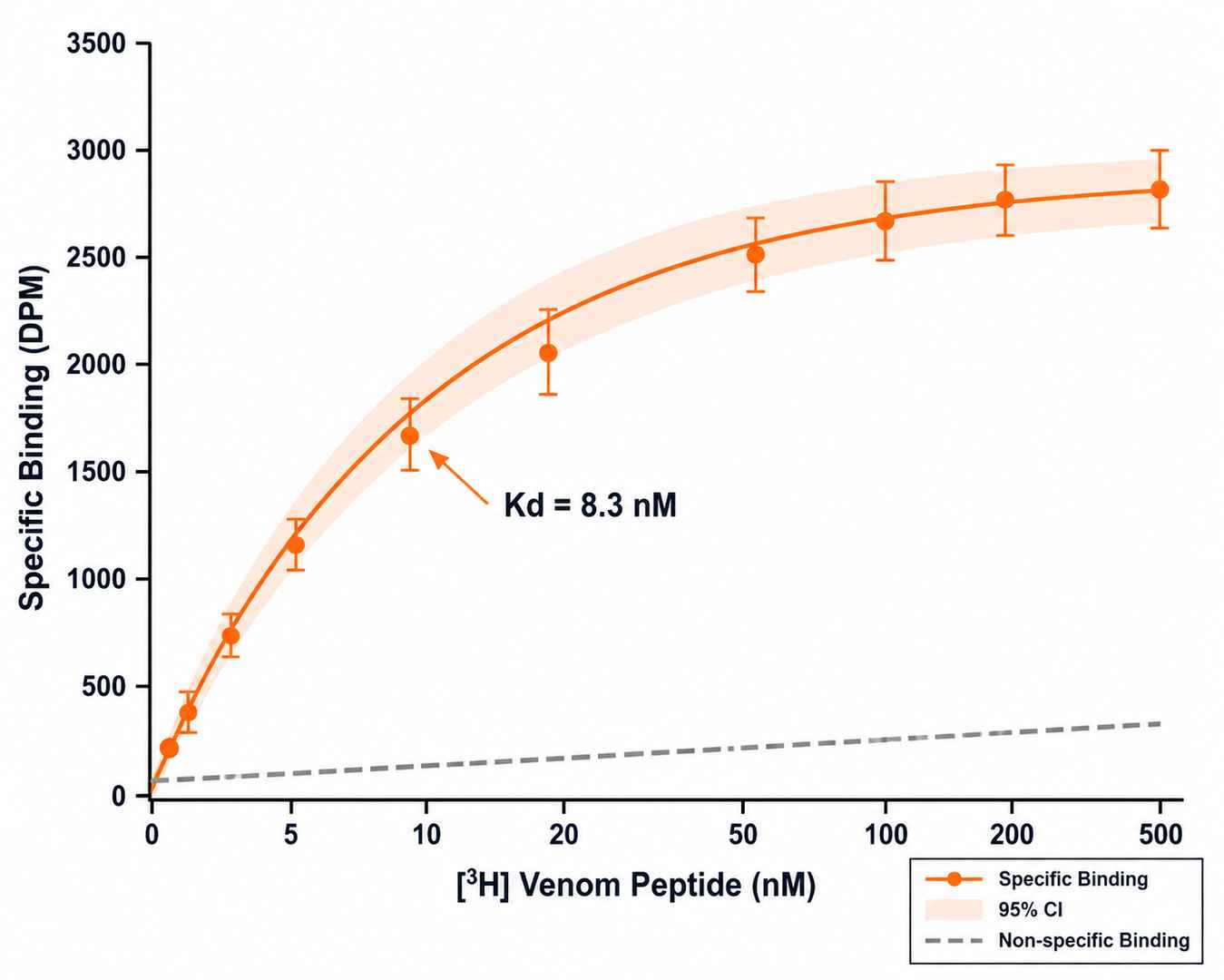
Figure 1: Saturation binding curve for a venom peptide agonist on an orphan GPCR. Kd = 8.3 nM. Competition binding against known ligand control confirms target engagement. Data from radioligand binding assay (n = 3).
cAMP Dose-Response: Gs-Coupled GPCR Activation
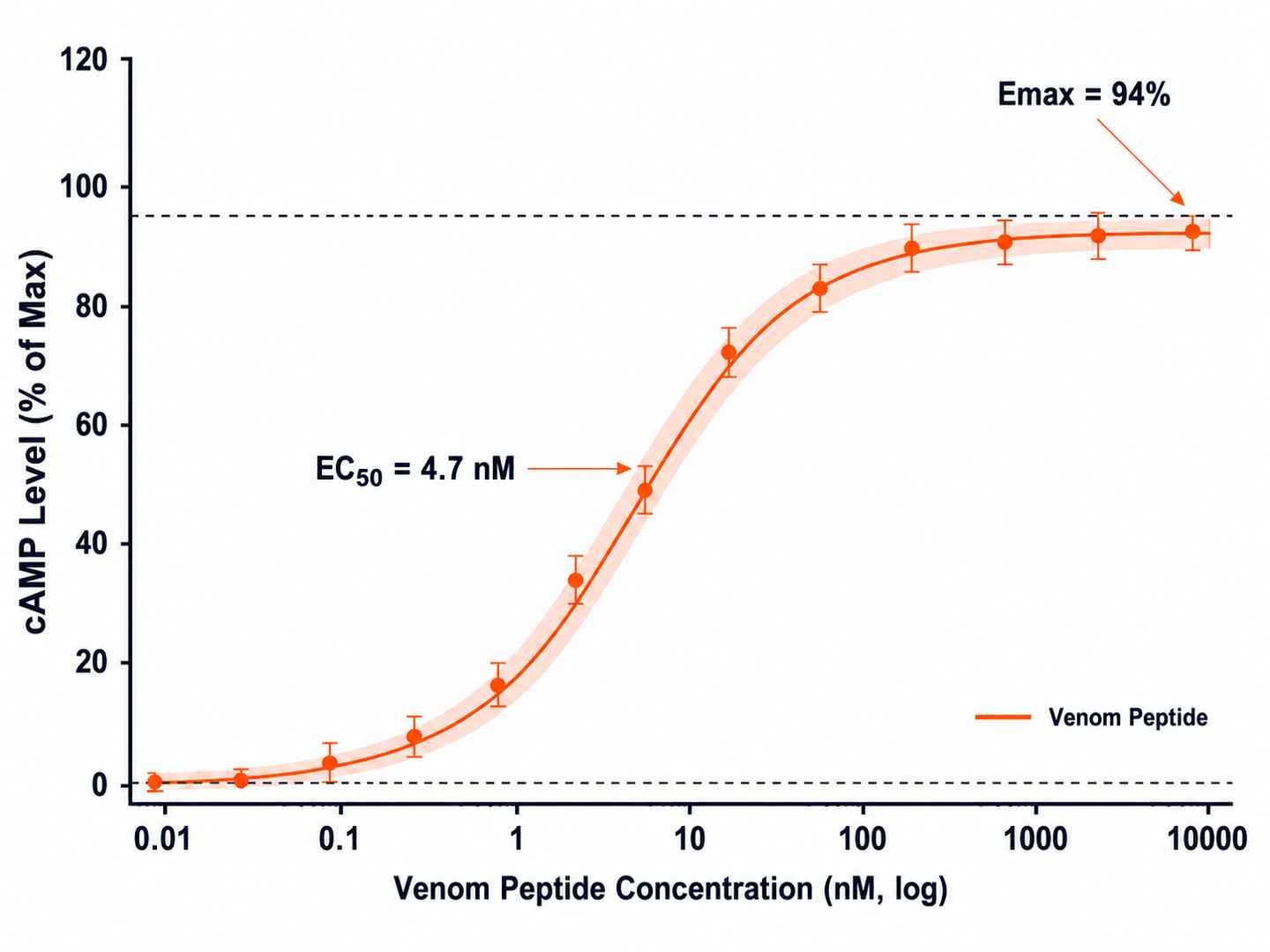
Figure 2: Concentration-response curve for venom peptide activation of a Gs-coupled GPCR. EC50 = 4.7 nM; Emax = 94% of reference ligand. HTRF cAMP assay, HEK293 cells (n = 3, error bars = SD).
Ca2+ Flux Heatmap: 80+ GPCR Panel Screening
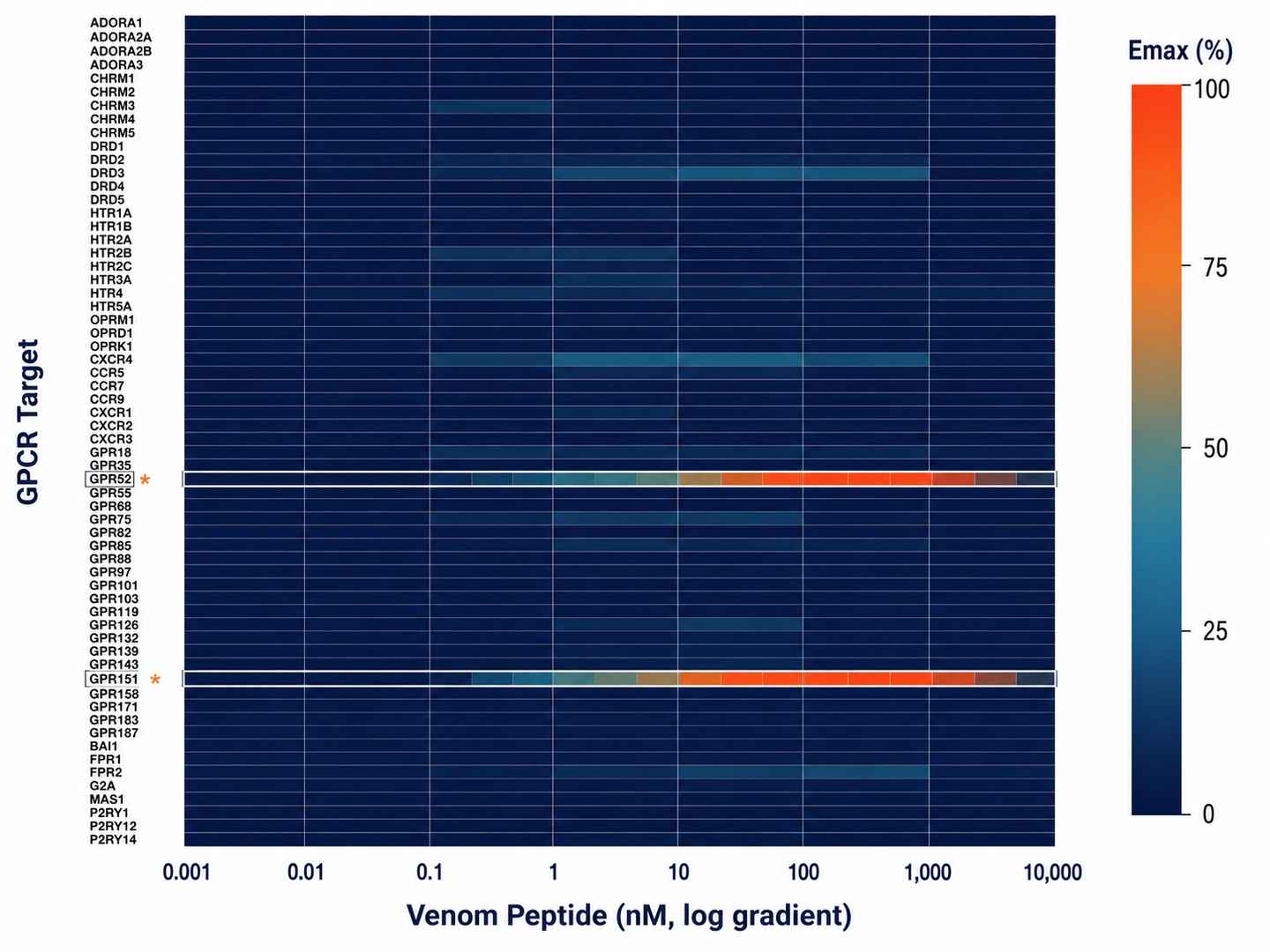
Figure 3: Calcium flux responses across an 80+ GPCR panel (FLIPR, Gq-coupled). Colour scale: %Emax relative to reference agonist. Subtype-selective venom peptide hits identified against two orphan GPCRs with no detectable off-target activity.
HRMS Venom Peptide Characterisation
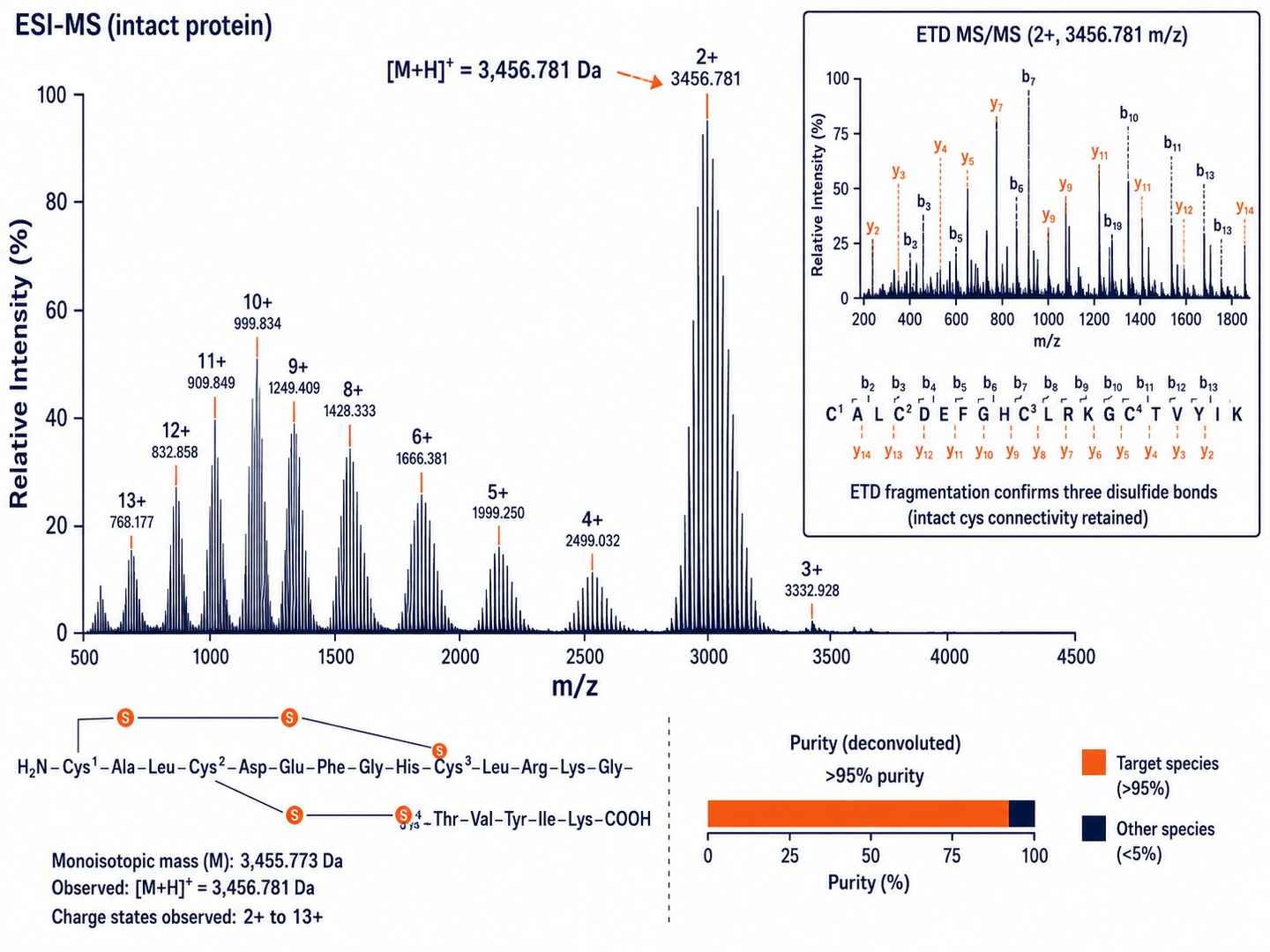
Figure 4: HRMS characterisation of a GPCR-active venom peptide. Monoisotopic mass confirmed: [M+H]+ = 3,456.781 Da (mass error < 2 ppm). Three disulfide bonds confirmed by ETD fragmentation. C-terminal amidation confirmed. Purity assessed at >95% by LC-UV at 214 nm.
Applications in GPCR Drug Discovery & Orphan GPCR Research
- Orphan GPCR Deorphanization — Assign confirmed endogenous ligands to previously uncharacterised human orphan GPCRs; establish a direct path from basic biology to therapeutic target validation
- Non-Opioid Analgesic Peptide Discovery — Venom peptide leads targeting GPCRs implicated in pain pathways (e.g., NPSR, QRFPR, GPR37) as alternatives to opioid receptors. Example: GPR37 high-affinity agonist identified with Kd = 8.3 nM — enabling non-opioid pain research with a previously orphan target. Our non-opioid analgesic peptide discovery service extends this platform into lead optimisation and in vitro efficacy profiling.
- Autoimmune & Inflammatory GPCR Targets — GPCRs in immune cell trafficking (CXCR, CCR, FPR, P2RY families) profiled for venom peptide agonist/antagonist activity; subtype-selective hits prioritised for downstream immunology programmes
- Cardiovascular Drug Discovery — GPCRs controlling heart rate, vasoconstriction, and vascular tone (e.g., ETA R, ETB R, AVPR1A) targeted with venom peptide libraries for novel cardiovascular leads
- Neuropsychiatric GPCR Research — CNS GPCRs (serotonin, dopamine, muscarinic, trace amine-associated receptors) screened against venom peptide libraries for novel CNS-active leads; selectivity profiles across >80 GPCR targets provided for each hit
- Peptide Hormone & Metabolism Research — Gut-brain metabolic GPCRs (GLP1R, GPR119, GPR120) accessed through venom peptide libraries; structural basis for subtype-selective GPCR agonism characterised by HRMS and functional assay
GPCR-Targeted Venom Peptide Discovery Deliverables
- HRMS venom peptide characterisation report (exact mass, purity, PTMs, disulfide connectivity)
- GPCR binding data: Kd, Bmax, and competition binding curves
- Functional assay data: Full concentration-response curves with EC50/IC50 and Hill slope
- Deorphanization report: Primary GPCR target identification, pathway coupling profile, and off-target selectivity summary
- Raw data files: Plate reader outputs, MS raw data, and bioinformatics pipeline outputs
- Publication-ready figures in GraphPad Prism format, with full statistical reporting
- Expert scientific interpretation: Integrated summary report with lead prioritisation recommendations
- Project consultation summary: Experimental design rationale and panel configuration decisions
What GPCR targets are covered by the venomics screening platform? +
The standard platform covers 80+ GPCR targets spanning Class A (Rhodopsin and Adhesion families), Class B (Secretin family), Class C (Metabotropic), and a curated panel of orphan GPCRs. Custom orphan GPCRs can be incorporated into the screening panel upon request, subject to assay development timelines.
How does venomics-based GPCR deorphaning compare to synthetic peptide library screening? +
The fundamental difference is evolutionary context. Synthetic combinatorial libraries generate structural diversity through random chemistry — but they lack the functional validation that defines a true GPCR ligand. Venom peptides carry native post-translational modifications (C-terminal amidation, hydroxylation, glycosylation) and disulfide-rich scaffolds that are critical for high-affinity GPCR binding and subtype selectivity. Each venom peptide has already passed predator-prey selective pressure, resulting in intrinsically lower false-positive rates and higher hit quality than synthetic libraries. Our integrated platform leverages this evolutionary head start to accelerate deorphaning timelines.
What deliverables are provided for orphan GPCR deorphaning projects? +
Deliverables include: (1) HRMS venom peptide characterisation report, (2) GPCR binding data with Kd and Bmax values, (3) Functional assay data — cAMP, β-arrestin, Ca2+ flux concentration-response curves, (4) Deorphanization report summarising the primary confirmed GPCR target and off-target selectivity, (5) Raw data files, (6) Publication-ready figures (GraphPad Prism format), (7) Expert interpretation and lead prioritisation recommendations.
Can custom venom peptide libraries or non-standard GPCR panels be screened? +
Yes. We accept client-supplied synthetic venom peptide libraries, recombinant venom peptide libraries, native venom fractions, and phage-displayed venom peptide libraries. Custom GPCR panels — including disease-specific orphan GPCR clusters — can be designed and validated on a per-project basis. A pre-screen feasibility call is recommended to confirm assay compatibility.
What is the throughput and typical project timeline? +
HRMS characterisation: 3–5 business days per sample. Pre-screen across the 80+ GPCR panel: 1,000+ peptides/day (96-well format). Functional validation (dose-response): 8–12 venom peptides/week per assay format. Orphan GPCR deorphanization project: 4–8 weeks. A tiered project model is available to match budget and timeline requirements.
Disclaimer: The services described herein are for research use only (RUO). The data and methods are not for clinical diagnostic or therapeutic use. All third-party trademarks and product names are the property of their respective owners.