What Is Natural Product Peptidomics?
Microbial natural products — particularly ribosomally synthesized and post-translationally modified peptides (RiPPs) and non-ribosomal peptides (NRPs) — represent one of the most structurally diverse and pharmacologically valuable classes of secondary metabolites. A single bacterial genome can encode dozens of biosynthetic gene clusters (BGCs), the majority of which are silent or expressed only under specific conditions. Traditional bioactivity-guided fractionation workflows struggle with this complexity: they are labour-intensive, highly biased toward abundant metabolites, and yield a persistent rediscovery problem for known scaffolds.
Natural product peptidomics addresses this bottleneck by placing genome mining and high-resolution mass spectrometry at the centre of the discovery process. Each project begins with a computational survey of the strain's biosynthetic potential, which directs the analytical strategy toward the predicted peptide classes before a single sample is run. This front-loaded approach means that low-abundance, heavily modified, or structurally novel peptides — the ones most likely to represent genuine discoveries — receive the specific enrichment and fragmentation conditions they require, rather than being filtered out as noise by a generic metabolomics pipeline.
What We Offer: From BGC Prediction to Validated Peptide
The natural product peptidomics workflow spans the complete discovery arc, from computational genome annotation through to absolute quantification of validated peptide candidates. Six integrated service modules cover every stage of this pipeline, with each module also available as a standalone engagement for researchers who need targeted support at a specific bottleneck.
Detectable Natural Product Peptide Classes
The platform accommodates the structural diversity of both RiPP and NRP classes. Major families routinely identified, dereplicated, and quantified are listed below.
| Peptide Class | Representative Families / Examples | Key PTMs | Biosynthetic Logic |
|---|---|---|---|
| Lanthipeptides (Class I–V) | Nisin, epidermin, lacticin 481, class V lanthipeptides | Lanthionine, methyllanthionine, Dha, Dhb | RiPP — ribosomal precursor + LanB/C/E dehydratases |
| Lassopeptides | Microcin J25, capistruin, astsidin | Macrolactam macrocycle, head-to-tail cyclisation | RiPP — YcaO cyclase enzyme |
| Sactipeptides | Thuricin H, subtilosin A, ruminococcin | Pending (sulfur-to-α-carbon) thioether crosslinks | RiPP — SPASM radical SAM enzymes |
| Thiopeptides | Thiostrepton, nosiheptide, GE2270 | Central pyridine ring, macrocyclic heterocycle, D-series amino acids | RiPP — post-translational macrocyclisation + heterocycle formation |
| Linear RiPPs / Leader-Containing | Linocin M2, paeninodin, pycnositysin | Leader peptide removal, variable C-terminal processing | RiPP — multiple tailoring enzymes |
| Colicin-like / Pore-Forming RiPPs | Haemolysin, colicin, glycinocin | Coiled-coil, pore formation domains, proteolytic activation | RiPP — leader-dependent cleavage + folding |
| Non-Ribosomal Peptides (NRPs) | Daptomycin, vancomycin, actinorhodin, bacillaene | D-amino acids, N-methylation, heterocyclisation, lipidation, glycosylation | NRPS — megaenzyme synthetases (adenylation, PCP, C domain) |
| Hybrid NRPS-PKS | Erythromycin, myxovirescin, pyrrolizidin | Mixed NRPS + polyketide extensions, starter units | Hybrid NRPS/PKS gene clusters |
| RiPP-NRP Hybrids | Plantazolicin, griseobactin-type hybrids | RiPP precursor + NRPS-domain tailoring combination | Hybrid BGC architecture |
| Post-Translationally Modified Peptides (general) | c-di-GMP signalling peptides, phalloidin-like toxins | Azole/azoline heterocycles, halogenation, prenylation | Specialised tailoring enzyme families |
Notes:
- Fragmentation data are searchable against NPAtlas, DNP, NPASS, and AntiMarin libraries — unmatched spectra indicate novel candidates pending UVPD structural confirmation.
- Novelty scores integrate BGC ranking, structural chemoinformatics metrics, and prior art literature mining for patent-ready novelty assessment per compound of interest.
- Coverage extends to actinomycete, firmicute, cyanobacterial, and proteobacterial strains and metagenome-assembled genomes (MAGs).
Why Choose Creative Proteomics for Natural Product Peptidomics?
Creative Proteomics built its natural product peptidomics platform for researchers who need structural confidence — not just spectral matches. Every workflow is designed to address the specific failure modes of RiPP and NRP discovery: missed modifications, false-positive BGC calls, and the rediscovery of known scaffolds under new names.
Unified Natural Product Peptidomics Workflow
The service workflow coordinates genome analysis, fermentation, mass spectrometry, and bioinformatics into a single cohesive project structure.
Genome Analysis
antiSMASH BGC annotation and novelty ranking
Fermentation Screening
OSMAC multi-condition media screening
LC-MS/MS Profiling
HRMS acquisition with DDA/PASEF acquisition
Dereplication
GNPS molecular networking and database cross-check
Structural Characterisation
UVPD, ETD, EThcD de novo sequencing
BGC-Product Linkage
Cross-validation of MS data with antiSMASH predictions
Targeted Quantification
MRM/PRM absolute quantification of validated candidates
1
Genome Analysis
Draft or complete genome sequences are analysed through antiSMASH 6.0+ for BGC prediction and BiG-SCAPE for novelty ranking and cross-strain comparison. The output is a prioritised list of BGCs ranked by predicted structural novelty, which informs fermentation strategy and analytical focus.
2
Fermentation Screening
OSMAC (One Strain Many Compounds) screening across 4-8 culture media conditions and temperature/pH combinations. SPE recovery with methods tailored to the predicted physicochemical properties of each peptide class — acid-stable lanthipeptides, hydrophobic NRPs, hydrophilic lassopeptides.
3
LC-MS/MS Profiling
UPLC-HRMS/MS on Orbitrap and timsTOF platforms. Sub-2 ppm mass accuracy and high-resolution MS/MS spectra across the 500-3000 Da mass range characteristic of RiPPs and NRPs. PASEF acquisition on timsTOF adds ion mobility separation and CCS measurement for isomer differentiation.
4
Dereplication
GNPS molecular networking clusters MS/MS spectra by spectral similarity against reference libraries (DNP, NPACT, NPASS, GNPS spectral libraries, Natural Products Atlas, AntiMarin). Known clusters are annotated in colour; novel clusters are flagged by their absence from all reference databases.
5
Structural Characterisation
UVPD generates complete backbone ion series (a, b, c, x, y, z) for de novo sequencing. ETD/EThcD preserve labile modifications during dissociation for PTM localisation. CID/HCD provide complementary b/y ion series. All fragmentation data are interpreted against predicted BGC products to assign structures to MS features.
6
BGC-Product Linkage
Validated peptide masses are cross-referenced against predicted BGC products from antiSMASH. Precursor mass, modified mass, and predicted core peptide sequence are compared against experimental MS features to confirm BGC-to-product linkage with confidence scores.
7
Targeted Quantification
MRM transitions developed directly from HRMS fragmentation data without stable-isotope-labelled standards. Retention time locking, collision energy optimisation, and matrix-matched calibration curves deliver absolute quantification at sub-ng/mL sensitivity for validated novel candidates across fermentation conditions.
Sample Requirements for Natural Product Peptidomics
Natural product peptidomics projects begin with a strain or extract. The table below summarises standard requirements for common starting materials.
| Sample Type | Minimum Amount | Preferred Format | Shipping Condition | Notes |
|---|---|---|---|---|
| Pure Bacterial / Fungal Culture (pellet) | 1–5 g wet biomass | Snap-frozen pellet, lyophilised biomass | Dry ice | Include fermentation conditions (media, temperature, time, OD) for reproducibility |
| Crude Extract or Fraction | 100–500 mg | Dried in DMSO or methanol, low-bind tubes | Ambient (dried) or dry ice (solution) | Note solvent composition and peptide concentration if available |
| Fungal Mycelium | 1–5 g wet weight | Snap-frozen, lyophilised | Dry ice | Fungal cell wall disruption may require additional protocols — contact us for consultation |
| Actinomycete Culture | 1–5 g wet pellet or 50-200 mg lyophilised | Frozen pellet or lyophilised | Dry ice | Rich source of diverse NRPs and RiPPs; include strain designation and passage history |
| Genome Sequence (optional for BGC-guided workflows) | Draft or complete genome (FASTA or GenBank) | Digital file upload | N/A | antiSMASH analysis can proceed on genomic data alone before fermentation samples arrive |
| Metagenomic DNA / eDNA | ≥500 ng high-molecular-weight DNA | TE buffer, low-bind tubes | Dry ice | BGC prediction from metagenome assemblies requires metagenome-assembled genomes (MAGs) — discuss assembly approach during consultation |
Representative Data from Natural Product Peptidomics Projects
The following representative results illustrate key analytical outputs from natural product peptidomics projects on our platform.
GNPS Molecular Network Map — Known vs. Novel RiPP Clusters
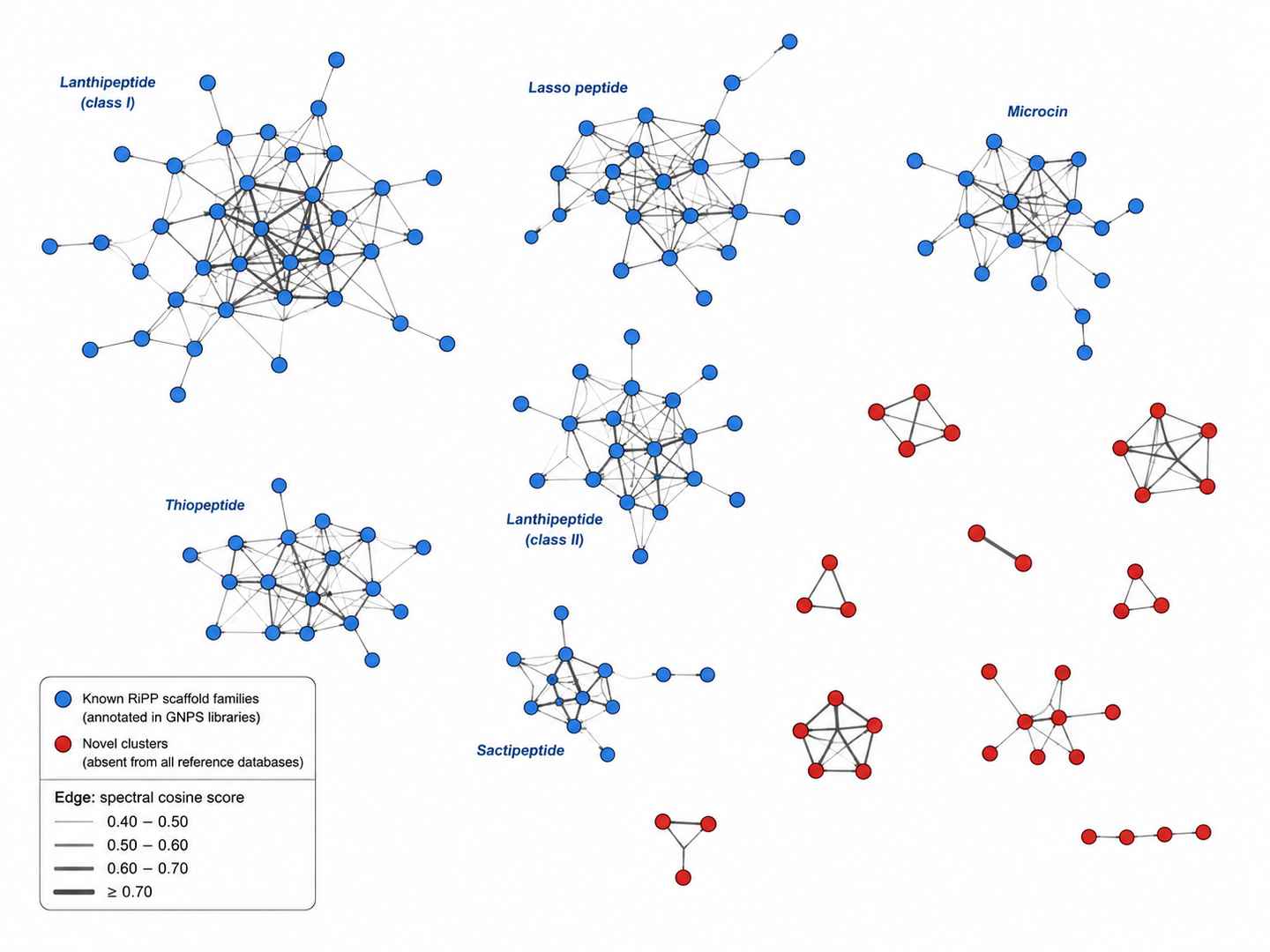
Figure 1: GNPS molecular network from a Streptomyces culture extract. Nodes in blue represent known RiPP scaffold families annotated against GNPS spectral libraries; nodes in red indicate novel clusters absent from all reference databases. Edge thickness correlates with spectral cosine score (≥0.7). The three novel lanthipeptide candidates highlighted in red were subsequently subjected to full structural characterisation by UVPD and ETD/MS.
Detectable RiPP and NRP Classes — Annotated MS Feature Table
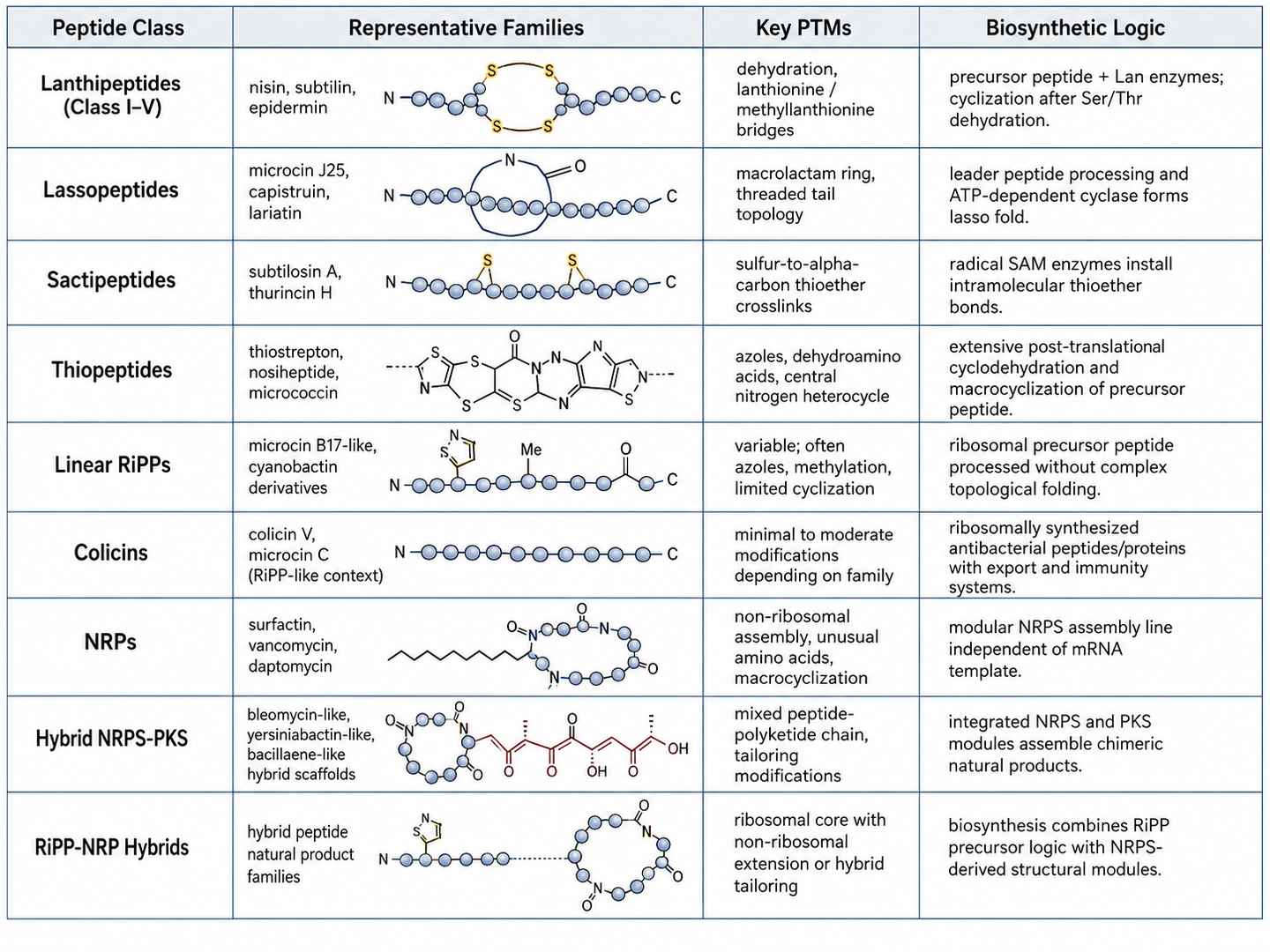
Figure 2: Representative MS feature table from an actinomycete extract profiling run. Features are annotated by predicted peptide class (lanthipeptide, lassopeptide, NRP), BGC assignment from antiSMASH cross-referencing, monoisotopic mass (≤3 ppm error), and novelty score. Rows highlighted in yellow indicate novel candidates selected for UVPD structural characterisation.
MRM Calibration Curve — Sub-ng/mL Quantification of Novel Lanthipeptide
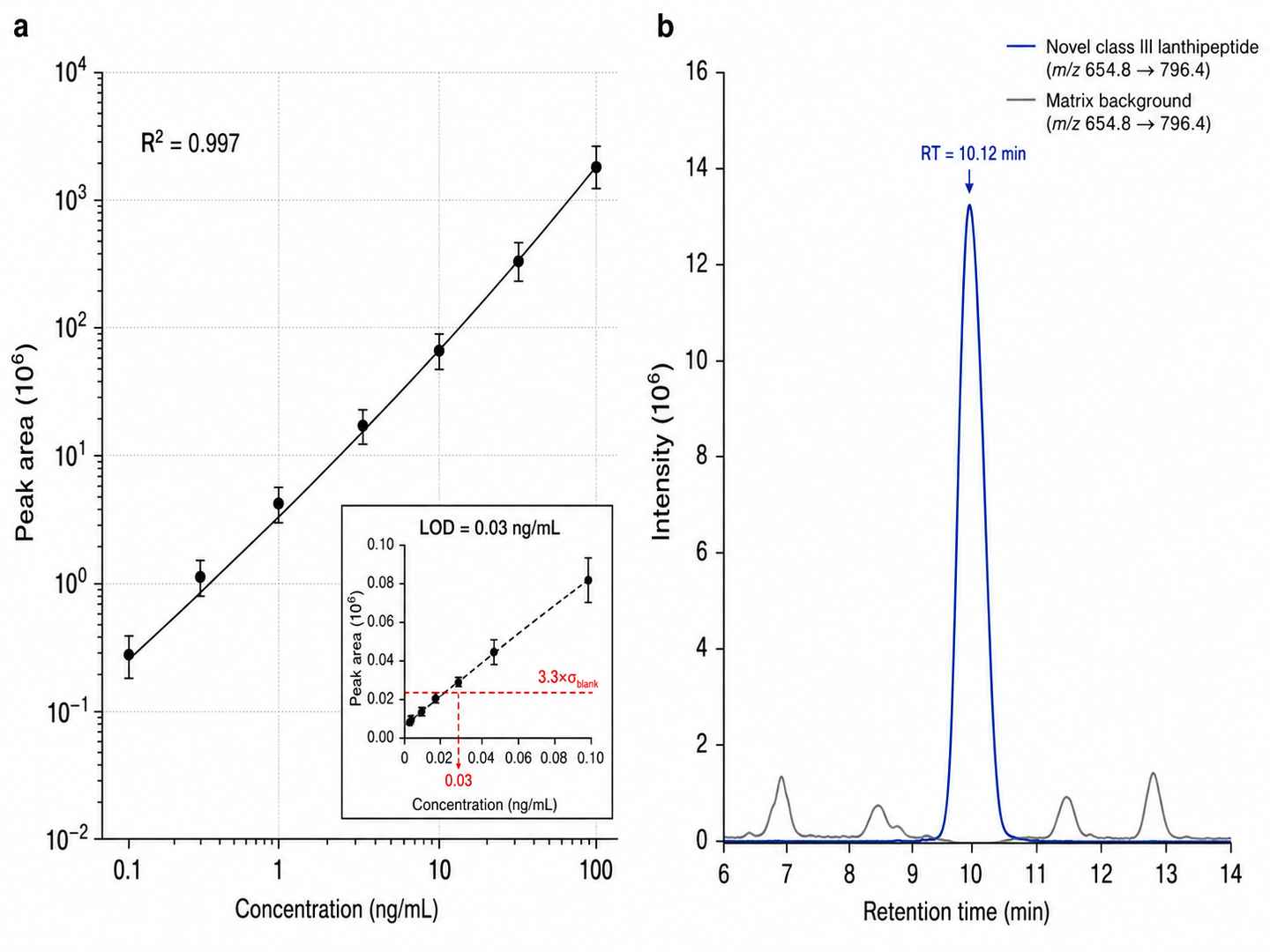
Figure 3: MRM quantification of a novel class III lanthipeptide across a fermentation time course. Calibration curve shows linear response from 0.1 to 100 ng/mL (R² = 0.997, LOD = 0.03 ng/mL). MRM transitions were developed from UVPD fragmentation data without synthetic isotope-labelled standard. Inset: extracted ion chromatogram showing clean separation from co-eluting matrix components in the fermentation broth extract.
UVPD Spectrum — Lanthionine Ring Topology Characterisation
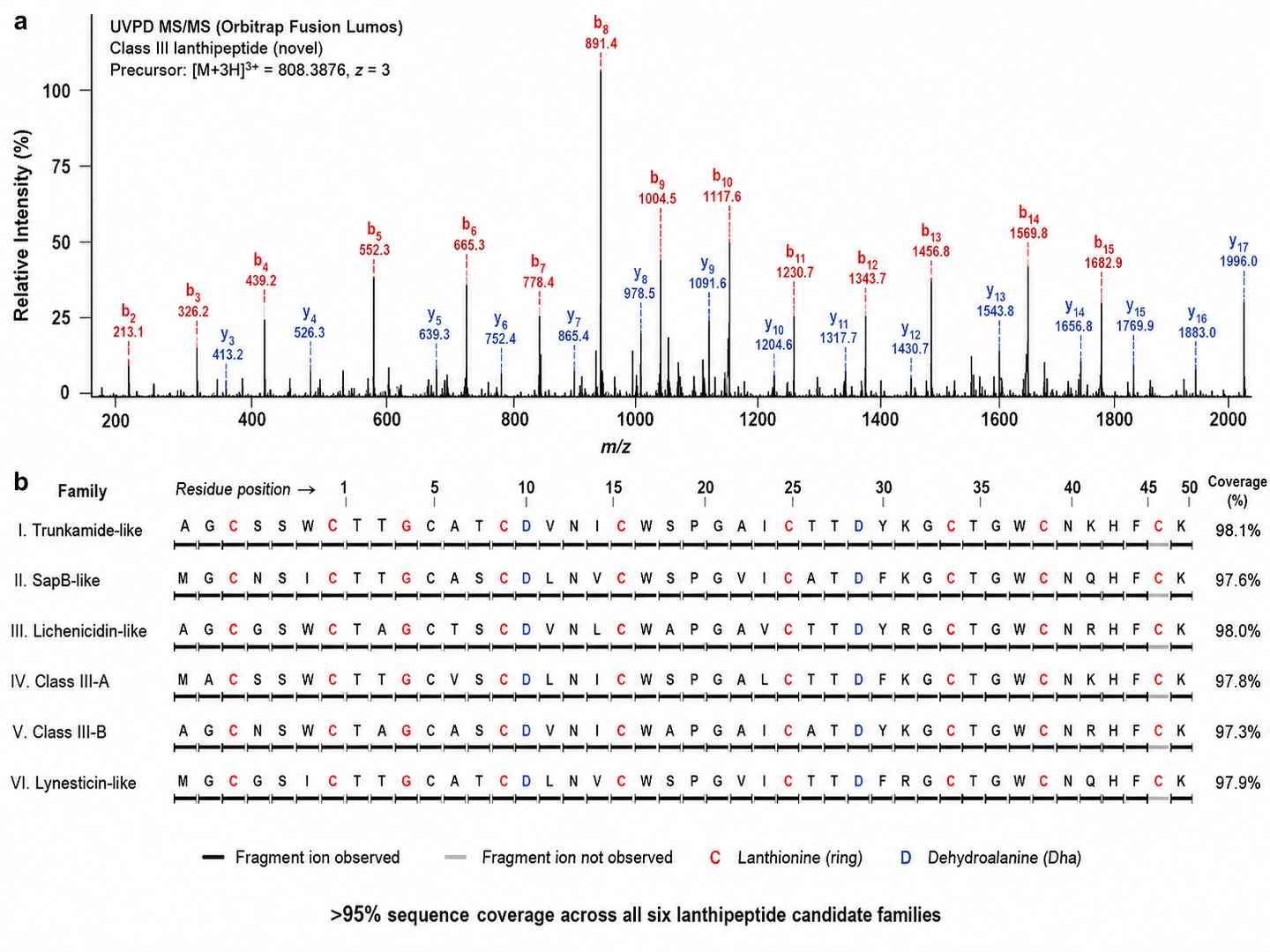
Figure 4: UVPD spectrum of a novel class III lanthipeptide acquired on an Orbitrap Fusion Lumos. Complete b and y ion series confirm two lanthionine ring positions and three dehydration sites, enabling full topology reconstruction. Fragment ion coverage map (bottom) shows >95% sequence coverage across all six lanthipeptide candidate families profiled on the platform.
Applications of Natural Product Peptidomics
- Novel antibiotic and anticancer drug discovery: RiPPs and NRPs are among the most clinically validated natural product scaffolds — nisin, daptomycin, vancomycin, actinorhodin. Natural product peptidomics enables systematic mining of microbial sources for structurally novel candidates before medicinal chemistry optimisation begins.
- Biosynthetic pathway engineering: Understanding which BGCs are expressed under which conditions enables rational engineering of yield improvement, heterologous expression, and chemoenzymatic analogue production — reducing the discovery-to-development timeline for promising candidates.
- Agricultural biocontrol agents: Many RiPPs (lantibiotics, thurincin-type bacteriocins) have food-grade status and broad application potential in crop protection, animal feed additives, and post-harvest preservation — without the regulatory burden of synthetic chemical pesticides.
- Cosmetics and personal care: Natural product peptides with skin-barrier support, antimicrobial, or anti-inflammatory activity are increasingly incorporated into cosmeceutical formulations. Dereplication ensures that claimed active ingredients are genuinely novel rather than rediscovered.
- Microbiome and metagenomics research: Linking metagenome-assembled genomes (MAGs) to their predicted secondary metabolite products requires the same BGC-MS integration that natural product peptidomics provides — directly applicable to human gut, soil, and marine microbiome studies.
- Phylogenetics and evolutionary biology: BiG-SCAPE-based BGC phylogenetics across strain collections reveals evolutionary relationships, horizontal gene transfer events, and the genetic basis for structural diversification in natural product families.
Deliverables
- antiSMASH BGC annotation report with novelty ranking and predicted peptide class for each cluster
- Complete LC-MS/MS raw data files (.raw, .d, or .mzML) and search results for independent review and reanalysis
- GNPS molecular network map with annotated known and novel clusters and spectral similarity scores
- Dereplication report cross-referencing MS features against Natural Products Atlas, DNP, NPACT, NPASS, AntiMarin, and GNPS libraries
- Structural characterisation report with annotated UVPD, ETD, and EThcD spectra and proposed peptide topology for each novel candidate
- BGC-to-product linkage report with confidence scores for each assigned MS feature
- Validated MRM/PRM quantification method with calibration curves, LOD/LOQ, linearity data, and quantified concentration results across samples
- Novelty assessment summary with literature support for patent and publication claims
- Expert scientific commentary and interpretation connecting findings to your research programme
What types of biosynthetic gene clusters (BGCs) can the platform detect? +
The platform covers all major RiPP classes — including lanthipeptides (class I-V), lassopeptides, sactipeptides, thiopeptides, linear RiPPs, and cyanobactins — as well as canonical NRPs, hybrid NRPS-PKS clusters, and RiPP-NRP architectural hybrids. antiSMASH 6.0+ analysis supports 71+ distinct BGC types across bacterial and fungal genomes, including specialised clusters from actinomycetes, firmicutes, cyanobacteria, and proteobacteria.
How does the dereplication pipeline reduce rediscovery of known compounds? +
The dereplication workflow applies three sequential filters. First, GNPS molecular networking clusters MS/MS spectra against curated spectral libraries and flags known scaffold families by spectral similarity. Second, precursor masses are searched against the Natural Products Atlas 2.0 (van Santen JA, et al. Nucleic Acids Research. 2022;50:D1317-D1323), DNP, NPACT, NPASS, and AntiMarin databases. Third, known clusters are annotated in colour on the molecular network map, leaving unannotated clusters as genuine novel candidates. In a typical actinomycete profiling project, this pipeline flags >90% of known compounds before de novo sequencing resources are committed.
How does the platform localise PTMs in RiPPs and NRPs — particularly thioether bridges and D-amino acids? +
PTM localisation requires fragmentation methods that preserve labile modifications during dissociation. UVPD generates comprehensive backbone fragmentation (a, b, c, x, y, z ion series) in a single laser pulse, enabling confident de novo sequencing of the peptide backbone even when it is extensively cross-linked. ETD and EThcD provide charge-directed fragmentation that preserves thioether and ester bonds during dissociation, allowing the precise localisation of lanthionine positions, Dha/Dhb residues, and heterocyclic rings. In-house algorithms then cross-reference these fragmentation patterns against predicted PTM sites from antiSMASH tailoring enzyme annotation to generate PTM maps with confidence scores for each modification position.
What sample formats are accepted for natural product peptidomics projects? +
Standard starting materials include pure bacterial or fungal culture pellets (1–5 g wet weight), lyophilised biomass, and crude organic extracts (100–500 mg). Genome sequence data (FASTA or GenBank format) is accepted digitally and is recommended for BGC-guided workflows — antiSMASH analysis can begin before wet-lab samples arrive. For metagenomic projects, high-molecular-weight eDNA (≥500 ng) or pre-assembled metagenome-assembled genomes (MAGs) are accepted. Samples should be shipped on dry ice with complete metadata (strain designation, fermentation conditions, media composition, harvest time). Contact our scientific team to discuss specialised starting materials.