Why Dedicated Dereplication Matters for Novel RiPP and NRP Discovery
A single fermentation broth may contain hundreds of secondary metabolites, yet most end up being known compounds already described in the literature — and the few that are truly novel often cannot be identified by conventional mass spectrometry workflows. Standard proteomics search engines, designed for linear tryptic peptides, are blind to the non-canonical features that define ribosomally synthesized and post-translationally modified peptides (RiPPs) and non-ribosomal peptides (NRPs) — macrocyclic backbones, D-amino acids, lipidation, heterocyclic modifications, and complex cross-links. Low-abundance bioactive peptides that could represent genuine new discoveries are buried under abundant matrix signals. A dedicated dereplication and quantification strategy — combining high-resolution mass spectrometry (HRMS), GNPS molecular networking, and triple quadrupole (QQQ) MRM — separates known from novel and quantifies what matters, from a single sample workflow.
What We Offer: From GNPS Molecular Networking to MRM Quantification
Standard metabolomics and peptidomics workflows are not equipped to distinguish a novel lanthipeptide from a rediscovered known compound in complex fermentation extracts. The present service addresses this limitation through a coordinated three-stage approach: HRMS data acquisition optimized for the 500–3000 Da mass range characteristic of RiPPs and NRPs, GNPS molecular networking to cluster and annotate known versus unknown metabolites, and rapid MRM method development on triple quadrupole instruments for absolute quantification of prioritized targets.
Detectable RiPP and NRP Classes by High-Resolution Mass Spectrometry
The platform accommodates the structural diversity of both RiPPs and NRPs. Major classes routinely identified, dereplicated, and quantified on our instruments are listed below.
| Peptide Class | Key Structural Features | Representative Examples | Dereplication Challenge |
|---|---|---|---|
| Lanthipeptides | Lanthionine/methyllanthionine bridges, dehydrated Ser/Thr | Nisin, Lacticin 3147, Haloduracin | Cross-linked topology unrecognized by linear search engines |
| Lasso Peptides | Isopeptide bond lariat, threaded C-terminal tail | Microcin J25, Capistruin, Caulosegnin | Unusual MS/MS fragmentation pattern; non-tryptic cleavage sites |
| Linear Azole-Containing Peptides (LAPs) | Heterocyclic oxazole/thiazole rings from Ser/Cys cyclization | Streptolysin S, Goadsporin, Plantazolicin | Heterocycle mass shifts not in standard modification databases |
| Graspetides | Macrocyclic ester/amide linkages (ATP-grasp enzymes) | Microviridin, Thurandacin | Macrocyclic topology eliminates linear b/y ion continuity |
| NRP Lipopeptides | N-terminal fatty acyl chain, D-amino acids, heterocycles | Daptomycin, Polymyxin B, Surfactin | Non-standard mass increments from lipid tails and D-configured residues |
| NRP Glycopeptides | Heavily cross-linked heptapeptide core with saccharide moieties | Vancomycin, Teicoplanin, Ramoplanin | High molecular weight (1500–2500 Da) with multiple labile glycosidic bonds |
| Cyclic and Branched Cyclic NRPs | Head-to-tail, side chain-to-terminus, or bi-cyclic topologies | Cyclosporin A, Gramicidin S, Bacitracin | Ring-opened versus intact forms must be distinguished for accurate quantification |
| Sactipeptides | Sulfur-to-α-carbon cross-links (Cys–Cα) | Subtilosin A, Thuricin CD | Unusual cross-link chemistry invisible to standard PTM search parameters |
| Thiopeptides | Highly modified central pyridine/dehydroalanine macrocycle | Thiostrepton, Nosineptide, GE2270A | Extensive dehydration and heterocyclization mask linear sequence |
| RaS-RiPPs and Emerging Classes | Radical SAM–catalyzed cross-links (C–C, C–S, C–N) | Streptide, Darobactin, Ruminococcin C | Novel linkage types require de novo spectral interpretation; no database precedent |
Notes:
- Dereplication coverage extends beyond known entries: GNPS molecular networking detects novel spectral clusters even when the compound itself is absent from all current databases.
- Targeted MRM methods can be developed for any RiPP or NRP that can be ionized, regardless of whether a synthetic standard is available.
- Class-specific fragmentation rules (e.g., C3/C4 diagnostic ions for lasso peptides, macrocyclic ring-opening signatures for graspetides) are built into our annotation pipeline.
Deep and Accurate Compound Identification by HRMS and GNPS Molecular Networking
High-resolution Orbitrap and QTOF mass spectrometers (operating at >60,000 resolving power) acquire untargeted MS/MS data from crude extracts, fraction pools, or enriched samples. Data are processed through the GNPS platform for molecular networking, spectral library matching, and automated annotation. Compounds matching known entries (DNP, GNPS libraries, in-house reference spectra) are flagged as dereplicated; clusters without database matches are prioritized for structural elucidation and subsequent MRM quantification.
For structurally ambiguous clusters, multi-mode fragmentation (HCD, CID, ETD) and open-search de novo sequencing are employed to resolve non-canonical features. The instrument configuration supports direct transfer from discovery-mode HRMS to quantification-mode QQQ without sample re-preparation.
Technical Highlights
- >99% Compound Removal via GNPS Dereplication
Automated molecular networking eliminates known compounds identified by MS/MS spectral matching to public and proprietary libraries, leaving only genuine novelty candidates for downstream structural work. - Multi-Mode Fragmentation for Complex Topologies
HCD for standard sequencing, CID (higher energy) for macrocyclic ring opening, ETD for highly charged species and labile PTM localization — all configurable per compound class within a single data acquisition method. - Rapid MRM Transition Development
QQQ MRM transitions are derived directly from HRMS fragmentation spectra of the novel compound, bypassing the need for custom synthesis of isotopically labeled standards. Average method development time: 2–3 days per target. - Sub-ng/mL Detection Limits
Triple quadrupole MRM achieves quantification limits of 0.1–1 ng/mL for most RiPPs and NRPs in fermentation broth matrices, with linear dynamic range spanning 3–4 orders of magnitude. - BGC-Integrated Validation
When genome sequence is available, in silico predicted precursor peptide masses are cross-referenced against experimental detection, providing orthogonal confirmation that the quantified compound is the predicted product. - Sample-Efficient Workflow
The entire dereplication-to-quantification pipeline can be completed from as little as 500 µL of crude fermentation broth or 5 mg of lyophilized extract, preserving material for orthogonal assays and follow-up experiments.
Instrument Capability Overview
| Feature | Orbitrap Exploris 480 (Discovery) | QTOF (Discovery) | QQQ (Quantification) |
|---|---|---|---|
| Resolving Power | Up to 480,000 (FWHM at m/z 200) | >60,000 (FWHM) | Unit resolution (0.7 Da FWHM) |
| Mass Accuracy | <3 ppm (internal calibration) | <5 ppm | N/A (MRM mode) |
| Fragmentation | HCD, CID, ETD | CID, EAD | CID (MRM transitions) |
| Acquisition Mode | DDA, DIA, PRM | DDA, SWATH | MRM, Scheduled MRM |
| Quantification Range | Label-free, TMTpro, PRM | Label-free | 0.1–500 ng/mL (matrix-dependent) |
| Primary Use in Workflow | Structural elucidation, PTM mapping | GNPS data acquisition, molecular networking | Absolute quantification, time-course studies |
Platform Advantages for Dereplication and Quantification
Unified Workflow: From Crude Extract to Validated MRM Quantification
The workflow comprises six sequential stages — sample preparation, HRMS acquisition, GNPS molecular networking and dereplication, structural elucidation, MRM method development, and quantification with integrated reporting — each optimized to preserve quantitative accuracy while maximizing the capture of structurally novel RiPP and NRP candidates.
Sample Prep
Extraction, fractionation, and SPE enrichment for RiPP/NRP class
HRMS Acquisition
Orbitrap/QTOF DDA and DIA for untargeted profiling
GNPS Networking
Molecular network construction and known-compound dereplication
Structural Analysis
De novo sequencing, PTM mapping, and class-specific annotation
MRM Development
Transition design from HRMS data, matrix-matched calibration
Quant & Report
QQQ MRM quantification with BGC cross-validation
1
Sample Preparation and Enrichment
Crude fermentation broths or extracts are subjected to class-specific enrichment: C18 SPE for moderately hydrophobic RiPPs, mixed-mode cation exchange for cationic NRPs, size-exclusion fractionation for high-MW thiopeptides and glycopeptides. QC checkpoints ensure sufficient peptide mass and matrix compatibility before MS analysis.
2
HRMS Data Acquisition
Samples are analyzed on Orbitrap Exploris 480 or QTOF instruments with DDA and DIA acquisition modes. Mass range is optimized for 500–3000 Da, with stepped HCD energy ramping to capture both low-energy backbone fragments and high-energy diagnostic ions for ring topology assessment.
3
GNPS Molecular Networking and Dereplication
MS/MS data is uploaded to GNPS for molecular network construction. Spectral matching against public libraries (GNPS, MassBank, DNP) and proprietary in-house RiPP/NRP databases flags known compounds. Novel clusters — nodes with no spectral matches to any database — are visually highlighted in the network map for prioritized downstream analysis.
4
Structural Elucidation and Annotation
Novel cluster compounds undergo deep structural analysis: de novo sequencing (PEAKS, CycloBranch for cyclic peptides), macrocyclic ring topology determination (diagnostic ring-opening fragment ions), D-amino acid detection (IM-MS or Marfey's analysis if needed), and PTM mapping including lanthionine bridges, heterocycles, and lipid modifications.
5
Targeted MRM Method Development
Using the HRMS-derived fragmentation spectrum, the most intense and specific product ions are selected as MRM transitions. Collision energy is optimized by ramping, retention time is locked on the QQQ system, and matrix-matched calibration standards are prepared. Method validation includes linearity (R² ≥ 0.99), precision (CV <15%), and recovery assessment in the target matrix.
6
Quantification and Integrated Reporting
Samples are analyzed by QQQ MRM with scheduled acquisition. Absolute concentrations are calculated against the matrix-matched calibration curve. Results are compiled into an integrated report featuring: GNPS network map with highlighted novel cluster, annotated MS/MS spectrum, MRM chromatogram and calibration curve, quantified concentrations with statistics, and BGC cross-validation when applicable.
Sample Requirements for Dereplication Projects
The table below summarizes our standard requirements for sample submission. Please contact our scientific team for atypical sample types or specialized extraction protocols.
| Sample Type | Minimum Amount | Preferred Format | Shipping Condition | Notes |
|---|---|---|---|---|
| Crude Fermentation Broth | 1–5 mL | Cell-free supernatant, 0.22 µm filtered | Dry ice | Record fermentation conditions (medium, time, induction); avoid methanol/acid precipitation before submission |
| Organic Extract (crude or fractionated) | ≥100 µg (dry weight) or 500 µL solution | DMSO or methanol solution in glass vials | Dry ice or ambient | Provide extraction solvent composition; note if fractionation steps (SPE, HPLC) have been applied |
| Purified or Semi-Purified Peptide | ≥10 µg | Lyophilized powder or concentrated solution | Dry ice or ambient | Suitable for direct structural characterization and MRM method development; purity estimate helpful |
| Microbial Cell Pellet | ≥50 mg (wet weight) | Snap-frozen pellet | Dry ice | Recommended when simultaneous genomic DNA extraction for BGC analysis is desired |
| Time-Course or Process Samples | ≥200 µL per time point | Individual aliquots, time-stamped | Dry ice | Minimum 5 time points recommended for fermentation profiling; include both early and peak production phases |
Demo Results: GNPS Networks, MS/MS Spectra, and MRM Quantification Data
Representative data from a dereplication and quantification project demonstrate the progression from GNPS molecular networking through structural characterization to targeted MRM quantification of a novel RiPP candidate.
GNPS Molecular Network Map
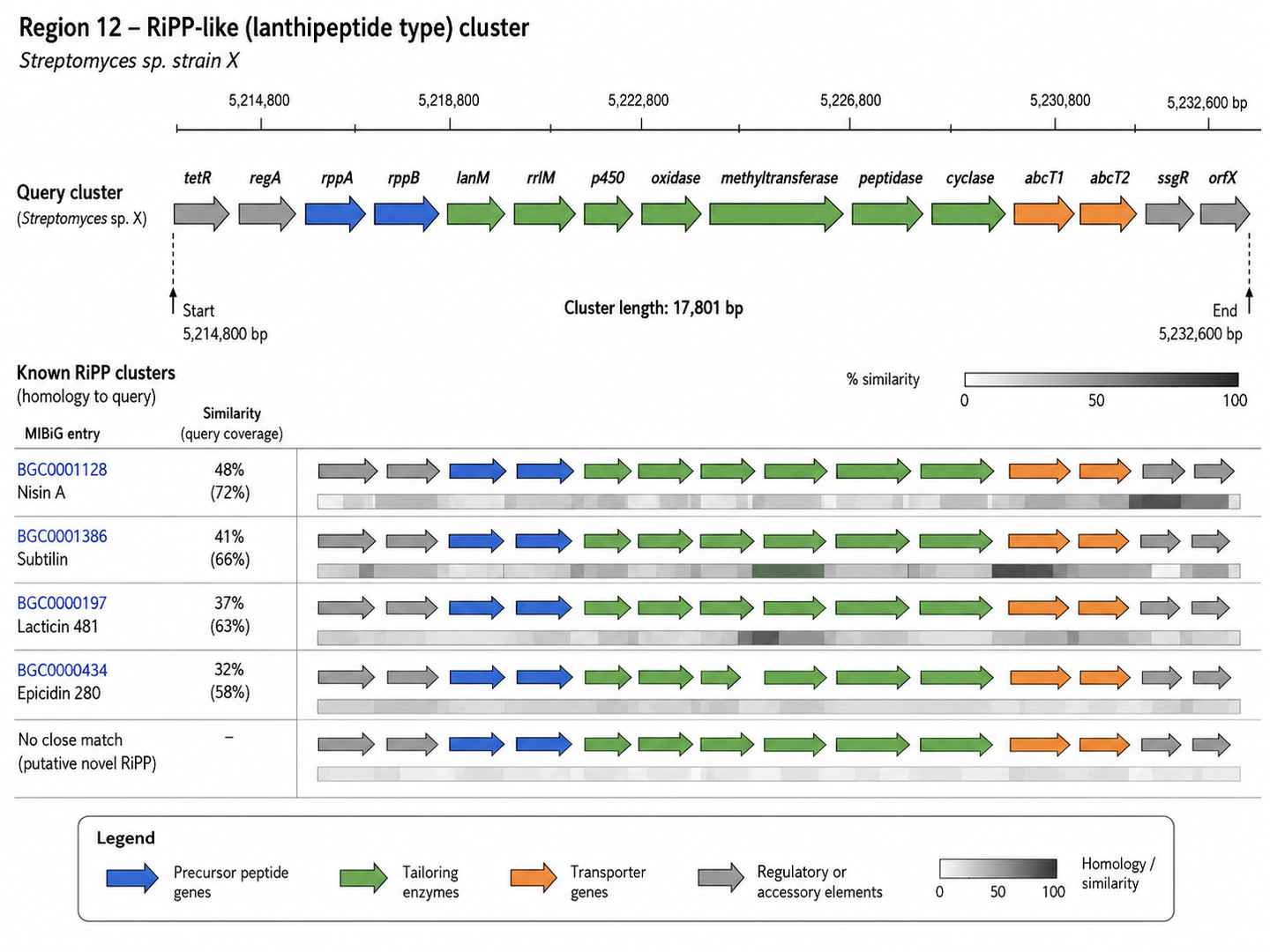
Figure 1: GNPS molecular network of a Streptomyces fermentation extract. Gray nodes represent MS/MS spectral clusters matched to known compounds in public libraries; red nodes represent novel clusters with no database match. The highlighted cluster (red, center) was prioritized for structural elucidation and subsequently identified as a novel branched cyclic NRP.
Annotated MS/MS Spectrum
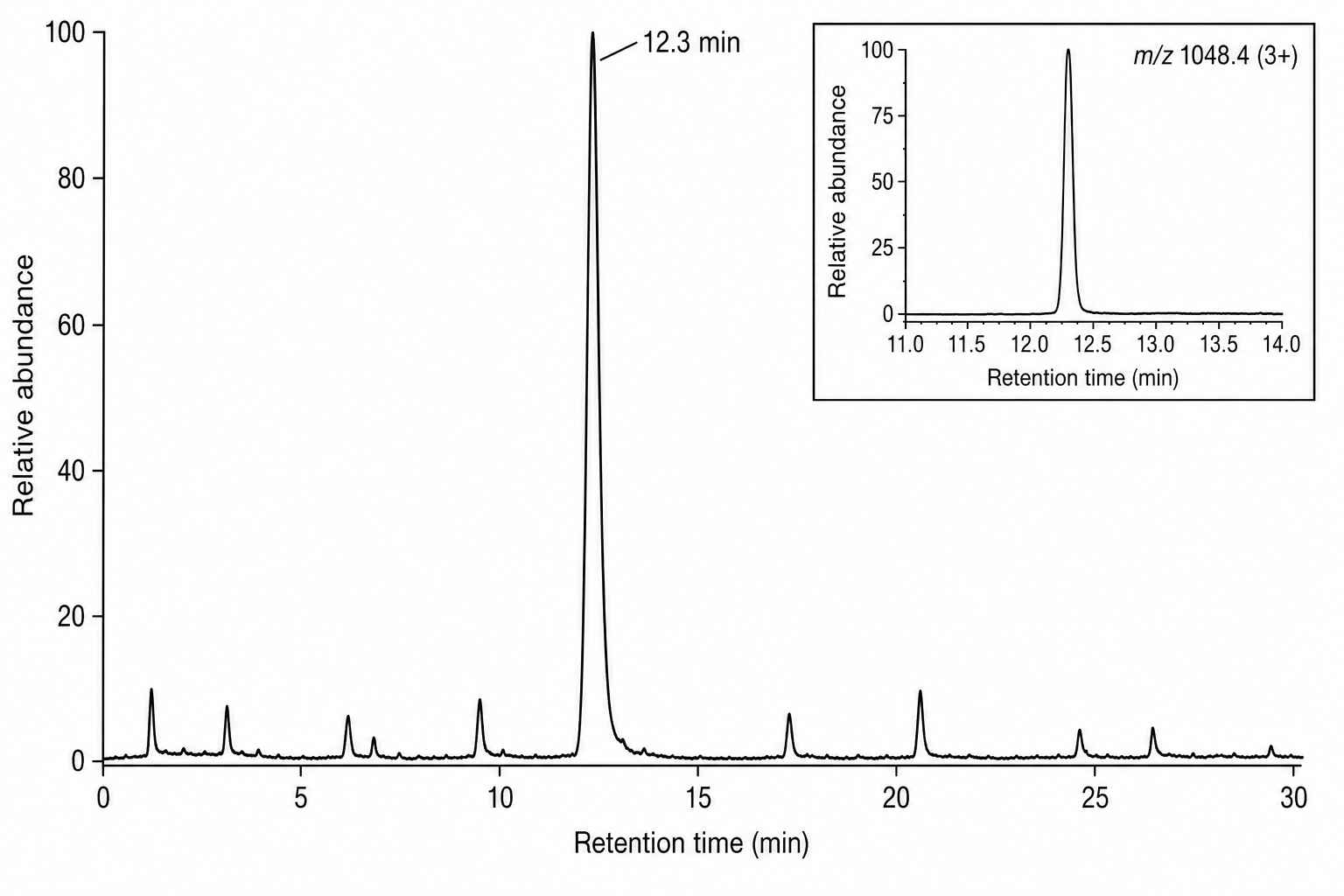
Figure 2: HCD-MS/MS spectrum of a novel lanthipeptide showing both linear b/y ion series (after ring-opening fragmentation) and diagnostic ions for lanthionine bridge connectivity (Δmass 34 Da for Lan, 48 Da for MeLan). Full sequence coverage was achieved with de novo confidence score >95%.
MRM Calibration Curve
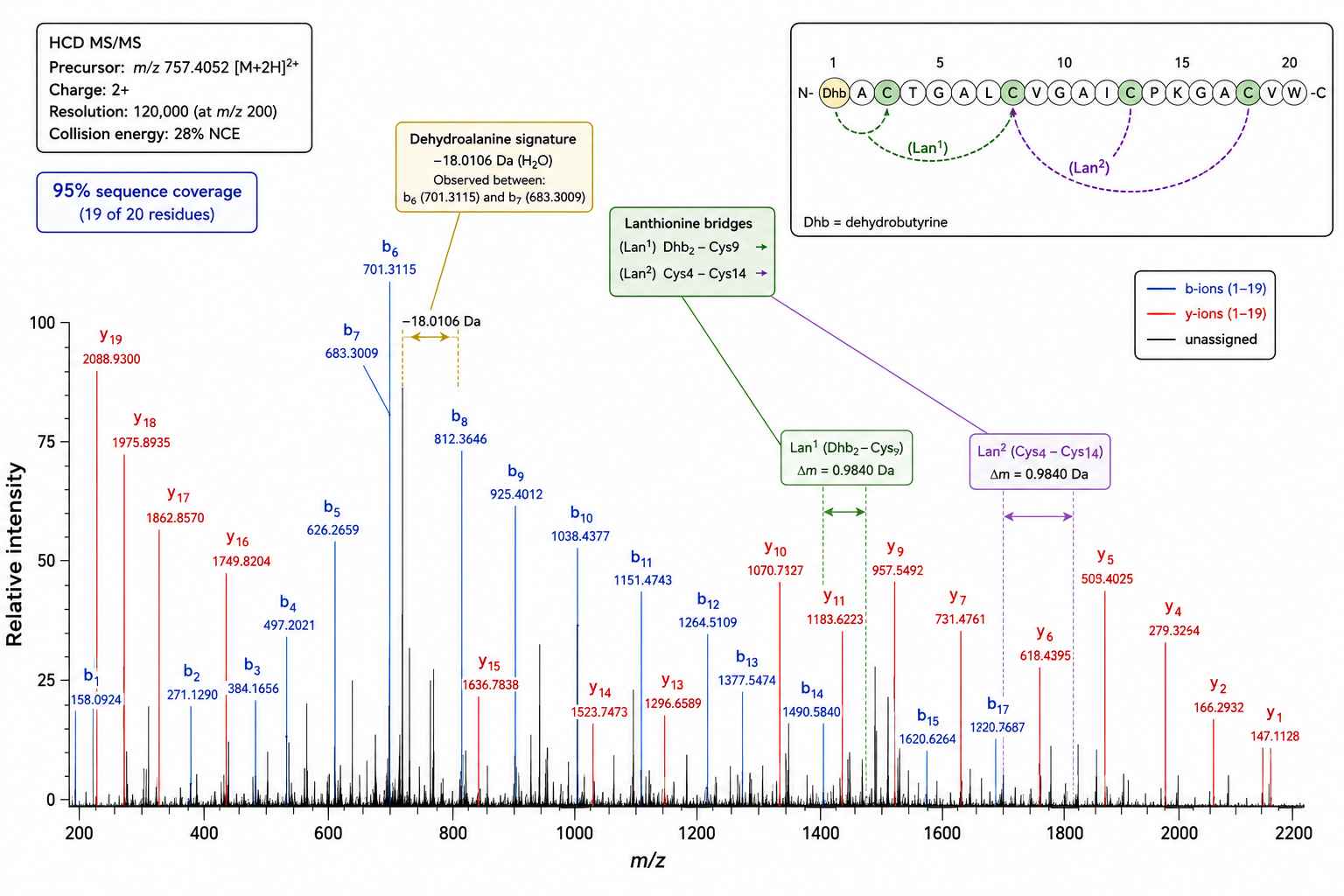
Figure 3: Matrix-matched MRM calibration curve for a novel NRP candidate developed directly from HRMS fragmentation data. Linear dynamic range spans 0.1–100 ng/mL (R² >0.995) with lower limit of quantification at 0.25 ng/mL in crude fermentation broth matrix.
BGC-to-Product Correlation
Figure 4: BGC-to-product correlation. AntiSMASH-predicted precursor peptide mass (2,348 Da) matched the experimental detection within 2 ppm. Time-course MRM quantification (inset) shows maximum production at 72 h, consistent with the BGC's predicted regulatory logic.
Applications in Natural Product Research and Drug Development
- Antibiotic lead discovery: Rapidly identify novel RiPP and NRP scaffolds from actinomycete, fungal, and environmental metagenomic libraries, eliminating the 90%+ of rediscovered compounds before they consume characterization resources
- Fermentation process optimization: Track absolute concentrations of target RiPPs and NRPs across time-course, media optimization, and scale-up experiments using validated MRM methods without redeveloping assays for each new condition
- Synthetic biology pathway validation: Quantify heterologous expression yields of refactored BGCs in chassis organisms, comparing production titers across promoter variants, copy numbers, and fermentation parameters
- Mode-of-action and activity-guided fractionation: Correlate MRM-quantified peptide concentrations with bioassay results (MIC, IC50) to identify the active component within a complex metabolite mixture
- Patent and regulatory support: Provide defensible structural evidence and validated quantification data for patent filings, IND-enabling studies, and regulatory submissions requiring GLP-comparable analytical data
- Natural product chemical ecology: Survey RiPP and NRP production profiles across microbial strains, environmental conditions, and co-culture systems to uncover condition-dependent regulation and interspecies interactions
What You Receive: Structural Data and Quantification Reports
- GNPS molecular network map with color-coded known/novel cluster annotation and spectral matching statistics
- Annotated MS/MS spectra with de novo sequencing output, PTM assignment, and class-specific fragmentation evidence (macrocyclic ring topology, lanthionine bridges, heterocycle mapping)
- Structural report including proposed RiPP/NRP sequence, modification inventory, and confidence scoring per residue
- MRM method development documentation including transition list, optimized collision energies, retention times, and matrix effects assessment
- Quantification report with calibration curve (R², LOD, LOQ), precision and recovery data, and absolute concentrations across all samples with statistical analysis
- BGC-to-product cross-validation report (when genome data is provided) linking predicted precursor masses to experimental detection
- Raw LC-MS/MS data files (.raw, .d, or .mzML) and processed results (GNPS output, MRM quantification tables) for independent review and reanalysis
- Integrated executive summary suitable for publication, patent filing, or internal decision-making
How is GNPS molecular networking different from standard LC-MS/MS database searching? +
GNPS constructs a molecular network based on MS/MS spectral similarity rather than relying on pre-defined database hit lists. This means that compounds absent from all reference libraries still appear as distinct clusters in the network and can be flagged as novel candidates. Standard database searching returns only matches to known entries — everything else is silently discarded.
Can you develop MRM methods without a synthetic standard of the novel peptide? +
Yes. MRM transitions are derived directly from the HRMS fragmentation spectrum of the novel compound. The most abundant and specific product ions are selected as quantifier and qualifier transitions. Collision energy is optimized empirically on the QQQ. This approach typically achieves quantification limits in the low ng/mL range without any synthetic standard. For absolute quantification with full regulatory validation, a synthetic or semi-synthetic standard can be incorporated at a later stage.
How do you handle macrocyclic peptides that do not produce linear b/y ion series? +
Macrocyclic peptides are analyzed using CID at elevated collision energies, which promotes ring-opening fragmentation to generate linearized b/y ion series. We also employ ETD for highly charged cyclic precursors and EAD (electron-activated dissociation) on QTOF platforms. Hybrid fragmentation strategies (CID + ETD) provide complementary coverage of cyclic topology and linear sequence.
What sample volume or mass is needed for both HRMS dereplication and QQQ quantification? +
The combined workflow can be performed from as little as 500 µL of crude fermentation broth or 100 µg of extract. The same enriched peptide pool is split for HRMS acquisition (10–20%) and QQQ MRM analysis (80–90%). For very low-abundance targets or time-course studies with many time points, we recommend 1–2 mL of broth or 500 µg of extract to ensure sufficient material for both discovery and quantification.
How long does the full dereplication-to-quantification workflow take? +
A typical project timeline is 4–6 weeks from sample receipt to final report, broken down as: sample preparation and QC (3–5 days), HRMS acquisition and GNPS networking (5–7 days), structural elucidation of novel clusters (7–10 days), MRM method development and validation (5–7 days), and final quantification with reporting (3–5 days). Expedited timelines are available for priority projects.