
Peptide Biomarker Verification After Discovery
Discovery peptidomics can nominate peptides that differ between study groups, track a perturbation, or correlate with a biological phenotype. Those observations are useful for candidate generation, but they do not by themselves establish that a peptide can be measured reproducibly in the intended matrix or that the association will persist when the analytical method or sample cohort changes.
Peptide biomarker verification narrows this gap. Candidate identity, molecular form, abundance, matrix behavior, and available analytical reagents are reviewed before a targeted measurement strategy is selected. Depending on the question, verification may use targeted LC-MS/MS, an affinity-based assay, or a deliberately orthogonal combination of the two. Within our Peptide Quantification & Bioanalysis portfolio, this service focuses on post-discovery verification and validation rather than initial candidate generation. Researchers who are still generating candidate lists should begin with our Peptide Biomarker Discovery service.
The term orthogonal validation is reserved here for research workflows in which a candidate is challenged with a different measurement principle from the one that generated the original evidence. A newly designed assay that uses the same core analytical principle can provide independent verification, but it is not automatically orthogonal. For example, DIA-MS followed by PRM is targeted MS verification, whereas an affinity-based assay can provide orthogonal confirmation of an MS-derived candidate. Conversely, sequence-specific LC-MS/MS can provide orthogonal evidence for a candidate originating from an affinity-based screen. These research workflows should not be interpreted as regulatory or clinical validation.
Peptide Biomarker Discovery, Verification, and Validation
The evidence required changes as a peptide candidate moves from discovery toward a more mature biomarker program. Separating these stages prevents a reproducible discovery signal from being overstated as a validated biomarker.
| Stage | Primary Question | Typical Evidence |
|---|---|---|
| Discovery | Which peptide features or identified peptides are associated with the study contrast? | Untargeted or broad quantitative peptidomics, including DIA peptidomics, followed by candidate prioritization. |
| Verification | Can selected candidates be measured reproducibly with a targeted assay in the intended matrix? | Fit-for-purpose targeted LC-MS/MS or another candidate-specific quantitative method. |
| Orthogonal Confirmation | Does an analytically independent measurement support the original finding? | Cross-platform or independent-assay measurement, interpreted with attention to molecular form, calibration, matrix effects, and assay specificity. |
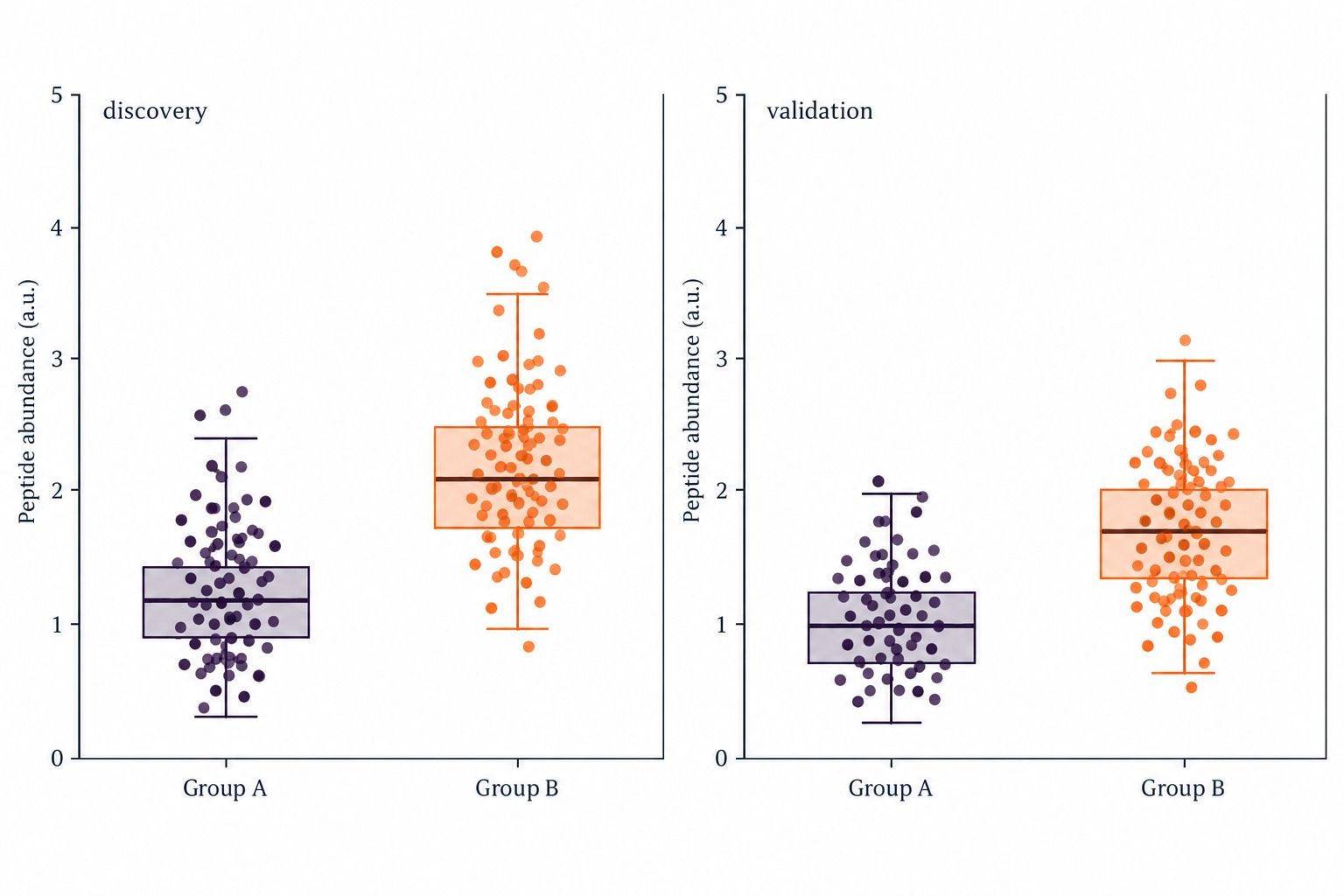
| Validation in an Independent Cohort | Does the predefined biomarker signal reproduce in a new sample set? | A locked or predefined assay applied to an appropriately designed independent research cohort. |
Platform Selection for Peptide Biomarker Verification
Platform choice should follow the molecular properties of the candidate, the original discovery method, and the evidence required. A short endogenous peptide, a modified peptide isoform, and a proteotypic surrogate peptide derived from a protein digest can require different assay designs even when they originate from the same precursor protein.
| Approach | Best Fit | Important Considerations |
|---|---|---|
| Targeted LC-MS/MS | Sequence-specific measurement, modified or truncated peptide forms, targets without suitable antibodies, and multiplexed confirmation of predefined candidates. | Method development depends on peptide ionization, chromatography, interference, matrix effects, internal standards, and the quantitative endpoint required. |
| Single Molecule Array (Simoa) | Very low-abundance analytes for which a suitable high-specificity affinity assay can be configured or sourced. | Feasibility depends on epitope accessibility, antibody-pair specificity, matrix background, calibrator design, and whether closely related peptide forms must be distinguished. |
| MSD Electrochemiluminescence (ECL) Immunoassays | Focused singleplex or multiplex affinity measurements in biofluids when suitable or previously characterized antibody pairs are available. | Assay behavior is target- and matrix-dependent; cross-reactivity, dilution behavior, calibration, and molecular-form recognition must be characterized. |
| Luminex xMAP Multiplex Immunoassays | Multiplex measurement of multiple predefined peptide, hormone, or protein biomarkers with compatible affinity reagents. | Multiplex interactions, antibody compatibility, analyte concentration range, matrix interference, and target-specific assay feasibility can limit panel composition. |
Whether a method is orthogonal depends on the discovery method. Targeted MS after DIA-MS is generally a verification step within the MS measurement domain, whereas an affinity-based assay introduces a different detection principle. The reverse can apply when a candidate originates from an affinity-based screen and is confirmed by sequence-specific LC-MS/MS. If the objective is sequence-selective targeted MS rather than cross-platform confirmation, a dedicated PRM or MRM peptide quantification workflow may be the more direct route. For neuropeptide candidates that primarily require PRM/MRM measurement, see our Targeted Neuropeptide Quantification service.
Peptide-Specific Assay Feasibility
Not every peptide discovered by LC-MS/MS is automatically transferable to an immunoassay, and not every immunoreactive signal represents the same molecular species measured by mass spectrometry. Assay feasibility is therefore reviewed at the candidate level before a validation platform is selected.
Peptide Biomarker Verification and Orthogonal Validation Workflow
Candidate & Evidence Review
Confirm target identity, discovery evidence, matrix, cohort design, and intended endpoint
Assay Feasibility & Platform Selection
Evaluate molecular form, analytical specificity, reagent feasibility, and expected abundance
Pilot Assay & Qualification
Establish fit-for-purpose performance in the intended sample matrix before cohort analysis
Targeted or Orthogonal Measurement
Measure selected candidates using the predefined verification or cross-platform strategy
Evidence Integration & Reporting
Assess reproducibility, cross-platform agreement, cohort replication, and candidate advancement
1
Candidate and Evidence Review
Discovery results are reviewed together with peptide sequence, precursor context, molecular form, study contrast, sample matrix, replication, and the intended downstream decision. Candidates can be prioritized before assay development when the original discovery list is larger than the feasible validation set.
2
Assay Feasibility and Platform Selection
The candidate is evaluated for targeted MS detectability, affinity-reagent feasibility, isoform specificity, endogenous abundance, and matrix compatibility. Targeted LC-MS/MS, Single Molecule Array (Simoa), MSD electrochemiluminescence immunoassays, Luminex xMAP, or another fit-for-purpose approach is selected according to the evidence required rather than by a fixed platform hierarchy.
3
Pilot Assay and Analytical Qualification
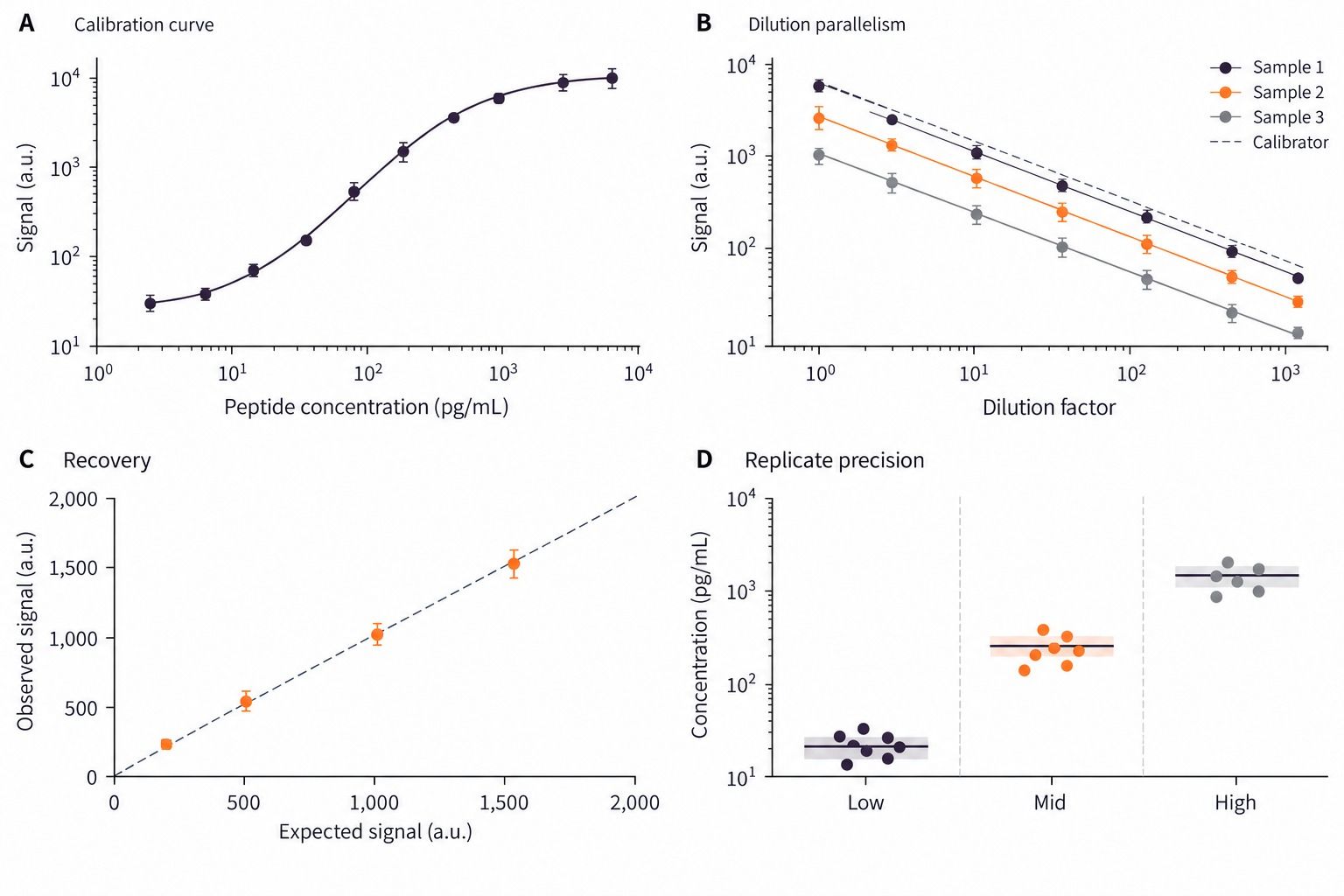
Pilot work evaluates whether the selected assay behaves acceptably in the intended matrix. Depending on platform and project scope, this can include response behavior, repeatability, dilution behavior, recovery, selectivity, interference review, and stability-related checks without assuming a universal acceptance threshold.
4
Targeted Verification or Orthogonal Measurement
Selected samples or a predefined cohort are measured using the planned verification assay or, when the study calls for orthogonal confirmation, a method based on a different measurement principle. The design can include blinded sample order, balanced batches, technical controls, internal standards, or plate controls as appropriate to the platform and study objective.
5
Evidence Integration and Reporting
Results are evaluated for analytical reproducibility, direction and magnitude of biological change, cross-platform concordance, assay-specific bias, and replication in the designated cohort. Candidates are reported with the evidence supporting advancement as well as unresolved analytical limitations.
Sample, Matrix, and Study Design Considerations
Peptide biomarker verification and orthogonal validation are most informative when the measurement question is defined before samples are run. Sample requirements are therefore determined from the candidate, matrix, assay platform, and cohort design rather than from a single fixed submission specification.
| Design Element | Information to Define | Why It Matters |
|---|---|---|
| Target Definition | Exact peptide sequence, terminal form, PTM state, precursor relationship, and whether the assay measures the endogenous peptide or a surrogate peptide. | Prevents apparently concordant assays from measuring different molecular species. |
| Sample Matrix | Plasma, serum, CSF, urine, conditioned medium, tissue extract, or other project-specific matrix, together with collection and storage history. | Matrix effects, proteolysis, binding proteins, and dilution behavior can alter assay performance. |
| Cohort Structure | Discovery samples, verification samples, independent samples, biological replicates, covariates, randomization, and batch plan. | Determines whether the study tests analytical repeatability, biological replication, or both. |
| Standards and Reagents | Internal standards, synthetic peptides, calibrators, antibodies, reference materials, and available matched assay reagents. | Defines what level of quantitative traceability, molecular specificity, and cross-platform comparison is feasible. |
Projects requiring concentration assignment with appropriate standards can also be routed to our Peptide Absolute Quantification workflow when absolute measurement is the primary analytical objective.
Analytical Qualification and Cross-Platform Interpretation
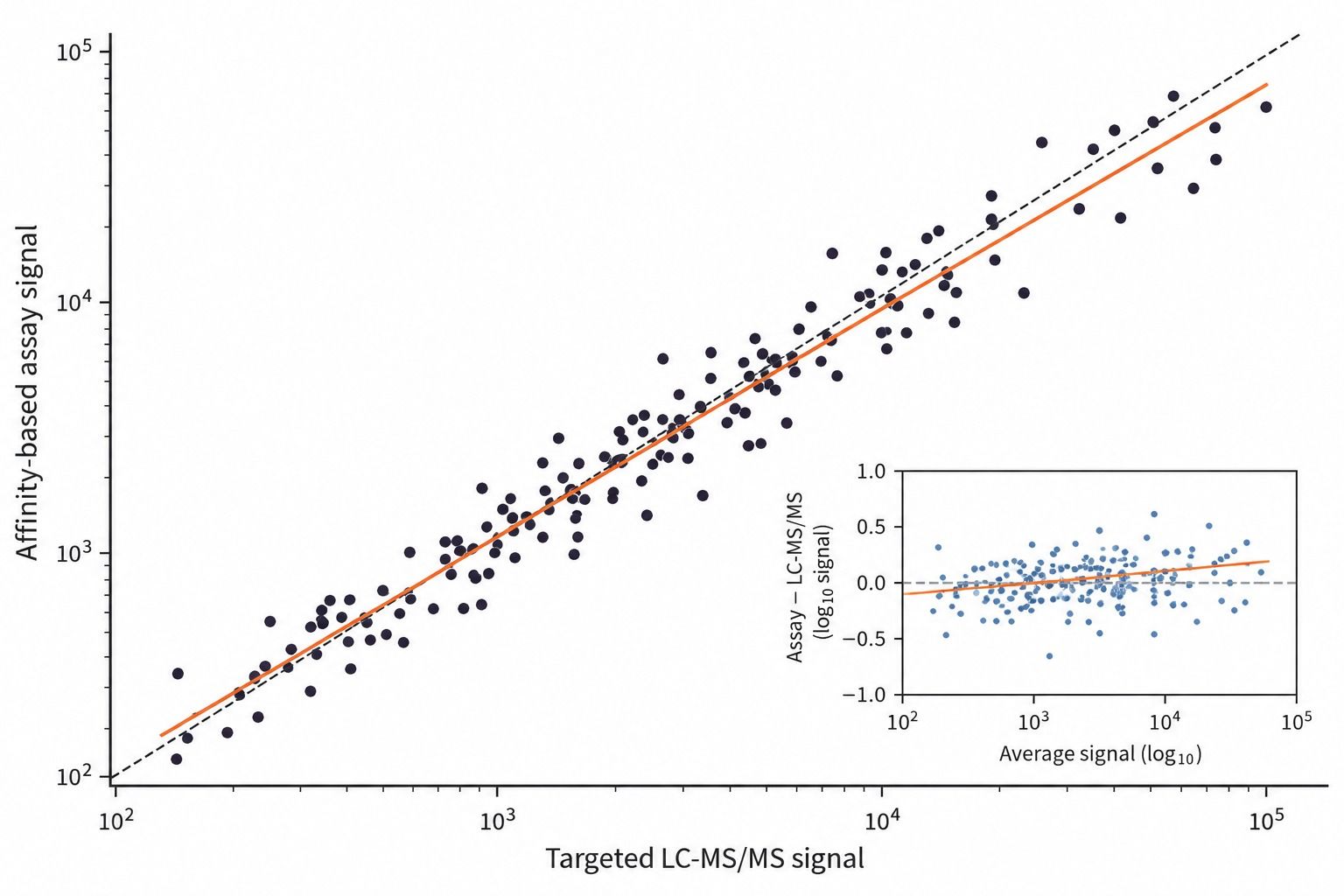
Agreement between two platforms should not be reduced to a single correlation coefficient. Orthogonal assays can differ because they recognize different molecular forms, use different calibrators, respond differently to matrix components, or operate over different analytical ranges.
Representative Results
The visualizations below illustrate representative analytical outputs for peptide biomarker verification. They are intended to show reporting formats rather than data from a specific customer project.
Cross-Platform Concordance
Assay Qualification
Independent Cohort Replication
Candidate Advancement Matrix
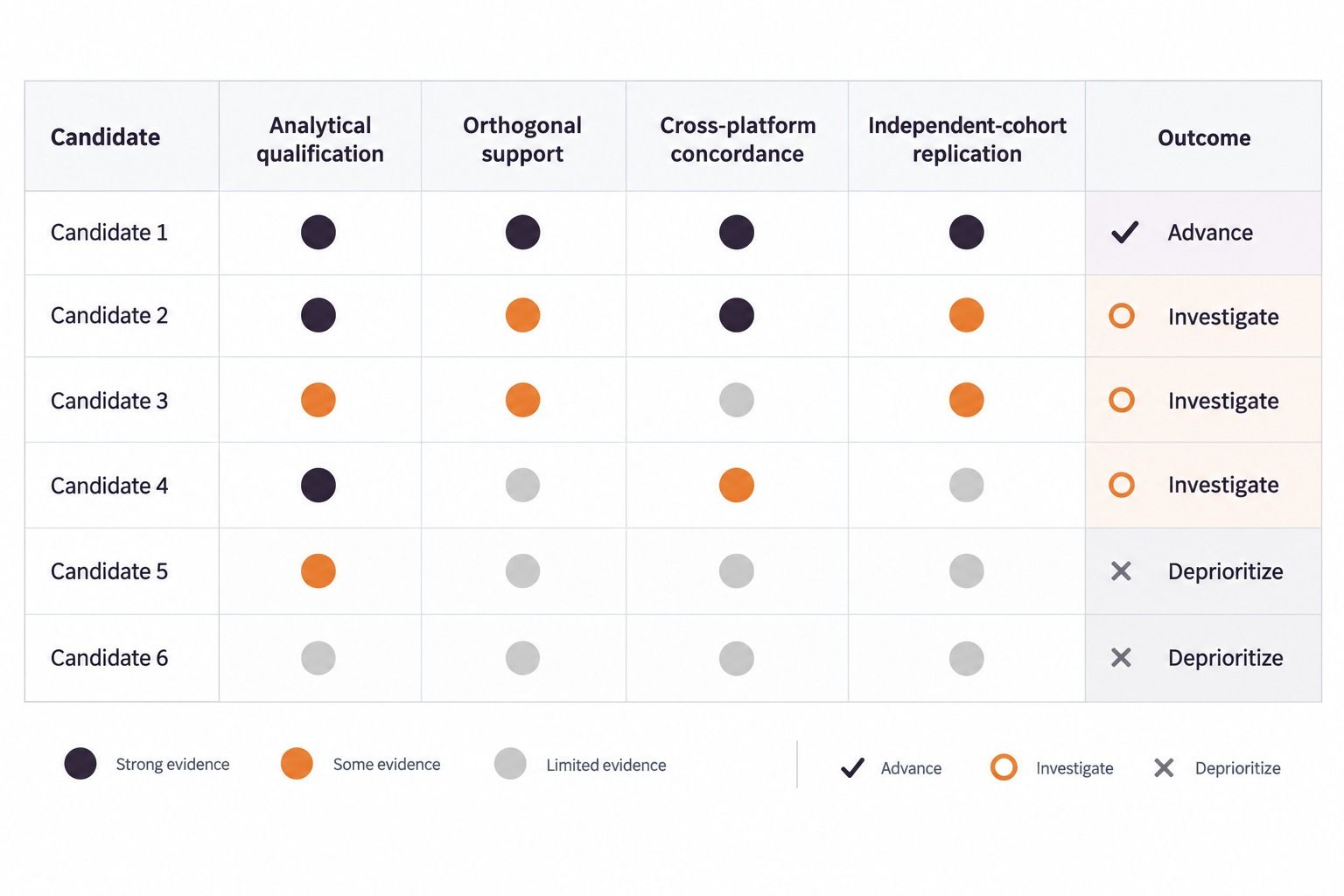
Representative outputs are illustrative. Final analyses depend on assay platform, target identity, matrix, standards, cohort design, and data quality.
Typical Deliverables
Deliverables are defined during project scoping and may include the following:
- Candidate and Assay Feasibility Review
A structured assessment of target identity, molecular form, discovery evidence, matrix, reagent availability, and recommended verification route. - Assay Development or Transfer Summary
Documentation of the selected targeted MS or affinity-based assay strategy and the analytical factors evaluated before cohort measurement. - Analytical Qualification Results
Project-appropriate repeatability, response, dilution, recovery, selectivity, interference, stability, or other qualification outputs according to assay format. - Quantitative Biomarker Dataset
Processed measurements with sample-level QC fields and normalization or calibration information appropriate to the selected platform. - Cross-Platform Comparison
Concordance, bias, discordance, and molecular-form interpretation when two analytical principles are compared. - Cohort Replication Analysis
Statistical summaries for predefined candidates when independent or extended research cohorts are included. - Candidate Advancement Summary
Evidence-focused ranking of candidates for further research, with analytical limitations and unresolved questions stated explicitly. - Analytical Report and Data Package
A structured report containing methods, QC, figures, interpretation notes, and project-specific data files.
References
- Whiteaker JR, Lin C, Kennedy J, et al. A targeted proteomics-based pipeline for verification of biomarkers in plasma. Nat Biotechnol. 2011;29(7):625-634. https://doi.org/10.1038/nbt.1900
- Addona TA, Shi X, Keshishian H, et al. A pipeline that integrates the discovery and verification of plasma protein biomarkers reveals candidate markers for cardiovascular disease. Nat Biotechnol. 2011;29(7):635-643. https://doi.org/10.1038/nbt.1899
- Kuhn E, Addona T, Keshishian H, et al. Developing multiplexed assays for troponin I and interleukin-33 in plasma by peptide immunoaffinity enrichment and targeted mass spectrometry. Clin Chem. 2009;55(6):1108-1117. https://doi.org/10.1373/clinchem.2009.123935
- Moradian A, Goonatilleke E, Lin TT, et al. Interlaboratory comparison of antibody-free LC-MS/MS measurements of C-peptide and insulin. Clin Chem. 2024;70(6):855-864. https://doi.org/10.1093/clinchem/hvae034
- Ashton NJ, Keshavan A, Brum WS, et al. The Alzheimer's Association Global Biomarker Standardization Consortium (GBSC) plasma phospho-tau Round Robin study. Alzheimers Dement. 2025;21(2):e14508. https://doi.org/10.1002/alz.14508
- Whiteaker JR, Lundeen RA, Zhao L, et al. Targeted Mass Spectrometry Enables Multiplexed Quantification of Immunomodulatory Proteins in Clinical Biospecimens. Front Immunol. 2021;12:765898. https://doi.org/10.3389/fimmu.2021.765898
- Smith JG, Gerszten RE. Emerging Affinity-Based Proteomic Technologies for Large-Scale Plasma Profiling in Cardiovascular Disease. Circulation. 2017;135(17):1651-1664. https://doi.org/10.1161/CIRCULATIONAHA.116.025446
For research use only. Not for use in diagnostic or therapeutic procedures.
FAQ for Peptide Biomarker Verification and Orthogonal Validation
What is the difference between biomarker verification and biomarker validation? +
Verification tests whether selected discovery candidates can be measured reproducibly with a targeted assay in the intended matrix and whether the original signal can be confirmed. Validation generally requires a more mature predefined assay and evidence that the biomarker relationship reproduces in an independent sample set. The exact stage depends on the project design, so we define the intended evidence level before assay development.
What makes a biomarker assay orthogonal? +
An orthogonal assay challenges the original finding with a different measurement principle. For example, an LC-MS/MS-derived peptide candidate may be assessed with an affinity-based assay, while a candidate from an affinity-based screen may be confirmed by sequence-specific targeted LC-MS/MS. A newly designed assay that retains the same core measurement principle can strengthen independent verification, but it is not automatically orthogonal.
Can every peptide biomarker be transferred to Simoa, MSD, or Luminex? +
No. Affinity-based feasibility depends on peptide length, epitope accessibility, molecular form, sequence homology, antibody-pair availability, cross-reactivity, matrix background, and endogenous abundance. Some candidates are better verified by targeted LC-MS/MS, particularly when closely related peptide forms or PTMs must be distinguished.
When should PRM or MRM be used for peptide biomarker verification? +
PRM or MRM is often appropriate once a peptide target list is defined and sequence-specific quantitative measurement is required. Targeted MS is particularly useful when suitable antibodies are unavailable or when the project must distinguish modified, truncated, or homologous peptide forms. The choice between PRM and MRM depends on the analytical objective and available platform.
Can intact endogenous peptides and protein surrogate peptides be handled in the same validation strategy? +
They can be part of the same program, but they are not analytically interchangeable. An intact endogenous peptide is the biomarker molecule itself, whereas a surrogate peptide generated after protein digestion reports on a precursor protein. Target definition, sample preparation, calibration, and interpretation should therefore be specified separately.
Which sample matrices can be evaluated? +
Projects can be scoped for matrices such as plasma, serum, CSF, urine, conditioned medium, or tissue-derived extracts when the selected assay is technically appropriate. Matrix compatibility is assessed during assay feasibility review because peptide stability, interference, binding proteins, and endogenous concentration can differ substantially between matrices.
Do I need antibodies for orthogonal peptide biomarker validation? +
Not necessarily. Orthogonality depends on using a different measurement principle from the original evidence, not specifically on using antibodies. For an LC-MS/MS discovery, an affinity-based assay can provide orthogonal confirmation; for an affinity-based discovery, sequence-specific targeted LC-MS/MS can provide orthogonal evidence. If the project only needs targeted MS verification after MS discovery, antibodies are not required because that step is verification rather than necessarily orthogonal validation.
What if the LC-MS/MS and immunoassay results do not agree? +
Discordance is investigated rather than automatically treated as assay failure. The two platforms may recognize different molecular forms, use different calibrators, respond differently to matrix components, or differ in analytical range and selectivity. Interpretation therefore considers sample-level patterns, proportional bias, target identity, assay specificity, and QC evidence.
Can absolute peptide concentrations be reported? +
Absolute quantification may be feasible when appropriate reference materials, calibrators, internal standards, and a qualified quantitative assay are available. The required level of traceability and assay qualification should be defined during project scoping rather than assumed from a discovery dataset.
Can the project include an independent validation cohort? +
Yes. Candidate verification can be extended to an independent or larger research cohort when the assay and study design are ready for that stage. Cohort size, group balance, covariates, batch structure, and the statistical endpoint should be planned before measurement.
How much sample is required? +
Sample input is project-dependent. Requirements vary with matrix, candidate abundance, number of targets, assay format, replicates, dilution needs, and whether multiple platforms will be run from the same specimen. We determine the practical input requirement after the target and validation strategy are reviewed.