Direct Profiling of the HLA Class II Ligandome
HLA class II peptidomics addresses a specific experimental question: which peptides are actually processed and displayed by HLA-II molecules in the biological system being studied? HLA-DR, HLA-DQ, and HLA-DP present peptide antigens to CD4+ T cells, but the displayed repertoire is shaped by HLA genotype, source-protein availability, intracellular processing, peptide loading and editing, and the cellular state of the antigen-presenting system.
Unlike peptide-binding prediction or screening of predefined candidates, immunopeptidomics isolates peptide-HLA complexes from the sample itself and identifies the eluted ligands by LC-MS/MS. This provides direct evidence of presentation and helps researchers move from a large theoretical antigen space to experimentally observed HLA-II peptides. For broader class I and class II projects, see our HLA Peptidomics platform.
Why HLA-II Requires a Dedicated Peptidomics Strategy
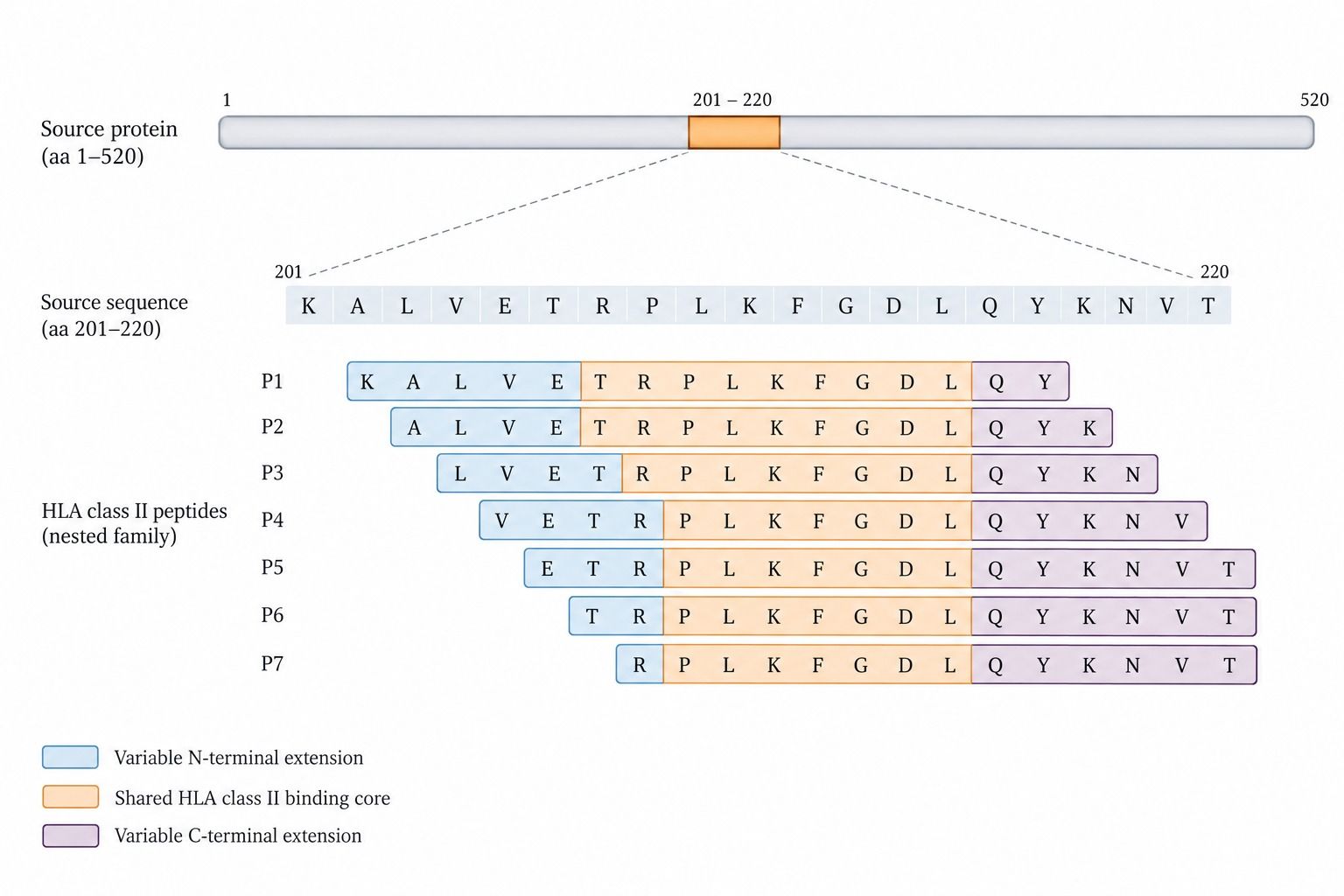
HLA-II ligands differ from conventional tryptic proteomics peptides and from the shorter, more tightly length-constrained HLA-I ligandome. Many HLA-II peptides occur as nested sets: overlapping N- and C-terminal variants that share a central binding region. HLA-II molecules also have an open-ended peptide-binding groove, allowing variable peptide extensions around the binding core. In multiallelic samples, several HLA-DR, HLA-DQ, and HLA-DP heterodimers can contribute to the same measured ligandome.
These features make class II-specific experimental design and interpretation essential. Peptide length, nested-set structure, motif consistency, source-protein context, HLA typing, and binding predictions are evaluated together rather than treating every identified sequence as an independent epitope or assigning an allele solely from sequence prediction.
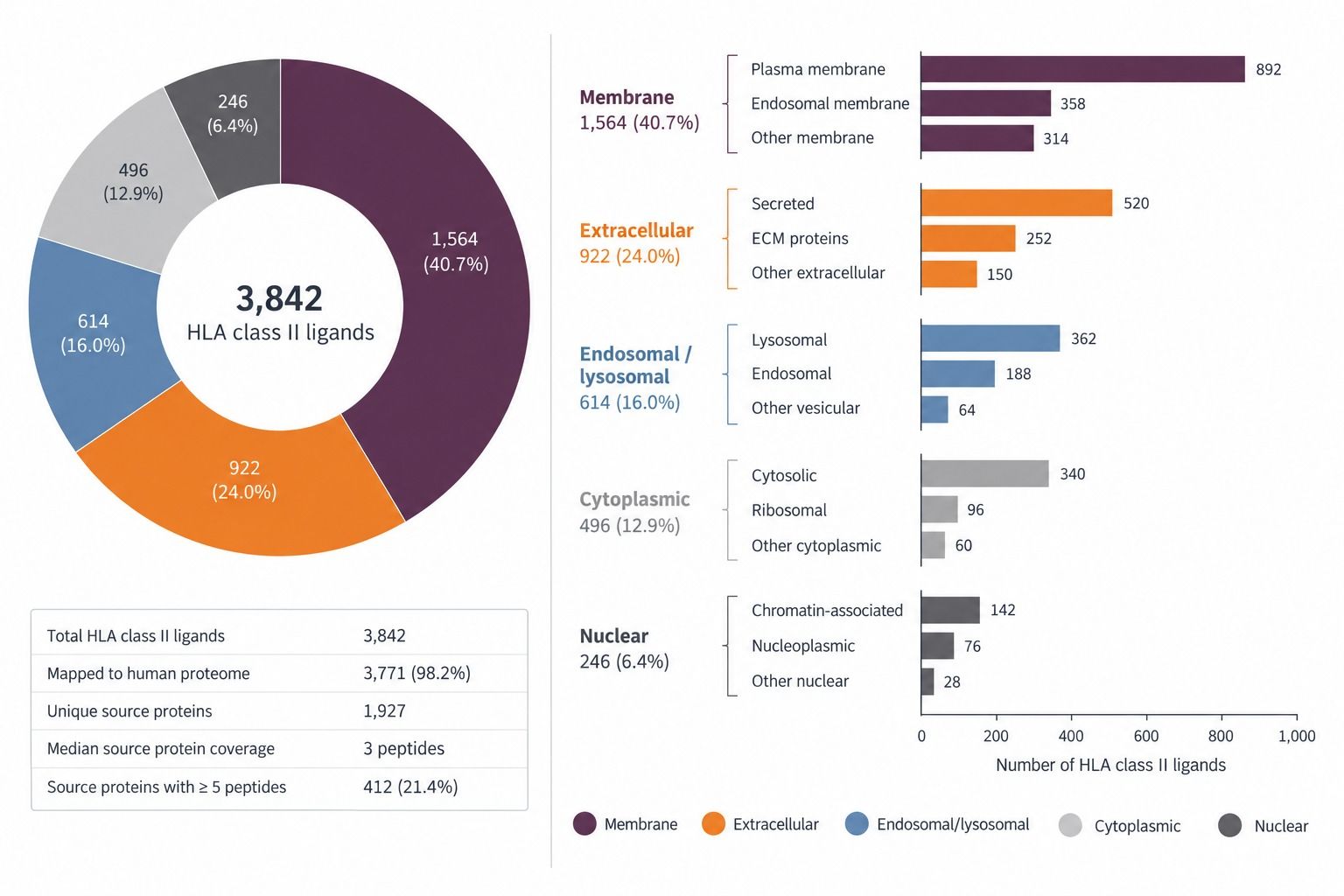
Representative source-protein origin analysis of HLA-II ligands, illustrating how identified peptides can be contextualized by their biological source categories.
HLA-II Targets and Analysis Modules
The enrichment and bioinformatics strategy should reflect the HLA-II loci and biological question of the study. Creative Proteomics can scope projects around HLA-DR, HLA-DQ, HLA-DP, or mixed HLA-II presentation, with interpretation adapted to monoallelic or multiallelic contexts.
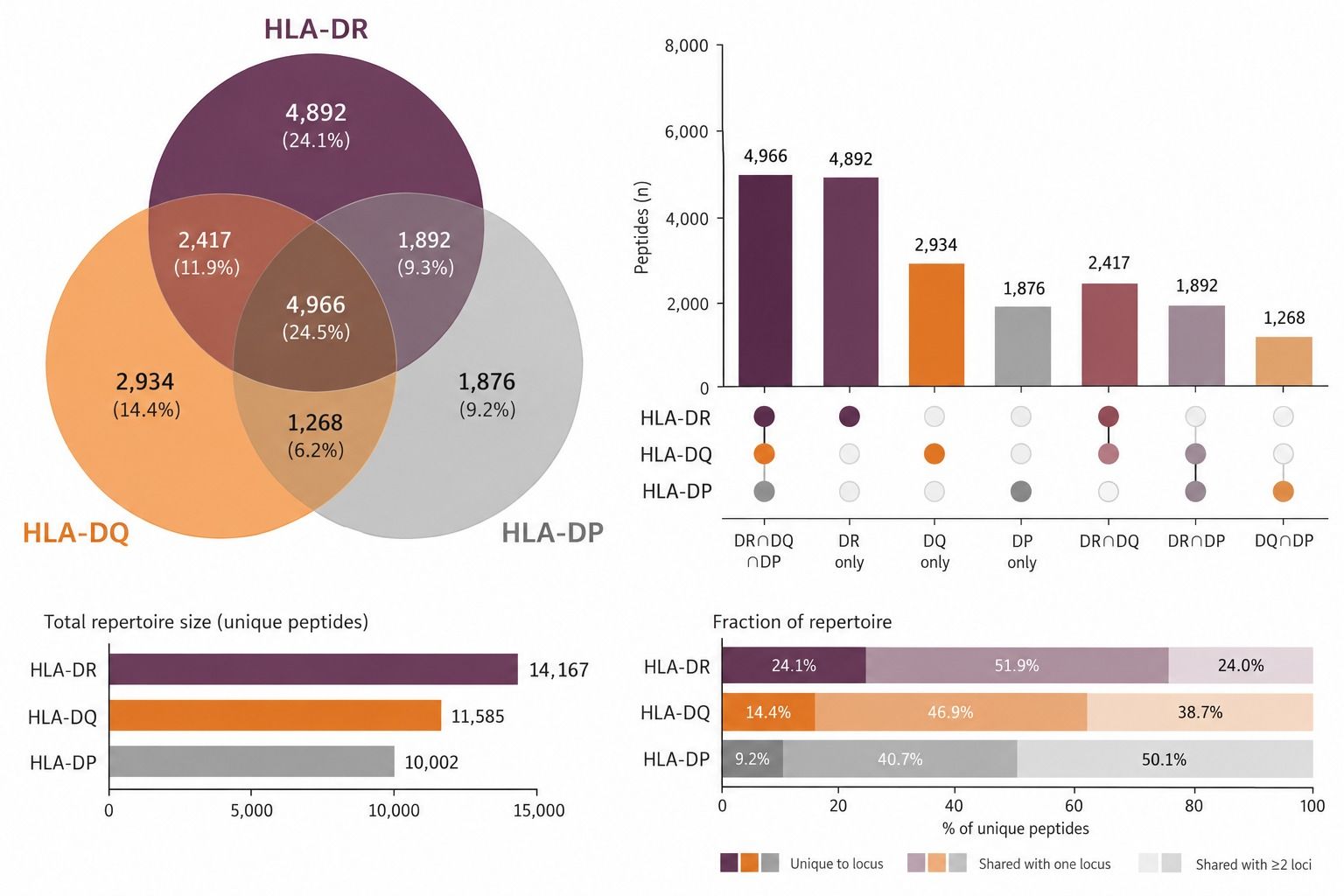
Representative comparison of HLA-DR, HLA-DQ, and HLA-DP peptide repertoires, highlighting shared and locus-associated presentation patterns.
Applications of HLA Class II Peptidomics
Because HLA-II peptidomics measures the products of antigen processing and presentation, it is most useful when the research question depends on what CD4+ T cells may encounter in a defined biological context rather than on peptide sequence or binding affinity alone.
For projects centered specifically on tumor antigen discovery and prioritization across broader immunopeptidomic and proteogenomic evidence, our Neoantigen Discovery workflow provides the more appropriate project framework.
HLA Class II Immunopeptidomics Workflow
Sample & Study Design
Define sample context, HLA-II targets, comparison groups, and available
HLA typing
HLA-II Immunoaffinity Enrichment
Enrich HLA-DR, HLA-DQ, HLA-DP, or mixed HLA-II complexes according to
project scope
Peptide Elution, Cleanup & LC-MS/MS
Release endogenous HLA-II ligands, reduce matrix interference, and
acquire tandem MS data
Peptide Identification & HLA-II Assignment
Identify non-tryptic ligands, map source proteins, group nested peptides,
and integrate HLA context
Motif, Binding-Core & Biological Interpretation
Summarize peptide length, motifs, candidate binding regions, comparative
presentation, and prioritized outputs
1
Sample and Study Design
The workflow begins by defining the biological material, HLA-II
loci of interest, study groups, HLA typing information, and downstream evidence required. This
determines whether the project should focus on HLA-DR, HLA-DQ, HLA-DP, or a broader class II
repertoire.
2
HLA-II Immunoaffinity Enrichment
HLA-II peptide complexes are isolated from appropriately
prepared research samples. Capture strategy is matched to the intended HLA-II coverage because
antibody recognition and HLA expression influence the ligand repertoire recovered.
3
Peptide Elution, Cleanup and LC-MS/MS
HLA-bound peptides are released from enriched complexes,
cleaned to reduce matrix interference, and analyzed by high-resolution LC-MS/MS without
assuming tryptic cleavage.
4
Peptide Identification and HLA-II Assignment
Peptides are identified with stringent quality control, mapped
to source proteins, and consolidated into overlapping or nested regions. HLA typing, motif
deconvolution, and binding predictions can be integrated to support allele-aware
interpretation.
5
Motif, Binding-Core and Biological Interpretation
Results are summarized through peptide-length patterns, nested
regions, motif and candidate binding-core analysis, source-protein context, comparative
presentation, and project-specific candidate prioritization.
From Peptide Identifications to HLA-II Binding Regions
A list of peptide-spectrum matches is only the starting point for HLA-II analysis. Class II datasets often contain multiple overlapping peptides from the same source-protein region. These nested ligands may share a common binding core but differ in their N- and C-terminal extensions. Treating each sequence as a separate biological epitope can therefore inflate apparent diversity and obscure the underlying presented region.
Our HLA-II interpretation framework emphasizes the relationship among peptide sequence, source-protein position, nested-set structure, length distribution, motif consistency, and HLA allele context. In multiallelic samples, computational assignment is reported as supporting evidence rather than as direct proof of a peptide's restricting allele unless the experimental design provides allele-specific evidence.
HLA Class II vs. HLA Class I Peptidomics
| Feature | HLA Class II Peptidomics | HLA Class I Peptidomics |
|---|---|---|
| Primary HLA loci | HLA-DR, HLA-DQ, HLA-DP | HLA-A, HLA-B, HLA-C |
| Principal T-cell context | CD4+ T-cell antigen recognition | CD8+ T-cell antigen recognition |
| Typical ligand architecture | Longer, heterogeneous peptides with variable flanking residues and frequent nested sets | Shorter peptides with more constrained length distributions |
| Binding groove | Open-ended groove; binding core is contained within a longer peptide | Closed-ended groove constrains peptide termini more strongly |
| Major processing context | Endosomal/lysosomal processing is central; endogenous proteins can also contribute through autophagy and related pathways | Cytosolic protein degradation and ER loading are major contributors, with additional alternative pathways |
| Key analysis challenge | Nested ligands, multiple alpha/beta-chain combinations, peptide editing, and multiallelic deconvolution | Allele assignment, low abundance, source-protein interpretation, and non-canonical ligand detection |
Choosing the Right HLA-II Research Workflow
HLA-II peptidomics is not interchangeable with every MHC-related assay. The most informative workflow depends on whether the project needs evidence of natural presentation, binding of predefined peptides, processing of a defined protein, or downstream receptor recognition.
| Research Question | Best-Fit Approach | What It Establishes |
|---|---|---|
| Which peptides are naturally presented by HLA-II in my biological sample? | HLA Class II Peptidomics | Direct MS evidence of naturally presented HLA-II ligands |
| Does a predefined peptide bind a selected MHC/HLA molecule? | MHC Binding & Epitope Screening | Candidate peptide binding or screening evidence; does not by itself prove natural processing and presentation |
| Which peptides from a defined protein are processed and presented by antigen-presenting cells? | MAPPs Immunogenicity Assessment | Processing and HLA-II presentation of peptides derived from a specified test protein in an APC-based workflow |
| Does a prioritized peptide-HLA complex support receptor-level recognition? | TCR-pMHC Validation | Downstream evidence for peptide-HLA/TCR recognition in the selected validation system |
Sample Requirements and Study Design
HLA-II immunopeptidome depth depends on more than total sample mass. The abundance and composition of HLA-II complexes, cell type, inflammatory or activation state, HLA genotype, sample handling, capture specificity, and biological heterogeneity can all affect the recovered ligand repertoire. For this reason, sample requirements should be defined after reviewing the biological material and study objective rather than applying a universal minimum-input value.
| Design Element | Recommended Information | Why It Matters |
|---|---|---|
| Sample type | Cell line, primary immune-cell preparation, antigen-presenting cell model, or tissue-based research material | HLA-II abundance and antigen-processing biology vary substantially across sample types |
| HLA background | HLA-DR/DQ/DP typing when available, especially for multiallelic donor-derived material | Supports motif interpretation and candidate peptide-to-allele assignment |
| Target HLA-II coverage | DR only, DQ only, DP only, locus combination, or broad HLA-II survey | Guides immunoaffinity capture and prevents overinterpretation of loci not efficiently represented in the enrichment |
| Study groups | Controls, perturbations, biological replicates, and batch structure | Determines whether comparative presentation analysis is statistically interpretable |
| Candidate validation plan | Sequence confirmation, MHC binding, pMHC/TCR testing, or functional T-cell assays | Helps define the evidence threshold needed during discovery and prioritization |
HLA-II-Specific Data Analysis and Interpretation
Representative Results
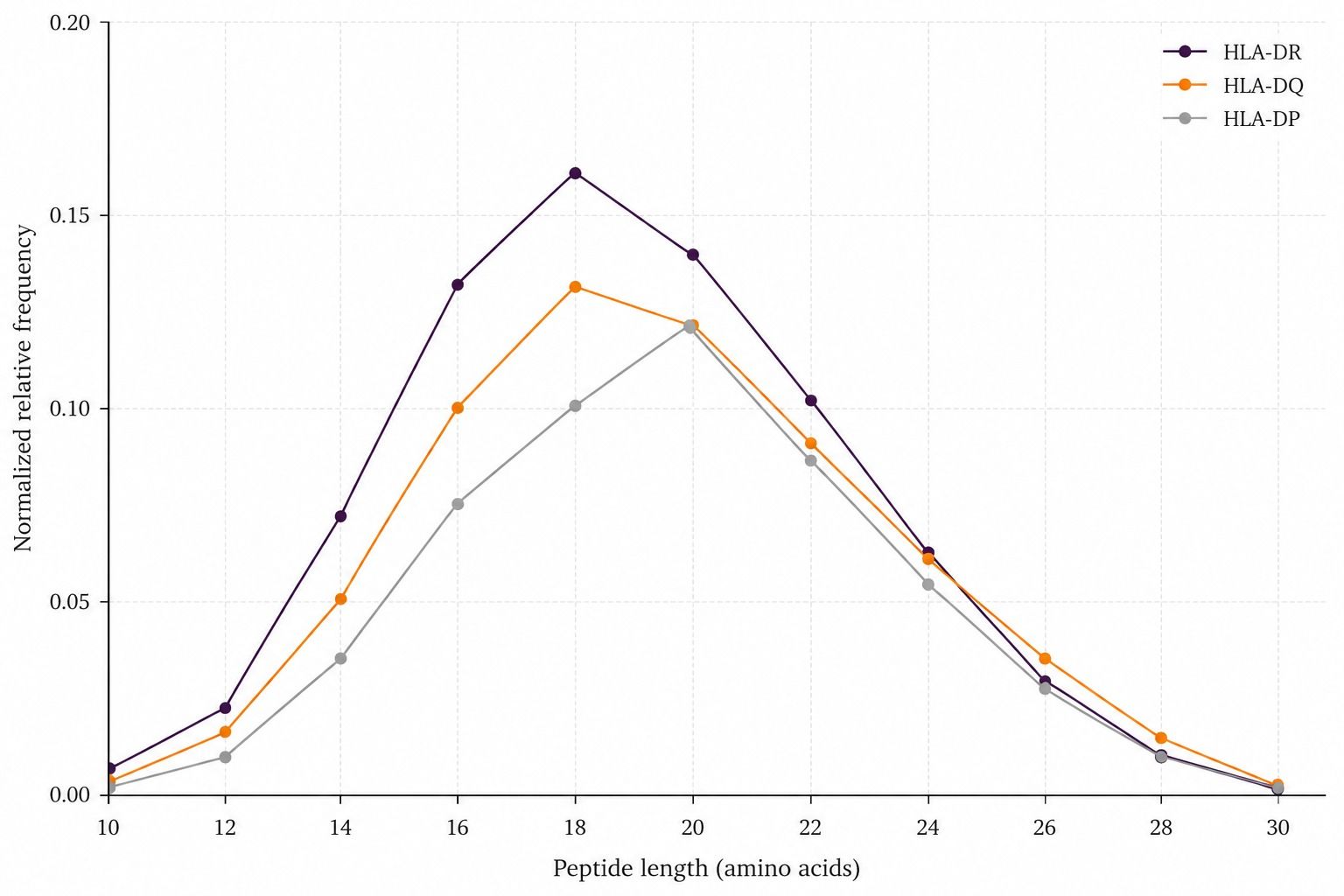
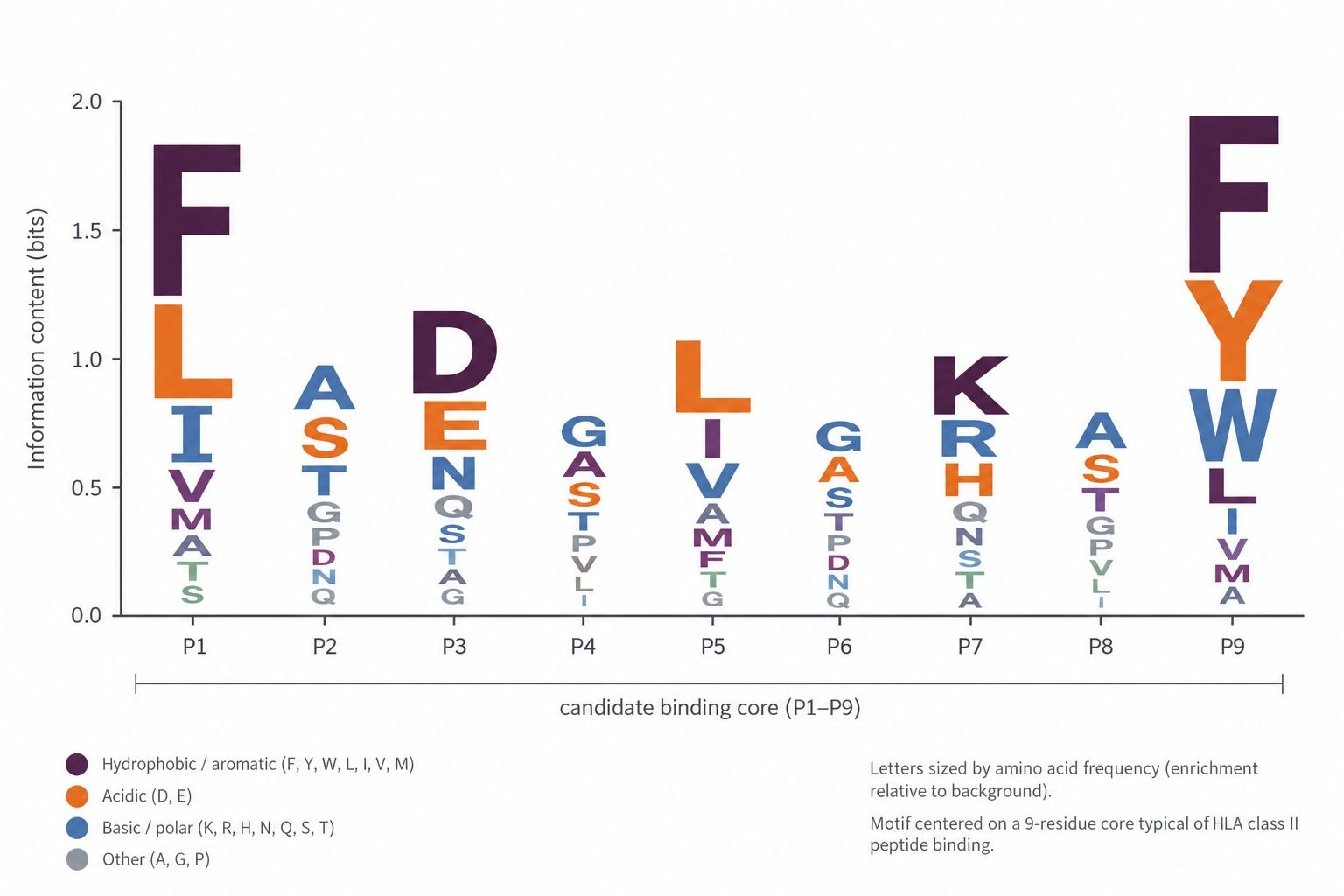
The visualizations below illustrate common result formats for HLA-II immunopeptidomics, complementing the source-origin and HLA-DR/DQ/DP repertoire views shown earlier on this page. Actual plots, comparisons, and annotations are generated from project-specific data and study design.
HLA-II Peptide Length Distribution
HLA-II Binding Motif and Sequence Logo
Nested Peptide and Binding-Core Alignment
Differential HLA-II Peptide Presentation
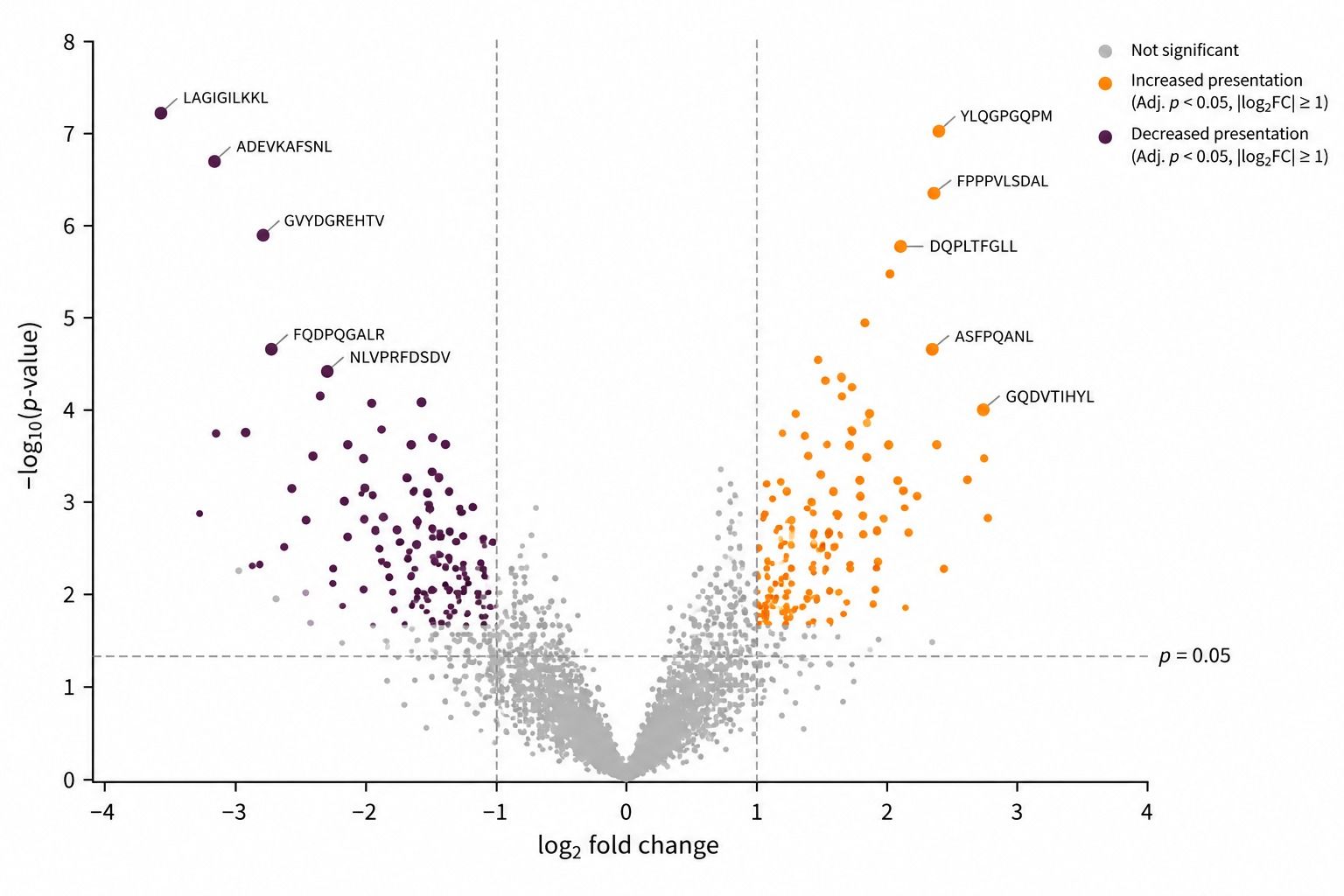
Representative outputs are illustrative and are not presented as data from a specific customer project. Final figures depend on sample type, HLA context, study design, and data quality.
Typical Deliverables
Deliverables are matched to the project design and may include the following analytical outputs:
- HLA-II Peptide Identification Table
Identified peptide sequences with peptide-level MS evidence, precursor information, and search-confidence fields appropriate to the selected workflow. - Source-Protein and Position Mapping
Mapping of HLA-II ligands to source proteins and protein coordinates, including overlapping or nested peptide regions. - Peptide Length and Nested-Set Analysis
Length distributions and consolidation of overlapping HLA-II ligands into shared presented regions. - Motif and HLA Annotation
Sequence motif visualization and candidate HLA-DR/DQ/DP assignments when supported by HLA context and the selected analysis strategy. - Comparative Presentation Results
For appropriately designed multi-group studies, quantitative or presence/absence summaries of condition-associated HLA-II presentation patterns. - Functional and Candidate-Prioritization Annotations
Optional source-protein, pathway, antigen-category, binding-prediction, or custom annotations selected during project scoping. - Analytical Report and Data Package
A structured report with methods, quality-control summaries, key visualizations, interpretation notes, and project-specific data files.
References
- Ramarathinam SH, Ho BK, Dudek NL, Purcell AW. HLA class II immunopeptidomics reveals that co-inherited HLA-allotypes within an extended haplotype can improve proteome coverage for immunosurveillance. Proteomics. 2021;21:e2000160. https://doi.org/10.1002/pmic.202000160
- Stražar M, et al. HLA-II immunopeptidome profiling and deep learning reveal features of antigenicity to inform antigen discovery. Immunity. 2023;56:1681-1698.e13. https://doi.org/10.1016/j.immuni.2023.05.009
- Santambrogio L. Molecular Determinants Regulating the Plasticity of the MHC Class II Immunopeptidome. Front Immunol. 2022;13:878271. https://doi.org/10.3389/fimmu.2022.878271
- Álvaro-Benito M, Morrison E, Abualrous ET, Kuropka B, Freund C. Quantification of HLA-DM-Dependent Major Histocompatibility Complex of Class II Immunopeptidomes by the Peptide Landscape Antigenic Epitope Alignment Utility. Front Immunol. 2018;9:872. https://doi.org/10.3389/fimmu.2018.00872
- Jurewicz MM, Stern LJ. Class II MHC antigen processing in immune tolerance and inflammation. Immunogenetics. 2019;71:171-187. https://doi.org/10.1007/s00251-018-1095-x
For research use only. Not for use in diagnostic or therapeutic procedures.
FAQ for HLA Class II Peptidomics
How is HLA class II peptidomics different from HLA class I peptidomics?
+
HLA-II peptidomics focuses on peptides presented by HLA-DR, HLA-DQ, and HLA-DP to
CD4+ T cells. These ligands are generally longer and more heterogeneous than HLA-I ligands and
frequently appear as nested peptide sets around shared binding regions. The enrichment strategy, search
parameters, motif interpretation, and allele-deconvolution approach should therefore be tailored
specifically to HLA-II.
Can HLA-DR, HLA-DQ, and HLA-DP all be analyzed?
+
Projects can be designed around HLA-DR, HLA-DQ, HLA-DP, or broader class II
coverage. The optimal enrichment strategy depends on the HLA loci of interest, antibody-capture
characteristics, HLA expression in the sample, and available HLA typing. These points should be defined
before sample submission.
Do I need HLA typing before HLA-II immunopeptidomics?
+
HLA typing is strongly recommended when allele-aware interpretation is important,
particularly for multiallelic donor-derived samples. A global HLA-II ligand survey may still be possible
without complete typing, but peptide-to-allele attribution will be more limited and should be reported
with appropriate uncertainty.
Does an identified HLA-II peptide prove that it is immunogenic?
+
No. Immunopeptidomics provides direct evidence that a peptide was detected in the
enriched HLA-II ligand pool. Immunogenicity additionally depends on T-cell repertoire, peptide-HLA
stability, abundance, receptor recognition, and biological context. Candidate peptides should be
validated with an assay matched to the downstream research question.
Does non-detection mean an HLA-II peptide is absent from the sample?
+
No. A peptide may remain unobserved because of low HLA-II abundance, limited
sample input, enrichment efficiency, peptide stability or ionization, chromatographic behavior,
acquisition depth, or stochastic sampling. Non-detection should therefore be interpreted as not observed
under the selected analytical conditions rather than as definitive evidence of biological absence.
How are peptides assigned to HLA-DR, HLA-DQ, or HLA-DP alleles?
+
Assignment can integrate the enrichment design, HLA typing, peptide motifs, motif
deconvolution, and HLA-II binding predictions. In multiallelic samples, these assignments may remain
probabilistic. Direct allele restriction is strongest when the experimental system or enrichment
strategy provides locus- or allele-specific evidence.
Why do HLA-II datasets contain many overlapping peptide sequences?
+
The HLA-II binding groove is open at both ends, and antigen processing can
generate ligands with different N- and C-terminal extensions around a shared core. These related
sequences form nested sets. Grouping nested peptides helps distinguish a shared presented region from
multiple independent epitopes.
Can HLA-II peptidomics identify modified, variant, or non-canonical peptides?
+
Potentially, but the search space must be defined carefully. Selected PTMs,
sequence variants, pathogen-derived sequences, or non-canonical sources can be incorporated when the
biological rationale, reference database, sample design, and validation strategy support the analysis.
Expanding the search space without adequate controls can increase false-positive risk.
Can I compare HLA-II peptide presentation between experimental conditions?
+
Yes, when samples are collected and processed using a balanced design with
suitable biological replication and consistent enrichment and MS acquisition. Comparative interpretation
should consider changes in HLA-II abundance as well as changes in the ligand repertoire itself.
What sample types are suitable for HLA-II immunopeptidomics?
+
HLA-II-expressing cell lines, antigen-presenting cell preparations, primary
immune-cell material, and tissue-based research samples may be suitable. Feasibility depends on HLA-II
abundance, sample quality, biological heterogeneity, and project goals, so input requirements should be
confirmed for the specific material before submission.
How does HLA-II peptidomics differ from peptide-HLA binding prediction?
+
Prediction estimates whether a sequence is likely to bind an HLA-II molecule.
HLA-II immunopeptidomics measures peptides recovered from HLA-II complexes in a biological sample, so it
captures the combined effects of protein availability, antigen processing, peptide loading,
HLA-DM/HLA-DO editing, and presentation. Prediction remains useful for annotation and prioritization but
is not a substitute for direct presentation evidence.
What is the best next step after discovering an HLA-II candidate peptide?
+
The validation path depends on the claim you need to establish. Options may
include synthetic-peptide MS confirmation, peptide-HLA binding assessment, pMHC reagent studies, TCR
recognition, or functional CD4+ T-cell assays. Defining the validation endpoint before discovery helps
set the appropriate evidence threshold for candidate prioritization.