
Macrocyclic Peptide Project Entry Points
Macrocyclic peptide projects rarely begin at the same point. Some teams have a validated protein target but no peptide hit; others already have a linear peptide, a weak cyclic binder, or a macrocycle with good affinity but inadequate stability or cellular exposure. The productive route depends on the starting material and the property that limits progression.
Our macrocyclic peptide discovery and optimization services are organized around that development decision. A program can begin with target-directed hit discovery, conversion of a known linear motif into constrained analogs, or optimization of an existing macrocyclic series. Discovery, synthesis, analytical confirmation, binding and functional testing, stability, permeability, and candidate ranking can be combined into a staged workflow so that each round of design is informed by measured data rather than by cyclization strategy alone.
This service sits within our Peptidomics-Based Drug Discovery portfolio and focuses on research-stage macrocyclic peptide discovery and lead optimization. Broader pharmacokinetic and ADME programs can be transitioned to dedicated peptide bioanalysis workflows after promising candidates are selected.
Macrocyclic Peptide Discovery and Screening Strategies
Discovery strategy should match the target format, available structural information, desired chemical space, and downstream assay. Large display selections are useful when no peptide starting point exists, whereas focused analog libraries are often more efficient when a binding motif or linear hit is already known.
| Starting Point | Discovery Strategy | Typical Decision |
|---|---|---|
| Defined Target, No Peptide Hit | Project-specific mRNA display, phage display, synthetic or combinatorial cyclic peptide libraries, affinity selection, and hit confirmation. | Which sequence families and macrocyclic chemotypes produce reproducible target engagement and are practical to resynthesize? |
| Known Linear Peptide or Binding Motif | Focused cyclization-site, ring-size, bridge, and sequence-variant libraries built around the existing pharmacophore. | Can conformational restriction improve affinity, selectivity, proteolytic stability, or other target properties without disrupting binding? |
| Existing Cyclic or Macrocyclic Hit | Analog generation, residue scanning, N-methylation, D-amino-acid or noncanonical-residue substitution, topology comparison, and property-directed screening. | Which structural changes improve the weakest developability property while preserving target activity? |
| Challenging Protein Surface or PPI | Macrocycle-focused screening and optimization designed around extended binding interfaces, with assay format selected for the target. | Can a constrained peptide engage a surface that is difficult to address with conventional small molecules? |
| Membrane Protein Target | Target-compatible presentation and screening using a suitable purified, membrane-associated, nanodisc, or cell-based format, followed by off-display binding or functional confirmation. | Can a macrocyclic binder engage the target in a presentation format that preserves the relevant extracellular or membrane-proximal binding site? |
| Intracellular Target | Macrocyclic hit discovery followed by permeability, cellular uptake, intracellular exposure, or target-engagement-compatible functional testing. | Can a confirmed binder reach the intracellular compartment required for the proposed mechanism? |
Display-based discovery is selected case by case. mRNA display can access broad sequence space and may incorporate expanded chemical diversity when the chosen platform supports noncanonical translation or post-display cyclization. Phage display is useful for genetically encoded peptide libraries and compatible cyclization chemistries. Focused synthetic libraries are preferred when the design space is already defined by a known sequence, topology, or structure-activity hypothesis.
Discovery Platform Selection
| Discovery Strategy | Best Fit | Key Considerations |
|---|---|---|
| mRNA Display | Broad sequence-space exploration, including expanded chemical diversity when the selected translation and cyclization system supports it. | Target presentation, selection pressure, translation-compatible building blocks, cyclization chemistry, and off-display hit confirmation. |
| Phage Display | Genetically encoded cyclic peptide libraries and robust affinity-selection workflows. | Library chemistry must remain compatible with phage display, target presentation, and downstream resynthesis of selected hits. |
| Synthetic or Combinatorial Libraries | Chemically diverse macrocycles, noncanonical residue space, or screening formats that benefit from direct synthetic control. | Practical library size and throughput depend on synthesis, purification, encoding strategy where used, and assay format. |
| Focused Analog Series | Known linear motifs, cyclic hits, or established structure-activity hypotheses. | Best suited to hypothesis-driven optimization of ring size, cyclization position, sequence, bridge chemistry, or other defined variables rather than de novo discovery. |
Macrocycle Design and Cyclization Strategy
Cyclization changes the accessible conformational ensemble of a peptide, but it does not guarantee better affinity, stability, or permeability. Ring topology, attachment positions, ring size, residue composition, bridge chemistry, and conformational flexibility should be selected together with the target-binding mode and the properties that need improvement.
For disulfide-rich scaffolds where cystine connectivity, oxidative folding, or disulfide scrambling is the main analytical question, projects can also use our Disulfide-Rich Peptide Profiling and Engineering workflow.
Macrocyclic Peptide Synthesis and Analog Generation
Discovery hits are only useful if they can be converted into chemically defined material for confirmation and optimization. Project scope can include linear precursor synthesis, macrocyclization, purification, analytical confirmation, and preparation of focused analog panels. The synthetic route is selected according to sequence length, cyclization chemistry, protecting-group requirements, residue composition, and the number of analogs needed for the next decision.
Analytical Characterization of Macrocyclic Peptides
A measured mass that is consistent with ring closure does not by itself establish the intended macrocyclic topology. Residual linear precursor, alternative ring-closure products, oligomers, oxidation products, adducts, rearrangements, or other related species can complicate interpretation. Where stereochemical integrity is a concern, potential epimeric species require stereochemistry-sensitive evidence rather than mass matching alone. Analytical confirmation should therefore match the chemistry and the structural question.
| Analytical Question | Project-Appropriate Evidence | Why It Matters |
|---|---|---|
| Was the intended product formed? | LC-MS or high-resolution MS, chromatographic profile, expected molecular composition, and comparison with precursor or reference material where available. | Confirms that screening and developability experiments are being performed on the intended molecular species. |
| Is residual linear precursor present? | Chromatographic separation combined with MS detection and targeted comparison to the precursor when needed. | Linear contamination can distort binding, permeability, stability, and activity measurements. |
| Is the cyclization site or connectivity correct? | MS/MS, selective cleavage or derivatization, targeted digestion, disulfide mapping, NMR, or other orthogonal evidence depending on scaffold chemistry. | Alternative ring closures or connectivity isomers can share similar composition while presenting different three-dimensional structures. |
| Are modifications retained? | Accurate-mass and fragmentation evidence can confirm mass-shifting modifications and many noncanonical residues where technically informative. D/L stereochemistry or epimeric identity may require synthesis records, reference standards, chromatographic separation, chiral analysis, or another stereochemistry-sensitive orthogonal method. | Confirms the intended medicinal-chemistry design without treating accurate mass alone as proof of stereochemical configuration. |
| What related species are present? | Chromatographic and MS-based profiling for truncation, oxidation, hydrolysis, adducts, oligomers, rearrangements, or other project-specific products. | Related species can explain inconsistent functional results or apparent instability. |
Cyclic peptide fragmentation can differ substantially from that of linear peptides because ring opening and multiple fragmentation pathways may occur. Sequence or topology assignments are therefore reported at an evidence level appropriate to the scaffold and are supported with orthogonal structural methods when MS/MS alone is not sufficient.
Binding, Selectivity, and Functional Evaluation
Chemical confirmation does not show that cyclization preserved the intended biological function. Macrocycle optimization should therefore connect analytical identity to the assay that matters for the target. Depending on the target and project stage, testing may include surface plasmon resonance (SPR), biolayer interferometry (BLI), microscale thermophoresis (MST), competition assays, biochemical activity, receptor activation or inhibition, cellular activity, internalization, or other target-engagement-related readouts.
| Evaluation | Typical Comparison | Development Question |
|---|---|---|
| Binding Confirmation | Resynthesized macrocycle vs. screening hit, parent peptide, or inactive control. | Is the interaction reproducible with chemically defined material? |
| Affinity and Selectivity | Candidate series across the primary target and relevant related proteins or control targets. | Did cyclization or sequence optimization improve the binding profile rather than only the apparent signal? |
| Competition or Mechanism | Competition with known ligand, peptide motif, or binding partner where mechanistically useful. | Does the macrocycle engage the intended site or pathway? |
| Cellular Function | Macrocycle vs. linear parent and selected analogs in a fit-for-purpose cell assay. | Is biochemical or biophysical binding translated into the required cellular effect? |
| Internalization or Cellular Access | Candidate series evaluated with fluorescence-based uptake, LC-MS-based intracellular exposure, or another target-engagement-compatible cellular assay where relevant. | Can the candidate reach the compartment required for the proposed mechanism? |
Stability, Permeability, and Lead Optimization
Macrocyclization can improve proteolytic stability or create a scaffold that is more amenable to permeability optimization, but those outcomes depend on sequence, ring topology, exposed polarity, intramolecular hydrogen bonding, N-methylation, lipophilicity, and conformational behavior. The relevant properties should be measured rather than inferred from the presence of a ring.
Oral-Exposure-Oriented Optimization
For programs aiming at oral delivery, early lead selection can incorporate proteolytic and matrix stability, passive and cell-based permeability, solubility, exposed polarity, intramolecular hydrogen bonding, N-methylation, lipophilicity, and conformational behavior. These measurements help prioritize macrocyclic chemotypes with more favorable oral-exposure potential, but they do not establish oral bioavailability; dedicated in vivo pharmacokinetic studies are required to determine systemic exposure after oral dosing.
For candidates requiring a broader disposition package, see our Therapeutic Peptide DMPK and ADME service.
Structure-Activity Relationship (SAR) and Candidate Optimization
Lead optimization is most informative when analogs are designed to test a specific hypothesis. Rather than changing several features at once, focused series can isolate the effect of cyclization position, ring size, bridge chemistry, residue substitution, backbone modification, or polarity masking on the property that currently limits progression.
| Optimization Variable | Readouts to Compare | Typical Interpretation |
|---|---|---|
| Cyclization Position or Ring Size | Identity, affinity, selectivity, conformational behavior, stability, and permeability where relevant. | Tests whether the ring constrains the pharmacophore productively or disrupts the target-binding geometry. |
| Bridge Chemistry | Synthetic yield, related species, chemical stability, binding, and biological performance. | Separates effects of geometric constraint from liabilities introduced by the bridge itself. |
| Residue Substitution | Binding and functional SAR together with proteolytic stability and physicochemical behavior. | Identifies positions that tolerate modification and residues that are essential for target engagement. |
| N-Methylation or Backbone Editing | Affinity, permeability, solubility, chromatographic behavior, and conformational profile. | Determines whether reduced exposed polarity or altered amide geometry improves cellular access without unacceptable activity loss. |
| D-Amino Acids or Noncanonical Residues | Protease resistance, binding, selectivity, stability, and analytical integrity. | Tests whether increased metabolic robustness can be achieved while maintaining the productive binding conformation. |
Candidate ranking should integrate the properties that matter for the intended mechanism. A macrocycle with the strongest affinity is not automatically the best lead if it is unstable, poorly soluble, difficult to synthesize, or unable to reach the required biological compartment.
Common Macrocyclic Peptide Project Scenarios
Natural cyclic peptides discovered from microbial, plant, or other natural-product sources can require a different discovery and dereplication strategy. Those projects are better aligned with our Natural Product Peptidomics Services when source-material mining and structural dereplication are the primary questions.
Macrocyclic Peptide Discovery and Optimization Workflow
Target & Starting-Point Review
Define target, current hits, assay context, chemical space, and the
property that limits progression
Discovery or Macrocycle Design
Select display, focused library, cyclization strategy, or analog plan for
the starting point
Synthesis & Analytical Confirmation
Resynthesize hits, form the intended macrocycle, purify products, and
confirm molecular identity
Binding & Developability Testing
Measure target activity, selectivity, stability, permeability, or
cellular access according to project goals
SAR Integration & Lead Prioritization
Connect structural changes to measured properties and select the next
design cycle or lead set
1
Target and Starting-Point Review
The project begins with the target or biological question,
available structural information, current peptide hits, preferred or excluded chemistries,
assay format, and the property that currently limits progression. This determines whether the
program should begin with broad discovery, focused cyclization design, resynthesis, or
optimization of an existing macrocycle.
2
Discovery or Macrocycle Design
For target-to-hit programs, an appropriate display,
affinity-selection, or combinatorial screening strategy is selected. For known peptides,
focused libraries are designed around ring topology, cyclization position, bridge chemistry,
sequence substitutions, N-methylation, D-amino acids, or other project-relevant modifications.
3
Synthesis and Analytical Confirmation
Selected hits or analogs are generated as chemically defined
material, purified, and evaluated by chromatographic and mass-spectrometric methods. Where
topology or connectivity cannot be established confidently by LC-MS/MS alone, an orthogonal
structural method can be incorporated according to the scaffold.
4
Binding and Developability Testing
Candidates are evaluated using the readouts that matter for the
intended mechanism, such as affinity, selectivity, biochemical or cellular activity,
proteolytic or matrix stability, permeability, uptake, or intracellular exposure. Matched
controls and parent compounds are included where they improve interpretation.
5
SAR Integration and Lead Prioritization
Results are integrated across chemical identity, target
engagement, stability, permeability, physicochemical behavior, and other project-specific
endpoints. The final comparison identifies productive design changes, unresolved liabilities,
and the next analog series or candidate set to advance.
Information Needed to Start a Macrocyclic Peptide Project
A useful inquiry does not require a completed screening or medicinal-chemistry plan. The most important information is the current starting point and the decision the next experiment needs to support.
| Project Information | What to Provide | Why It Matters |
|---|---|---|
| Target | Protein, receptor, PPI partner, pathway target, or other defined molecular target; include available target material or assay format if known. | Determines screening format, target presentation, counter-screening, and functional follow-up. |
| Starting Point | No hit, linear peptide, known motif, cyclic hit, macrocyclic lead series, or client-supplied compounds. | Determines whether the project starts with discovery, cyclization design, synthesis, characterization, or lead optimization. |
| Sequence or Scaffold | Known peptide sequences, ring topology, disulfide pattern, bridge chemistry, terminal groups, and existing modifications. | Defines the accessible cyclization and medicinal-chemistry design space. |
| Chemical Space | Natural residues only or allowance for N-methylation, D-amino acids, noncanonical residues, synthetic bridges, or other modifications. | Guides library format, synthetic feasibility, and the range of properties that can be optimized. |
| Primary Goal | Hit discovery, affinity, selectivity, stability, permeability, intracellular access, activity, structural confirmation, or troubleshooting. | Prevents the project from becoming an unfocused panel of assays and defines the ranking criteria. |
| Available Assay | Existing binding, biochemical, receptor, or cell-based assay; alternatively indicate that assay development or adaptation is needed. | Determines how hits will be confirmed and how optimization cycles will be scored. |
| Material Status | Client-supplied target, peptide, compound series, reference ligand, control proteins, or other available reagents. | Helps define the shortest practical route to screening, resynthesis, confirmation, or comparative testing. |
To scope the project efficiently, send the target or biological question, current peptide starting point, any known sequence or cyclization information, available assay or reagents, and the property you most need to improve. If the project starts before a peptide hit exists, indicate the target format and the chemical-space constraints so that an appropriate discovery strategy can be selected.
Representative Results
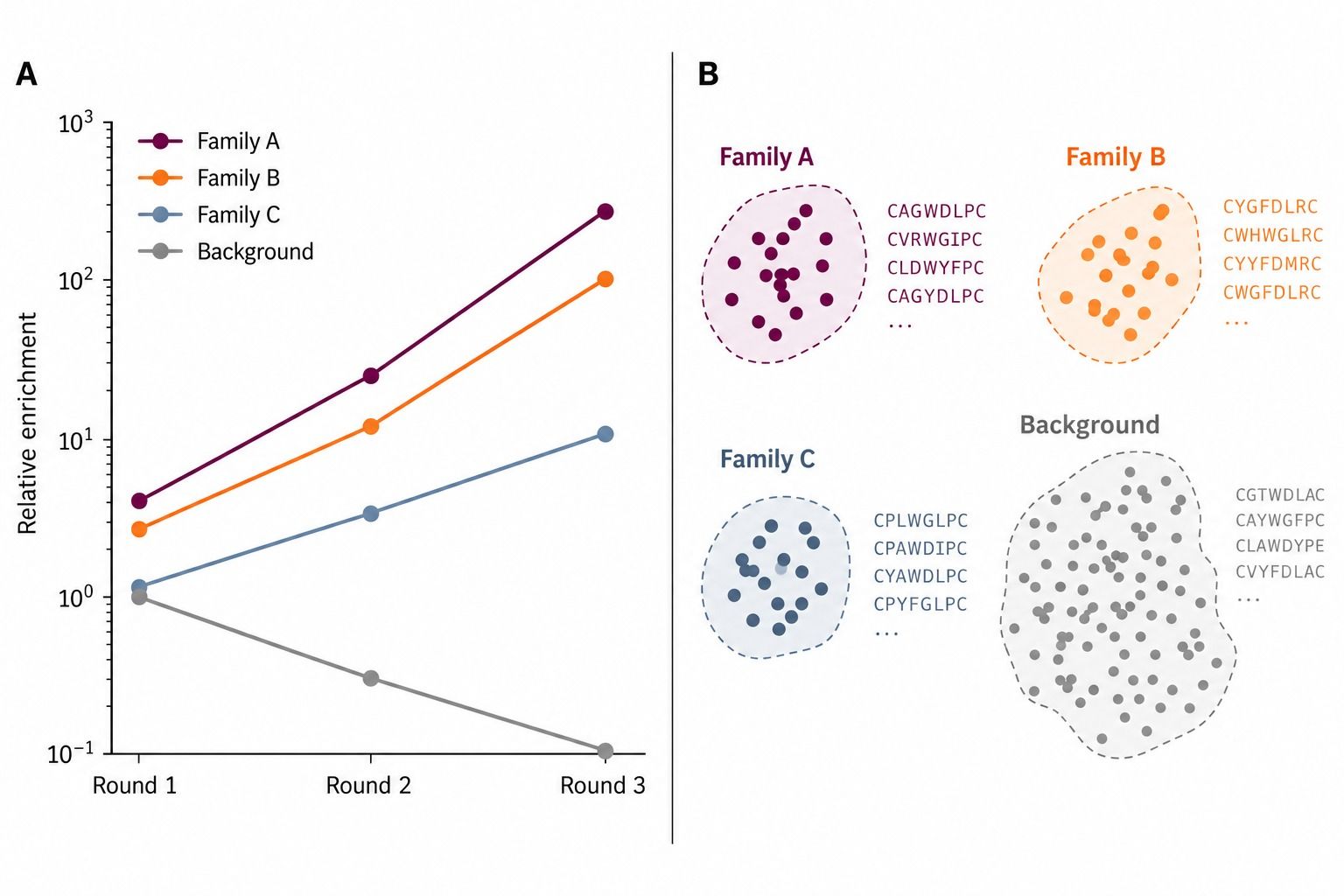
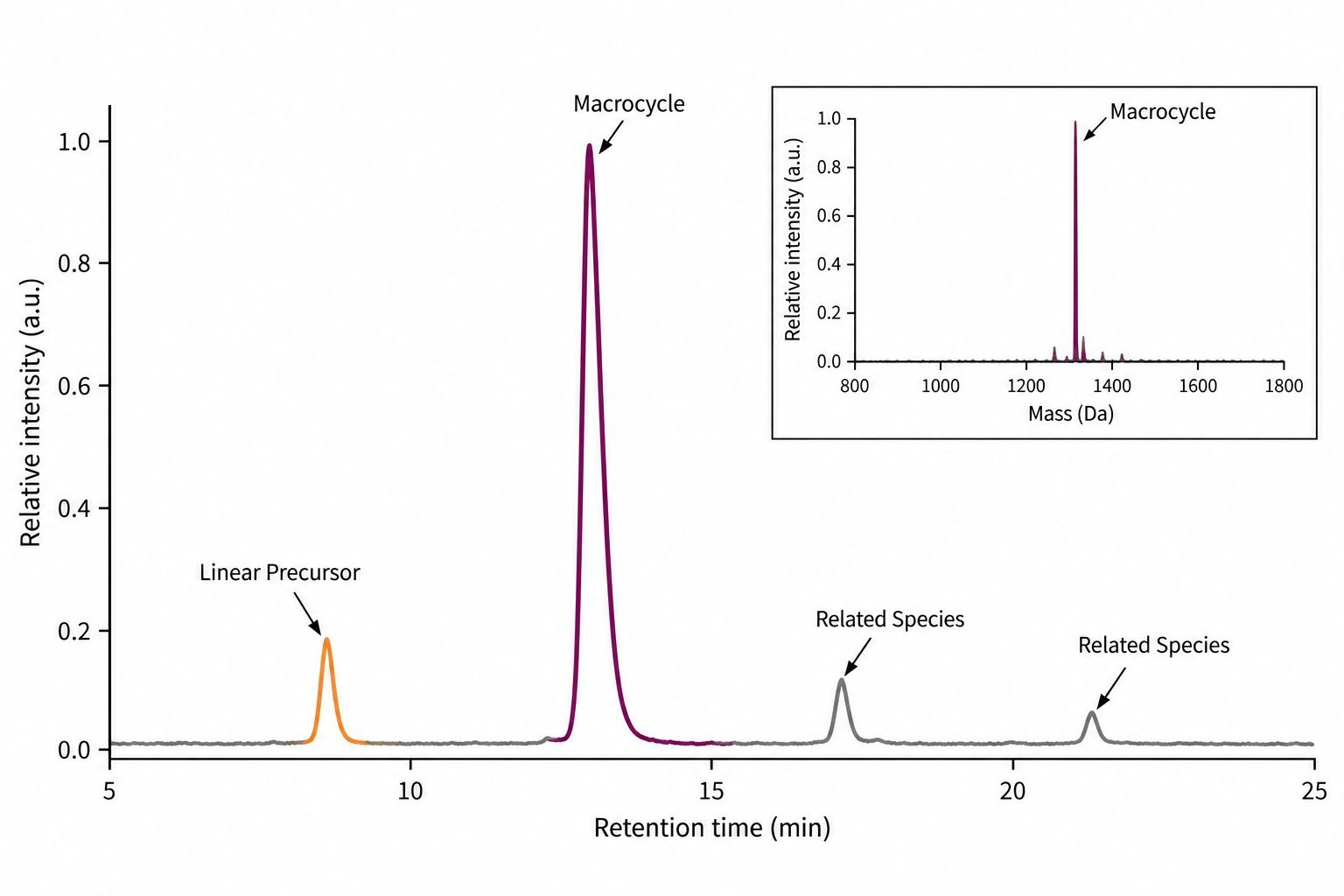
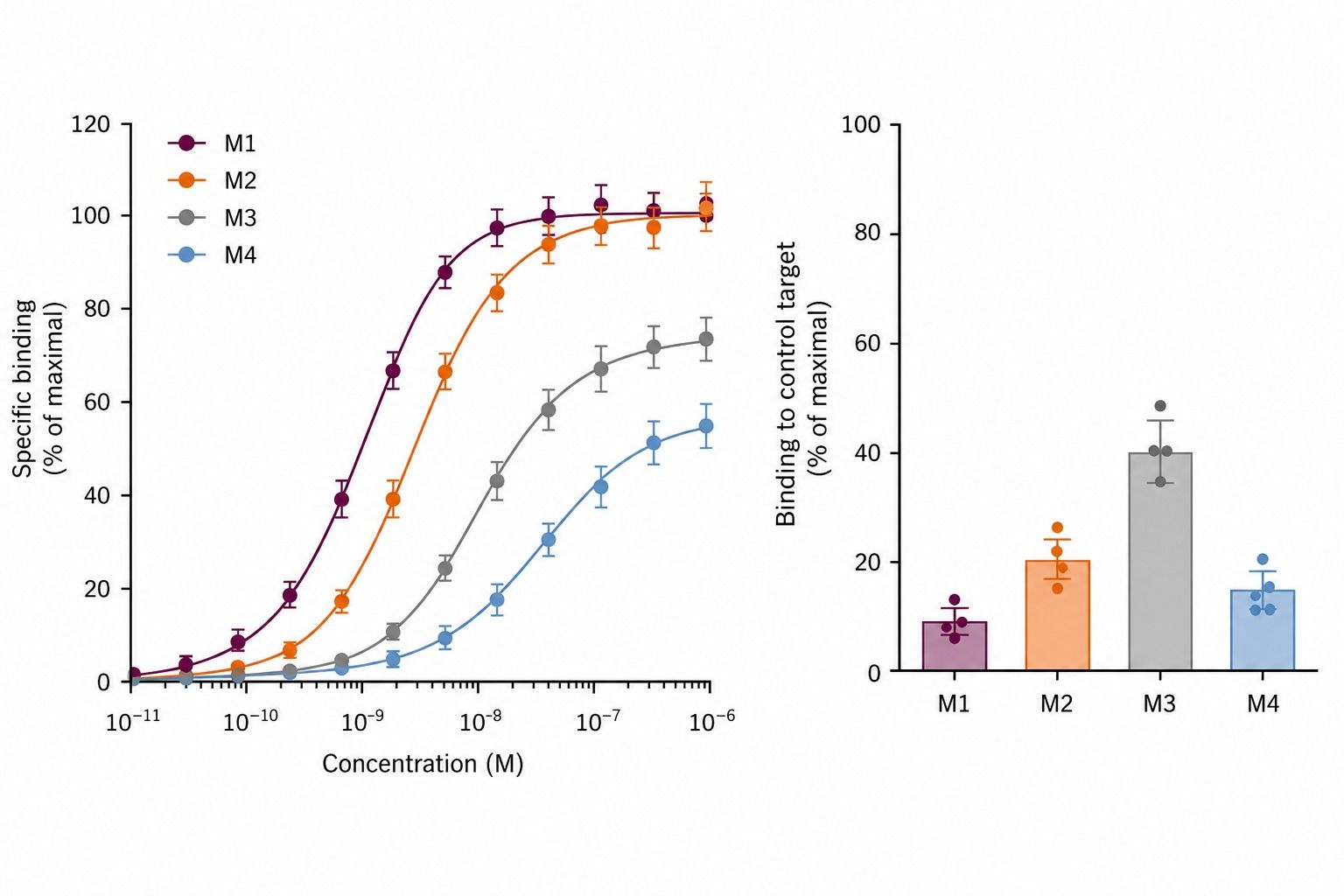
The examples below illustrate result formats that can support macrocyclic peptide discovery and optimization. They are representative analytical outputs rather than data from a specific customer project.
Selection Enrichment and Hit Families
Macrocycle Identity and Product Profile
Binding and Selectivity Comparison
Stability-Permeability Trade-Off
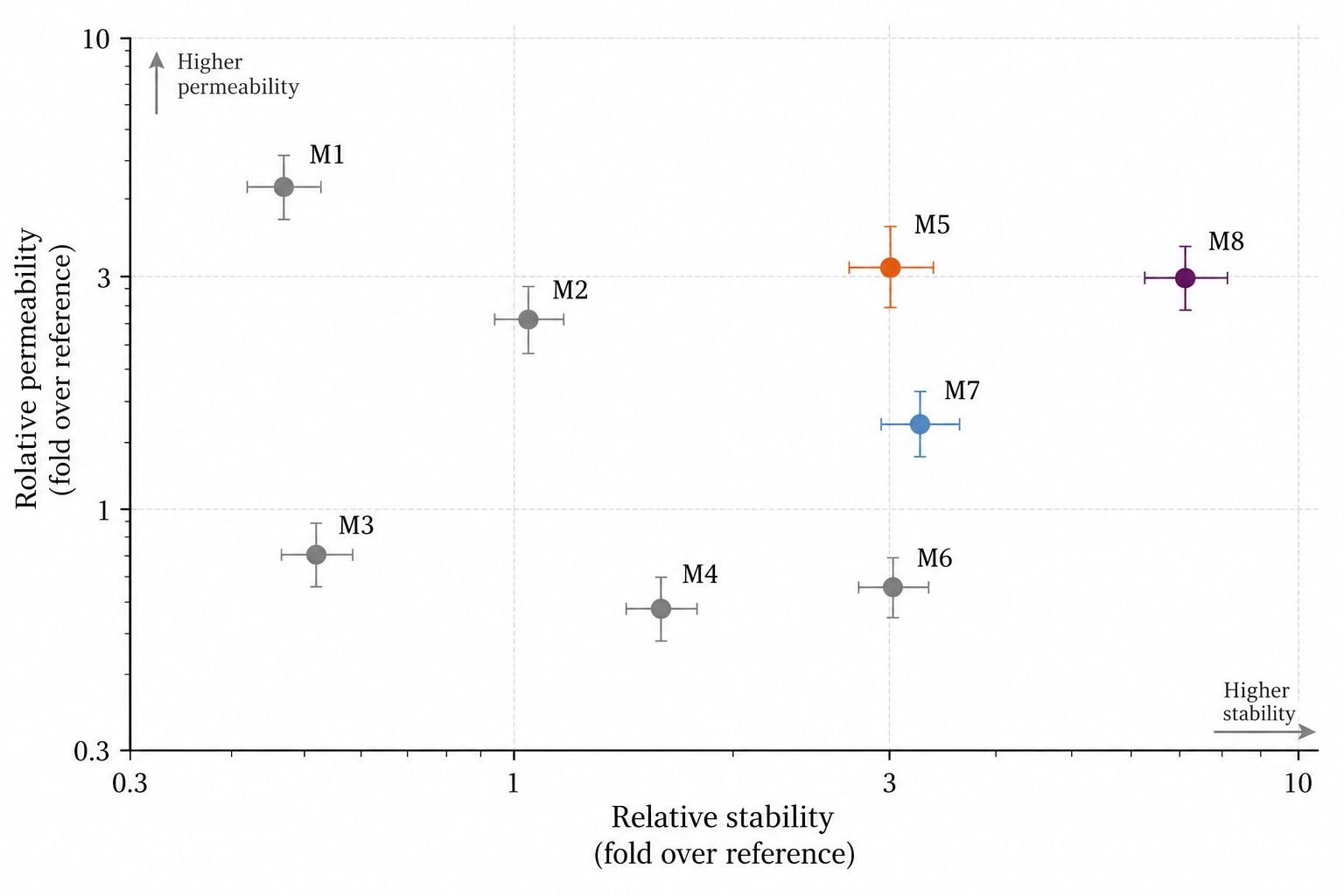
Representative outputs are illustrative. Final assays, visualizations, and interpretation depend on target format, scaffold chemistry, available standards or controls, and project-specific data quality.
Typical Deliverables
Deliverables are defined around the stage of the program and may include:
- Discovery or Cyclization Strategy Summary
A project-specific plan covering target format, screening route, macrocyclization options, chemical-space constraints, and the criteria used to advance hits. - Hit or Analog List
Selected sequences or macrocyclic candidates with screening, resynthesis, and confirmation status where applicable. - Synthesis and Analytical Characterization Package
Chromatographic and mass-spectrometric data supporting product identity, purity assessment, related-species review, and topology or connectivity evidence where technically appropriate. - Binding, Selectivity, or Functional Results
Project-specific target-engagement and biological assay outputs with matched controls and candidate comparisons. - Stability and Permeability Dataset
Comparative proteolytic, matrix-stability, permeability, uptake, or related developability results selected for the lead-optimization question. - SAR and Candidate Prioritization Summary
A structured comparison linking sequence, topology, and chemical modifications to measured properties and recommended next design steps. - Analytical Report and Data Package
Methods, QC information, representative chromatograms or spectra, processed results, interpretation notes, and project-specific data files.
References
- Parmar R, Shrivastava V, Kaur G, Goyal B, Jain R. Macrocyclic peptides and peptidomimetics as modulators of protein-protein interactions. RSC Med Chem. 2026. https://doi.org/10.1039/d6md00640j
- Zhou Y, Li N, Zheng JS. Advances in Cyclic Peptides Targeting G Protein-Coupled Receptors. ChemBioChem. 2026;27(15):e70498. https://doi.org/10.1002/cbic.70498
- Oppewal TR, Mayer C. Hybrid Macrocyclic Peptides - Synthetic Strategies to Diversify and Cyclize Peptide Libraries in Phage Display Selections. Chemistry. 2026:e71408. https://doi.org/10.1002/chem.71408
- Zhang X, Guo Y, Liu F, Yao ZJ. The assembly of synthetically difficult "drug-like" macrocyclic peptides. Chem Commun. 2026;62(69):17097-17108. https://doi.org/10.1039/d6cc03294j
- Wei S, Zhang X, Guo Y, Liu F, Yao ZJ. Solid-phase synthesis of sterically hindered peptides via ribosome-mimicking molecular reactors. Nat Protoc. 2026. https://doi.org/10.1038/s41596-026-01383-5
- Bose D, Bhardwaj P, Girigoswami A. Flexible molecular chameleons: structural adaptability and therapeutic applications. Front Chem. 2026;14:1886764. https://doi.org/10.3389/fchem.2026.1886764
For research use only. Not for use in diagnostic or therapeutic procedures.
FAQ for Macrocyclic Peptide Discovery and Optimization
What information should I provide to start a macrocyclic peptide project?
+
Provide the target or biological question, current starting point such as no hit,
linear peptide, or existing macrocycle, any known sequence or topology information, available target
material or assay, chemical-space constraints, and the property you most need to improve. This is enough
to determine whether the project should begin with discovery, cyclization design, synthesis,
characterization, or lead optimization.
Can the project start without an existing peptide hit?
+
Yes. Target-to-hit programs can use a project-specific discovery strategy such as
mRNA display, phage display, synthetic or combinatorial peptide libraries, affinity selection, or
another suitable screening format. The platform is selected from the target format, desired chemical
diversity, and downstream confirmation assay rather than treated as a universal workflow.
Can a known linear peptide be converted into a macrocyclic series?
+
Yes. A linear hit can be used to design focused analogs that vary cyclization
position, ring size, bridge chemistry, sequence, N-methylation, D-amino acids, or other modifications.
The goal is to test whether conformational restriction improves the limiting property while preserving
the binding motif.
Which macrocyclization chemistries can be considered?
+
Projects may consider head-to-tail, side-chain-to-side-chain,
side-chain-to-terminus, disulfide, lactam, thioether, click-type, hydrocarbon, bicyclic, or other
chemically suitable constraints. The preferred chemistry depends on sequence, ring geometry, reactive
handles, required stability, and the intended biological function.
Do you support noncanonical amino acids and N-methylated macrocycles?
+
Yes, when compatible with the selected discovery or synthesis route. N-methyl
residues, D-amino acids, noncanonical residues, and related backbone or side-chain modifications can be
incorporated into focused analog series to explore affinity, stability, permeability, and conformational
effects.
How do you confirm that the intended macrocycle was formed?
+
Confirmation can combine chromatographic behavior, accurate mass, MS/MS,
comparison with linear precursor, selective chemistry, targeted digestion, disulfide mapping, NMR, or
another orthogonal method depending on the scaffold. A mass consistent with ring closure alone is not
always sufficient to establish the intended topology or connectivity.
Can you screen macrocyclic peptides against protein-protein interactions or membrane targets?
+
Potentially. Macrocycles are well suited to extended binding surfaces such as many
PPIs, and selected membrane-protein targets can also be addressed when a suitable target presentation
and confirmation assay are available. The exact discovery format depends on target stability,
accessibility, assay compatibility, and the required downstream mechanism.
Can macrocyclization improve cell permeability?
+
It can create a scaffold that is more amenable to permeability optimization, but
improved permeability is not guaranteed. Sequence, ring topology, exposed polarity, intramolecular
hydrogen bonding, N-methylation, lipophilicity, and conformational behavior all contribute. Permeability
or cellular uptake should therefore be measured directly during optimization.
Can macrocyclic peptides be optimized for oral exposure?
+
Yes, selected macrocyclic chemotypes can be optimized toward oral-exposure goals
by balancing proteolytic stability, permeability, solubility, exposed polarity, intramolecular hydrogen
bonding, N-methylation, lipophilicity, and conformational behavior. These in vitro and structural
readouts support lead selection but do not by themselves establish oral bioavailability; systemic
exposure after oral dosing requires dedicated in vivo pharmacokinetic evaluation.
Can you evaluate plasma or protease stability?
+
Yes. Comparative studies can be designed in selected protease systems, plasma,
serum, or other project-relevant matrices. LC-MS or LC-MS/MS can also be used to follow degradation
products when the species are detectable and provide sufficient evidence for structural assignment.
Can binding, stability, and permeability be optimized in the same program?
+
Yes. A staged program can rank analogs across multiple properties, but the design
should recognize trade-offs. A change that improves permeability may reduce solubility or affinity,
while a highly constrained scaffold may improve stability but weaken the productive binding
conformation. Candidate selection should therefore use the property set required by the intended
mechanism.
Can you work with client-supplied cyclic or macrocyclic peptides?
+
Yes. Client-supplied compounds can enter directly into identity confirmation,
related-species analysis, binding or functional testing, stability, permeability, degradation mapping,
or comparative lead evaluation. The scope is defined from the scaffold chemistry and the decision the
study needs to support.