How much peptide sample do I need to send for testing?expand_more
A standard test panel (HPLC purity + LC-MS identity + AAA) requires approximately 3–5 mg of lyophilized peptide. For fewer tests, we can work with as little as 1 mg. For multi-batch screening or full characterization panels, we recommend 5–10 mg. Contact us with your specific requirements for a precise sample requirement estimate.
What is the difference between HPLC purity and peptide content?expand_more
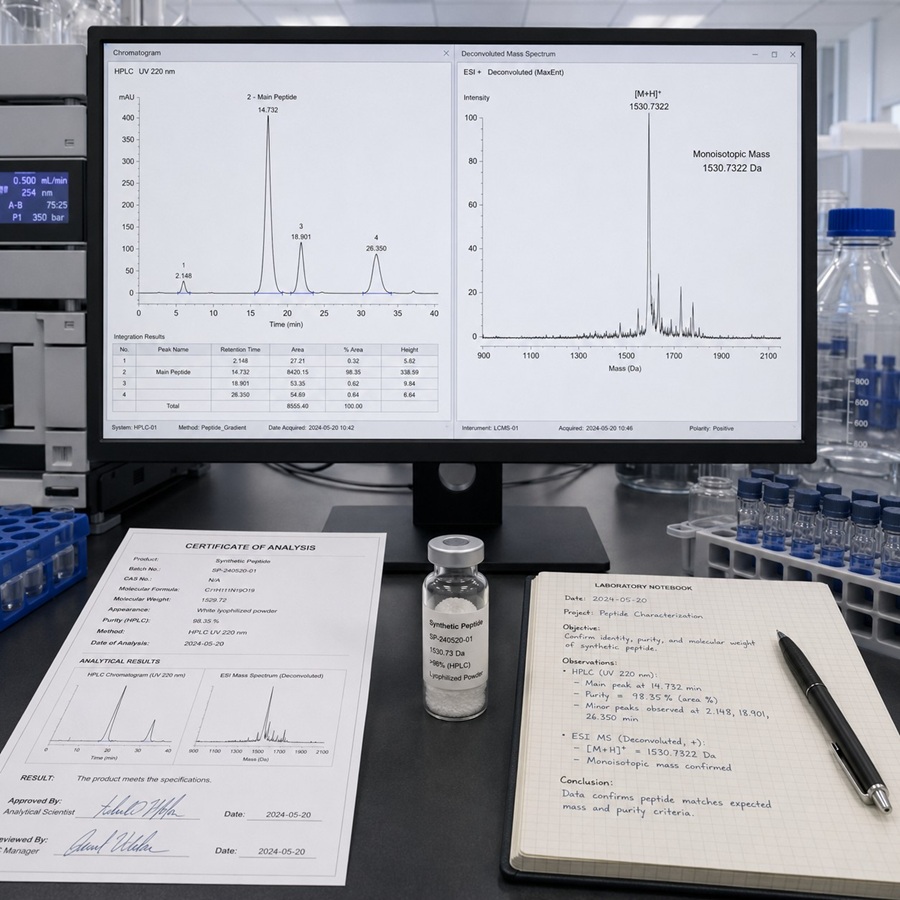
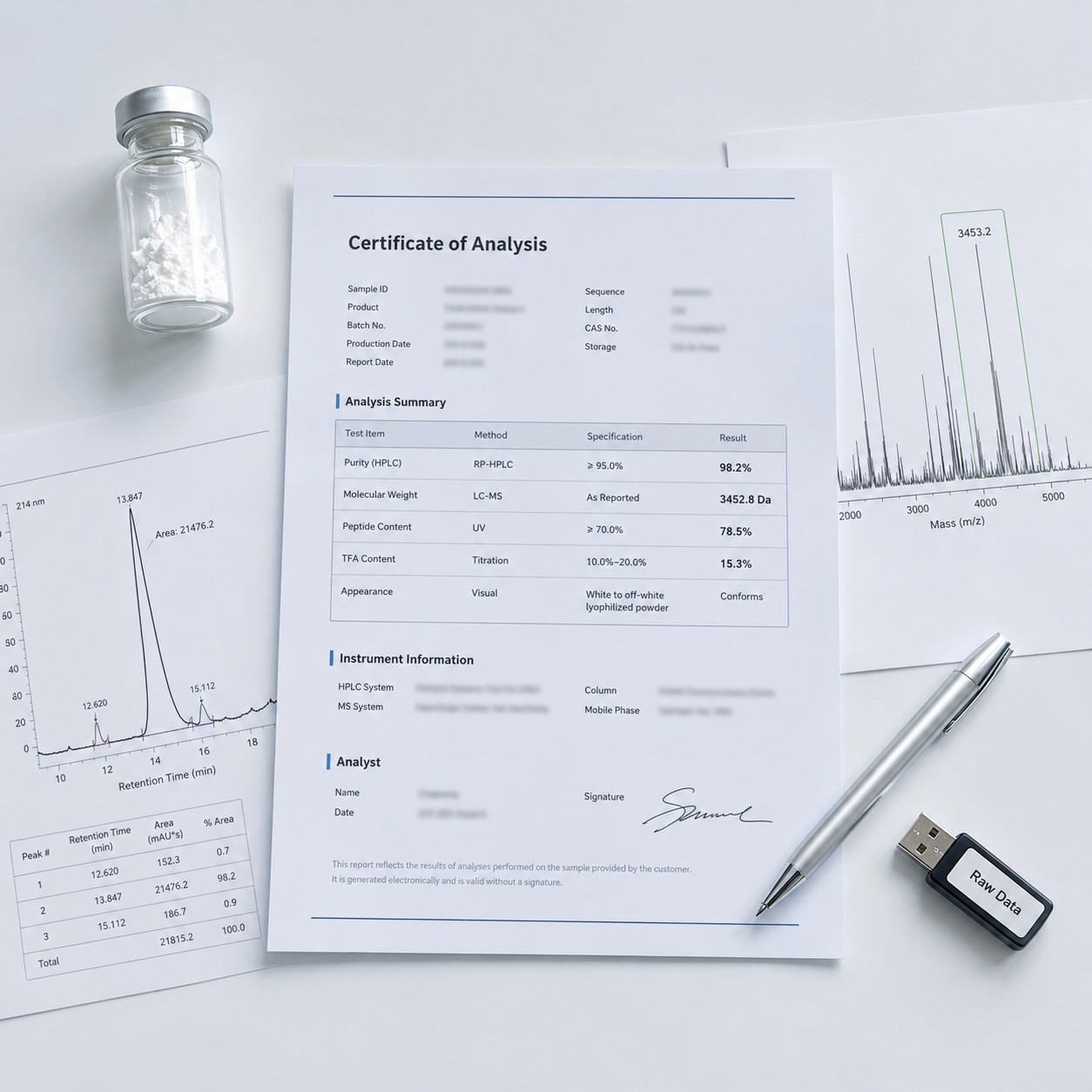
HPLC purity measures the percentage of UV-absorbing material that is your target peptide — it does not account for non-UV-absorbing components like water, salts, and TFA. Peptide content measures the actual weight of peptide per unit of powder weight. A peptide can be >98% pure by HPLC but contain only 70% peptide by weight. For biological assays requiring accurate dosing, both values matter. We recommend including peptide content determination alongside purity testing.
Can you test peptides with unusual modifications or non-standard amino acids?expand_more
Yes. We routinely test peptides containing phosphorylated residues (pSer, pThr, pTyr), acetylated and amidated termini, fluorescent labels (FITC, Cy dyes, TAMRA), biotin, PEG, fatty acid conjugates, D-amino acids, and cyclic peptides. Providing the full sequence and modification details at the inquiry stage helps us select the most appropriate analytical methods.
Can you help interpret unexpected or conflicting test results?expand_more
Yes. When results from different analytical methods appear to conflict — for example, high HPLC purity but low AAA recovery — our scientists investigate the root cause and provide a reconciled interpretation. Common scenarios include non-UV-absorbing contaminants inflating HPLC purity, incomplete hydrolysis affecting AAA values, and co-eluting impurities with similar retention times. Every report includes expert commentary that contextualizes results across all methods performed.
What file formats do you deliver for instrument data?expand_more
We provide instrument raw data in standard formats (e.g., .raw for Thermo MS data, .d for Agilent HPLC data) and processed reports as PDF documents. If you require specific formats for your documentation or publication, please mention this when placing your order.
Can you test peptides that are already dissolved in buffer or solvent?expand_more
We prefer lyophilized powder when possible, as it provides the most stable form for shipping and storage. If you must send peptides in solution, please contact us for specific solvent and concentration guidelines before shipment to ensure compatibility with our analytical systems.
How do you ensure the accuracy and reliability of results?expand_more
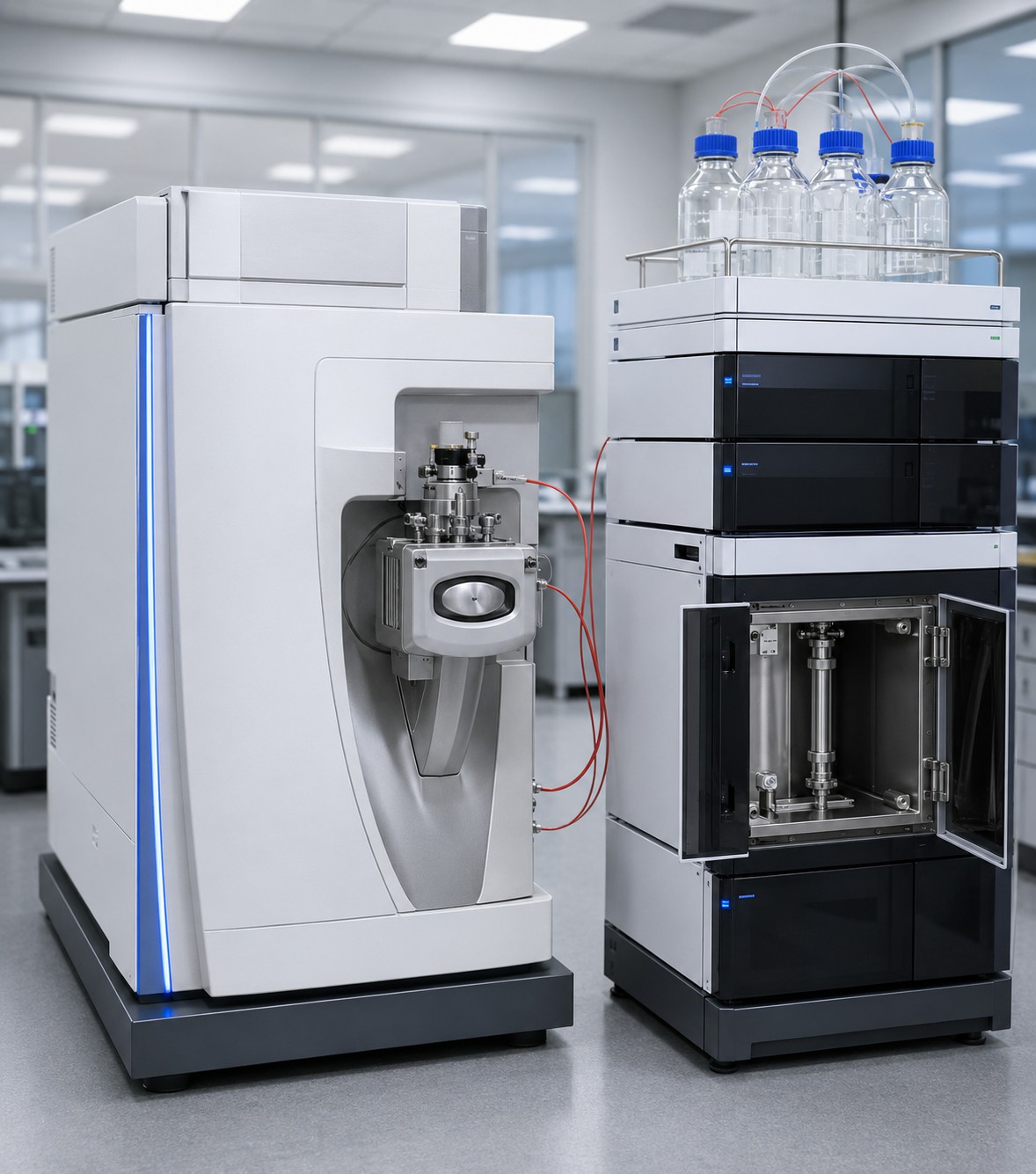
Every analytical run follows documented quality controls: system suitability testing and instrument calibration before each sample sequence, blank injections to verify system cleanliness, reference standards in every analytical batch, replicate injections for quantitative methods, and senior scientist review of every report before release. Raw instrument data files are archived and provided alongside processed results so any result can be independently verified.
Can I order a single test rather than a full panel?expand_more
Yes. There is no minimum test requirement. You can order a single test — for example, HPLC purity only — or a full characterization panel. Our technical team can also recommend the most appropriate tests based on your peptide sequence and downstream application.