Published Research
Quantification of a Peptide Standard Using Intrinsic Tyrosine Fluorescence
Journal
Anal Bioanal Chem
DOI
10.1007/s00216-016-9334-1
Study Overview
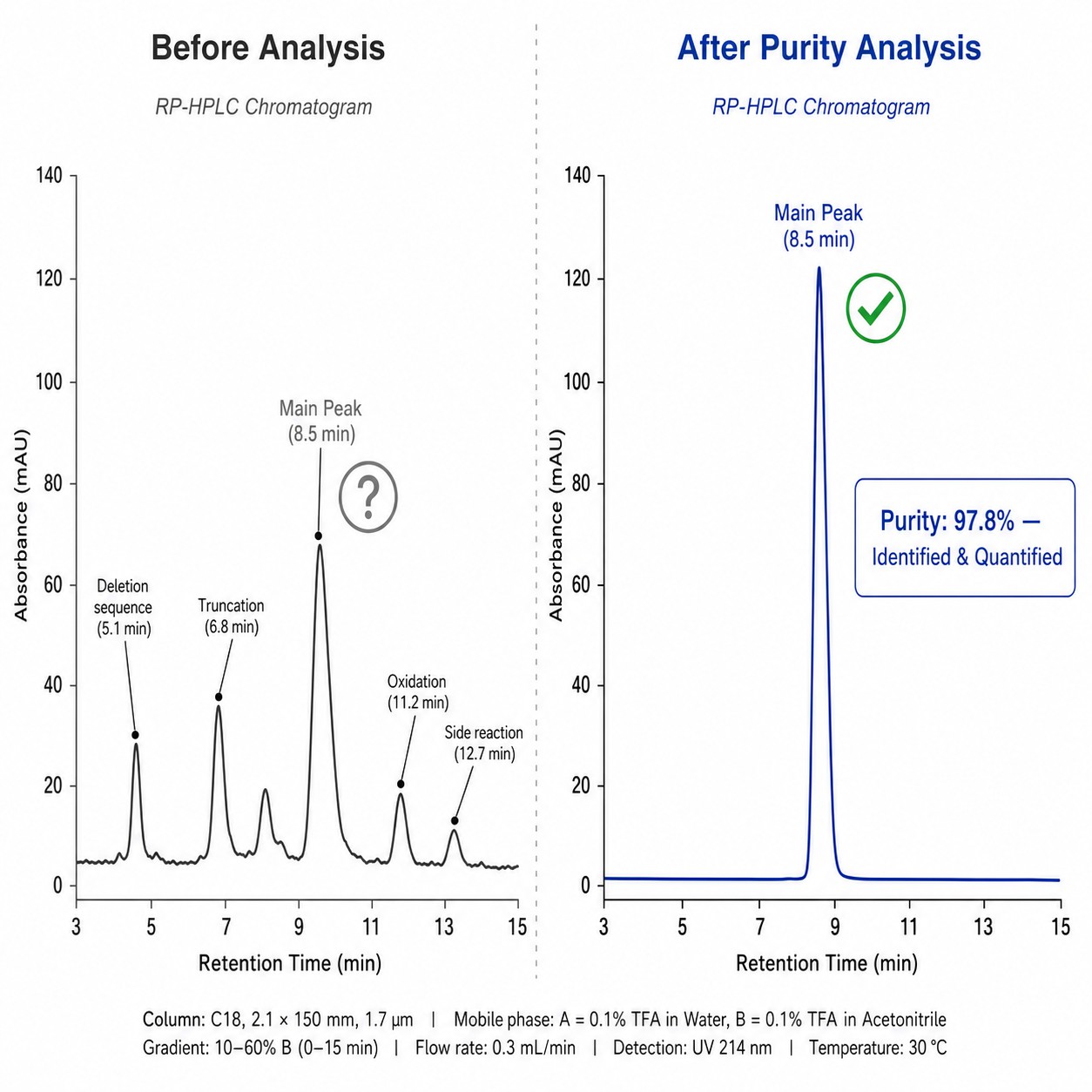
Preston and Phillips (Analytical and Bioanalytical Chemistry, 2016) addressed a fundamental challenge in peptide purity analysis: conventional UV absorbance-based quantification cannot distinguish the target peptide from co-eluting impurities that share the peptide backbone. They developed an orthogonal HPLC method with intrinsic tyrosine fluorescence detection (HPLC-FDTyr) for a synthetic 21-residue peptide standard (Cam-iT3), comparing results against traditional UV absorbance and Ellman's derivatization assay.
Analytical Methods
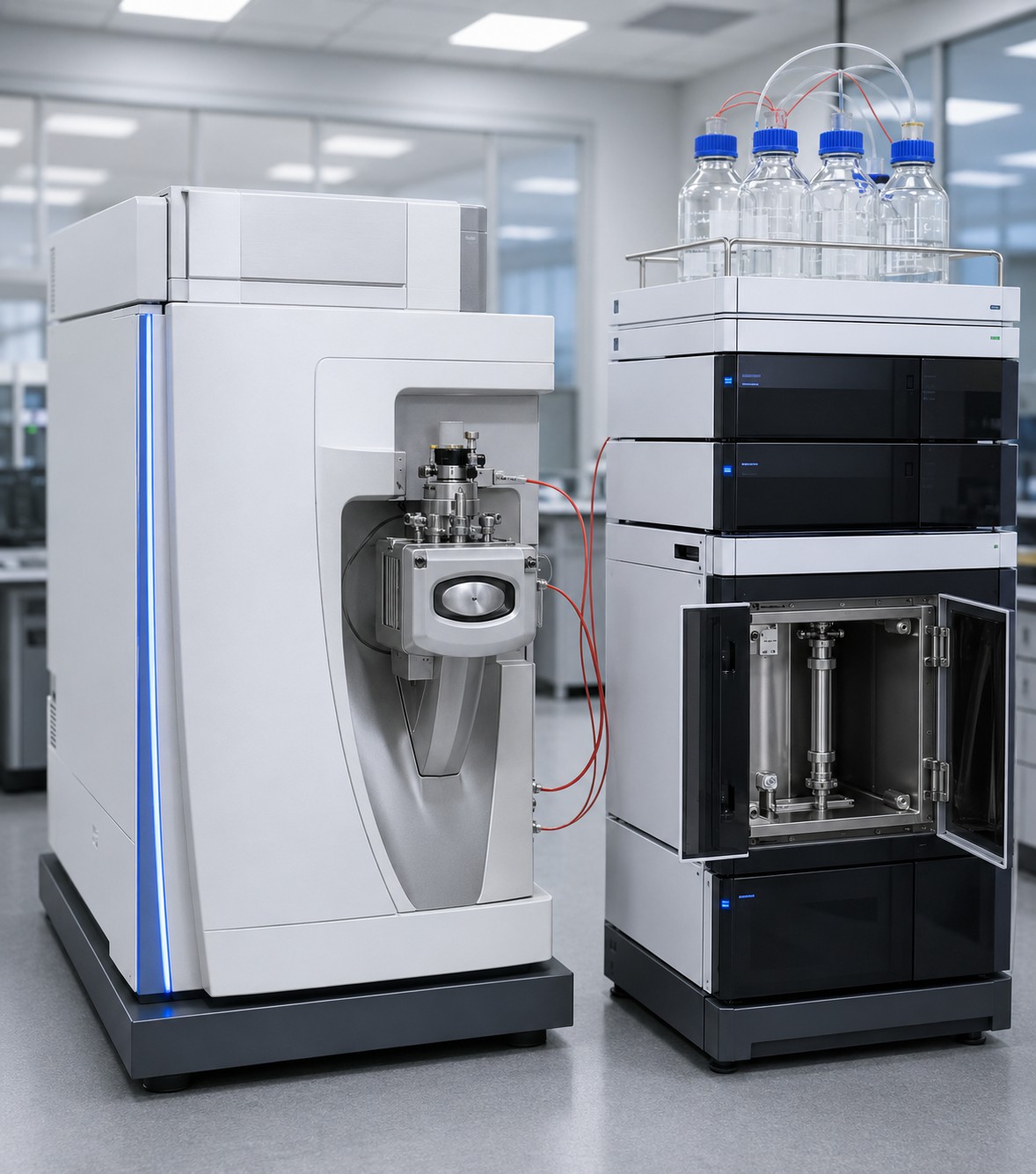
- RP-HPLC with diode array (DAD) and fluorescence (FD) detection in series — C18 column, water/acetonitrile gradient with 0.1% formic acid.
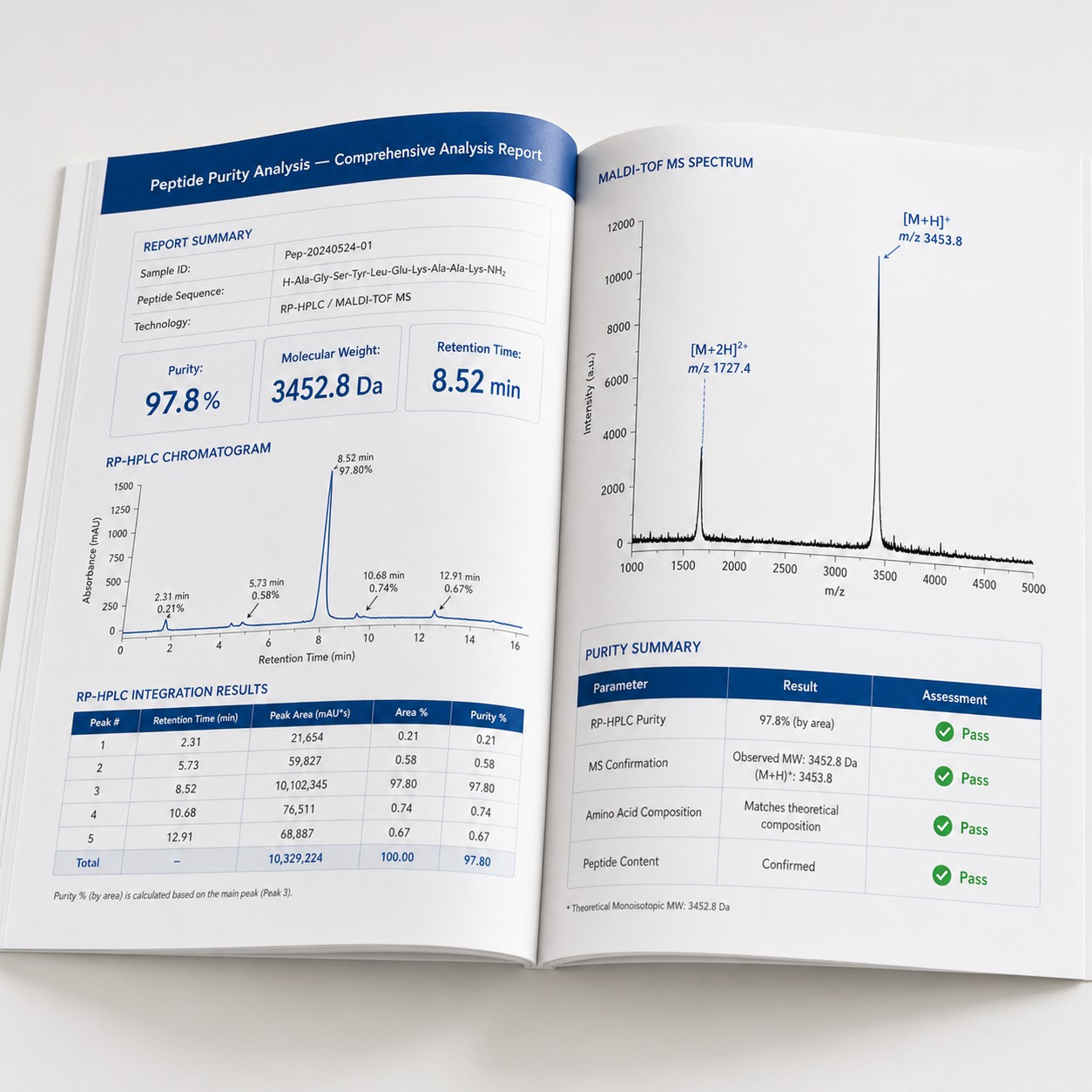
- ESI-MS and MS/MS for peptide identity confirmation and identification of co-eluting impurities in the commercial preparation.
- Ellman's assay (DTNB derivatization) as an independent chemical verification of thiol content for the reduced peptide form.
Relevance to Purity Analysis
- Demonstrates the value of orthogonal detection methods beyond UV absorbance for peptide purity assessment.
- Shows that co-eluting impurities can confound single-wavelength UV purity determinations.
- Highlights the importance of mass spectrometric identity confirmation alongside chromatographic purity.
Key Finding
The orthogonal HPLC-FDTyr quantification results agreed with the Ellman's assay after correction for response differences between the calibrant and analyte. The study confirmed that impurities in commercial peptide preparations complicate quantification regardless of detection method — reinforcing the need for multi-method purity assessment that combines chromatographic separation, mass spectrometric identity, and orthogonal quantification.
Publication Reference
Preston GW, Phillips DH. Quantification of a peptide standard using the intrinsic fluorescence of tyrosine. Anal Bioanal Chem. 2016;408(9):2187–2193. DOI: 10.1007/s00216-016-9334-1.