Protein Sequence Verification

Protein Full-Length Sequencing Service

Complete protein sequence determination with 100% amino acid coverage using multi-protease continuous digestion and high-resolution LC-MS/MS. Verify recombinant protein expression, detect sequence variants, and confirm biopharmaceutical identity from N-terminus to C-terminus.

100% Sequence Coverage Multi-Protease Strategy Recombinant Protein QC Mutation & Variant Detection

Service Scope

Complete sequence verification with 100% amino acid coverage

settings_ethernet

Multi-Protease

Up to 6 enzymes with complementary specificities for gap-free coverage.

Continuous Digestion

Timed multi-protease digestion for maximum peptide overlap.

Orbitrap LC-MS/MS

High-resolution mass spectrometry with HCD and ETD fragmentation.

Expert Review

Manual spectrum inspection and sequence alignment verification.

Service Details

Case Study

FAQ

What Is Full-Length Protein Sequencing?

Full-length protein sequencing is a mass spectrometry-based analytical service that determines the complete amino acid sequence of a protein from the first N-terminal residue to the last C-terminal residue, achieving 100% sequence coverage without gaps or missing regions. For biopharmaceutical developers, this verification is essential: even a single amino acid substitution introduced during expression can alter protein folding, stability, immunogenicity, or biological activity.

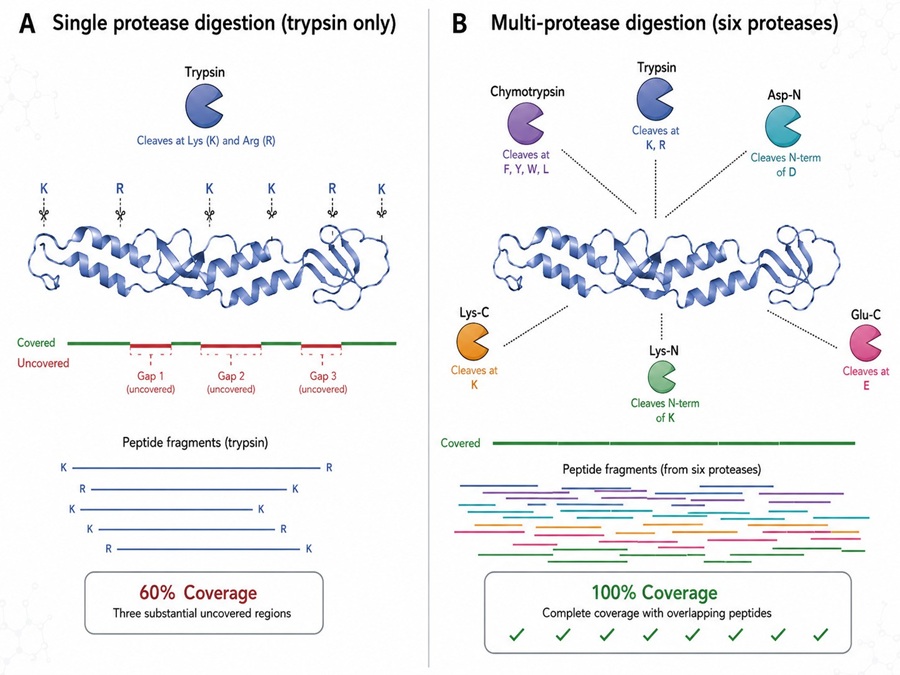
Unlike standard trypsin-only digestion workflows that typically recover 60–70% sequence coverage, our method employs up to six proteases with complementary cleavage specificities in a continuous digestion format. This multi-protease strategy generates overlapping peptide fragments that span every region of the protein, including hydrophobic domains, disulfide-rich segments, and regions with sparse tryptic cleavage sites. Each amino acid position is confirmed by multiple independent peptide identifications from at least two different digest conditions.

The service is designed for biopharmaceutical developers who need to confirm that a recombinant protein has been fully and correctly expressed — verifying the primary structure against the intended gene sequence, detecting unintended mutations, truncations, or sequence variants that could affect efficacy, stability, or regulatory compliance.

Scientific illustration comparing standard trypsin digestion (60% coverage) versus multi-protease continuous digestion (100% coverage) for full-length protein sequence verification.

Full-Length Sequencing vs. Peptide Mapping vs. Top-Down: Choosing the Right Method

Understanding the differences between these complementary approaches helps select the right strategy for your protein characterization goals. While all three methods use LC-MS/MS, they serve distinct analytical purposes and achieve different levels of sequence coverage.

Dimension Full-Length Sequencing Peptide Mapping Top-Down Sequencing
Primary Objective Complete sequence verification from N- to C-terminus Identity confirmation via peptide fingerprint matching Intact mass & proteoform characterization
Sequence Coverage 100% amino acid level 80–95% 20–80 residues from termini
Enzymatic Digestion Multi-protease (up to 6 enzymes), continuous digestion Trypsin ± 1–2 additional enzymes None — intact protein analysis
Best For Recombinant protein QC, mutation detection, expression verification Routine identity testing, biosimilar comparability PTM profiling, proteoform analysis, terminal sequencing
Proteoform Information Limited — digested peptides lose PTM connectivity Limited — peptides analyzed individually Comprehensive — intact mass preserves PTM patterns
Database Required Yes — gene/plasmid sequence for alignment Yes — reference sequence needed No — de novo compatible
Protein Size Range Unrestricted (any size) Unrestricted (any size) <30 kDa optimal; up to 150 kDa
Fragmentation HCD, ETD (Leu/Ile resolution) HCD (standard peptide fragmentation) ECD, ETD, HCD, UVPD
Sample Amount 10–20 μg 10–50 μg 5–10 μg

Full-length sequencing is the appropriate choice when every amino acid must be confirmed — for recombinant protein QC, clone selection, manufacturing change control, or regulatory submissions where complete primary structure evidence is required.

Our Full-Length Protein Sequencing Services

End-to-end sequence verification solutions designed for biopharmaceutical quality control — from method development to regulatory-ready reports. Every service achieves 100% amino acid coverage through multi-protease continuous digestion strategies.

settings_ethernet

Full-Length Sequence Verification

  • • Complete primary structure confirmation from N-terminus to C-terminus.
  • • Multi-protease digestion with up to 6 enzymes for gap-free coverage.
  • • Every residue confirmed by ≥2 independent peptide identifications.
100% Coverage N-to-C Terminus
biotech

Recombinant Protein Expression QC

  • • Confirm correct protein expression and processing.
  • • Detect N/C-terminal truncations and internal deletions.
  • • Identify amino acid substitutions from plasmid errors.
Quality Control
find_replace

Mutation & Variant Analysis

  • • Detect single amino acid variants and polymorphisms.
  • • Leu/Ile resolved by ETD w-ion series analysis.
  • • Critical for clone selection and cell bank characterization.
Variant Detection
analytics

Biopharmaceutical Lot Release Support

  • • Sequence confirmation data for regulatory submissions.
  • • Aligned with ICH Q6B characterization expectations.
  • • Audit-ready documentation with full experimental traceability.
Regulatory Support
compare_arrows

Biosimilar Comparability

  • • Side-by-side full-length sequence comparison against reference listed drug.
  • • Residue-level sequence identity evidence for analytical similarity claims.
  • • Foundational primary structure data supporting 351(k) biosimilar pathways.
Comparability

Full-Length Protein Sequencing Workflow

From sequence analysis to expert-reviewed report, our six-step workflow is designed to eliminate coverage gaps and deliver 100% residue-level confirmation for any protein.

01

Sequence Analysis

Reference protein sequence is analyzed to predict cleavage patterns and select optimal protease combinations for complete coverage.

02

Multi-Protease Digestion

Up to 6 proteases applied in separate timed digestions through a continuous digestion device for maximum peptide overlap.

03

LC-MS/MS Analysis

Each digest is analyzed on high-resolution Orbitrap mass spectrometers using DDA with HCD and ETD fragmentation.

04

Peptide Identification

MS/MS spectra searched against reference sequence. PSMs filtered at 1% FDR and mapped to residue positions.

05

Sequence Assembly

Peptides from all digests pooled and aligned. Overlapping coverage bridges gaps for 100% confirmation.

06

Expert Review

Manual spectrum inspection, variant verification, and comprehensive report preparation with coverage maps.

This multi-protease continuous digestion strategy is equally effective for small peptide hormones and large multi-domain proteins — the principle of complementary proteolysis ensures complete coverage regardless of protein size.

Instrument Platform for Full-Length Protein Sequencing

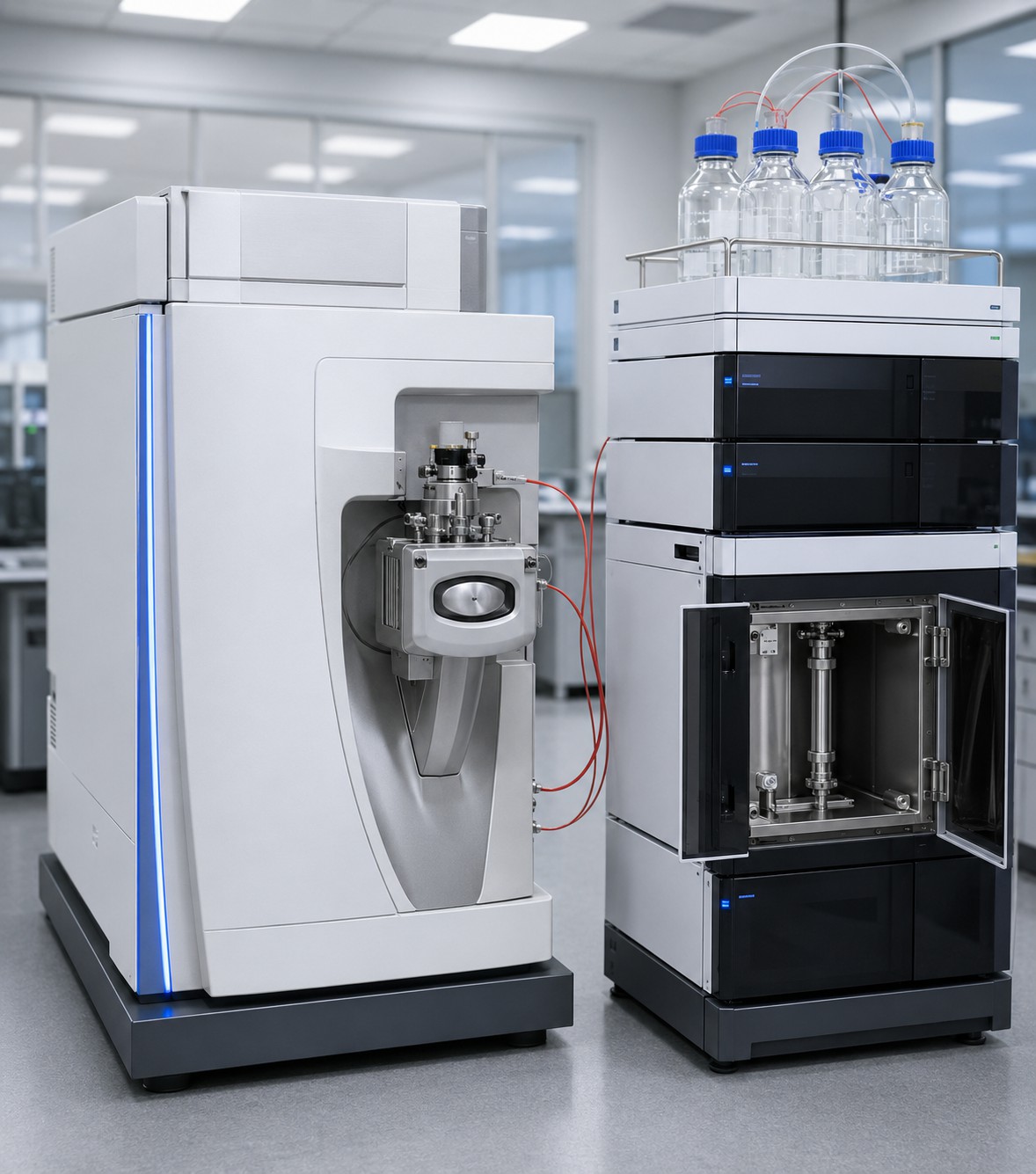
High-resolution Orbitrap mass spectrometer with nano-LC system used for full-length protein sequencing at Creative Proteomics.
science

Multi-Protease Continuous Digestion

A custom continuous digestion device passes protein solutions through immobilized protease columns. Trypsin, Chymotrypsin, Asp-N, Glu-C, Lys-C, and Lys-N are selected based on sequence analysis to maximize peptide overlap and eliminate coverage gaps.

waves

Advanced Fragmentation

HCD generates comprehensive b- and y-ion series for sequence assignment, while ETD preserves labile modifications and enables Leu/Ile discrimination through w-ion analysis — resolving the most challenging analytical problem in protein sequencing.

precision_manufacturing

High-Resolution Mass Spectrometers

Thermo Scientific Orbitrap Fusion Lumos, Orbitrap Eclipse, and Bruker timsTOF Pro provide resolution up to 500,000 with ≤3 ppm mass accuracy, ensuring confident peptide identification even for low-abundance peptides from challenging protein regions.

data_thresholding

Integrated Data Analysis

Proteome Discoverer and Mascot for peptide-spectrum matching, combined with custom sequence assembly and coverage visualization pipelines — delivering residue-level confidence scores for every amino acid position.

Applications of Full-Length Protein Sequencing

biotech

Recombinant Protein QC

Verify full-length expression, confirm signal peptide cleavage, and detect internal deletions or frameshift errors in recombinant proteins and subunit vaccines.

science

Biosimilar Development

Demonstrate analytical similarity at the primary structure level — residue-level sequence identity evidence supporting 351(k) regulatory pathways.

find_replace

Clone Selection & Cell Bank

Confirm sequence fidelity across clones and characterize cell banks for accumulated mutations during expansion and manufacturing.

medication

Therapeutic Protein Characterization

Full-length confirmation of cytokines, enzymes, growth factors, and fusion proteins — detecting processing variants and sequence changes.

hub

PTM-Integrated Verification

Combine full-length sequencing with PTM analysis for simultaneous primary structure and modification characterization.

compare_arrows

Manufacturing Change Control

Demonstrate sequence equivalence before and after process changes to satisfy regulatory comparability requirements.

Sample Requirements for Full-Length Protein Sequencing

Sample Type Minimum Amount Preparation Guidelines
Purified protein in solution 10–20 μg
  • - Purity > 90%
  • - Avoid Tris, glycine, guanidine, glycerol, sucrose, SDS, Triton, Tween, ammonium sulfate
Gel band (SDS-PAGE) 1 visible band (Coomassie)
  • - Excised with clean scalpel
  • - Avoid silver stain when possible
PVDF membrane 1 visible band
  • - Use CAPS buffer for transfer
  • - Stain with Ponceau S or Coomassie
  • - Avoid glycine-containing transfer buffers
Lyophilized protein 10–20 μg
  • - Reconstitute in MS-compatible buffer
  • - Consult our team for buffer recommendations

All reagents must be of the highest purity. Use powder-free gloves and maintain a clean working environment to prevent keratin contamination. For samples containing detergents or high salt concentrations, contact our team for buffer exchange recommendations before submission.

Advantages of Our Full-Length Protein Sequencing

all_inclusive

100% Sequence Coverage

Multi-protease continuous digestion engineered to cover every residue. If any position remains unconfirmed, we add supplementary proteases at no extra cost until complete coverage is achieved.

precision_manufacturing

Multi-Protease Strategy

Six complementary proteases with orthogonal cleavage specificities. Each residue confirmed by multiple independent peptides from different digest conditions.

psychology

Expert Manual Review

Every spectrum and peptide assignment reviewed by experienced mass spectrometrists — catching low-abundance peptides and sequence variants that automated analysis misses.

description

Regulatory-Ready Reports

Annotated MS/MS spectra, sequence coverage maps, residue-level scores, and raw data files formatted for IND/IMPD and BLA/MAA submissions.

tune

Tailored Protease Panels

Protease selection customized based on your protein's amino acid composition — not a one-size-fits-all fixed panel. Optimized for maximum coverage of your specific sequence.

integration_instructions

Complementary Service Integration

Combine with N-terminal and C-terminal sequencing or de novo sequencing for multi-level characterization from a single sample.

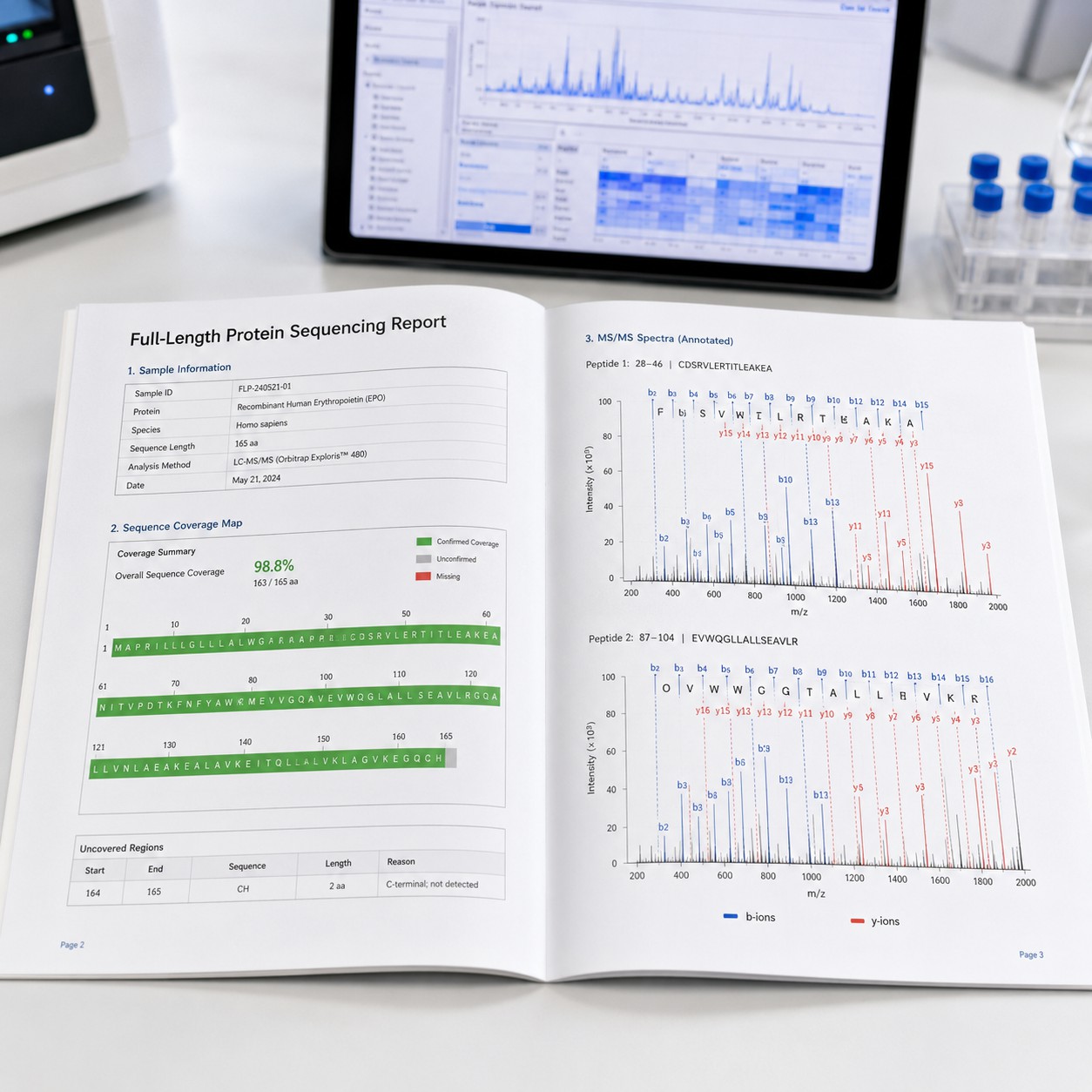
Sample full-length protein sequencing report showing sequence coverage map, annotated MS/MS spectra, and peptide alignment.

Deliverables of Full-Length Protein Sequencing

Comprehensive deliverables designed to support interpretation, regulatory documentation, and confident scientific decision-making.

description

Detailed Report

Complete experimental procedures, LC and MS parameters, protease selection rationale with sequence analysis justification.

analytics

Sequence Coverage Map & Alignment

Residue-level coverage diagram showing confirmed positions across all protease digests, with reference sequence alignment and variant annotation.

hub

Annotated MS/MS Spectra

High-resolution spectra for all identified peptides with b-ion and y-ion assignments, confidence scores, and mass errors.

database

Raw Data Files

Complete .raw MS data files, Proteome Discoverer result files, and peptide identification exports for independent re-analysis.

psychology

Expert Consultation

Post-analysis consultation with our scientists to discuss findings, answer questions, and guide subsequent characterization steps.

Published Research Example

XA-Novo: High-Throughput MS-Based De Novo Sequencing for Monoclonal Antibodies

Journal

Nature Communications

Year

2026

Coverage

100%

Proteases

5 enzymes

Project Overview

Researchers at Xiamen University developed an integrated platform combining single-pot multi-enzymatic gradient digestion (SP-MEGD) with deep learning-based de novo peptide sequencing. The method was validated on six COVID-19 neutralizing antibodies with known sequences (S2P6, SA55, SA58 human; 85F7, 36H6, 2B4 murine) and applied to six commercial therapeutic antibodies with unknown sequences, consistently achieving 100% sequence coverage across heavy and light chains.

Analytical Approach

  • SP-MEGD digestion with five proteases — trypsin, chymotrypsin, pepsin, elastase, and Asp-N — in a single-pot timed gradient with fractions at 2, 4, and 6 hours pooled for maximum peptide diversity.
  • LC-MS/MS on Thermo Scientific Orbitrap Eclipse with dual fragmentation (HCD stepped collision energy for backbone sequencing, EThcD for regions lacking basic residues).
  • Deep learning de novo sequencing via the Casanovo transformer model, followed by beam search assembly (beam size = 5) reconstructing full-length antibody sequences.

Relevance to Full-Length Sequencing

  • Demonstrates that multi-protease digestion achieves 100% sequence coverage — the same core strategy deployed in our full-length sequencing service.
  • Single amino acid accuracy of 100% in CDR regions, proving multi-protease approaches can discriminate even the most challenging sequence variants including Leu/Ile.
  • The SP-MEGD approach parallels our continuous digestion method, confirming multi-enzyme strategies as the definitive solution to the sequence coverage problem.
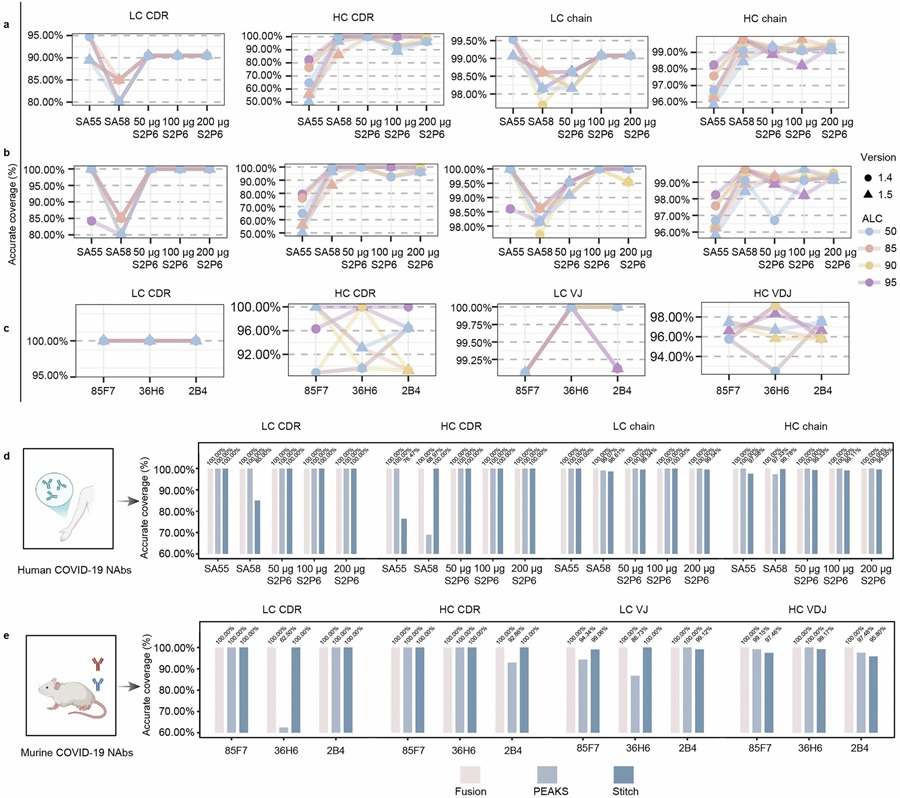
Figure from Xiong et al. (2026) Nature Communications showing 100% sequence coverage across heavy and light chains of six therapeutic antibodies using the SP-MEGD multi-protease approach.

Sequence coverage comparison across antibodies demonstrating 100% coverage for all tested samples using the multi-protease gradient digestion approach. (Adapted from Xiong et al., 2026, Nature Communications)

Key Findings

100% Sequence Coverage

Heavy and light chains fully covered for all six tested antibodies

100% CDR Accuracy

All six CDR regions sequenced with perfect accuracy; Leu/Ile resolved

3-Antibody Mixtures

Simultaneous full-length sequencing from a single sample at ≥99.54% accuracy

50 μg Input

Low sample requirement — practical for early-stage development

Publication Reference

Xiong Y, Jiang W, Xiao J, et al. XA-Novo: high-throughput mass spectrometry-based de novo sequencing technology for monoclonal antibodies and antibody mixtures. Nat Commun. 2026;17:3391. DOI: 10.1038/s41467-026-70496-y.

Frequently Asked Questions

What is the difference between full-length protein sequencing and peptide mapping?expand_more
Full-length sequencing aims for 100% amino acid coverage across the entire protein sequence, using up to 6 complementary proteases in a continuous digestion format to eliminate coverage gaps. Peptide mapping typically uses trypsin alone or with one additional enzyme, achieving 80–95% coverage — sufficient for identity confirmation but not for verifying every residue position. Full-length sequencing is the appropriate choice when every amino acid must be confirmed, such as for recombinant protein QC, mutation detection, or regulatory submissions requiring complete primary structure evidence.
Do I need to provide the reference sequence?expand_more
Yes. Our full-length sequencing service aligns experimentally determined peptide sequences against your provided reference gene or protein sequence. The reference can be submitted as a FASTA file, plasmid map annotation, or protein sequence in any standard format. Without a reference, we recommend our de novo protein sequencing service, which reconstructs sequences without prior database information.
Can full-length sequencing detect single amino acid variants?expand_more
Yes. Because we achieve 100% residue-level coverage with multiple overlapping peptides per position, single amino acid substitutions are reliably detectable. Each residue is confirmed by peptides from 2–4 different protease digests. For leucine/isoleucine discrimination (isobaric and indistinguishable by conventional CID/HCD), we employ ETD fragmentation and w-ion series analysis to resolve these residues at the sequence level.
What size of protein can be analyzed?expand_more
There is no size restriction for full-length sequencing. Because proteins are digested into peptides before analysis, even very large proteins (200+ kDa) and multi-subunit complexes are fully accessible. We have successfully sequenced proteins ranging from small peptide hormones (2–5 kDa) to large multi-domain proteins (150–200 kDa). The multi-protease approach is particularly valuable for large proteins, where single-protease methods inevitably leave coverage gaps in regions with poor tryptic cleavage — a problem that worsens with increasing protein size.
Can disulfide bonds affect sequence coverage?expand_more
Disulfide bonds can reduce sequence coverage in cysteine-rich regions if not properly reduced and alkylated. Our standard workflow includes reduction with DTT or TCEP followed by iodoacetamide alkylation to break and cap all disulfide bonds, ensuring cysteine-containing peptides are released and detectable. For proteins with complex disulfide bonding patterns, we can perform non-reduced analysis as a complementary run and integrate our dedicated disulfide bond analysis service for complete bond mapping.
How do you handle post-translational modifications during sequencing?expand_more
Our database search includes common PTMs as variable modifications (phosphorylation, acetylation, oxidation, deamidation, N-terminal pyroglutamate, and N-glycosylation), enabling detection of modified residues during sequence alignment. However, our standard full-length sequencing service is optimized for primary structure confirmation rather than comprehensive PTM profiling. For detailed PTM site mapping and quantification, we recommend combining full-length sequencing with our dedicated PTM analysis services as part of an integrated characterization package.
Online Inquiry
Online Inquiry