Plasmid DNA Characterization Service
Creative Proteomics provides plasmid DNA characterization services to support the quality evaluation of plasmid materials used in nucleic acid drug development, gene therapy research, mRNA template preparation, and viral vector production workflows. As a key starting material or production intermediate, plasmid DNA must be assessed for structural consistency, preparation quality, and suitability for downstream applications. Variations introduced during plasmid construction, amplification, purification, storage, or handling may affect transfection performance, expression output, manufacturing reproducibility, and biological assay reliability. Our plasmid DNA characterization service provides fit-for-purpose analytical support for plasmid material qualification, batch comparison, and process development before downstream research, development, or manufacturing-related use.
Request a Custom Phosphorylation Analysis PlanIn line with ICH Q6B Guidance for biologic characterization
Jump to Section
- Why Plasmid DNA Characterization Matters
- Analytical Capabilities
- Development Scenarios
- Service Advantages
- Instrument Platform
- Analysis Workflow
- Case Study
- FAQs
- References
Why Plasmid DNA Characterization Matters
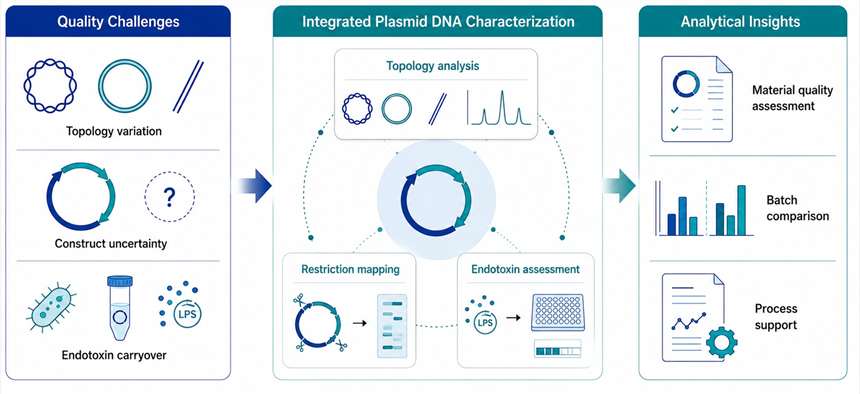
Plasmid DNA characterization focuses on the analytical evaluation of plasmid structure, topology, integrity, and selected process-related quality attributes. Unlike linear oligonucleotides or RNA products, plasmid DNA is a circular DNA molecule that may exist in different conformational forms, including supercoiled, open-circular, and linear forms. The relative distribution of these forms provides important information about plasmid preparation quality and structural integrity.
For plasmid DNA materials used in nucleic acid drug development, mRNA template preparation, gene therapy research, and vector production workflows, routine concentration measurement or absorbance-based purity assessment alone may not provide enough information to judge material quality. Plasmid DNA characterization helps reveal structure-related and process-related issues that may affect material consistency, downstream performance, and quality-related decision-making.
The following points summarize why plasmid DNA characterization is important:
- Limited insight from concentration-based measurements
A260-based concentration and purity ratios can estimate sample amount and gross purity, but they do not fully reflect structural changes, topology shifts, or preparation-related abnormalities. - Risk of topology changes during preparation or storage
Nicking, shearing, or partial degradation may change the relative distribution of plasmid forms. These changes can affect how consistently the plasmid performs in later experimental or production workflows. - Potential construct-level inconsistencies
Plasmid construction or amplification may introduce unexpected structural issues, such as insert loss, backbone rearrangement, or abnormal digestion patterns. These issues may not be obvious from routine purity checks. - Batch quality differences that are difficult to judge visually
Plasmid batches prepared under different conditions may show differences in structural quality or preparation consistency. Characterization data provide a more objective basis for comparing material quality. - Bacterial source-related quality risks
Plasmids produced in bacterial systems may contain endotoxin-related carryover. Identifying this risk early helps avoid interference with downstream biological evaluation and supports better material control.
Plasmid DNA Characterization at Creative Proteomics
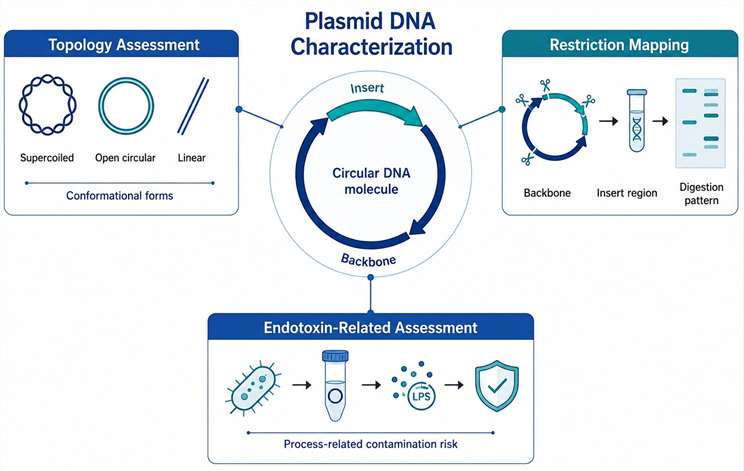
Creative Proteomics provides plasmid-focused analytical capabilities to support topology evaluation, enzyme digestion-based structural verification, and endotoxin-related quality assessment. These modules can be selected individually or combined with comparative reporting for plasmid batch evaluation, process development, or downstream material qualification.
| Characterization Focus | Analytical Strategy | Key Information Delivered |
| Supercoiled / Linear / Open-Circular Ratio Analysis | Evaluation of plasmid conformational distribution using suitable electrophoretic, capillary electrophoresis, or chromatographic approaches. Supercoiled, open-circular, and linear plasmid forms are separated and assessed according to project requirements. | Relative abundance of major plasmid topology forms; supercoiled content; open-circular and linear form distribution; evidence of nicking, shearing, degradation, or preparation-related topology changes; support for batch or condition comparison. |
| Restriction Mapping | Restriction enzyme digestion followed by gel-, CE-, or fragment analysis-based readout. Observed digestion patterns are compared with the expected plasmid map to support construct-level structural verification. | Confirmation of expected digestion pattern; information on plasmid backbone and insert-region consistency; detection of abnormal fragment patterns that may suggest insert loss, rearrangement, incomplete digestion, or construct-related inconsistency. |
| Endotoxin Analysis Support for Plasmid DNA | Endotoxin-related assessment support using suitable assay formats according to sample properties, matrix compatibility, and project requirements. When needed, sample suitability or interference-related considerations can be included. | Endotoxin-related quality information for plasmid DNA materials; assessment of bacterial source-related contamination risk; support for endotoxin-sensitive downstream studies, material selection, and process-related quality evaluation. |
Applications of Plasmid DNA Characterization Services
Plasmid DNA characterization supports plasmid material evaluation across nucleic acid drug development, gene therapy research, vector production, and process development workflows.
- mRNA production template assessment
Evaluation of plasmid DNA used as templates for in vitro transcription and mRNA manufacturing-related studies. - Viral vector production plasmid evaluation
Quality assessment of plasmids used for AAV, lentiviral, or other viral vector production workflows. - Gene therapy plasmid material evaluation
Characterization of plasmid materials used in gene therapy research, plasmid-based construct development, and preclinical preparation. - Clone screening and construct pattern confirmation
Restriction digestion-based evaluation of candidate plasmid clones to support confirmation of expected backbone, insert region, and digestion pattern. - Plasmid batch comparison
Comparative evaluation of plasmid materials prepared from different batches, purification methods, storage conditions, or suppliers. - Endotoxin-sensitive material evaluation
Support for plasmid DNA samples where bacterial production-related endotoxin carryover may affect downstream biological use or quality assessment.
Advantages of Our Plasmid DNA Characterization Services
- Plasmid-specific characterization focus: The service is designed around key quality attributes of circular plasmid DNA, rather than applying a generic nucleic acid testing approach.
- Integrated structural and quality assessment: Multiple analytical readouts can be combined to provide a more complete view of plasmid material quality, supporting interpretation beyond a single assay result.
- Flexible assay selection: Analytical strategies can be adjusted according to plasmid size, sample condition, expected plasmid map, downstream use, and project stage.
- Routine and comparative study support: The service can support single-batch evaluation, batch-to-batch comparison, preparation method comparison, or storage-condition-related quality assessment.
- Clear and interpretable reporting: Reports include representative profiles, comparative summaries, and project-specific comments to help interpret plasmid quality differences.
- Experienced Scientific Support: Our scientific team provides technical guidance on plasmid topology analysis, restriction mapping strategy, endotoxin-related assessment, data interpretation, and study design for plasmid DNA characterization projects.
Plasmid DNA Characterization Platforms
Creative Proteomics uses fit-for-purpose analytical platforms to support plasmid DNA topology profiling, restriction digestion-based structural verification, and endotoxin-related quality assessment.
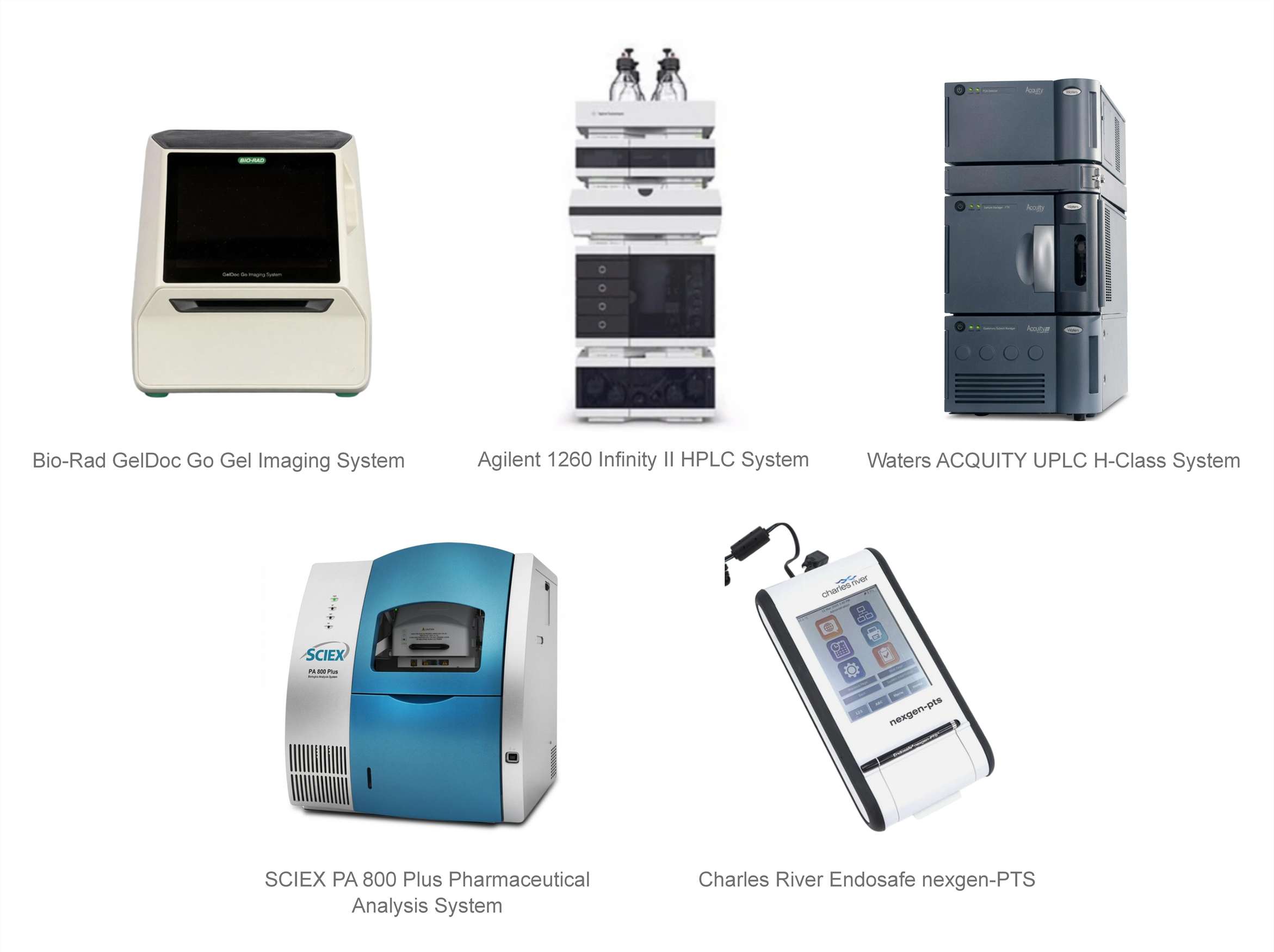
- Bio-Rad GelDoc Go Gel Imaging System
Gel imaging platform for visualization and documentation of agarose gel electrophoresis results, supporting plasmid topology assessment, restriction digestion fragment pattern analysis, and gel-based comparison of undigested or enzyme-treated plasmid DNA samples. - Agilent 1260 Infinity II HPLC System
HPLC-based separation platform for chromatographic profiling of plasmid DNA samples where applicable, supporting purity-related assessment, comparative chromatographic analysis, and evaluation of plasmid preparation consistency across batches or process conditions. - Waters ACQUITY UPLC H-Class System
High-efficiency UPLC platform for improved chromatographic resolution of nucleic acid species, supporting selected plasmid DNA profiling workflows, product-related heterogeneity assessment, and comparative analysis when higher separation efficiency is required. - SCIEX PA 800 Plus Pharmaceutical Analysis System
Capillary electrophoresis platform for high-resolution nucleic acid analysis, supporting plasmid isoform separation, supercoiled / open-circular / linear form assessment, restriction fragment analysis, and more quantitative comparison of plasmid topology profiles. - Charles River Endosafe nexgen-PTS
Endotoxin testing platform for rapid endotoxin-related assessment of plasmid DNA samples, supporting evaluation of bacterial source-related contamination risk and endotoxin-sensitive downstream material qualification where applicable.
Workflow of Plasmid DNA Characterization
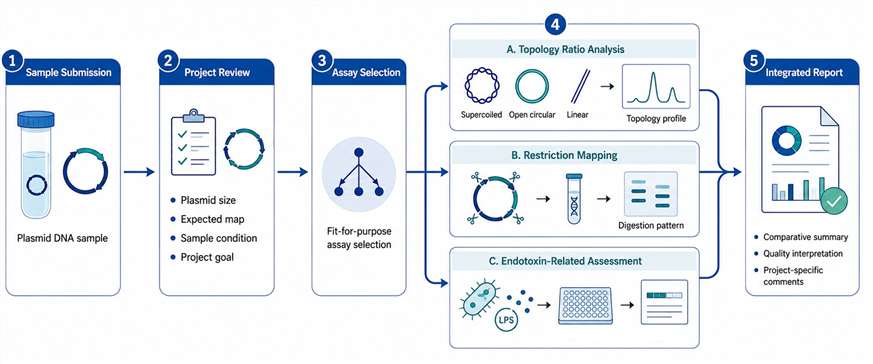
- 1
Sample Submission
Purified plasmid DNA samples are submitted for characterization together with available sample information, such as plasmid concentration, buffer composition, plasmid size, storage condition, and intended downstream use. When applicable, the expected plasmid map or digestion plan can also be provided to support structural evaluation.
- 2
Project Review
The submitted project information is reviewed to define the key quality attributes to be assessed. This step may include evaluation of plasmid size, expected construct map, sample condition, analytical purpose, and whether the project requires topology analysis, restriction mapping, endotoxin-related assessment, or comparative reporting.
- 3
Assay Selection
Based on the project objective and sample properties, suitable analytical approaches are selected. The workflow may include electrophoresis-based, capillary electrophoresis-based, chromatographic, restriction digestion-based, or endotoxin-related testing strategies, depending on the characterization questions to be addressed.
- 4
Plasmid-Specific Analytical Assessment
Selected assays are performed according to the agreed characterization plan. Topology ratio analysis can be used to evaluate supercoiled, open-circular, and linear plasmid forms. Restriction mapping can be performed to compare observed digestion patterns with the expected plasmid map. Endotoxin-related assessment may be included when bacterial source-related contamination risk needs to be evaluated.
- 5
Data Integration and Interpretation
Analytical results from different assessment modules are reviewed together to support interpretation of plasmid material quality. Topology profiles, digestion patterns, endotoxin-related results, and sample-to-sample differences can be compared according to project requirements.
- 6
Integrated Report
A final analytical report is prepared with representative profiles, quantitative or semi-quantitative results where applicable, comparative summaries, and project-specific comments. The report supports plasmid material qualification, batch comparison, troubleshooting, and process-related quality evaluation.
Case Study: CGE-Based Quantitative Analysis of Plasmid DNA Topology
Plasmid DNA topology is an important quality attribute for plasmid materials used in biotechnology, pharmaceutical research, vaccine-related studies, and gene therapy development. In this study, pUC19 plasmid DNA was used as a model double-stranded plasmid to evaluate whether capillary gel electrophoresis (CGE) could distinguish and quantify major plasmid conformations, including linear, supercoiled/covalently closed circular, and open-circular forms.
Key findings:
- CGE generated distinct electropherogram regions corresponding to linear, supercoiled/covalently closed circular, and open-circular pUC19 plasmid DNA.
- The three plasmid forms showed different migration behaviors, allowing topology composition to be estimated by integrating the assigned signal regions.
- Enzyme-prepared controls supported isoform assignment: HindIII treatment generated linearized pUC19, while Nt.BspQI treatment generated open-circular plasmid DNA.
- CGE-based measurements showed quantitative trends consistent with conventional agarose gel electrophoresis for defined plasmid topology states.
This case study highlights the value of CGE-based plasmid topology analysis for assessing plasmid isoform distribution, supporting sample comparison, and providing quality-related information for plasmid DNA characterization.
Source
Hahn MB. Rapid quantitative analysis of double-stranded plasmid DNA with capillary gel electrophoresis for applications in quality control and radiation research. Scientific Reports. 2025, 15(1):1068. doi: 10.1038/s41598-025-85132-w
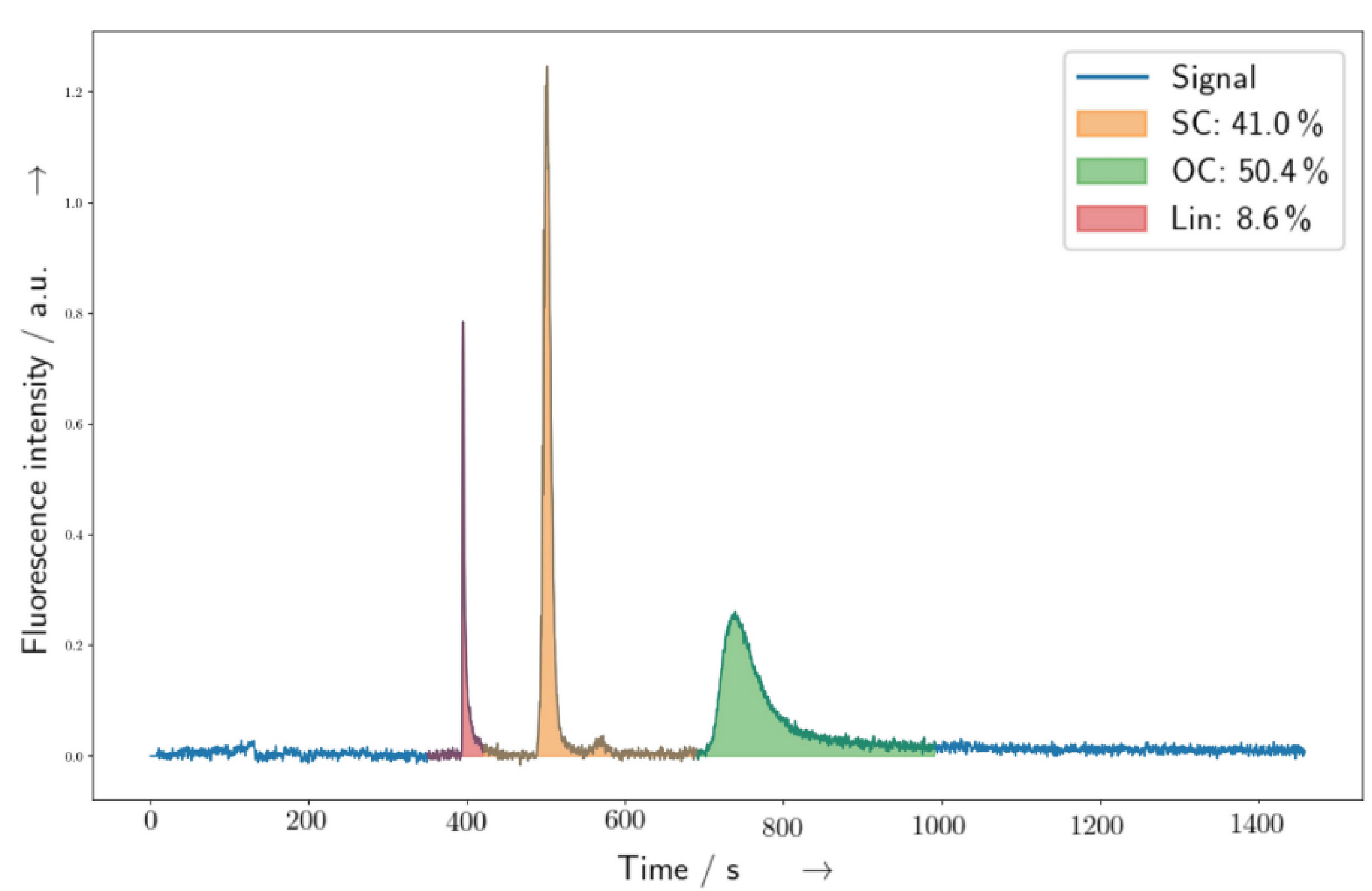
Figure from Hahn (2025) showing CGE-based separation of pUC19 plasmid DNA isoforms, including linear, supercoiled/covalently closed circular, and open-circular forms (CC BY 4.0).
FAQs of Plasmid DNA Characterization
Can plasmid DNA characterization replace sequencing?
No. Plasmid DNA characterization and sequencing provide different types of information. Sequencing is used for base-level sequence confirmation, while plasmid DNA characterization focuses more on topology, structural pattern, preparation quality, and selected process-related quality attributes. For projects requiring complete sequence identity confirmation, sequencing may be recommended as a complementary method.
Why is topology ratio analysis important for plasmid DNA?
Plasmid DNA can exist as supercoiled, open-circular, or linear forms. Changes in the relative proportion of these forms may reflect nicking, shearing, degradation, or preparation-related stress. Topology ratio analysis helps evaluate whether the plasmid preparation maintains the expected structural quality.
What information is needed before starting restriction mapping?
For restriction mapping, it is helpful to provide the expected plasmid map, plasmid size, insert information, known or preferred restriction enzyme sites, sample concentration, buffer composition, and the purpose of the analysis. If an enzyme digestion strategy has not been selected, Creative Proteomics can help review the plasmid map and recommend a suitable restriction digestion scheme for structural verification.
Is endotoxin analysis necessary for every plasmid DNA sample?
Not always. Because plasmid DNA is commonly amplified and purified from bacterial hosts such as E. coli, endotoxin carryover can be an important quality concern. Endotoxin-related assessment is especially recommended when plasmid DNA will be used in endotoxin-sensitive cell-based studies, in vivo research, transfection-related workflows, or development-stage material evaluation. The need for testing depends on the sample grade, purification process, downstream use, and project requirements.
What methods can be used for plasmid DNA characterization?
Depending on the project goal, plasmid DNA characterization may involve agarose gel electrophoresis, capillary electrophoresis or capillary gel electrophoresis, selected HPLC/UPLC-based methods when applicable, restriction enzyme digestion followed by fragment analysis, and endotoxin-related assay support. The final method selection depends on plasmid size, sample quality, resolution requirements, and reporting needs.
How much plasmid DNA sample is required?
The required sample amount depends on the selected assays, plasmid size, concentration, and whether repeat analysis or multiple enzyme digestion conditions are needed. For routine topology or restriction mapping analysis, we generally recommend providing several micrograms of purified plasmid DNA when possible. For projects involving multiple assays, comparative studies, or endotoxin-related assessment, additional sample may be required. Please contact us for project-specific sample recommendations.
What is the typical turnaround time?
Turnaround time depends on the selected assays, number of samples, plasmid size, digestion strategy, and whether endotoxin-related assessment is included. Routine topology assessment or restriction mapping is generally completed within approximately 5–10 business days after sample receipt and project confirmation. Projects involving multiple plasmid batches, customized digestion scheme evaluation, comparative reporting, or endotoxin-related testing may require a longer timeline. Please contact us for a project-specific schedule.
Can this service compare plasmid DNA from different batches or preparation conditions?
Yes. Comparative plasmid DNA characterization can be used to evaluate differences among batches, purification methods, storage conditions, suppliers, or process development samples. The report can include side-by-side comparison of topology profiles, restriction mapping results, and endotoxin-related assessment results when applicable.
References
- Hahn MB. Rapid quantitative analysis of double-stranded plasmid DNA with capillary gel electrophoresis for applications in quality control and radiation research. Scientific Reports. 2025, 15(1):1068. doi: 10.1038/s41598-025-85132-w
- Middaugh CR.; et al. Analysis of plasmid DNA from a pharmaceutical perspective. J Pharm Sci. 1998, 87(2):130-46. doi: 10.1021/js970367a.
For Research Use Only. Not for diagnostic procedures.