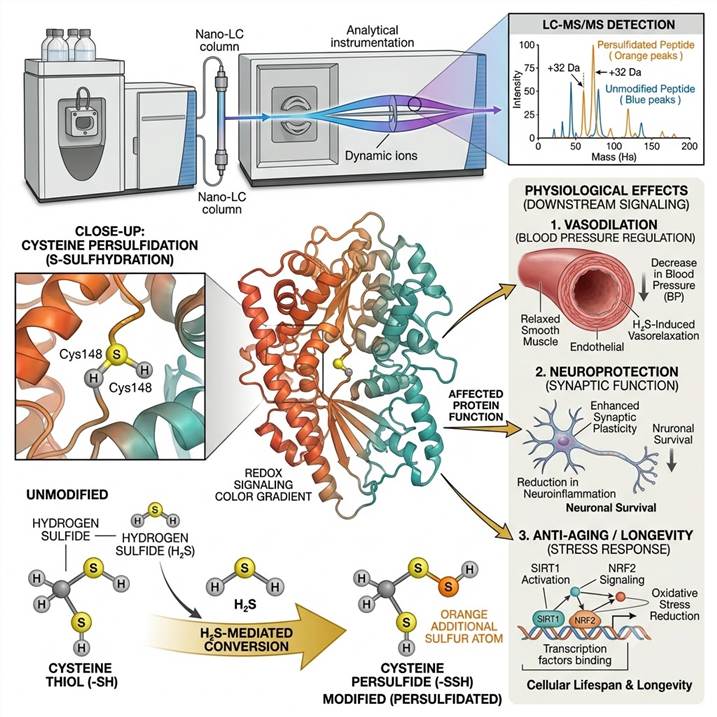
Why Persulfidation Analysis Matters
Persulfidation is the principal molecular mechanism through which hydrogen sulfide (H₂S) exerts its regulatory effects on cellular function. Unlike the well-characterized S-nitrosylation (NO-based) and S-glutathionylation (GSH-based) redox modifications, persulfidation operates through a distinct chemical paradigm with unique regulatory logic.
H₂S Signaling and the Gasotransmitter Revolution
H₂S is now recognized alongside nitric oxide (NO) and carbon monoxide (CO) as a fundamental gasotransmitter with essential signaling functions. Unlike classical signaling molecules, gasotransmitters diffuse freely across membranes and regulate cellular function through covalent modification of protein cysteine residues. H₂S is produced endogenously by three enzymatic pathways — cystathionine β-synthase (CBS), cystathionine γ-lyase (CSE), and 3-mercaptopyruvate sulfurtransferase (3-MST) — and its levels are tightly regulated in health and dysregulated in cardiovascular, neurological, and metabolic diseases.
Persulfidation vs. Other Cysteine Redox Modifications
Persulfidation (-SSH) is chemically and functionally distinct from other cysteine redox states. While sulfenylation (-SOH) represents oxidative stress and can lead to irreversible overoxidation, persulfidation protects cysteines from permanent damage by forming a reversible persulfide bond. Moreover, persulfidation enhances the nucleophilicity of the modified cysteine compared to the free thiol, altering its reactivity and protein interaction properties. The interplay between persulfidation, S-nitrosylation, and S-glutathionylation represents a complex regulatory network that governs redox signaling in health and disease.
Evolutionary Conservation and Therapeutic Potential
Persulfidation is evolutionarily ancient, with conserved targets spanning bacteria, plants, and mammals. Recent evidence demonstrates that persulfidation levels decline with age across species and that interventions that increase persulfidation are associated with extended lifespan. The therapeutic potential of H₂S donors and persulfidation-modulating compounds is under active investigation for cardiovascular disease, neurodegeneration, inflammation, and cancer — making quantitative persulfidation analysis an essential capability for both basic research and drug development programs.
Our Approach to Persulfidation Analysis
Protein persulfidation presents unique analytical challenges: the persulfide bond is chemically labile, susceptible to oxidation, and cannot be directly enriched using antibodies. Our pipeline deploys validated chemoselective strategies that specifically tag and enrich persulfidated cysteine residues while preserving the modification through sample processing.
Chemoselective Persulfide Labeling and Enrichment
We employ two complementary and well-validated strategies for persulfide-specific enrichment. The tag-switch method uses methylsulfonyl benzothiazole (MSBT) to selectively block persulfides, followed by cyanoacetate-based switch chemistry to introduce affinity tags. The dimedone-switch method leverages the selective reactivity of dimedone-based probes with persulfides under controlled pH conditions. Both approaches enable biotin-based affinity capture of persulfidated peptides for downstream LC-MS/MS analysis. The choice of enrichment strategy is optimized based on sample type, expected persulfide abundance, and downstream quantification requirements.
LC-MS/MS Detection and Site Localization
Enriched persulfidated peptides are analyzed on high-resolution Orbitrap platforms using LC gradients optimized for modified peptide retention and separation. HCD fragmentation produces diagnostic fragmentation signatures for persulfidated cysteines, including characteristic neutral losses. For unambiguous site localization, we deploy multiple proteases to generate overlapping peptide sequences that provide independent confirmation of each persulfidation site.
Quantification and Data Integration
For differential persulfidation analysis, we offer label-free quantification based on normalized spectral abundance factors and extracted ion chromatogram comparison across conditions. When paired with our S-Nitrosylation Analysis and S-Glutathionylation Analysis services, we provide integrated redox PTM profiling that reveals the interplay between different cysteine modifications in your biological system.
Compatible Sample Types and Requirements
Persulfidation analysis requires careful sample handling to preserve the labile modification. Samples must be processed with fresh reductant-free buffers and analyzed promptly after preparation.
| Sample Type |
Recommended Amount |
Expected Coverage |
| Cultured cells (mammalian) |
≥2 × 10⁷ cells |
Global persulfidome profiling (hundreds of sites) |
| Tissue samples (snap-frozen) |
≥50 mg wet weight |
Tissue-specific persulfidation mapping |
| Blood-derived samples (plasma, serum) |
≥500 μL |
Persulfidation of abundant plasma proteins |
| Plant tissue |
≥100 mg fresh weight |
Plant persulfidome profiling |
| Microbial cell pellets |
≥5 × 10⁸ cells |
Bacterial/yeast persulfidation mapping |
| Subcellular fractions (mitochondria, cytosol) |
≥200 μg protein |
Compartment-specific persulfidome analysis |
For broader redox proteomics characterization, our Cysteine-Redoxome Proteomics service provides integrated analysis of multiple cysteine oxidative modifications in parallel.
Workflow: From Sample to Persulfidation Data
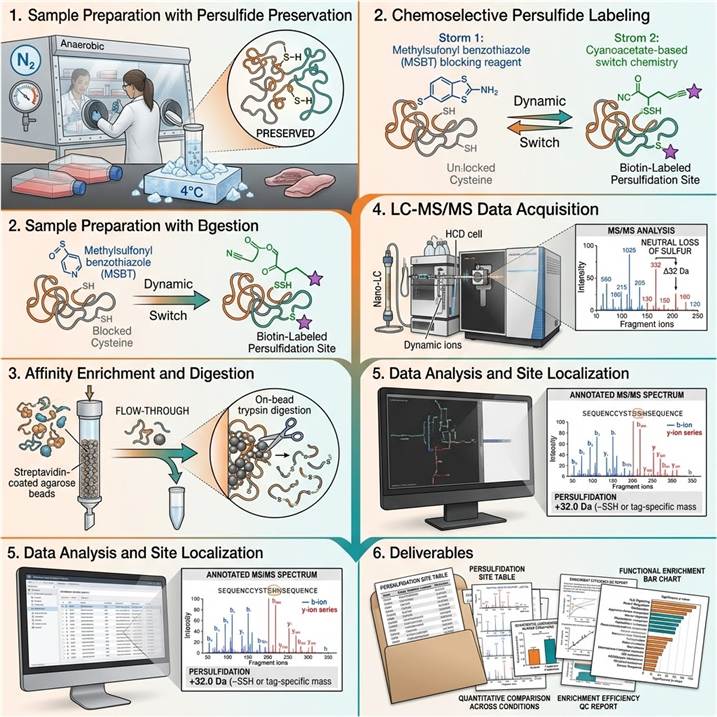
Step 1: Sample Preparation with Persulfide Preservation
Samples are processed using buffers containing appropriate reducing agents and alkylating reagents that specifically stabilize persulfides while blocking free thiols. All processing steps are performed under oxygen-free conditions where possible, and samples are kept at 4°C throughout to minimize persulfide loss. Protein extraction is followed by quantification and quality assessment.
Step 2: Chemoselective Persulfide Labeling
Persulfidated cysteines are selectively labeled using the optimized tag-switch or dimedone-switch method. Blocking reagents first react with free thiols, then the persulfide-specific switch reaction introduces a biotin affinity tag exclusively at persulfidated sites. Labeling efficiency is verified by dot-blot or streptavidin-HRP detection before proceeding to enrichment.
Step 3: Affinity Enrichment and Digestion
Biotin-tagged persulfidated proteins are captured on streptavidin-agarose beads with high-affinity binding. After stringent washing to remove non-persulfidated proteins and excess reagents, on-bead digestion with optimized proteases releases persulfidated peptides. Eluted peptides are desalted, concentrated, and spiked with internal standards for LC-MS/MS analysis.
Step 4: LC-MS/MS Data Acquisition
Enriched persulfidyl peptides are separated using nano-flow reversed-phase chromatography with gradients optimized for modified peptide retention. Data-dependent acquisition on high-resolution Orbitrap platforms uses HCD fragmentation with optimized normalized collision energies for persulfide bond characterization. The diagnostic neutral loss of sulfur (32 Da) from the persulfide group is used as an additional validation filter.
Step 5: Data Analysis and Site Localization
Raw MS data are searched against protein databases using custom modification definitions for persulfidation (cysteine +32 Da for -SSH, or +tag-specific mass shift). Site localization confidence is assessed using fragment ion coverage and the presence of diagnostic ions. For multi-condition experiments, label-free quantification identifies persulfidation sites with significant abundance changes between conditions.
Step 6: Deliverables and Review
Persulfidation site table with protein IDs, modified cysteine positions, sequence windows, and confidence scores, annotated MS/MS spectra for each identified persulfidation event, quantitative comparison across conditions, enrichment efficiency QC report, and a scientist consultation session for biological interpretation and follow-up experimental planning.
For comprehensive redox cysteine PTM characterization, our Reactive Cysteine Profiling and Free Thiol Quantification services provide complementary analysis of cysteine reactivity and redox state.
Why Choose Our Persulfidation Analysis Service
Validated Chemoselective Enrichment Expertise
Persulfidation enrichment requires precise control of reaction conditions, blocking efficiency, and switch chemistry that goes far beyond standard proteomics workflows. Our team has hands-on experience with both the tag-switch and dimedone-switch methodologies, including optimization of blocking efficiency, switch reaction kinetics, and enrichment stringency for diverse sample types.
Labile Modification Handling
The persulfide bond is among the most labile PTMs routinely analyzed by mass spectrometry. Our sample processing protocols are specifically optimized for persulfide preservation — including oxygen-free processing, low-temperature workflows, and rapid processing timelines — ensuring that the persulfidation state at the time of sample collection is faithfully represented in the final data.
Integrated Redox PTM Platform
Persulfidation does not occur in isolation. Our service is part of an integrated redox PTM platform that includes S-nitrosylation, S-glutathionylation, sulfenylation, and disulfide bond analysis — enabling you to map the full landscape of cysteine redox regulation in your samples. Our Carbonylation Analysis and Oxidation Analysis services provide additional oxidative PTM detection capabilities.
Cross-Species Applicability
Persulfidation is evolutionarily conserved, and our enrichment and analysis methods are validated across bacterial, plant, and mammalian samples. Whether your research spans model organisms, crop plants, or human clinical samples, our pipeline delivers reliable persulfidation data.
Case Study: Persulfidome of Sweet Pepper Fruits During Ripening — Dimedone-Switch LC-MS/MS Profiling
In a 2024 study published in Antioxidants (MDPI), Muñoz-Vargas et al. performed the first comprehensive persulfidome analysis in plant fruits, demonstrating the conservation and functional significance of persulfidation in a commercially important crop system.
Background: While protein persulfidation was known to regulate mammalian and bacterial proteins, the extent of persulfidation in plants — particularly in non-model species and during developmental transitions — remained largely unexplored. Ripening represents a programmed oxidative process in fruits, making it an ideal system to investigate the role of persulfide-mediated redox regulation.
Approach: The team employed a dimedone-switch method combined with LC-MS/MS to profile the persulfidome of sweet pepper (Capsicum annuum) fruits at two ripening stages (green and red). Proteins were extracted under conditions that preserve persulfides, labeled with dimedone-based probes, enriched via biotin-streptavidin affinity capture, and analyzed by high-resolution LC-MS/MS. Identified persulfidated proteins were validated and functionally characterized.
Key Findings:
- A total of 891 persulfidated proteins were identified in pepper fruits, revealing a persulfidome of unexpected breadth and diversity
- Persulfidation levels changed dynamically during ripening, with distinct sets of proteins persulfidated at green versus red stages
- Leucine aminopeptidase (LAP) was identified as a persulfidation target, and its activity increased approximately 3-fold upon persulfidation — demonstrating a direct functional effect of this modification
- Persulfidated proteins were enriched in metabolic pathways, stress responses, and protein processing categories, consistent with the extensive metabolic reprogramming that occurs during fruit ripening
- The study demonstrated that the dimedone-switch LC-MS/MS approach is applicable to complex plant tissues and can reveal developmentally regulated persulfidation dynamics
Significance: This study established that persulfidation is not merely a mammalian signaling mechanism but a broadly conserved redox regulatory modification with functional significance in plants. The dimedone-switch LC-MS/MS workflow validated in this study is directly transferable to mammalian and clinical samples, demonstrating the robustness and versatility of chemoselective persulfide enrichment for persulfidome profiling across biological systems.
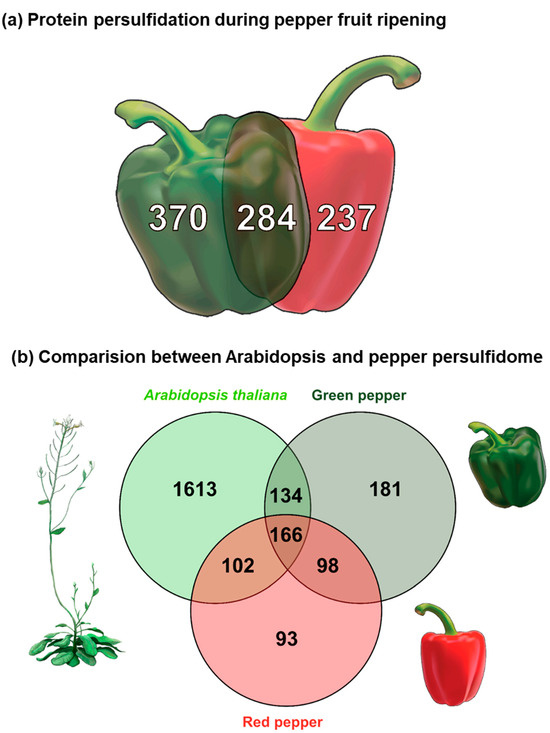
Figure 1 from Muñoz-Vargas et al. (2024). Dimedone-switch-based persulfidome profiling workflow, identified persulfidated protein categories, and stage-specific persulfidation dynamics during fruit ripening. (CC BY 4.0)
Representative Persulfidation Analysis Results
Our persulfidation analysis delivers integrated data packages with multiple annotation and visualization layers, enabling immediate biological interpretation and publication-quality figure generation.
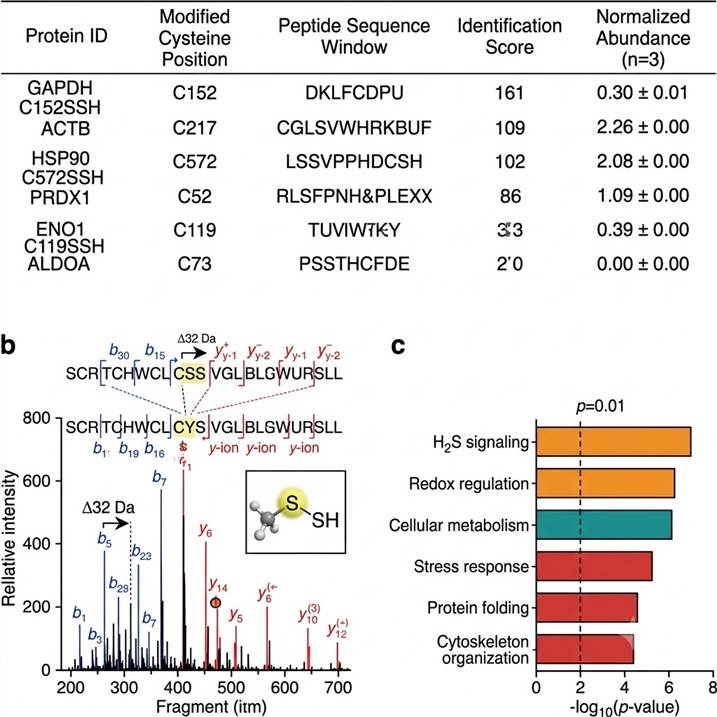
Representative data outputs from our persulfidation analysis pipeline. Left: Persulfidation site identification table. Center: Annotated MS/MS spectrum of a persulfidated peptide. Right: Functional enrichment analysis of persulfidated proteins.
Key deliverables included in every project package:
- Persulfidation site table — For each identified site: protein ID, modified cysteine position, peptide sequence, spectral count, identification confidence score, and quantification values across conditions
- Annotated MS/MS spectra — Fragmentation spectra for each persulfidated peptide with diagnostic neutral loss markers (Δ32 Da for sulfur loss) and b/y ion assignments
- Quantitative comparison — For multi-condition experiments, persulfidation level changes with statistical significance and effect sizes
- Functional enrichment analysis — GO term, pathway, and protein class enrichment for identified persulfidated proteins, providing biological context for the persulfidation landscape
- Enrichment efficiency QC report — Blocking efficiency, switch reaction yield, and replicate reproducibility metrics
Related Services
Our persulfidation analysis is one component of a comprehensive redox PTM and cysteine modification analysis platform. These services can be used independently or integrated into a complete redox biology characterization workflow.
FAQs
What is protein persulfidation (S-sulfhydration)?
Protein persulfidation is the covalent modification of cysteine thiol (-SH) groups to persulfide (-SSH) groups by hydrogen sulfide (H₂S). This modification alters the chemical reactivity, structure, and function of target proteins and represents the principal mechanism through which H₂S exerts its regulatory effects on cellular signaling, metabolism, and gene expression.
How is persulfidation different from other cysteine redox modifications?
Persulfidation (-SSH) is chemically distinct from sulfenylation (-SOH), sulfinylation (-SO₂H), and sulfonylation (-SO₃H). Unlike these oxidative modifications that represent progressive oxidation states, persulfidation enhances the nucleophilicity of the modified cysteine and protects it from irreversible overoxidation. Persulfidation is reversible through thioredoxin-dependent depersulfidation, providing a regulatory on-off switch analogous to phosphorylation but operating through a fundamentally different chemical mechanism.
Why is persulfidation difficult to detect by conventional proteomics?
The persulfide bond is chemically labile and susceptible to oxidation during sample processing. The modification is also acid-labile and can be lost under standard proteomics sample preparation conditions. There are no persulfide-specific antibodies available for direct enrichment. The mass shift of persulfidation (+32 Da) is identical to the addition of oxygen (sulfenylation), making differentiation dependent on fragmentation signatures. Our chemoselective enrichment and optimized LC-MS/MS methods overcome each of these challenges.
What enrichment methods do you use for persulfidation?
We deploy two validated chemoselective enrichment strategies: the tag-switch method (using MSBT blocking followed by cyanoacetate-based switch chemistry to introduce biotin tags) and the dimedone-switch method (using dimedone-based probes that selectively react with persulfides). Both methods enable specific biotin-streptavidin affinity capture of persulfidated peptides. The optimal method is selected based on sample type and amount.
Can you distinguish persulfidation from sulfenylation?
Yes — these modifications produce the same nominal mass shift (+32 Da) but are chemically distinct. Our chemoselective enrichment methods are specific for persulfidation over sulfenylation, and the fragmentation signatures of persulfidated peptides (including characteristic neutral loss of sulfur) provide additional distinguishing evidence. For comprehensive analysis, we recommend parallel persulfidation and sulfenylation enrichment experiments.
What is the biological significance of H₂S-mediated persulfidation?
H₂S is a gasotransmitter with diverse biological functions mediated primarily through protein persulfidation. Key regulatory roles include vasodilation and cardioprotection, neuroprotection against ischemic injury, regulation of inflammation and immune responses, control of cellular energy metabolism, modulation of ion channel activity, and regulation of aging and longevity pathways. Dysregulation of H₂S production and persulfidation is implicated in cardiovascular disease, neurodegeneration, diabetes, and cancer.
Can you quantify persulfidation changes between conditions?
Yes — we offer label-free quantification based on normalized spectral abundance factors and extracted ion chromatogram comparison across conditions. For higher precision, we can also incorporate tandem mass tag (TMT) labeling strategies for multiplexed quantification of persulfidation levels across up to 16 samples simultaneously.
How do I collect and store samples for persulfidation analysis?
Samples should be snap-frozen in liquid nitrogen immediately after collection and stored at -80°C. For cell culture samples, harvest directly into lysis buffer containing appropriate thiol-blocking reagents. Avoid freeze-thaw cycles. We provide detailed sample collection and handling protocols upon project initiation. For specific guidance on your sample type, please contact us during the project planning phase.
References
- Muñoz-Vargas MA, González-Gordo S, Palma JM, Corpas FJ. Persulfidome of Sweet Pepper Fruits during Ripening: A Dimedone-Switch LC-MS/MS Approach. Antioxidants. 2024;13(6):719.
- Wang Z, Li S, Hong G, Zhang L, Liu J, Wu Z, Yang G. The Activity of YCA1 Metacaspase Is Regulated by Reactive Sulfane Sulfur via Persulfidation. Antioxidants. 2024;13(5):589.
- Ye J, Liu Y, Chen X, Zhang L, Wu Z, Yang G. Impact of Reactive Sulfur Species on Entamoeba histolytica: Proteomic Insights into S-Sulfuration. Antioxidants. 2024;13(2):245.
For research use only. Not for use in diagnostic procedures.