
Phospho-to-Total Protein Ratios: Targeted LC-MS vs Western Blotting
Phospho-to-total protein ratios are useful when a study must distinguish a change in phosphorylation from a change in total target-protein abundance. Targeted LC-MS is usually the stronger option when the exact phosphosite, peptide identity, isoform context, or several targets must be resolved; Western blotting remains useful for a small number of established antibody targets and rapid exploratory comparisons.
A phospho signal does not automatically mean that phosphorylation regulation changed. The signal can increase because the phosphorylated fraction increased, because total protein increased, or because both changed. Conversely, a constant phospho signal can conceal a fall in total protein and a higher phosphorylated fraction. These are different biological interpretations, so the measurement and normalization strategy must be selected before samples are consumed.
Key Takeaways for Phospho-to-Total Protein Ratios
- A phospho-to-total ratio is a relative readout of a site-associated phospho signal against a defined total-protein measurement; it is not automatically phosphorylation occupancy.
- Western blotting is practical for a few established targets, but the result depends on antibody specificity, linear range, band assignment, and how phospho and total signals are normalized.
- Targeted LC-MS measures site-containing phosphopeptides and separate reference peptides, supporting explicit evidence for sequence, phosphosite localization, and multiplexed panels.
- Total-protein adjustment answers a different question from global loading normalization. Both may be needed, and they should not be conflated.
- If the study needs exact site resolution, isoform discrimination, or a panel of pathway targets, choose targeted LC-MS. If it needs a rapid check of one validated antibody target, Western blotting may be sufficient.
Why Phospho-to-Total Protein Ratios Need Careful Interpretation
Phosphorylation is a dynamic post-translational modification, often present on only a fraction of a protein pool. A phosphosite intensity therefore reflects at least two biological quantities: the abundance of the protein and the fraction or amount of that protein that carries the modification. Global phosphoproteomics studies have repeatedly shown that phosphosite changes can be confounded by protein-abundance changes unless the corresponding protein measurement is considered (Wu et al., 2015; Abelin et al., 2016).
Three measurements that should not be treated as synonyms
The first measurement is phosphosite abundance: the signal of a site-containing phosphopeptide or phospho-specific antibody band. The second is total target-protein abundance: a measurement representing the protein independently of the phosphosite. The third is site occupancy, the fraction of protein molecules modified at a defined residue. Occupancy requires a more specific experimental design than simply dividing one signal by another.
In many research studies, a phospho-to-total ratio is the practical endpoint. It can be highly informative, provided the report identifies exactly what was measured. A ratio based on a phospho-specific antibody and a pan-protein antibody is an antibody-response ratio. A ratio based on a phosphopeptide and one or more non-modified proteotypic peptides is a targeted peptide-level ratio. Neither should be labeled absolute occupancy unless the relevant phosphorylated and unmodified forms, calibration, and quantitative assumptions support that claim.
Why global loading normalization is not the same as total-protein adjustment
Loading normalization addresses unequal sample input, transfer, or injection. Total-protein adjustment addresses biological variation in the target protein itself. For Western blotting, normalizing each band to a lane-level total-protein stain may correct gross loading differences, but it does not answer whether a higher phospho band reflects more phosphorylation per target molecule. For targeted LC-MS, a common internal standard or injection-normalization strategy can stabilize technical comparison, but a separate target-protein measurement is still necessary to interpret phosphosite regulation.
If the target protein is stable across groups, a phospho-signal comparison may be enough for the stated question. If target-protein abundance may change after treatment, differentiation, stress, or time-course exposure, measure both components. If the required conclusion is actual fractional occupancy, plan a dedicated occupancy workflow rather than assuming the phospho-to-total ratio is equivalent.
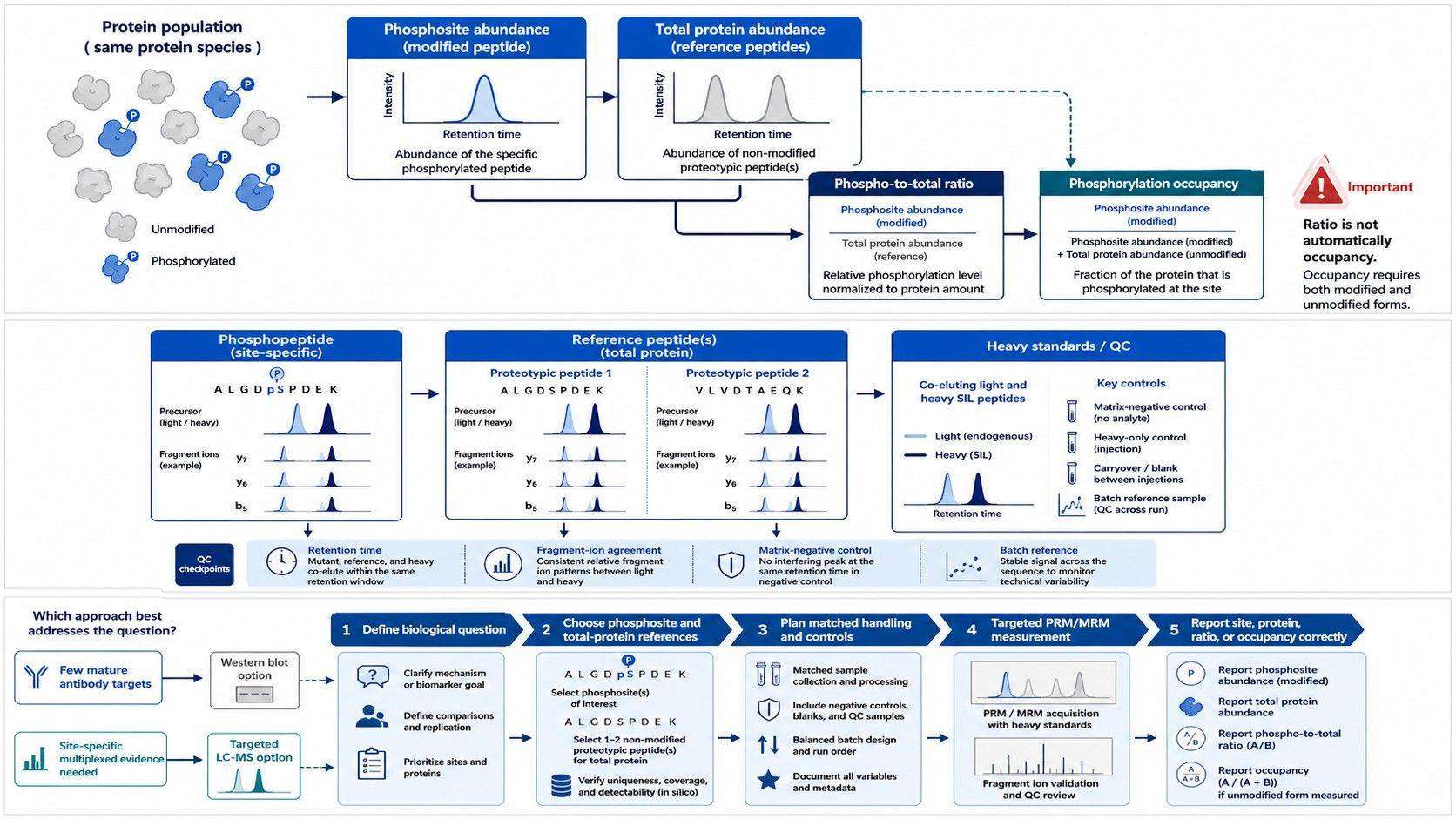 Figure 1. Four related but distinct phosphorylation measurements used in study interpretation.
Phospho-to-Total Ratios by Western Blotting
Western blotting combines an antibody directed at a phosphorylated epitope with a pan or total-protein antibody. For a small number of well-characterized targets, it offers a familiar and direct way to compare pathway activation across samples. It is particularly useful in early hypothesis testing when the target, phosphosite, species, and antibody performance are already well understood.
What Western blotting can answer well
When a phospho-specific antibody and a total-protein antibody are both selective and operate in a demonstrated linear range, their normalized signals can support a relative comparison across a defined experiment. Duplex detection on the same membrane can reduce lane-to-lane uncertainty relative to separate blots. The ERK phospho-form comparison by Gnanapragasam et al. illustrates both the utility of phospho/total antibody measurements and the importance of evaluating their quantitative behavior rather than treating all band intensities as directly proportional to molecular amount.
Western blotting is also practical when tissue amount is limited but the study needs only one or two established pathway readouts. It can provide a fast orthogonal check after discovery proteomics, especially when the proposed conclusion does not depend on distinguishing several nearby phosphosites or protein isoforms.
Western blotting limitations for phospho-to-total conclusions
Antibody specificity is the principal limitation. A phospho-specific reagent may cross-react with a related sequence, recognize multiple isoforms, or respond differently to neighboring modifications. A total antibody can likewise recognize more than one isoform or have a non-linear response across the relevant concentration range. Signal saturation, background subtraction, membrane transfer, and comparisons across separate blots add further sources of uncertainty.
Western blotting also has limited site-level multiplexing. A target with two regulated phosphosites may require several antibodies and still may not reveal whether the sites occur on the same protein molecule. Where no suitable phospho antibody exists, an apparently straightforward ratio cannot be measured by this approach. These constraints do not invalidate Western blotting; they define when a site-specific targeted LC-MS assay offers a clearer experimental answer.
Targeted LC-MS for Site-Specific Phospho-to-Total Measurements
Targeted LC-MS measures peptides rather than antibody epitopes. In a phospho-to-total design, the assay includes a site-containing phosphopeptide and one or more separate peptides representing the target protein. Product-ion evidence and retention-time behavior provide sequence-level support for the measured analyte. PRM retains high-resolution fragment-ion information for each precursor, whereas MRM uses a predefined set of transitions after assay development.
What a targeted phosphoproteomics panel measures
The phosphopeptide identifies the modified sequence and, when the fragment-ion evidence is sufficient, the residue location. Reference peptides are selected away from the regulated site and represent total target-protein context. A panel can include multiple phosphosites on the same protein, multiple proteins in a pathway, and controls that detect sample-preparation or enrichment variability. Targeted methods are therefore well suited to studies where a pathway hypothesis requires several coordinated phospho-to-total comparisons rather than a single band.
Targeted phosphoproteomics is especially helpful when the antibody result cannot distinguish isoforms, when a site has no reliable antibody, or when the project needs peptide-level documentation for a selected panel. Reviews of targeted phosphorylation quantification describe SRM/MRM, PRM, and DIA-based targeted extraction as useful tools for the reproducible measurement of low-stoichiometry phosphopeptides in biological samples (Zhou et al., 2023).
Total protein is measured in a matched but distinct channel
The phosphopeptide and the reference peptide commonly differ in ionization and recovery. Their raw signals should therefore not be interpreted as molecular occupancy without fit-for-purpose calibration. A practical targeted study can still compare phosphopeptide changes after adjustment to the total-protein trend, as long as the reporting clearly calls this a protein-adjusted phosphosite result rather than absolute occupancy.
For a stronger quantitative design, use stable-isotope-labeled phosphopeptide and reference-peptide standards where appropriate, confirm response linearity in representative matrix, and predefine how replicate data and missing values will be handled. If absolute occupancy is essential, the study must evaluate the modified and unmodified counterparts, their relative responses, and the total target protein with an occupancy-specific design.
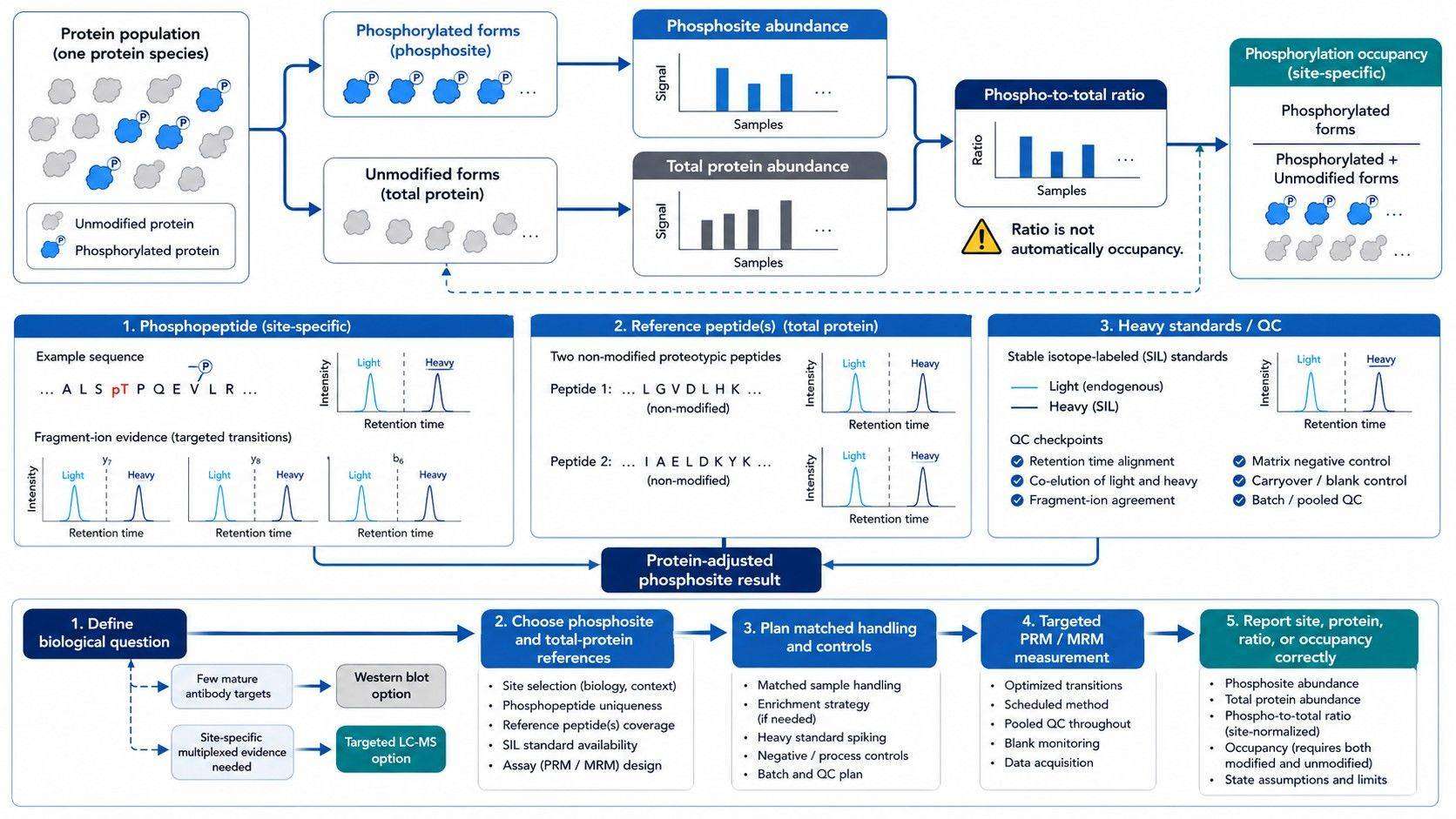 Figure 2. Targeted LC-MS design linking a phosphosite peptide with total-protein reference peptides and QC standards.
Targeted LC-MS vs Western Blotting for Phospho-to-Total Ratios
The correct choice depends on the decision the data must support. Neither method universally replaces the other.
| Decision factor | Targeted LC-MS | Western blotting |
| Site identity | Peptide sequence and product ions support site-specific evidence | Defined by phospho-antibody epitope and validation |
| Total-protein context | Separate proteotypic reference peptides can be included | Pan-protein antibody or separate total-target measurement |
| Multiplexing | Multiple phosphosites and proteins in one panel | Usually a small set of antibody targets per experiment |
| Isoform discrimination | Possible when unique peptides are available | Limited by antibody epitope specificity and band resolution |
| New or antibody-limited sites | Can be developed from observable peptides | Often constrained by reagent availability |
| Best fit | Site-specific pathway panels, confirmation, protein-adjusted interpretation | Focused exploratory checks using mature reagents |
Choose Western blotting when the study has a small number of validated targets, a clear antibody record in the relevant species and matrix, and a relative answer is sufficient. Choose targeted LC-MS when the study needs site localization, several phosphosites, isoform-aware evidence, a new or antibody-limited target, or a documented path from discovery results to a cohort-ready validation panel. Use both when Western blotting provides a rapid orthogonal check while LC-MS supplies the site-specific and multiplexed quantitative evidence.
For broader pathway discovery before a focused panel is built, large-scale phospho profiling services can identify candidate regulatory sites. The resulting candidates can then be evaluated in a focused targeted LC-MS study for selected-site confirmation across additional samples.
Designing a Phospho-to-Total LC-MS Study
The most important design decision is to define the intended biological result. A pathway-activation question may require several site-specific phosphopeptides and total-protein references. A question about whether one target changes after an experimental perturbation may need only one phosphosite and one or two reference peptides. A question about the fraction phosphorylated requires an occupancy-oriented method, not only a normalized phosphopeptide intensity.
Select phosphosites and total-protein reference peptides together
Identify the target phosphosite, its known sequence context, and whether multiple nearby sites or isoforms could confound the result. Then select mutation-free, non-modified reference peptides that are unique to the target protein and not expected to be altered by the treatment. Where possible, use empirical discovery data to check peptide observability in a related matrix before final panel selection.
For proteins with multiple isoforms, total-protein references must be selected deliberately. A peptide shared across isoforms measures an isoform-combined total. A unique peptide measures only the assigned isoform. The report should make this distinction explicit, because the denominator determines what the phospho-to-total ratio means.
Include controls for phosphatase-sensitive sample handling
Phosphorylation can change during collection, lysis, storage, and processing. The project plan should therefore document sample handling consistency, stabilization strategy, matrix-matched pooled controls, and batch references. These details matter as much as the instrument acquisition mode because a clean targeted measurement cannot recover a biological state that was lost before analysis.
In targeted LC-MS, assess phosphopeptide retention time, multiple fragment ions, site-localization evidence, and agreement with standards where used. Assess reference peptides independently. A single shared injection control does not replace the need to evaluate whether both phospho and total-protein components are stable enough for the requested conclusion.
Define deliverables before the study starts
A useful deliverable set includes peptide and phosphosite annotations, target and reference-peptide evidence, QC summary, normalized peptide-level quantitative matrix, protein-adjusted phosphosite comparison, and clear definitions of any reported ratios. It should also separate direct measured results from pathway interpretation. For studies that require an expanded signaling panel, 4D-phosphoproteomics services can support deeper phosphosite exploration before the final targeted list is fixed.
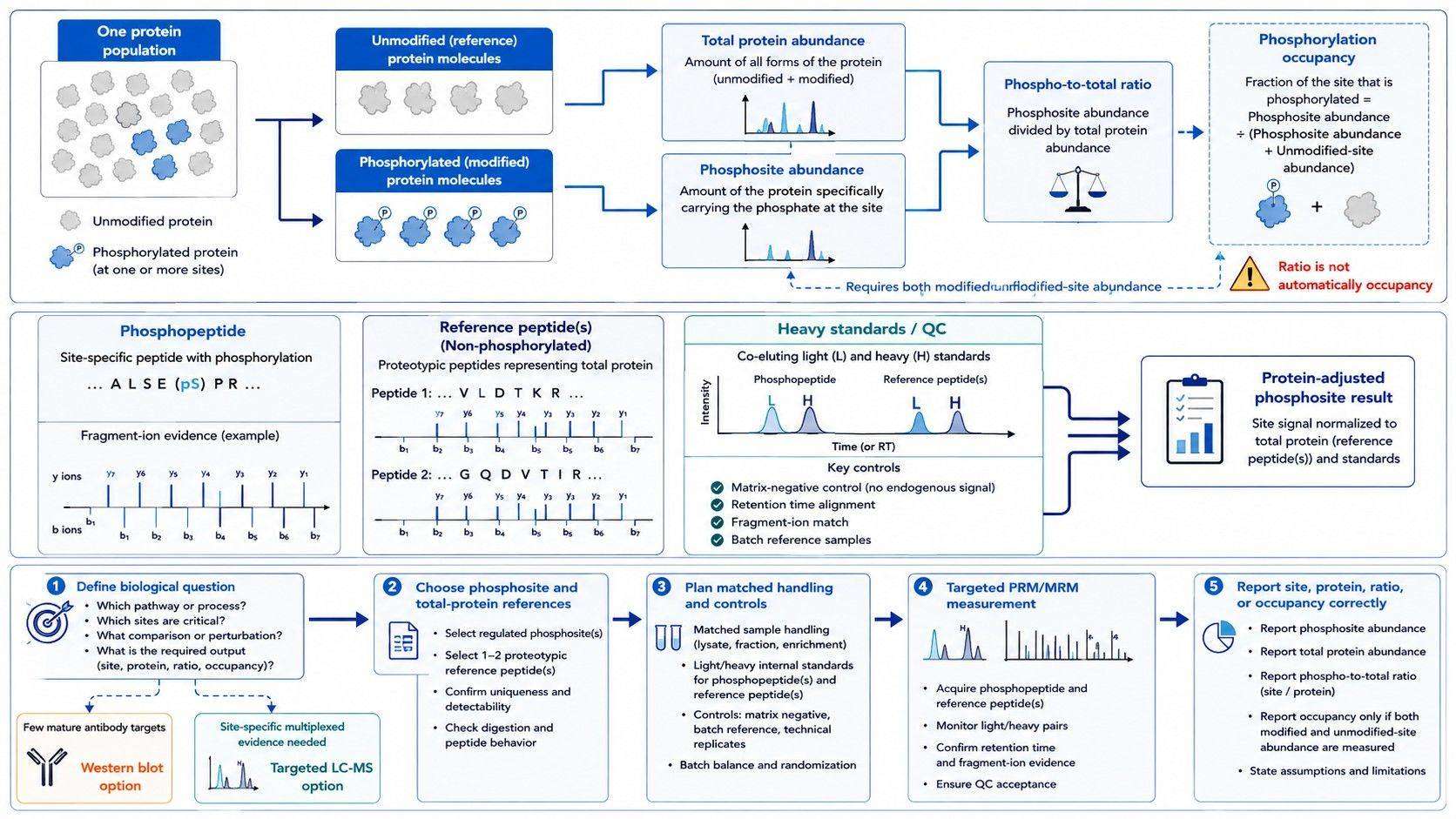 Figure 3. Study design workflow for interpretable targeted phospho-to-total protein measurements.
Common Phospho-to-Total Ratio Pitfalls
The most common error is calling a rise in phosphopeptide or phospho-antibody signal evidence of activation without measuring the target protein. The second is calling a normalized ratio occupancy without a design that measures modified and unmodified forms appropriately. A third is selecting a total-protein peptide that is shared by several isoforms while interpreting it as one isoform-specific denominator.
Other pitfalls include relying on a phospho antibody without verifying its relevant matrix behavior, using a reference peptide affected by proteolysis or alternative splicing, or comparing groups processed in distinct analytical batches. These issues are manageable when they are identified at the feasibility stage. They are difficult to repair after the only available sample aliquots have been consumed.
NGPro can scope phospho-to-total studies through targeted proteomics services, including site and peptide feasibility review, matched total-protein reference selection, targeted assay design, QC planning, and interpretation of protein-adjusted phosphosite results. This approach is appropriate for discovery follow-up, mechanism studies, and preclinical research where the question is not simply whether a band changes, but what the measured phosphorylation change represents.
Frequently Asked Questions
Not necessarily. A ratio can be a useful protein-adjusted phospho readout, but occupancy is the fraction of target molecules modified at a specific site and requires an assay designed to quantify the relevant modified and unmodified forms. The report should use the term that matches the measurement.
Western blotting is often sufficient when a study has one or two established targets, validated phospho and pan antibodies, and a relative comparison within a controlled experiment is the goal. It becomes less suitable when site identity, isoform specificity, multiplexing, or a new antibody-limited phosphosite is central to the conclusion.
Yes. A targeted design can combine site-containing phosphopeptides with non-modified proteotypic peptides representing the target protein. The measurements may use different sample fractions or enrichment logic, so the analysis plan should define how their results will be aligned and reported.
The total target protein may have increased by a similar amount. In that case, phosphosite abundance rises because there is more protein present, while the protein-adjusted result suggests the modified fraction or site usage did not materially change.
Multiple independent reference peptides are often useful when the protein is large, has isoforms, or the biological context may affect peptide recovery. The appropriate number depends on sequence uniqueness, observed peptide behavior, and the specific interpretation required; it should be decided during assay feasibility assessment.
Yes. Discovery data can prioritize phosphosites and establish whether candidate peptides are observable. A targeted follow-up should independently evaluate site identity, matrix behavior, reference peptides, and QC before extending the assay to the full validation cohort.
Glossary
- Phospho-to-total ratio: A relative comparison between a phospho-associated signal and a defined total target-protein measurement.
- Protein-adjusted phosphosite abundance: A phosphosite result interpreted together with the corresponding target-protein abundance trend.
- Phosphorylation occupancy: The fraction of a protein population carrying phosphorylation at a defined site.
- Proteotypic peptide: A peptide selected because it uniquely represents a protein or specified isoform in MS analysis.
- PRM: Parallel reaction monitoring, a high-resolution targeted LC-MS/MS acquisition mode.
- MRM: Multiple reaction monitoring, a targeted LC-MS/MS method based on predefined precursor-to-product transitions.
References:
- Gnanapragasam, M. N., et al. Comparative analysis of Erk phosphorylation suggests a mixed strategy for measuring phospho-form distributions. Molecular Systems Biology 6, 401 (2010). https://doi.org/10.1038/msb.2010.58
- Wu, R., et al. Large-scale determination of absolute phosphorylation stoichiometries in human cells by motif-targeting quantitative proteomics. Nature Communications 6, 10062 (2015). https://doi.org/10.1038/ncomms10062
- Abelin, J. G., et al. Reduced-representation phosphosignatures measured by quantitative targeted MS capture cellular states and enable large-scale comparison of drug-induced phenotypes. Molecular & Cellular Proteomics 15, 1622-1641 (2016). https://doi.org/10.1074/mcp.M115.055731
- Bekker-Jensen, D. B., et al. Rapid and site-specific deep phosphoproteome profiling by data-independent acquisition without the need for spectral libraries. Nature Communications 11, 787 (2020). https://doi.org/10.1038/s41467-020-14609-1
- Zhou, H., et al. Targeted quantification of protein phosphorylation and its contributions towards mathematical modeling of signaling pathways. Molecules 28, 168 (2023). https://doi.org/10.3390/molecules28010168
- Oslund, R. C., et al. Improved method for determining absolute phosphorylation stoichiometry using Bayesian statistics and isobaric labeling. Molecular & Cellular Proteomics 13, 1491-1504 (2014). https://doi.org/10.1074/mcp.M113.035352

 4D Proteomics with Data-Independent Acquisition (DIA)