
Host Cell Protein Profiling in Bioprocess Development
Host cell proteins (HCPs) are process-related protein impurities originating from the expression host used to produce a recombinant biotherapeutic. Their composition is influenced by the host system, cell-culture conditions, cell lysis, product interactions, and downstream purification. Two samples with similar total HCP values can therefore contain very different HCP populations.
For process-development research, protein identity matters. A protein that is efficiently removed after capture has a completely different process implication from one that repeatedly co-purifies through later steps. DIA-MS host cell protein analysis adds this protein-resolved view by enabling consistent comparison of detected HCPs between process samples.
Content Guide
- HCP Clearance Trending
- LC-MS vs ELISA Strategy
- What Problems We Solve
- Service Advantages
- Supported Host Systems
- DIA-MS Workflow
- Sample Requirements & Prep
- Persistent HCP & PRM Follow-Up
- Deliverables & Reporting
Reading HCP Clearance Across a Process Series
A process-series design is more informative than viewing each purification sample in isolation. It shows which HCPs are efficiently removed, which decline slowly, and which remain detectable into later steps.
- Establish baseline HCP population: Profile the starting HCP complexity in harvest or HCCF.
- Monitor purification dynamics: Compare protein-resolved clearance after capture and intermediate purification.
- Focus late-stage resolution: Prioritize HCPs that persist or co-purify through polishing steps.
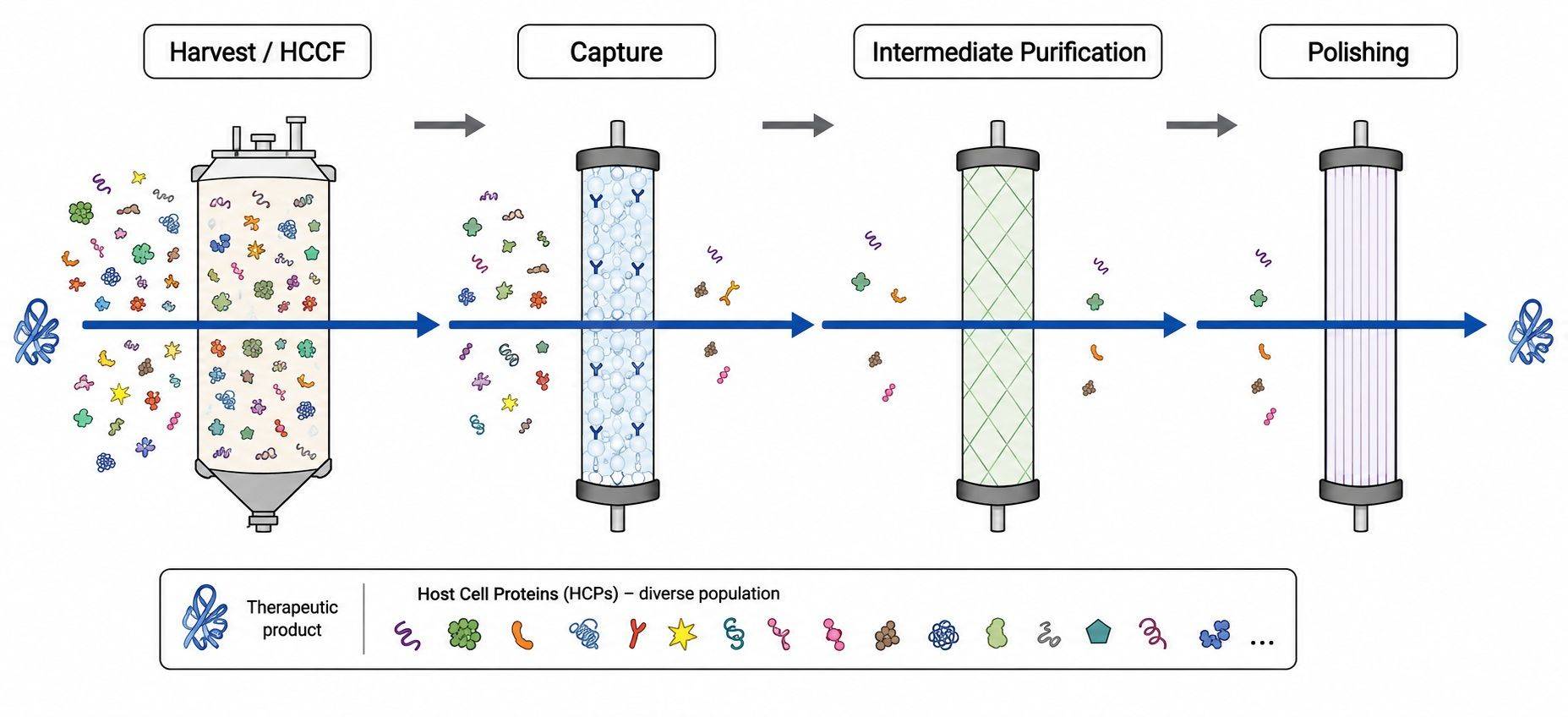
Figure 1. Protein-resolved HCP behavior across sequential purification stages (Harvest → Capture → Intermediate → Polishing).
LC-MS and ELISA Strategies for HCP Analysis
HCP ELISA and mass spectrometry answer different questions. ELISA monitors an aggregate immunoreactive HCP signal, whereas LC-MS provides orthogonal, protein-level identification independently of antibody recognition. For many bioprocess development programs, the strongest analytical strategy is a deliberate combination of total-HCP measurement and protein-resolved characterization.
| Research Need | HCP ELISA | DIA-MS Profiling | Targeted PRM/MRM |
|---|---|---|---|
| Total HCP Trend | Strong fit for aggregate immunoreactive HCP measurement | Complementary protein-resolved profile | Not the primary use |
| Identify Individual HCPs | Limited identity information | Strong fit for broad protein identification and comparison | Known targets only |
| Compare Purification Steps | Total signal trend | Protein-resolved trend across process samples | Focused monitoring of selected proteins |
| Investigate Persistent HCPs | Shows aggregate change but not protein identity | Identifies candidates that persist or co-purify | Useful follow-up after targets are defined |
| Absolute Quantification | Assay dependent (standard curve) | Relative profiling (calibrated designs require reference standards) | Supports calibrated target-specific quantitation |
DIA vs. DDA for Host Cell Protein Profiling
DDA remains useful for discovery characterization, but precursor selection is stochastic and prone to missing low-abundance HCP peptides in product-rich backgrounds. DIA systematically interrogates predefined mass windows without relying on stochastic top-intensity precursor selection, improving consistency across sequential purification samples.
Method Selection Boundaries
No single assay answers every HCP question. ELISA remains valuable for aggregate monitoring, DIA-MS adds protein-resolved identification and clearance profiling, and targeted PRM/MRM is optimal once persistent targets are identified. DIA signal intensity represents relative abundance unless calibrated standards are applied.
What Problems Does DIA-MS HCP Profiling Solve?
Overcoming the blind spots of aggregate ELISA and standard DDA in bioprocess characterization.

Protein-Resolved Identity
Move beyond generic total-HCP values to report gene names, accession numbers, and available functional annotations for confidently identified host cell proteins.

Purification-Step Clearance Trending
Track which impurities are cleared by Protein A capture, ion exchange, or hydrophobic interaction chromatography to guide resin selection.

Persistent & Co-Purifying HCPs
Pinpoint stubborn impurities (e.g., PLBL2, clusterin, histones, lipases) that co-elute with the therapeutic product across downstream polishing.

Dynamic-Range Management
Matrix-aware digestion and high-resolution DIA acquisition mitigate product ion suppression, detecting low-ppm impurities in high-titer formulations.

Orthogonal Support to ELISA
Identify non-immunoreactive or poorly recognized HCPs that may fall into ELISA coverage blind spots, supporting further HCP risk evaluation and orthogonal investigation.

Targeted PRM/MRM Transition
Translate selected proteotypic peptide targets from DIA datasets into focused PRM/MRM assays for process monitoring and quantitative follow-up.
Advantages of Our DIA-MS HCP Service
Identification Depth
Down to Low-ppm Range
Detect and profile individual trace host cell proteins across wide dynamic ranges, even in formulated drug substances.
Data Completeness
Consistent Across Batches
DIA acquisition eliminates stochastic precursor sampling, ensuring reproducible tracking across multi-step purification series.
Multi-Host Coverage
CHO · HEK · E. coli · Yeast
Customized reference database construction tailored to your exact host cell line, strain, and product sequence.

Clearance Dynamics
Process Step Mapping
Visualize relative clearance trends and step-to-step abundance changes across downstream chromatography units.

Orthogonal Confidence
Dual-Platform Strategy
Combine aggregate immunoreactivity with mass-spectrometry identification for comprehensive HCP characterization and analytical documentation.

Targeted Verification
PRM / MRM Follow-Up
Transition persistent or process-relevant HCP candidates into focused targeted assays for quantitative follow-up and process monitoring.
Host Systems Supported for HCP Profiling
Tailored database design and search parameters across mammalian and microbial expression platforms

Mammalian Systems
- Chinese Hamster Ovary (CHO-K1, CHO-S, CHO-DG44)
- Human Embryonic Kidney (HEK293, HEK293T)
- Murine Myeloma (NS0, Sp2/0-Ag14)

Microbial Systems
- Escherichia coli (BL21, K-12, W3110 strains)
- Pichia pastoris (Komagataella phaffii)
- Saccharomyces cerevisiae

Custom / Novel Hosts
- Insect cell lines (Sf9, Sf21, High Five)
- Plant-based expression systems
- Custom genomic/transcriptomic database integration
DIA-MS Workflow for Host Cell Protein Analysis
Our end-to-end analytical pipeline connects process mapping, sample cleanup, high-resolution DIA acquisition, and clearance bioanalytics.
Define expression host, product sequence, sample series (harvest to drug substance), and study goals (clearance trending vs. persistent HCP follow-up).
Detergent-aware lysis, reduction/alkylation, and enzymatic digestion. Native digestion or selective precipitation strategies tuned to product-to-HCP ratio.
High-resolution Orbitrap or timsTOF acquisition using optimized isolation windows for deep fragment-ion coverage across the entire process series.
Database search against host-specific reference proteomes with strict FDR filtering (<1%), spectral library matching, and protein grouping deconvolution.
Generate step-wise clearance heatmaps, log2 fold-change matrices, persistent impurity candidate shortlists, and recommendations for PRM verification.
- Protein-resolved clearance profiles across entire purification trains
- Mitigation of product dynamic-range interference via optimized LC-MS/MS
- Custom host cell reference database configuration
- Expert bioprocess consultation from study design to targeted PRM panels
Sample Preparation and Matrix Interference Control

Dynamic-Range Challenge: The therapeutic product mass overwhelmingly dominates residual HCPs (104–106:1). Preparation protocols are tailored by process stage.
Buffer Compatibility: Provide full buffer details (salts, detergents, Polysorbate 20/80, glycerol). Cleanup or buffer exchange is applied as needed.
| Process Sample | Typical Planning Input* | Why It Is Informative | Main Analytical Challenge |
|---|---|---|---|
| Harvest / HCCF | 100–500 µL | Broad view of starting host cell protein population | High complexity & wide abundance range |
| Capture Eluate | 50–200 µL (≥50 µg protein) | Identifies HCPs surviving the primary capture step | Product background becomes dominant |
| Intermediate Purification | 50–200 µL per fraction | Reveals step-specific removal or persistence | Lower relative HCP abundance |
| Polishing / Final DS | 100–500 µL (≥100 µg protein) | Focuses on residual impurities in drug substance | Extreme product-to-HCP dynamic range |
*Planning inputs reflect typical guidance for CHO/mAb process samples. Final requirements are confirmed based on host system, titer, and target profiling depth.
Persistent HCP Evaluation and Targeted MS Follow-Up
A structured three-step framework for evaluating and acting on stubborn impurities
Identify Persistence
Identify HCPs repeatedly observed across later purification stages and distinguish expected clearance from incomplete removal or relative enrichment.
Evaluate Evidence
Review peptide-level identification confidence, process trend consistency, and biological risk (e.g., immunogenicity, enzymatic activity, adjuvant effect).
Move to Targeted MS
Transition validated candidates into PRM/MRM assays with stable isotope-labeled standards (SIL) for calibrated absolute quantitation.
HCP Data Analysis and Deliverables
Comprehensive, auditable data packages connecting protein identity with process clearance
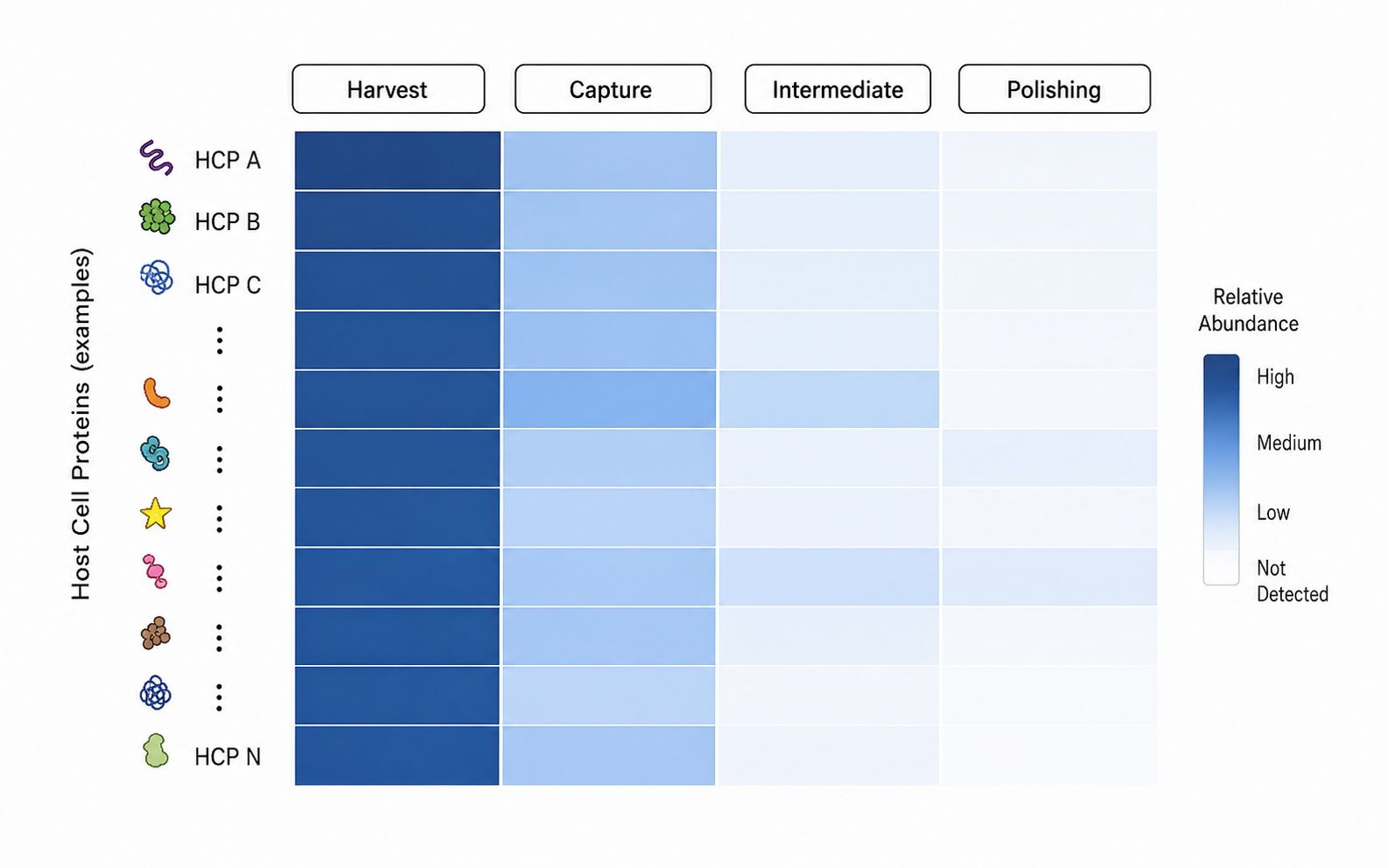
HCP Clearance Heatmap: Compare individual protein abundance patterns across harvest, capture, intermediate, and polishing fractions.
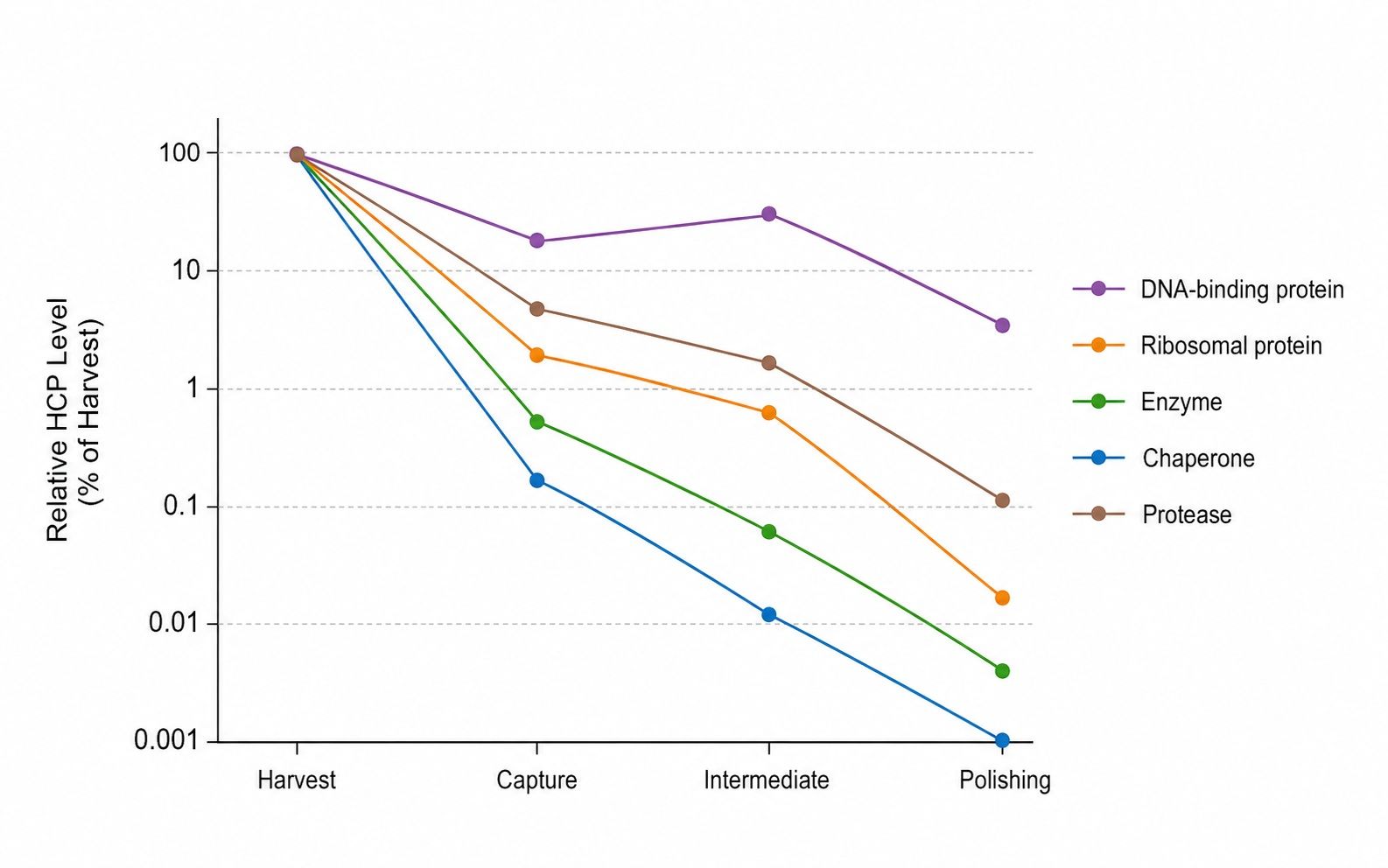
Persistent HCP Trends: Track candidate proteins through sequential purification steps to evaluate relative clearance trends and step-to-step abundance changes.
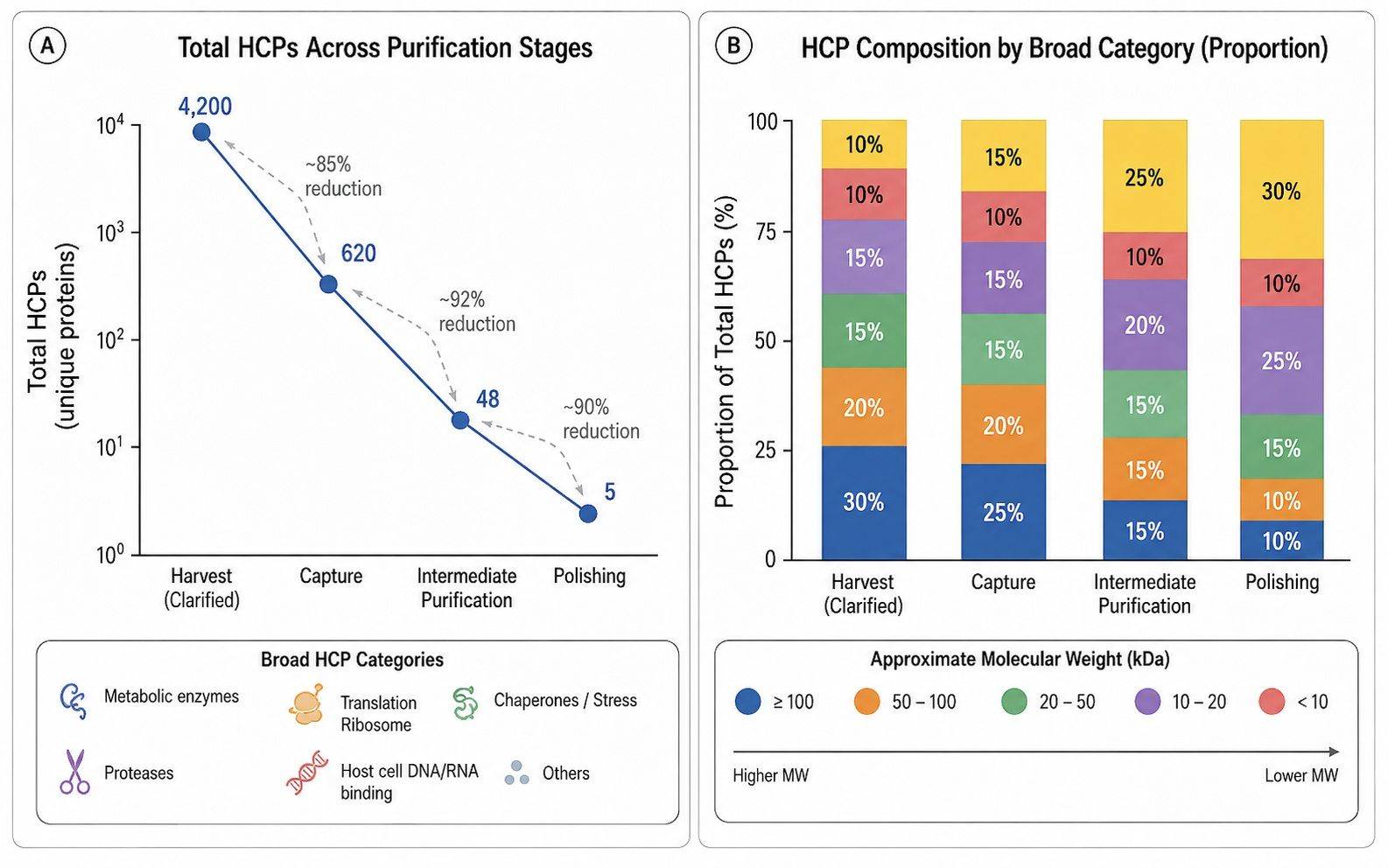
HCP Composition Summary: Pie and stacked bar charts detailing the shift in impurity populations and molecular weight distributions.
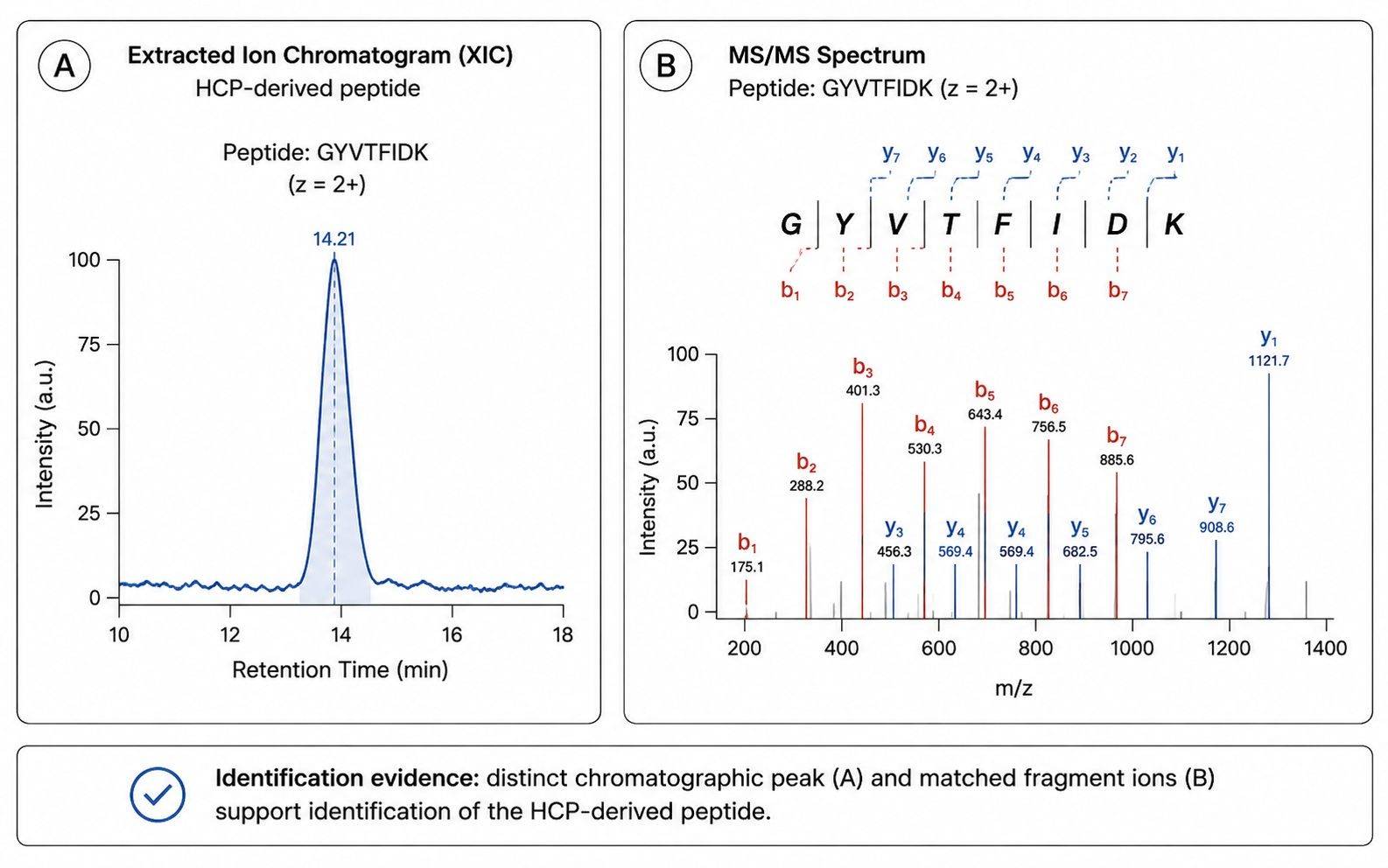
Identification Evidence: High-resolution extracted ion chromatograms (XICs) and annotated MS/MS fragment spectra for confirmed HCPs.
Standard Deliverables Checklist
- Raw mass spectrometry instrument files (.raw / .d) and search logs
- Comprehensive HCP identification & protein-level quantitative matrix
- Supporting proteotypic peptide evidence & sequence coverage tables
- Quality control summary and identification confidence metrics (<1% FDR)
- Purification-step comparative clearance profiles & heatmaps
- Persistent and co-purifying HCP candidate shortlists
- Cross-validation report for orthogonal ELISA integration
- Targeted PRM/MRM follow-up recommendations & assay parameters
Host Cell Protein Analysis Frequently Asked Questions
Representative Research Example: Modular MS Platform for Bioprocess HCP Clearance
Adaptive LC-MS Strategies Support Optimal Host Cell Protein Clearance Across Downstream Purification
Journal: mAbs · Published: 2017 · DOI: 10.1080/19420862.2017.1303023
Multi-Stage
Adaptive MS strategy across process
DIA / SWATH
Consistent comparative monitoring
Orthogonal
Resolves ELISA coverage blind spots
PRM Ready
Targeted verification of persistent HCPs
Study Scope
Investigators developed a modular, adaptive mass spectrometry platform to characterize HCP clearance during monoclonal antibody (mAb) downstream process development. As purification progressed, the analytical requirements shifted: early harvest stages required broad discovery, intermediate stages demanded consistent comparative profiling, and final drug substance required focused, high-sensitivity monitoring.
Technical Strategy & Process Fit
| Process Need | MS Strategy in the Study | Decision Value |
|---|---|---|
| Broad HCP Discovery | DDA LC-MS/MS | Build comprehensive protein and spectral libraries from HCP-rich harvest matrices |
| Comparative HCP Monitoring | DIA / SWATH-MS | Track hundreds of detected HCPs across downstream pools with high quantitative reproducibility |
| Focused Follow-Up | Targeted PRM/MRM | Quantify selected persistent or process-relevant HCPs with absolute calibration in final material |
Key Findings & Process Implications
- Stage-specific analytical design: Demonstrated that applying a single static method from harvest to drug substance is suboptimal; an adaptive workflow balances depth and quantitative consistency.
- Bridging discovery to monitoring: DIA-MS successfully connected broad untargeted discovery with reproducible multi-step clearance tracking across chromatography steps.
- Focused target handoff: Provided a seamless route to transition critical persistent impurities into targeted PRM assays for routine bioprocess monitoring.
Selected Scientific References:
- Guo J, Kufer R, Li D, et al. Technical advancement and practical considerations of LC-MS/MS-based methods for host cell protein identification and quantitation to support process development. mAbs. 2023;15:2213365. doi:10.1080/19420862.2023.2213365.
- Walker DE, Yang F, Carver J, et al. A modular and adaptive mass spectrometry-based platform for support of bioprocess development toward optimal host cell protein clearance. mAbs. 2017;9:654-663. doi:10.1080/19420862.2017.1303023.
- Wilson LJ, Lewis W, Kucia-Tran R, Bracewell DG. Identification and classification of host cell proteins during biopharmaceutical process development. Biotechnology Progress. 2022;38:e3224. doi:10.1002/btpr.3224.
- United States Pharmacopeia. General Chapter <1132.1> Residual Host Cell Protein Measurement in Biopharmaceuticals by Liquid Chromatography-Mass Spectrometry.