
Biomarker Discovery-to-Verification Strategy
A useful proteomic biomarker program is a sequence of decisions rather than a single differential-expression experiment. Discovery should generate enough quantitative breadth to find credible signals, but each subsequent stage must reduce uncertainty: first by ranking candidates, then by verifying selected proteins in a broader sample set, and finally by evaluating whether individual markers or multi-protein panels remain informative under the intended research conditions.
This staged design is especially important for heterogeneous tissues and complex biofluids, where biological variability, pre-analytical effects, and protein dynamic range can create apparently strong signals that do not reproduce. We therefore plan biomarker proteomics around the evidence needed for the next decision, not only around the number of proteins identified in the first run.
Content Guide
- Discovery-to-Verification Strategy
- Sample Matrices
- Proteomics Platform Selection
- Integrated Strategy Advantages
- Cohort Design & Pre-Analytics
- Candidate Prioritization
- Verification & Panel Development
- Candidate Advancement Evidence
- Data Analysis & Deliverables
Stage-Gate Framework for Protein Biomarker Development
| Stage | Primary Question | Proteomics Strategy | Main Output | Advance When |
|---|---|---|---|---|
| Discovery | Which proteins or protein patterns differ between the defined biological groups? | DIA, 4D-DIA, DDA, or multiplexed discovery according to study design | Broad quantitative candidate set | Signals show quantitative quality and biological relevance |
| Prioritization | Which candidates are strong enough and measurable enough to justify follow-up? | Statistics, pathway context, peptide evidence, and feasibility review | Ranked biomarker shortlist | Candidates remain reproducible and technically tractable |
| Verification | Do selected proteins reproduce in an expanded or independent research cohort? | PRM/MRM or other fit-for-purpose targeted assays | Focused quantitative evidence | Candidate effects remain consistent in follow-up samples |
| Panel Development | Does a multi-protein model add information beyond individual candidates? | Targeted measurement plus multivariate modeling | Research biomarker panel and model outputs | Performance is tested with appropriate holdout or independent data |
Biomarker Research Objectives
Biomarker proteomics is not limited to disease-associated discovery. The study objective should define what type of evidence is needed, which matrix is informative, and whether broad discovery or focused follow-up is the better starting point.
Phenotype-Associated Biomarkers
Identify proteins or signatures associated with a defined biological state, stage, genotype, or experimental phenotype.
Treatment-Response / Pharmacodynamic Markers
Track protein changes associated with exposure, dose, time, or response to an experimental intervention.
Mechanism and Target-Engagement Markers
Connect pathway modulation or target response with measurable protein-level evidence.
Research Stratification Markers
Explore protein signatures associated with molecular subgroups or heterogeneous research populations.
Safety and Toxicology Markers
Identify protein changes associated with organ response, stress, injury, or experimental toxicology endpoints.
Sample Matrices for Biomarker Proteomics
The most informative matrix depends on where the biological signal originates, where it must ultimately be measured, and how much pre-analytical variation the study can control. Tissue and circulating samples are common, but biomarker proteomics can also begin from other biofluids, cells, organoids, extracellular vesicles, or conditioned media.
| Matrix Group | Examples | Strongest Use | Main Considerations |
|---|---|---|---|
| Tissue Samples | Fresh-frozen tissue, FFPE, biopsy material, tumor/adjacent tissue, organ tissue | Source-proximal discovery and mechanism-linked candidates | Heterogeneity, preservation, sampling, extraction efficiency |
| Blood-Derived Samples | Plasma, serum, whole-blood-derived fractions | Circulating biomarker discovery and longitudinal research | Extreme dynamic range, hemolysis, depletion strategy, handling consistency |
| Other Biofluids | CSF, urine, saliva, BALF, synovial fluid, tears, and other study-specific fluids | Organ- or compartment-proximal biomarker research | Low abundance, concentration variability, collection standardization, matrix effects |
| Cellular / Cell-Derived Samples | Primary cells, cultured cells, PBMCs, cell pellets, organoids, extracellular vesicles/exosomes, conditioned media | Mechanism-linked discovery, source tracing, treatment-response research | Cell composition, culture conditions, enrichment/isolation method, normalization |
For deeper matrix-specific planning, see our Tissue Biomarker Discovery Solutions and Biofluid Biomarker Discovery Solutions. Cellular and extracellular-vesicle projects are scoped according to the biological system, isolation method, and intended downstream readout.
Proteomics Platforms for Biomarker Discovery and Verification
Method selection should follow the research stage rather than a single preferred technology. DIA and 4D-DIA are strong options for cohort-wide discovery, but DDA or multiplexed discovery designs can be useful when deep characterization, fractionation, or grouped experimental comparisons are the priority. Once the candidate space narrows, targeted or orthogonal assays become more appropriate for focused follow-up. Creative Proteomics can route projects through DIA quantitative proteomics, 4D proteomics, and targeted proteomics according to matrix, cohort design, required depth, and downstream objective.
| Research Need | DDA / Multiplexed Discovery | DIA Proteomics | 4D-DIA Proteomics | Targeted PRM/MRM |
|---|---|---|---|---|
| Broad Candidate Discovery | Useful for deep discovery or multiplexed comparative designs | Strong fit for cohort-wide quantitative profiling | Strong fit when added ion-mobility separation or depth is useful | Not the primary discovery approach |
| Complex Matrices | Can use deeper fractionation or enrichment strategies | Suitable with matrix-appropriate preparation | Useful when an extra separation dimension improves analytical resolution | Best after targets are defined |
| Large Cohort Comparability | Requires careful control of missingness or labeling/batch structure | Strong for consistent broad profiling across many samples | Strong for consistent broad profiling with ion-mobility information | High specificity for selected targets |
| Candidate Verification | Not usually the primary follow-up route | Can support re-analysis and reprioritization | Can support re-analysis and reprioritization | Primary fit for focused verification |
| Calibrated Quantification | Not the default objective | Requires an appropriate calibrated design | Requires an appropriate calibrated design | Well suited to isotope-standard-supported quantification |
Choosing a Discovery-First Strategy
Use broad discovery when the study begins without a fixed marker panel. DIA and 4D-DIA are well suited to reproducible cohort profiling, while DDA or multiplexed designs can be considered when deep characterization, extensive fractionation, or grouped experimental comparisons are more important than a single acquisition strategy.
Moving to Focused Follow-Up
Once the project has a defined shortlist, focused PRM/MRM, ELISA, or another fit-for-purpose assay can test selected candidates across additional samples. Targeted MS can be configured for relative or calibrated quantification when suitable standards and method design are used.
When Total-Protein Profiling Is Not Enough
Some biomarker questions depend on molecular state rather than total protein abundance. If the biology is driven by phosphorylation, glycosylation, proteolytic processing, or compartment-specific release, the project may require a more specialized proteomics layer.
PTM-Driven Biomarkers
Phosphoproteomics or glycoproteomics can capture regulatory states that total-protein abundance may miss.
Proteolytic or Peptide Biomarkers
Peptidomics can be more informative when cleavage products or endogenous peptides are the relevant readout.
Compartment-Enriched Signals
Extracellular-vesicle or other enrichment-based proteomics can help investigate proteins concentrated in a biologically informative fraction.
Advantages of an Integrated Biomarker Proteomics Strategy

Stage-to-Stage Continuity
Carry empirical discovery evidence forward into candidate review and targeted follow-up instead of restarting the analytical strategy at each phase.

Matrix-Aware Design
Adapt sample preparation, depletion, cleanup, enrichment, and analytical depth to tissue, blood-derived, other biofluid, cellular, and cell-derived matrices rather than treating all samples as equivalent.

Candidate Measurability Review
Evaluate whether a statistically interesting protein also has specific, detectable, and transferable peptide evidence for targeted follow-up.

Cohort-Oriented QC
Track analytical performance, batch structure, sample quality, and missingness before biological differences are interpreted as candidate signals.

Decision-Focused Bioinformatics
Move beyond plotting tools to rank candidates by effect size, reproducibility, biological context, model contribution, and verification feasibility.

Verification Handoff
Translate selected candidates into PRM/MRM or another fit-for-purpose orthogonal assay when the research question shifts from broad discovery to focused verification.
Cohort Design and Pre-Analytical Quality Control
Proteomics can measure thousands of proteins precisely, but it cannot rescue a cohort whose biological groups are confounded by collection method, handling time, demographic imbalance, freeze-thaw history, treatment exposure, or batch. Study design and pre-analytical control should therefore be defined before acquisition parameters are finalized.
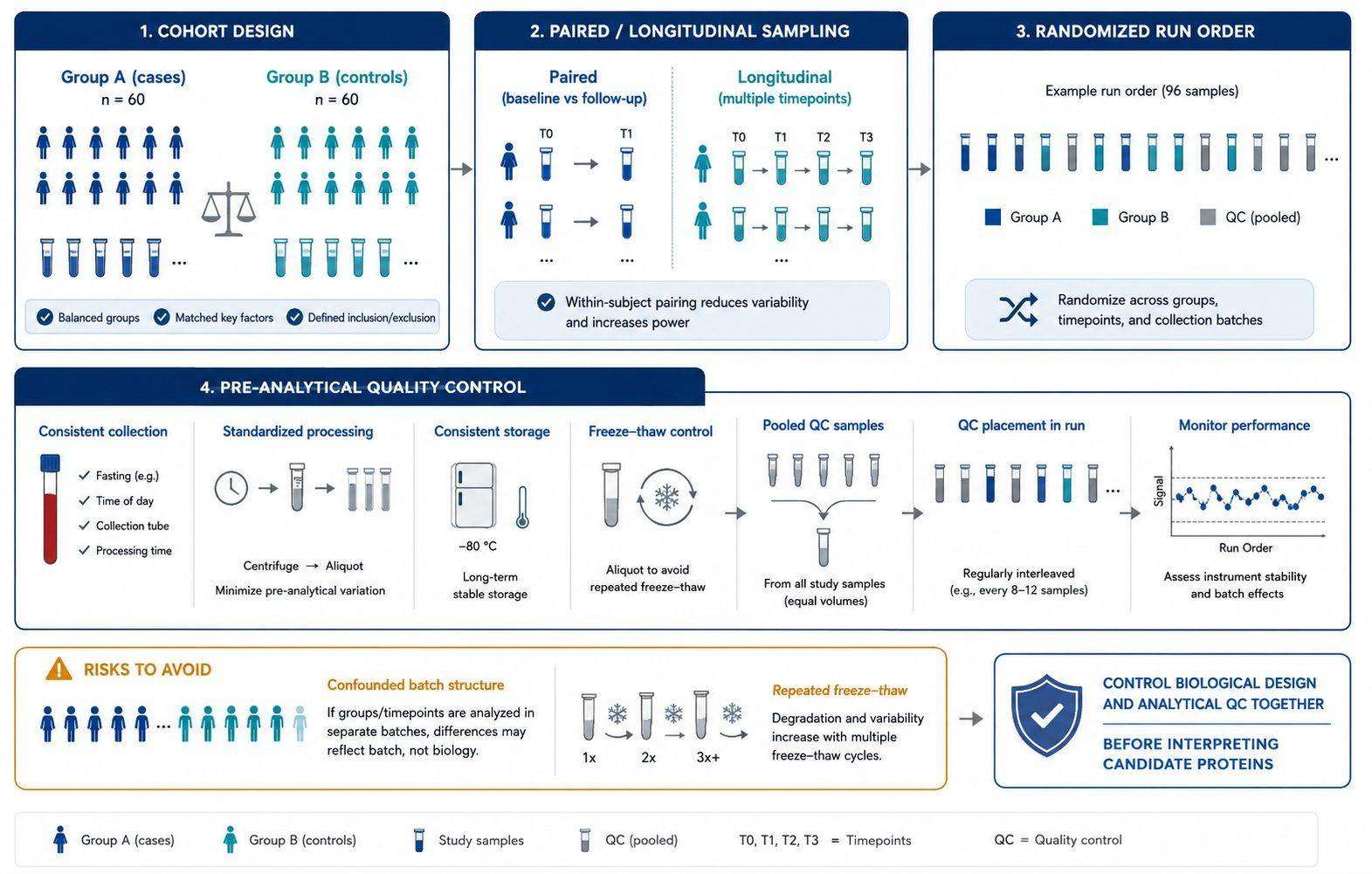
Core principle: technical quality and biological design must be evaluated together. A strong group separation can still be misleading if sample collection, processing, or batch structure differs systematically between groups.
| Design Factor | What to Control | Why It Matters |
|---|---|---|
| Group Definition | Phenotype, treatment, time point, inclusion criteria, and relevant covariates | Reduces biological ambiguity in candidate interpretation |
| Replication & Power | Biological replicates, expected effect size, within-group variance, and study balance | Determines whether candidate effects can be distinguished from cohort noise |
| Paired / Longitudinal Design | Subject matching, baseline samples, repeated measures, and time-point structure | Preserves within-subject information and avoids treating repeated samples as independent |
| Covariate & Stratification Plan | Age, sex, genotype, treatment exposure, site, or other study-relevant factors | Reduces confounding and supports interpretable subgroup analysis |
| Collection & Handling | Collection tube, processing delay, storage condition, freeze-thaw history, and preservation | Prevents handling artifacts from appearing as biological signals |
| Batch Structure | Randomization, balanced run order, pooled QC, and bridge samples where appropriate | Separates analytical drift from true group effects |
| Model Development Plan | Predefine discovery/training, cross-validation, holdout, or independent test sets when predictive modeling is planned | Reduces overfitting and optimistic performance estimates |
| Matrix-Specific QC | Hemolysis or contamination review, depletion/enrichment strategy, extraction efficiency, and sample integrity | Protects low-abundance candidate detection and downstream comparability |
- Discovery-to-verification planning matched to your biomarker research stage
- Matrix-specific planning for tissue, blood-derived, other biofluid, cellular, organoid, and extracellular-vesicle research samples
- Cohort-aware statistics and candidate ranking rather than plot-only bioinformatics
- Targeted or orthogonal follow-up pathways for verification-ready protein candidates
Biomarker Candidate Prioritization and Bioinformatics
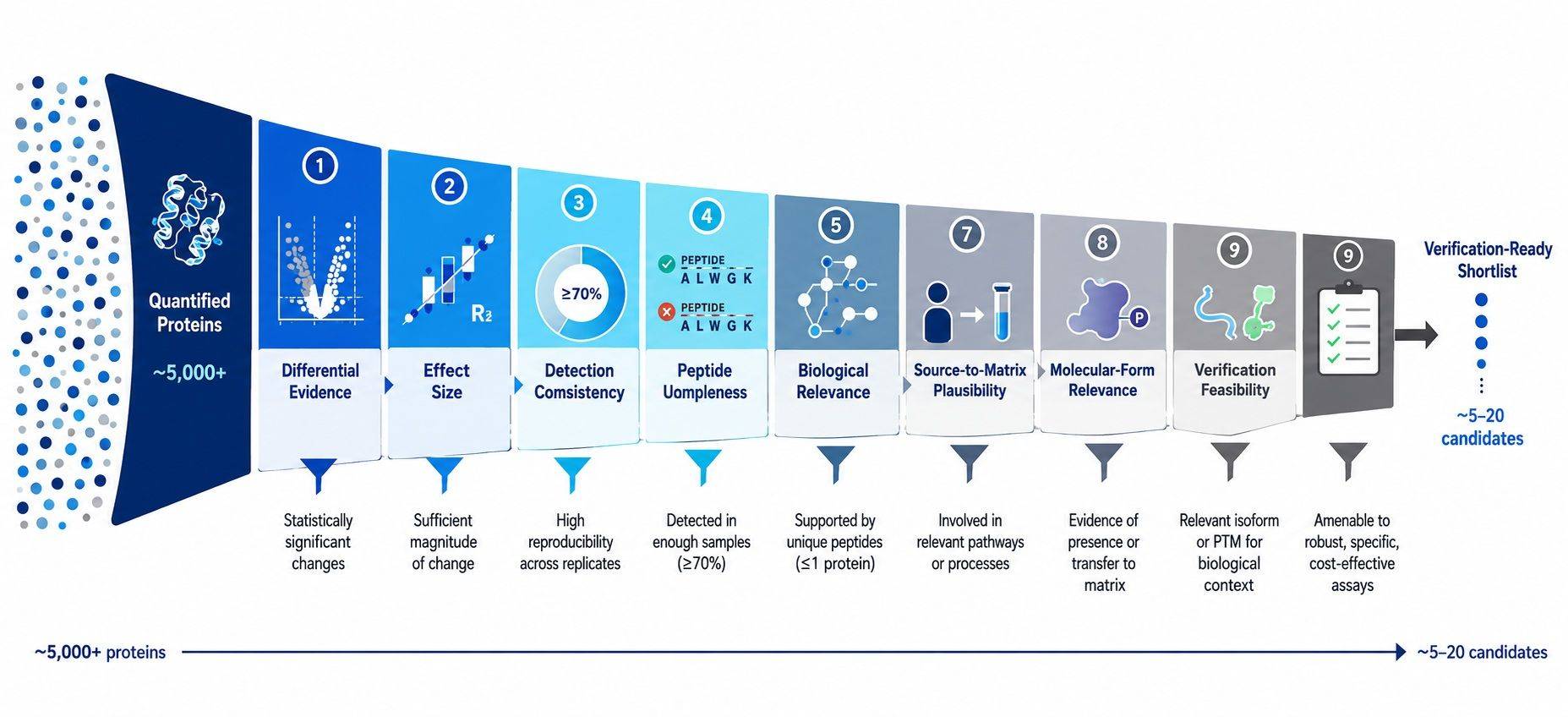
A differential protein is not automatically a biomarker. Candidate prioritization should ask whether the signal is statistically credible, reproducible across samples, supported by confident peptide evidence, biologically interpretable, and measurable by a downstream assay. Our proteomics bioinformatics analysis workflow is therefore organized around candidate decisions rather than a fixed list of plots.
From Quantified Proteins to a Verification Shortlist
- Statistical evidence: effect size, uncertainty, multiple-testing control, and model fit.
- Reproducibility: consistency across biological replicates, strata, and relevant batches.
- Detection completeness: whether the candidate is observed reliably enough to support comparison.
- Peptide specificity: unique, measurable peptide evidence that can support targeted assay design.
- Biological context: pathway, localization, function, and relationship to the research phenotype.
- Source-to-matrix plausibility: whether a signal discovered in tissue or cells is likely to remain measurable in the intended downstream matrix.
- Molecular-form relevance: whether total abundance, a PTM, a cleavage product, or a compartment-enriched form best represents the biology.
- Verification feasibility: whether the candidate can be transferred into PRM/MRM, ELISA, or another fit-for-purpose assay.
Unsupervised analyses such as PCA and clustering remain useful for checking global structure, outliers, and batch effects. Differential analysis, pathway enrichment, ROC analysis, and machine-learning models can then support candidate interpretation. However, a high AUC observed in the same discovery cohort is still discovery evidence; it does not substitute for independent verification. Likewise, a strong tissue signal should not be assumed to be measurable in plasma or serum without considering secretion or release, protein stability, carrier association, abundance, and matrix background.
Targeted Verification, Orthogonal Follow-Up, and Biomarker Panel Development
Once a discovery study has narrowed the candidate space, the analytical goal changes. The next stage is no longer to quantify as many proteins as possible, but to measure a smaller set of candidates consistently across additional samples and determine whether single proteins or multi-protein panels retain their research value.
Review discovery effect size, reproducibility, matrix accessibility, peptide evidence, biological context, and sample-level behavior before follow-up begins.
Select proteotypic peptides for PRM/MRM or choose an appropriate orthogonal assay when antibody-based or other measurement is better aligned to the candidate and matrix.
Optimize targeted transitions, fragment-ion monitoring, calibration, or orthogonal assay conditions for the selected candidate set.
Measure selected candidates across additional research samples using relative or calibrated quantification according to the study objective.
Evaluate individual and combined marker behavior with pre-specified models, internal validation, holdout data, or independent samples when available.
Projects that begin with discovery data and require a direct transition to targeted MS can also be routed through our DIA+PRM target proteomics workflow.
Biomarker Verification vs. Validation
| Stage | Primary Question | Typical Evidence |
|---|---|---|
| Discovery | Which proteins or signatures are promising enough to investigate further? | Broad proteomic profiling, differential evidence, biological context, candidate ranking |
| Verification | Do selected candidates reproduce with a focused method in additional samples? | Targeted MS or orthogonal assay, expanded cohort, reproducible effect direction and measurability |
| Validation | Does a predefined marker or panel perform reproducibly under independent, pre-specified conditions? | Independent or prospectively defined samples, locked analysis plan, predefined performance criteria |
This service primarily supports research-stage discovery, analytical verification, and evidence generation for subsequent validation studies. When predictive models are built, feature selection, model tuning, and performance estimation should be separated as much as the study design allows; cross-validation, holdout samples, and independent cohorts reduce optimistic performance estimates.
Evidence Standards for Advancing Biomarker Candidates
Candidate advancement should be based on converging evidence. Statistical significance alone is not enough, and neither is a visually strong separation in a single discovery dataset. The most useful candidates combine biological signal, analytical measurability, and reproducibility.
| Evidence Dimension | What It Tells You | Why It Matters Before Follow-Up |
|---|---|---|
| Effect Size | Magnitude of the observed protein difference | Separates biologically meaningful change from statistically detectable but small effects |
| Statistical Confidence | Uncertainty, multiple-testing control, and model support | Reduces false-positive candidate inflation |
| Replicate Consistency | Whether the direction and magnitude are stable across samples | Improves the chance that the signal will reproduce |
| Detection Completeness | How consistently the protein or peptide is observed | Important for cohort-level comparison and later focused measurement |
| Peptide Uniqueness | Whether a peptide can specifically represent the target protein | Supports confident PRM/MRM assay development |
| Biological Relevance | Relationship to pathway, tissue origin, function, or study phenotype | Strengthens interpretation beyond a purely statistical association |
| Source-to-Matrix Plausibility | Whether a source-tissue or cellular signal is likely to remain measurable in the intended downstream matrix | Prevents tissue-only candidates from being advanced blindly into plasma, serum, or another matrix |
| Molecular-Form Relevance | Whether total abundance, a PTM, a cleavage product, or a compartment-enriched form best represents the biology | Helps select the correct proteomics layer and follow-up assay |
| Independent Verification | Whether the candidate reproduces in new samples or an orthogonal method | Distinguishes discovery performance from transferable evidence |
| Panel Contribution | Whether the candidate adds information beyond other markers | Helps build parsimonious multi-protein research panels |
Biomarker Proteomics Data Analysis and Deliverables
From cohort quality to verification-ready candidates
Deliverables are organized so the project team can trace how a candidate moved from a quantified proteome into a prioritized shortlist. Reports can include raw and processed data, QC summaries, differential statistics, pathway interpretation, candidate-ranking evidence, and recommendations for targeted follow-up.
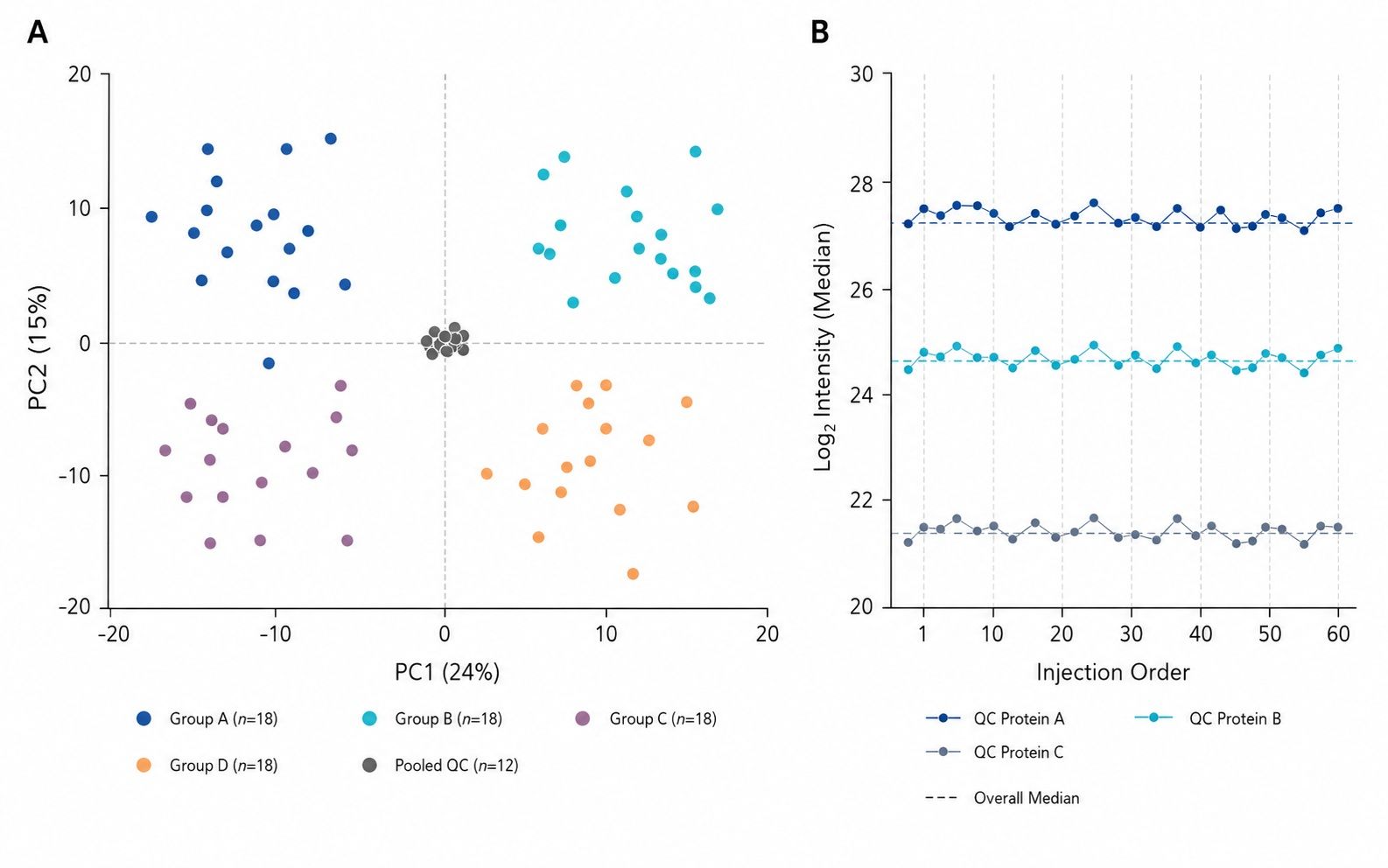
Cohort & QC Review: Visualize sample structure, technical QC behavior, outliers, and possible batch effects before candidate interpretation.
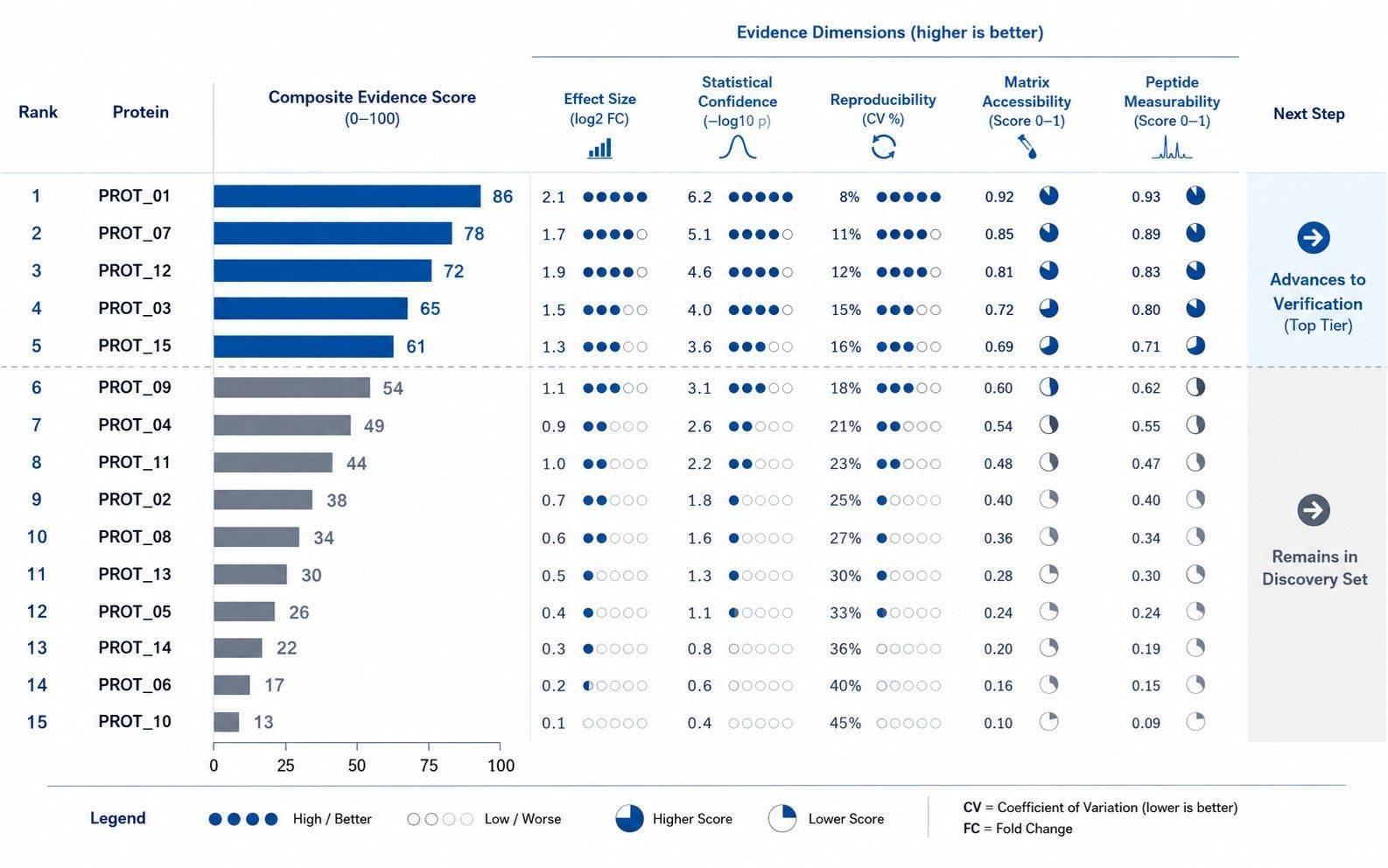
Candidate Ranking: Compare effect size, statistical evidence, reproducibility, and peptide measurability in one decision-oriented view.
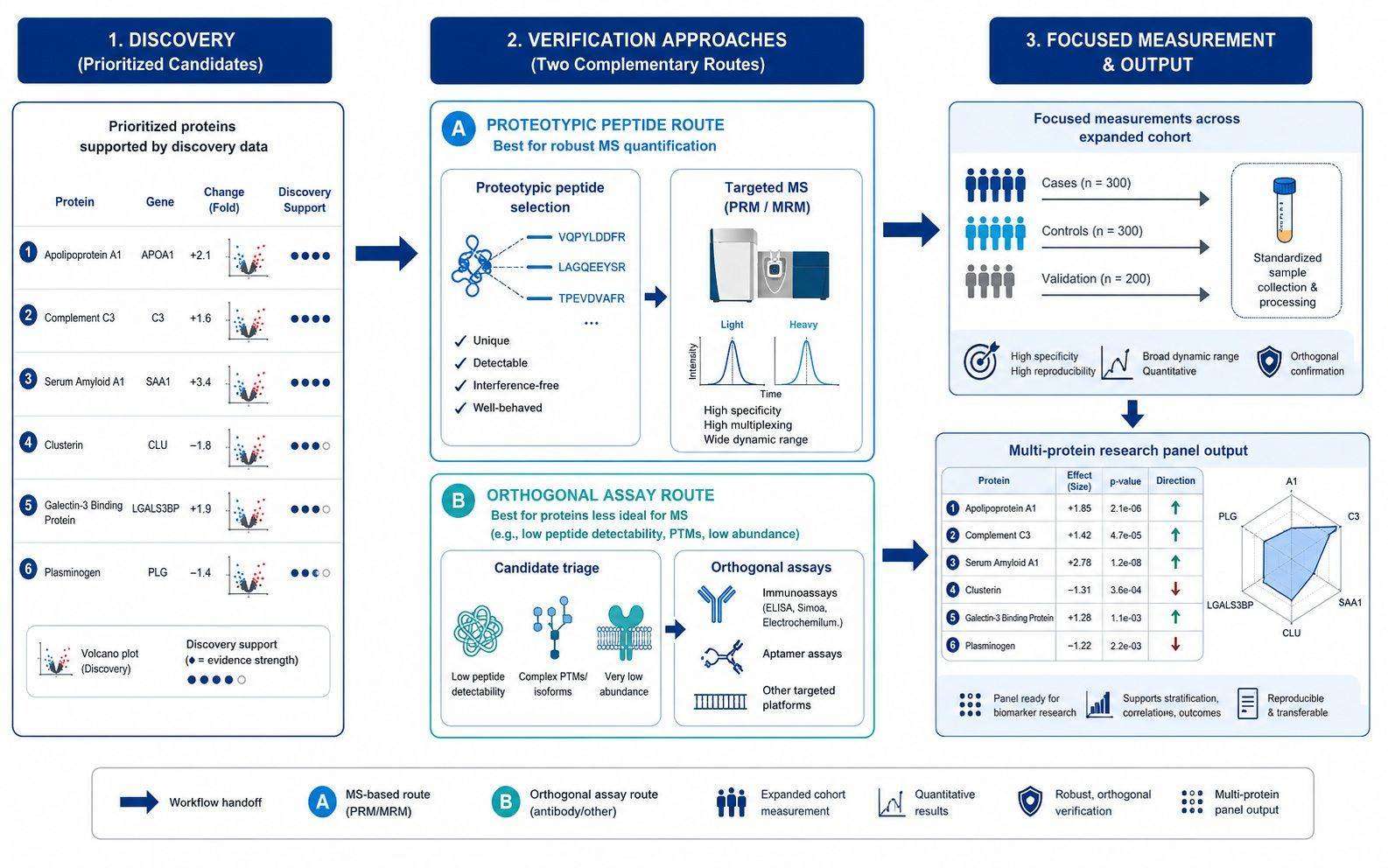
Verification Handoff: Convert the prioritized candidate list into a focused targeted-MS or orthogonal follow-up plan with peptide and assay-planning evidence.
Standard Deliverables Checklist
- Raw mass spectrometry data and processed quantitative tables
- Protein and supporting peptide identification matrices
- Sample, run, and cohort-level quality-control summaries
- Differential statistics with effect-size and multiple-testing outputs
- Functional, pathway, and network interpretation where appropriate
- Ranked biomarker candidate table with supporting evidence
- ROC or predictive-model outputs when appropriate to the study design
- Candidate measurability and peptide-evidence review
- Verification-ready shortlist for PRM/MRM or orthogonal follow-up
- Targeted follow-up recommendations aligned to the next research stage
Biomarker Proteomics Frequently Asked Questions
Customer Case Study: Serum Proteomics for Stage-Specific Biomarker Discovery
Stage-Specific Serum Proteomic Signatures in Huntington's Disease Research
Journal: Cells · Published: 2025 · DOI: 10.3390/cells14151195
202
Differential proteins reported across HD stages
5
Protein candidates prioritized for ELISA follow-up
0.948
Highest reported discovery-cohort AUC (CFH)
Proteomics + ELISA
Discovery followed by orthogonal measurement
Study Scope
The study compared serum proteomic profiles across asymptomatic, early symptomatic, and advanced Huntington's disease groups together with matched controls. Serum samples were shipped to Creative Proteomics for high-abundance protein depletion, protein digestion, and LC-MS/MS proteomic analysis. The study then used statistical and pathway analysis to identify stage-associated protein changes and nominate candidates for follow-up.
From Discovery Proteomics to Candidate Verification
| Study Step | What Was Done | Why It Matters |
|---|---|---|
| Serum Preparation | High-abundance proteins were depleted before LC-MS/MS analysis | Improved access to lower-abundance serum protein signals |
| Proteomic Discovery | Stage-specific quantitative protein differences were characterized | Generated a broad candidate space rather than a predefined panel |
| Candidate Filtering | Statistical, pathway, and biomarker analyses prioritized proteins including CAP1, CAPZB, TAGLN2, THBS1, and CFH | Narrowed the discovery set to a smaller group for follow-up |
| Orthogonal Follow-Up | Creative Proteomics performed ELISA measurements for the selected proteins in an independent serum cohort | Tested whether candidate behavior could be reproduced using a different assay format |
What the Study Demonstrates
- Biomarker discovery benefits from a staged pipeline rather than a one-step differential-protein list.
- Serum proteomics can reveal stage-associated protein patterns after appropriate high-abundance protein handling.
- Candidate filtering should reduce a large proteomic dataset to a smaller set that can be measured with an orthogonal or targeted method.
Relevance to Research Biomarker Programs
This customer study provides a concrete example of the discovery-to-verification logic used throughout this service page: broad proteomic measurement generated a large evidence base, bioinformatics prioritized candidates, and selected proteins moved into orthogonal follow-up. The reported AUC values remain study-specific evidence rather than universal service-performance claims.
Selected Scientific References
- Christodoulou CC, Demetriou CA, Zamba-Papanicolaou E. Stage-Specific Serum Proteomic Signatures Reveal Early Biomarkers and Molecular Pathways in Huntington's Disease Progression. Cells. 2025;14(15):1195. doi:10.3390/cells14151195.
- Geyer PE, Holdt LM, Teupser D, Mann M. Revisiting biomarker discovery by plasma proteomics. Mol Syst Biol. 2017;13(9):942. doi:10.15252/msb.20156297.
- Picotti P, Aebersold R. Selected reaction monitoring-based proteomics: workflows, potential, pitfalls and future directions. Nat Methods. 2012;9:555-566. doi:10.1038/nmeth.2015.
- Kusebauch U, Campbell DS, Deutsch EW, et al. Human SRMAtlas: A Resource of Targeted Assays to Quantify the Complete Human Proteome. Cell. 2016;166(3):766-778. doi:10.1016/j.cell.2016.06.041.