
Absolute Protein Quantification by PRM/MRM: SIL Peptides, Calibration Curves, and When Relative Results Are Not Enough
Absolute protein quantification by PRM/MRM is appropriate when a study needs a concentration, amount per sample input, or stoichiometric value that can be compared to a defined calibration framework. Relative targeted quantification is often sufficient when the scientific question is whether a selected protein changes between experimental groups. The distinction matters because stable-isotope-labeled (SIL) peptides, calibration curves, standard-addition strategy, digestion behavior, and reporting units all determine what the final number actually represents.
A heavy peptide does not automatically make a result an absolute protein concentration. In bottom-up proteomics, the instrument measures proteolytic peptide surrogates. A labeled peptide added after digestion can support identity confirmation, signal normalization, and calibrated peptide measurement, but it does not correct protein extraction or digestion recovery in the same way as a full-process labeled protein. The required calibration design should therefore follow the question the result must answer, not a preference for a more impressive unit.
Key Takeaways for Absolute Protein Quantification by PRM/MRM
- Relative PRM/MRM is suitable when the study needs consistent fold-change or group-comparison evidence for a defined panel under one controlled design.
- Absolute quantification is needed when the endpoint requires a stated amount or concentration, a stoichiometric comparison, a cross-study value with a defined reference, or a model that requires quantitative input.
- SIL peptides are matched references for the endogenous peptide and can support retention-time confirmation, fragment-ion review, response normalization, and calibration; their point of addition determines which workflow steps they can assess.
- A calibration curve must use a defined calibrator level, response relationship, matrix strategy, and range that brackets the study samples. A curve alone does not resolve peptide-specific digestion bias.
- Reports should name the measured entity and unit precisely: peptide amount, estimated protein amount, amount per total protein, amount per cell equivalent, or another defined normalization basis.
Relative vs Absolute Protein Quantification: What Result Does Your Study Actually Need?
Relative quantification asks whether one defined signal differs between samples or groups. The result is commonly expressed as a fold change, ratio, normalized intensity, or relative abundance. It is often the most efficient and informative endpoint for discovery follow-up, mechanism studies, dose-response ranking, and confirmation that a selected panel changes in the same direction in an independent sample set.
Absolute quantification asks for an amount anchored to a calibrated reference, such as an amount of peptide or an estimated amount of parent protein per specified sample basis. This can be necessary when the analysis will be used as an input to a quantitative model, when protein stoichiometry matters, when results must be interpreted against a predefined amount range, or when different data collections require a shared numerical scale.
Relative results answer many important research questions
For a perturbation experiment, the primary question may be whether a target increases or decreases relative to a matched control. A well-designed relative PRM/MRM panel can answer this directly when the target peptides are specific, the sample preparation and acquisition are balanced, and QC shows stable measurement. Adding an absolute calibration framework does not automatically improve the biological conclusion if the decision only depends on direction and relative magnitude.
Relative designs are also useful for prioritizing candidates after broad discovery. They can preserve multiplex capacity and focus effort on peptide identity, technical precision, biological replication, and cohort balance. For a study that begins with many unknowns, it is often sensible to establish the strongest relative evidence first, then apply absolute quantification to the subset for which an absolute unit changes the next decision.
Absolute results are needed when the unit itself changes the decision
Absolute quantification becomes valuable when the value must be communicated as more than a within-study ratio. Examples include estimating the abundance of an enzyme for a kinetic model, comparing molar amounts among subunits in a complex, tracking a predefined target across separately acquired research sets, or deciding whether a measured level falls inside a stated experimental range. In these cases, the report needs a calibration trace and an explicit definition of the sample denominator.
The phrase absolute protein concentration should be used carefully in a bottom-up workflow. The direct analyte is a peptide released from the parent protein. A measured peptide amount can be translated to an estimated protein amount only when peptide selection, digestion behavior, calibration, and normalization support that interpretation. Studies comparing SIL peptides, cleavable peptide standards, and full-length SIL proteins have shown that digestion-related differences can limit accuracy when peptide standards are assumed to represent all upstream steps (Shuford et al., 2017).
The decision rule for relative and absolute PRM/MRM
If the study needs to compare a predefined target panel between matched groups, rank conditions, or confirm the direction of a discovery finding, relative targeted quantification is usually the appropriate starting endpoint. If the study needs a value in defined amount units, a stoichiometric relationship, a model input, or a cross-run reference that must be numerically interpretable, plan absolute quantification with standards and calibration from the outset.
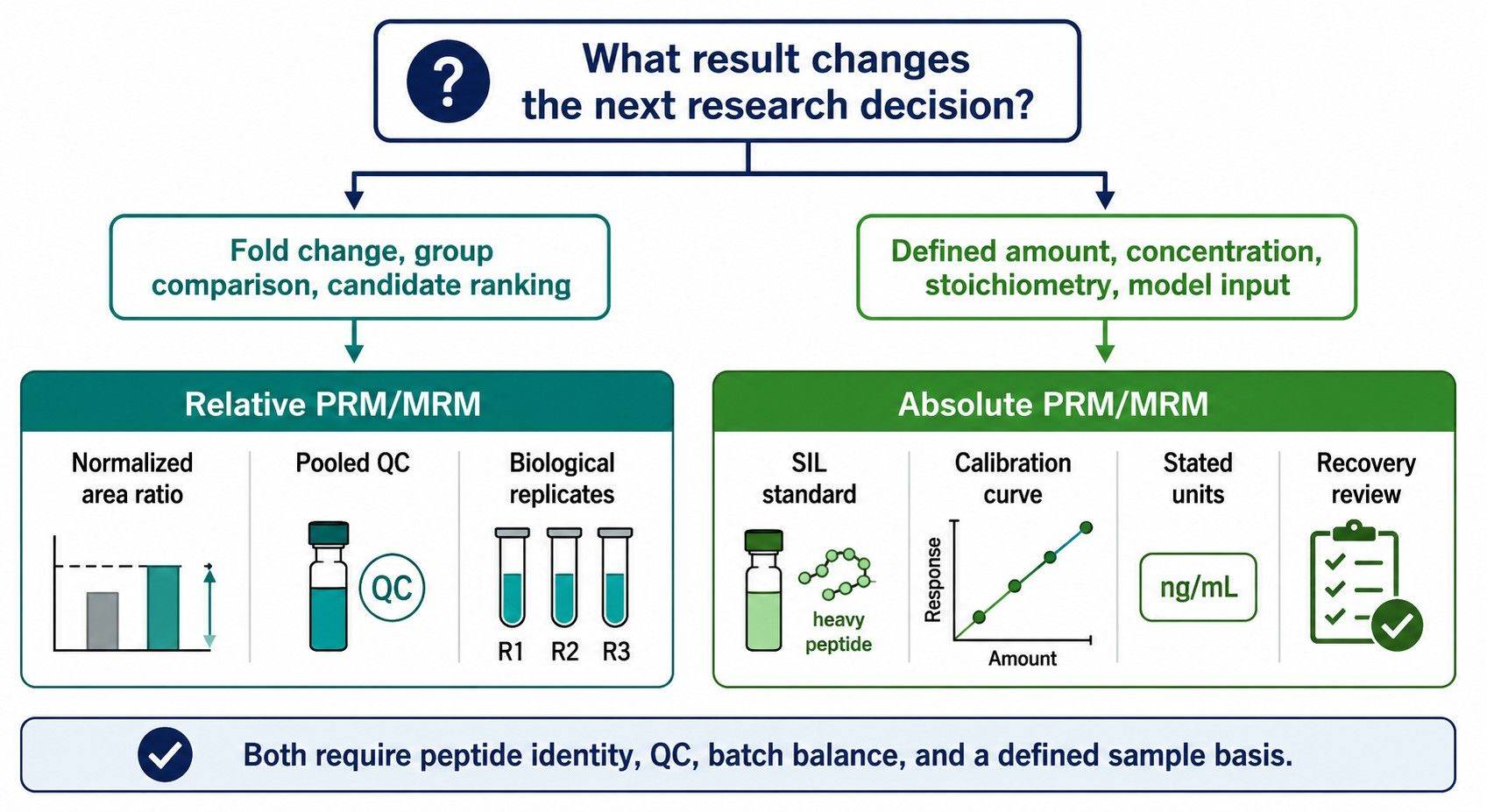 Figure 1. The required biological decision determines whether relative or absolute PRM/MRM quantification is needed.
What SIL Peptides Do in an Absolute PRM/MRM Workflow
Stable-isotope-labeled peptides have the same sequence as their endogenous counterparts but contain a mass shift that allows them to be distinguished by mass spectrometry. Because light and heavy peptide forms generally co-elute and produce corresponding fragmentation behavior, the heavy peptide can provide a reference for target identity and a response ratio. This is the principle underlying stable-isotope dilution and many AQUA-style targeted assays.
The role of the SIL peptide should be stated explicitly. It may be used to confirm retention time and fragment-ion evidence; to normalize an endogenous-to-heavy area ratio; to construct a calibration relationship; or to monitor run-level performance. Each role is valuable, but none should be assumed to correct every upstream source of variation.
Point of addition defines what the standard can control
When a SIL peptide is added after digestion, it experiences LC-MS analysis with the endogenous peptide and can help manage ionization and instrument-response variation at the peptide level. It cannot directly reveal losses during protein extraction, denaturation, digestion, or peptide release because those steps have already occurred. Adding a cleavable peptide or a labeled protein earlier can extend coverage of upstream steps, but these materials also require their own suitability and commutability assessment.
This distinction is central to inquiry-quality study design. A client may request absolute protein quantification but require only a calibrated peptide amount per digest. Another project may require an estimated native protein amount after a complex extraction and digestion workflow. Those are different analytical claims and may need different standard materials, addition points, and validation evidence.
SIL standards improve evidence quality but require quality control themselves
For each target, evaluate heavy-standard identity, isotopic enrichment, expected concentration, retention time, fragment-ion co-elution, and response behavior. Low-level light contamination in a heavy peptide can affect low-abundance endogenous measurements if it is not recognized. A published study of labeled internal peptide standards showed that such contamination can create false detection and quantitative error, particularly where the endogenous signal is weak (Ritz et al., 2022).
Standards also support scalable QC. Monitoring heavy peptide performance across runs can identify outlying injections, retention-time shifts, unexpected signal loss, or peak-quality problems before the data are interpreted as biology. This is distinct from showing that a calibration curve exists; both standard behavior and study-sample behavior must be reviewed (Gibbons et al., 2019).
Calibration Curves for PRM/MRM Absolute Quantification
A calibration curve relates a known amount or concentration of calibrator to a measured response, often an endogenous-to-heavy or calibrant-to-heavy area ratio. The curve should be constructed in a way that reflects the intended analytical claim. That means choosing the material, concentration range, number of levels, regression model, weighting if appropriate, acceptance checks, and sample-normalization basis before unknown samples are interpreted.
Use a range that brackets the expected study samples
The study samples should fall within the validated response range rather than requiring extensive extrapolation above or below it. A curve with many points is not automatically fit for purpose if the concentration range misses the expected biological material or if the response is distorted by matrix interference. Pilot data and discovery evidence can help estimate where the endogenous signals are likely to fall.
The calibrator must also be defined. A natural light peptide spiked into a relevant digest assesses the analytical response of the peptide in that calibration matrix. A protein calibrator introduced earlier may better emulate digestion steps but can differ from the endogenous protein in extraction or processing behavior. No single calibrator choice is universally superior; the choice must match the source of variation that matters for the final claim.
Matrix matching and standard addition are not interchangeable terms
Matrix-matched calibration uses a calibrator in material that resembles the study digest, helping account for ion suppression and background at the peptide measurement stage. Standard addition introduces known analyte amounts directly into sample material and can be useful when a representative blank matrix is unavailable. In-sample calibration approaches use isotopologue responses to create a curve within the analytical context of each sample. These approaches solve different practical problems and should not be described as equivalent without a method-specific rationale.
An in-sample calibration study using high-resolution product-ion measurement reported linear behavior over two to three orders of magnitude for the tested peptide surrogates and highlighted that product-ion selection can help address interferences seen at the precursor level (Parks et al., 2022). That result illustrates a possible strategy, not a universal performance guarantee. Calibration design must still be evaluated in the intended matrix and target range.
Calibrated peptide amount is not automatically protein amount
After a curve has established a peptide quantity, the report may estimate a parent protein quantity using the selected surrogate peptide. The reliability of that translation depends on the uniqueness and stoichiometry of the peptide, digestion completeness and reproducibility, endogenous protein processing, sample losses, and the chosen denominator. Multiple peptide results can show whether one surrogate is behaving differently from the others.
Do not obscure this distinction with unit labels. For example, fmol peptide per injection and fmol estimated protein per microgram total protein are not interchangeable statements. A strong report includes the direct quantitative measurement, the conversion assumption if used, and the basis on which samples were normalized.
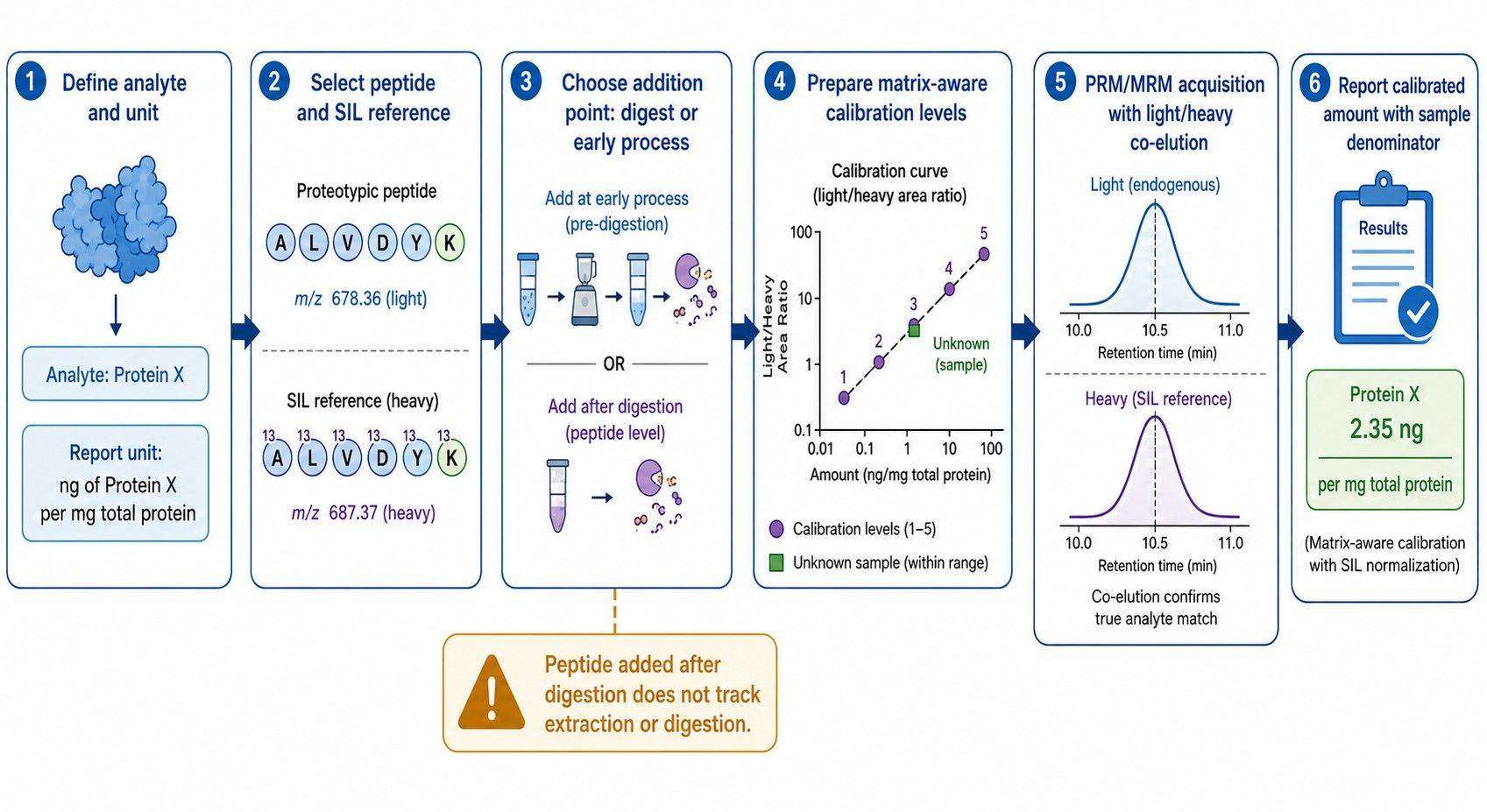 Figure 2. Absolute PRM/MRM reporting requires a defined standard, calibration range, matrix strategy, and unit of interpretation.
Choosing SIL Peptides, Cleavable Standards, or Labeled Proteins
The standard form should reflect the process step that requires control. SIL peptides are accessible, scalable, and directly relevant to peptide identity and LC-MS behavior. Cleavable standards may account for more of the enzymatic release step. Full-length labeled proteins can more closely follow extraction and digestion, although they may be more complex to obtain and their behavior still needs evaluation in the study matrix.
| Standard strategy | Typical point of addition | What it can directly support | Important limitation |
| SIL peptide | Digested sample or peptide stage | Peptide identity, co-elution, MS response ratio, peptide-level calibration | Does not directly correct extraction or digestion recovery before addition |
| Cleavable SIL peptide | Before or during digestion, depending on design | Peptide release behavior in addition to downstream peptide measurement | May not mimic the full native protein structure or extraction behavior |
| Full-length labeled protein | Early in sample processing | More complete tracking of extraction and digestion behavior | Material preparation, commutability, and protein-specific behavior still require assessment |
| External protein calibrator with SIL peptide reference | Calibration material processed alongside samples | Calibration relationship plus peptide-level response monitoring | Calibrator digestion or matrix behavior may differ from endogenous protein |
For a focused panel in a stable digest matrix, SIL peptide standards may be sufficient when the endpoint is a calibrated peptide quantity or a relative comparison strengthened by internal references. For an estimated protein amount where extraction and digestion bias can materially change the conclusion, an earlier-added standard or an explicit recovery study may be warranted. If the study does not need an absolute unit, preserve the relative endpoint rather than adding a complex calibration design that does not change the decision.
Designing an Absolute PRM/MRM Study Before Samples Are Consumed
Absolute quantification should be planned as a measurement system, not added after an exploratory PRM result. Start by defining the analyte, the sample matrix, the required unit, and the question the unit will support. Then define peptide candidates, standard form, standard-addition point, calibration strategy, sample-normalization basis, and control plan.
Define the analyte and reporting unit first
Ask whether the result is intended to represent the endogenous peptide, an estimated protein amount, a protein amount normalized to total protein, an amount per sample mass, or an amount per cell-equivalent input. Each choice changes preparation and calculation. Protein copy number or stoichiometry requires a carefully justified denominator and usually benefits from multiple peptide evidence. A reported concentration without a stated volume, mass, or input basis is not fully interpretable.
Select peptide surrogates and standards together
Choose peptides based on sequence specificity, empirical observability, chromatographic behavior, interference risk, and relationship to the desired protein form. Then select the standard material and its addition point. Do not select a heavy peptide only after the PRM method is final; standard selection can reveal that a peptide is unsuitable for the planned calibration range or matrix.
If the project begins with a broad discovery list, discovery proteomics services can provide peptide-level evidence for target prioritization before the absolute assay scope is fixed. The final targeted phase can be structured through targeted proteomics services around the required units, calibration evidence, controls, and data review.
Predefine QC, calculations, and exclusions
The plan should state blank handling, pooled QC and reference-sample roles, replicate strategy, curve acceptance, area-ratio integration, calibration back-calculation, handling of values outside range, and criteria for excluding an individual peptide or sample. A heavy peptide should be monitored not just as a denominator in a formula but as evidence that the analytical system behaved as expected.
For multi-batch work, balance experimental groups across acquisition batches and include reference material throughout. Absolute calibration does not eliminate batch effects. The standard curve may establish a numerical scale, but batch-aware design and longitudinal QC are still needed to distinguish analytical drift from sample differences. The NGPro platform can help connect the study design from discovery through targeted measurement; use the NGPro proteomics platform overview when the project needs to align broad discovery, focused validation, and data continuity in one plan.
Common Mistakes in Absolute Protein Quantification by PRM/MRM
The most common mistake is presenting a heavy-normalized signal as an absolute protein concentration without a validated calibrator and unit definition. Another is using a peptide standard added after digestion to make an unqualified claim about extraction and digestion recovery. The resulting number may be useful, but the claim should match the workflow.
Another mistake is treating a calibration curve as a generic requirement independent of the sample matrix. Matrix effects, endogenous baseline, interference, and the available blank material influence which calibration approach is feasible. A curve should be built around the samples that will be measured, not around an idealized standard solution alone.
Finally, avoid overloading the first absolute panel. Start with targets for which peptide surrogates, standard materials, expected range, and biological decision are clear. Include reserve peptides when possible, and document why each target belongs in the panel. For complex or low-input discovery matrices, 4D proteomics services may help establish stronger precursor-separation evidence before a narrow absolute panel is committed.
When Relative Results Are Enough and When Absolute PRM/MRM Is Worth the Added Design
Relative results are enough when the project needs an internally controlled comparison: which condition has more or less of a target, whether a direction replicates, which candidates progress to the next study, or whether pathway-associated proteins change together. In these cases, prioritize analytical specificity, biological replication, sample balance, and clear fold-change reporting.
Absolute PRM/MRM is worth the added design when the project requires a numerical amount whose unit changes the interpretation: a concentration range, model input, molar stoichiometry, or a comparison that must be anchored to defined calibration material. The request should include time and material for standard selection, curve qualification, and careful unit reporting.
The conditional conclusion is simple: if a well-controlled relative change answers the research question, use relative targeted quantification and preserve the resources for biological replication; if the next decision depends on a defined amount or concentration, build the SIL-standard and calibration framework before the cohort is analyzed.
Frequently Asked Questions
Not by itself. A heavy peptide can support identity confirmation and normalized peptide response, but an absolute result also needs a defined calibrator, response relationship, concentration range, and reporting unit. The standard addition point determines whether upstream extraction and digestion variability are represented.
It is sufficient when the research decision depends on a controlled comparison between groups, such as a fold change, dose response, or confirmation of discovery direction. The study should still use appropriate peptide selection, QC, batch balance, and a clear normalization approach.
Add them according to the source of variation the standard is meant to address. A peptide added after digestion supports peptide-level LC-MS measurement, while an earlier-added cleavable or full-length standard can provide information about more upstream processing steps. The appropriate choice follows the required claim and available reference material.
It can if the matrix, calibration range, response behavior, and sample processing are appropriate for the study material and the samples fall within the qualified range. Multi-batch projects also need longitudinal QC and bridge or reference material to show that the calibrated response remains comparable over time.
Use a unit that names both the measured quantity and the sample basis, such as fmol peptide per injection, fmol estimated protein per microgram total protein, or amount per cell-equivalent input. Do not report a concentration without stating the relevant volume, mass, or normalization denominator.
Not when it is added after digestion, because it has not experienced the same protein denaturation and peptide-release steps as the endogenous analyte. A cleavable standard, labeled protein, recovery study, or carefully qualified workflow may be needed when digestion-related bias materially affects the conclusion.
Glossary
- Absolute quantification: Measurement reported against a defined calibration framework in a stated amount or concentration unit.
- Relative quantification: Comparison of a measured signal between samples or groups, usually expressed as a ratio, fold change, or normalized intensity.
- SIL peptide: Stable-isotope-labeled peptide used as a mass-resolved reference for the corresponding endogenous peptide.
- Calibration curve: A defined relationship between known calibrator levels and measured response used to quantify unknown samples.
- Matrix matching: Use of calibration or QC material that resembles the sample matrix to account for matrix-dependent measurement behavior.
- Commutability: The extent to which a reference material behaves like the endogenous analyte across the intended analytical workflow.
References:
- Shuford, C. M., et al. Absolute Protein Quantification by Mass Spectrometry: Not as Simple as Advertised. Analytical Chemistry 89, 7406-7415 (2017). https://doi.org/10.1021/acs.analchem.7b00858
- Hoofnagle, A. N., et al. Recommendations for the Generation, Quantification, Storage, and Handling of Peptides Used for Mass Spectrometry-Based Assays. Clinical Chemistry 62, 48-69 (2016). https://doi.org/10.1373/clinchem.2015.250654
- Gibbons, B. C., et al. Rapidly Assessing the Quality of Targeted Proteomics Experiments through Monitoring Stable-Isotope Labeled Standards. Journal of Proteome Research 18, 694-699 (2019). https://doi.org/10.1021/acs.jproteome.8b00688
- Parks, B. A., et al. Use of in-sample calibration curve approach for quantification of peptides with high-resolution mass spectrometry. Rapid Communications in Mass Spectrometry 36, e9377 (2022). https://doi.org/10.1002/rcm.9377
- Ritz, D., et al. Light contamination in stable isotope-labelled internal peptide standards is frequent and a potential source of false discovery and quantitation error in proteomics. Communications Biology 5, 174 (2022). https://doi.org/10.1038/s42003-022-03127-w
- Picard, G., et al. PSAQ standards for accurate MS-based quantification of proteins: from the concept to biomedical applications. Journal of Mass Spectrometry 47, 1353-1363 (2012). https://doi.org/10.1002/jms.3106

 4D Proteomics with Data-Independent Acquisition (DIA)