Get Your Custom Quote

Online Inquiry

Target Validation Proteomics Service

Integrated mass spectrometry-based platform for comprehensive drug target validation — connecting PRM target engagement quantification, IP-MS interaction mapping, thermal stability profiling (TPP), and targeted protein degradation (TPD) confirmation. Our four-pillar platform delivers the orthogonal evidence layers needed to confidently validate drug targets, assess selectivity, characterise binding mechanisms, and advance preclinical candidates with data-driven confidence.

Research Use Only (RUO) Notice: All services and data provided are strictly for non-clinical research purposes. Our analytical results are not intended for clinical diagnosis, patient management, or therapeutic decision-making.

Services Technologies Demo Case Study FAQ Related Services

CORE SERVICE

Multi-Technology Target Validation by Integrated Proteomics

Drug target validation is the critical juncture where preclinical promise must be substantiated with orthogonal evidence — target engagement in physiologically relevant contexts, interaction networks that reveal mechanism and off-target risk, biophysical evidence of binding, and functional confirmation of pharmacological effect. Our Target Validation Proteomics platform addresses each of these dimensions through four interconnected mass spectrometry-based technology pillars, deployed individually or as an integrated workflow custom-designed for your target and research question.

  • PRM/MRM Target Engagement Quantification: Absolute quantification of target proteins and drug-bound peptide surrogates using parallel reaction monitoring (PRM) on high-resolution Orbitrap/QqTOF platforms or multiple reaction monitoring (MRM) on triple quadrupole systems, with stable isotope-labeled AQUA/SIS internal standards for precise concentration determination in complex biological matrices including plasma, tissue, and FFPE.
  • IP-MS Interaction Mapping & Interactome Analysis: Immunoprecipitation or pull-down coupled with LC-MS/MS identification and label-free or isotopic quantification of target-interacting proteins, providing confidence-scored interaction networks that distinguish specific binders from background and enable stoichiometric assessment of protein complex composition.
  • Thermal & Degradation Profiling (TPP & TPD): Thermal proteome profiling (TPP/PISA) for cellular target engagement confirmation through drug-induced thermal shift detection, and targeted protein degradation (TPD) proteomics for assessing PROTAC-induced degradation efficiency, selectivity, and duration across the proteome.
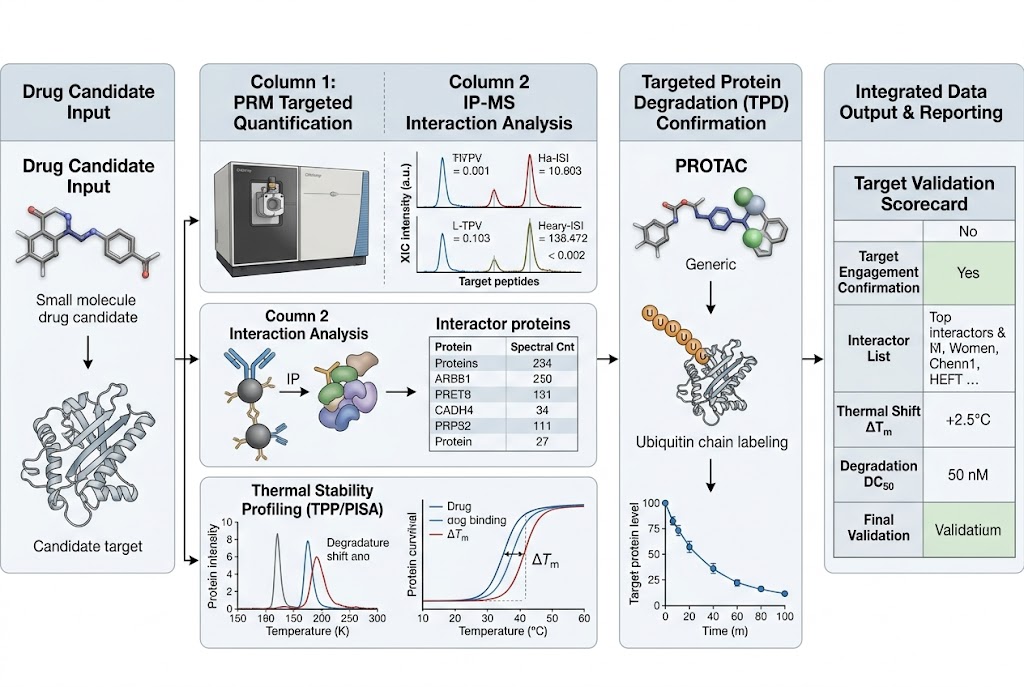
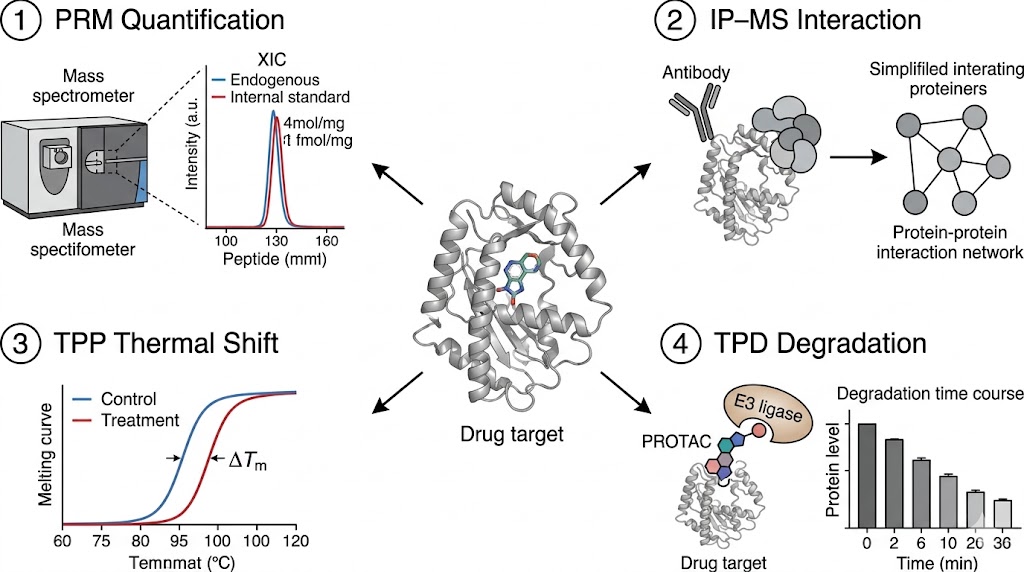
Target validation proteomics workflow diagram connecting four technology pillars: PRM quantification, IP-MS interaction analysis, TPP thermal profiling, and TPD degradation confirmation

Integrated target validation workflow: from drug candidate through four orthogonal proteomics pillars to a comprehensive target validation report.

Understanding Target Validation Proteomics

Drug target validation in the modern preclinical landscape demands more than binding affinity measurements or cellular activity assays. Regulatory-quality validation requires orthogonal evidence layers that collectively address three fundamental questions: (1) Does the drug engage its intended target in a physiologically relevant context? (2) What are the molecular consequences of that engagement — which pathways are modulated, which protein interactions are altered? (3) Is the observed pharmacology on-target, or are there contributions from off-target interactions that could impact efficacy or safety? Mass spectrometry-based proteomics is uniquely positioned to answer these questions because it delivers direct, unbiased molecular readouts of protein-level drug effects — without the reliance on antibodies, engineered reporters, or surrogate markers that can introduce artefactual results.

Our platform integrates four established MS-based technologies into a coherent target validation workflow. For researchers in early-stage target discovery, we recommend beginning with our Deep Proteome Profiling service to establish baseline protein expression context. For those with advanced candidates requiring comprehensive validation, the integrated workflow combines all four pillars to generate a complete target validation dossier in a single coordinated project.

Four-pillar technology integration diagram showing PRM quantification, IP-MS interaction, TPP thermal shift, and TPD degradation around a central drug target

Four-pillar integration: PRM quantification, IP-MS interaction mapping, TPP thermal profiling, and TPD degradation confirmation provide orthogonal validation evidence.

Our Four Technology Pillars

Each pillar addresses a distinct dimension of drug target validation. Pillars can be deployed independently for focused investigation or combined for comprehensive integrated assessment. Our scientific team designs the optimal strategy based on your target biology, drug modality, and validation stage requirements.

PRM/MRM Target Engagement Quantification

Absolute quantification of target proteins and drug engagement biomarkers in cell lysates, tissues (fresh frozen, FFPE), plasma, and tumour biopsies. PRM on Orbitrap/QqTOF platforms provides full MS/MS spectra for maximum specificity, while MRM on triple quadrupole platforms delivers highest sensitivity for validated panels in cohort-scale studies. Stable isotope-labeled internal standards enable fmol/µg-level quantification with defined LOD, LOQ, and linear dynamic range.

IP-MS Interaction & Interactome Analysis

Pull-down or immunoprecipitation of the target protein from endogenous or overexpressing systems, followed by LC-MS/MS identification of co-purifying proteins. Label-free quantification (LFQ) or stable isotope labeling distinguishes specific interactors from non-specific background. Data are reported as confidence-scored interaction networks with sequence coverage, unique peptide counts, fold-change over control, and calculated stoichiometry.

Thermal Profiling (TPP) & Degradation (TPD)

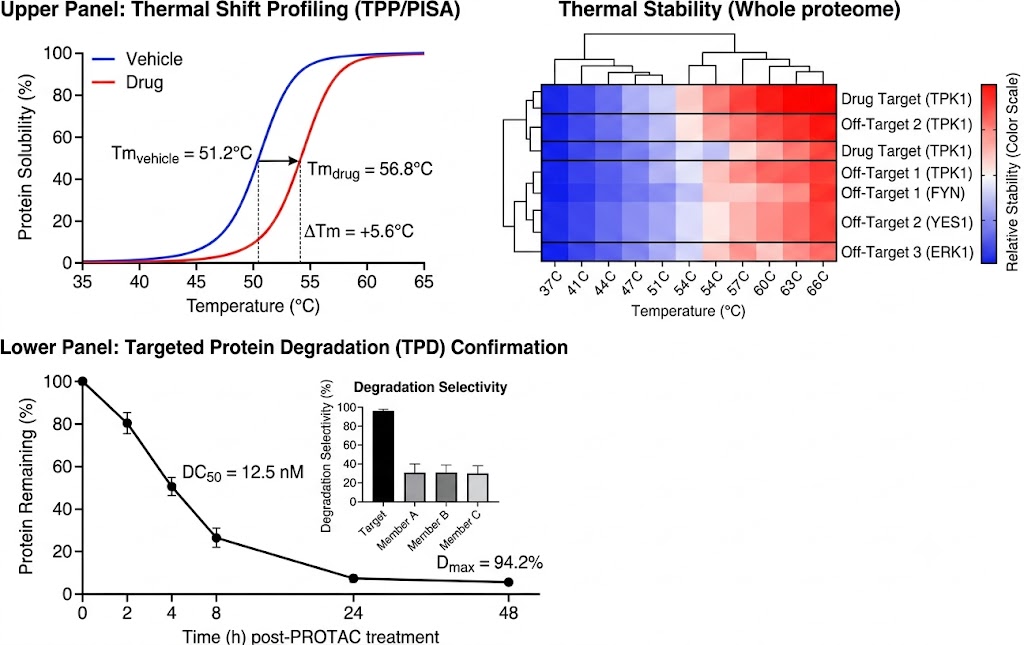
Cellular target engagement confirmed through thermal proteome profiling (TPP/PISA), where drug binding stabilises (or destabilises) the target protein, producing a melting-temperature shift (ΔTm) detectable by multiplexed quantitative MS. For targeted degradation modalities, TPD proteomics quantifies PROTAC-induced protein depletion across the proteome, providing DC50, Dmax, degradation selectivity, and duration-of-effect measurements.

Workflow Overview

Step 1 — Validation Strategy Design: Our project team reviews your target, drug modality, biological system, and stage of preclinical advancement to design the optimal technology combination. We define the validation questions, select appropriate pillars, establish statistical power requirements, and design the sample plan.

Step 2 — Sample Preparation & MS Acquisition: Samples are processed using pillar-specific protocols. For PRM: protein extraction, digestion, stable isotope standard spiking, and targeted LC-MS/MS acquisition. For IP-MS: crosslinking optimisation (if applicable), immunoaffinity capture, on-bead digestion, and LC-MS/MS. For TPP: compound treatment, temperature gradient fractionation, TMT labeling, and multiplexed acquisition. For TPD: time-point sample collection, digestion, and targeted/proteome-wide acquisition.

Step 3 — Data Processing & QC: Raw MS data are processed through pillar-specific pipelines — Skyline (PRM/MRM), MaxQuant/FragPipe (IP-MS), TPP-TR (thermal profiling), and custom degradation analysis scripts. Each dataset undergoes pillar-specific QC metrics including retention time stability, internal standard performance, replicate correlation, and signal-to-noise assessment.

Step 4 — Integrated Multi-Pillar Analysis: Results from all deployed pillars are integrated into a coherent target validation narrative. Target engagement concentrations are cross-referenced against interactor identities, thermal shift magnitudes, and degradation kinetics to build a comprehensive picture of on-target pharmacology and off-target liability.

Step 5 — Validation Report & Data Package: Deliverables include a comprehensive target validation report with pillar-specific data sections, integrated conclusions, and supplementary materials (extracted ion chromatograms, interaction networks, melting curves, degradation profiles, assay performance metrics, and methods documentation).

Platform Selection: PRM and MRM for Target Engagement Quantification

Target engagement quantification requires analytical methods capable of distinguishing the drug target from the complex proteomic background of the biological matrix. Our platform offers two complementary targeted MS acquisition strategies, selected based on the specificity and throughput requirements of your study.

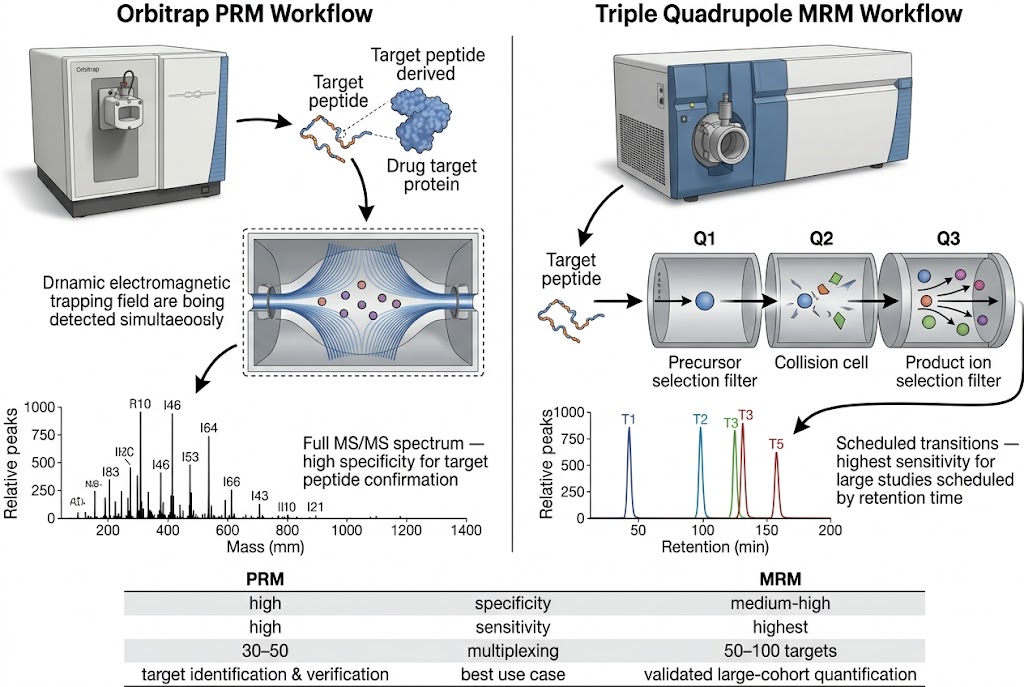
Parallel Reaction Monitoring (PRM) on high-resolution Orbitrap (Q Exactive HF-X, Orbitrap Fusion Lumos) and QqTOF (ZenoTOF 7600) instruments acquires full MS/MS fragment ion spectra for each target peptide, providing the highest specificity for unambiguous target identification — critical when quantifying closely related protein isoforms, mutant vs wild-type variants, or post-translationally modified forms of the target. The full spectral record also enables retrospective data mining if new targets of interest emerge.

Multiple Reaction Monitoring (MRM/SRM) on triple quadrupole platforms (AB Sciex 6500+) monitors pre-selected precursor-to-product ion transitions with scheduled acquisition, delivering the highest sensitivity for known target peptides in large-cohort studies. MRM is the method of choice when the quantification panel is established and the primary requirement is consistent, high-throughput measurement across hundreds of samples.

Side-by-side comparison of PRM on high-resolution Orbitrap and MRM on triple quadrupole mass spectrometers for target engagement quantification

PRM (full MS/MS spectrum, high specificity) vs MRM (scheduled transitions, highest sensitivity) for target engagement quantification.

Sample Requirements & Submission Guidelines

Pillar Sample Type Recommended Input Notes
PRM/MRM (all pillars) Cell lysate 200–500 μg total protein Minimum 50 μg for high-abundance targets; replicate cultures recommended
PRM/MRM Tissue (fresh frozen / FFPE) 10–50 mg wet weight / 2–5 × 5 μm FFPE sections FFPE requires deparaffinisation and protein extraction; target peptide selection must account for formalin crosslinking
PRM/MRM Plasma / Serum 50–200 μL High-abundance protein depletion recommended for low-abundance targets
IP-MS Cell lysate (IP-compatible buffer) 500 μg – 5 mg total protein Input depends on target abundance; crosslinking optimization may be required for weak/transient interactors
IP-MS Tissue lysate 1–10 mg total protein Tissue lysis optimisation required; please contact for feasibility consultation
TPP Cell lysate (live, drug-treated) 10–15 × 10⁶ cells per condition Live cell treatment before lysis; 10-temperature gradient (37–67 °C) preferred; TMT 10-plex or 16-plex compatible
TPD Cell lysate (time-course, PROTAC-treated) 2–5 × 10⁶ cells per time point 6–8 time points (0–48 h) recommended for DC50/Dmax determination; triplicate biological replicates

For projects combining multiple pillars from the same biological samples, we provide integrated sample splitting and parallel processing workflows to maximise data yield. Please contact us to discuss specific sample requirements and feasibility for non-standard sample types. For projects requiring broader proteomic context beyond targeted analysis, our Biomarker Validation by PRM/MRM service provides complementary cohort-scale quantification capabilities.

Representative Data & Platform Performance

Below are representative examples from our target validation proteomics workflows, demonstrating the orthogonal data outputs from each technology pillar.

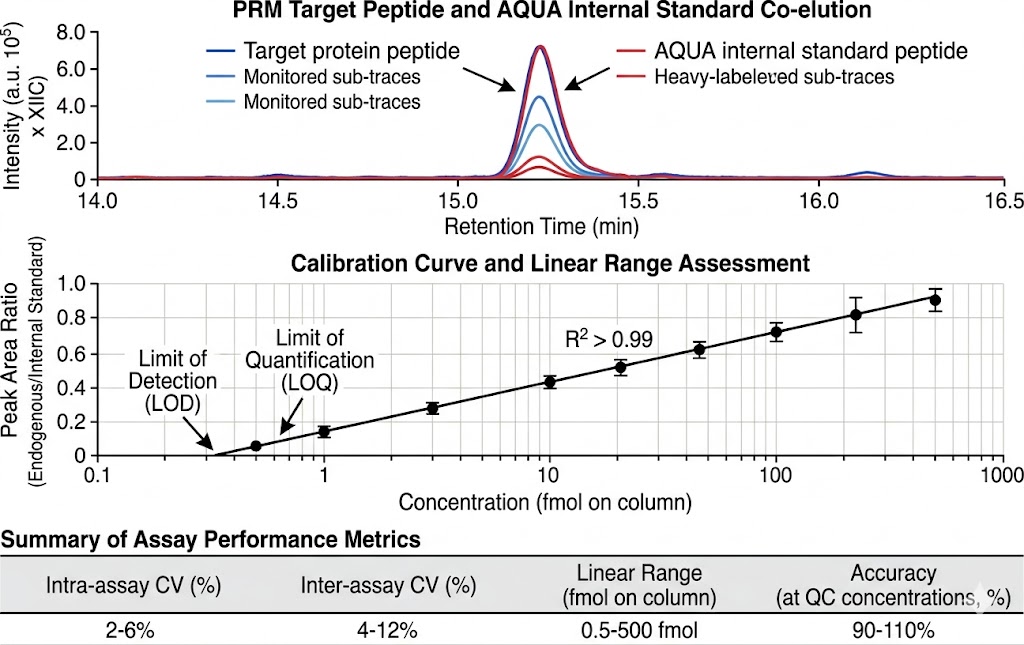
PRM target protein quantification data showing extracted ion chromatograms, calibration curve, and assay performance metrics

PRM target protein quantification: extracted ion chromatograms with internal standard co-elution, 8-point calibration curve (R² > 0.99), and assay performance summary including CV, linear range, and accuracy metrics.

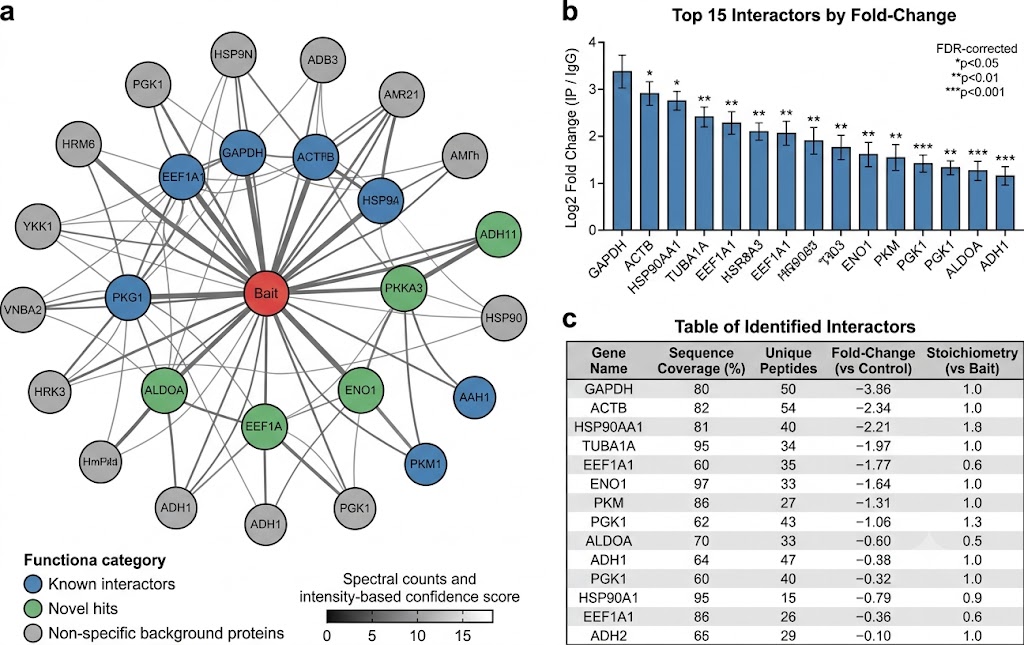
IP-MS protein interaction data showing interaction network map, fold-change bar chart, and interactor table

IP-MS interaction data: confidence-scored protein interaction network, fold-change quantification versus control, and comprehensive interactor table with spectral counts and sequence coverage.

TPP thermal shift melting curves and TPD degradation time course data with key metrics

TPP thermal shift profiling (ΔTm annotated melting curves, proteome-wide thermal stability heatmap) and TPD degradation data (time course with DC50/Dmax, selectivity bar chart across protein family members).

CASE STUDY

Mass Spectrometry Quantification of KRASG12C Target Engagement in FFPE Tumor Tissue by FAIMS-PRM

Chambers et al. 2023 | Clin Proteomics | CC BY 4.0

Background & Purpose

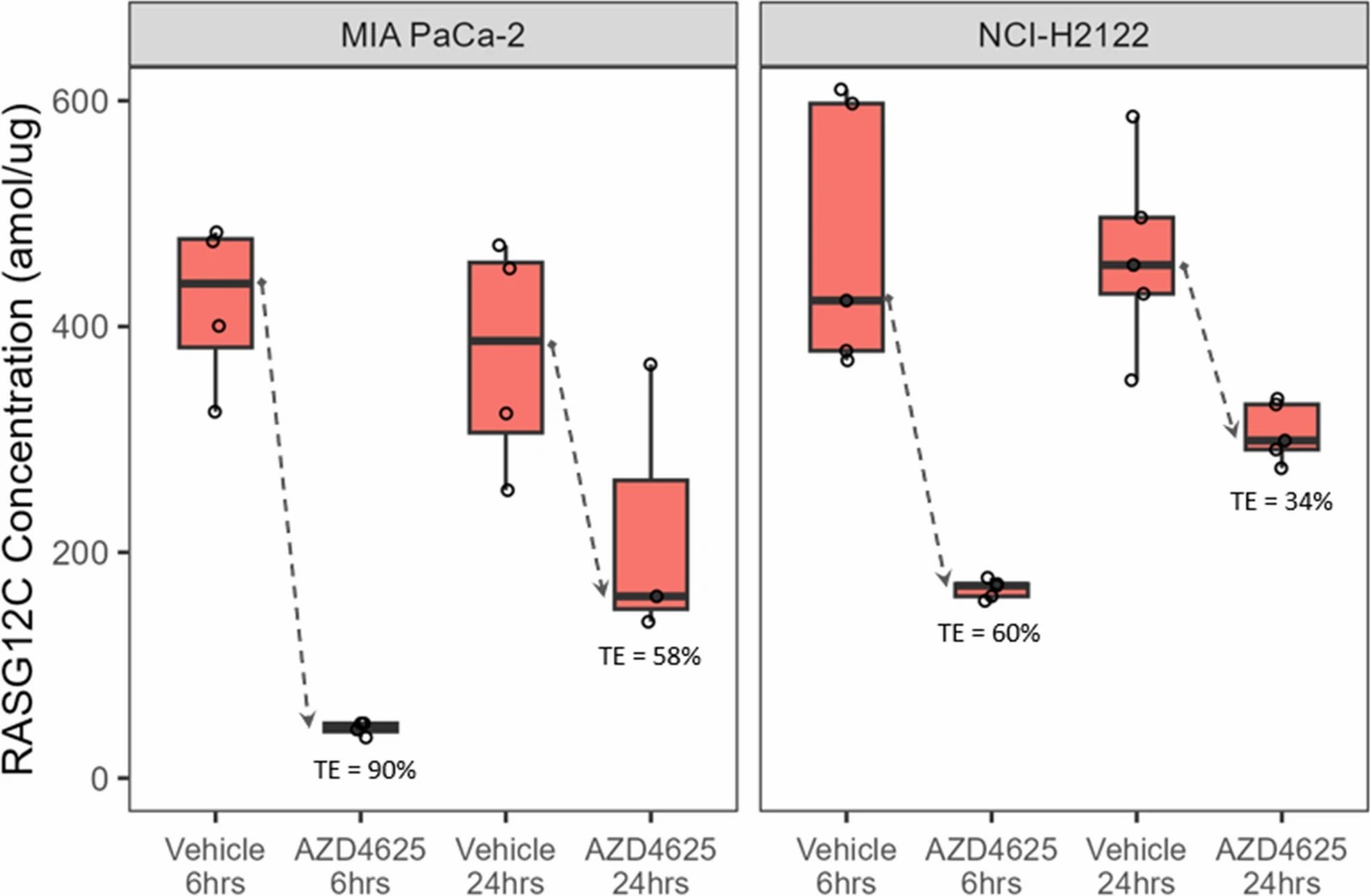
Quantifying drug target engagement in archived tumor tissue — particularly FFPE blocks from clinical trials and preclinical xenograft studies — represents a significant analytical challenge. Target engagement measurements in FFPE tissue would enable direct correlation of drug exposure with pharmacological effect at the protein level, but FFPE processing introduces extensive crosslinking that complicates protein extraction and digestion. Chambers et al. addressed this challenge by developing a high-sensitivity FAIMS-PRM (field asymmetric ion mobility spectrometry — parallel reaction monitoring) workflow for quantifying KRASG12C mutant protein engagement by AZD4625, a covalent KRASG12C inhibitor, in FFPE tumor tissue from xenograft models.

Methods

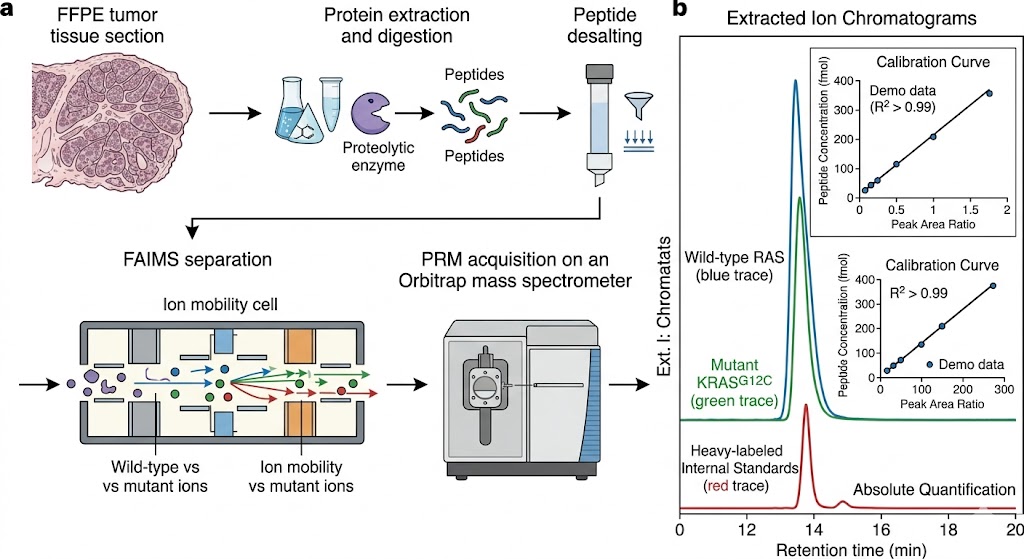
FFPE tumor sections from KRASG12C-mutant xenograft models (vehicle control vs AZD4625-treated) were deparaffinised, homogenized, and subjected to protein extraction and tryptic digestion. Heavy isotope-labeled AQUA peptide standards corresponding to wild-type KRAS, mutant KRASG12C, and internal reference proteins were spiked at known concentrations. Peptide separation employed FAIMS (field asymmetric ion mobility spectrometry) to reduce background interference and increase signal-to-noise for low-abundance target peptides prior to PRM acquisition on an Orbitrap mass spectrometer. Data were analysed using targeted extraction and internal standard normalisation to yield absolute concentration values (amol/µg total protein) for each KRAS variant.

Results Overview

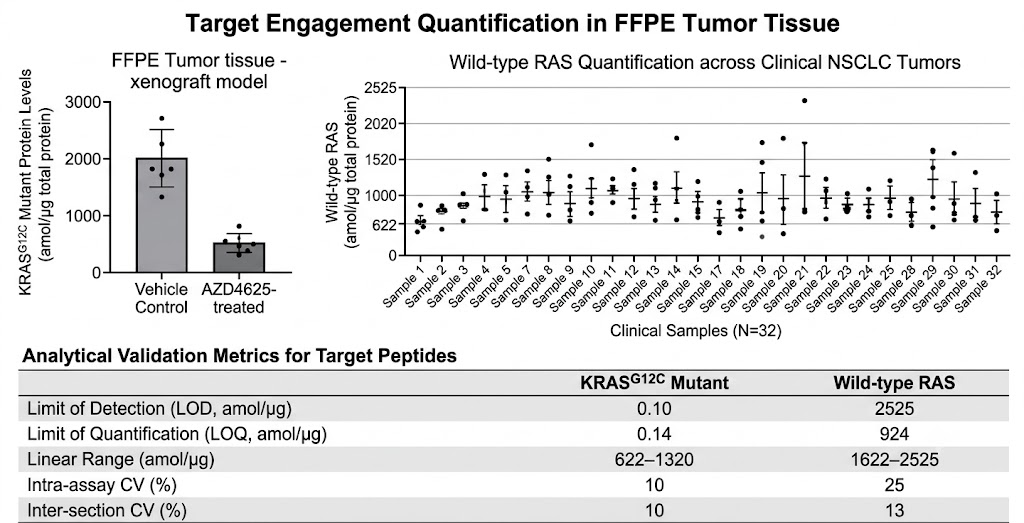
The FAIMS-PRM assay achieved robust analytical performance with LOD of 0.75 amol/µg and linear quantification across the relevant concentration range. In xenograft FFPE samples, KRASG12C levels were quantified at 8–32 amol/µg total protein, with clear differentiation between vehicle and AZD4625-treated groups. Wild-type RAS isoforms were quantifiable across 32 clinical NSCLC FFPE tumour samples, demonstrating a dynamic range of 622–2525 amol/µg and confirming the assay's suitability for heterogeneous clinical specimens. Inter-section CV (measuring reproducibility across serial FFPE sections) ranged from 5.7–14.2%, demonstrating that a single 5 µm section provides reproducible target engagement data.

FAIMS-PRM target engagement workflow from FFPE tumor tissue through protein extraction, digestion, FAIMS separation, and PRM acquisition on Orbitrap mass spectrometer

Target engagement quantification workflow: FFPE tissue processing → protein extraction → digestion → FAIMS separation → PRM acquisition → data analysis with internal standard normalisation. (AI-generated demo data representation of the published workflow by Chambers et al.)

KRASG12C quantification bar chart comparing vehicle vs AZD4625-treated groups and wild-type RAS scatter plot across clinical samples

Left: KRASG12C target engagement in FFPE xenograft tissue — vehicle vs AZD4625-treated (amol/µg total protein). Right: wild-type RAS quantification across 32 clinical NSCLC FFPE samples (622–2525 amol/µg range). (AI-generated demo data)

Integrated multi-technology target validation summary showing PRM, IP-MS, and TPP data with validation conclusion

Integrated multi-technology target validation: PRM quantification with internal standard normalisation, IP-MS interaction network, and TPP thermal shift data converge on a unified target validation conclusion. (AI-generated demo data)

Conclusion

This study establishes FAIMS-PRM as a robust and reproducible approach for quantifying drug target engagement directly in FFPE tumour tissue — a sample type that constitutes the vast majority of archived clinical trial specimens. The demonstration that a single 5 µm FFPE section yields reproducible target quantification (inter-section CV < 15%) has direct translational relevance for clinical trial correlative studies where tissue availability is often limited. The analytical framework — combining AQUA peptide internal standards, FAIMS separation for background reduction, and high-resolution PRM acquisition — is directly transferable to other target classes beyond KRAS, providing a template for MS-based target engagement studies broadly applicable across the preclinical and translational drug development landscape. For a deeper discussion of target engagement strategies, see Valerie et al. 2024 (CeTEAM methodology), which provides a complementary cellular target engagement profiling approach.

Frequently Asked Questions

Q1: What is the difference between target engagement and target validation in the context of proteomics?

Target engagement refers specifically to confirming that a drug molecule binds to its intended protein target in a biological system, typically measured by PRM/MRM quantification of the target protein or by thermal stabilisation assays (TPP) that detect drug-induced conformational changes. Target validation is broader: it encompasses engagement evidence plus functional confirmation (degradation in TPD studies), interaction network mapping (IP-MS) to understand mechanism and off-target liability, and integrated interpretation across all orthogonal data layers. Our platform supports both focused engagement studies and comprehensive validation projects depending on your stage of preclinical advancement.

Q2: Which technology pillar should I choose for my target validation study?

The optimal pillar combination depends on your validation questions and drug modality. PRM/MRM quantification is recommended when the primary question is "how much target is present and is it engaged?" — suitable for most small molecule and biologic programmes. IP-MS is essential when understanding the interaction network and mechanism is a priority, particularly for novel targets or those in poorly characterised pathways. TPP is the method of choice for cellular target engagement confirmation where a thermal shift readout provides direct evidence of drug-target interaction in the native cellular environment. TPD is specific to targeted degradation modalities requiring confirmation of degradation efficiency and selectivity. For comprehensive target validation programmes, we typically recommend combining PRM quantification with at least one orthogonal pillar (IP-MS or TPP) to provide convergent evidence.

Q3: Can you combine PRM quantification with IP-MS in the same project using the same biological samples?

Yes. We routinely design integrated workflows where the same biological samples are split for parallel PRM and IP-MS analysis. For cell lysate samples, a typical 1 mg protein input is sufficient for both PRM quantification of 10–30 target peptides and a single IP-MS pull-down experiment. The data are then cross-correlated: PRM provides absolute target abundance, while IP-MS identifies and quantifies interaction partners. This combined approach is particularly powerful for distinguishing direct from indirect drug effects on protein interaction networks. Please contact us to discuss sample splitting strategies for your specific project.

Q4: What sample types are compatible with TPP thermal profiling?

TPP is optimally performed using live cultured cells (adherent or suspension) that can be treated with compound, harvested, and subjected to the temperature gradient in controlled conditions. Typical input is 10–15 × 10⁶ cells per condition for a full 10-temperature gradient. We have also successfully performed TPP on fresh tissue samples (minced and briefly cultured), primary cells, and PBMCs. Frozen samples are generally not suitable because the thermal shift response requires live cells at the time of compound treatment. For projects where live-cell TPP is not feasible, we recommend our PRM-based target engagement quantification as an alternative. Tissue samples for thermal profiling require feasibility assessment — please contact us to discuss.

Q5: How do you ensure data quality across the four technology pillars in an integrated study?

Each pillar operates under standardised QC protocols with defined acceptance criteria. For PRM/MRM: internal standard retention time stability (±0.5 min), transition ratio correlation (>0.85), and replicate CV (<20%). For IP-MS: control pull-down peptide counts, contaminant filtering (CRAPome), and replicate correlation. For TPP: melting curve fit quality (R² > 0.8), replicate Tm reproducibility (±1 °C), and soluble protein recovery. For TPD: vehicle control stability, time-zero normalisation consistency, and replicate concordance. In integrated studies, we additionally cross-validate results between pillars — for example, TPP-identified thermal shift targets can be independently quantified by PRM to confirm concentration-dependent engagement. All data are compiled into a single integrated validation report with transparent QC metrics for each pillar.

References

  1. Chambers AG, Reid JM, Johnson AM, McGeehan GM, Eyers CE. Mass spectrometry quantifies target engagement for a KRASG12C inhibitor in FFPE tumor tissue. Clin Proteomics. 2023;20:47.
  2. Chan A, Bensimon C, Ciceri D, et al. Lipid-mediated intracellular delivery of recombinant bioPROTACs for the rapid degradation of undruggable proteins. Nat Commun. 2024;15:5808.
  3. Valerie NCK, Wolber AM, Freiberger S, et al. Coupling cellular drug-target engagement to downstream pharmacology with CeTEAM. Nat Commun. 2024;15:10347.

GET STARTED

Advance Your Drug Target Validation Programme

Our integrated proteomics platform provides the orthogonal evidence layers needed to confidently validate drug targets, from initial engagement confirmation through comprehensive multi-technology characterisation. Contact our team to design a validation strategy matched to your target and preclinical advancement stage.

Discuss Your Target Validation Requirements with Our Scientific Team

Request a Customized Quote