Get Your Custom Quote

Online Inquiry

Off-Target Profiling Service

Comprehensive mass spectrometry-based off-target profiling platform for drug discovery — integrating chemoproteomics (ABPP), thermal proteome profiling (TPP), and affinity pull-down approaches to systematically map drug-protein interactions beyond the intended target. Whether characterising covalent inhibitor selectivity, deconvoluting phenotypic screening hits, or assessing polypharmacology, our platform delivers proteome-wide off-target identification with quantitative occupancy or affinity measurements to guide medicinal chemistry, mitigate toxicity risk, and support preclinical candidate selection.

Research Use Only (RUO) Notice: All services and data provided are strictly for non-clinical research purposes. Our analytical results are not intended for clinical diagnosis, patient management, or therapeutic decision-making.

Services Technologies Demo Case Study FAQ Related Services

CORE SERVICE

Proteome-Wide Off-Target Profiling for Drug Selectivity Assessment

Understanding the full target landscape of a drug candidate — both intended and unintended protein interactions — is a critical component of preclinical development. Unanticipated off-target interactions can lead to mechanism-based toxicity, limit the therapeutic window, or, in some cases, reveal beneficial polypharmacology opportunities. Our Off-Target Profiling service deploys three complementary mass spectrometry-based platforms — chemoproteomics (activity-based protein profiling, ABPP), thermal proteome profiling (TPP), and affinity pull-down — to comprehensively map drug-protein interactions across the proteome, providing quantitative selectivity data that directly informs medicinal chemistry strategy and de-risks preclinical candidate selection.

  • Chemoproteomics ABPP Profiling: For covalent inhibitors and electrophilic compounds, activity-based probes or clickable photoaffinity probes enable direct, residue-level mapping of target engagement across the proteome. Isobaric labeling (TMT) and label-free quantification quantify probe labeling ratios across >20,000 cysteine-containing peptides, identifying both the intended target and off-target cysteine modifications with defined occupancy thresholds.
  • Thermal Proteome Profiling (TPP): For any drug modality (covalent, non-covalent, stabilising, destabilising), TPP detects drug-induced changes in protein thermal stability across the proteome, providing an unbiased, label-free readout of cellular off-target binding. Multiplexed TMT acquisition enables 10- or 16-condition comparisons in a single experiment, with melt-curve fitting and ΔTm quantification for >6,000 proteins.
  • Affinity Pull-Down & Kinobeads Profiling: For non-covalent inhibitors, immobilised drug or kinobeads-based affinity enrichment captures concentration-dependent binding proteins from native cell lysates, followed by LC-MS/MS identification and quantitative comparison against control beads to distinguish specific from non-specific interactions.
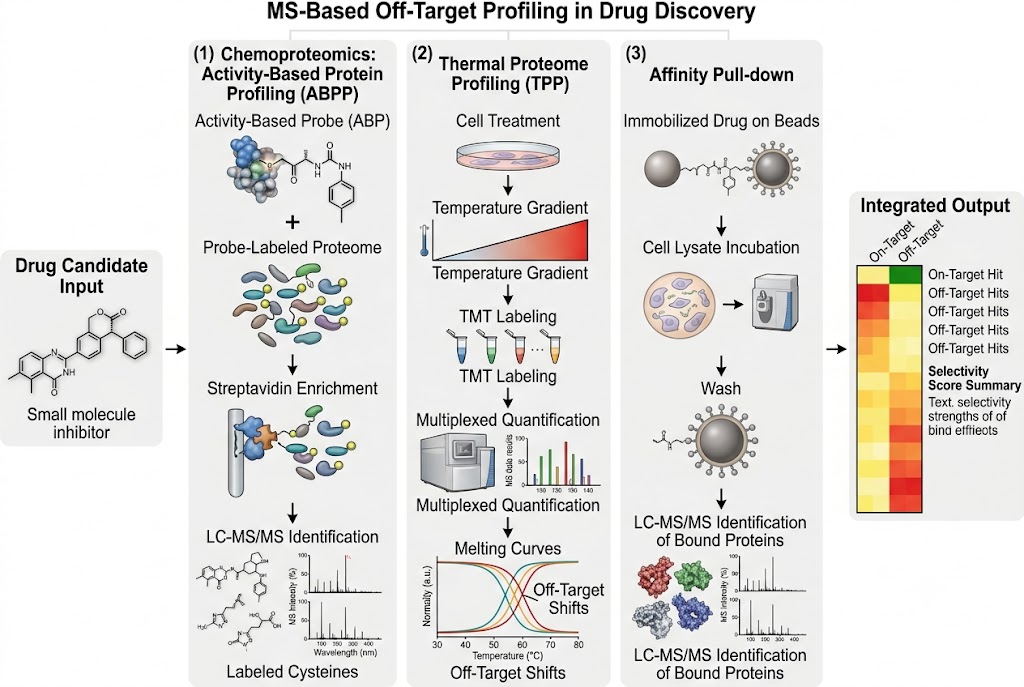
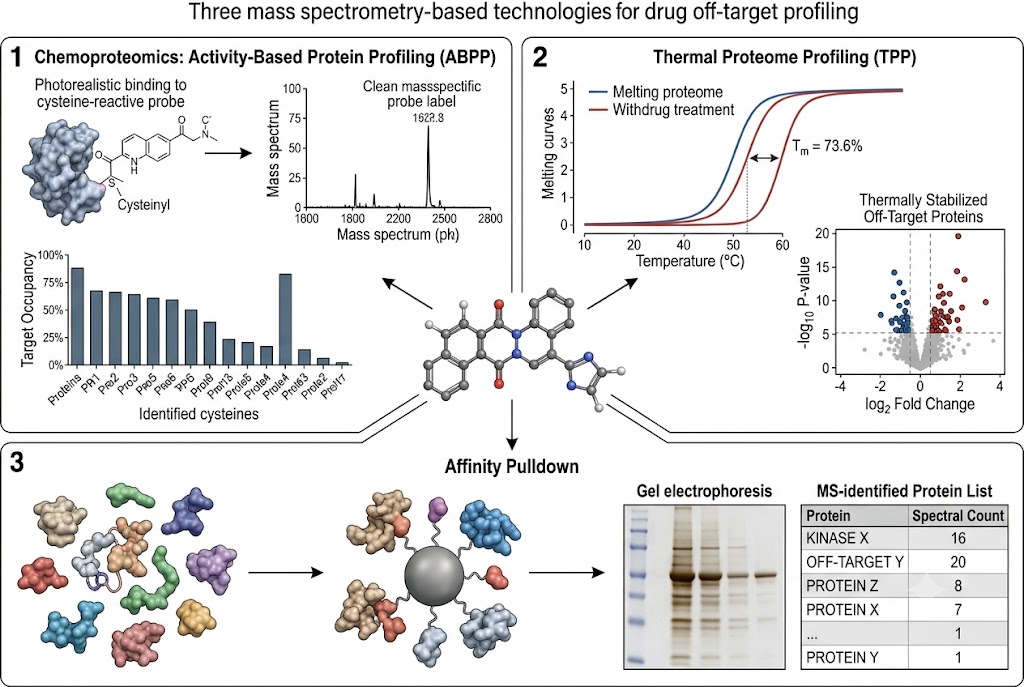
Off-target profiling workflow showing three parallel MS-based approaches: chemoproteomics ABPP, thermal proteome profiling, and affinity pull-down for comprehensive drug selectivity assessment

Integrated off-target profiling platform: three complementary MS-based approaches for comprehensive drug selectivity mapping.

Understanding Off-Target Profiling in Drug Discovery

Every drug interacts with more proteins than its intended target. These off-target interactions — whether arising from structural similarity of binding sites, reactive warhead promiscuity, or physicochemical properties driving non-specific binding — are a leading cause of preclinical attrition and clinical adverse events. Systematic off-target profiling has therefore become an essential component of preclinical advancement, providing data that guides medicinal chemistry optimisation, establishes the therapeutic window, and supports candidate selection with evidence-based selectivity claims. Major regulatory frameworks, including ICH M10 guidelines, increasingly emphasise the importance of comprehensive selectivity assessment in preclinical drug development packages.

Mass spectrometry has emerged as the platform of choice for proteome-wide off-target profiling because it delivers unbiased, protein-level interaction data without requiring genetic engineering, antibody reagents, or prior knowledge of potential off-targets. For researchers beginning with broader mechanism-of-action investigations, our Mechanism of Action Proteomics platform provides complementary workflows for upstream target deconvolution and pathway mapping, while the dedicated Thermal Proteome Profiling service offers deeper TPP methodology for focused thermal shift studies.

Technology integration diagram showing three off-target profiling methods: chemoproteomics ABPP, TPP thermal profiling, and affinity pulldown around a central drug molecule

Three-pillar technology integration: chemoproteomics ABPP, TPP thermal profiling, and affinity pull-down provide orthogonal off-target detection strategies.

Our Profiling Platforms

Each platform addresses distinct drug modalities and off-target detection requirements. The optimal strategy — or combination of strategies — depends on your compound's chemical properties, mechanism of action, and the depth of selectivity data required for your preclinical advancement stage.

Chemoproteomics (ABPP)

Best for: Covalent inhibitors, electrophilic fragments, targeted covalent inhibitors (TCIs), and compounds with reactive warheads. Activity-based probes functionalised with enrichment tags (biotin/alkyne) enable direct capture and MS identification of probe-labeled proteins and specific cysteine residues. Competitive ABPP with TMT-10/16 quantification provides quantitative occupancy across >20,000 cysteines, distinguishing the on-target site from off-target modifications. Our dedicated Chemoproteomics service provides further depth for focused cysteine-reactive compound profiling and target deconvolution studies.

Thermal Proteome Profiling (TPP)

Best for: Any drug modality — covalent, non-covalent, stabilising or destabilising ligands. TPP detects drug-induced changes in protein thermal stability in live cells or lysates without requiring chemical modification of the drug. Ten-temperature gradients (37–67 °C) with TMT multiplexing generate melting curves for 6,000–8,000 proteins, with ΔTm values and FDR-corrected significance calling for off-target identification. For detailed methodology and experimental design, refer to our Thermal Proteome Profiling service page.

Affinity Pull-Down & Kinobeads

Best for: ATP-competitive kinase inhibitors, non-covalent small molecules, and compounds where the target class is known. Immobilised drug on sepharose beads captures concentration-dependent binding proteins from native lysates, with LC-MS/MS identification and label-free or SILAC-based quantification. Kinobeads profiling provides a dedicated panel of >300 kinase targets for focused kinome-wide selectivity assessment. Complementary data on protein interaction networks can be obtained through our Target Validation Proteomics service.

Workflow Overview

Step 1 — Platform Selection & Study Design: We review your compound's chemical features (covalent/non-covalent, warhead type, solubility, cell permeability) and validation objectives to select the optimal profiling platform or combination. Study design includes concentration ranges, replicates, controls, and statistical power requirements.

Step 2 — Sample Preparation & Mass Spectrometry Acquisition: For ABPP: probe synthesis (if required), live-cell or lysate labeling, enrichment, digestion, and TMT labeling. For TPP: live-cell treatment, temperature gradient fractionation, TMT labeling, and multiplexed LC-MS/MS. For affinity: drug immobilisation, lysate incubation, wash, on-bead digestion, and LC-MS/MS. All workflows include appropriate controls and quality standards.

Step 3 — Data Processing & Off-Target Identification: Raw MS data are processed through platform-specific pipelines. ABPP data: quantitative comparison of probe labeling ratios (compound vs DMSO) across quantified cysteine sites, with occupancy thresholds for on-target vs off-target classification. TPP data: melting curve fitting (sigmoidal dose-response), Tm calculation, ΔTm determination, and FDR-controlled significance calling. Affinity data: label-free quantification or SILAC ratios comparing drug vs control, with statistical filtering for specific interactors.

Step 4 — Hit Validation & Selectivity Analysis: Identified off-target candidates are triaged by occupancy/affinity, functional relevance, and estimated in vivo exposure relevance. For high-priority off-targets, orthogonal validation by PRM quantification or recombinant protein binding assays can be included. Selectivity scores and concentration-response relationships are calculated to define the therapeutic window.

Step 5 — Integrated Selectivity Report: Deliverables include the full off-target list with quantitative metrics (occupancy %, ΔTm, affinity estimate), selectivity heatmaps and visualisations, comparison against reference compounds where applicable, target class enrichment analysis, and a comprehensive methods section suitable for regulatory submission support and publication.

Platform Selection: Choosing the Right Off-Target Profiling Strategy

The choice of profiling platform depends primarily on the chemical nature of your drug candidate and the specific off-target detection questions you need to answer. Each platform provides complementary information, and the most comprehensive off-target assessments often combine two or more approaches.

Chemoproteomics ABPP is the method of choice for covalent inhibitors and compounds containing electrophilic warheads, because it provides direct, residue-level evidence of which proteins and specific amino acid residues are modified. The ability to quantify occupancy at >20,000 cysteine sites in a single experiment enables both on-target binding confirmation and comprehensive off-target identification at the amino-acid resolution level.

Thermal Proteome Profiling is the most broadly applicable approach, compatible with any drug modality without requiring chemical modification. TPP detects both direct binders and proteins whose thermal stability is altered as a consequence of drug treatment, providing a cellular-context readout that captures both on- and off-target pharmacology. For compounds progressing through late-stage preclinical profiling, integrated Mechanism of Action Proteomics studies combining TPP with phosphoproteomics and interaction proteomics provide deeper mechanistic insight into off-target effects.

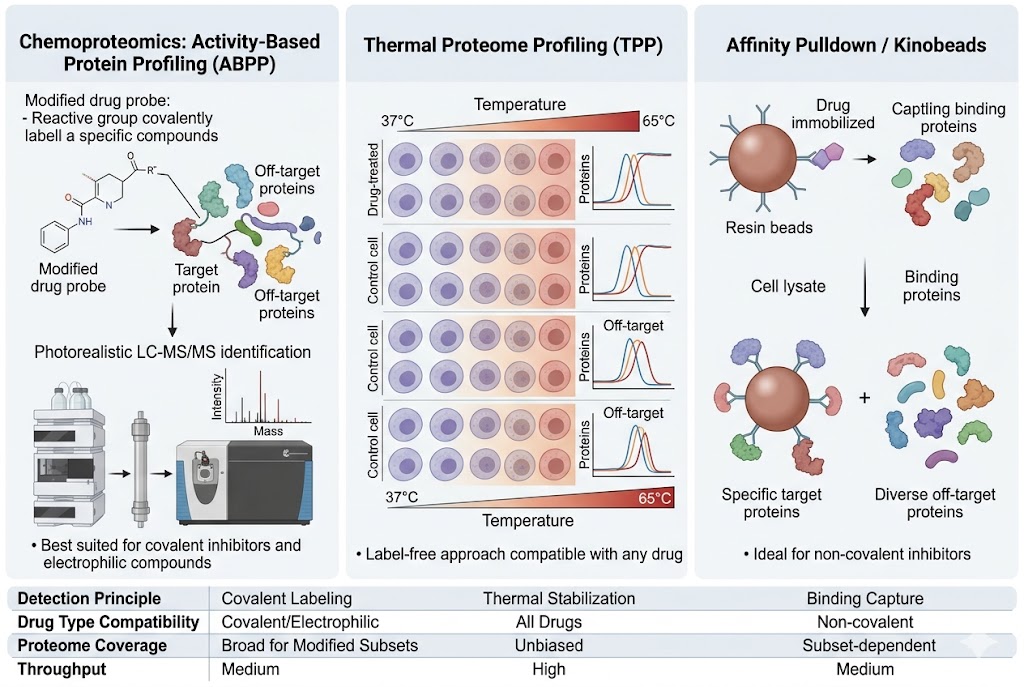
Side-by-side comparison of three off-target profiling platforms: chemoproteomics ABPP, thermal proteome profiling TPP, and affinity pull-down kinobeads approaches

Platform comparison: chemoproteomics ABPP, TPP, and affinity pull-down — selection by drug modality and profiling objectives.

Sample Requirements & Submission Guidelines

Platform Sample Type Recommended Input Notes
ABPP (all platforms) Cell lysate (live or frozen pellet) 2–10 mg total protein per condition Live-cell labeling preferred for cell-permeable probes; lysate labeling compatible with impermeable probes
ABPP Tissue lysate 5–20 mg total protein Tissue lysis optimisation required; contact for feasibility assessment
TPP Live cultured cells 10–15 × 10⁶ cells per condition 10-temperature gradient (37–67 °C); TMT 10-plex or 16-plex; triplicate biological replicates recommended
TPP Fresh tissue / primary cells 20–50 mg tissue or 5–10 × 10⁶ primary cells Requires viability maintenance during compound treatment; feasibility assessment required
Affinity pull-down Cell lysate (native, non-denaturing buffer) 2–5 mg total protein per pull-down Buffer conditions must maintain drug solubility and protein native state; drug immobilisation chemistry may require optimisation
Kinobeads profiling Cell lysate or tissue lysate 2–5 mg total protein Kinase-enriched profiling; compatible with broad kinase inhibitor selectivity assessment

All platforms require compound characterisation data (structure, solubility, reactivity for covalent compounds, cell permeability) before study initiation. For compounds where limited material is available, please contact us for feasibility assessment and miniaturised workflow options. For broader proteome-level analysis of drug effects beyond direct off-target binding, consider combining off-target profiling with our Biomarker Validation by PRM/MRM service for downstream confirmation of off-target engagement in disease-relevant models.

Representative Data & Platform Performance

Below are representative examples of off-target profiling data outputs from each of our three platform technologies.

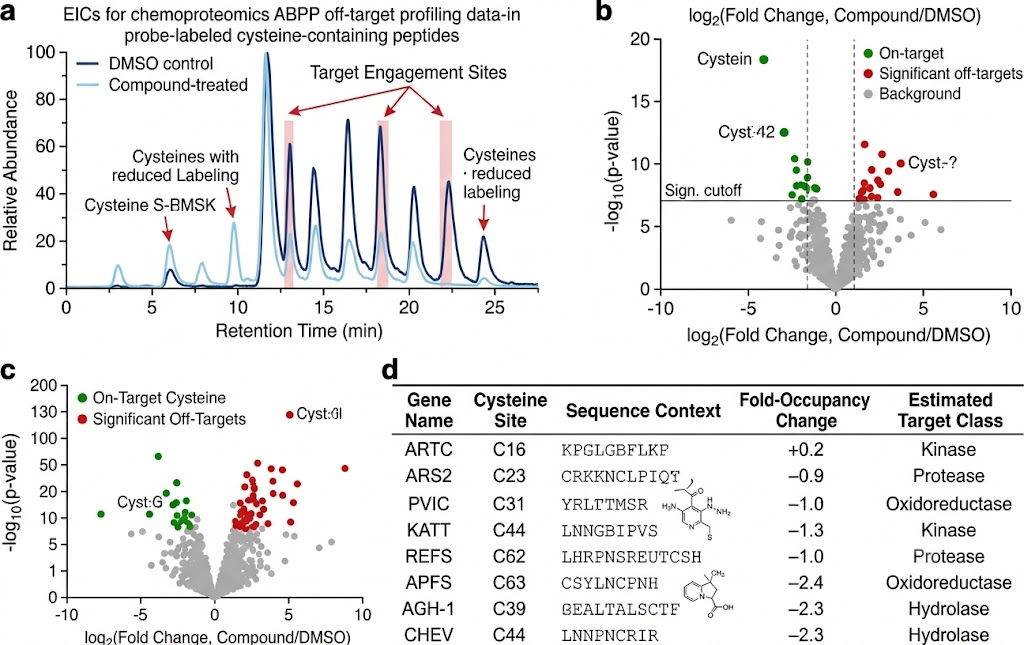
Chemoproteomics ABPP data showing competitive labeling profiles, volcano plot of off-target cysteines, and off-target identification table

Chemoproteomics ABPP profiling: competitive labeling ratios across >20,000 cysteines, volcano plot highlighting on-target and off-target sites, and tabulated off-target identification with occupancy metrics.

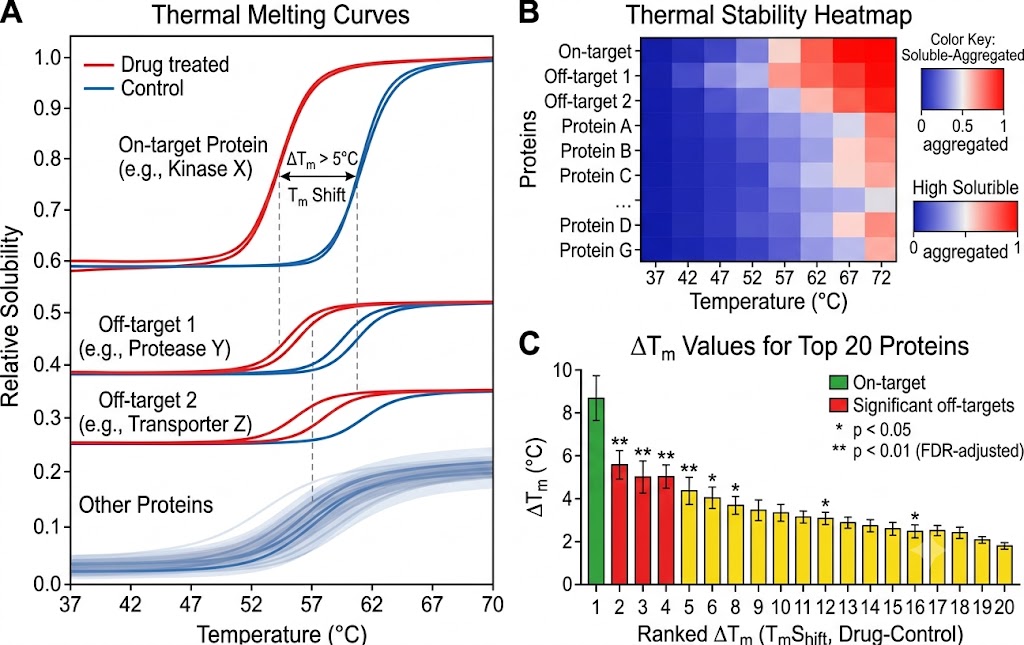
TPP thermal shift data showing melt curves for on-target and off-target proteins and proteome-wide ΔTm heatmap

TPP thermal shift profiling: melting curves comparing control vs drug-treated conditions for identified off-targets, with proteome-wide ΔTm heatmap and significance-ranked off-target list.

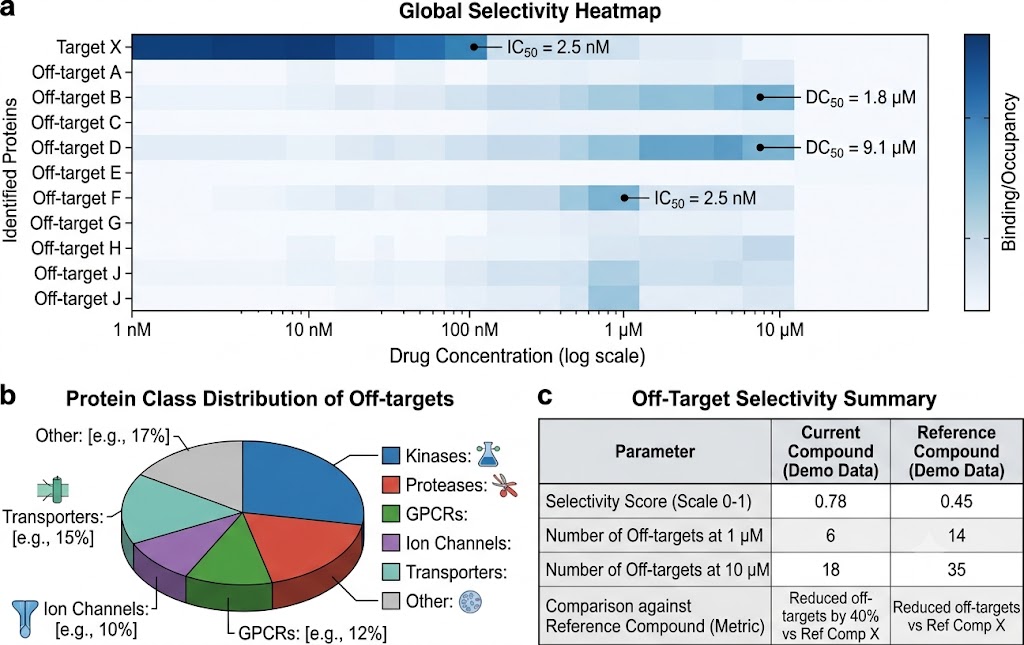
Integrated off-target selectivity summary showing heatmap, protein class distribution, and selectivity metrics

Integrated off-target selectivity summary: concentration-dependent selectivity heatmap, off-target distribution by protein class, and quantitative selectivity score table.

CASE STUDY

Accelerating Deubiquitinating Enzyme Inhibitor Discovery with Chemoproteomic ABPP and Proteome-Wide Off-Target Cysteine Profiling

Chan et al. 2023 | Nat Commun | CC BY 4.0

Background & Purpose

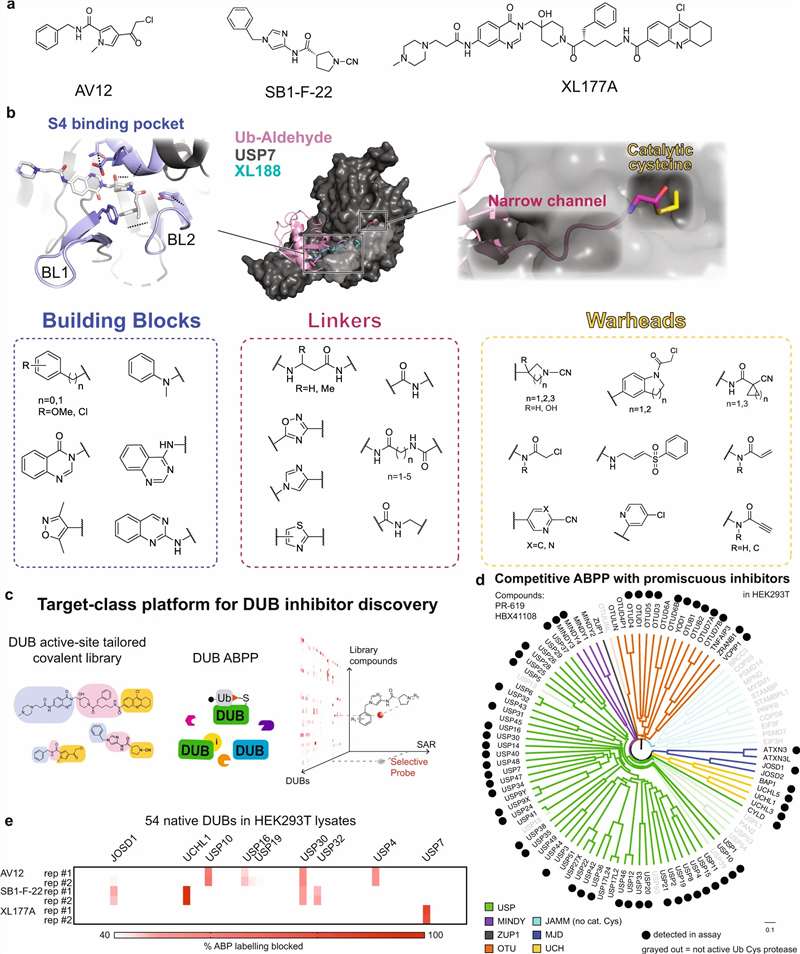
Deubiquitinating enzymes (DUBs) are emerging therapeutic targets in oncology, neurodegeneration, and inflammation, but developing selective, cell-active DUB inhibitors has been hampered by the high conservation of DUB catalytic sites and the risk of off-target cysteine reactivity. Chan et al. addressed this challenge by combining a focused covalent inhibitor library (178 compounds) with activity-based protein profiling (ABPP) and quantitative mass spectrometry to screen against 65 endogenous DUBs, followed by proteome-wide cysteine reactivity profiling to comprehensively characterise the off-target landscape of a lead DUB inhibitor (Figure 1).

Methods

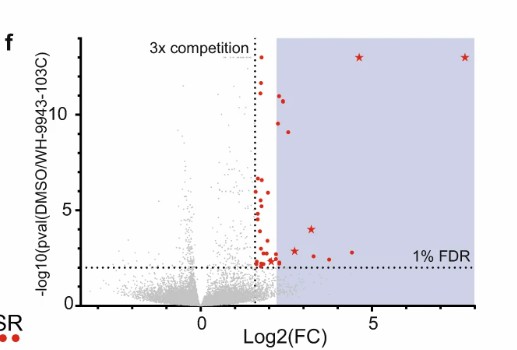
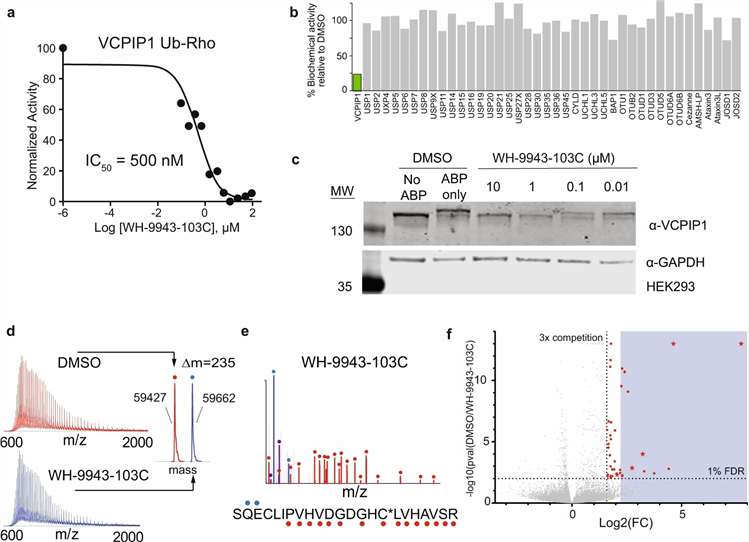
Compounds from a focused covalent inhibitor library bearing azetidine chloroacetamide warheads were screened against a panel of 65 endogenous DUBs in cell lysate using a broad-spectrum DUB ABPP probe (Figure 1). Hit compounds were deconvoluted by competitive ABPP with TMT-based quantification to identify DUB targets and determine potency. For a lead compound (WH-9943-103C targeting the DUB VCPIP1, Figure 5a–e), proteome-wide off-target cysteine profiling was performed by quantitative ABPP across >24,000 unique cysteine residues, with compound vs DMSO labeling ratios quantified at two concentrations (5 µM and 20 µM). Off-target occupancy thresholds were defined at 66% binding occupancy (1% FDR) to classify significant off-target cysteines (Figure 5f).

Results Overview

The ABPP screen identified selective inhibitors for multiple DUB family members, including VCPIP1, with the lead compound demonstrating potent target engagement (Figure 5a–e). Proteome-wide off-target profiling at 5 µM compound concentration identified 39 significant off-target cysteines (at 66% occupancy threshold, 1% FDR) from 24,579 quantified unique cysteine sites — representing an off-target rate of 0.16% across the quantified cysteome (Figure 5f). The majority of off-targets showed lower occupancy than the intended VCPIP1 target, confirming a favourable selectivity profile. Targeted PRM-MS assays were used to independently validate key off-target engagements, demonstrating the integrative workflow from proteome-wide discovery to targeted validation.

ABPP-based DUB inhibitor discovery and off-target profiling workflow from focused library screening through proteome-wide cysteine occupancy quantification

Figure 1 from Chan et al. 2023: DUB-tailored inhibitor discovery platform — three-piece modular covalent library design, ABPP screening workflow with TMT-based quantitative MS, and DUBome coverage validation. (CC BY 4.0)

Off-target cysteine quantification results showing occupancy scatter plot, bar chart of top off-targets, and identification table

Figure 5f from Chan et al. 2023: proteome-wide off-target cysteine profiling of WH-9943-103C — 24,579 cysteines quantified, 39 off-targets identified at 66% occupancy threshold (1% FDR), demonstrating 0.16% off-target rate. (CC BY 4.0)

DUB selectivity assessment across enzyme family members showing activity heatmap, phylogenetic tree, and selectivity window

Figure 5a–e from Chan et al. 2023: VCPIP1 lead inhibitor WH-9943-103C characterization — biochemical IC₅₀, DUB selectivity panel, native target engagement in lysate, and covalent modification of catalytic cysteine C219 confirmed by intact protein MS. (CC BY 4.0)

Conclusion

This study establishes an integrated chemoproteomics workflow that addresses two fundamental challenges in covalent DUB inhibitor development simultaneously: identifying selective, cell-active inhibitors through ABPP-based screening (Figure 1), and rigorously characterising proteome-wide off-target selectivity through large-scale cysteine profiling (Figure 5f). The demonstration that a single lead compound engages only 39 off-targets from 24,579 quantified cysteine sites (<0.2% off-target rate) illustrates the power of proteome-wide ABPP for generating quantitative selectivity data that can meaningfully inform medicinal chemistry optimisation. The experimental framework — combining focused covalent libraries, ABPP screening, quantitative cysteine reactivity profiling, and targeted PRM validation — provides a directly transferable template for off-target assessment broadly applicable across covalent drug discovery programmes. Broader chemoproteomics approaches for target deconvolution and off-target profiling are covered in depth on our Chemoproteomics service page.

Frequently Asked Questions

Q1: What is the difference between on-target and off-target effects in drug discovery?

On-target effects are the pharmacological consequences of a drug binding to its intended primary target, producing the desired therapeutic response. Off-target effects arise when a drug binds to proteins other than the intended target — these may be closely related family members (e.g., other kinases for a kinase inhibitor), structurally unrelated proteins with similar binding pockets, or reactive modifications (e.g., covalent adducts on non-target cysteines). Off-target effects can lead to toxicity, limit the therapeutic window, or in some cases produce beneficial polypharmacology. Our profiling platforms are designed to systematically identify and quantify both classes of off-target interactions.

Q2: Which off-target profiling method should I choose for my compound?

The optimal method depends on your compound's chemical properties. For covalent inhibitors and compounds with electrophilic warheads, chemoproteomics ABPP is the method of choice because it provides residue-level evidence of which specific amino acids are modified and quantifies occupancy. For non-covalent inhibitors and any drug modality more broadly, TPP provides an unbiased, label-free readout of cellular target engagement without requiring chemical modification of the drug. For ATP-competitive kinase inhibitors, kinobeads profiling offers focused, high-throughput kinome-wide selectivity data. In many cases, the most comprehensive approach combines two platforms — for example, ABPP for cysteine-level resolution paired with TPP for proteome-wide interaction discovery. Contact our team for a recommendation tailored to your specific compound.

Q3: How many off-targets are typically detected in a chemoproteomics ABPP experiment?

The number of detectable off-targets depends on the compound's warhead reactivity, the concentration tested, the cell type, and the occupancy threshold applied. In typical ABPP experiments quantifying 20,000–30,000 cysteine sites, a selective covalent inhibitor may show 20–100 significant off-targets at 66% occupancy threshold (1% FDR), representing an off-target rate of 0.1–0.5% of the quantified cysteinome. More reactive or promiscuous compounds can yield hundreds of off-targets. We report all off-targets with their quantitative occupancy values and statistical significance, enabling you to apply appropriate filtering thresholds based on your specific selectivity requirements. All datasets include negative control comparisons to distinguish compound-specific engagement from background reactivity.

Q4: Can you perform off-target profiling for non-covalent inhibitors that lack reactive warheads?

Yes. For non-covalent inhibitors, thermal proteome profiling (TPP) and affinity pull-down are the appropriate platforms. TPP detects drug-induced thermal stabilisation (or destabilisation) of target and off-target proteins in live cells without requiring any chemical modification of the drug, making it applicable to any cell-permeable compound. Affinity pull-down using immobilised drug on beads captures binding proteins from native lysates through non-covalent interactions, enabling identification even for compounds with modest binding affinities (low µM range). For compounds where target class knowledge exists (e.g., kinase inhibitors), kinobeads profiling provides dedicated panel-based selectivity assessment. We recommend TPP as the first-line approach for non-covalent inhibitors due to its unbiased, cellular-context readout.

Q5: How do you validate that an identified off-target interaction is biologically relevant?

Off-target hits from proteome-wide profiling are triaged using a multi-criteria prioritisation framework: (1) occupancy/affinity strength — higher-occupancy off-targets are prioritised for follow-up; (2) concentration-response relationship — off-targets showing dose-dependent engagement are more likely to be relevant at therapeutic exposures; (3) functional relevance — off-targets in pathways related to potential toxicity or efficacy receive higher priority; (4) estimated in vivo target coverage — plasma/tissue free drug concentrations are compared with off-target occupancy to predict in vivo relevance. High-priority candidates can be orthogonally validated by targeted PRM quantification (for independent confirmation of engagement), recombinant protein binding assays, or cellular functional assays. This integrated validation approach ensures that limited resource allocation is focused on the off-targets most likely to impact preclinical advancement decisions.

References

  1. Chan WC, Liu X, Magin RS, et al. Accelerating inhibitor discovery for deubiquitinating enzymes. Nat Commun. 2023;14:686.
  2. Leo IR, Kunold E, Audrey A, et al. Functional proteoform group deconvolution reveals a broader spectrum of ibrutinib off-targets. Nat Commun. 2025;16:1948.
  3. Tian C, Sun L, Liu K, et al. Proteome-wide ligandability maps of drugs with diverse cysteine-reactive chemotypes. Nat Commun. 2025;16:4863.

GET STARTED

Profile Your Compound's Off-Target Landscape

Our integrated mass spectrometry platform provides comprehensive, proteome-wide off-target profiling data to guide medicinal chemistry, de-risk preclinical development, and support candidate selection. Contact our team to design the optimal profiling strategy for your drug candidate.

Discuss Your Off-Target Profiling Requirements

Request a Customized Quote