Get Your Custom Quote

Online Inquiry

Multiplexed Protein Panels Service

Custom multiplexed protein panel development and quantification — PRM and 4D-PRM assays for 15–100+ targets with stable isotope internal standards. Our multiplexed panel platform supports biomarker validation, pathway profiling, and drug target engagement studies across diverse biological matrices with defined analytical performance.

Research Use Only (RUO) Notice: All services and data provided are strictly for non-clinical research purposes. Our analytical results are not intended for clinical diagnosis, patient management, or therapeutic decision-making.

Services Technologies Demo Case Study FAQ Related Services

CORE SERVICE

Custom Multiplexed Protein Panel Development for Biomarker Validation & Pathway Profiling

When your research demands simultaneous quantification of multiple proteins across sample cohorts — biomarker candidates from a DIA discovery study, a signalling pathway of interest, or a panel of drug target engagement markers — running individual single-target assays is neither practical nor cost-effective. Our Multiplexed Protein Panels service addresses this directly: we design, develop, and validate bespoke targeted proteomics assays that quantify your chosen proteins in a single LC-MS/MS injection, with stable isotope internal standards providing defined analytical performance for every target.

We bring together high-resolution mass spectrometry platforms — Orbitrap (Thermo Scientific Orbitrap Fusion Lumos) and timsTOF (Bruker timsTOF Pro) — with our extensive experience in assay development across diverse biological matrices. Whether you need a focused 15-plex panel for a defined pathway or a comprehensive 100-plex biomarker verification panel, we build the assay from the ground up around your specific protein targets, sample type, and throughput requirements.

  • Bespoke panel design — you provide the target protein list, we build the assay. Our scientists select proteotypic peptides, design heavy-labeled internal standards, optimise LC and MS parameters, and validate performance in your sample matrix — no off-the-shelf kit constraints.
  • 15–100+ protein targets per panel with stable isotope internal standards for every analyte. Every target in your panel receives a matched heavy-labeled peptide (AQUA) or protein standard, enabling both relative fold-change measurement and absolute quantification in fmol/mg, copies per cell, or molar concentration as required.
  • PRM and 4D-PRM acquisition with defined LOD, LOQ, and inter-assay CV. Each panel is delivered with a full analytical characterisation report including calibration curves, limits of detection, linear dynamic range, and reproducibility metrics — the data quality framework expected by journal reviewers and regulatory reviewers alike.
Multiplexed protein panel concept showing custom target list converging into a single LC-MS injection with stable isotope internal standards for every target analyte

Overview of multiplexed protein panel development: from target protein list through bespoke assay design and heavy-labeled internal standard synthesis to validated PRM/4D-PRM panel deployed across sample cohorts.

Why Multiplexed Protein Panels Outperform Single-Target Quantification

The economic and scientific case for multiplexing is straightforward: running ten individual PRM assays for ten target proteins consumes ten times the instrument time, ten times the sample volume, and ten times the data processing effort compared to a single multiplexed panel that quantifies all ten simultaneously. For cohort studies with hundreds of samples, this difference determines whether a validation study is feasible within budget and timeline constraints.

Beyond throughput, multiplexed panels provide internal consistency that single-target workflows cannot match. When all targets are measured from the same injection under identical chromatographic and ionisation conditions, protein-to-protein abundance ratios and inter-protein correlations are directly comparable without the confounding effect of inter-injection variability. This is particularly valuable for pathway-level analyses where the biological question concerns coordinated changes across multiple proteins, and for biomarker panels where multi-marker signatures derive their statistical power from correlated measurements within the same analytical run.

Panel Design Strategies Tailored to Research Goals

Biomarker verification panels are designed for statistical power. Typically 20–50 targets, these panels prioritise assay reproducibility and throughput, enabling measurement across hundreds of clinical research samples with systematic quality control samples embedded throughout the analytical sequence. The goal is to produce data that withstands rigorous statistical testing for candidate biomarker performance evaluation.

Pathway profiling panels are designed for biological depth. These panels cover 30–100+ targets spanning an entire signalling cascade, metabolic pathway, or protein interaction network. The emphasis is on coordinated quantification — detecting subtle but consistent changes across multiple nodes in the pathway that collectively indicate pathway activation or suppression. Pathway panels are particularly valuable in drug mechanism-of-action studies, where understanding which pathways are engaged or bypassed informs target validation decisions.

Drug target engagement panels are designed for specificity. Typically 15–30 targets, these panels focus on the drug target itself plus related proteins that may exhibit compensatory regulation. Absolute quantification with stable isotope internal standards is the norm here, providing target protein copy number or concentration data that can be correlated with drug exposure measurements.

Custom combination panels are designed for flexibility. When your research spans multiple categories — a few drug targets, several pathway markers, and some exploratory biomarkers — we combine these into a single integrated panel. The design process balances coverage, sensitivity, and throughput to meet all objectives without compromising any single component.

Comparison diagram showing single-target PRM assays versus multiplexed protein panel approach highlighting throughput advantage and internal consistency

Technology Platform & Quantitative Strategies

PRM & 4D-PRM Multiplexed Acquisition

Parallel reaction monitoring on Orbitrap instruments (Thermo Scientific Orbitrap Fusion Lumos) provides high-resolution, full-scan MS/MS spectra for every targeted precursor, enabling confident peptide identification through fragment ion pattern matching alongside sensitive quantification through summed fragment ion intensities. The scheduled acquisition strategy — where retention time windows and optimised collision energies are defined for each target during method development — ensures that the instrument duty cycle is maximally utilised for your targets. For projects requiring maximum multiplexing capacity, our 4D-PRM Targeted Proteomics service on the Bruker timsTOF Pro adds ion mobility separation as an additional selectivity dimension, tightening peak widths and enabling up to 150–200 targets per injection.

Stable Isotope Internal Standard Quantification

Every target in a multiplexed panel benefits from a matched heavy-labeled internal standard — typically an AQUA peptide incorporating 13C and 15N at selected residues — spiked into the sample at a known concentration prior to digestion. Because the heavy and light peptide pairs are chemically identical but mass-resolved, they co-elute and experience identical ionisation suppression, making the endogenous-to-heavy peak area ratio a robust measure of target abundance that is corrected for digestion efficiency, injection volume variability, and matrix effects. For absolute quantification, we construct multi-point calibration curves spanning the expected concentration range and report results in fmol per mg total protein or copies per cell. Our Stable Isotope Absolute Quantification service provides the heavy-labeled peptide synthesis and characterisation infrastructure that underpins every multiplexed panel.

Custom Panel Design & Method Optimisation

The panel development process begins with proteotypic peptide selection — identifying 1–3 peptides per target protein that are unique to that protein, free of missed cleavage sites and chemically labile residues, and produce intense, consistent MS/MS spectra. For each selected peptide, we synthesise the corresponding heavy-labeled internal standard, optimise LC gradient conditions and scheduled retention time windows, and tune collision energy parameters for maximal fragment ion yield. The developed method undergoes validation in your sample matrix — not in a simplified buffer system — to ensure that the assay performs under real-world conditions before it is applied to your study cohort.

Multiplexed Panel Development & Analysis Workflow

Step 1 — Target Selection & Panel Design. You provide the list of target proteins and your research objectives. We evaluate target feasibility — protein abundance, matrix compatibility, and availability of suitable proteotypic peptides — and propose a panel configuration including quantification strategy, multiplexing level, internal standard approach, and platform selection.

Step 2 — Peptide Selection & Heavy Standard Synthesis. For each target protein, we identify 1–3 proteotypic peptides using experimental spectral libraries and in silico prediction tools. Corresponding heavy-labeled AQUA peptides are synthesised, purified, and characterised by amino acid analysis to confirm concentration.

Step 3 — Method Development & Optimisation. LC separation conditions, scheduled retention time windows, and collision energy parameters are optimised for each target peptide. For complex matrices such as plasma, we evaluate the need for depletion, enrichment, or fractionation steps to achieve the required sensitivity.

Step 4 — Assay Validation. The developed method is validated in your sample matrix. We construct calibration curves for absolute quantification, determine LOD and LOQ values, and assess intra-assay and inter-assay precision. Validation follows fit-for-purpose principles adapted from CPTAC community guidelines.

Step 5 — Sample Cohort Analysis & Data Delivery. The validated panel is applied to your full sample cohort with systematic quality control — pooled QC samples, blank injections, and internal standard-only controls. Raw data are processed in Skyline or Spectronaut for peak integration and quantification. The final report includes individual peptide-level and protein-level quantification data, assay performance metrics, and annotated chromatograms for every target in every sample.

Sample Requirements for Multiplexed Panel Quantification

Sample Type Recommended Input Key Notes
Cell lysate / tissue homogenate 50–200 µg total protein Standard input for most PRM/4D-PRM panels; compatible with abundant and moderate-abundance targets
Plasma / Serum 10–100 µL High-dynamic-range matrix; depletion or enrichment recommended for targets below 50 ng/mg
CSF 50–200 µL Low total protein content; concentration before digestion may be required
Fresh frozen tissue biopsy 5–20 mg Homogenisation and protein extraction performed in-house; cryopreservation recommended
Cell pellet 1×10⁶ – 1×10⁷ cells Adherent or suspension cells; washed in PBS before lysis; enables per-cell absolute quantification
Immunoprecipitated eluate 1–10 µg total protein Post-IP sample; compatible with enrichment-based targeted workflows

Multiplexed Panel Quantification in Practice

Our multiplexed panel platform produces robust, reproducible data that meets the standards expected for publication and regulatory review. Below are representative examples from our targeted proteomics portfolio, illustrating the data quality and quantitative depth achievable with custom PRM and 4D-PRM panels.

Scheduled PRM chromatograms for a 50-plex biomarker verification panel showing co-eluting endogenous and AQUA internal standard peptide pairs across four orders of magnitude in abundance

Scheduled PRM chromatograms for a 50-plex biomarker verification panel — overlaid extracted ion chromatograms showing co-eluting endogenous (light) and AQUA internal standard (heavy) peptide pairs across four orders of magnitude in abundance.

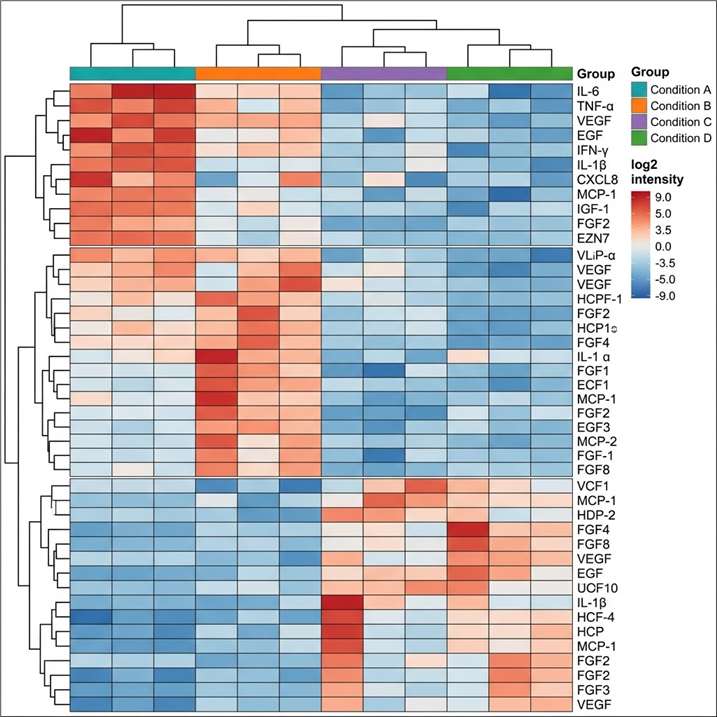
Heatmap visualisation of a 30-target pathway profiling panel across dose-response experiment showing coordinated pathway modulation with dose-dependent protein abundance changes

Heatmap visualisation of a 30-target pathway profiling panel across a dose-response experiment — simultaneous quantification of signalling cascade proteins demonstrates coordinated pathway modulation with dose-dependent protein abundance changes.

Assay reproducibility assessment showing coefficient of variation CV distribution across 60 peptide targets measured from pooled QC samples over a 72-hour analytical sequence median CV below 12 percent

Assay reproducibility assessment — coefficient of variation (CV) distribution across 60 peptide targets measured from pooled QC samples over a 72-hour analytical sequence. Median CV below 12%, with >90% of targets achieving CV < 20%.

CASE STUDY

Pathway-Scale Multiplexed Protein Panels Enable Genetic Regulation Discovery Across 480 Samples

Yu Q, Liu X, Keller MP, et al. Nat Commun. 2023;14:555.

Background & Purpose

Connecting genetic variation to protein-level phenotypes at pathway scale requires the ability to quantify dozens to hundreds of proteins across large sample cohorts — a technical challenge that conventional targeted proteomics approaches have struggled to meet. The GoDig (Go Digest) strategy was developed to address this gap by combining TMTpro 16-plex sample multiplexing with real-time instrument analytics, enabling pathway-scale targeted proteomics in a single LC-MS/MS injection using approximately 1 µg of combined peptide material per sample.

Methods

The GoDig platform operates by performing real-time peptide identification during LC-MS/MS acquisition: when a target peptide from the predefined protein list is detected at its expected mass and retention time, the instrument automatically triggers a quantitative MS3 scan for all 16 TMT channels simultaneously. This eliminates the need for pre-synthesised internal standard peptides — any previously observed peptide from spectral libraries can be targeted — and the TMT-based multiplexing compresses instrument time from hours to minutes per sample. In this study, pathway-focused GoDig panels were designed for kinases (50 targets), lipid metabolism proteins, and lipid droplet-associated proteins, and applied to liver samples from 480 fully genotyped Diversity Outbred (DO) mice fed a high-fat diet. Total instrument time for all 480 samples was approximately 60 hours.

Results Overview

Single-shot GoDig analyses routinely achieved 94% target protein coverage — compared to 29% for conventional MS1-based shotgun proteomics — with 88% quantitative repeatability between technical replicates. The correlation between single-shot GoDig data and data from 24-fraction deep proteome profiling reached a Spearman coefficient of 0.93, confirming that the targeted approach did not sacrifice quantitative accuracy despite the dramatic increase in throughput. Across the 480 DO mouse cohort, data completeness was 100% for the lipid metabolism panel, and 44 of 49 previously reported protein quantitative trait loci (pQTLs) were reproduced with substantially improved statistical confidence. More importantly, GoDig identified 13 novel pQTLs among 50 kinases with no previously reported genetic associations. Follow-up mediation analysis revealed GM4951 as a previously uncharacterised master regulator of hepatic lipid droplet homeostasis — a finding subsequently validated by overexpression and knockdown experiments in AML12 hepatocytes.

Case study: GoDig workflow schematic from Yu et al. 2023 Nature Communications showing real-time targeted proteomics with TMTpro 16-plex sample multiplexing

Fig. 1 from Yu et al. 2023 Nature Communications: Schematic of the GoDig real-time targeted proteomics strategy combining TMTpro 16-plex sample multiplexing with scheduled MS3 quantification for pathway-scale protein analysis.

Case study data: protein family profiling results from Yu et al. 2023 showing quantitative coverage and technical repeatability of GoDig across 4 human cell lines

Fig. 2 from Yu et al. 2023: Protein family profiling results demonstrating 94% target coverage and 88% quantitative repeatability between technical replicates across four human cell lines.

Case study data: pQTL analysis across 480 Diversity Outbred mouse livers from Yu et al. 2023 showing novel pQTL identification and statistical confidence improvement

Fig. 4 from Yu et al. 2023: Targeted pQTL analysis of livers from 480 genotyped DO mice fed a high-fat diet, showing 44/49 known pQTLs reproduced with improved statistical confidence and 13 novel pQTLs identified.

Conclusion

This study demonstrates that carefully designed multiplexed protein panels, when combined with efficient sample multiplexing and real-time acquisition strategies, can deliver pathway-level quantitative proteomics at a throughput and coverage that was previously achievable only by discovery-phase methods — without sacrificing the analytical rigour of targeted approaches. The GoDig framework validated here illustrates the principle that underpins our multiplexed protein panel service: that targeted proteomics need not be limited to a handful of proteins per experiment, and that custom panels tailored to specific biological pathways, protein families, or disease-relevant targets can unlock genetic and mechanistic insights inaccessible to either discovery-only or single-target workflows. Creative Proteomics has implemented analogous multiplexed PRM and 4D-PRM panel workflows across our Orbitrap and timsTOF platforms, adapted from the principles established in this work.

Frequently Asked Questions

Q1: How many proteins can be quantified in a single multiplexed panel?

For typical targeted proteomics panels with 1–3 peptides per protein and scheduled 2–3 minute retention time windows, we routinely multiplex 15–100 peptide targets per injection on Orbitrap platforms. With 4D-PRM on the Bruker timsTOF Pro, ion mobility-filtered peaks enable tighter scheduling, supporting up to 150–200 peptide targets per injection. The practical limit depends on your targets' retention time distribution, sample matrix complexity, and required sensitivity — we evaluate these factors during the initial feasibility assessment and recommend an optimal panel size.

Q2: Can you develop a custom panel for my specific protein targets?

Yes — this is the core of our service. You provide the list of target proteins; we handle everything else: proteotypic peptide selection, heavy-labeled AQUA peptide synthesis, LC-MS method development and optimisation, assay validation in your sample matrix, and full sample cohort analysis. Custom panels typically require 4–6 weeks for development and validation before the production analysis begins. We provide regular progress updates and a comprehensive assay performance report upon validation completion.

Q3: Do you use stable isotope internal standards for every target?

For absolute quantification panels — yes, every target receives a matched heavy-labeled peptide or protein standard. For relative quantification panels where cross-study comparability is less critical, we can use a hybrid approach with a subset of internal standards for normalisation while monitoring additional targets through label-free PRM. The choice depends on your research goals and is discussed during the panel design phase.

Q4: What biological matrices are compatible with multiplexed panel analysis?

We have developed and validated multiplexed PRM and 4D-PRM panels across a comprehensive range of matrices: plasma and serum (with or without abundant protein depletion), CSF, cell lysates, tissue homogenates (fresh frozen and FFPE), urine, saliva, bronchoalveolar lavage fluid, and immunoprecipitated eluates. For each matrix type, we perform an initial feasibility assessment to determine whether matrix-specific depletion, enrichment, or fractionation steps are needed to achieve the required sensitivity for your specific targets.

Q5: How long does custom panel development take?

A typical custom panel of 20–50 targets requires 4–6 weeks from target list finalisation to validated assay delivery. This includes peptide selection (1 week), heavy standard synthesis (2–3 weeks), method development and optimisation (1–2 weeks), and assay validation (1 week). Larger panels (50–100+ targets) may require an additional 1–2 weeks. Production sample cohort analysis timelines depend on sample numbers and are discussed during project planning.

GET STARTED

Design Your Custom Multiplexed Protein Panel

From 15-plex pathway panels to 100-plex biomarker verification assays — our multiplexed panel development service delivers the quantitative performance your research demands with custom design, full analytical validation, and comprehensive data reporting for every target.

Ready to discuss your panel requirements?

Request a Customized Quote

All services and data provided are strictly for non-clinical research purposes. Our analytical results are not intended for clinical diagnosis, patient management, or therapeutic decision-making.