Get Your Custom Quote

Online Inquiry

Biologics Protein Quantification Service

Comprehensive LC-MS/MS-based quantification of biotherapeutic proteins — monoclonal antibodies (mAbs), antibody-drug conjugates (ADCs), fusion proteins, and recombinant proteins. Our platform integrates immunoaffinity enrichment, signature peptide-based targeted quantification (PRM/MRM), and intact/middle-down mass spectrometry to deliver robust, reproducible protein quantification in plasma, serum, tissue, and cell culture matrices. Supporting biotherapeutic development from early discovery pharmacokinetics through process development and quality assessment.

Research Use Only (RUO) Notice: All services and data provided are strictly for non-clinical research purposes. Our analytical results are not intended for clinical diagnosis, patient management, or therapeutic decision-making.

Services Technologies Demo Case Study FAQ Related Services

CORE SERVICE

Integrated LC-MS/MS Biologics Quantification Platform for Biotherapeutic Development

Biologics quantification by LC-MS/MS has become the methodology of choice when traditional ligand-binding assays are unavailable, insufficiently specific, or require multi-analyte multiplexing. Unlike ELISA, LC-MS/MS directly measures the protein analyte through its peptide surrogates or intact mass, providing sequence-level specificity that distinguishes closely related biotherapeutic variants, quantifies total and conjugated antibody species for ADCs, and supports simultaneous multi-analyte panels. Our biologics quantification platform deploys three complementary LC-MS/MS strategies — immunoaffinity enrichment coupled to LC-MS/MS, signature peptide-based targeted quantification (PRM/MRM), and intact/middle-down mass spectrometry — selected and combined according to the biotherapeutic modality, required sensitivity, and study objectives.

  • mAb & Fusion Protein Quantification: Generic human IgG framework peptide-based LC-MS/MS workflows enable quantification of monoclonal antibodies and Fc-fusion proteins across drug development stages, from discovery PK through regulated bioanalysis. Surrogate peptide selection, stable isotope internal standard synthesis, and multi-analyte panel development are optimised for each biotherapeutic candidate.
  • ADC Multi-Attribute Quantification: Comprehensive antibody-drug conjugate analysis measuring total antibody (TAb), conjugated antibody (CAb), free payload, and drug-to-antibody ratio (DAR) — providing the complete PK picture required for ADC development. Intact mass analysis tracks DAR distribution and deconjugation kinetics.
  • Recombinant Protein & HCP Quantification: Stable isotope dilution absolute quantification of recombinant therapeutic proteins in cell culture supernatants, purification fractions, and final drug substance. Host cell protein (HCP) quantification workflows identify and quantify residual process-related impurities at single-ppm sensitivity.
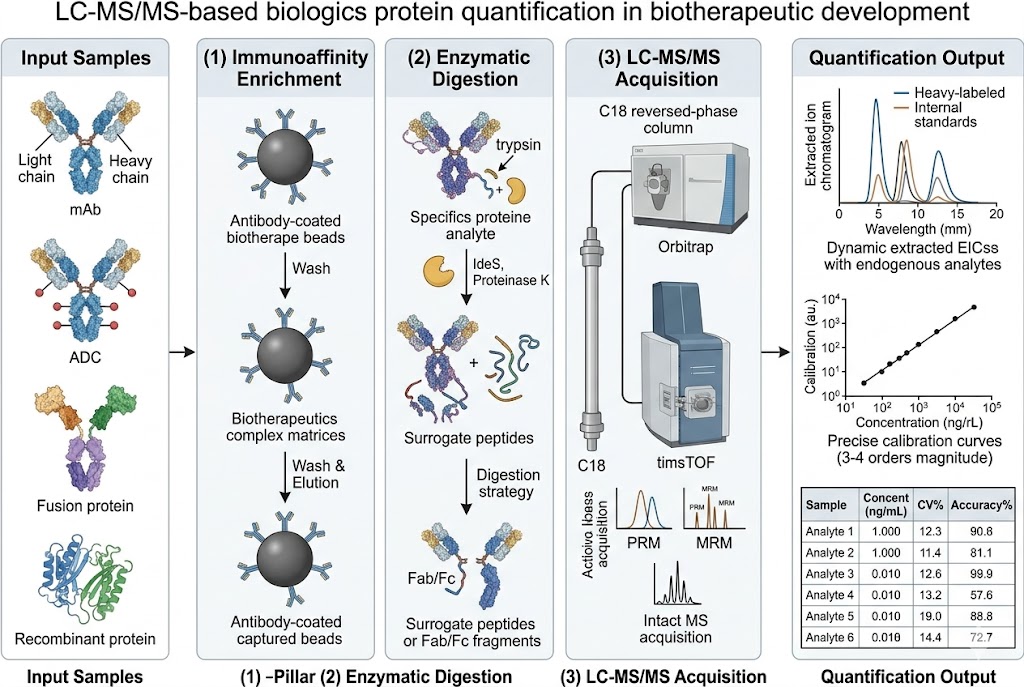
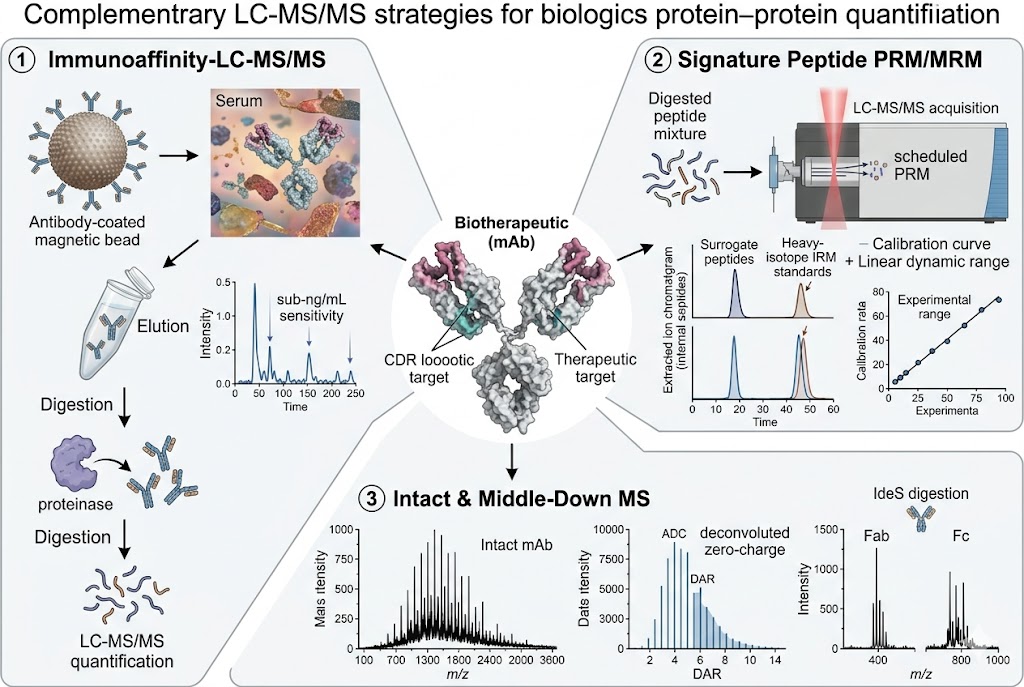
Biologics protein quantification workflow showing three integrated LC-MS/MS approaches for monoclonal antibodies, ADCs, fusion proteins, and recombinant protein quantification in biotherapeutic development

Integrated biologics quantification platform: three complementary LC-MS/MS strategies for comprehensive biotherapeutic protein analysis across drug development stages.

LC-MS/MS for Biologics Quantification: Addressing the Limitations of Ligand-Binding Assays

The quantification of biotherapeutic proteins in biological matrices presents analytical challenges that are fundamentally different from those encountered with small molecules. The large size, complex structure, and endogenous homology of many biologics demand analytical methods with high specificity and broad dynamic range. While ligand-binding assays (LBA) such as ELISA have historically been the standard for biologics bioanalysis, they exhibit well-recognised limitations: development timelines of 12-24 weeks, cross-reactivity with endogenous proteins, inability to distinguish intact drug from metabolites or degradation products, and limited multiplexing capacity. LC-MS/MS addresses these limitations by directly measuring the biotherapeutic through sequence-specific surrogate peptides or intact mass analysis, providing molecular-level specificity that LBAs cannot achieve.

The selection of the optimal LC-MS/MS strategy depends on the biotherapeutic modality and the specific bioanalytical question. For first-in-human PK studies where assay development speed is critical, generic human IgG framework peptide methods enable rapid method deployment with minimal reagent development. For ADC programmes requiring simultaneous measurement of total antibody, conjugated antibody, and free payload, multi-assay LC-MS/MS workflows provide the comprehensive PK dataset needed for exposure-response analysis. For recombinant protein process development, label-free or stable isotope dilution quantification supports high-throughput in-process monitoring. Each application demands a tailored analytical strategy, and our platform is designed to provide the appropriate level of analytical rigour aligned with the development stage and regulatory expectations.

Quantification Strategies Across Biotherapeutic Modalities

Monoclonal antibodies represent the most mature biotherapeutic modality, and LC-MS/MS methods for mAb quantification are well established. Generic approaches target conserved human IgG framework peptides (e.g., from the heavy chain constant region), enabling a single method to be applied across multiple antibody programmes without re-development. For programmes requiring higher specificity — such as distinguishing a therapeutic mAb from an endogenous antibody with the same isotype — variable region or CDR-specific surrogate peptides are selected, typically requiring 4-6 weeks for peptide selection and assay optimisation. Fusion proteins and bispecific antibodies present additional complexity, requiring multiple signature peptides that distinguish each functional domain or binding arm. For the most challenging low-abundance quantification scenarios, where LLOQ below 10 ng/mL in plasma is required, our Immunoaffinity-LC-MS/MS Quantification service provides antibody-based enrichment prior to LC-MS/MS analysis, combining the specificity of immunocapture with the molecular resolution of mass spectrometry detection.

Three complementary LC-MS/MS strategies for biologics quantification: immunoaffinity-LC-MS/MS, signature peptide PRM/MRM, and intact/middle-down mass spectrometry for comprehensive biotherapeutic analysis

Three complementary LC-MS/MS quantification strategies for biotherapeutic proteins: immunoaffinity enrichment, signature peptide targeted quantification, and intact/middle-down mass spectrometry.

Our Biologics Quantification Platform & Methodologies

Immunoaffinity-LC-MS/MS for Biologics

Target-specific or generic antibody-based enrichment prior to LC-MS/MS provides the highest sensitivity for biotherapeutic quantification in complex matrices. Anti-human IgG Fc, anti-idiotype, or target-specific antibodies are immobilised on magnetic beads to capture the biotherapeutic from plasma, serum, or tissue homogenate. Following stringent washing to remove matrix components, the captured protein is eluted, enzymatically digested, and analysed by LC-MS/MS with stable isotope internal standards. This hybrid approach combines the selectivity of immunoaffinity capture with the molecular specificity of mass spectrometry, routinely achieving LLOQs of 0.1-10 ng/mL in plasma — 10-100 fold improvement over direct digestion workflows. The approach is compatible with mAbs, ADCs (preserving the conjugated payload during capture), fusion proteins, and recombinant proteins where a suitable capture antibody is available.

Signature Peptide Targeted Quantification (PRM/MRM)

Parallel reaction monitoring (PRM) on high-resolution Orbitrap instruments or multiple reaction monitoring (MRM) on triple quadrupole platforms provides multiplexed, sequence-specific quantification of biotherapeutic proteins through surrogate peptide surrogates. Following proteolytic digestion, 2-5 proteotypic peptides per protein are monitored with scheduled retention time windows, along with their corresponding heavy stable isotope-labeled internal standards. The ratio of endogenous-to-labeled signal provides absolute concentration values against characterised calibration curves. Our Precision Protein Quantification service provides the full PRM/MRM assay development pipeline — from in silico peptide selection and empirical screening through multi-analyte panel assembly and cohort-scale sample analysis. Multiplexing capacity of 50-200 surrogate peptides per injection enables simultaneous quantification of multiple biotherapeutic candidates in combination therapy studies.

Intact & Middle-Down Mass Spectrometry

Intact mass analysis complements peptide-based quantification by providing molecular-level information that bottom-up approaches cannot capture. Under denaturing LC-MS conditions, the intact mass of a mAb (~150 kDa), ADC, or fusion protein reveals the distribution of post-translational modifications, payload conjugation states (DAR0-DAR8 for ADCs), clipping, and aggregation. Middle-down analysis using IdeS or comparable proteases generates defined Fab and Fc fragments (~25-50 kDa), providing domain-level resolution of modifications. For ADC development, intact mass analysis tracks DAR distribution over time in plasma stability and PK studies, distinguishing active DAR (payload still conjugated) from total DAR. For fusion proteins and bispecific antibodies, intact and middle-down MS confirms correct assembly, quantifies heterodimer vs homodimer ratios, and detects clipping or degradation products that may affect product quality or PK.

Biologics Quantification Workflow

Step 1 — Study Design & Assay Strategy Selection: We review the biotherapeutic modality (mAb, ADC, fusion protein, recombinant protein), the biological matrix, required sensitivity, and study objectives to select the optimal quantification strategy — direct digestion PRM/MRM, immunoaffinity-LC-MS/MS, or intact/middle-down MS. For ADCs, a multi-assay strategy covering TAb, conjugated antibody, free payload, and DAR is designed to provide complete PK coverage.

Step 2 — Sample Preparation & Enzymatic Digestion: For peptide-based quantification, protein denaturation, reduction, alkylation, and proteolytic digestion are optimised for each biotherapeutic-matrix combination. Trypsin is the default protease, but alternative enzymes (Lys-C, proteinase K, IdeS) are deployed where tryptic peptides lack specificity or where domain-level information is required. For immunoaffinity workflows, magnetic bead-based capture is performed before digestion. For intact MS, samples are analysed after buffer exchange to MS-compatible solvents without digestion.

Step 3 — LC-MS/MS Method Development & Optimisation: For PRM/MRM workflows, surrogate peptides are selected through in silico digestion and empirical screening. Scheduled retention times, collision energy optimisation, and transition selection are performed for each target. For intact MS, optimised denaturing or native LC conditions are established to preserve non-covalent interactions (for native DAR measurement) or provide optimal mass resolution (for denatured intact mass analysis). Stable isotope-labeled AQUA peptide or SILAC-protein internal standards are incorporated.

Step 4 — Assay Characterisation & Sample Analysis: Full method characterisation including calibration curve linearity, LOD, LLOQ, intra-assay and inter-assay precision, accuracy, matrix effects, and stability. Calibration standards and quality control samples are prepared in the target matrix. For large cohort studies, systematic QC at regular intervals monitors assay performance. For ADCs, DAR is calculated from intact mass spectra using deconvolution algorithms that quantify each DAR species (DAR0-DAR8) as a percentage of total antibody signal.

Step 5 — Data Processing & Integrated Reporting: Raw LC-MS/MS data are processed using Skyline, Spectronaut, or instrument-native software for peak integration and quantification. For ADC multi-attribute studies, TAb, conjugated antibody, free payload, and DAR data are integrated into a unified PK dataset with cross-analyte consistency checks. Deliverables include individual concentration-time data, summary statistics, calibration curve performance, incurred sample reanalysis results, and a comprehensive methods section suitable for regulatory submission support.

Comprehensive ADC Quantification: Total Antibody, Conjugated Antibody, Free Payload & DAR

Antibody-drug conjugates present uniquely complex bioanalytical challenges because the therapeutic entity exists as a heterogeneous mixture of species with varying drug-to-antibody ratios, each with distinct PK properties. A complete PK picture requires no fewer than four complementary measurements: total antibody (TAb, representing all antibody-containing species regardless of payload conjugation state), conjugated antibody (CAb, representing species that retain at least one payload molecule), free payload (released drug in systemic circulation), and DAR distribution (the relative abundance of DAR0 through DAR8 species). Each measurement requires a different analytical approach, and the integration of these datasets provides the mechanistic understanding needed to optimise ADC design and dosing regimens.

Our ADC quantification platform deploys immunoaffinity capture for TAb and CAb quantification — using anti-human IgG Fc antibodies for total antibody capture and payload-specific antibodies for conjugated antibody enrichment — followed by LC-MS/MS quantification with stable isotope internal standards. Free payload is quantified separately using solvent extraction and LC-MS/MS after protein precipitation. DAR distribution and deconjugation kinetics are monitored by intact mass analysis under denaturing and native conditions across time points in plasma stability and PK studies. For ADC programmes where payload-related PTMs or catabolite profiling is required, our Targeted PTM Quantification service provides site-specific quantification of payload modifications and ADC-related post-translational changes. For ADC candidates where off-target toxicity is a concern, our Off-Target Profiling platform enables proteome-wide assessment of ADC-protein interactions.

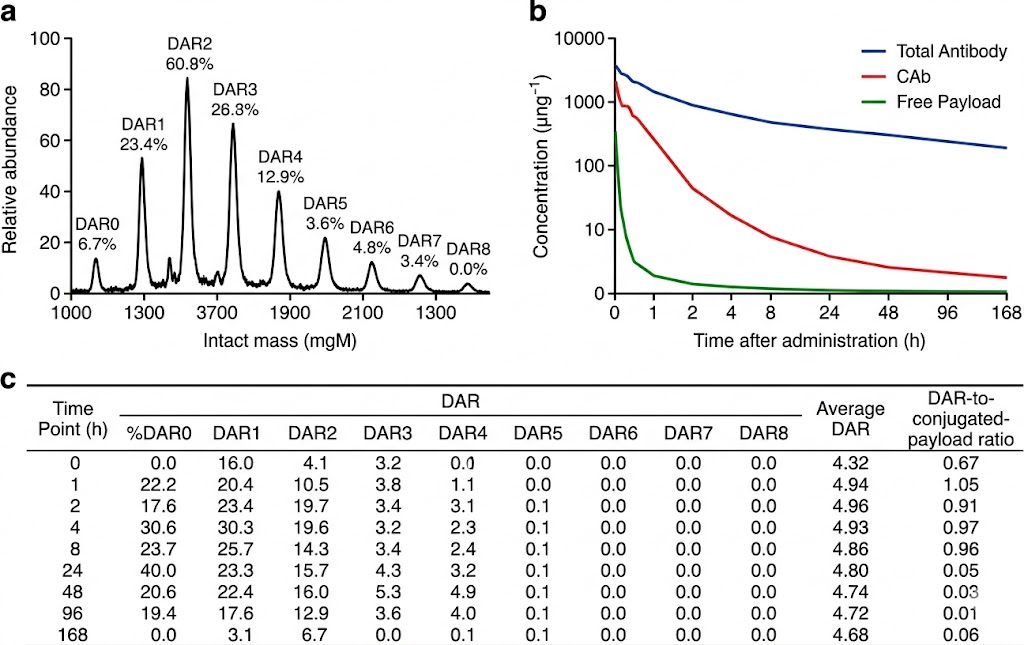
Intact Mass DAR Analysis: Under denaturing LC-MS conditions, an ADC sample resolves into distinct mass peaks corresponding to DAR0 through DAR8 species. Deconvolution algorithms calculate the relative abundance of each species, from which the average DAR is derived. When performed under native conditions, the non-covalent interaction between antibody chains is preserved, providing additional confirmation of structural integrity. Serial measurements across time points in plasma stability studies reveal the kinetics of payload deconjugation, distinguishing stable conjugates from those with rapid payload loss.

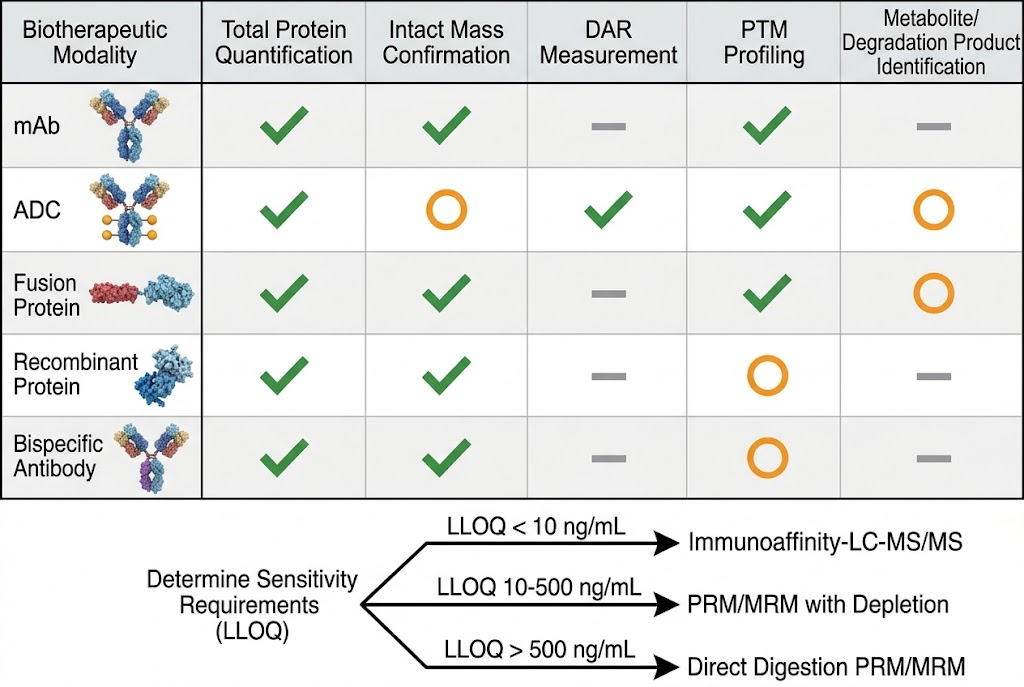
Platform selection guide for biologics quantification comparing LC-MS/MS strategies for different biotherapeutic modalities and analytical goals

Method selection framework: matching LC-MS/MS quantification strategy to biotherapeutic modality and analytical objectives.

Sample Requirements for Biologics Protein Quantification

Biotherapeutic Modality Sample Type Recommended Volume / Input Recommended Approach
Monoclonal antibody Plasma / serum 25-100 µL Generic IgG peptide PRM/MRM or immunoaffinity-LC-MS/MS for sub-ng/mL sensitivity
Antibody-drug conjugate (ADC) Plasma / serum 50-200 µL Multi-assay: immunocapture LC-MS/MS (TAb + CAb) + intact MS (DAR) + solvent extraction LC-MS/MS (free payload)
Fusion protein Plasma / serum 25-100 µL Modality-specific signature peptide PRM/MRM; immunoaffinity enrichment recommended for LLOQ below 10 ng/mL
Recombinant protein Cell culture supernatant 100-500 µL Direct digestion PRM/MRM with stable isotope internal standard; label-free quantification for high-concentration in-process samples
Recombinant protein Purified drug substance / formulation 10-100 µg total protein Intact MS for mass confirmation and purity; PRM for absolute quantification
Biotherapeutic (any modality) Tissue homogenate (biodistribution) 10-50 mg tissue Immunoaffinity-LC-MS/MS recommended; homogenisation optimisation required per tissue type

All workflows support multiple biological matrices including plasma, serum, whole blood, CSF, tissue homogenates, cell culture supernatant, and cell lysates. Triplicate biological replicates are recommended for PK and toxicokinetic studies. For early discovery studies, single-replicate analysis with pooled QC may be sufficient. Study-specific feasibility assessment is performed before method development to confirm that the target sensitivity and selectivity can be achieved in the specified matrix. For quantification projects requiring orthogonal target engagement confirmation, our Target Validation Proteomics platform provides complementary interaction proteomics workflows.

Representative Biologics Quantification Data

The representative examples below illustrate the quantitative performance of our LC-MS/MS biologics quantification platform across different biotherapeutic modalities.

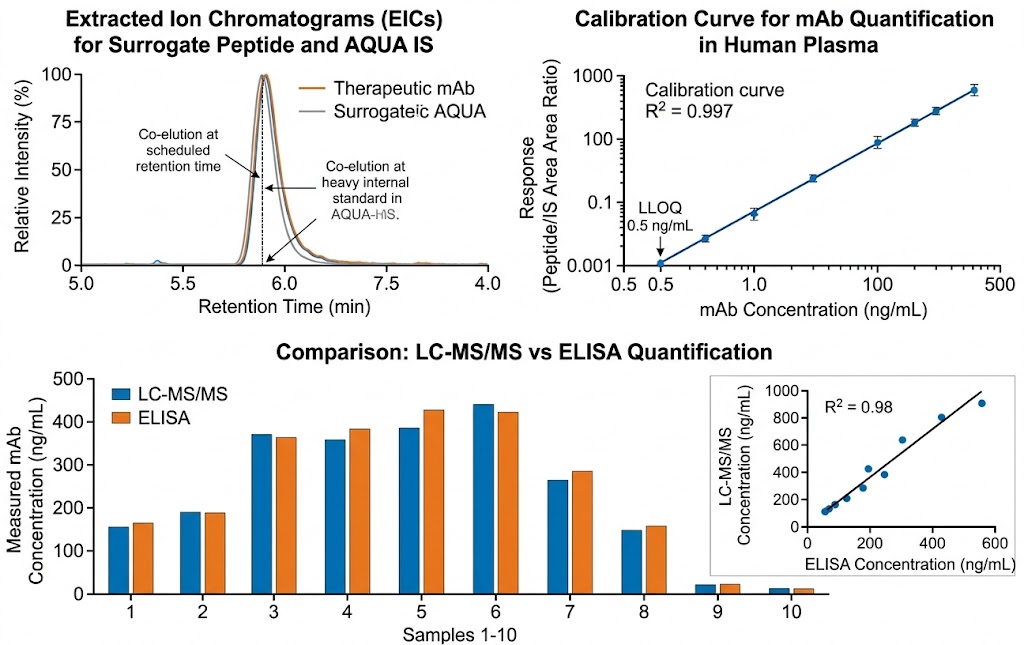
Monoclonal antibody quantification data showing extracted ion chromatograms for surrogate peptide with internal standard, calibration curve, and cross-method comparison with ELISA

mAb quantification by LC-MS/MS: extracted ion chromatograms for surrogate peptide and AQUA internal standard, calibration curve in human plasma (0.5-500 ng/mL), and correlation with ELISA across spiked samples.

ADC multi-attribute quantification data showing intact mass spectrum with DAR distribution, time-course PK profiles for total antibody and free payload, and DAR calculation table

ADC multi-attribute quantification: intact mass spectrum with DAR0-DAR8 annotation, time-course PK profiles for TAb, conjugated antibody, and free payload, and DAR distribution table at each time point.

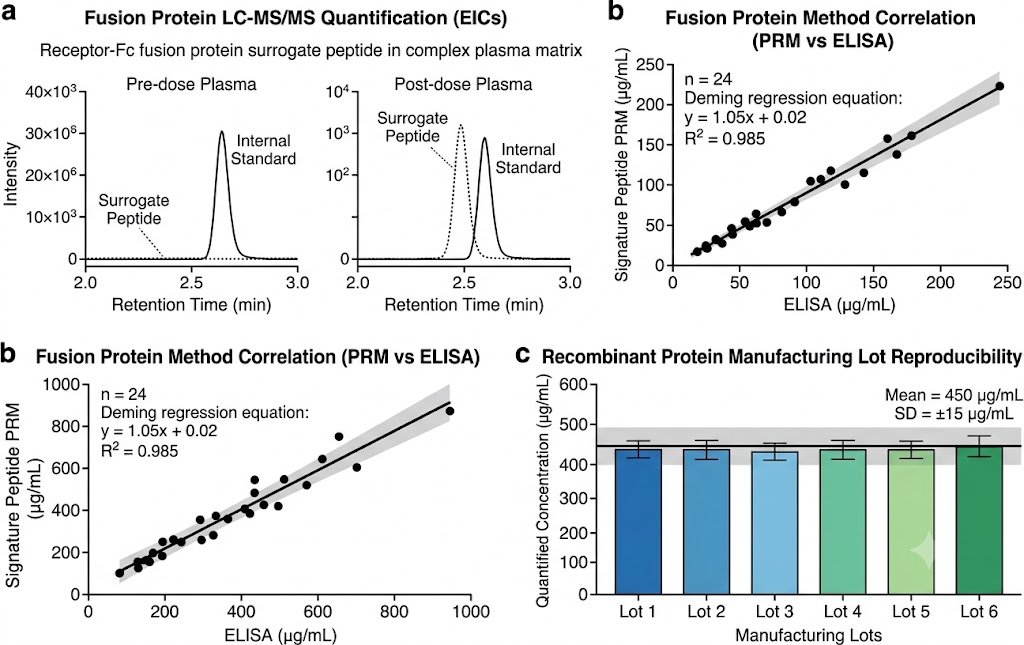
Fusion protein and recombinant protein quantification data showing surrogate peptide chromatograms, correlation with ELISA, and batch reproducibility across manufacturing lots

Fusion protein and recombinant protein quantification: surrogate peptide quantitation in pre-dose vs post-dose samples, correlation with ELISA across patient samples, and batch-to-batch reproducibility assessment.

CASE STUDY

Simple and Highly Sensitive LC-MS Workflow for Simultaneous Quantification of ADC Cleavable Payloads in Serum

Mak et al. 2024 | Sci Rep | CC BY 4.0

Background & Purpose

Antibody-drug conjugates (ADCs) deliver potent cytotoxic payloads selectively to tumour cells, but the free payload released into systemic circulation after ADC deconjugation can contribute significantly to toxicity and limit the therapeutic window. Reliable quantification of cleavable ADC payloads in serum is therefore essential for understanding ADC pharmacokinetics, deconjugation kinetics, and exposure-toxicity relationships. Existing LC-MS/MS methods for payload quantification often require large serum volumes, extensive sample preparation, or specialised equipment. Mak et al. addressed this gap by developing a simple, highly sensitive LC-MS/MS workflow capable of simultaneously quantifying six chemically diverse ADC payloads — SN-38, maytansine (MTX), DXd, monomethyl auristatin E (MMAE), monomethyl auristatin F (MMAF), and calicheamicin (CM) — from only 5 µL of serum, using a rapid single-phase extraction and fast LC-MS/MS analysis.

Methods

A single-phase extraction using methanol-ethanol mixture (50% v/v) as extraction solvent was developed to extract the target payload analytes from mouse serum. 5 µL of serum was spiked with 2 µL of nicotinamide-D4 as internal standard, followed by addition of 15 µL of ice-cold methanol:ethanol. After vortex mixing and protein precipitation at -20 °C, the supernatant was collected and analysed directly by LC-MS/MS without drying or reconstitution. Liquid chromatography separation was performed using a Kinetex F5 core-shell column with water/methanol mobile phases, selected after systematic comparison of BEH Phenyl, CSH Phenyl-Hexyl, and Kinetex F5 columns. Mass spectrometry detection was performed on a triple quadrupole instrument in MRM mode with positive electrospray ionisation. The method was validated for selectivity, linearity, accuracy, precision, recovery, matrix effects, and stability according to regulatory bioanalytical method validation guidelines.

Results Overview

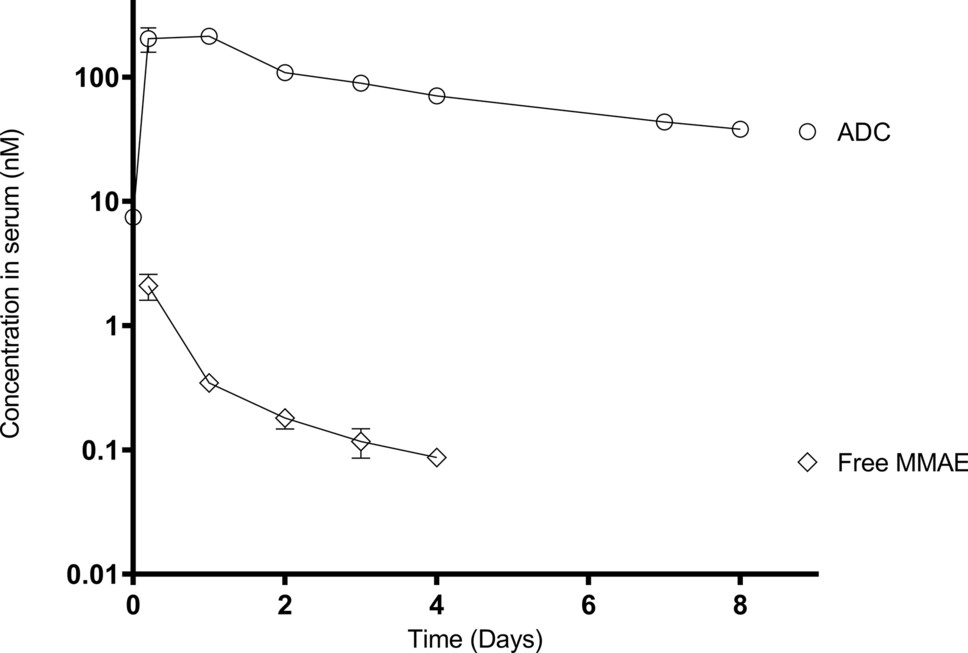
The validated method achieved >85% extraction recovery for all six payload analytes from 5 µL serum with minimal matrix effects. Linear dynamic ranges were established: 0.4-100 nM for SN-38, MTX, and DXd; 0.04-100 nM for MMAE and MMAF (providing 10-fold greater sensitivity for these auristatins); and 0.4-1000 nM for calicheamicin. Inter-assay precision (CV) was within 15% at all quality control levels across three validation runs. The method was successfully applied to a pharmacokinetic study in mice, quantifying free MMAE serum concentrations over time after intravenous administration of an ADC at 5 mg/kg. The concentration-time profile revealed the expected rapid distribution phase followed by slower elimination, with MMAE levels quantifiable for at least 168 hours post-dose — demonstrating the sensitivity required for extended PK monitoring in preclinical ADC development programmes.

ADC payload LC-MS/MS quantification workflow from Mak et al. 2024 showing single-phase extraction from 5 uL serum followed by fast LC-MS/MS analysis for simultaneous quantification of six ADC payloads

Figure 1 from Mak et al. 2024: LC-MS/MS workflow schematic for ADC cleavable payload quantification — single-phase methanol-ethanol extraction from 5 µL serum followed by fast LC-MS/MS analysis for six ADC payloads. (CC BY 4.0)

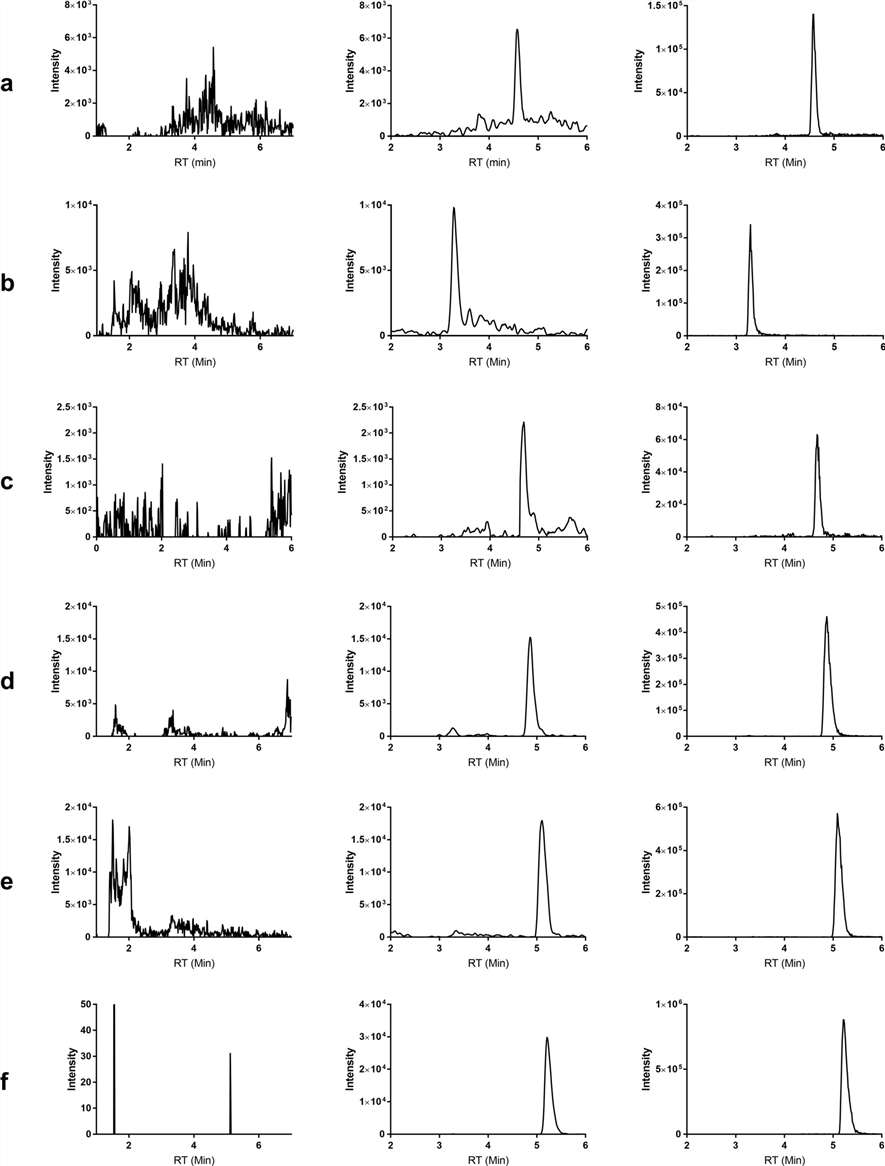
LC-MS/MS chromatograms from Mak et al. 2024 showing method selectivity for six ADC payloads vs blank serum with internal standard

Figure 2 from Mak et al. 2024: Representative LC-MS/MS chromatograms demonstrating method selectivity — blank serum (lower) vs analyte standards (upper) for six ADC payloads with internal standard. (CC BY 4.0)

Pharmacokinetic application from Mak et al. 2024 showing serum MMAE concentration-time profile in mice after ADC administration

Figure 4 from Mak et al. 2024: Pharmacokinetic application — serum concentration-time profile of free MMAE in mice (n=6) after intravenous ADC administration at 5 mg/kg, demonstrating method applicability to preclinical PK studies. (CC BY 4.0)

Conclusion

This study establishes a straightforward, high-sensitivity LC-MS/MS workflow for simultaneous quantification of chemically diverse ADC payloads from minimal serum volumes, addressing a critical bioanalytical need in ADC development. The key innovations — single-phase extraction without drying/reconstitution, systematic column selection for payload separation, and validated performance across six payloads representing different drug classes — make the method broadly applicable across ADC programmes regardless of payload chemistry. For researchers developing ADC candidates, the demonstrated sensitivity (0.04 nM LLOQ for MMAE and MMAF) and extended PK monitoring capability (168-hour quantification window) provide the bioanalytical foundation needed for thorough preclinical characterisation of ADC deconjugation kinetics and systemic payload exposure. Creative Proteomics has implemented analogous LC-MS/MS payload quantification workflows, adapted from the principles demonstrated in this work, across our biologics quantification platform.

Frequently Asked Questions

Q1: Why choose LC-MS/MS over ELISA for biologics quantification?

LC-MS/MS provides sequence-level specificity that distinguishes closely related biotherapeutic variants, quantifies total and conjugated antibody species simultaneously for ADCs, and supports multiplexed multi-analyte panels in a single injection. Unlike ELISA, LC-MS/MS does not require analyte-specific antibody reagents for method development (generic human IgG framework peptides can be used for mAb quantification), making it the preferred approach when high-quality ELISA reagents are unavailable, when specificity at the peptide sequence level is required to distinguish the biotherapeutic from endogenous proteins, or when multiple analytes must be quantified from limited sample volumes.

Q2: Can you quantify mAbs, ADCs, and fusion proteins from the same sample?

Yes. Our multi-analyte LC-MS/MS assays use surrogate peptide-based quantification with stable isotope internal standards, enabling simultaneous quantification of multiple biotherapeutic proteins from a single sample injection. For mAbs, conserved human IgG framework peptides provide a generic quantification strategy applicable across antibody therapeutics. For ADCs, we deploy complementary assays that quantify total antibody, conjugated antibody, and free payload levels from the same sample. For combination therapy studies involving two or more biotherapeutics, the multiplexing capacity of PRM acquisition supports simultaneous quantification of all analytes, provided that unique surrogate peptides can be identified for each therapeutic protein.

Q3: What sensitivity can you achieve for biologics quantification by LC-MS/MS?

Sensitivity depends on the analytical approach. With direct digestion PRM/MRM (without enrichment), typical LLOQ ranges from 50-500 ng/mL in plasma depending on target peptide ionisation efficiency. With immunoaffinity enrichment (SISCAPA or protein-level immunocapture), LLOQ improves to 0.1-10 ng/mL — comparable to or better than ELISA for most targets. For ADC payload quantification by solvent extraction and LC-MS/MS, LLOQ of 0.04-0.4 nM is achievable depending on payload chemistry, as demonstrated in published work (Mak et al. 2024, Sci Rep). The appropriate approach is selected based on the required sensitivity, sample availability, and development stage.

Q4: How do you handle ADC quantification — total antibody, conjugated antibody, and payload?

ADC quantification requires a multi-assay strategy. Total antibody (TAb) is quantified by generic human IgG peptide-based LC-MS/MS after immunocapture. Conjugated antibody (CAb) is quantified by simultaneously monitoring both antibody-specific peptides and linker-payload-specific fragments after enzymatic digestion — the ratio provides a measure of the average payload load on antibody-containing species. Free payload is quantified separately after simple solvent extraction and LC-MS/MS analysis. DAR is measured by intact mass analysis under denaturing conditions, with deconvolution software quantifying the relative abundance of DAR0 through DAR8 species. These four complementary measurements provide the complete PK picture required for ADC development.

Q5: What sample volumes and types are required?

For plasma or serum, 25-100 µL is typically sufficient for standard targeted quantification, and 50-200 µL is recommended when immunoaffinity enrichment is required. For ADC free payload quantification, as little as 5 µL of serum is sufficient for the extraction LC-MS/MS workflow. For cell culture supernatant from upstream process development, 100-500 µL is recommended. For tissue biodistribution studies, 10-50 mg of homogenised tissue is typically required. All major biological matrices are compatible — plasma, serum, whole blood, CSF, tissue homogenates, cell culture supernatant, and cell lysates. Contact our team for a project-specific feasibility assessment for your matrix and target combination.

GET STARTED

Quantify Your Biotherapeutic with Confidence

From mAb PK studies through ADC multi-attribute quantification to recombinant protein process monitoring — our biologics quantification platform delivers the sensitivity, specificity, and throughput your programme demands. Every assay is supported by method development, full analytical validation, and comprehensive data reporting tailored to your development stage.

Ready to discuss your biologics quantification requirements?

Request a Customized Quote