Get Your Custom Quote

Online Inquiry

Transform protein interaction studies with SILAC-based CoIP-MS, enabling accurate, reproducible, and biologically relevant results.

Get Your Custom Quote

SILAC-based CoIP-MS Analysis

Struggling to separate true protein–protein interactions from background noise? Creative Proteomics' SILAC-based CoIP-MS delivers end-to-end, quantitative interactome mapping — from metabolic labelling and antibody-validated co-IP to nano-LC-MS/MS and expert bioinformatics — so you get statistically robust interaction lists that preserve native conformations and PTMs and reliably reveal condition-specific and transient partners.

  • What we deliver: full-service SILAC labelling, Co-IP, high-resolution LC-MS/MS (Q Exactive HF / Orbitrap Fusion series), and transparent data + network analysis.
  • How it helps: reduces false positives, enables accurate heavy:light quantification, and distinguishes specific interactors from background for drug target validation and mechanism-of-action studies.
  • Why trust us: Creative Proteomics has years of proteomics expertise, validated workflows, rigorous QC, and complete raw data and bioinformatics reporting for reproducible, publishable results.
Creative Proteomics' SILAC-based CoIP-MS services.

Why Quantitative Protein Interaction Analysis Matters?

Protein-protein interactions (PPIs) are dynamic and context-dependent. Changes in interaction strength or composition often reflect pathway activation, disease states, or drug-induced perturbations. Traditional qualitative approaches frequently fail to distinguish specific interactors from nonspecific background proteins, limiting biological interpretation.

Quantitative proteomics-based PPI analysis addresses this limitation by enabling direct comparison between experimental and control conditions. In drug discovery, this is particularly crucial for target validation, mechanism-of-action studies, and profiling of off-target interactions. SILAC-based CoIP-MS has become a preferred strategy for high-confidence interaction analysis in complex biological systems.

What Is SILAC-based CoIP-MS?

Stable Isotope Labeling by Amino acids in Cell culture (SILAC) is a metabolic labelling technique in which cells incorporate isotopically labelled amino acids during protein synthesis. When paired with co-immunoprecipitation (CoIP) and LC-MS/MS, SILAC enables accurate relative quantification of proteins co-enriched with a target bait protein.

In a typical SILAC-based CoIP-MS experiment, experimental and control cell populations are differentially labelled with "heavy" and "light" amino acids. After immunoprecipitation of the protein of interest, samples are mixed early in the workflow and analysed together by mass spectrometry. The resulting heavy-to-light peptide ratios enable a direct, internal comparison of protein abundance, allowing for confident discrimination between specific interactors and nonspecific binders. This approach is widely recognised as a benchmark method for quantitative interactomics.
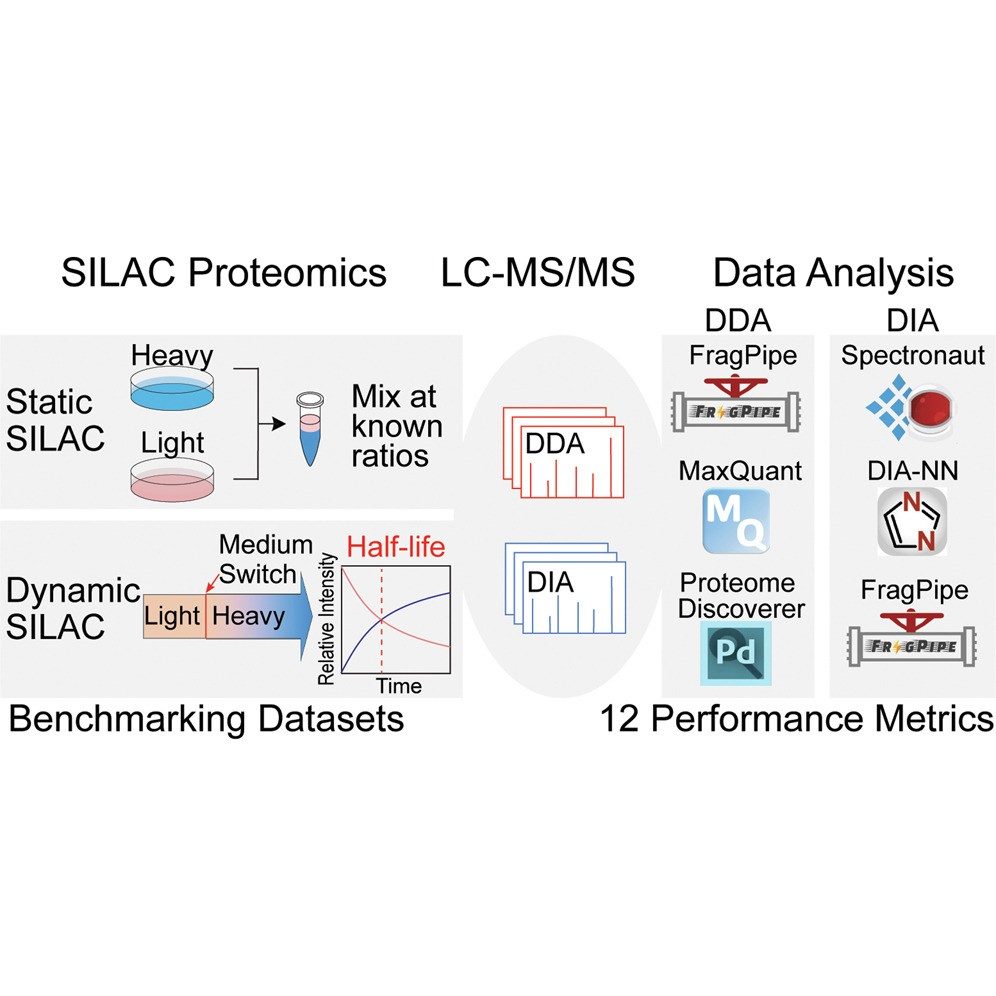
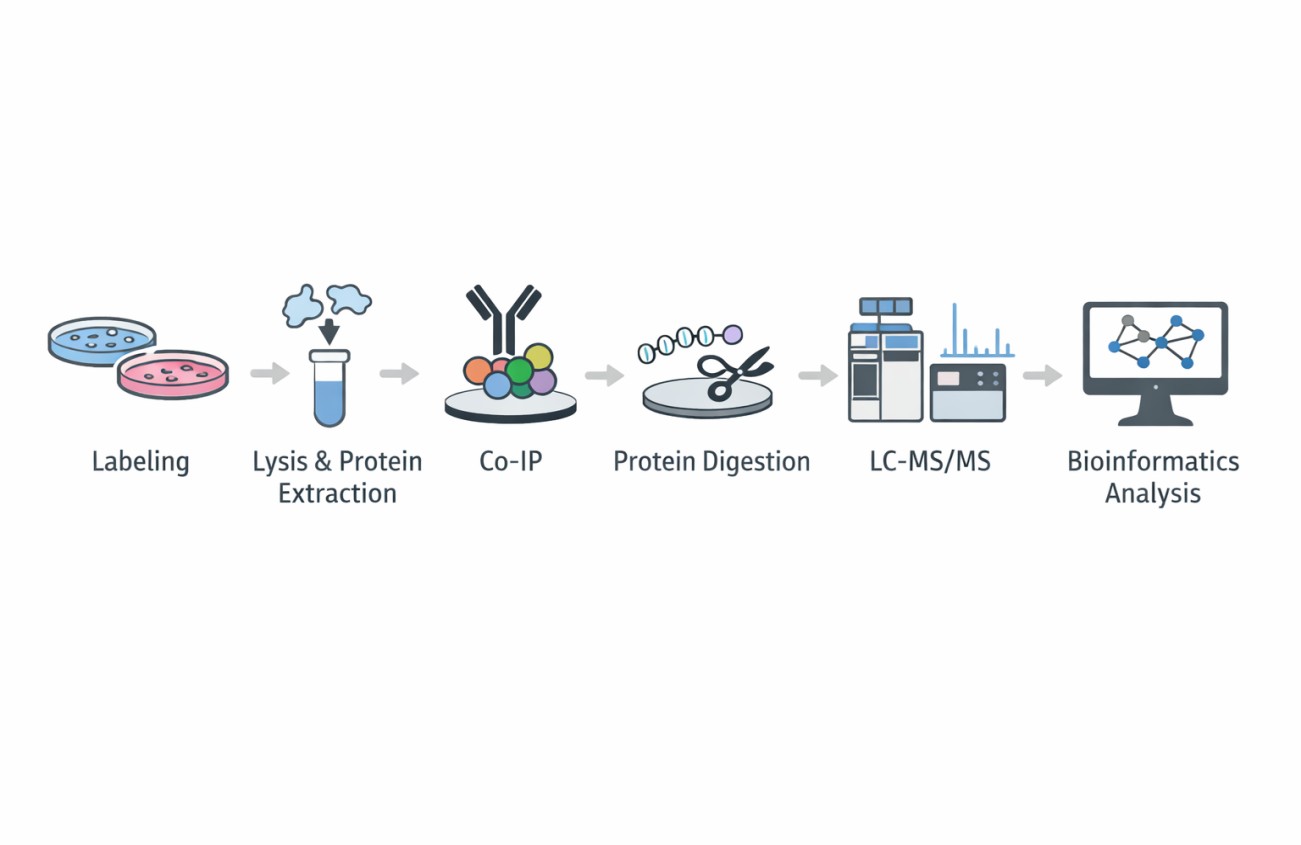
Workflow and data analysis platforms for SILAC proteomics.

Figure 1. SILAC proteomics workflows and data analysis platforms (Frankenfield A M, et al. 2025).

Advantages of SILAC-based Proteomics

Why Combine SILAC with CoIP-MS?

The integration of SILAC with CoIP-MS offers several critical methodological advantages over conventional IP-MS or post-lysis chemical labelling strategies:

Comparison with Other Quantitative Proteomics Strategies

TMT (Tandem Mass Tag) labeling enables the simultaneous comparison of multiple samples, making it ideal for large-scale studies or experiments that require high-throughput analysis. Unlike SILAC, TMT labels proteins after digestion, which can sometimes introduce variability in quantification; however, it works well with samples that cannot be metabolically labelled, such as primary tissues.

iTRAQ (Isobaric Tags for Relative and Absolute Quantitation) functions similarly to TMT, chemically tagging peptides post-digestion for simultaneous comparison across samples. iTRAQ is useful for analyzing multiple conditions or treatments in a single experiment, but can be more sensitive to technical variability in sample preparation. SILAC introduces the label during cell growth, so heavy and light samples are mixed early in the process. This reduces experimental error, preserves native protein states, and provides more reliable relative quantification, especially for detecting subtle changes in protein interactions.

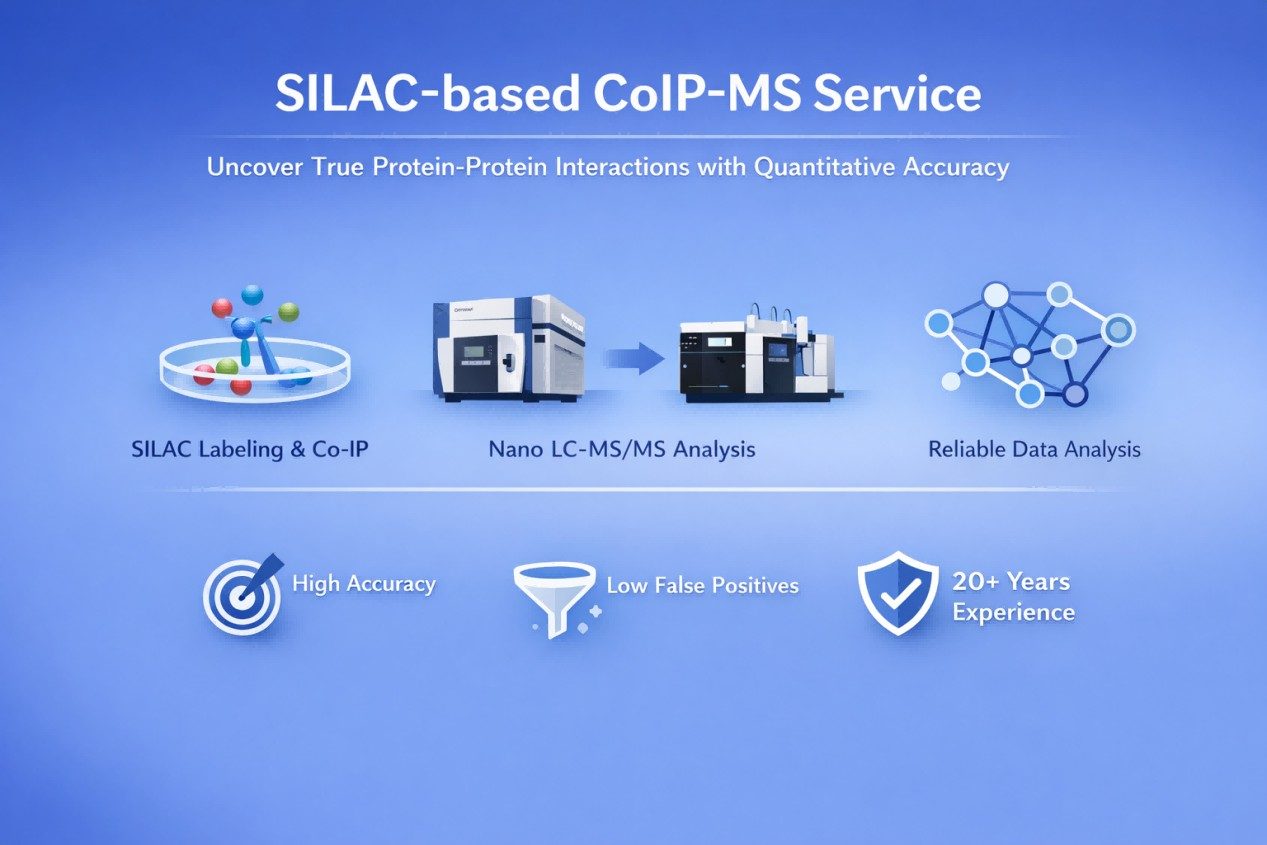
Experimental Workflow of SILAC-based CoIP-MS

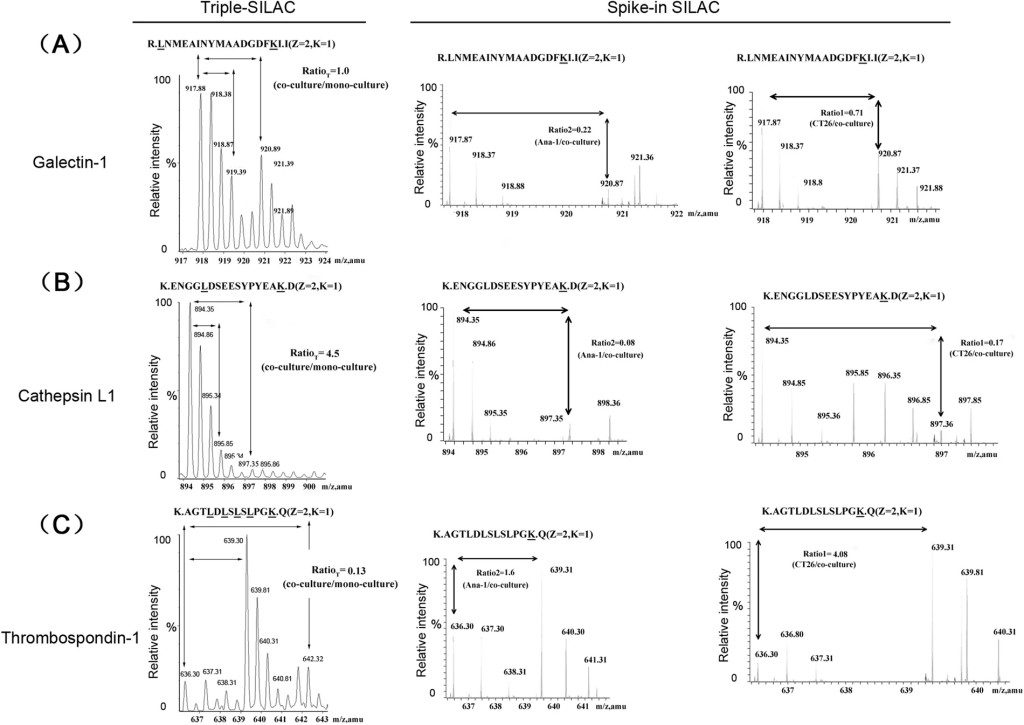
Quantitative MS peaks of proteins.

Data Output and Bioinformatics Interpretation

Applications in Biomedical and Pharmaceutical Research

SILAC-based CoIP-MS is widely applied across multiple research areas, including:

Sample Requirements

Sample type Actively growing, SILAC-compatible cultured cells
Cell number ≥ 5 × 10⁶ cells per condition
Protein amount ≥ 200–300 μg total protein per IP
Controls Matched negative control (e.g., IgG or empty vector)
Replicates At least two biological replicates

Why Choose Creative Proteomics for SILAC-based CoIP-MS?

FAQ

Q1: How does antibody specificity influence data quality in SILAC-based CoIP-MS?

A1: Antibody specificity is a major determinant of experimental success. Poorly characterized or low-affinity antibodies can lead to inefficient enrichment or high background binding, compromising quantitative interpretation. Antibody validation, use of appropriate controls (e.g., IgG pull-downs), and Optimisation of binding conditions are essential to ensure reliable interaction data.

Q2: When should SILAC-based CoIP-MS be preferred over label-free IP-MS?

A2: SILAC-based CoIP-MS is preferred when high quantitative precision and low false-positive rates are required, particularly for comparative studies. Label-free IP-MS may be suitable for exploratory analyses or sample-limited systems, but generally exhibits higher variability and reduced quantitative confidence compared with SILAC-based approaches.

Q3: Can SILAC-based CoIP-MS be used for time-course or dynamic interaction studies?

A3: Yes. SILAC-based CoIP-MS is well-suited for time-course experiments, as it enables the comparison of interaction profiles across different time points following stimulation or drug treatment. When combined with experimental designs such as pulse-SILAC or label-swap strategies, it allows quantitative tracking of dynamic changes in protein complex assembly and disassembly.

Q4: What is the typical project timeline for a SILAC-based CoIP-MS study?

A4: Project timelines depend on cell growth rates, labelling durations, and experimental complexities. In general, SILAC labelling and cell expansion may require several cell doublings, followed by immunoprecipitation, MS analysis, and bioinformatics processing. 

Demo

Demo: SILAC–based quantitative MS approach for real-time recording protein-mediated cell-cell interactions

This study extended SILAC-based quantitative mass spectrometry to monitor changes in protein secretion in a tumor-microenvironment co-culture system. While focusing on secreted proteins, the approach demonstrates how SILAC labelling coupled with LC-MS/MS can quantitatively compare protein levels between complex biological conditions, a principle fundamental to SILAC-CoIP comparative PPI analyses.

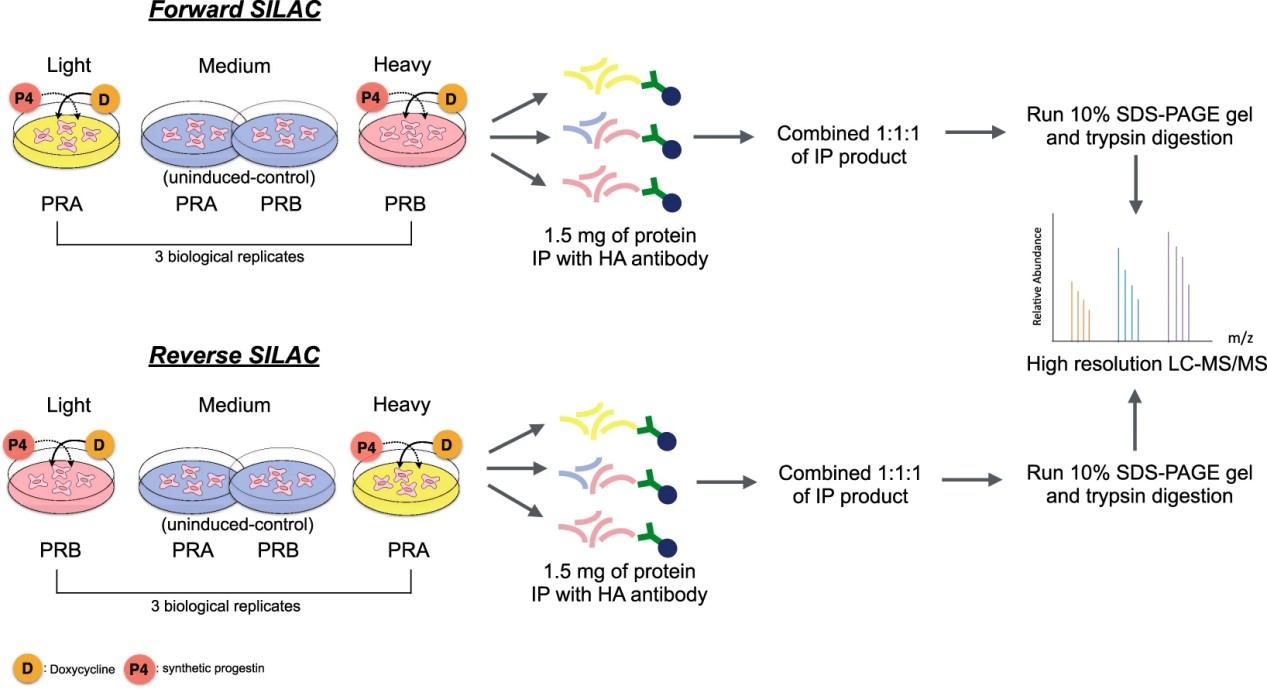
Summary of the experimental work-flow for PRA and PRB interacting.

Figure 2. Quantitative MS peaks of three proteins identified by spike-in SILAC and Triple-SILAC in mouse Ana-1 and CT26 co-culture system (Wang X, et al., 2018).

Case Study

Case: Triple SILAC Identified Progestin-Independent and Dependent PRA and PRB Interacting Partners in Breast Cancer

Background

Progesterone receptor (PR) signalling plays a central role in breast cancer biology. Two major PR isoforms — PRA and PRB — have overlapping yet distinct biological functions. Understanding the differential protein interactions of these isoforms is critical to elucidating isoform-specific mechanisms in hormone responses and breast cancer progression.

Purpose

To systematically identify and compare protein complexes interacting with PRA and PRB under both progestin-independent and progestin-dependent conditions using a quantitative SILAC-based proteomics approach. The goal was to generate comprehensive interactome maps for each receptor isoform that reflect functional differences.

Methods

  • Triple SILAC labelling was employed, where cells expressing HA-tagged PRA or PRB were labelled with distinct stable isotope media (light, medium, heavy), enabling robust quantitative comparisons across conditions.
  • Affinity purification (Co-IP) of PRA or PRB complexes was performed using the HA tag.
  • Peptides were analysed by LC-MS/MS, and quantitative comparisons of heavy/light SILAC ratios distinguished specific interacting proteins for each receptor isoform and ligand state.
  • Both forward and reverse SILAC experiments were applied to minimise labelling bias and experimental noise.

Results

  • The study produced differential interaction profiles for PRA and PRB, identifying common and unique interacting partners for each isoform.
  • Multiple proteins involved in transcriptional regulation, chromatin remodeling, and nuclear signalling were reproducibly detected as isoform-specific interactors.
  • Progestin‐dependent interactions were also identified, revealing how ligand binding modulates receptor complexes differently for PRA and PRB.
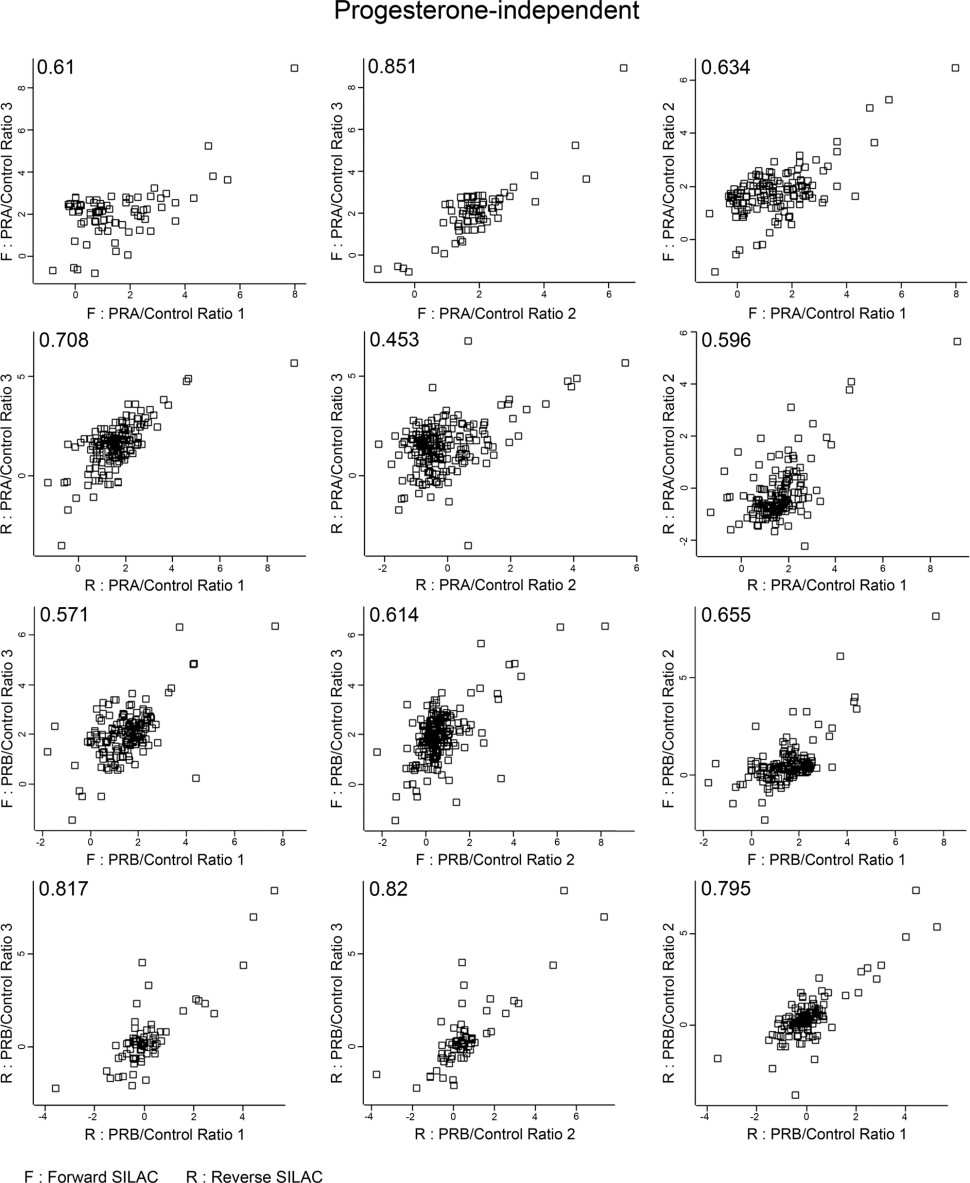
Scatter plots of log2 SILAC ratio comparing across replicates.

Figure 3. Summary of the experimental workflow applied to investigate PRA and PRB interacting partners.

Functional enrichment analysis of PRA and PRB interacting partners.

Figure 4. Scatter plots of log2 SILAC ratio comparing across replicates in progesterone-independent condition.

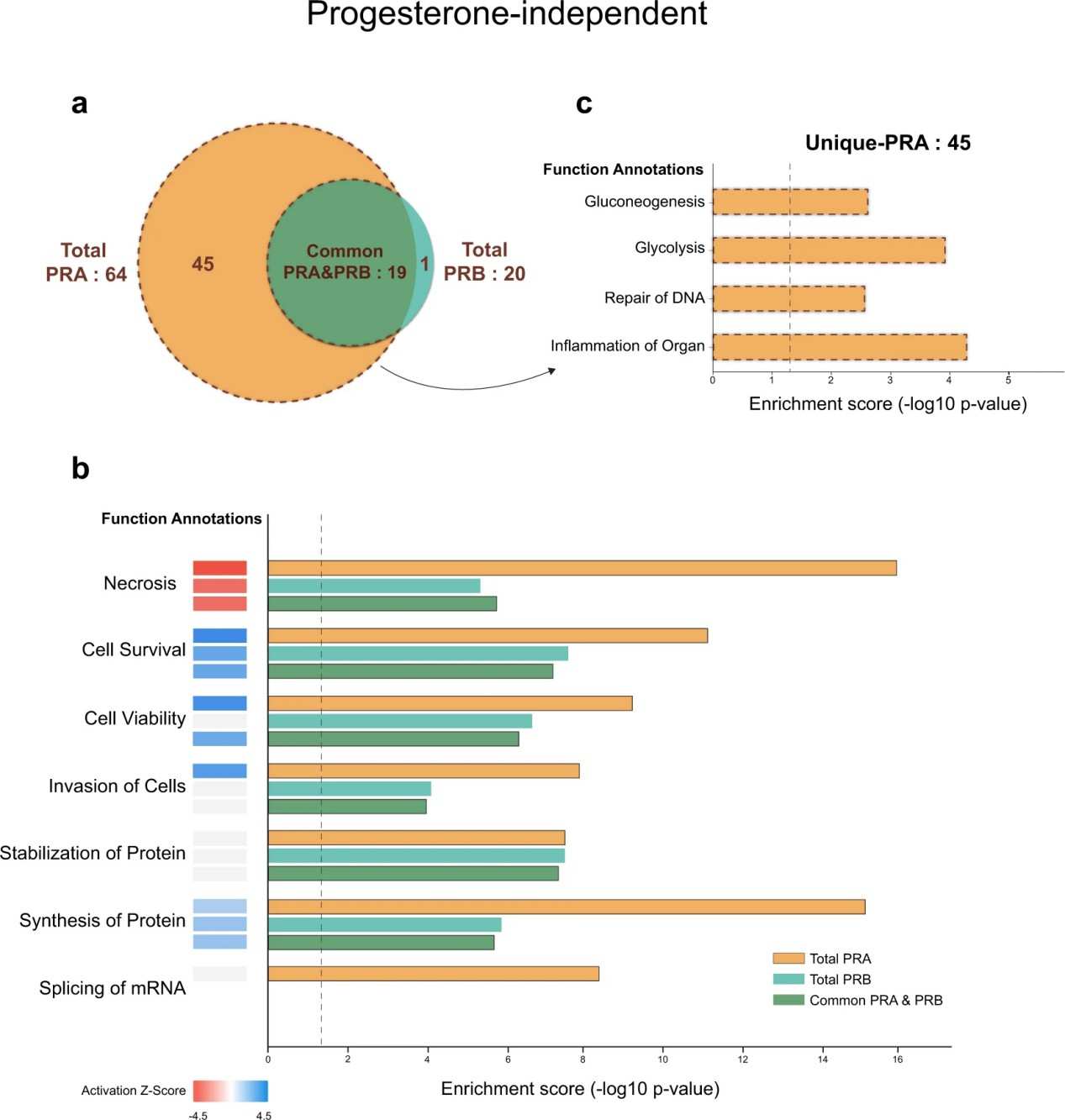
Figure 5. Functional enrichment analysis of progesterone-independent PRA and PRB interacting partners by IPA.

Conclusion

This work demonstrates that SILAC-based Co-IP-MS can resolve subtle quantitative differences in protein-protein interaction networks associated with receptor isoforms and hormonal status. The resulting dataset provides a high-confidence interactome resource for understanding PR-mediated signalling in breast cancer and highlights the value of SILAC for dissecting context-dependent interactomes.

Related Services

References

For research purposes only, not intended for clinical diagnosis, treatment, or individual health assessments.

Tell Us About Your Project